Contents:
- What is a Shield Nickel?
- Shield Nickel History and Years of Issue
- Shield Nickel Value Chart and Market Evaluation
- How Much is a Shield Nickel Worth?
- Shield Nickels Varieties and Error Types
- Collectible Errors and Their Market Impact
- US Shield Nickel and Its Role in Monetary Circulation
- Grading Shield Nickels and Collector Guidelines
- Are Shield Nickels Silver or Base Metal Coins?
The Shield Nickel was the first U.S. five-cent coin made of a copper-nickel alloy rather than silver. It was issued from 1866 to 1883 and became a symbol of the American monetary system's transition to new materials after the Civil War.
Today, the coin's value depends on the year, condition, and rare errors. The best app to check coin value helps you find out its exact value.
What is a Shield Nickel?
Origins of the First US Five-Cent Copper-Nickel Coin
Before the introduction of the Shield Nickel, five-cent coins were minted in silver and called half dimes. However, amid the economic crisis and precious metal shortages following the Civil War, the government decided to seek a replacement.
In 1866, Congress authorized the issue of a new coin made of an alloy of 75% copper and 25% nickel. Chief Engraver James Longacre created it, using a shield as a clear symbol of unity.
Symbolism and Design Features
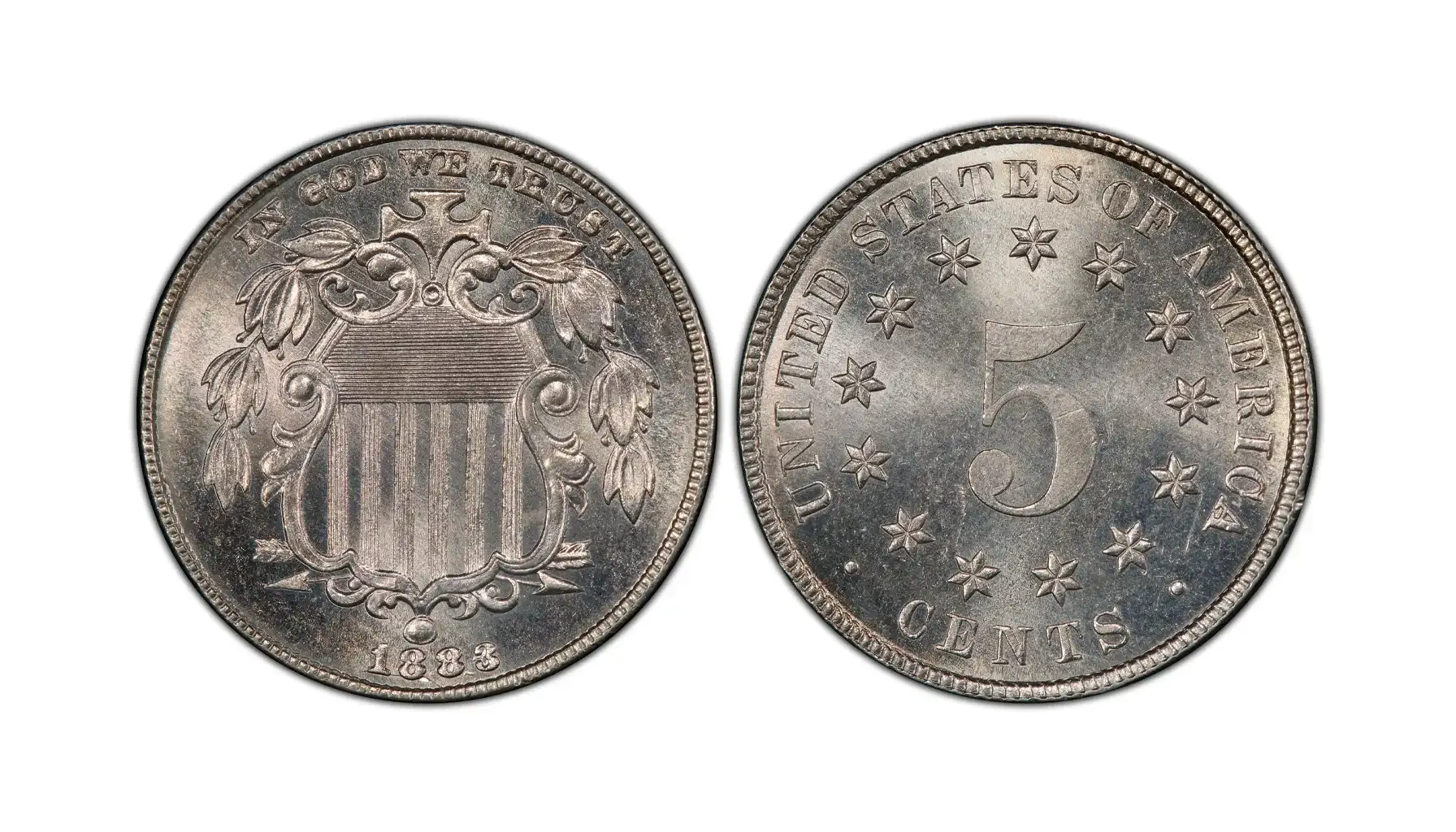
The obverse of the coin features a heraldic shield with laurel branches and crossed arrows, a nod to the traditions of classical symbolism. Above the shield, the inscription "In God We Trust" appeared for the first time, later used on other coins.
The reverse features the number 5 surrounded by stars, and in an early issue, rays as well, though these were soon abandoned due to technical difficulties during minting.
Shield Nickel History and Years of Issue
Transition from Half Dimes to Nickel Coinage
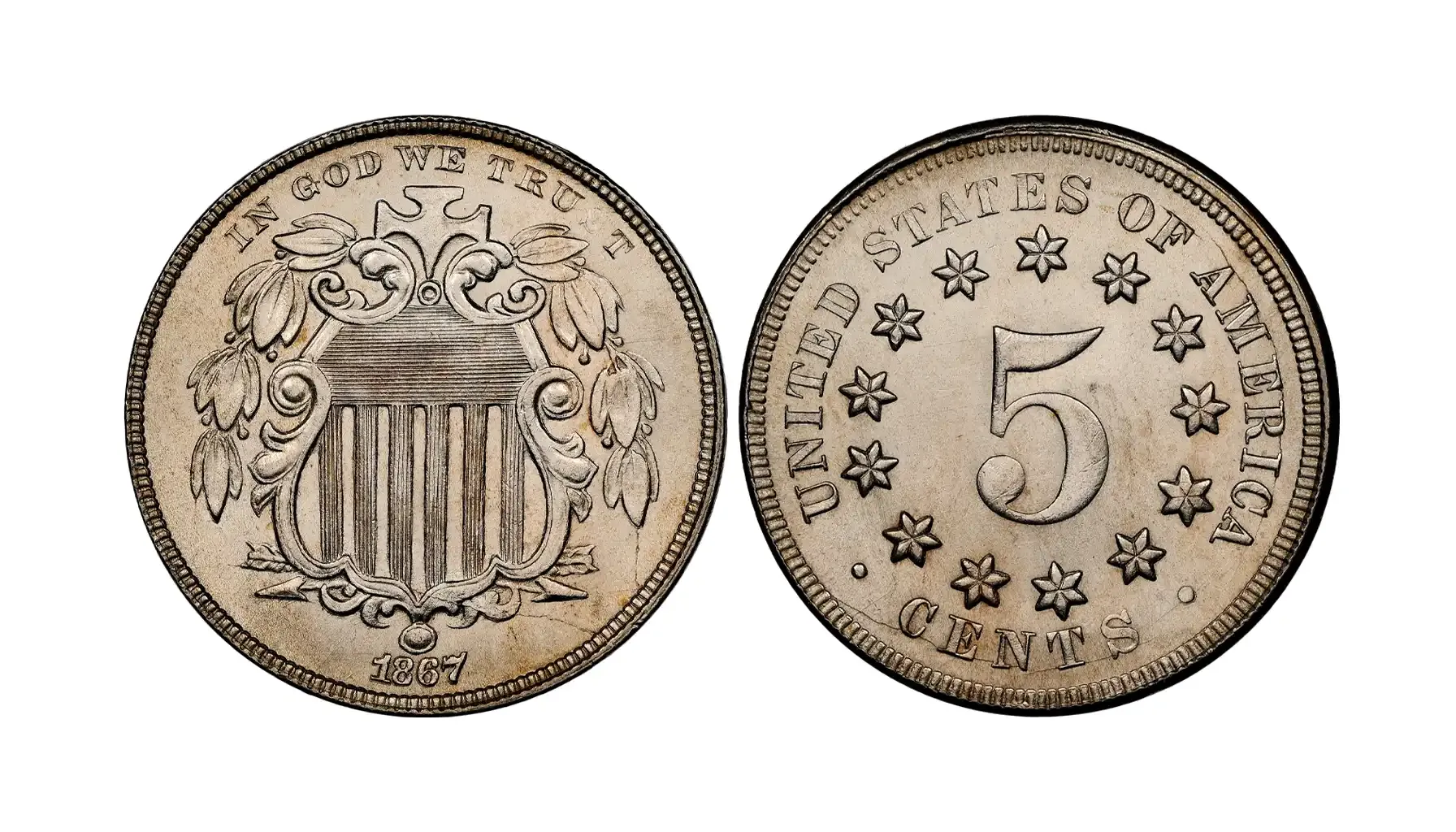
Silver half dimes remained in circulation until the 1860s, but their production proved economically unviable. Silver disappeared en masse from circulation during the war, and as an alternative, Congress authorized the issue of bronze and nickel coins of small denominations. It was then that the idea for a new nickel emerged.
Shield Nickel Years and Production Timeline
The coin was issued from 1866 to 1883. The coinage was not uniform:
1866–1867 — the first issues with "rays" on the reverse;
1867–1876 — regular coinage without rays;
1877–1878 — only proof coins for collectors;
1879–1882 — limited mintages;
1883 — the last year the Shield Nickel was replaced by the Liberty Head Nickel.
Individual years, such as the 1907 nickels in other series, are also of interest, but the Shield Nickel was the first coin to establish nickel in mass circulation.
Shield Nickel Value Chart and Market Evaluation
Standard Specifications and Composition
Characteristic | Value |
Denomination | 5 cents |
Alloy | 75% copper, 25% nickel |
Weight | 5.0 g |
Diameter | 20.5 mm |
Years of issue | 1866–1883 |
Mint | Philadelphia (no mint mark) |
Shield Nickel Value Chart by Year and Condition
Year of Issue | Good | Fine | Extremely Fine | Uncirculated |
1866 With Rays | $30 | $50 | $150 | $250 |
1867 With Rays | $35 | $65 | $200 | $300 |
1867 No Rays | $30 | $50 | $150 | $250 |
1868 | $25 | $35 | $65 | $110 |
1870 | $30 | $60 | $100 | $150 |
1871 | $80 | $150 | $280 | $350 |
1872 | $35 | $75 | $125 | $175 |
1873 Open 3 | $30 | $60 | $100 | $140 |
1873 Closed 3 | $30 | $60 | $140 | $200 |
1875 | $45 | $100 | $160 | $220 |
1876 | $40 | $80 | $150 | $200 |
1880 | $200 | $300 | $450 | $650 |
1882 | $25 | $35 | $65 | $110 |
1883 | $25 | $35 | $65 | $110 |
Note: Prices are indicative and depend on the condition of the coin and the market. This is an average price.
How Much is a Shield Nickel Worth?
Factors That Determine Collectible Prices
The price range depends on the year and condition. Key factors include:
Rare years (e.g., 1871, 1880) are worth significantly more;
Errors and varieties increase the price significantly;
Strike quality and eye appeal always add a premium.
Collectors often seek well-struck examples: clear shield lines and laurel veins.
To understand market dynamics, you can compare early issues with later ones, for example, by studying the 1970 nickel, which shows how pricing and the role of coin condition have changed.
Auction Results and Rare Records
At Heritage Auctions, an 1880 Shield Nickel MS65 sold for just over $50,000. This demonstrates that certain specimens can reach the rare nickels worth money category, where the collector value far exceeds the base price.
Shield Nickels Varieties and Error Types
Major Die Varieties and Minting Peculiarities
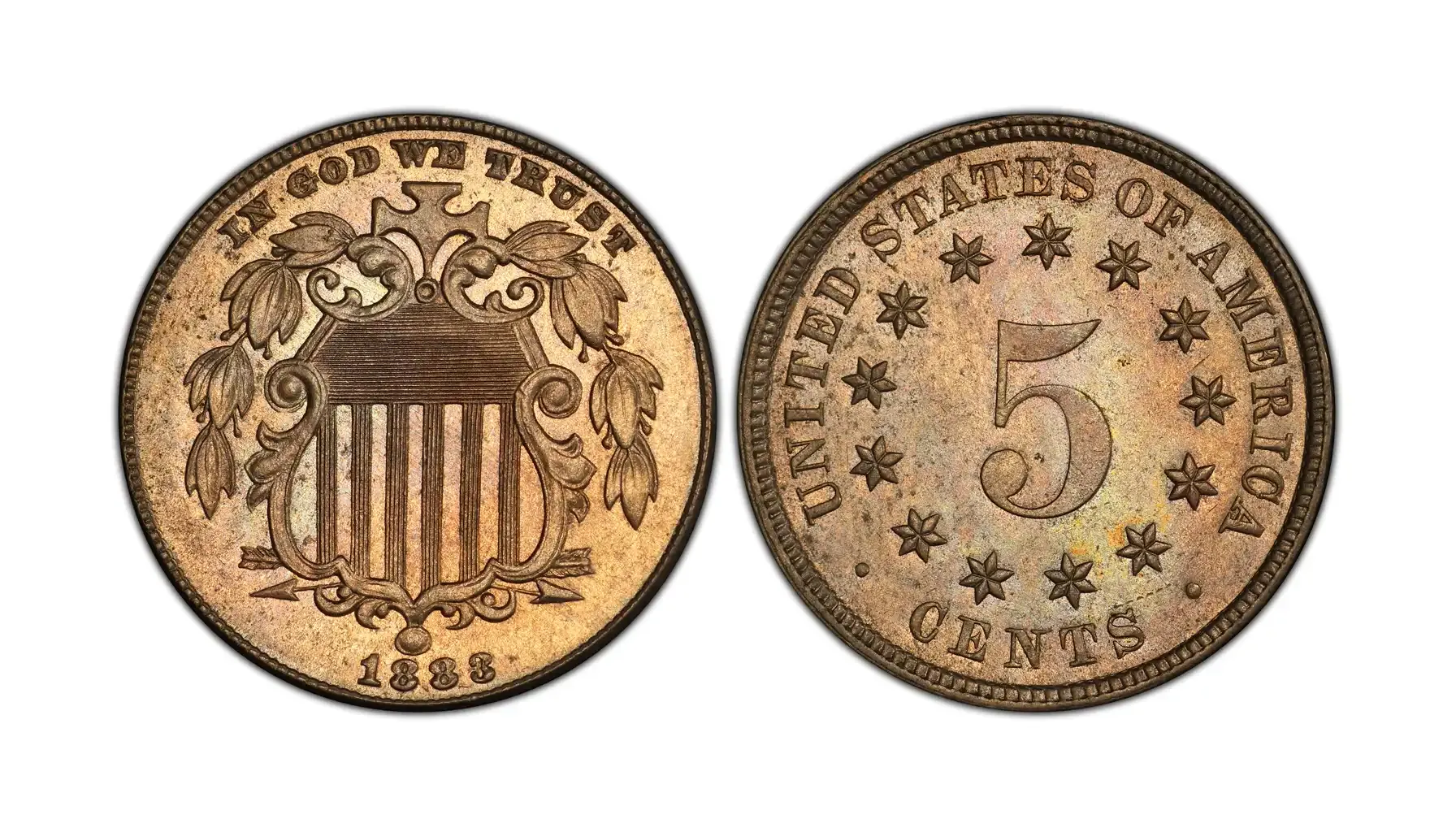
The Shield Nickel series is known for its many varieties caused by striking issues. Among the most notable are:
1867 "With Rays" and "No Rays";
1873 "Closed 3" and "Open 3";
1883/2 Overdate.
Collectible Errors and Their Market Impact
Doubled Die
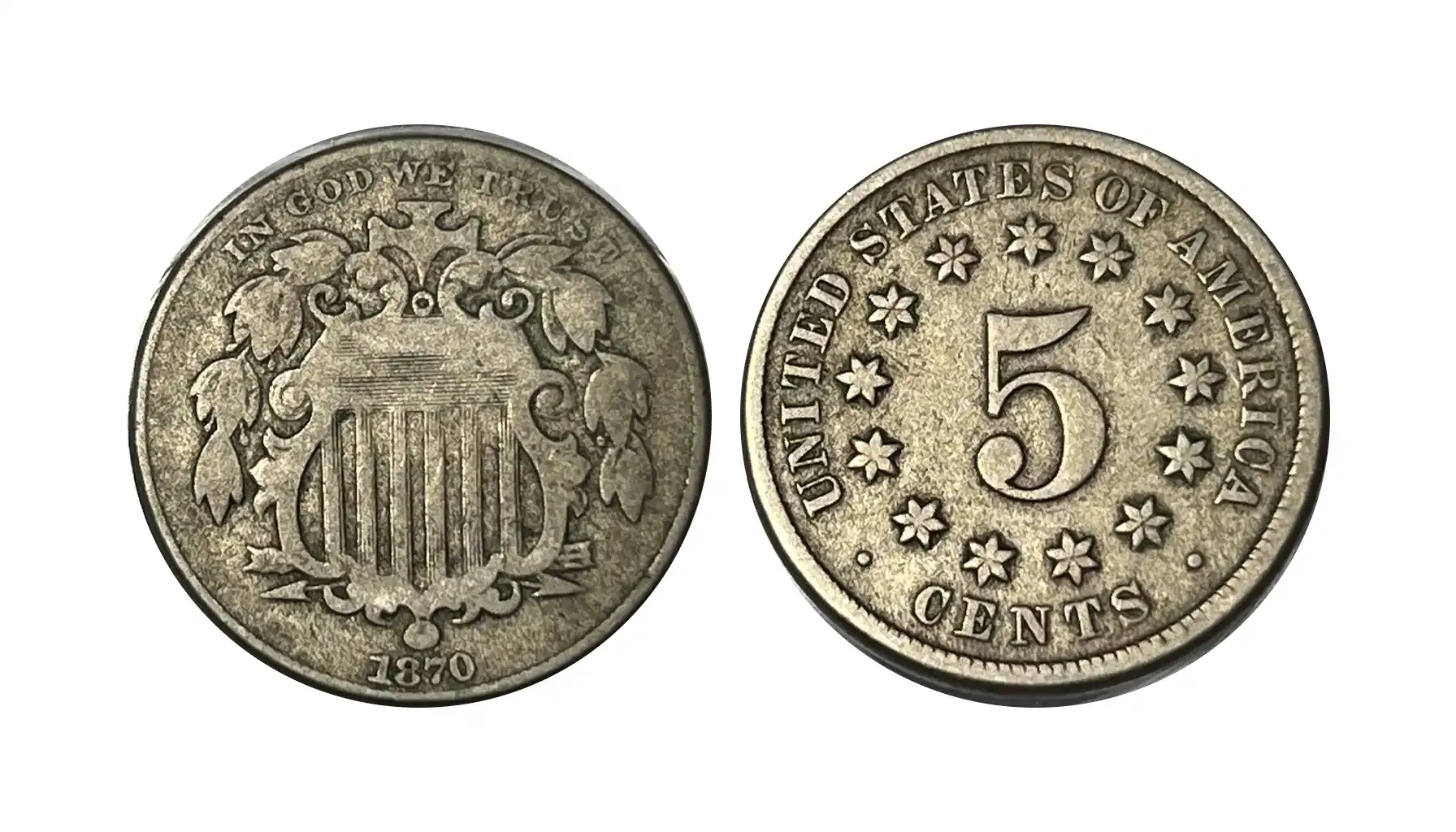
This type occurs when the die strikes the same image twice, slightly offset. This doubling is most often visible on the date and inscriptions. At auction, the price for a doubled die often exceeds $300, even in average condition.
Off-Center Strike
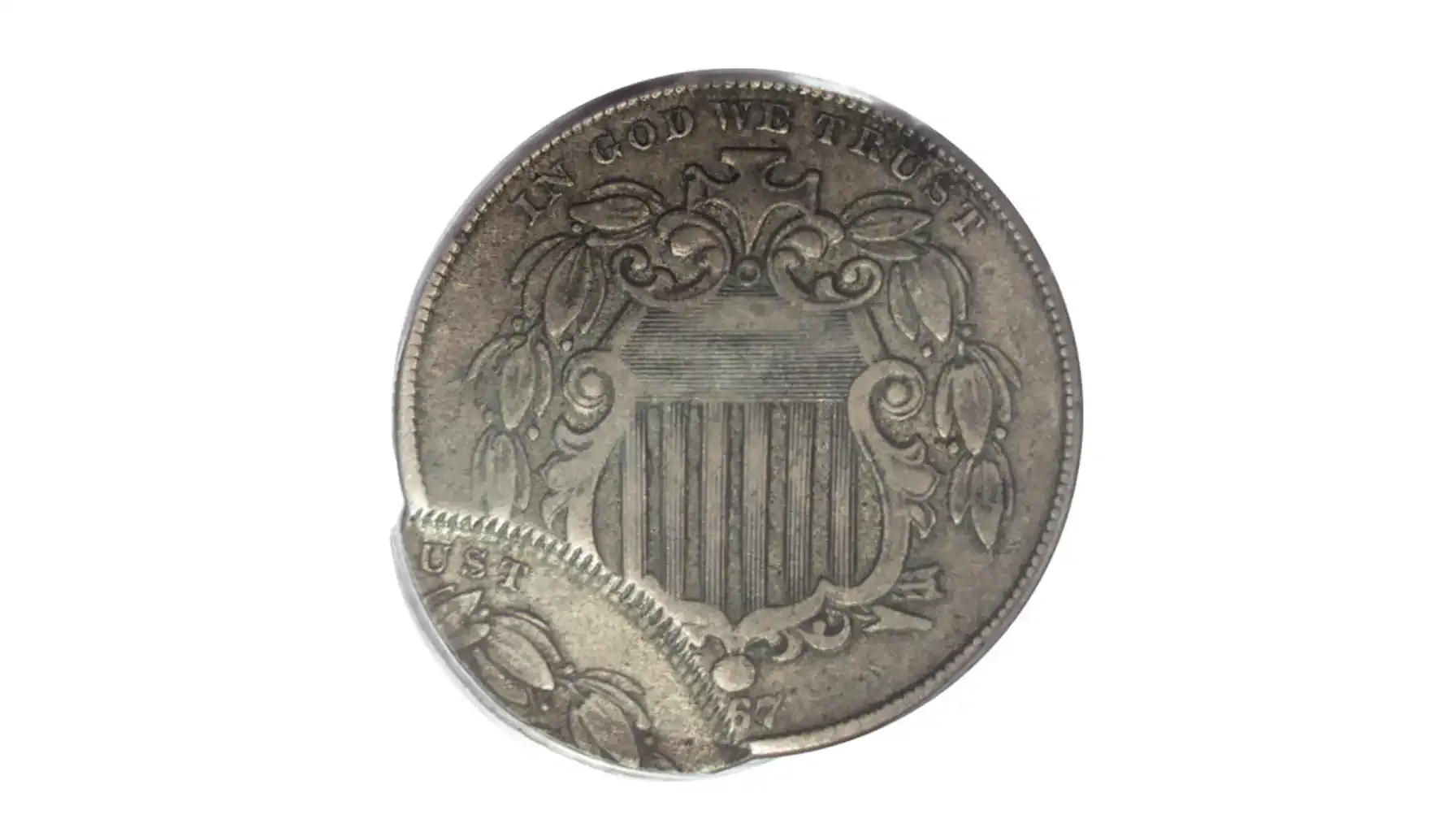
An error occurs when the planchet is misaligned with the die, causing part of the design to extend beyond the center. The greater the displacement, the higher the rarity and value. Coins with a displacement of more than 50% are particularly prized by collectors, with a visible date significantly increasing the price.
Repunched Date (RPD) Varieties
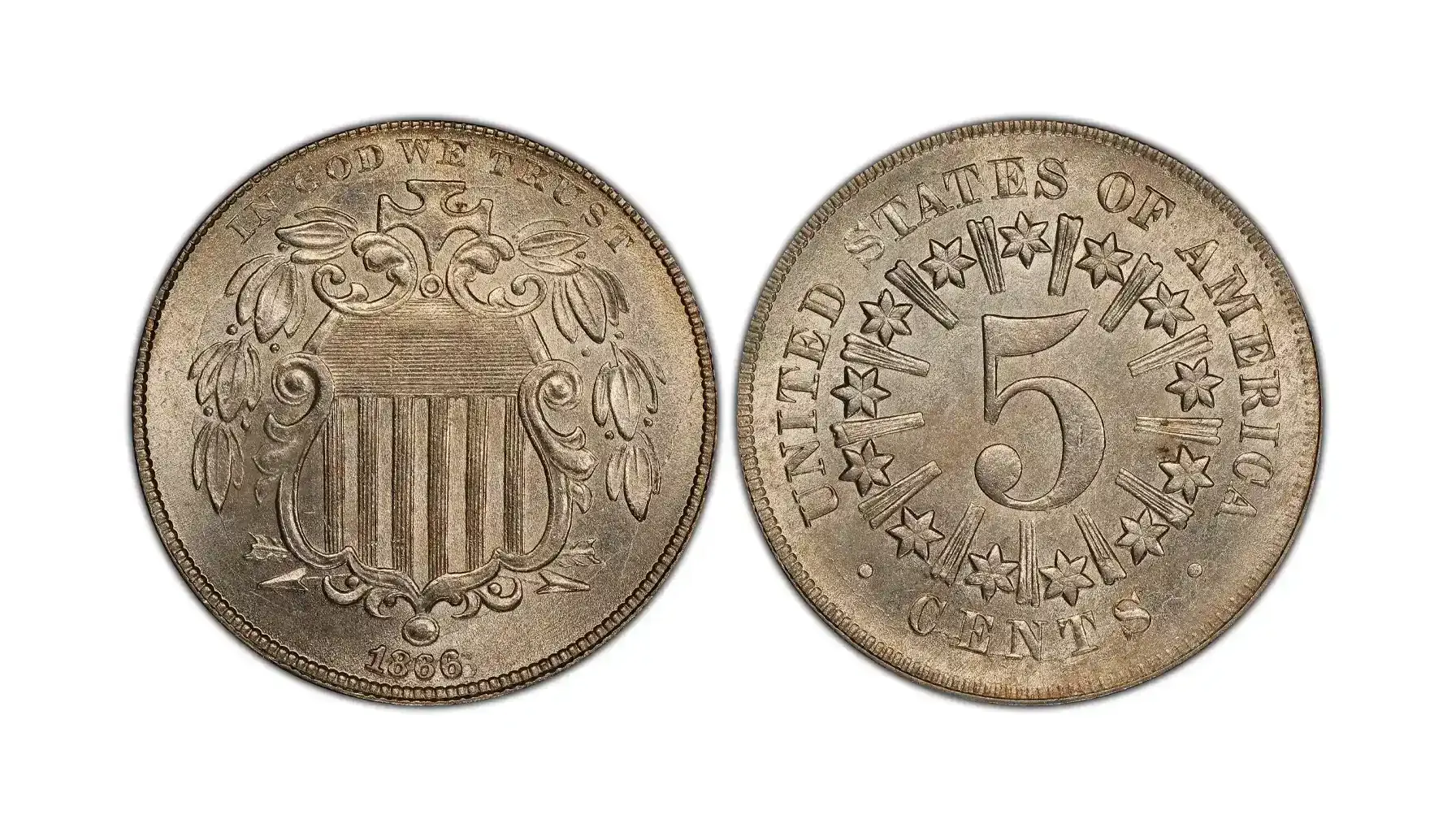
A second strike on the date leaves superimposed or offset digits, making the coin easily recognizable. These varieties are particularly interesting for experts, as they allow them to trace the workings of the Mint.
US Shield Nickel and Its Role in Monetary Circulation
Historical Context of Post-Civil War Coinage
The US Shield Nickel played a role in restoring the monetary system after the war. Basic denominations returned to circulation, and the new coin replaced the paper fractional currency used in the 1860s.
The coin quickly entered circulation, but was often criticized for its hard alloy and poor striking quality.
Letter to the editor of the AJN, September 1866 (regarding the design):
“the inventor of this coin may rest assured that the devil will never forgive him …”
Grading Shield Nickels and Collector Guidelines
How to Grade Shield Nickels Correctly
They are graded according to an international scale (Good → MS/PR). Key points for evaluation include:
the clarity of the shield lines;
the condition of the fields (presence of spots or traces of cleaning);
the legibility of the date and inscriptions.
Tips for Collectors and Beginners
Have your coins authenticated by professional dealers.
Don't rush to clean them—it reduces their value.
Use catalogs and databases to verify mintages.
Take advantage of modern digital services that help you evaluate coins and manage your collection.
Are Shield Nickels Silver or Base Metal Coins?
Alloy Composition and Misconceptions
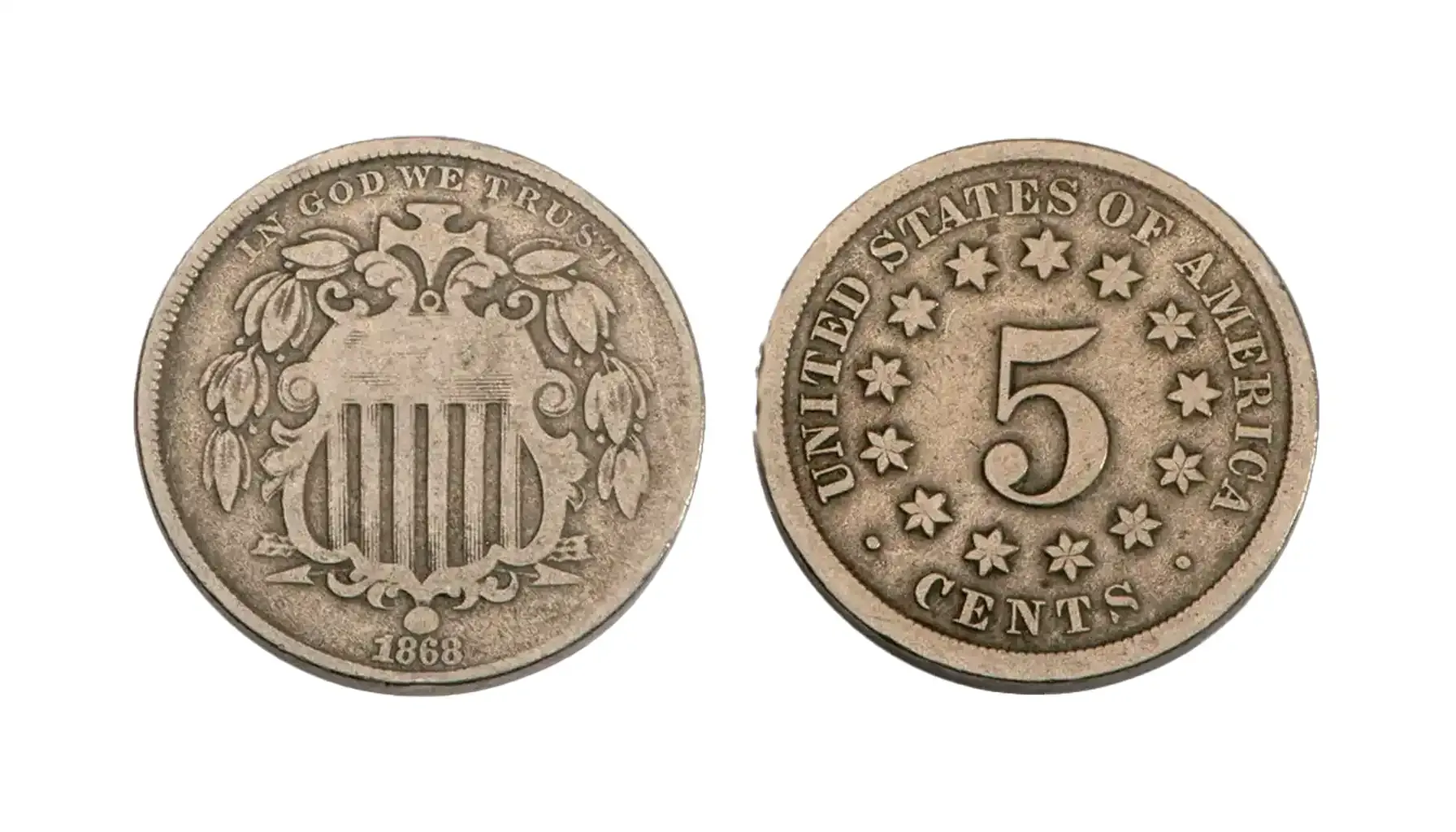
Some beginning collectors wonder: are shield nickels silver? In fact, they contain no silver. This is the first five-cent coin made entirely of a copper-nickel alloy.
The decision to use nickel had several reasons:
a silver shortage after the war;
the influence of industrialist Joseph Wharton, who monopolized nickel mining;
the need for inexpensive mass coinage.
Today, Shield Nickels for sale can be found at auctions, from dealers, and online. Prices range from tens of dollars for common examples to thousands for rare Proof specimens.
Coin ID Scanner
Modern numismatists use the Coin ID Scanner app. It allows users to identify coins from a photo, find out their year, country, composition, weight, and approximate value. It also features a digital catalog and a database of 187,000 coins. For convenience, advanced users can apply smart filters and perform manual searches.

 Facebook
  X (Twitter)
  Pinterest
  LinkedIn