Contents:
- What Is the 1776 to 1976 Kennedy Half Dollar?
- How Much Is a 1776 to 1976 Half Dollar Worth Today?
- 1776 to 1976 Half Dollar Value by Mint Mark (P, D, S)
- Silver vs Clad: Why Composition Changes the Value
- 1776 to 1976 Kennedy Half Dollar Value Chart
- Rare and Valuable 1776–1976 Half Dollar Errors
- What Makes a 1776 to 1976 Half Dollar Valuable?
- How to Identify a Silver 1776 to 1976 Half Dollar
- Where to Buy or Sell Kennedy Half Dollar 1776 to 1976
- FAQ: Kennedy Half Dollar Value 1776 to 1976
The 1776 to 1976 Bicentennial Half Dollar celebrates 200 years of freedom. It features a reverse design with Independence Hall and a dual date (1776-1976).
But what determines the half dollar coin value 1776 to 1976? And what makes a 1776-1976 half dollar rare if so? The best way to check collector coins for value is to study them via charts and apps.
In general, values look like this today:
1976 no mint mark (Philadelphia, clad): usually about 50¢ to a few dollars.
1976-D (Denver, clad): also usually 50¢ to a few dollars for normal pieces.
1976-S clad proof: usually about $4 to $10 for typical raw examples.
1976-S 40% silver uncirculated: usually about $8 to $20+, with NGC listing circulated examples around $12 to $12.50.
1976-S 40% silver proof: usually about $12 to $25 for common raw pieces.
What Is the 1776 to 1976 Kennedy Half Dollar?
In 1976, America celebrated 200 years since the signing of the Declaration of Independence. To mark this momentous occasion, the U.S. Mint released special Bicentennial coins, including the Kennedy specimen. This coin, popularly referred to as the Liberty half dollar 1776 to 1976, features the portrait of President John F. Kennedy on the obverse. There is Independence Hall as a symbol of the nation's founding on its reverse.
“No 1975-dated Quarter Dollars, Half Dollars, and Dollars were made, thus Proof and Mint Sets from 1975 contain Cents, Nickels, and Dimes dated 1975 along with the three Bicentennial Coins.”
—Ron Guth, numismatist
PCGS
The Bicentennial coins were produced in large quantities at three mints—Philadelphia (no mint mark), Denver (“D”), and San Francisco (“S”). Unlike regular coins, the half dollar coin 1776 to 1976 value is influenced by its commemorative status, special designs, and variations in mint marks and errors.
Obverse Designer | Gilroy Roberts |
Reverse Designer | Seth G. Huntington |
Composition | Copper-nickel clad or 40% silver (San Francisco Mint). |
Mint Marks | “D” (Denver), “S” (San Francisco), No Mint Mark (Philadelphia). |
Weight | 11.34 grams. |
Diameter | 30.6 mm. |
Edge | Reeded. |
Mintage | 1976 no mint mark: 234,308,000 1976-D: 287,565,248 1976-S clad proof: 7,059,099 1976-S 40% silver uncirculated: 11,000,000 1976-S 40% silver proof: 4,000,000 |
Bicentennial Markings | Dual date (1776-1976) and special Independence Hall reverse design. |
How Much Is a 1776 to 1976 Half Dollar Worth Today?
In most cases, a 1776–1976 Bicentennial Kennedy half dollar is a modest coin. The big split is between the common clad pieces from Philadelphia and Denver and the 40% silver collector coins from San Francisco. The main Bicentennial half dollar formats are Philadelphia clad, Denver clad, San Francisco clad proof, San Francisco 40% silver uncirculated, and San Francisco 40% silver proof.
1776 to 1976 half dollar value no mint mark clad: usually 50¢ to a few dollars for normal raw coins. PriceCharting’s ungraded value is $3.63. Greysheet shows the 1976 Kennedy half series starting at $0.50.
1976-D (Denver, clad): also usually 50¢ to a few dollars. Recent reported sales often land around $1.50 to $3.
1976-S clad proof: usually about $4 to $9 for a typical coin. PriceCharting currently shows $4.36 for the type, with recent examples around that level.
Value of 1776 to 1976 half dollar S 40% silver uncirculated: usually about $12 to $20+. NGC lists circulated examples at $12 to $12.50, and PriceCharting shows the type around $19.95.
1976-S 40% silver proof: usually about $12 to $25 for normal raw pieces. Recent reported sales include examples around $12 to $25.
1776 to 1976 Half Dollar Value by Mint Mark (P, D, S)
The 1776 to 1976 half dollar mint mark location is just below Kennedy’s neck. Depending on the mint, the value and rarity of the coin can differ.
Philadelphia Mint (No Mint Mark)
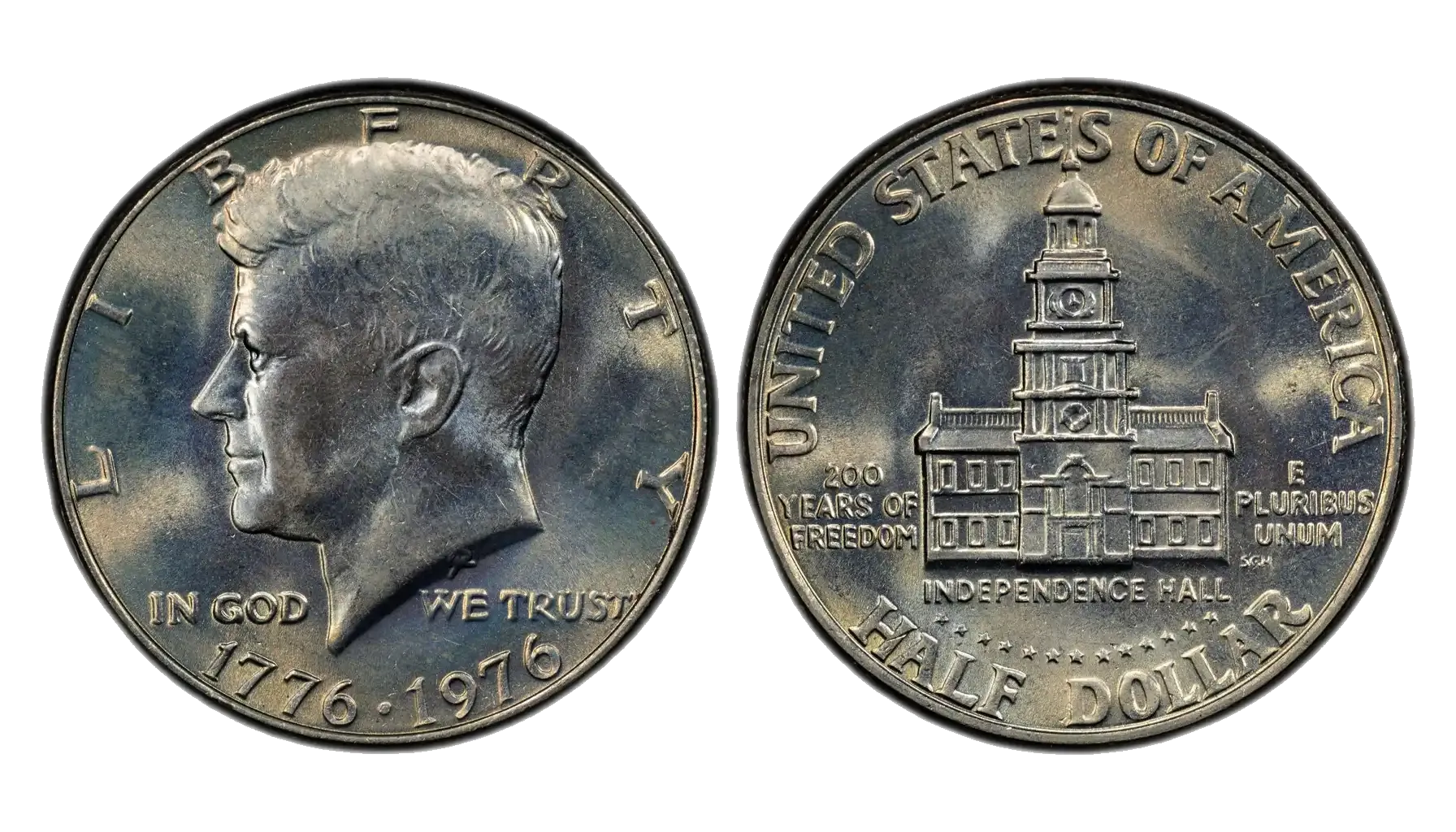
PCGS lists a mintage of 234,308,000 1976 halves. Most ordinary pieces stay in the face-value to low-single-digit range. Mint State coins can move higher. PCGS also shows the coin as common in lower grades, and recent certified examples in modest Mint State have sold in the $6 to $10 range.
Denver Mint (“D” Mint Mark)
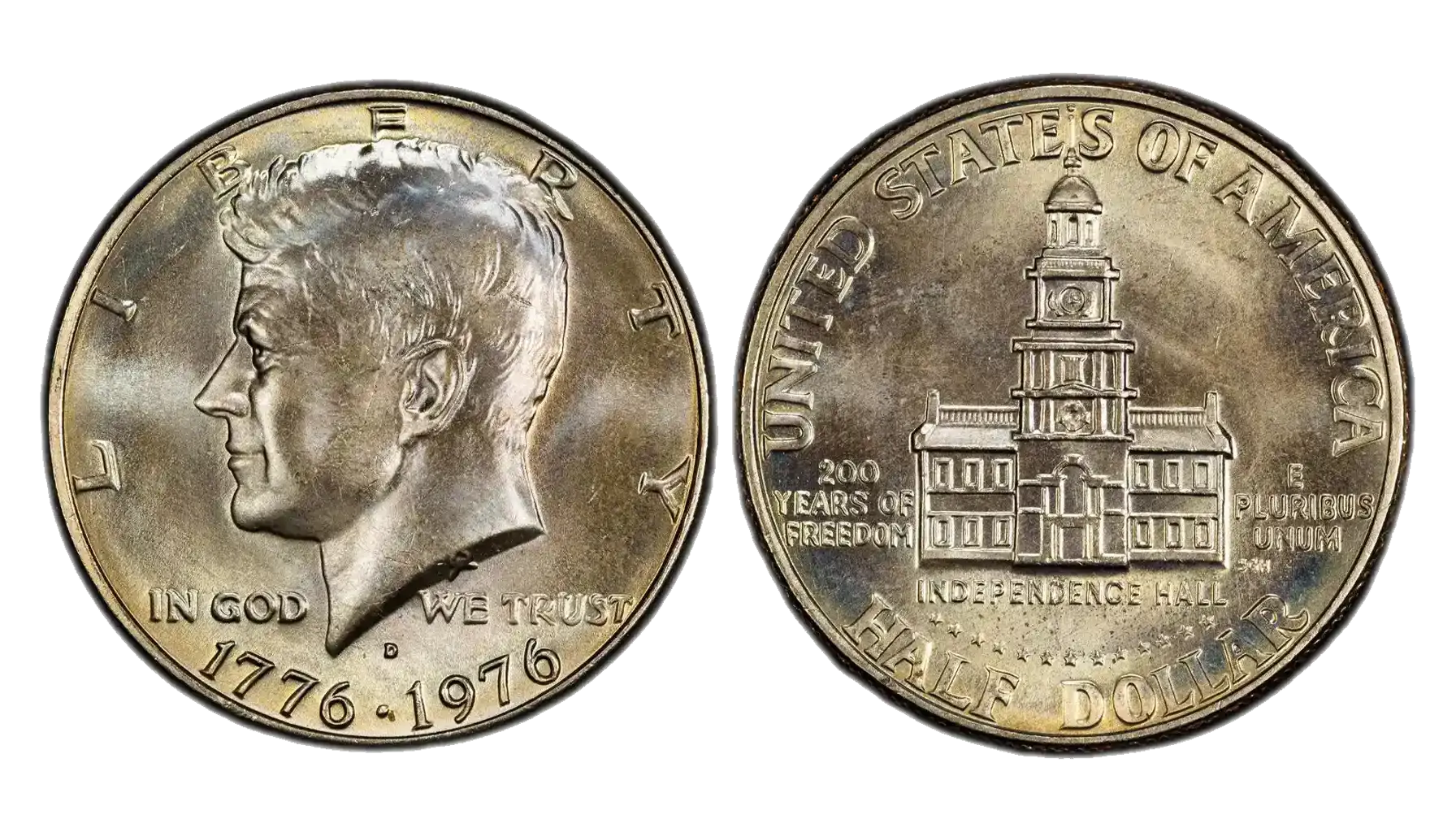
This is the Denver clad bicentennial specimen, and it is even more common, with a mintage of 287,565,248. A current ungraded value is $2.58. Recent raw sales have mostly landed around $1.50 to $4.
The 1976 D half dollar value is in general similar to its Philadelphia counterpart for circulated coins but can fetch more if uncirculated or with errors.
San Francisco Mint (“S” Mint Mark)
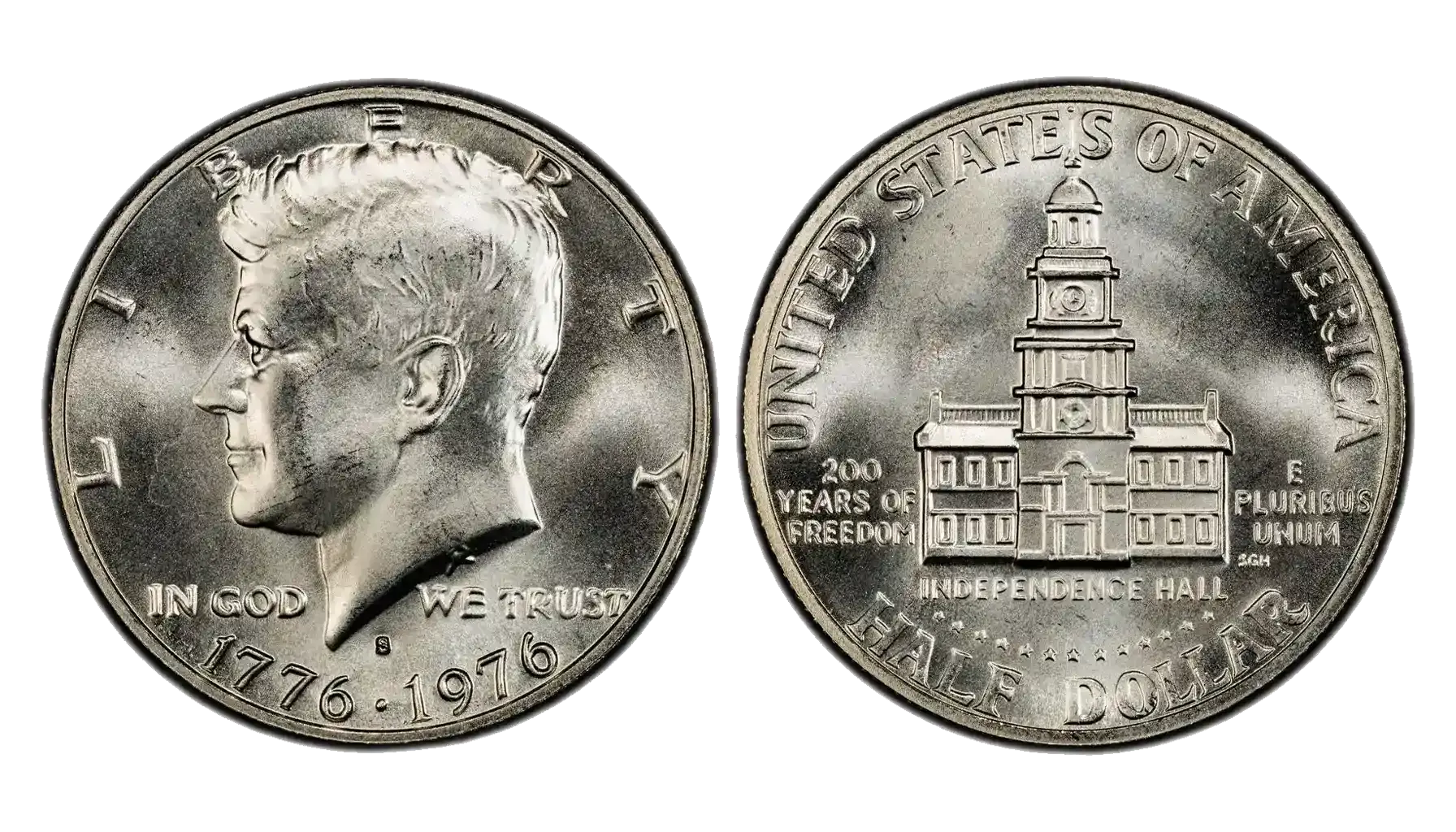
San Francisco made the collector versions. The 1976-S clad proof is usually a modest proof coin, often around $5 to $10. Recent sales in the source run from about $6.50 to the low $20s.
The 1976-S 40% silver uncirculated half has a higher floor: circulated examples are about $12 to $12.50; recent certified MS65–MS67 sales fall around $16.50 to $45.
The 1976-S 40% silver proof is usually in the $12 to $25 range, with recent sales around $12 to $25.
Related article: Rare $1 Coins.
Silver vs Clad: Why Composition Changes the Value
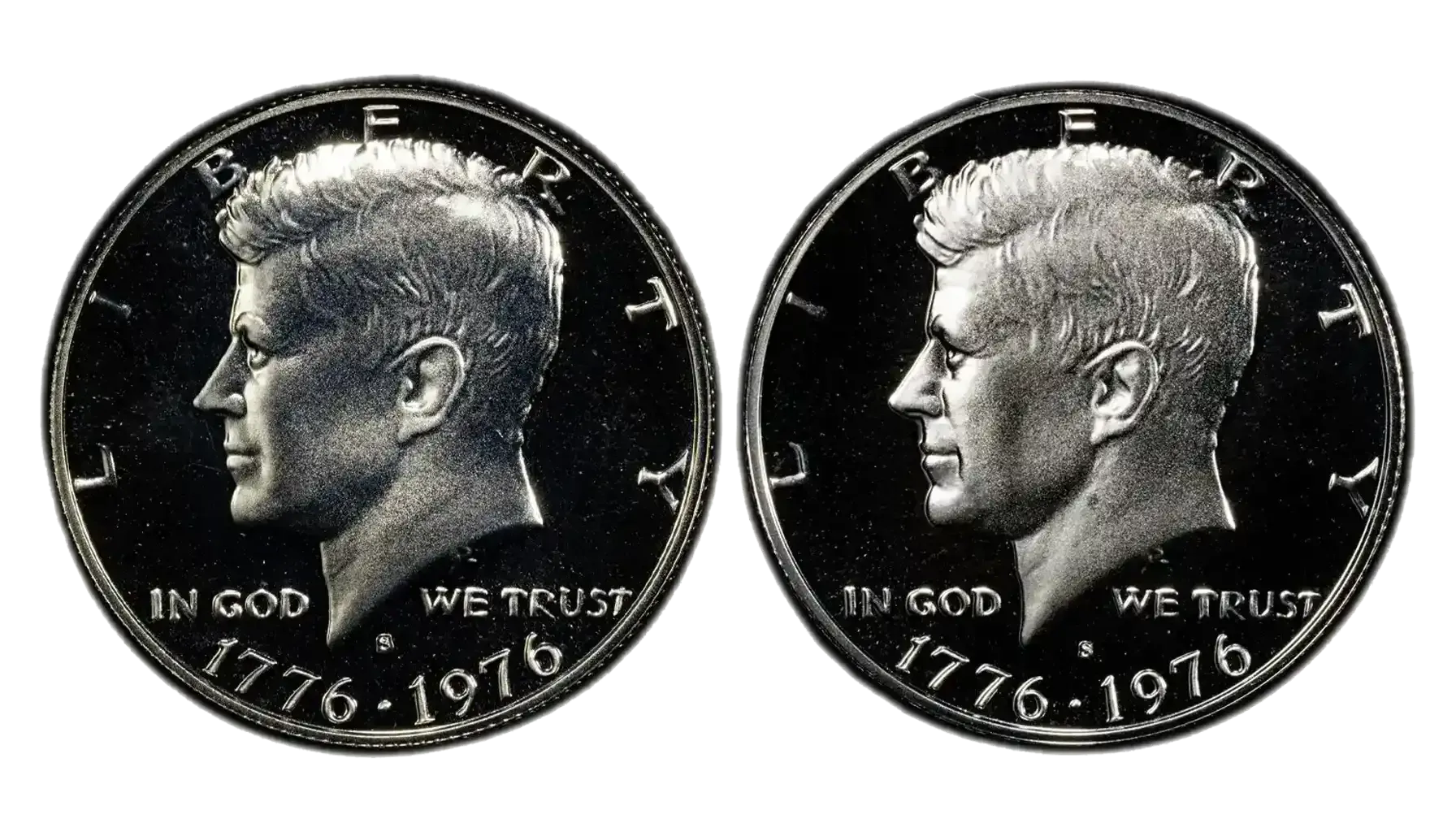
Regular Bicentennial halves from Philadelphia and Denver are clad, with a copper core and copper-nickel outer layers, and they weigh 11.30 grams. The San Francisco silver versions use a 40% silver composition and weigh 11.50 grams.
A clad coin has no silver value, so most ordinary pieces stay close to face value unless the grade is unusually high. A 40% silver Bicentennial half has built-in bullion value, and the 1976-S silver proof with a melt value is around $11.80.
It also changes collector demand. The clad Philadelphia and Denver coins were made in very large numbers, over 234 million and 287 million respectively. The 1976-S silver uncirculated had a mintage of 11 million and the 1976-S silver proof had 4 million. Lower mintages and silver content give the San Francisco pieces a stronger market.
Not sure about your coin? Use the Coin ID Scanner app. Simply scan your half dollar coin 1776 to 1976, and the app will provide detailed information, e.g., weight, silver content and the value.
1776 to 1976 Kennedy Half Dollar Value Chart
Coin | Grade | Value |
1776 to 1976 half dollar no mint mark value | Ungraded | $7.09 |
AU50–58 | $4.50 | |
MS62 | $6.00 | |
MS63 | $6.20 | |
MS64 | $22.97 | |
MS65 | $25.08 | |
MS66 | $63.75 | |
MS67 | $70.00 | |
MS68 | $84.00 | |
MS69 | $101.00 | |
MS70 | $126.00 | |
1776 to 1976 D half dollar value | Ungraded | $2.58 |
AU50–58 | $9.95 | |
MS63 | $19.00 | |
MS64 | $20.99 | |
MS65 | $21.35 | |
MS66 | $37.25 | |
MS67 | $452.69 | |
MS68 | $543.00 | |
MS69 | $652.00 | |
MS70 | $815.00 | |
1776 to 1976 S half dollar value (clad proof) | Ungraded | $4.25 |
PR63 | $6.20 | |
PR66 | $13.68 | |
PR67 | $15.00 | |
PR68 | $17.00 | |
PR70 | $188.29 | |
1776–1976-S (40% silver, uncirculated) | Ungraded | $18.93 |
MS60 | $33.00 | |
MS63 | $20.00 | |
MS64 | $22.75 | |
MS65 | $25.00 | |
MS66 | $28.00 | |
MS67 | $32.00 | |
MS68 | $79.84 | |
MS69 | $96.00 | |
MS70 | $120.00 | |
1776–1976-S (40% silver proof) | Ungraded | $19.43 |
PR63 | $8.00 | |
PR64 | $9.00 | |
PR65 | $10.00 | |
PR66 | $11.64 | |
PR67 | $27.24 | |
PR68 | $41.51 | |
PR70 | $199.35 |
The 1776-1976 Kennedy half dollar value table is created with data from PriceCharting’s full guide for the 1976 Bicentennial half dollar.
Rare and Valuable 1776–1976 Half Dollar Errors
Errors are where the real money is! Some notable examples include:
Clipped Planchets: Where part of the coin’s edge is missing.
Doubled Die Errors: Doubling in text or images, like on the reverse’s lettering, is highly prized.
Off-Center Strikes: Misaligned designs can dramatically increase the coin's value.
Missing Clad Layers: This exposes the coin’s copper core, creating a striking appearance.
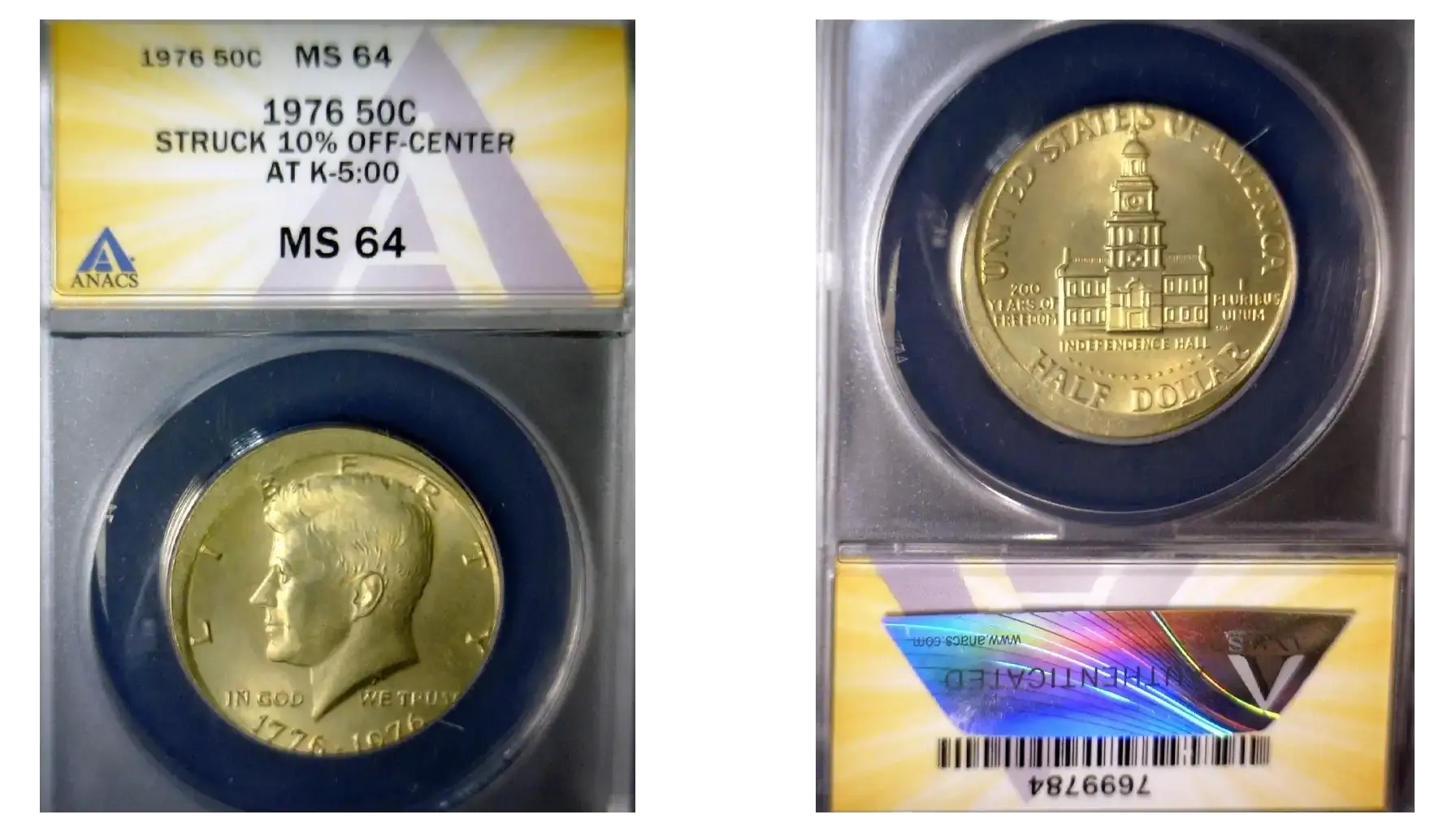
These mistakes influence the error 1776 to 1976 half dollar value. But they are important not only in terms of halves. The list of quarter errors by year will help you with another kind of coins.
What Makes a 1776 to 1976 Half Dollar Valuable?
What changes the value most:
Metal — silver coins start higher than clad coins because they have bullion value and stronger collector demand. There are silver Bicentennial halves as 40% silver, 60% copper, and the regular coins which are copper-nickel clad.
Mint mark and format — no mint mark and D are common circulation strikes. S pieces are collector issues, either clad proof or 40% silver.
Grade — most Bicentennial halves stay cheap unless they are very sharp, clean, and well preserved. Greysheet’s spread from $0.50 to $8,000 across the listings shows how much grade matters at the top end.
Errors and varieties — real 1776 to 1976 Kennedy half dollar errors can move the coin into a different price bracket.
Auction Records
These are issue highs, not normal market Kennedy half dollar 1776 to 1976 value numbers.
Coin | Auction record | Grade | Sale date | Auction house |
1776–1976, no mint mark (Philadelphia, clad) | $3,105 | MS64 | June 3, 2004 | Heritage Auctions |
1776–1976-D (Denver, clad) | $8,400 | MS66 | August 18, 2024 | Heritage Auctions |
1776–1976-S (San Francisco, clad proof) | $5,175 | PR70 | January 9, 2008 | Heritage Auctions |
1776–1976-S (San Francisco, 40% silver uncirculated) | $9,600 | MS69 | August 28, 2022 | Heritage Auctions |
1776–1976-S (San Francisco, 40% silver proof) | $4,370 | PR70 | September 1, 2003 | Heritage Auctions |
The highest record in this group belongs to the 1976-S 40% silver uncirculated half dollar at $9,600, followed closely by the 1976-D clad coin at $8,400.
How to Identify a Silver 1776 to 1976 Half Dollar
Look for the S mint mark. The silver Bicentennial half was struck at San Francisco.
Weigh the coin. A silver 1976-S half should weigh 11.50 grams. A regular clad Philadelphia or Denver piece weighs 11.30 grams.
Check the metal type. The silver version is a 40% silver composition, while the regular clad coin is copper-nickel over a copper center.
Do not rely on color alone. Toning and wear can be misleading. The mint mark and weight are the quickest checks
Where to Buy or Sell Kennedy Half Dollar 1776 to 1976
Local coin dealers — good for common pieces and quick offers. NGC has a dealer locator for nearby shops and specialists.
PCGS authorized dealers — useful for certified coins or better material. PCGS lets you search dealers by location and specialty, including auctions and appraisals.
Auction houses — better for high-grade, silver, or unusual coins that deserve wider exposure. PCGS dealer search includes auction specialists.
Online marketplaces — workable for common Bicentennial halves, but prices vary more and photos matter more.
FAQ: Kennedy Half Dollar Value 1776 to 1976
How much is a 1776 to 1976 bicentennial silver dollar worth?
The 1776–1976-S Eisenhower silver dollar cost usually around $24.50 to $25.50 today, with better uncirculated and proof coins worth more.
Are any 1776-1976 Half Dollars silver?
Yes. The 1976-S Kennedy half dollar was made in 40% silver in both uncirculated and proof versions.
What is the rare coin 1776-1976?
The scarcer regular Bicentennial issue is the 1976-S 40% silver coin. The Philadelphia and Denver clad halves were struck in much larger numbers and are common.
What is the error on the 1776-1976 half dollar coin?
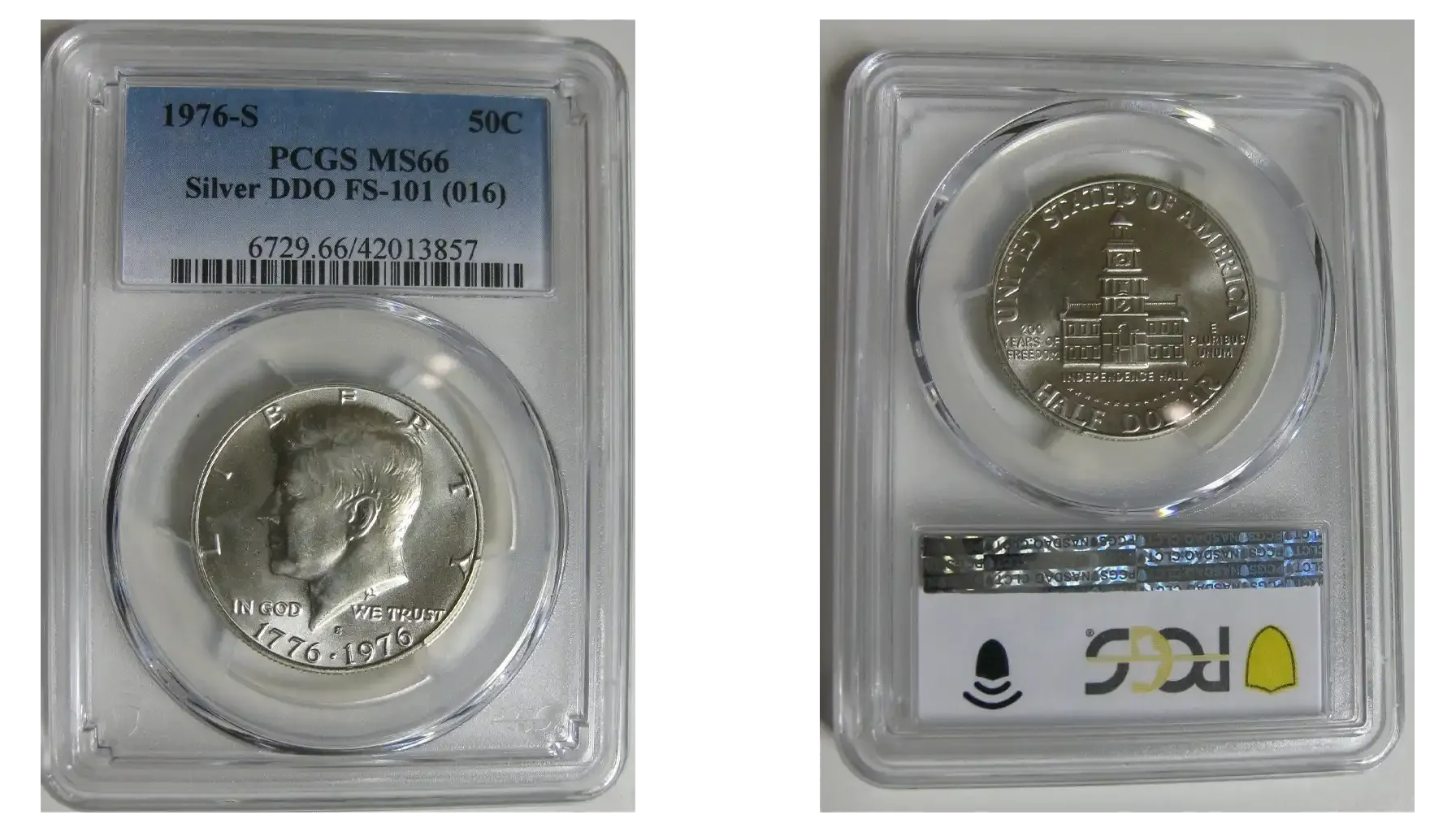
The better-known ones are doubled dies and wrong-planchet pieces. PCGS lists a 1976-S 50C Silver DDO FS-101, and it also records a 1976 half struck on a quarter planchet.
What makes a 1776-1976 half dollar rare?
Usually one of three things: 40% silver composition, top-grade preservation, or a real mint error/major variety.
How much is a 1776 to 1976 half dollar worth with no mint mark?
A no-mint-mark coin is the Philadelphia clad piece. Most are worth face value to a small premium, and recent raw sales often land around $1 to $3 unless the coin is unusually nice.
Which 1776-1976 bicentennial quarter is worth?
The Bicentennial quarters that usually matter most are the 1976-S 40% silver quarter, strong top-grade 1976-P coins, and recognized varieties such as the 1976-D DDO.
Where is the mint mark on a 1776 to 1976 silver dollar?
On the Eisenhower dollar, the mint mark is on the obverse, above the date and to the right, below Eisenhower’s bust.
Is a 1976 silver dollar pure silver?
No. The Bicentennial 1976-S silver dollar is 40% silver, not pure silver.

 Facebook
  X (Twitter)
  Pinterest
  LinkedIn