Contents:
Coins with a hole in the center are recognizable all over the world, Japan has succeeded in this and has done everything to make their currency unique.
But some Asian countries may also have tokens with a hole of a different shape, of course, it may be difficult for a beginner to immediately remember the size and shape of the hole in the coin and what it is for.
So if you notice that you are confused by Japanese characters and do not understand at all what is in front of you, then check the token through a coin scanner online.
Overview of the Japanese 5 Yen Coin
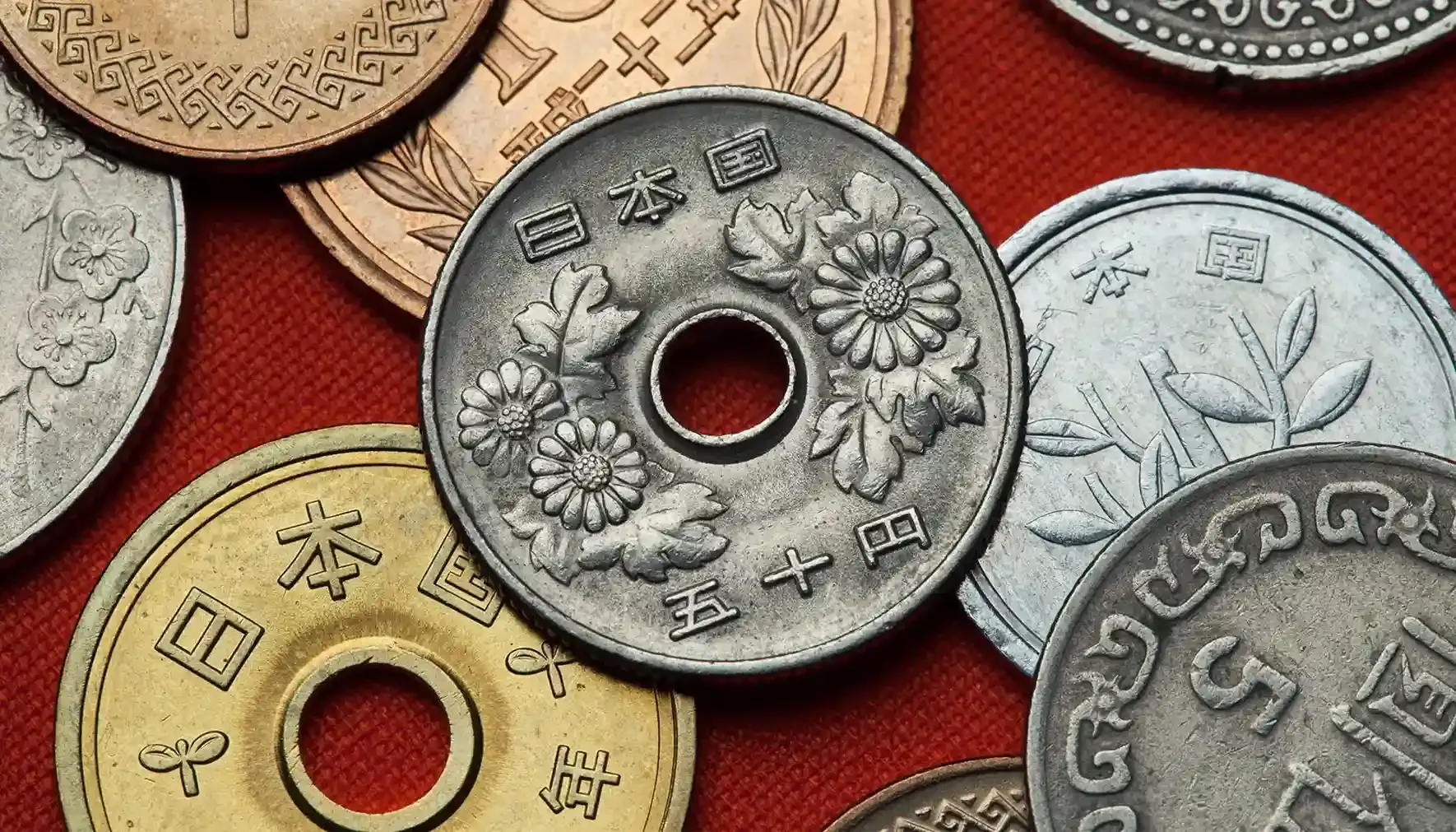
The five-yen is used for daily payments in Japan.
The design, created in 1959, is still in use today, and the most recognizable feature is the hole exactly in the center of the token, round and small.
“Japan adopted the Chinese currency system in the 8th century AD when Yamato Empress Gemmei sent for Chinese artisans to cast coins in Japan. From the 10th to the 16th century, the Japanese abandoned the practice of producing coins. Instead, they sent metal to China for minting at the courts of the Yuan and Ming Emperors.
This was returned to Japan in the form of Chinese cast coinage. During this period, silver ingots were widely used in Japan. Japanese mints did not locally produce copper coins again until the 17th century.”
— Unnamed commentary from “Ancient and Medieval East and South Asia” article
American Numismatic Society
In those days, coins of such a small denomination were made of pure gold, but modern copper ones, which came into use after World War II, quickly became a necessary part of Japan's daily monetary system.
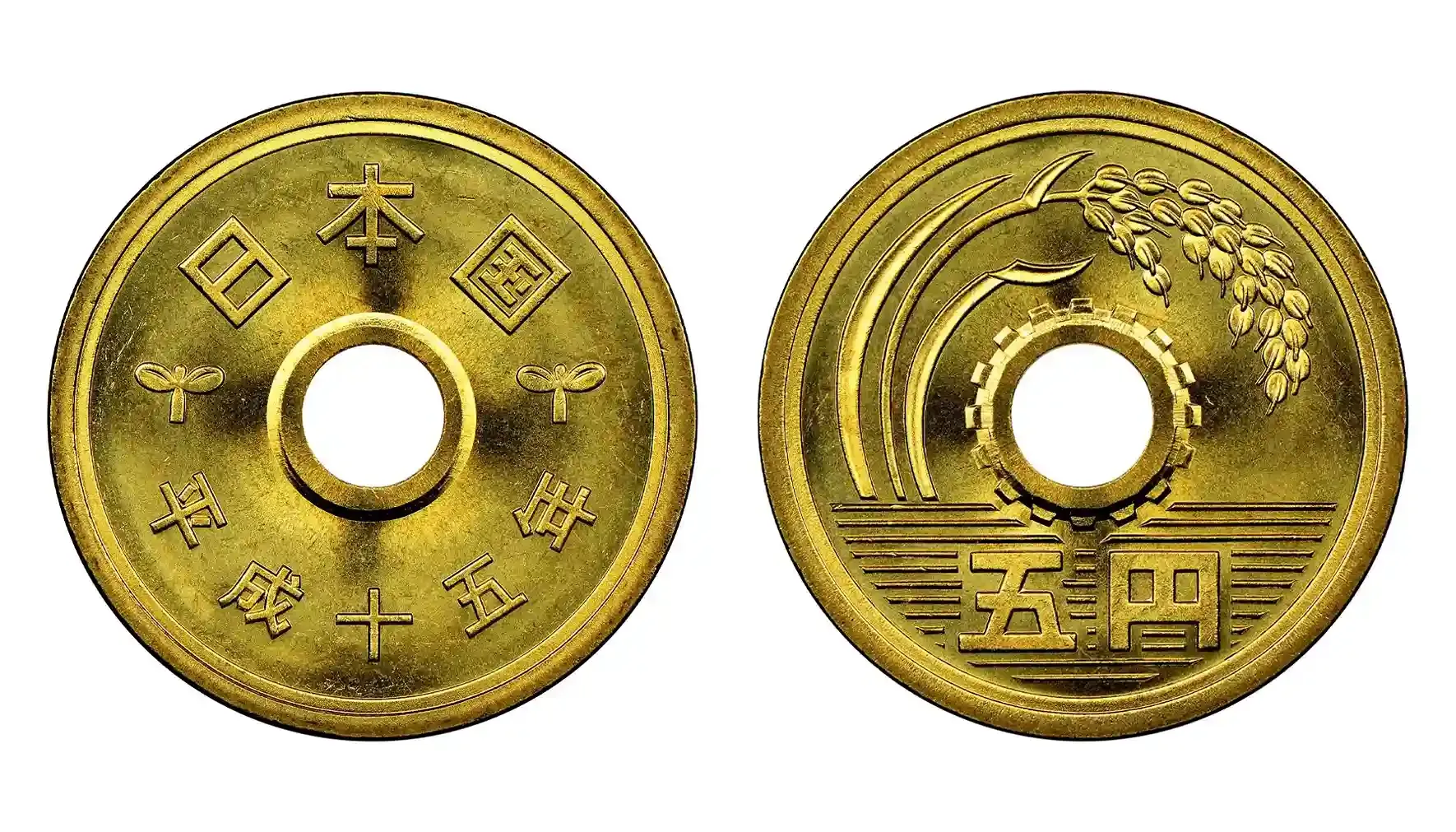
The technical facts about the piece, telling us exactly how it is made, are simple and easy to remember:
Japanese Coin 5 Yen
Brass
3.75 g
22 mm х 1.5 mm
Hole in the middle
The Symbolism Behind the 5 Yen Coin
The images carry a special meaning, reflecting the main areas of Japan's activity after World War II, and all design elements are located on the obverse and reverse sides of the token.
Elements of the Front Side
A large stalk of rice, curved and located at the top of the coin, symbolizes agriculture, that is, rice cultivation — has always been a central part of Japanese cuisine and culture for many centuries.
The water is about fishing and resources for a country surrounded by the sea.
The small teeth of the gear located around the central hole of the piece reflect industry and factories.
These three parts — agriculture, fishing, and industry show a complete image of the country's main income-generating activity.
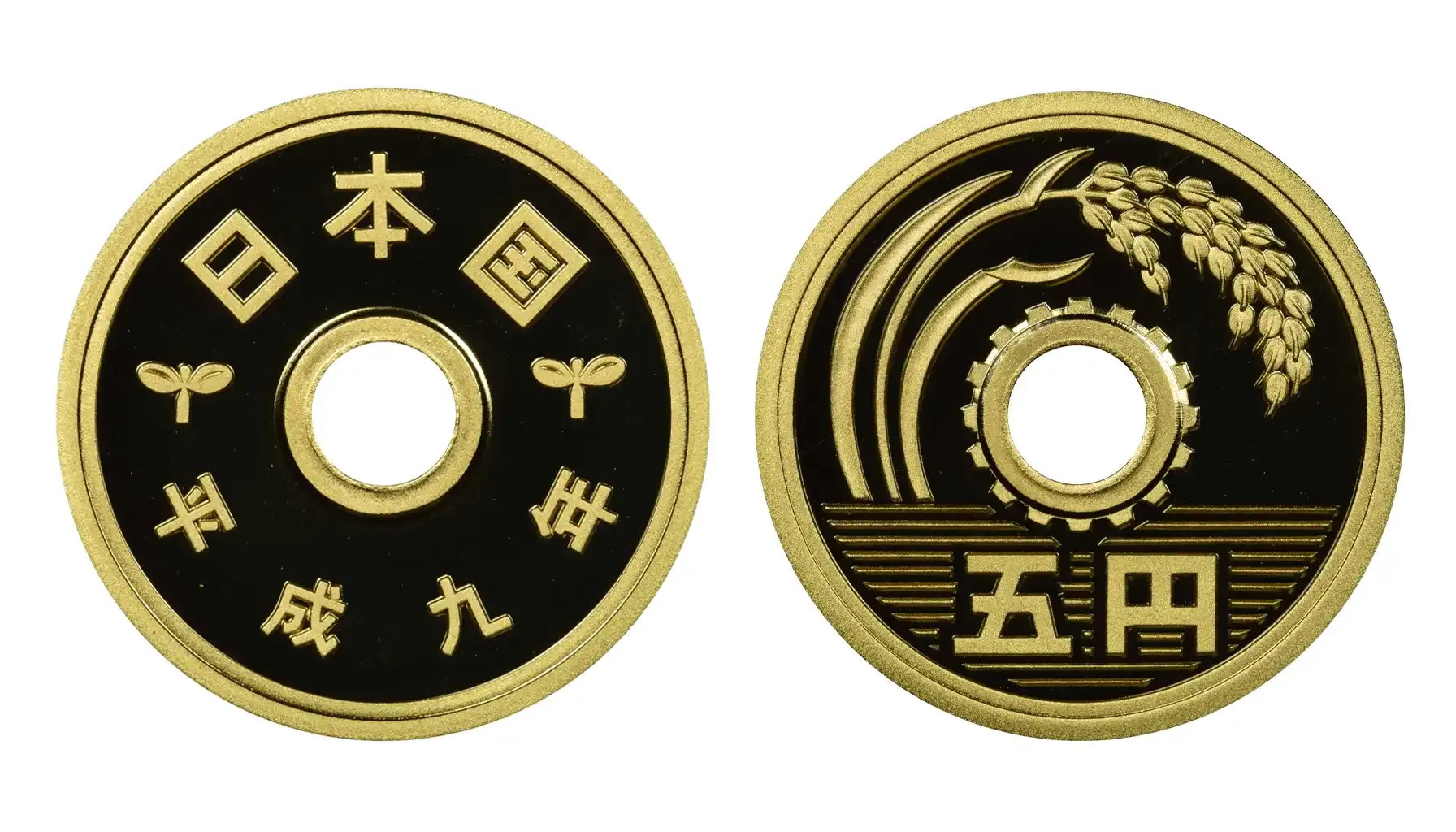
Elements of the Back Side
Two small shoots of a tree or a seed leaf, located on both sides of the central hole, symbolize forestry, which expresses the general idea of growth and peace in Japan.
There are also Japanese letters on this side that mean "The State of Japan" and the year of manufacture.
Hidden Cultural Meaning
In Japanese society, a 5-yen coin carries an additional meaning based on the sound of words.
The Japanese way to pronounce "five yen" (go-en, 五円) sounds exactly like the word go-en (ご縁) — "luck", or "good relationship".
And because of this sound correspondence, the 5 yen coin Japan is often used as a small gift in Shinto shrines and Buddhist temples.
How to Read the Date on a 5 Yen Coin
To determine the year of manufacture of a Japanese coin, people need to know the Japanese time frame.
Japanese coins are dated not by the Western year, but by the number of years of the emperor's reign.
The Japanese Era System
In Japan, each epoch marks the period when a certain emperor ruled the country, and here everything is not as simple as in European or American coins — to find out the year of issue, you need to know the name of the epoch and the year number.
A date consisting of three parts: epoch names, year numbers, and characters.
Name | Period |
Shōwa or 昭和 | 1926-1989 |
Heisei or 平成 | 1989-2019 |
Reiwa or 令和 | 2019 - now |
Translating the Date to the Western Calendar
To transfer the 5 yen coin date from a coin to a regular calendar year, people need to know the year of the beginning of the era, and make the calculation:
Year in Western Calendar = (Starting Year of Era - 1) + Year Number on Coin
For example, if it says 昭和二十四年*
*十 for 10, 二 for 2
So, the starting year of the era is 1926, and the year number is 24.
1926-1+24=1949
The Japanese numbers on the coin are read using written symbols that represent a numeric Japanese 5 yen coin value.
Design and Features of the 5 Yen Coin
With frequent interaction with water, brass can change color, that is why old pieces often look darker, and sometimes a little greenish.
As for the hole, it was made for several reasons: 1) to save metal when it was difficult to find materials after the war; 1) to make it easier for people with poor eyesight to recognize it.
All the words like the face Japan 5 yen coin value and the name of the country, are written in Japanese characters.
The edge — a small side surface — is smooth, meaning there are no small lines on it, and this differs from some other Japanese coins, which often have lines along the edges.
Conclusion
The number of tourists in Japan is increasing every year, and many tourists take a couple of tokens to their homes as keepsakes, but numismatists see this as more than just a souvenir, because if they are lucky, a valuable specimen may fall into their hands.
Therefore, when traveling and going to numismatic shows, know how to orient yourself in this currency for a general outlook.

 Facebook
  X (Twitter)
  Pinterest
  LinkedIn