Contents:
The Mint produced over 1.26 billion Jefferson pieces. Among the coins, some with unique defects are worth up to $1,800, compared to an initial price of $1.50.
What Is a 1984 Nickel Worth Today?
Most circulated pieces possess a value of exactly five cents. High-grade uncirculated examples sometimes sell for higher prices at online shops and auctions. Professionals seek coins with Full Steps on the reverse design.
"A certified 'Full Steps' version is the only way to realize a high market premium for this specific year".
– Bernard Nagengast, author
The Jefferson Nickel Analyst
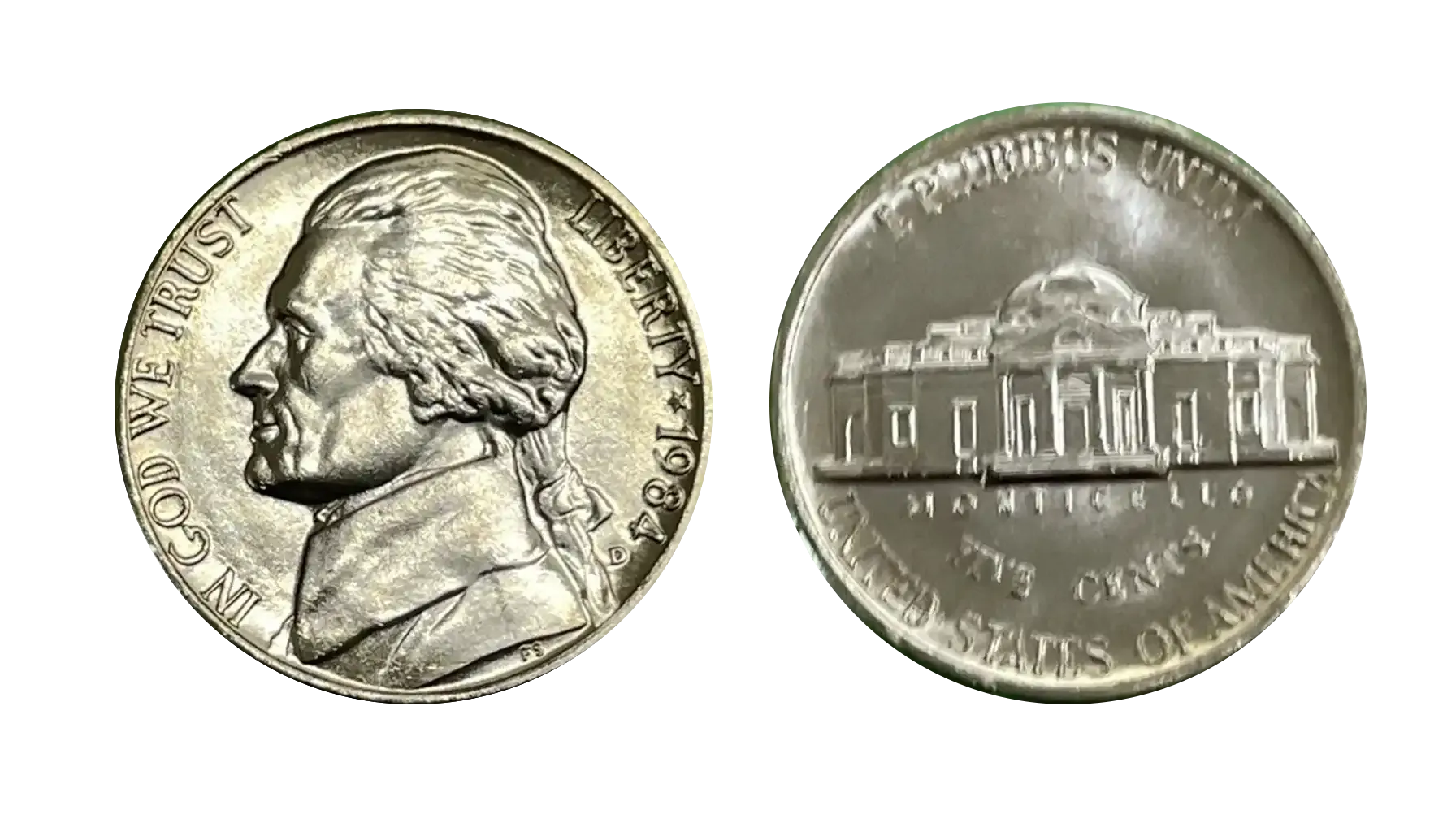
1984 P Nickel Value
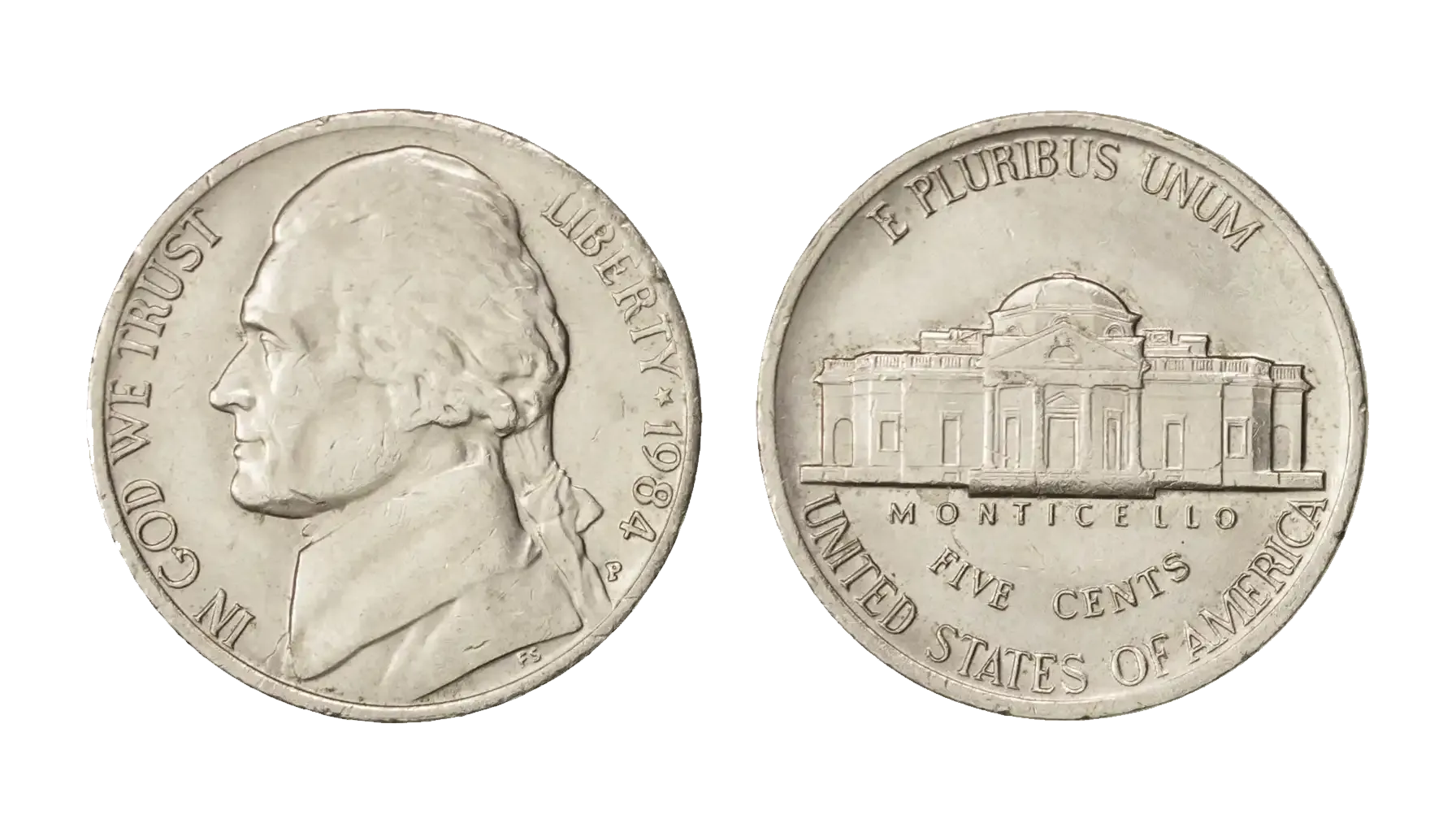
The Philadelphia Mint produced a massive quantity in the year, and made them very common in daily change. Years ago, the mint had the 1984 nickel no mint mark. These coins do not feature a mint mark or may carry a small P letter above the date.
746,769,000
Circulated – $0.05
Uncirculated – $1.00–$50.00+
Collectors look for the Full Steps (FS) designation on the reverse. While standard strikes are common, a 1984 nickel P with five or six clear steps on Monticello can command a premium, with MS67 FS examples reaching over $800 in past auctions.
1984 D Nickel Value
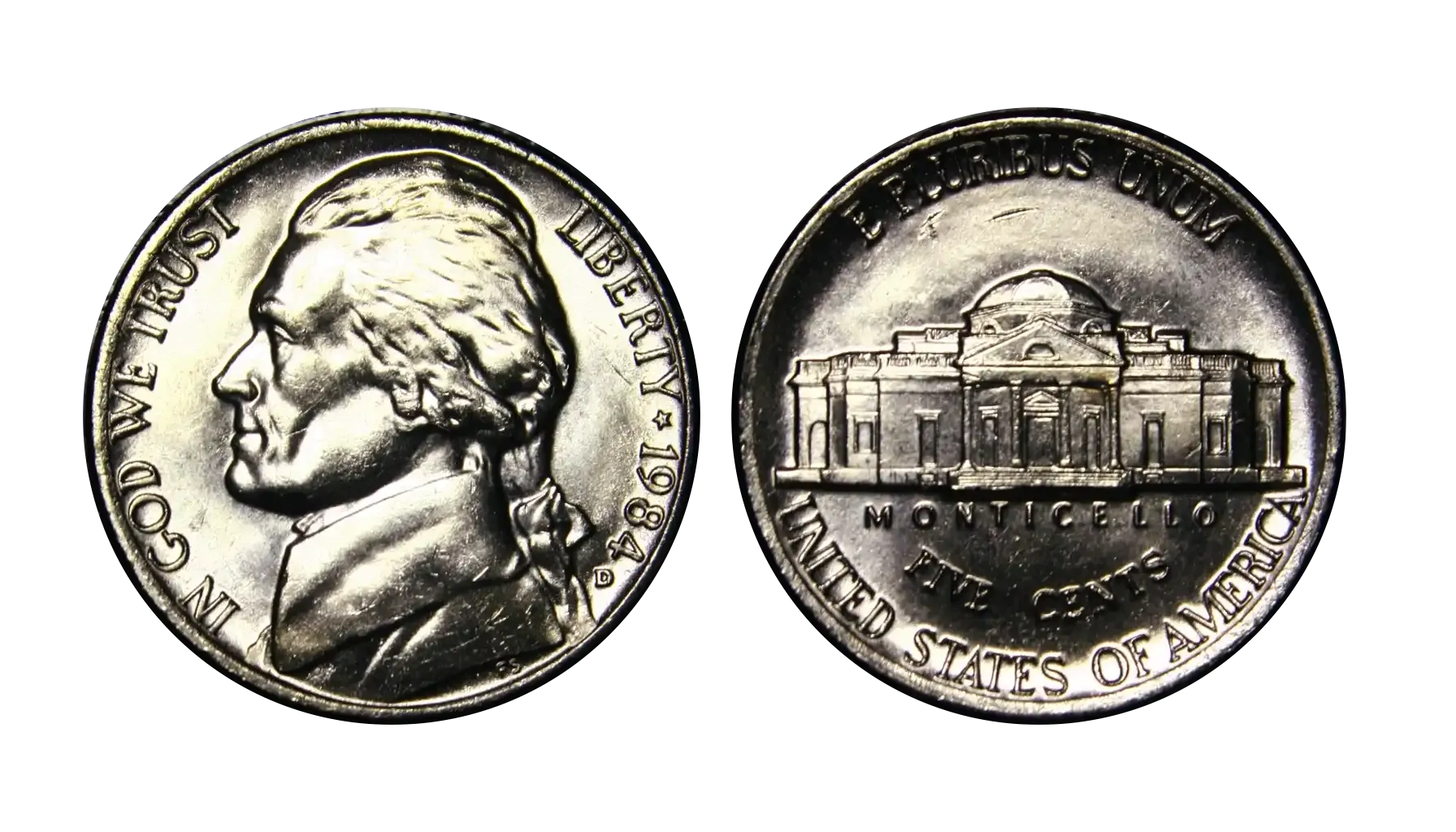
The Denver Mint also struck hundreds of millions of items for general circulation. You can identify these by the small "D" mint mark located to the right of the Monticello building on the reverse.
517,675,146
Circulated – $0.05
High-quality items MS-66+ are relatively scarce. The current auction record for a non-FS MS-67 item is $138, while Full Steps versions are higher.
1984-S Jefferson Nickel
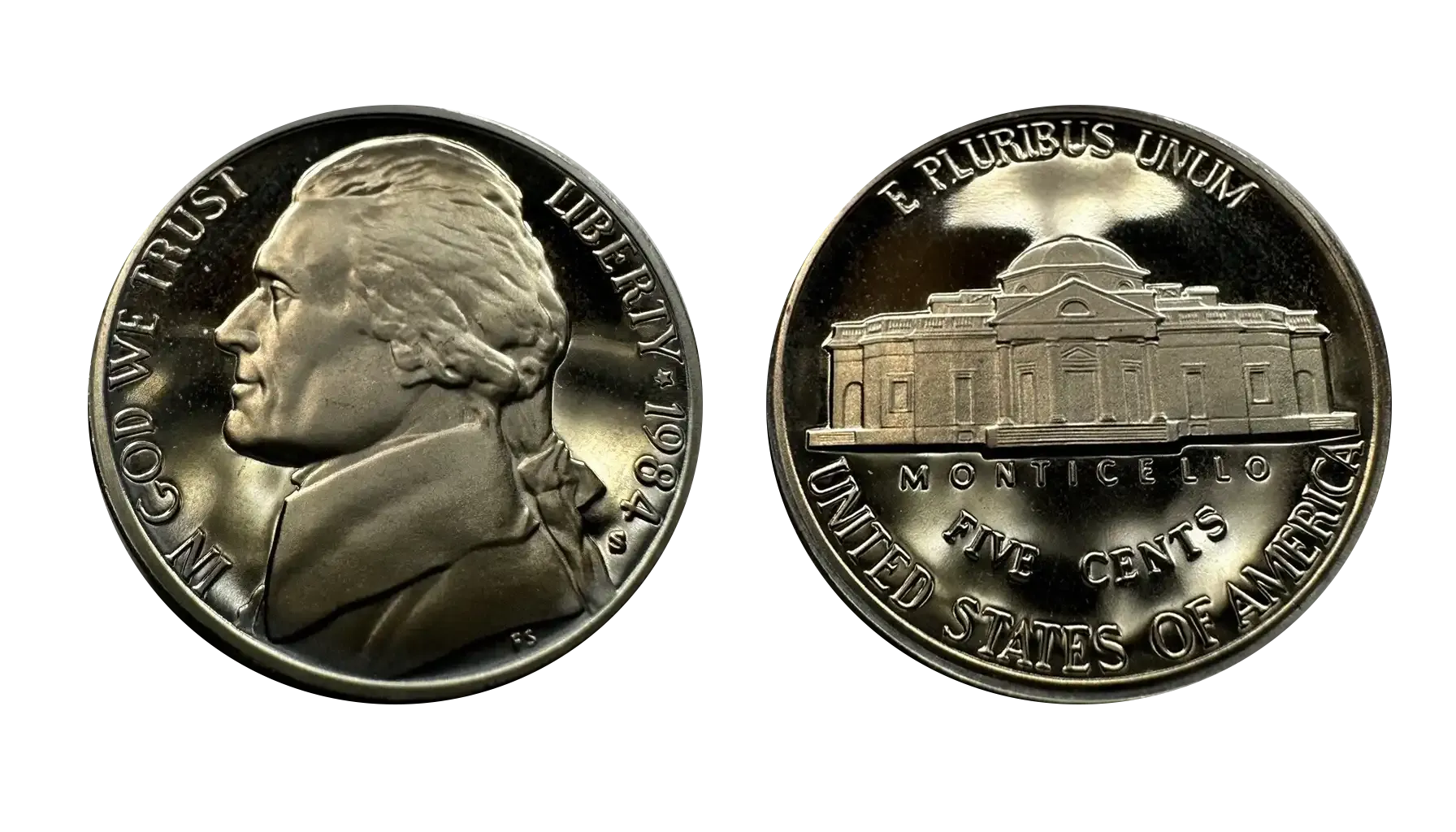
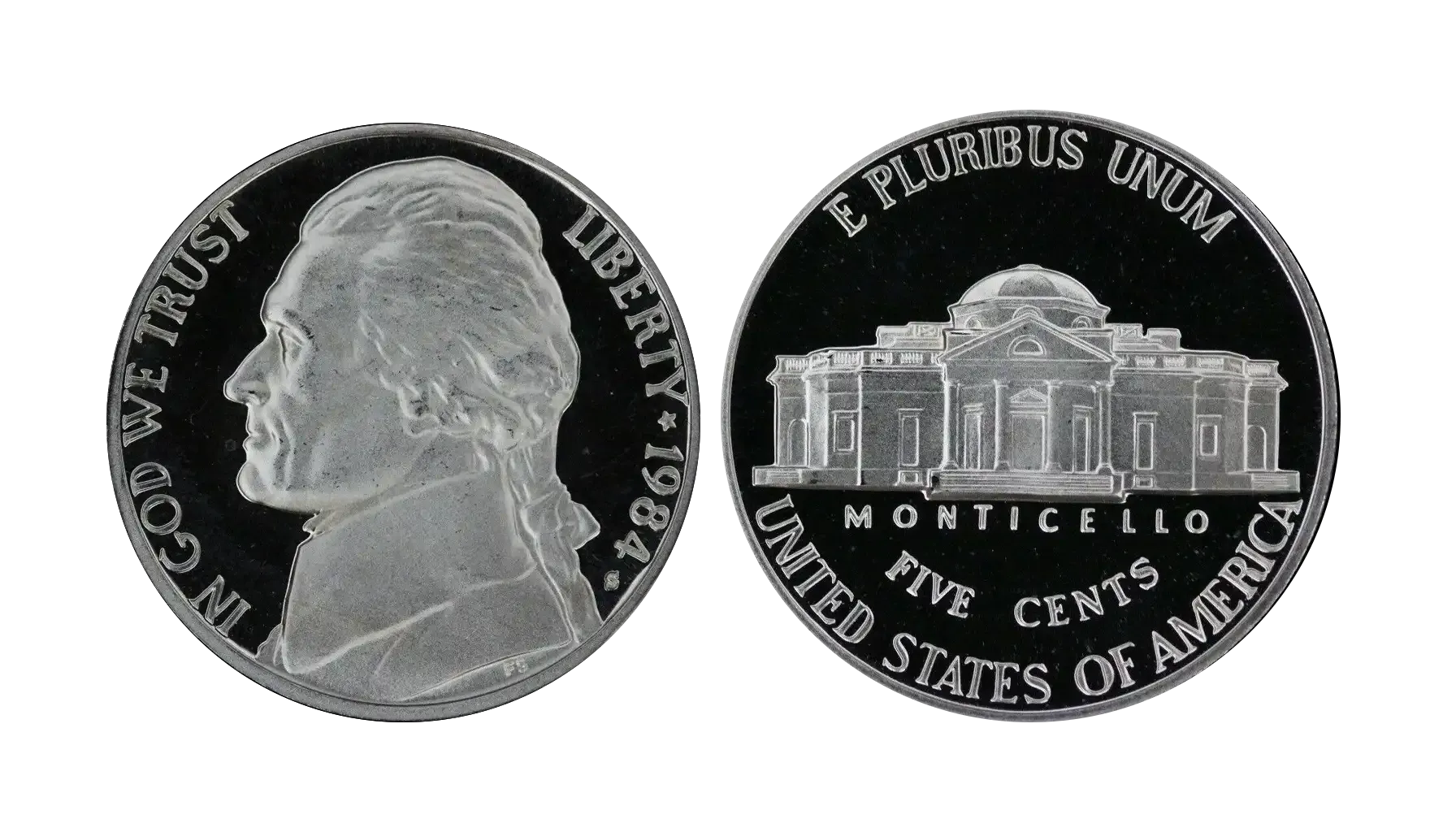
Unlike the Philadelphia and Denver issues, the San Francisco Mint only produced Proof versions in the year. These were sold in sets specifically for collectors and feature a mirror-like finish with frosted details.
3,065,110
Circulated – $0.25–$1.00
Proof – $3.00–$10.00
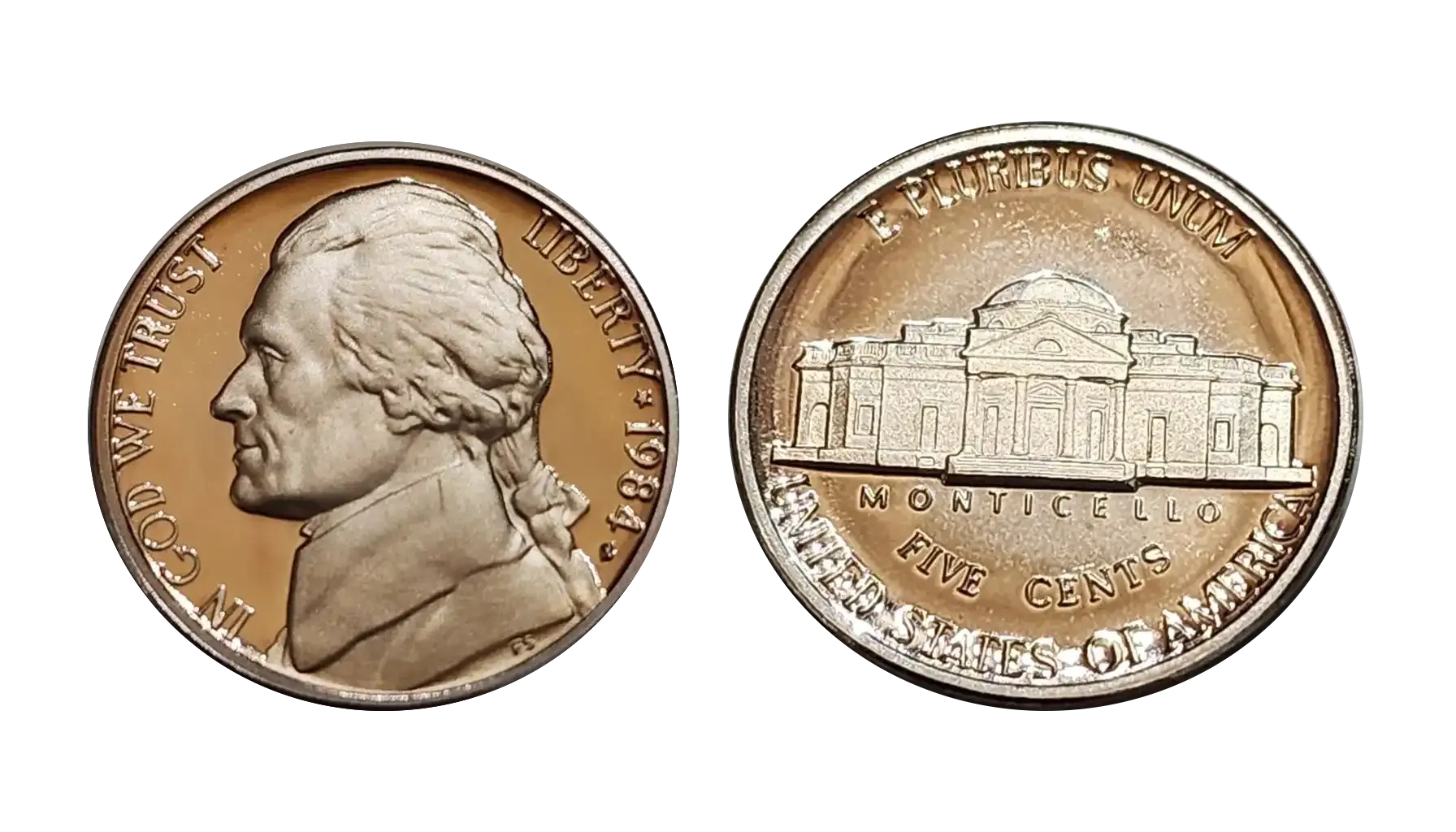
Nearly all S items are Deep Cameo (DCAM), which is a sharp contrast between the shiny background and the matte portrait. While common in lower proof grades, a perfect Proof 70 Deep Cameo is highly prized. Some pieces are selling for over $1,000 in specialized auctions.
For actual information, check the rare nickels worth money list.
1984 Jefferson Nickel Overview
Obverse – Thomas Jefferson portrait and culturally important inscriptions.
Reverse – inscriptions and Monticello.
Weight | 5.00 g |
Diameter | 21.20 mm |
Thickness | 1.95 mm |
Edge | Plain |
Designer | Felix Schlag |
Full Steps Items
In the actual market, the thickness and weight are standard, but the strike quality is where the value lies. Look at the reverse of your P or D item.
Suppose the steps leading up to Monticello are crisp and fully separated, with at least 5 or 6 clear steps. It receives the Full Steps designation. A standard item is worth face value, but a D MS-67 with Full Steps can reach $1,500+ at auction because the Denver mint struggled with strike clarity that year.
S Proof Items
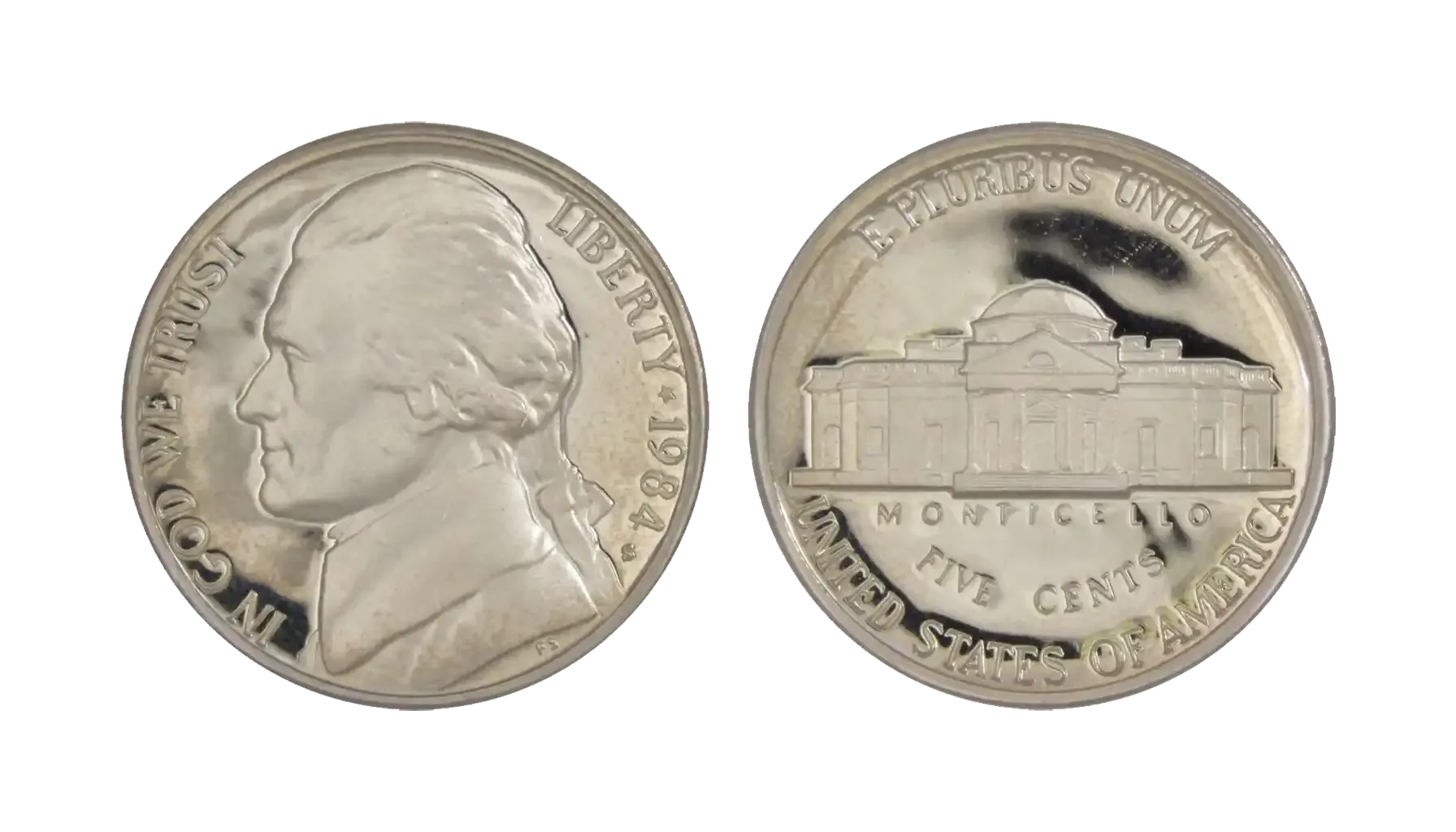
Most S proofs are Deep Cameo (DCAM), where Jefferson's portrait is frosted and white against a black mirror background. A PR-69 DCAM is common and worth under $15. However, a perfect PR-70 DCAM is a registry set coin that investors in the modern world are paying nearly $1,000 for.
1984 Nickel Value Chart
How much is a 1984 nickel worth in the modern world? From Philadelphia to San Francisco, prices for this year's coins vary widely. The difference can be dramatic for both beginner and professional numismatists. To understand what to expect when adding to your collection, consult the table below with current market values.
Grade | Philadelphia | Denver | San Francisco |
MS-63 & PR-63 | $1.50–$3.00 | $1.50–$3.00 | $2.00–$4.00 |
MS-65 & PR-65 | $8.00–$15.00 | $8.50–$12.00 | $6.00–$10.00 |
MS-67 & PR-67 | $40.00–$75.00 | $35.00–$60.00 | $15.00–$25.00 |
MS-67 with Full Steps | $350–$550 | $1,200–$1,800+ | - |
PR-70 DCAM | - | - | $650–$1,000+ |
You should compare prices with the 1985 item.
Is a 1984 Nickel Worth Anything in Circulation?
There are three scenarios that create true value:
Uncirculated Items
Full Steps
Defects
Item History
1982–1984
The early 1980s were a unique time for the U.S. Mint. To save money, the government ceased production of official Unc Mint Sets in 1982 and 1983. 1984 marked the triumphant return of the official Mint Set. Because collectors could not buy sets directly from the Mint in the two years prior, many 1982 and 1983 coins were lost to circulation.
Billion-Coin Mintage
By 1984, the United States was in a stage of robust economic expansion following the recession of 1982. As consumer spending surged, the demand for daily items skyrocketed.
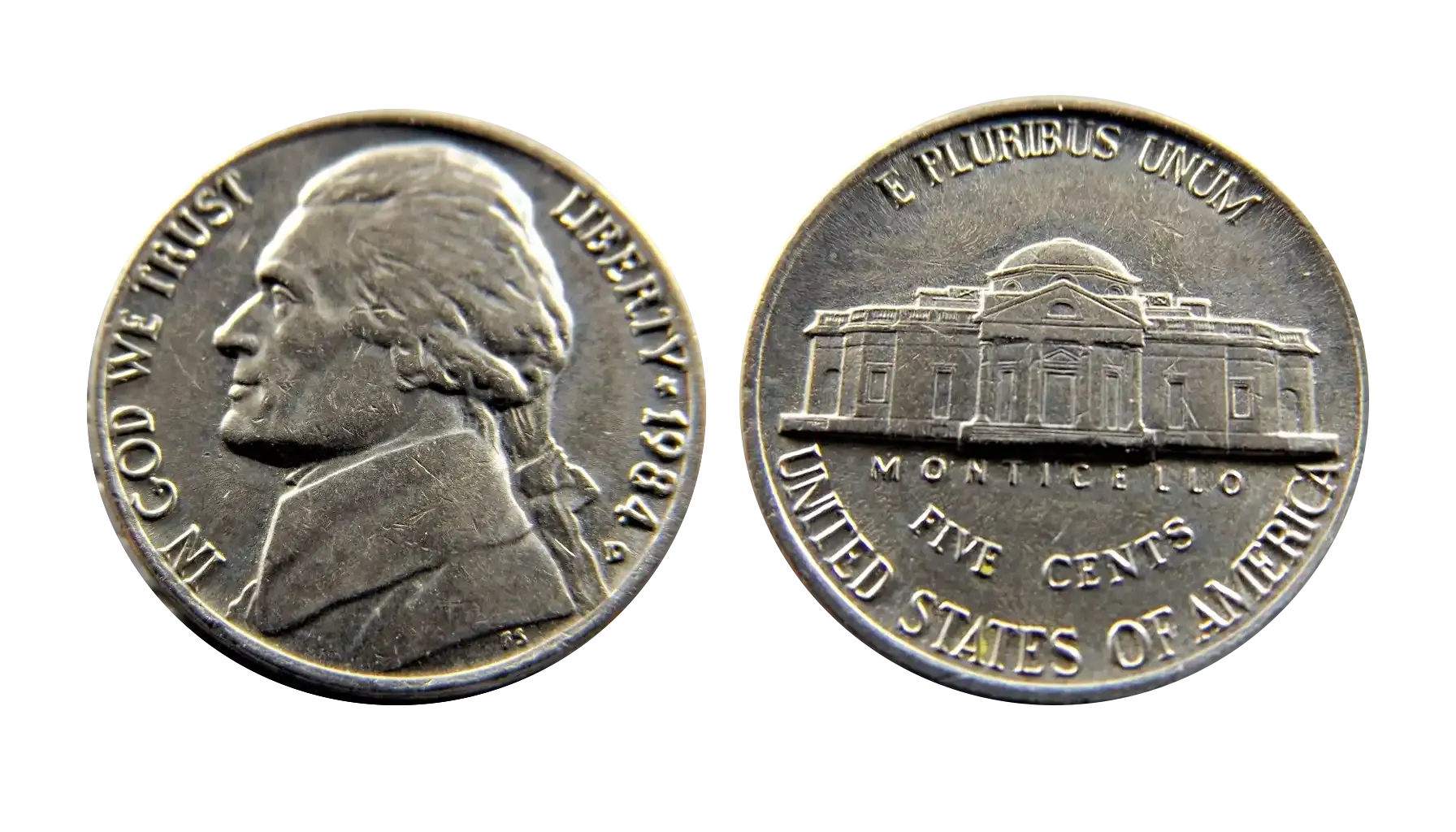
The Mint responded by striking nearly 1.3 billion items across Philadelphia and Denver. Because the Mint was focused on quantity to meet commercial needs, the quality of the strikes often suffered.
Transition in Mint Mark Placement
The 1980s represented the established new epoch of mint mark placement. This period solidified the visual layout we still see on the obverse of items today. Always check the 1984 P nickel error list with pictures.
The Last Years of the Manual Punch
In the mid-1980s, the U.S. Mint was still using a manual process to punch mint marks into the working dies. This makes 1984 part of the Repunched Mint Mark anomalies. Because a human had to physically hammer the P or D into the metal, mistakes often happened.
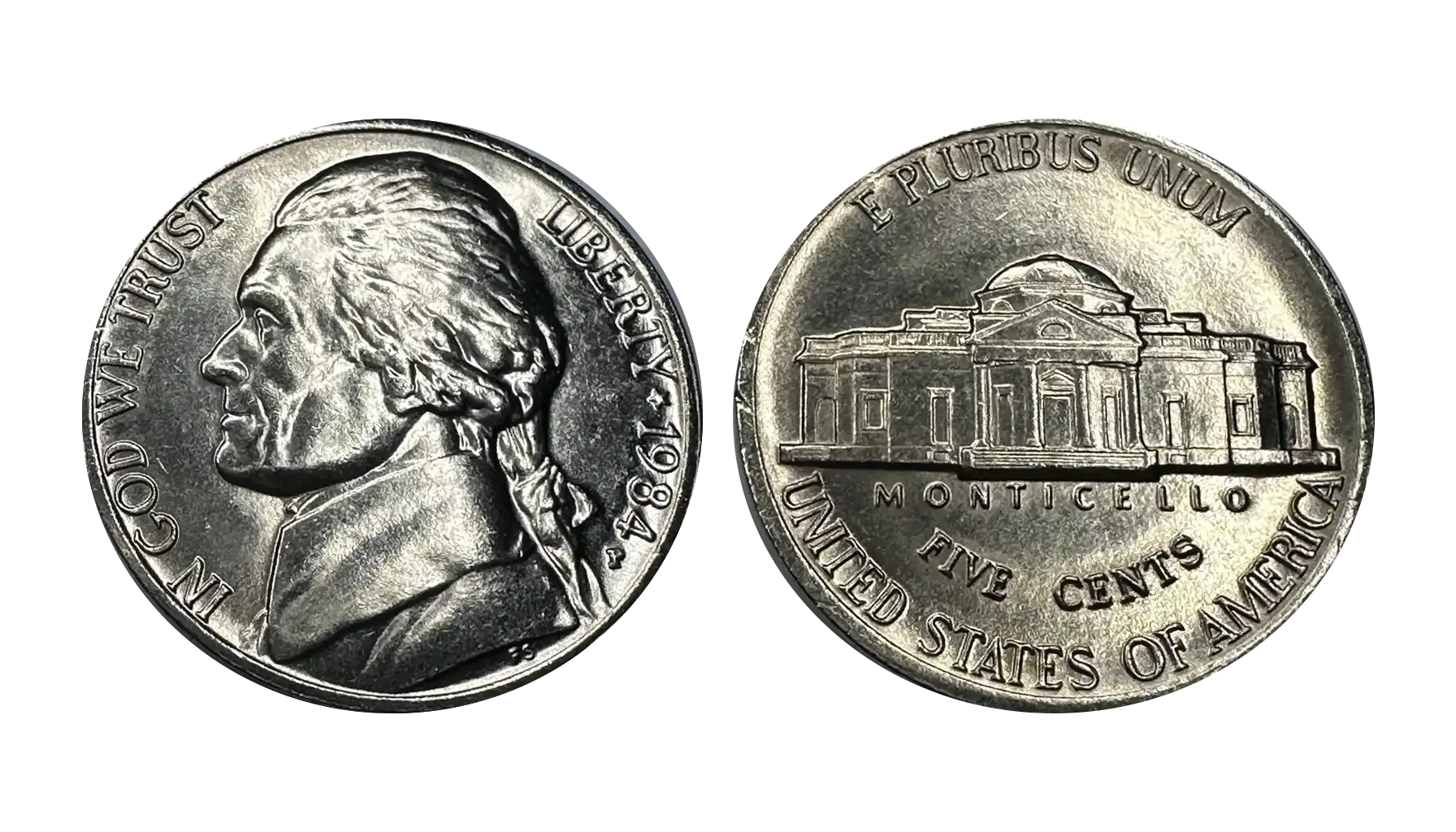
Compared to the 1990s, the Mint moved to a digital process where the mint mark was part of the master design. The process makes the specific types of errors found on pieces a relic of 20th-century manufacturing.
1984 Nickel Error List
Many P and 1984 D nickel error list listed as rare defects on auction sites are actually just heavily circulated or chemically damaged coins. If the doubling looks smeared or the coin feels bumpy rather than having crisp, raised lines, it is likely environmental damage rather than a mint error.
Type | Value | Rarity |
Double Denomination | $1,200–$2,500 | High+ |
Struck on Penny Planchet | $450–$900 | High |
50 % Off-Center with Date | $150–$350 | Medium+ |
Die Cud | $40–$130 | Medium |
Grease-Filled Die | $1–$5 | Low |
DDO & DDR
For identification, you should look for notching on the serifs of the letters and in the date.
$10–$300
Cuds and Die Breaks
As the dies aged in 1984, they developed cracks. Die cud is a large, raised blob of metal attached to the rim. A prominent cud at the base of Jefferson's bust or on the word Monticello can sell for $100+ dollars.
Die Cracks are raised lines running through the design. These are common and usually only add $1–$5 unless they are massive.
$50–$150
Improperly Annealed Planchets
Annealed Planchets or Black Beauty planchets, sometimes the heating process of the coin blanks went wrong, resulting in a dark, gunmetal gray, or burnt orange surface.
$10–$50
Rare 1984 Nickel Errors That Increase Value
Struck on Wrong Planchet
The defect occurs when a piece is accidentally struck on a blank intended for a penny or a dime.
P Struck on Penny Planchet, they are thin and copper-colored, 1984 copper nickel.
P Struck on Dime Planchet, they are smaller than a normal one and show incomplete designs at the edges.
Double Denomination is struck over a previously minted 1984 penny.
$400–$1,500+
Broadstruck with Full Steps
A Broadstrike happens when the collar fails and causes the metal to spread out wider and flatter than usual. The defect is worth about $50. If the coin also has Full Steps (FS), the rare 5 or 6 crisp lines on Monticello, the price skyrockets.
$400–$600
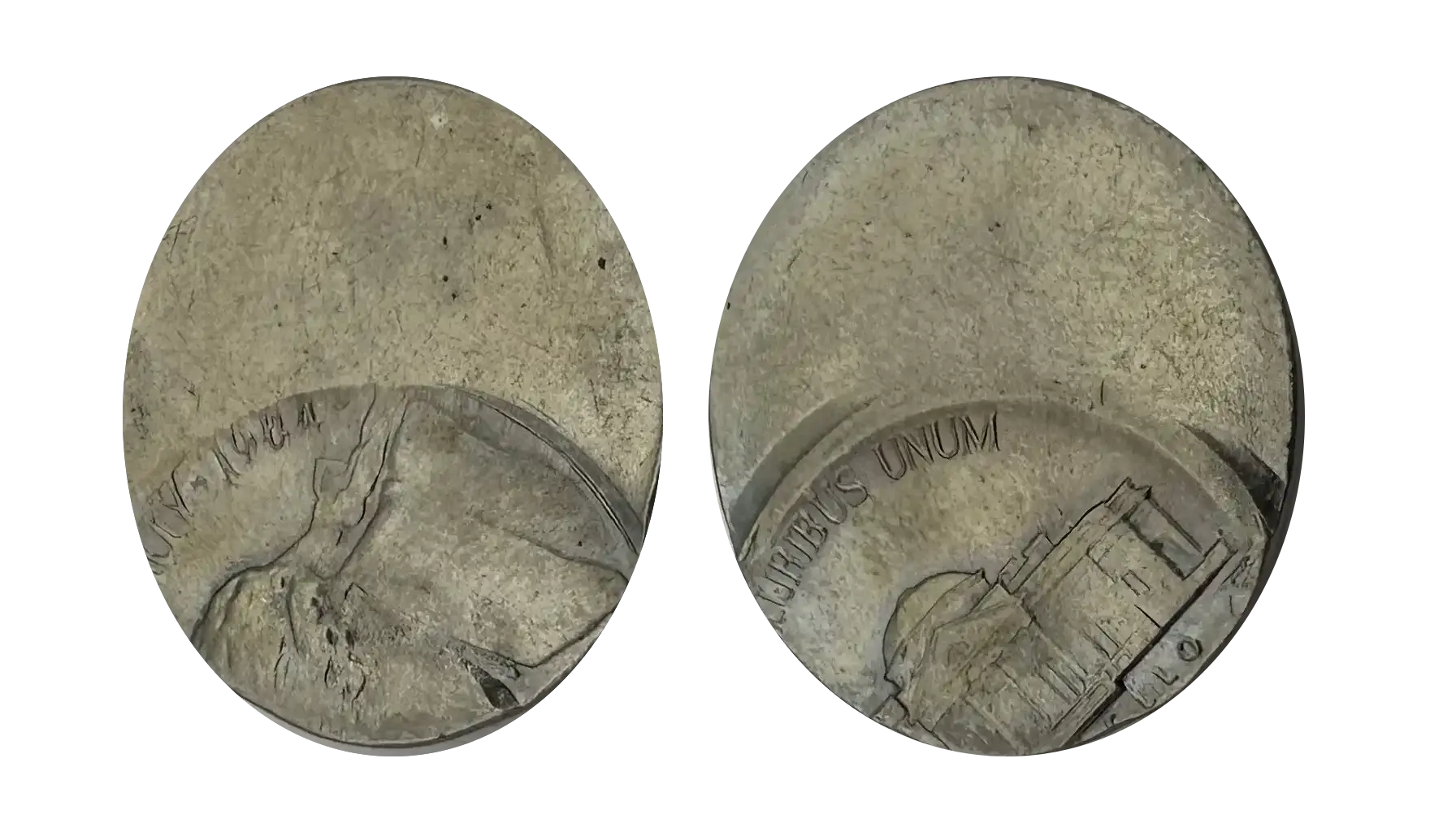
Off-Center Strikes
A visually striking error where the planchet was not centered during the strike. For identification, check that the part of the design is missing, leaving a blank crescent of metal.
$25–$300+
How to Identify a Fake Defect
With the high prices, be wary of Post-Mint Damage (PMD):
Squeezed Items – a piece looks flat and wide, but the edges are rough.
Acid Dipped – the item is thin and underweight, but the details are fuzzy.
Genuine doubling on a piece will always have sharp, raised edges. If the doubling looks flat and smeared, it is worthless machine doubling.
How to Identify a Valuable 1984 Nickel
Inspect Monticello's Steps
Check the Mint Mark
Examine the Edge
Look for Doubling
Weigh the Coin
Look for the obverse; six steps exist, but weak strikes often merge them into fewer visible lines. Search for doubled letters on inscriptions and the date, or Monticello. True doubled die errors show split, notched, or overlapping letters. Strike doubling appears as flat, shelf-like extensions and adds no bonuses.
A broadstrike error shows an expanded diameter with no collar imprint. The edge appears smooth and wider than standard. A clipped planchet shows a smooth, curved missing section with a corresponding weakness on the opposite rim.
Item as Investment
Circulated Coins – keep them for spending; they hold no collector premium.
Uncirculated Rolls are becoming harder to find in original bank wrapping. A mint-sealed roll can sell for $25–$40 today. How many nickels are in a roll?
Certified Gems – if you have an item that looks flawless, getting it professionally graded (FS) is the only way to realize the high values listed above.
FAQ
What 1984 nickel is worth money?
The S and Full Steps variants are worth a lot of money.
What are the errors on a 1984 nickel?
Not only do ordinary defects exist, such as DDO or Cuds.
What is the error on the 1984 nickels?
Look for the unique defect – the P struck on a dime planchet.
What makes a 1984 nickel valuable?
The two main factors that make the item valuable are Full Steps and rare defects.
How much is a 1984 D nickel worth?
The D item ranges from $1.50 to $1,800+ dollars on the online market.
What does a 1984 nickel weigh?
The basic item weight is 5.00 grams.
Is a 1984 nickel worth anything?
The answer is positive, but if you want more than face value, look for the rare anomalies.
What is the value of a 1984 P nickel?
The price reaches $550 dollars.

 Facebook
  X (Twitter)
  Pinterest
  LinkedIn