Contents:
The 1986 American Silver Eagle is the first coin of the series and a key date for many collectors. Its unique design and status of the first issue still explain a strong demand and desire of collectors to add a piece to their collections.
You can use our coin scanner app to check its worth (or any other piece) and read further to know other nuances explaining 1986 silver dollar value.
The 1986 American Silver Eagle — History and Background
The Silver Eagle Program started after the Liberty Coin Act of 1985 that offered a silver bullion coin supported by the government. The first 1986 Silver Eagle was made of one troy ounce of .999 silver and with a $1 face value. It quickly became popular among investors and set the standard for American eagle coin value in later years.
Symbolism Behind the Walking Liberty Design
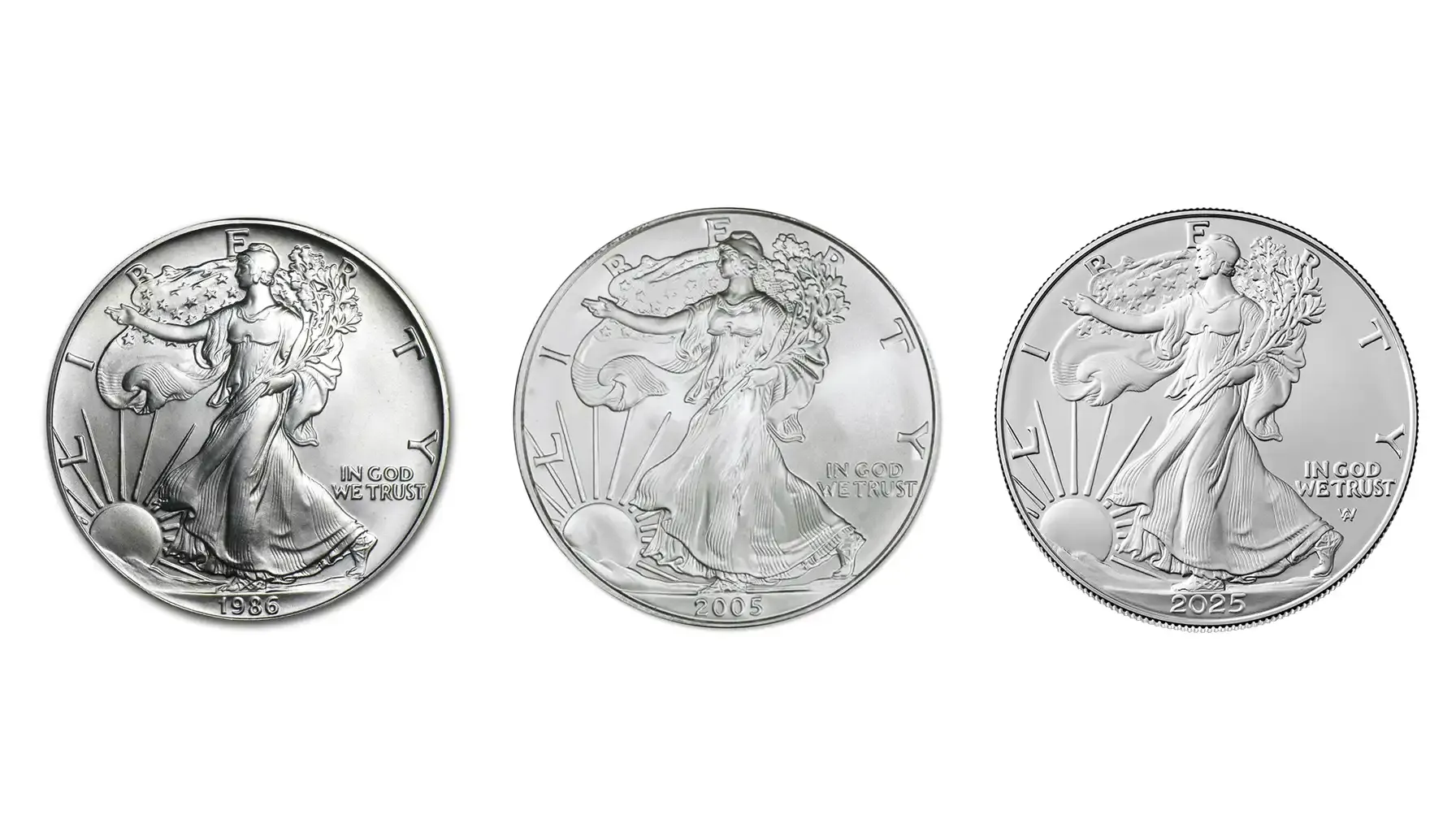
Adolph A. Weinman created the design for the new silver dollar. On the obverse, Lady Liberty walks toward the rising sun with the American flag around her shoulders. Coin’s reverse shows John Mercanti’s eagle, holding a shield, arrows, and an olive branch.
These symbols mean:
Liberty and progress — moving toward a new day.
Strength and unity — the flag and eagle.
Peace and protection — the olive branch and arrows.
The design reminded people of older U.S. silver dollars and quickly attracted attention of collectors and investors.
“The Silver Eagle’s … design, created by the talented Adolph A. Weinman … captures the grace and strength of the American spirit. This design has become a lasting symbol of freedom and resilience”.
— Unnamed article “The American Silver Eagle & Adolph A. Weinman's Legacy”
American Standard Gold
Mintage Details from Philadelphia and San Francisco
The first issue was released in two Mints. Philadelphia produced bullion coins without a mint mark, while San Francisco (S mint mark) produced Proof versions. These differences are easier to understand if you know how coins are made. This separation helped to spread the coins more widely and made the Proof version rarer.
Approximate 1986 Mintage:
Bullion (Philadelphia): about 5.4 million
Proof (San Francisco): about 1.4 million
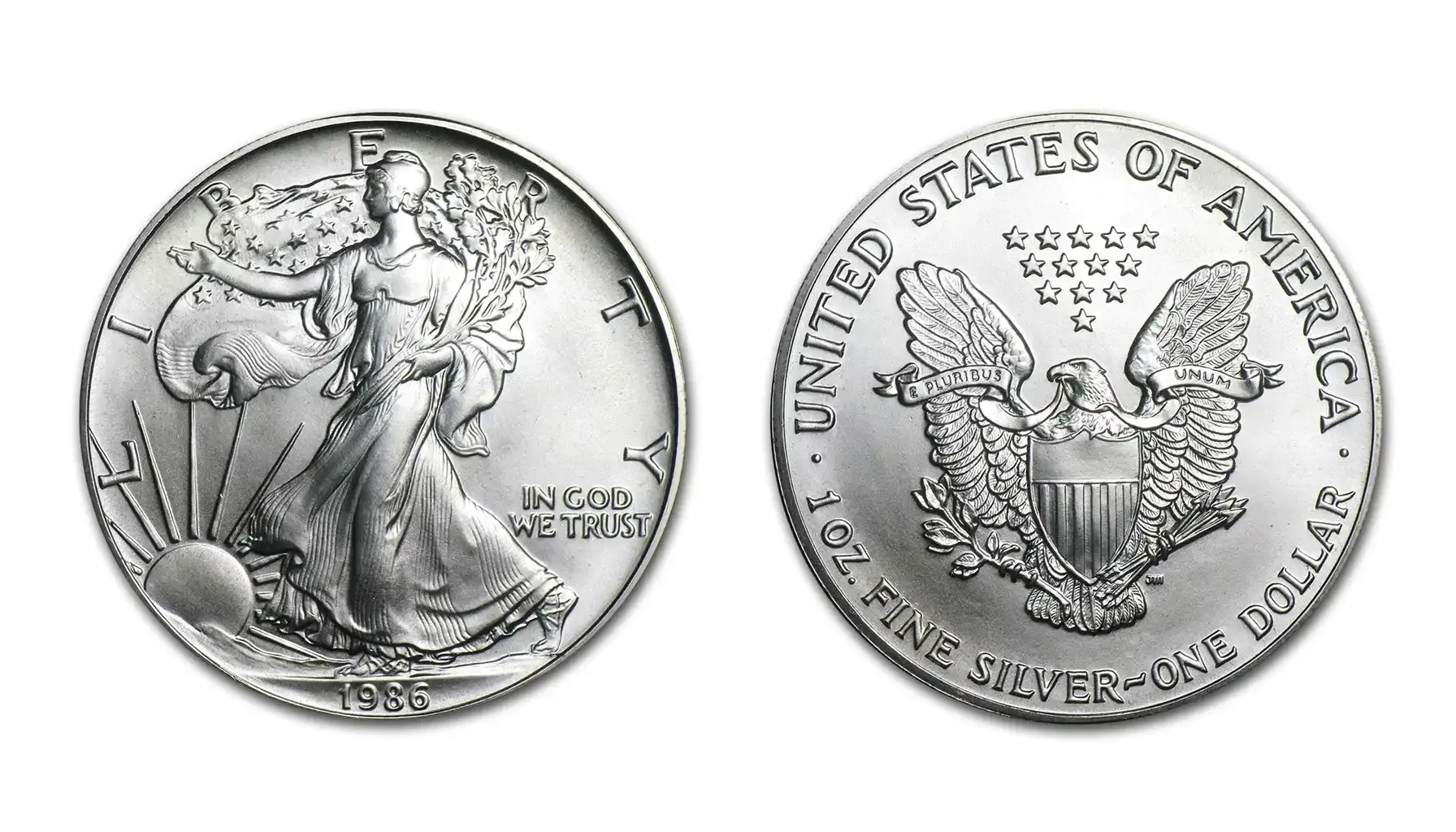
1986 Silver Eagle Specifications and Design Details
Composition, Weight, and Purity
The series meets clear standards (each specimen contains 1 troy ounce of .999 fine silver), which makes it easy to compare Silver Eagle coin value with other 1 oz bullion coins. These minting standards have remained unchanged since 1986.
Specification | Details |
Metal | .999 Fine Silver |
Weight | 1 troy ounce (31.103 g) |
Diameter | 40.6 mm |
Thickness | 2.98 mm |
Face Value | $1 |
Edge | Reeded |
Distinguishing Features Between Bullion and Proof Versions
Both have the same design and silver content, but they serve different purposes and have different finishes.
Bullion Version (for Investors)
Made for the precious metals market, have a matte finish and no mint mark. Coins are usually shipped in bulk, so some can have typical signs of handling. Most collectors treat them as a silver asset, i.e. pieces are valued primarily for silver content rather than condition.
Proof Version (for Collectors)
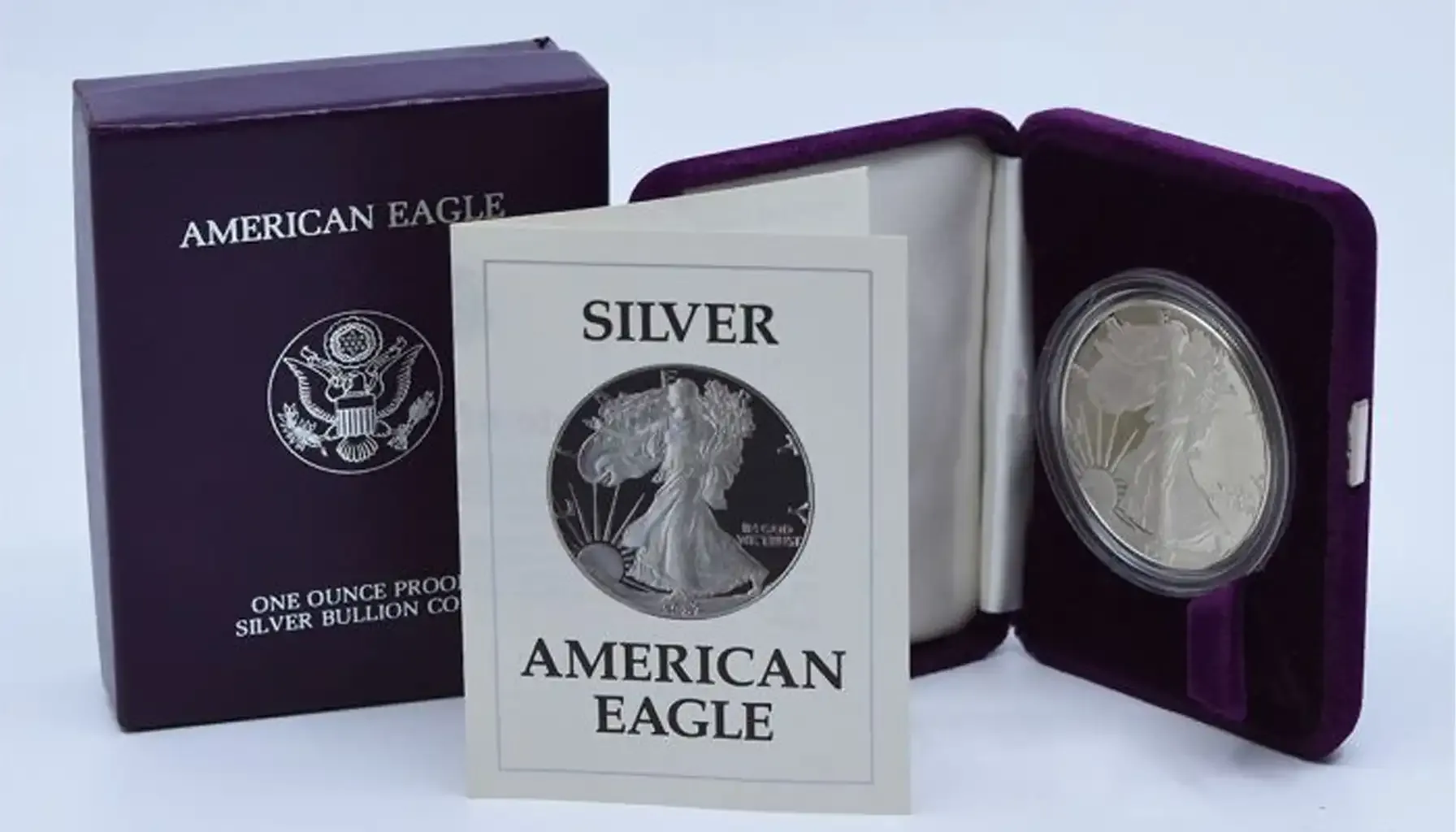
Made with special polished dies to create a mirror-like surface with matte (frosted) design elements. All 1986 Proofs have the “S” mint mark, and each coin comes in a presentation case with a certificate (to preserve condition and support higher 1986 Liberty silver dollar value over time).
The same proof style is used in special proof sets, which are also popular with collectors.
Notable Characteristics Unique to the 1986 Issue
As the first release of the series, these dollars hold a special place. Many collectors are interested in the issue to complete a collection or to own a piece of the modern Silver Eagle era.
Notable points for the 1986 issue:
First-year status boosts demand and long-term interest.
San Francisco Proofs often show sharper detail and cleaner mirrored fields.
Bullion pieces (Philadelphia) may show minor surface marks due to early mass-production handling.
Slight strike variations are found, as the Mint adjusted to the new program.
1986 Silver Eagle Value and Price Chart
Current Values by Grade and Condition (BU, MS, Proof)
American Eagle silver dollar value depends on the type and condition. Please refer to the Silver Eagle price chart to check current values.
Type / Grade | Typical Value (USD) |
Bullion (Uncirculated / BU) | $30 – $45+ |
MS65 | $55 – $85+ |
MS66 | $90 – $140+ |
$160 – $260+ | |
Proof (uncertified, with COA and box) | $60 – $120+ |
PR69 / PF69 | $90 – $180+ |
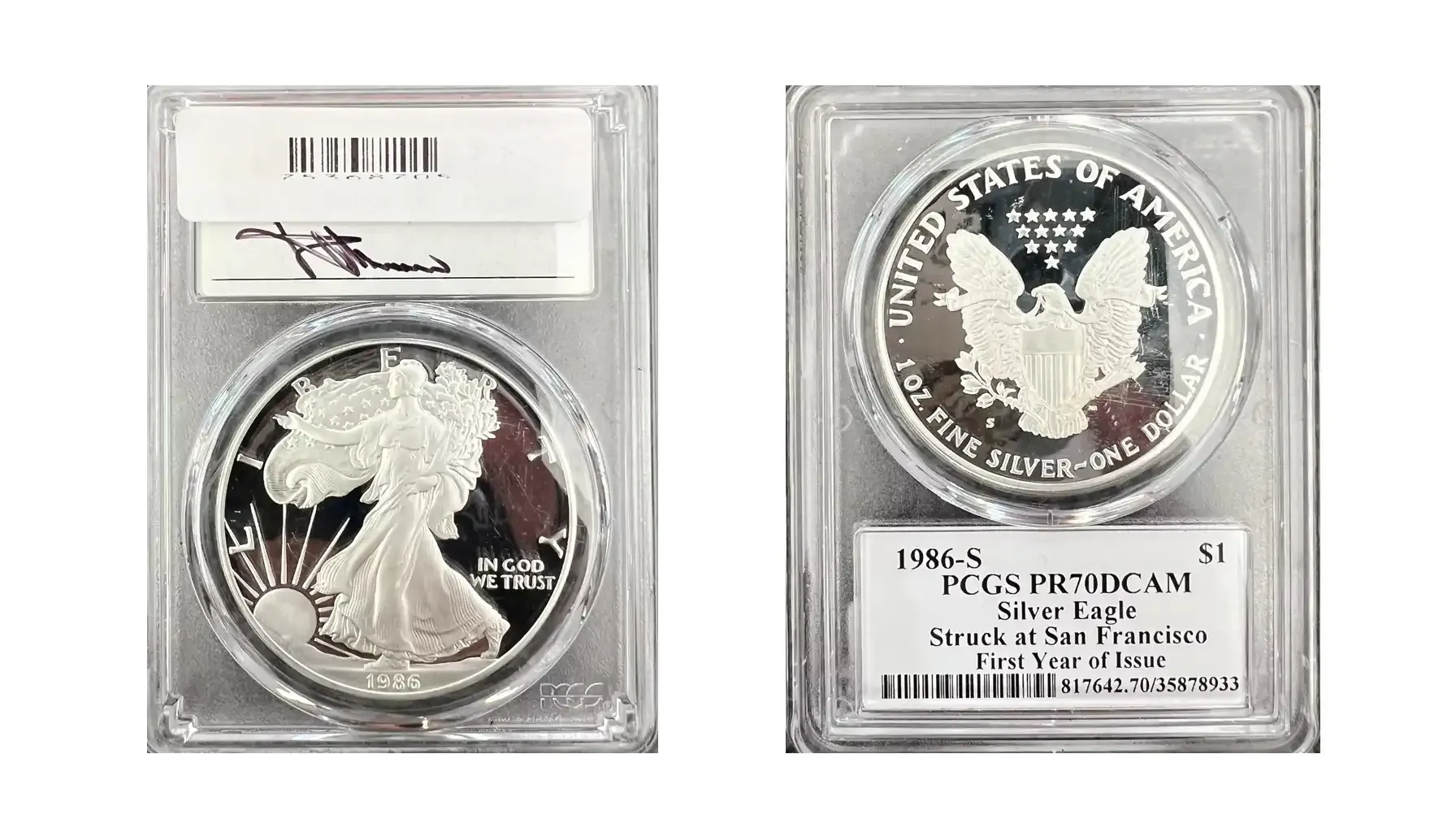
PR70 / PF70 | $900 – $1,600+ |
*All numbers are actual to October 2025. Check the market before buying or selling or use tools to verify current prices.
Bullion Value vs Numismatic Value Explained
Bullion coins prices (for collectors) follow the market price of silver, i.e. they rise and fall with changes of metal costs. Proof coins for collectors, so their value is based on condition, mint mark, and scarcity. Proof coins in high grades (with original packaging) can sell several times more than their silver content.
Recent Auction Results and Collector Trends
Coin | Price (USD) | Grade | Date | Auction |
1986 Silver Eagle $1 | 21,150 | PCGS MS70 | 02/07/2013 | Heritage Auctions |
1986 (S) Silver Eagle $1 | 1,990 | NGC MS70 | 03/16/2023 | eBay |
1986 Silver Eagle $1 | 2,040 | PCGS MS70 | 06/26/2024 | Stack's Bowers |
*These auction records show exceptional examples in top grades. They are not typical market prices and should not be used as standard value references.
These results confirm how presentation, condition, and grading can influence value. Most 1986 dollar pieces reach only typical market ranges, but exceptional examples continue to attract strong interest and can achieve higher prices.
Authenticity and Grading Insights
A real 1986 dollar has sharp details and matches all official minting characteristics: 31.1 g, 40.6 mm in diameter, and a clean reeded edge. The strike looks crisp, with clear lines in Liberty’s gown and feathers on the eagle.
Simple checks that can help you:
Weight and size: match exact parameters, no noticeable deviations
Magnet and ice tests: pure silver is not magnetic; silver coin can melt the ice (just put it on the cube and watch the reaction)
Design quality : no unclear lettering or blurred details; no mint mark for bullions and “S” for proofs
The same principles applied when detecting fakes. Counterfeits usually appear as plated base-metal coins or altered bullions. They may have wrong parameters, incorrect mint marks, uneven edges, or blurred design details.
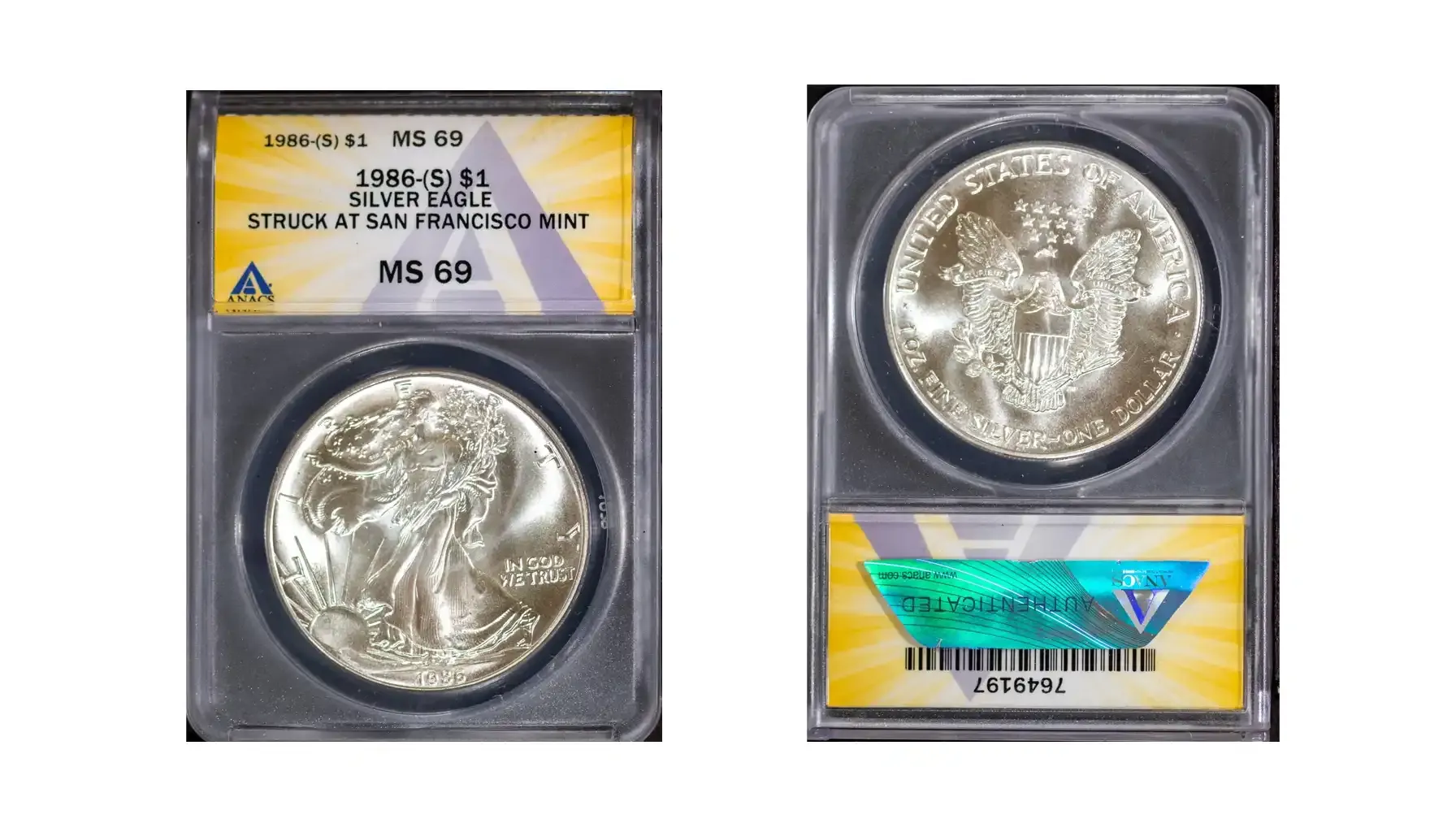
But the most reliable way to avoid counterfeits is professional certification. Grading services like PCGS, NGC, or ANACS verify authenticity, determine its grade and seal the coin.
Benefits of Professional Grading:
Verified authenticity and condition.
Easier resale and auction listing.
Protection against paying too much for unverified coins.
Documentation of rarity and grade for insurance or long-term tracking.
Collectibility and Investment Outlook
Why is the 1986 release a collector favorite? The classic Walking Liberty design and the first year issue status keep interest steady. Even now proofs with original packaging show the strongest demand.
Long-term Performance and Silver Price Correlation
Bullion coins follow silver prices, while costs for certified and Proof examples are more stable during metal drops thanks to collector demand. In general, value trends remain steady, non-speculative.
Investment Considerations
The 1986 release suits both collectors and investors with long-term strategy. Clean BU coins and high-grade Proofs offer the best potential.
Things to note:
First-year status supports value
Condition and grading matter most
Top-grade Proofs are sought-after
Bullion reacts to silver market changes
Some collectors prefer to hold both a Proof and a bullion example to balance numismatic and metal value.
Care, Storage and Display Tips
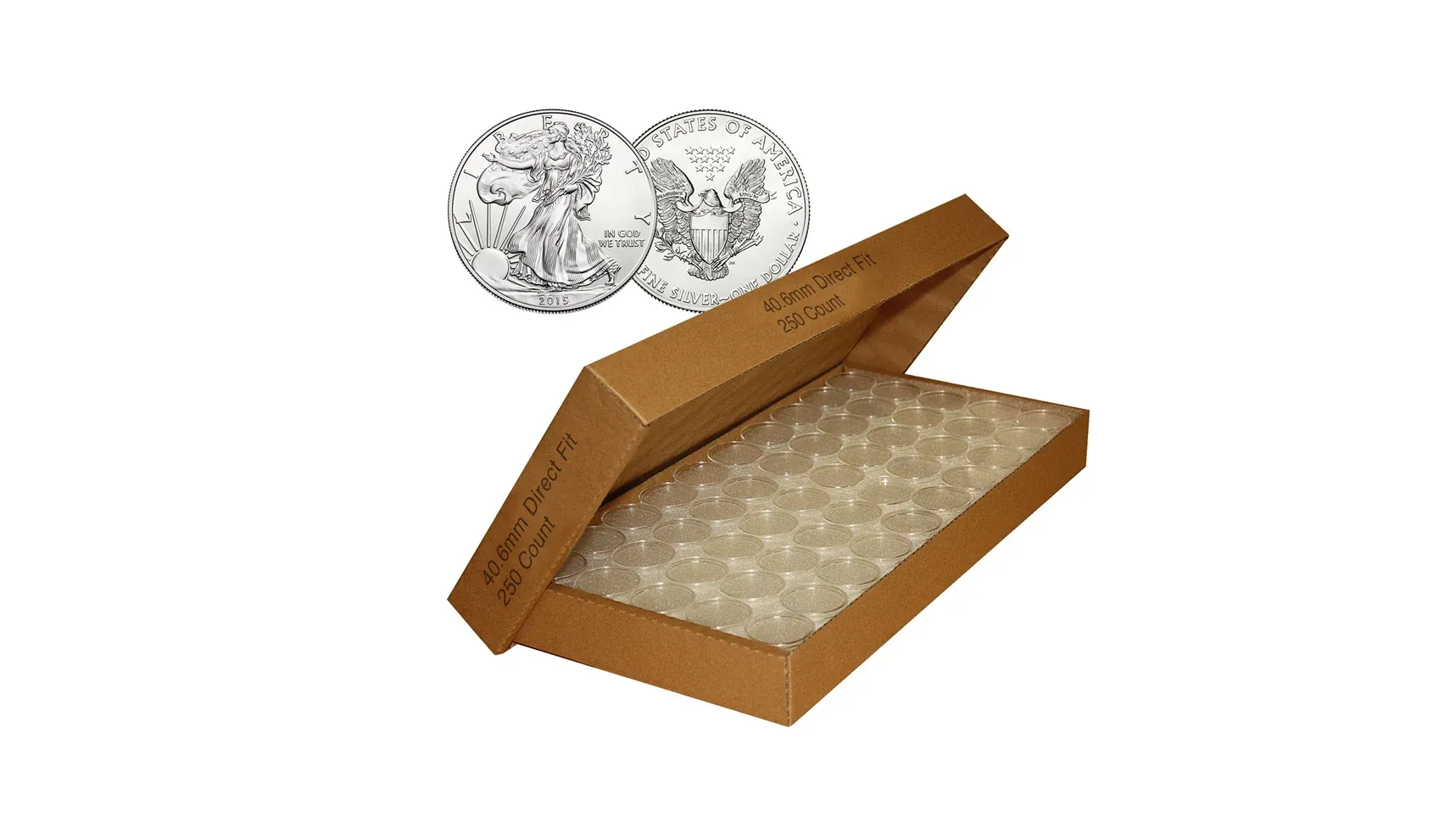
Preventing Tarnish and Maintaining Condition
Silver Silver oxidizes quickly, reacting to changes with air, moisture, and touches. To save the silver pieces’ condition:
Hold coins by the edges
Store in a dark, dry, place and use silica gel to control humidity
Never polish — it harms the finish
Recommended Storage Materials and Capsules
Containers or special holders are the must have. They keep the metal stable and prevent chemical contact:
Airtight capsules for long-term storage
Mylar flips or Mint packaging
PCGS/NGC/ANACS slabs for graded coins
Avoid PVC, it causes residue and discoloration that cannot be removed or cleaned
And if you are going to display your Eagles, remember that presentation matters, but safety comes first. Safe options are clear capsules and albums, slab storage boxes for graded sets.
FAQ
How much is a 1986 silver eagle worth today?
Bullion examples (from Philadelphia Mint) are sold at a price slightly above silver spot. Proof and graded coins can bring more profit. For quick reference check an American Silver Eagle value chart above or use Coin ID Scanner to see the current market worth of your specimen.
What makes the 1986 American Silver Eagle valuable?
It is the first release in the Silver Eagle series. The piece has key-date status, classic design, so collectors’ interest rises, especially if the coin is in high grade with original Proof packaging.
Where was the 1986 Silver Eagle minted?
Bullion coins were minted in Philadelphia and have no mint mark. Proof coins were struck in San Francisco and carry the “S” mark.
What’s the difference between Proof and Bullion Silver Eagles?
Bullion pieces focus on metal value, have a standard finish and suit better for investors. Proofs have mirror-like surfaces, come in presentation cases and are intended for collectors (can bring higher premiums).
Is the 1986 Liberty Silver Dollar the same as the Silver Eagle?
Yes, this name also refers to this specimen. The coin has a $1 face value and shows walking Liberty in the obverse. Both terms describe the same issue.
Is the 1986 Eagle Worth Your Attention?
Yes. It is the first issue in the series; it has stable demand and clear pricing logic. It is suitable for people collecting the series pieces, strengthening their portfolios with key issues, or looking for a liquid silver dollar with a proven history. Remember that the best results show uncirculated BU and certified Proof versions with a package.
Practical Help for Collectors Today
A wise practice is to compare prices before buying and to check the details and conditions of coins. So, try Coin ID Scanner app to quickly receive historical and minting background, current values and to store collection data conveniently. Save your time and avoid overpaying smartly.

 Facebook
  X (Twitter)
  Pinterest
  LinkedIn