Contents:
These days, stumbling upon the 1974 Eisenhower dollar in circulation is almost impossible (and if you are lucky enough to find one, it is likely from someone who spent it without realizing its collectible appeal). The large, heavy coins were never favored when it came to regular transactions, and most of them have long since been utilized in casinos, melted down, or hidden in private collections.
Anyway, are there any features that identify this coin as rare, and how much is a 1974 dollar coin worth?
Key Factors That Determine Your 1974 Eisenhower Dollar Value
When people ask about the worth of a 1974 dollar coin, the answer usually starts with identifying the mint mark and metal value.
Clad vs. Silver: The Core Composition Divide
Metal composition is the first and most reliable value driver. It creates a clear split between clad and silver issues.
The clad Eisenhower dollar 1974 contains no precious metal. As a result, market prices for clad Ikes are anchored close to face value. Only coins in unusually high Mint State, with clean fields and minimal contact marks, rise above that baseline.
Silver Eisenhower dollars, struck only at San Francisco in 1974, contain 40% silver. This places them on a different value scale. Even worn or lightly handled examples retain a floor price tied to their silver content. When silver prices rise, these coins often increase in value without any change in collector demand; when silver falls, prices soften but rarely drop below melt value.
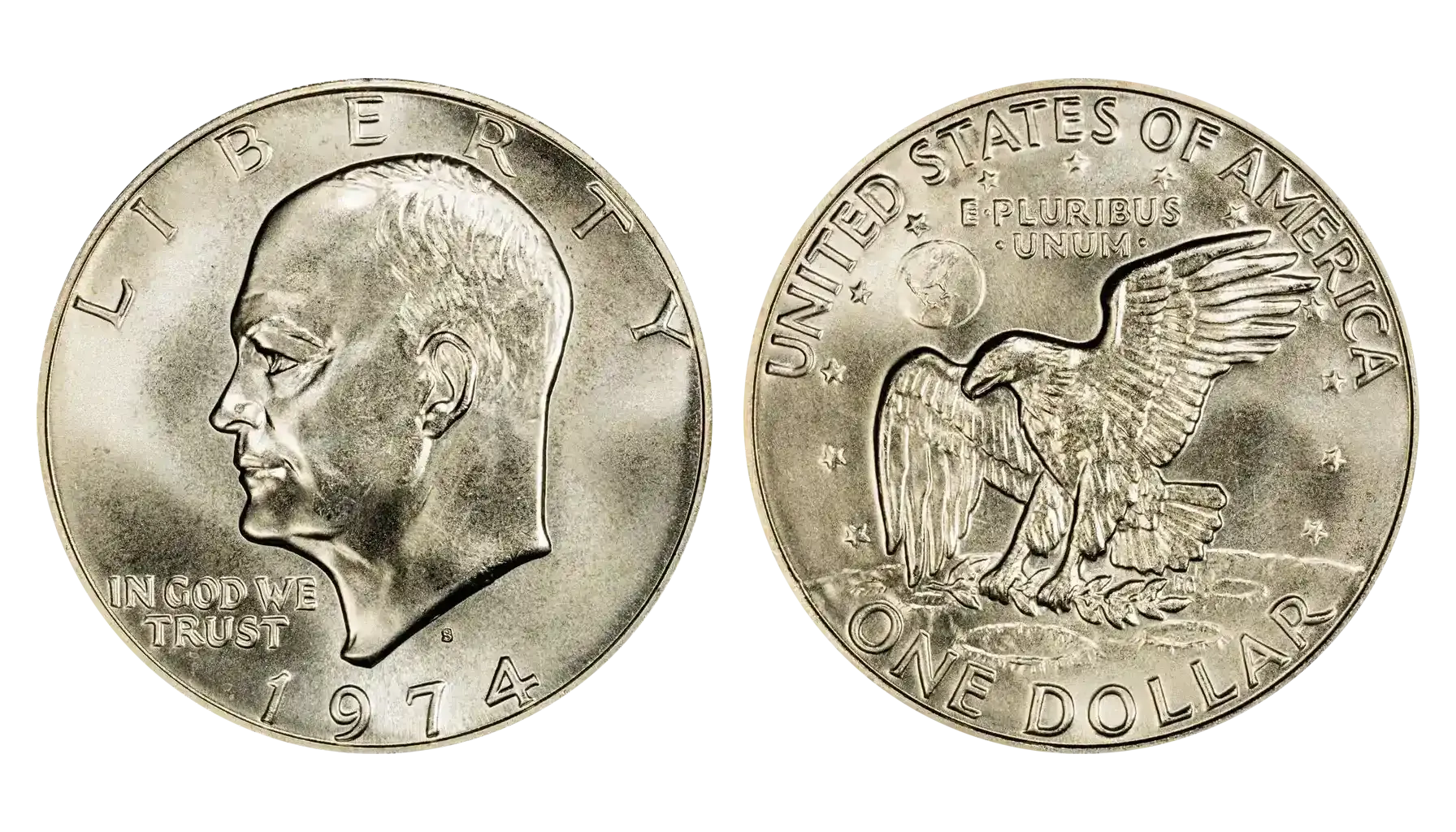
Mint Marks Explained: P, D, and S
This coin was minted by three main facilities in the US, i.e., Denver, San Francisco, and Philadelphia Mint offices. However, the varieties and quantities differ from mint to mint.
Mint & Type | Mintage | Composition | Purpose |
1974 Eisenhower Dollar No Mint Mark | 27,366,000 | Copper-Nickel Clad | Circulation |
1974 Silver Dollar D | 45,517,000 | Copper-Nickel Clad | Circulation |
1974 S Silver | 1,900,156 | 40% Silver-Clad | Collector Coins |
1974 S Silver Proof | 1,306,579 | 40% Silver-Clad | Collector Coins |
1974 S Clad Proof | 2,612,568 | Copper-Nickel Clad | Collector Coins |
As one may see, San Francisco struck both clad and silver versions, but all were intended for collectors rather than circulation. What is more, proofs have special attributes that may boost the 1974 Eisenhower silver dollar value even more.
Although all specimens share the same design, the mint mark and composition create clear value differences. The key distinction is between circulation clad issues (P, D) and collector silver issues (S) struck by the United States Mint.
1974 Silver Dollar Value by Mint Mark and Type
1974-P (Philadelphia) Eisenhower Dollar
The Philadelphia issue carries no mint mark and was struck only in copper-nickel clad for circulation.
1974 one dollar coin value no mint mark
Circulated: $1–3
MS63–MS64: $6–15
MS65 and higher: $25+ (condition-sensitive)
Most examples show bag marks due to large-size handling. Premiums appear only for clean, well-struck coins. The Eisenhower dollar from 1974 shows a wide value range, driven more by composition and condition than by age.
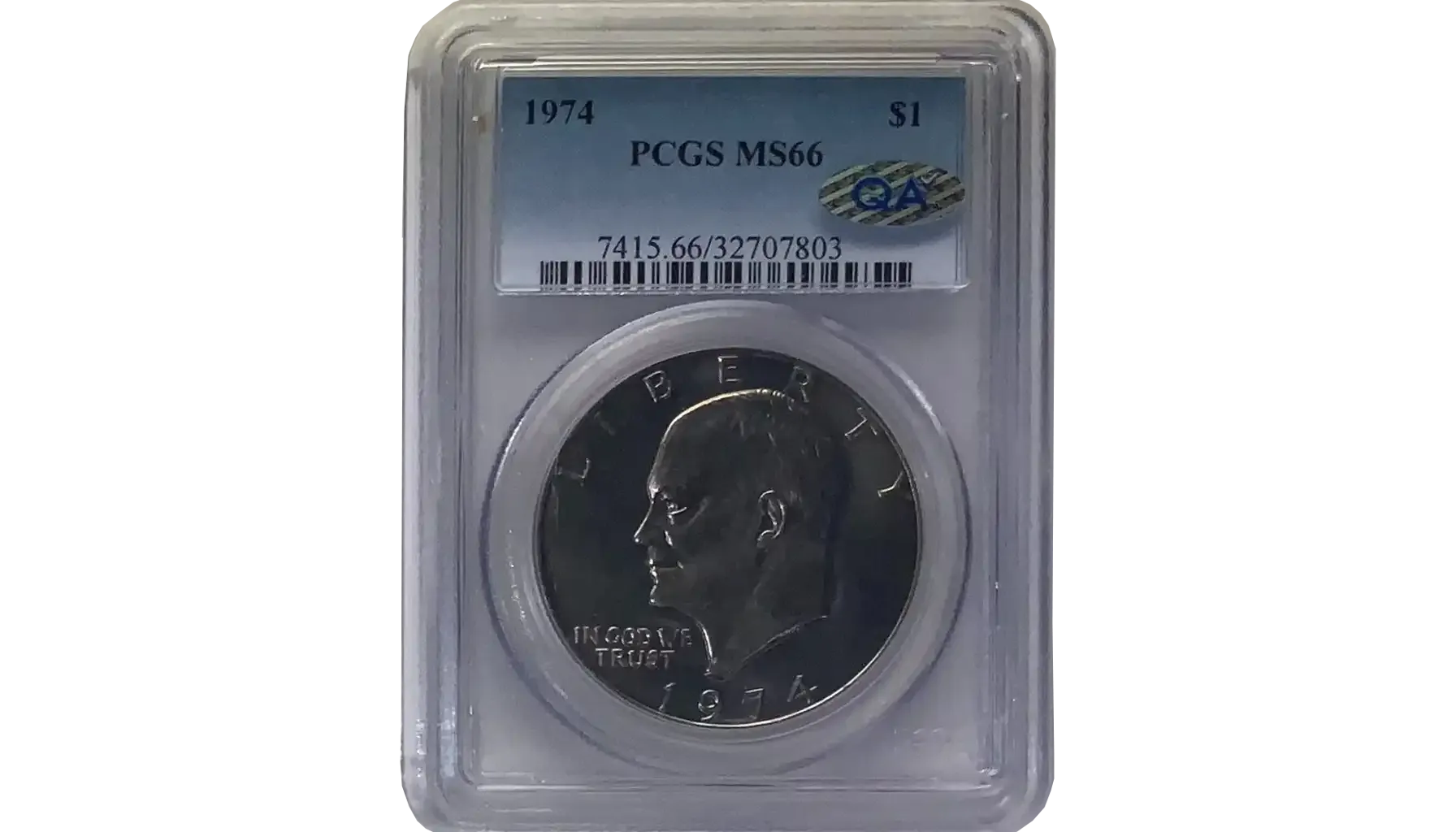
1974-D (Denver) Eisenhower Dollar
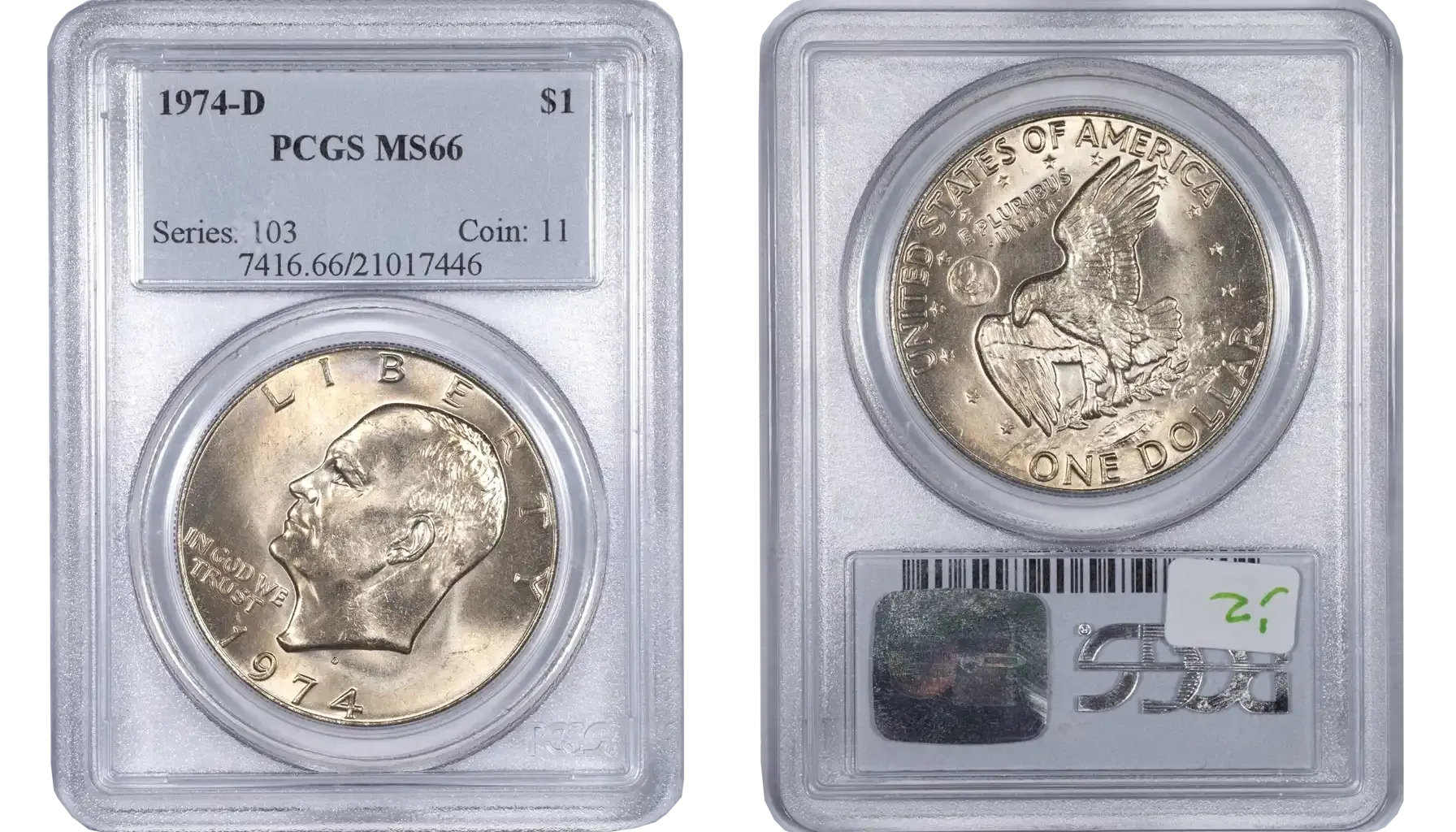
The Denver issue is also clad only and identified by a “D” mint mark. They have comparable mintage and availability to Philadelphia.
1974 D Eisenhower dollar value
Circulated: $1–3
MS63–MS64: $6–15
MS65 and higher: $30+
Like the Philadelphia issue, Denver Ikes rely on grade and surface quality when it comes to the 1974 D dollar coin value.
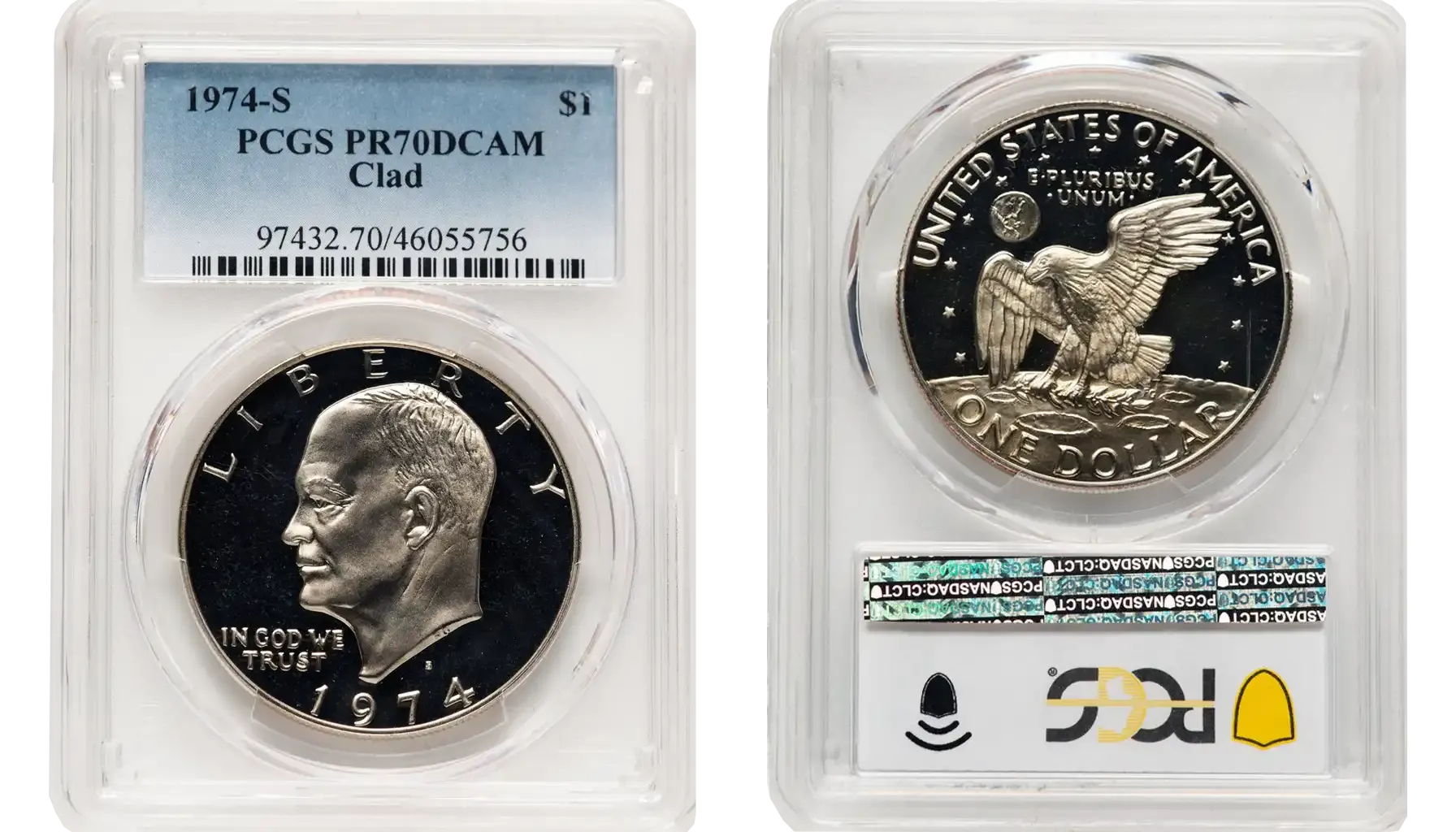
1974-S (San Francisco) Eisenhower Dollar
San Francisco struck collector-only Eisenhower dollars. These were never intended for circulation and were sold directly to collectors. By the way, an original packaging increases desirability.
Value ranges
1974 Eisenhower uncirculated silver dollar: $15–30+
Silver proof: $20–40+
The value of 1974 silver dollar of this type fluctuates with silver prices, but even lower-grade examples maintain a bullion-based floor.
1974 Dollar Coin Price Guide & Value Chart
What is a 1974 silver dollar worth? Eisenhower dollars can be common in circulated conditions, selling for the face value or slightly above. High-quality uncirculated and proof examples, particularly those with deep cameo designation, can command substantial prices at auctions, yet clad versions (unless they have noticeable flaws) usually sell for $1 to $5.
Type | Auction Record | Grade | Date |
1974 $1 (Regular Strike) | $8,900 | MS67 | 02-01-2023 |
1974 D $1 (Regular Strike) | $14,100 | MS65 | 01-08-2014 |
1974 S $1 Silver (Regular Strike) | $13,513 | MS68+ | 10-28-2021 |
1974 S $1 Silver (Proof) | $2,300 | GEM PR | 05-28-2001 |
1974 S $1 Silver, CAM (Proof) | $1,050 | PR67 | 03-20-2021 |
1974 S $1 Silver, DCAM (Proof) | $4,600 | PR70 | 05-01-2007 |
1974 S $1 Clad (Proof) | $256 | PR67 | 06-02-2019 |
1974 S $1 Clad, CAM (Proof) | $1,035 | PR68 | 05-30-2006 |
1974 S $1 Clad, DCAM (Proof) | $9,000 | PR70 | 08-09-2020 |
So as to understand if your coin may command the same prices, it is recommended to appeal to reputable grading services like PCGS or NGC, as well as to ask for a professional evaluation. This may answer how much is a 1974 Eisenhower dollar worth, though it heavily relies on the current demand (which cannot be explained at times).
The value of a one-dollar coin issued in 1974 can change noticeably with silver prices and overall market demand.
Rare Errors & Varieties That Boost Value
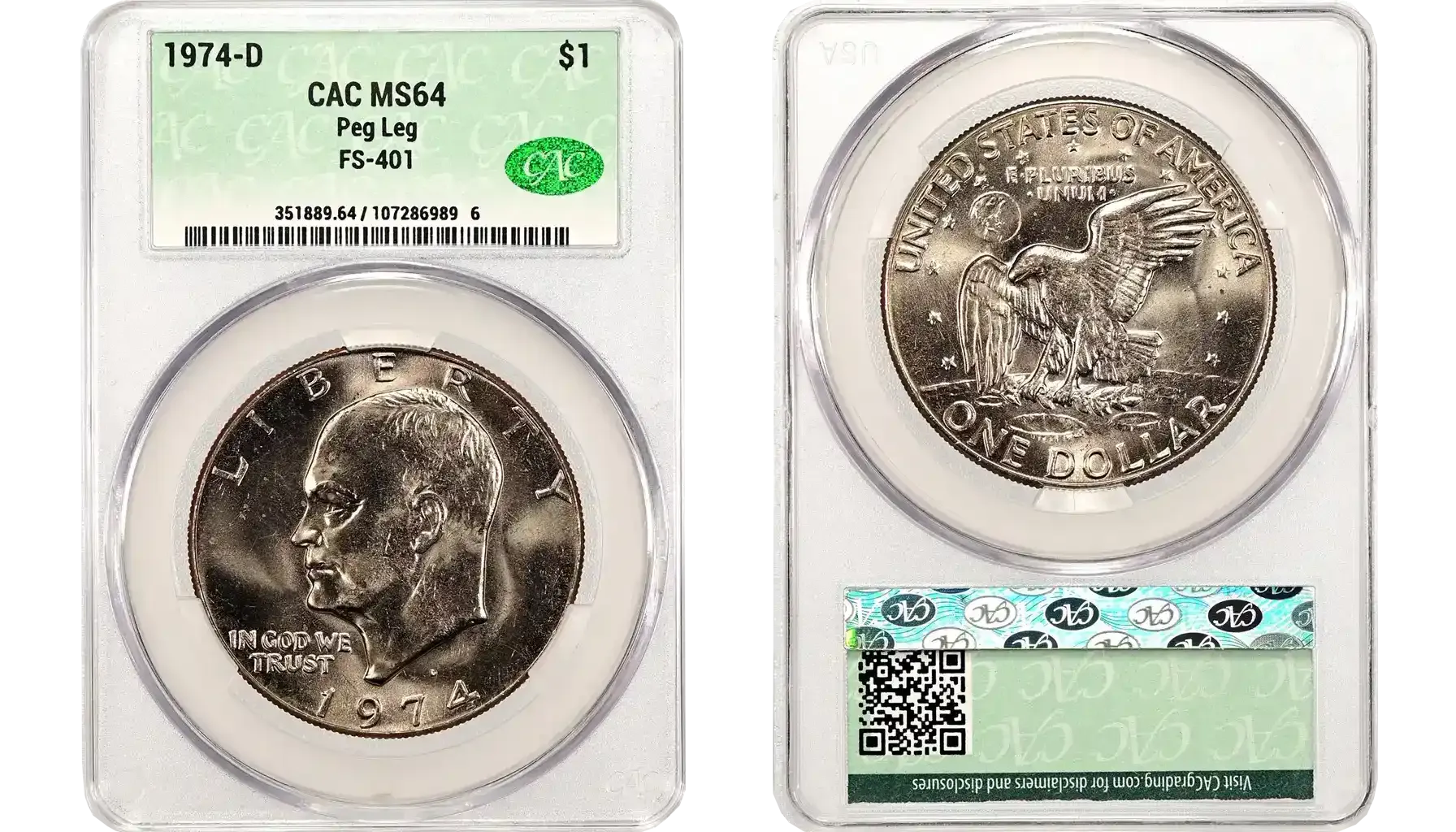
The 1974 “Peg Leg” Eisenhower Dollar
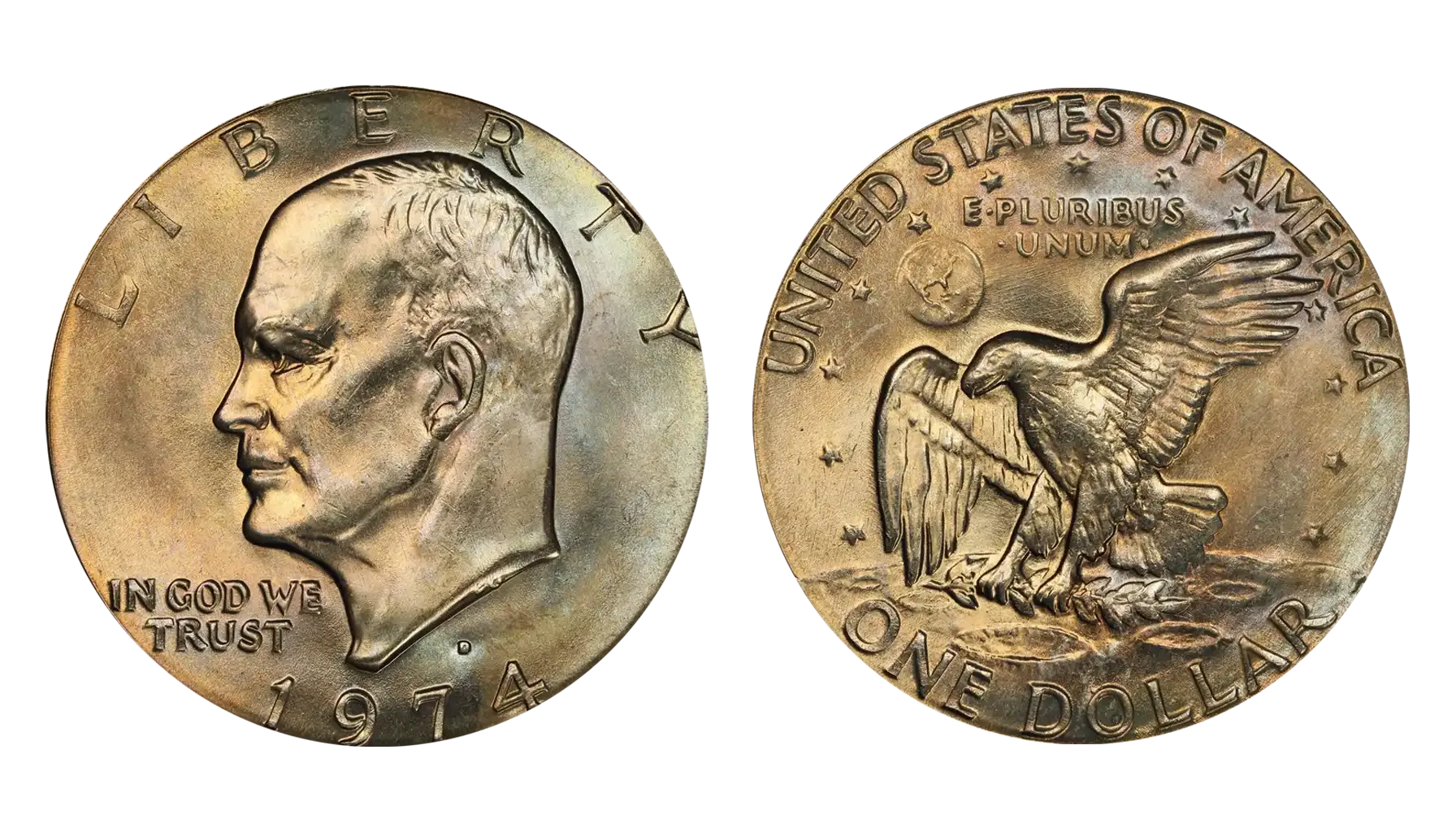
It gets its name from the unusually weak right leg of the eagle on the reverse. On normal strikes, the eagle’s leg shows rounded detail. On Peg Leg coins, the leg appears thin, flat, and almost straight, as if carved from a narrow bar.
Caused by over-polished reverse dies
Seen only on clad circulation strikes
Most commonly associated with 1974-D, but Philadelphia examples exist
Recognized by major grading services
Well-defined Peg Leg examples often sell for multiples of standard 1974 Ikes, especially in Mint State.
Doubled Die Obverse (DDO) Varieties
True Doubled Die Obverse varieties exist for 1974 Eisenhower dollars, though they are far less dramatic than classic doubled dies from earlier series.
Doubling on LIBERTY
Separation on IN GOD WE TRUST
Minor doubling in date numerals
Strong, clearly attributed DDOs command premiums, especially when certified. Minor or borderline examples carry a limited one dollar coin 1974 value.
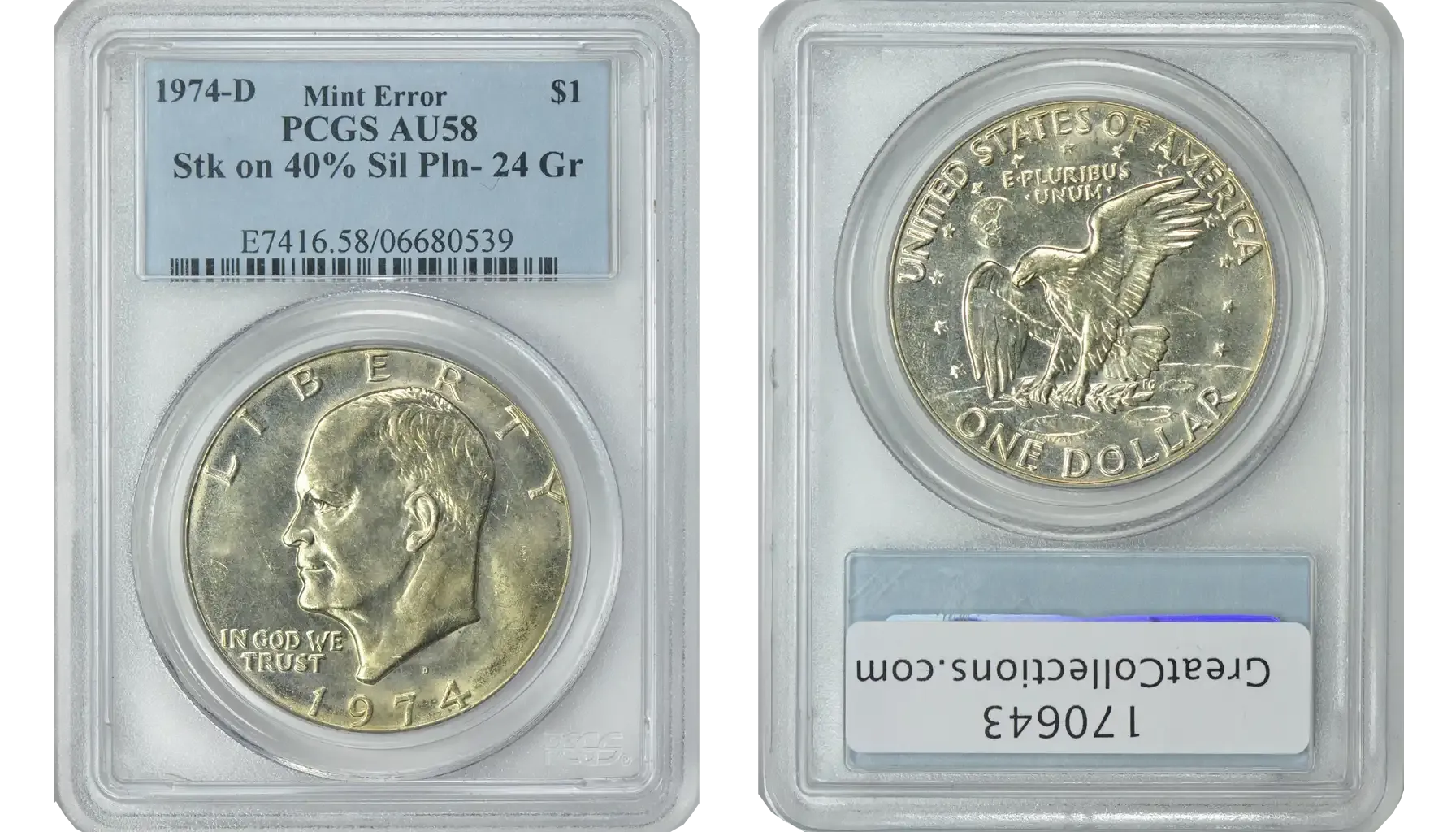
Off-Metal Strikes and Other Errors
Some of the highest-priced 1974 Ikes come from major mint errors, particularly those involving planchets and striking stages.
Off-metal strikes (e.g., struck on foreign or incorrect U.S. planchets)
Broadstrikes (missing or misaligned collar)
Off-center strikes with visible date
Clipped planchets
Major die breaks or retained cuds
Because Eisenhower dollars are large and heavy, these 1974 one dollar coin error examples are visually obvious and easy to authenticate when genuine.
Related article: 1922 Liberty silver dollar.
Investment Potential and Selling Your 1974 Eisenhower Dollar
What makes a 1974 silver dollar rare? For most examples, investment appeal depends on type rather than age.
Clad circulation strikes have limited upside. The value growth is tied almost entirely to condition, and only high-grade, certified coins show long-term appreciation. Average uncirculated pieces tend to move slowly.
1974-S silver issues carry stronger investment appeal because they combine 40% silver content with collector demand.
Recognized varieties or major mint errors offer the most potential. These coins are condition-sensitive and often require certification, but demand is consistent among specialists.
It makes sense to sell when:
The coin is certified and in high Mint State
It is a 1974-S silver proof or uncirculated issue
It has a recognized error or variety with clear attribution
“...copper-nickel clad business-strike specimens grading MS65 or better are remarkably scarce. This is because the coins are… more prone to surface gouges and other imperfections during shipment in bags.”
— Unknown Author
Greysheet website
Is the 1974 Eisenhower Dollar a Good Investment?
If you are a professional collector or investor with expertise, a high-grade 1974 Eisenhower dollar can be a significant addition to your numismatic assemblage. Anyway, do your research, buy from reliable sources, and pay attention to quality first.
Frequently Asked Questions (FAQ)
What Is a 1974 Dollar Coin Worth?
The value of a silver dollar dated 1974 depends mainly on whether it was issued for collectors or circulation. $1–3 in circulated condition (1974 silver dollar value no mint mark and D). Uncirculated clad coins range from $6–15. High-grade examples can sell for $25+. Silver issues carry a higher silver dollar 1974 value based on metal content and condition.
Is a 1974 Coin Rare?
No. Rarity appears only in high Mint State grades, recognized varieties, or major mint errors.
What Is the Error on the 1974 Dollar Coin?
The best-known variety is the 1974 “Peg Leg” reverse, where the eagle’s right leg appears thin and flat due to die over-polishing. Other value-adding errors include doubled die obverses (DDO), off-center strikes, broadstrikes, off-metal strikes, etc.
How Much Is a 1974 Silver Dollar Worth Today?
$15–30+ (uncirculated “Blue Ike”)
$20–40+ (proof “Brown Ike”)
Prices fluctuate with silver spot and condition.
Are 1974 Silver Dollars Real Silver?
Yes—but only the 1974-S issues. These collector coins contain 40% silver and were sold directly to collectors. 1974-P and 1974 D silver dollar value coins are clad.
Where Is the Mint Mark on a 1974 Silver Dollar?
It appears on the obverse below Eisenhower’s neck.
Related Coin Value Guides

 Facebook
  X (Twitter)
  Pinterest
  LinkedIn