Contents:
- What Is a 1953 Wheat Penny Worth Today?
- 1953 Lincoln Wheat Penny Overview
- 1953 Penny Value by Mint Mark (D, S and No Mint Marks)
- 1953 Wheat Penny Value Chart
- Is a 1953 Wheat Penny Worth Anything?
- 1953 Wheat Penny Error List
- Valuable 1953 D Wheat Penny Errors
- 1953 “Silver” Penny: Myth or Reality?
- How to Identify a Valuable 1953 Wheat Penny
- FAQ
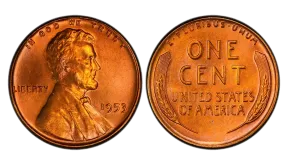
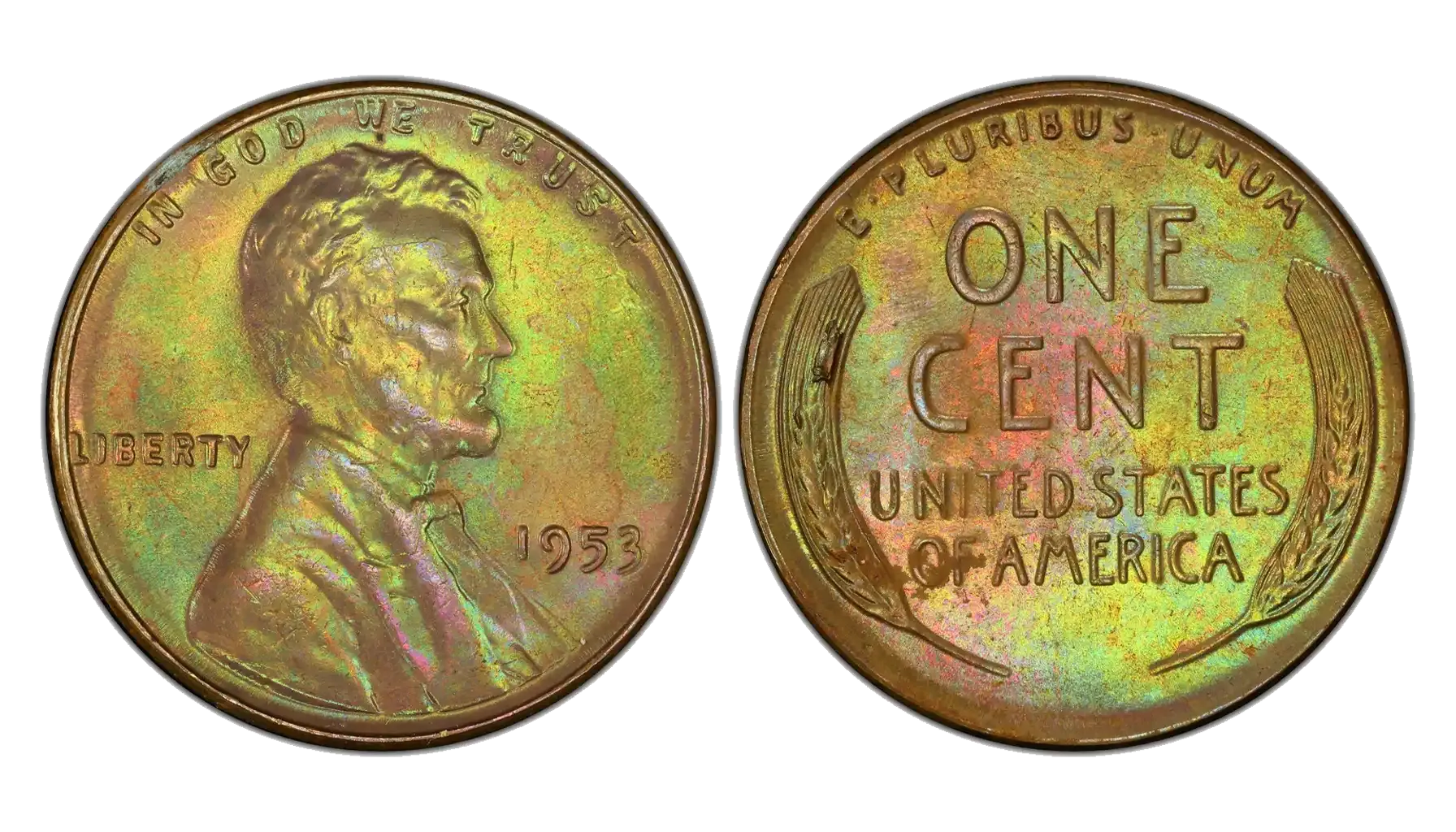
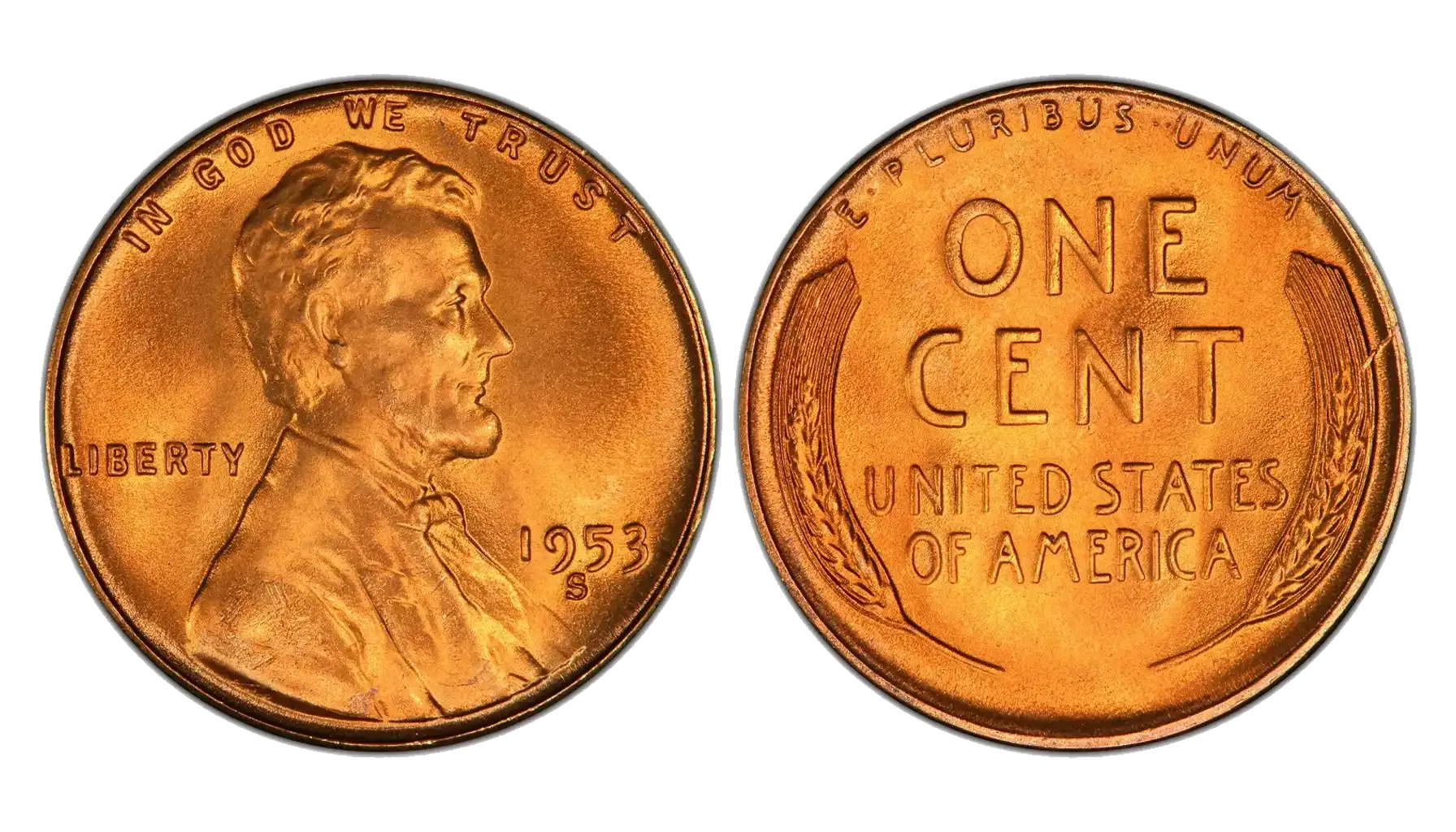
This Lincoln cent features the classic wheat ears reverse design used from 1909 to 1958. The MS-63 is worth $3–$7 dollars.
What is the best coin identifier app?
What Is a 1953 Wheat Penny Worth Today?
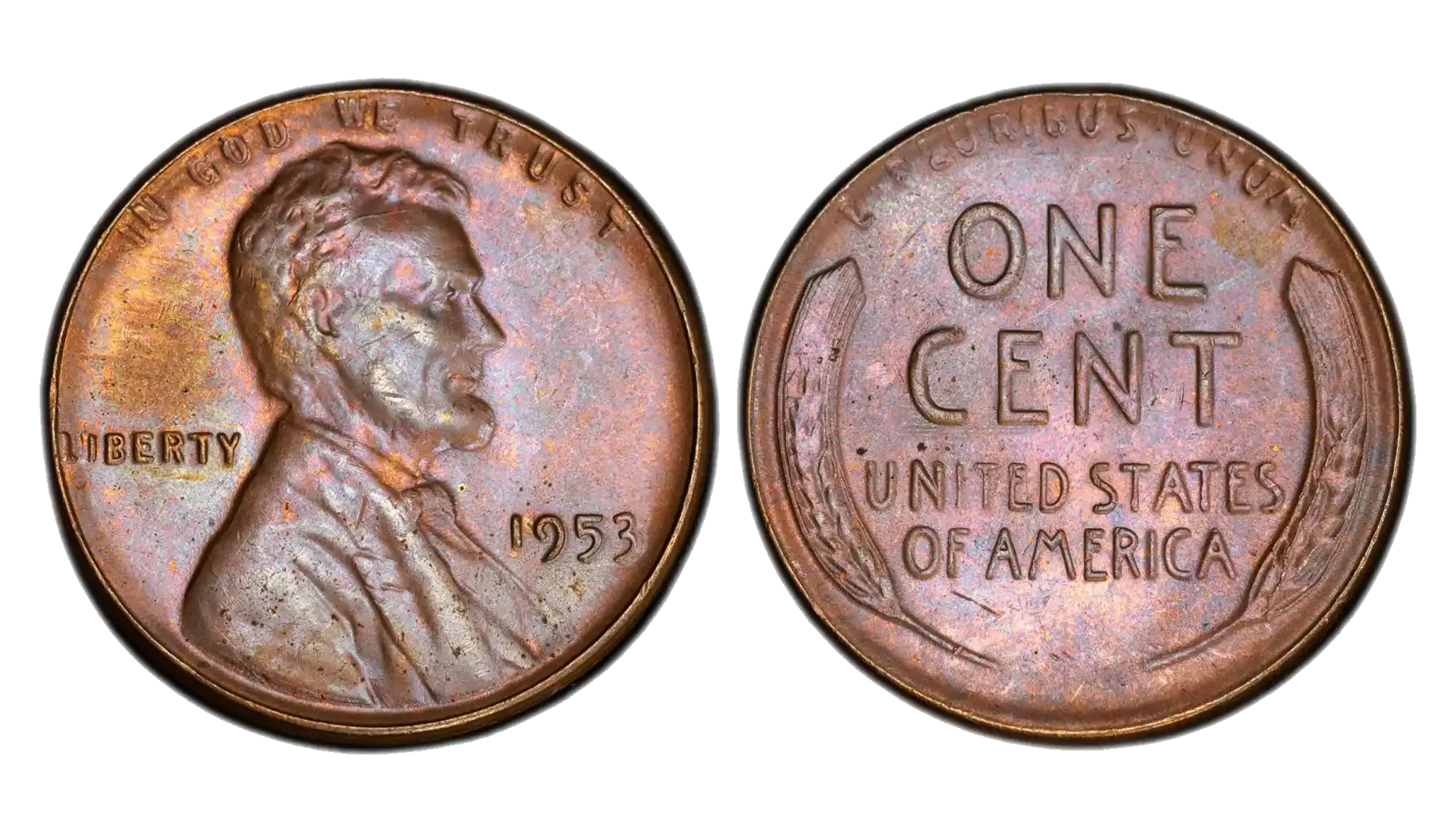
First, look for your item, which is a color. Red color coins have higher prices on the online markets and auctions. Can the 1953 Wheat penny worth a million dollars?
Brown
Red
Mix
Remember, for 1919 pennies, composition was similar.
Valuable Item Factors
Color – pennies are graded as BN / RB / RD. A Red item – meaning it still looks like it was minted yesterday – is always worth more.
The Proof Set – San Francisco also produced 128,800 Proof pennies for special sets. A Proof item in perfect condition can be worth $100 to $500.
The D/S Myth – in contrast to some other years, there is no widely recognized "D over S" mint mark for the year, though various minor RPMs exist for all three mints.
"The 1953-S cent is often found with a very sharp strike and attractive luster, making it a favorite for those seeking condition rarities."
– David W. Lange, author
The Complete Guide to Lincoln Cents
1953 Lincoln Wheat Penny Overview
Obverse – the President Abraham Lincoln and the motto.
Reverse – denomination and inscriptions.
Weight | 3.11 g |
Diameter | 19.00 mm |
Thickness | 1.55 mm |
Edge | Plain |
Designer | Victor David Brenner |
Why Thickness Varies in 1953
In the early 1950s, quality control at the Philadelphia, Denver, and San Francisco mints could vary, leading to a few thickness-related anomalies:
Tapered Planchet
This occurs when the bronze strip used to punch out the coin blanks was rolled unevenly. One side of your item might be the standard 1.55 mm, while the opposite edge is noticeably thinner.
Rolled Thin Stock
If the entire coin is thinner than 1.55 mm and weighs less than 3.11g, it was struck on a planchet intended for a foreign coin or a strip that was rolled too thin.
Circulation Wear
Because the item has been in use for over 70 years, a heavily circulated slick coin will naturally be thinner than its original mint state due to the metal wearing away over decades of handling.
1953 Penny Value by Mint Mark (D, S and No Mint Marks)
You will find the thickness remains the same regardless of which mint produced the coin:
1953 Penny No Mint Mark: Philadelphia
D: Denver
S: San Francisco
1953 Wheat Penny No Mint Mark
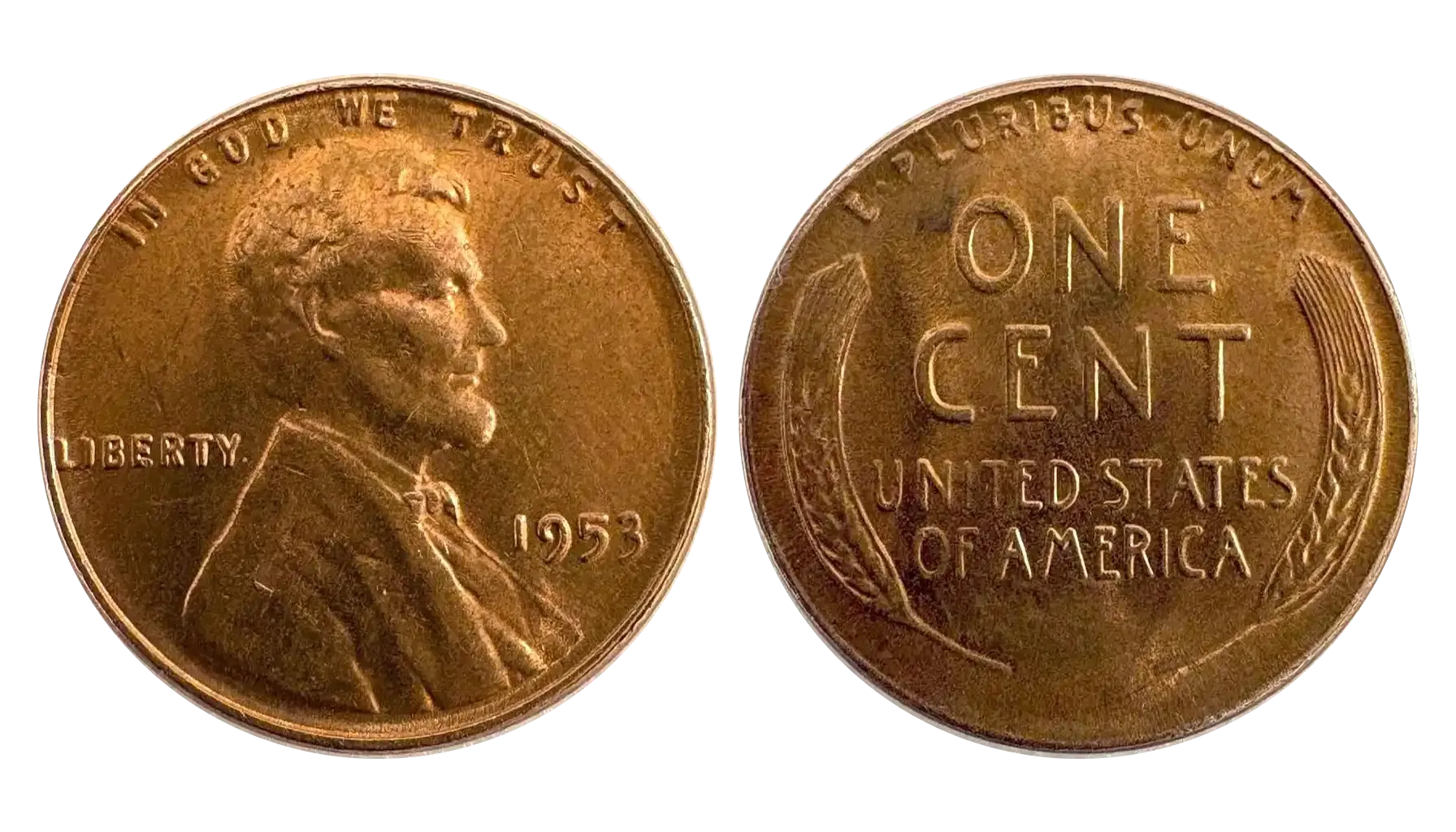
256,755,000
Philadelphia produced the second-highest number of pennies in the year. While common, they are slightly harder to find in pristine Gem condition than the Denver issues.
Circulated $0.05–$0.15
Uncirculated $1–$3
Uncirculated MS-65 Red $15–$25
Auction Record: $14,100 MS-67, 2014 Heritage Auctions
1953 D Wheat Penny Value
700,515,000
Denver was the powerhouse of item production in the year, striking over 700 million coins. Because of the massive supply, only the absolute highest grades carry high bonuses. How much is a 1953 D Wheat penny worth with defects?
Look for the Re-punched Mint Mark (RPM) where a second "D" is visible slightly offset from the first. How much is a 1953 Wheat penny worth in D mint?
Circulated $0.02–$0.10
Uncirculated MS-63 Brown $0.50–$1.50
How much is a 1953 D penny worth in high MS grade? Uncirculated MS-65 Red $12–$20
Auction Record: $7,475 MS-67, 2007 Bowers & Merena
1953 Wheat Penny Value Chart
Grade | Philadelphia | 1953 D Penny Value | San Francisco |
MS-63 | $3–$5 | $2–$4 | $4–$7 |
MS-65 | $15–$25 | $12–$20 | $25–$40 |
MS-66 | $65–$85 | $35–$55 | $75–$110 |
MS-67 | $800–$1,200 | $400–$700 | $250–$450 |
MS-67+ | $4,000+ | $2,500+ | $1,400+ |
Note: The values in the table are given for Red сoins.
1953 S Wheat Penny Value
181,835,000
The San Francisco Mint typically had lower production numbers, making the "S" mint mark a favorite for collectors building sets. S pennies often feature very sharp strikes and attractive luster. Collectors hunt for the S/S Re-punched Mint Mark, which can double or triple the 1953 S penny value of the coin in higher grades.
Circulated $0.10–$0.25
Uncirculated MS-63 Brown $2–$5
Gem Uncirculated MS-65 Red $25–$40
Auction Record: $18,000 MS-68 Red, 2025 Heritage Auctions
Is a 1953 Wheat Penny Worth Anything?
The value of this year's coin varies greatly depending on whether you're considering it as a casual collector or a serious investor. Since nearly a billion of these coins were minted at all three foundries, the market is divided into two distinct tiers: common coins and highly rare coins.
Collectors find rare varieties with defects – D/D, BIE.
Investors look only for NGC and PCGS varieties and auction offers.
Doubled Die Obverse / Reverse
While the year does not have a mega-error like the 1955 Doubled Die, there are several minor doubled dies. In the word "LIBERTY" and the date, you will see the doubling. You are looking for notching on the corners of the letters or a thickening of the lines.
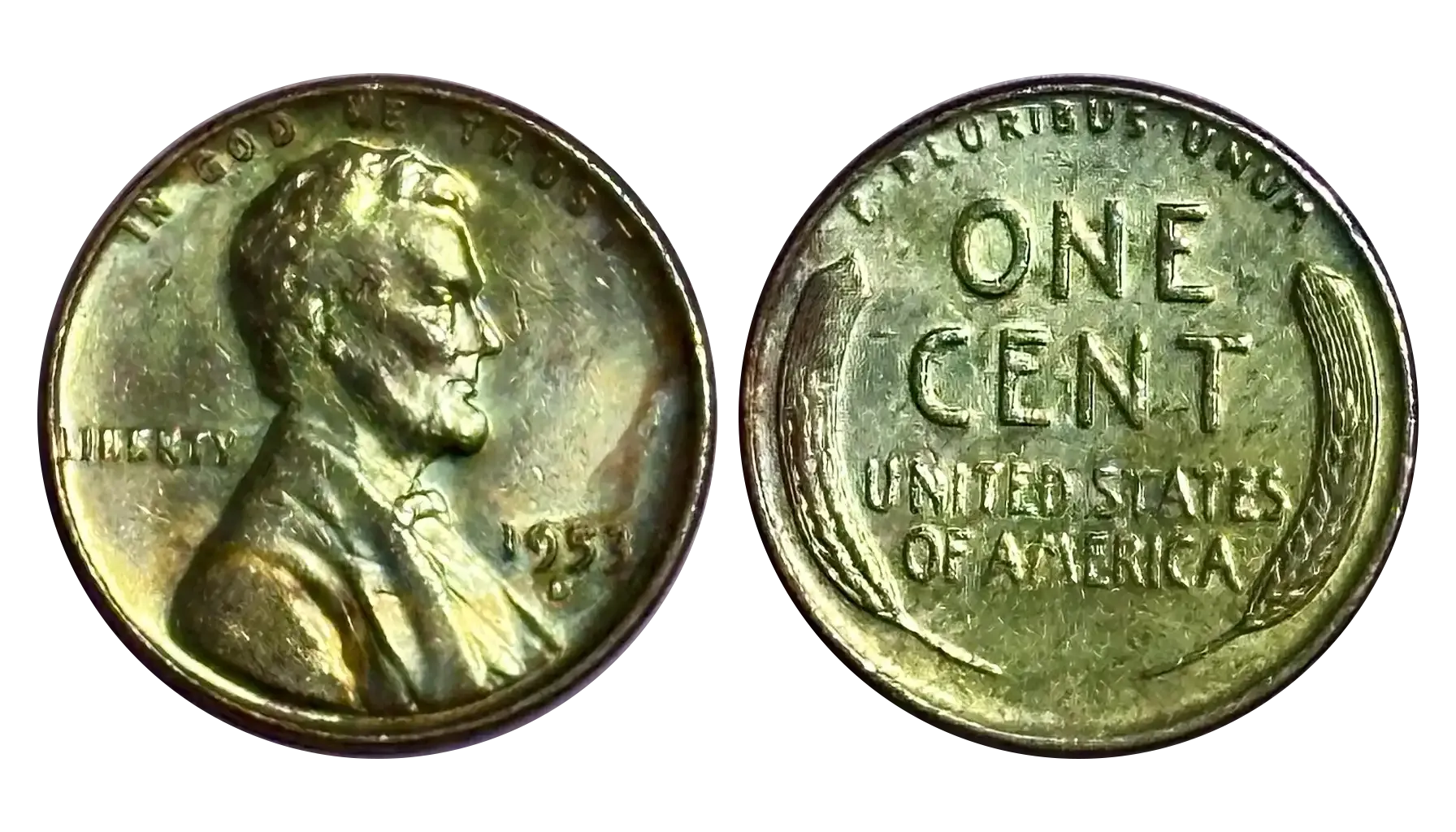
$15–$100
BIE Die Crack
This is a very specific and popular 1953 Wheat penny error among Wheat issue collectors. A small vertical die crack develops between the B and the I of "LIBERTY," making it look like a capital I or a small i is squeezed in there (spelling "B-I-E").
$5–$15
1953 Wheat Penny Error List
Re-punched Mint Marks (RPM)
This is the most common specialty error for the year. In this era, mint marks were hand-punched into the dies. If the worker struck the punch twice at slightly different angles, it created a doubled letter. To find D/D, look for a shadow of a second D either to the north, south, or west of the main mint mark.
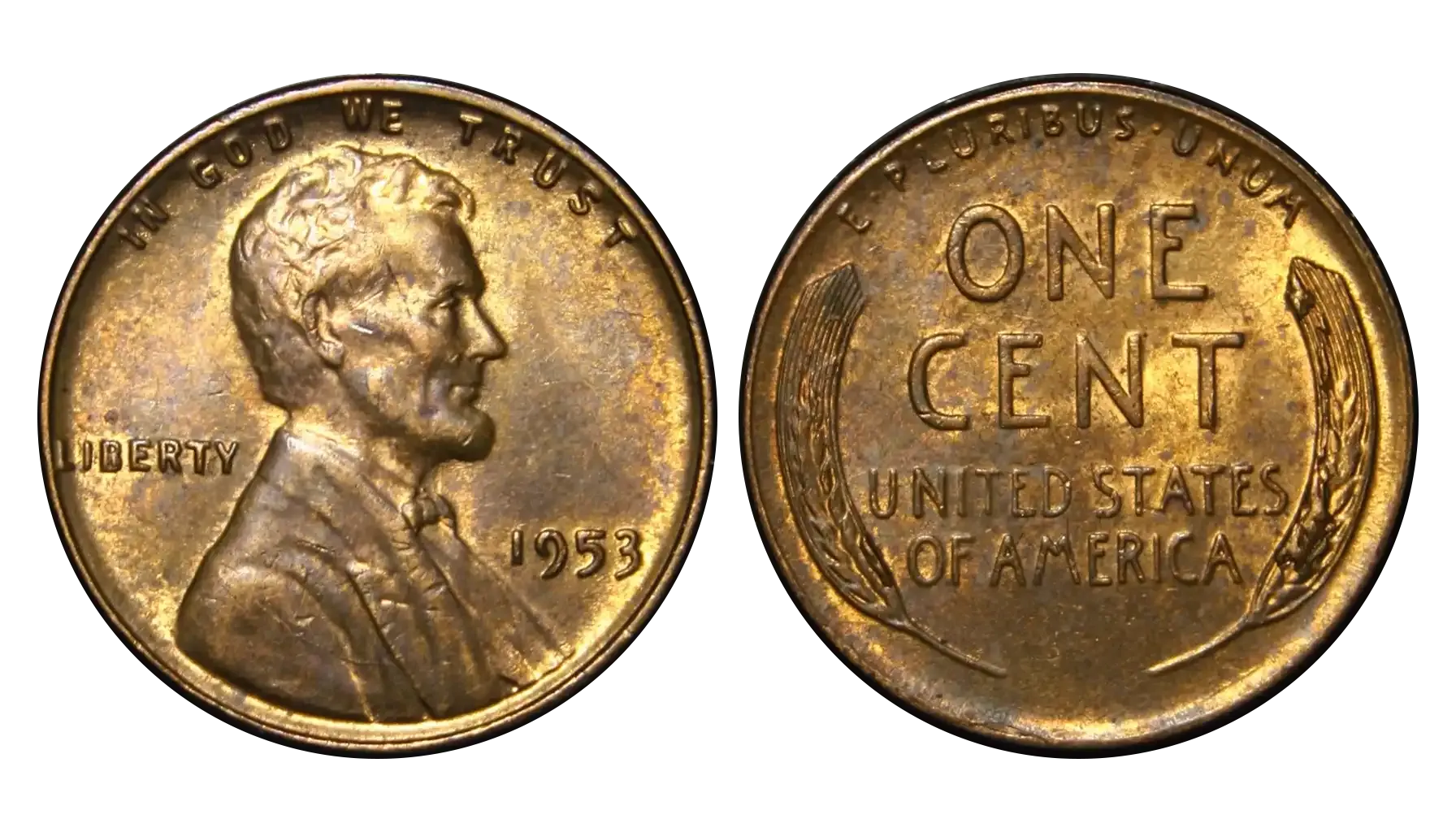
$5–$40
Lamination Defects
Because the item is 95 % copper, impurities in the metal sometimes cause the surface of the coin to peel or flake off.
What to look for: A thin sliver of metal missing from the surface or a crack that looks like a peeling sticker.
$3–$20
Off-Center Strikes
This happens when the planchet (the blank coin) isn't centered in the press.
10% Off-Center: Part of the rim is missing
$10–$20
50% Off-Center: Half the design is missing, but the date is still visible
$100–$250
Valuable 1953 D Wheat Penny Errors
Strong RPM – Two "D" marks visible – $25–$100
50% Off-Center – Half the design is missing – $150–$300
BIE Variety – "LIB-I-ERTY" appearance – $5–$20
Broadstruck – Wider/flatter without ridges – $20–$50
Talking about Repunched Mint Marks, the D is famous for having multiple RPM varieties. In the year, the "D" was punched into the die by hand, often requiring two strikes. To find a D over D defect, you should look for a clear secondary "D" offset to the South or West.
The D over horizontal D is a very rare variety where the first punch was accidentally placed sideways before being corrected.
Tips for RPM Identification
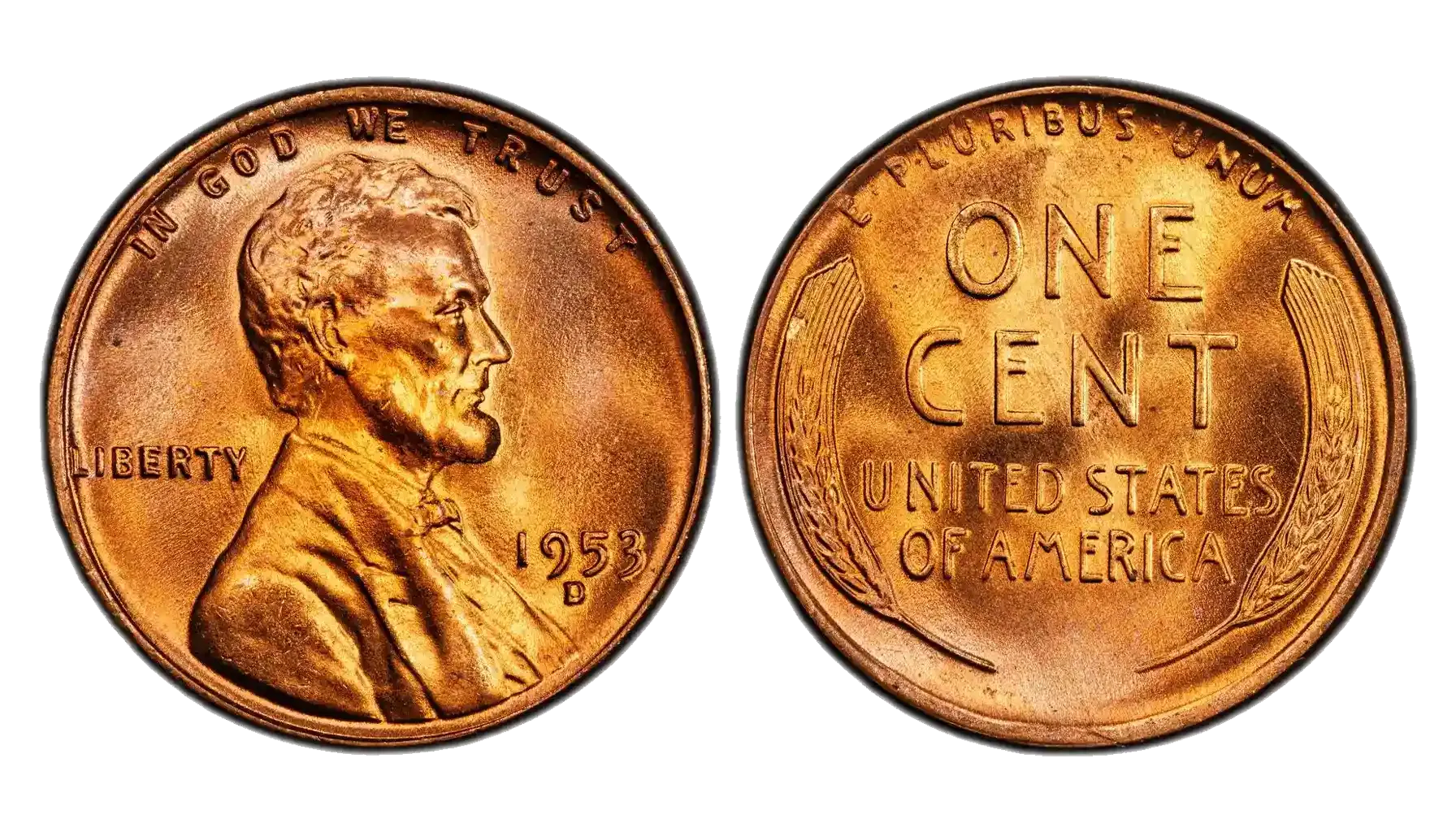
Check the Tails – look at the top-left and bottom-left corners (the serifs) of the "D." If you see two distinct points instead of one, you have found an RPM.
Ignore Zinc Rot – on later coins, bubbling can look like doubling. Since the year, pennies are solid bronze; any extra metal you see is usually a genuine part of the coin's strike.
Cross-Reference – many collectors use sites like VarietyVista or Wexler’s Die Varieties to compare their coin against plate photos of known D RPMs.
1953 “Silver” Penny: Myth or Reality?
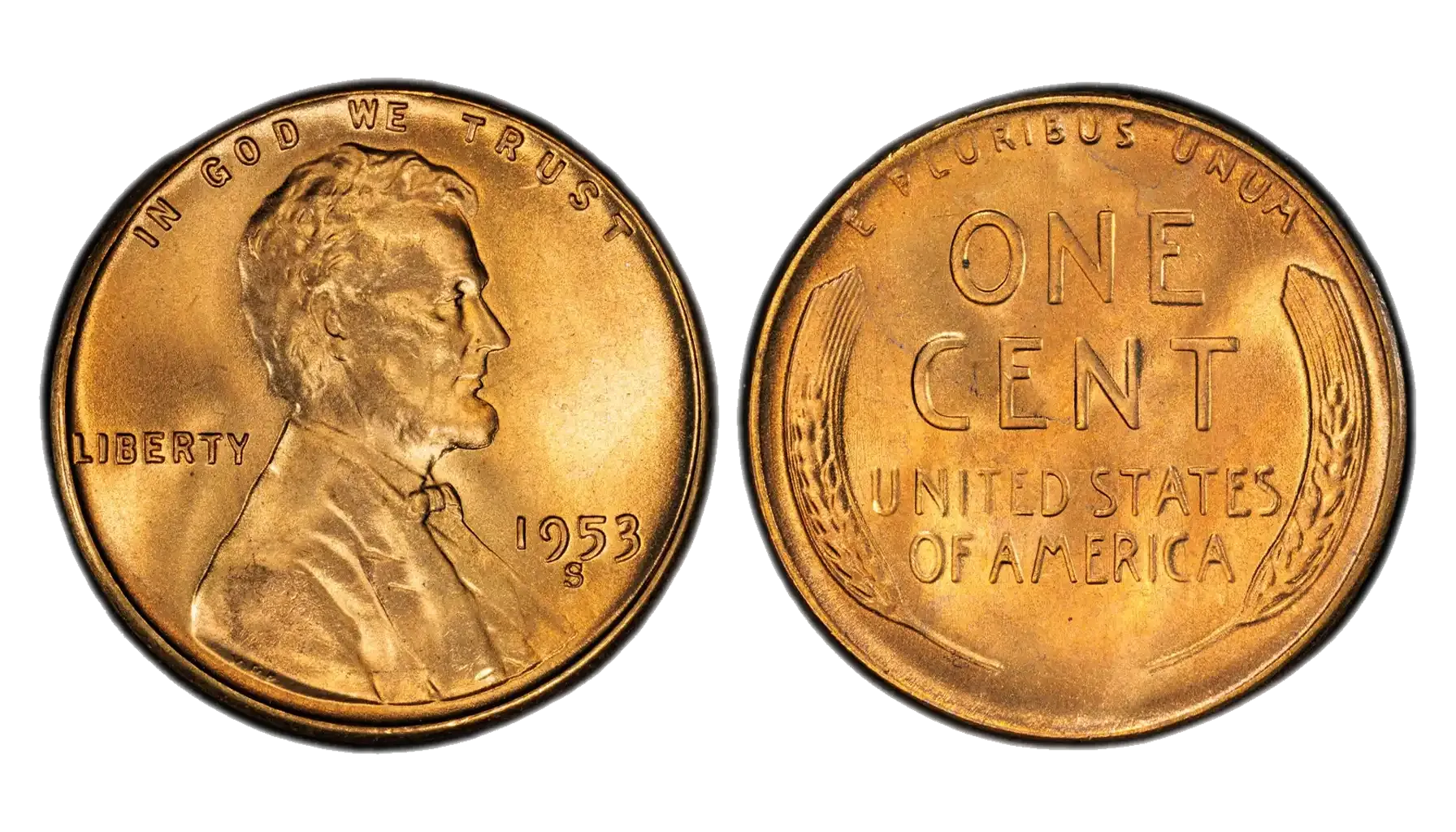
The silver item is an authenticated mint defect. It occurs when a blank intended for a Roosevelt dime is accidentally fed into the item press.
How to quickly identify that? Step 1 – the weight test. A standard issue weighs 3.11g. A dime planchet weighs 2.50g.
Step 2 – the size test. Because a dime is smaller than an item, the design will usually be cut off at the edges (a broadstruck appearance) because the metal didn't fill the larger item die. Step 3 – the magnet test. It will not stick to a magnet.
The Steel Item Confusion
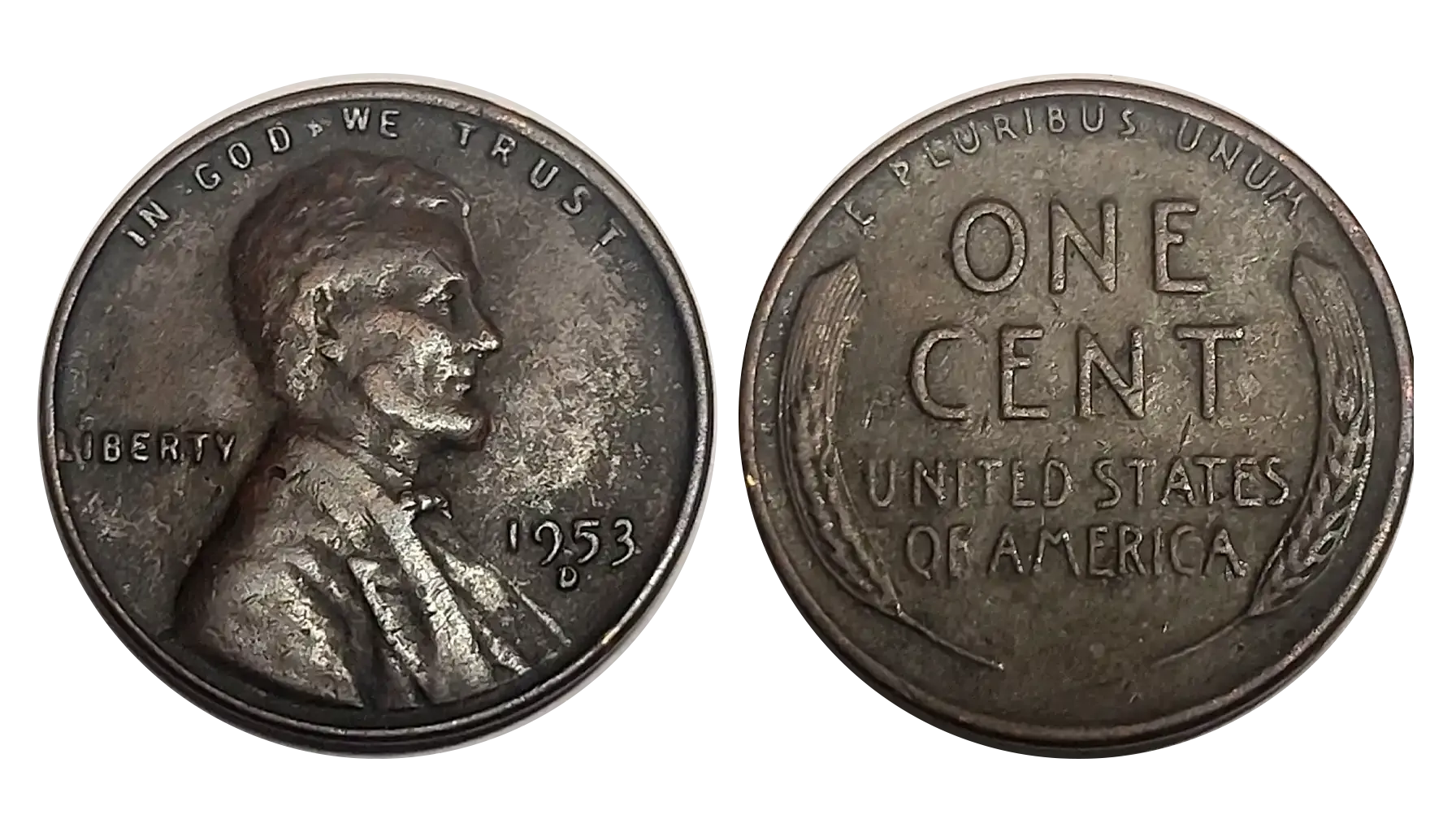
Many people find a silver item and assume it is a 1953, but it is actually a 1943 Steel issue. In 1943, the U.S. Mint switched to zinc-coated steel to save copper for the war effort. In worn condition, the "4" in 1943 can sometimes be misread as a "5," or collectors simply associate a "silver" item with the early 50s.
Is a 1953 penny worth anything in the numismatic field? How do professionals identify it? An item is strongly attracted to a magnet. A “silver” item should not be magnetic.
Comparison Table: Is Your Item Real?
Feature | Silver Dime Planchet Error | Steel Penny | Plated Penny |
Magnet Test | Non-magnetic | Magnetic | Non-magnetic |
Weight | 2.50 grams | 2.70 grams | 3.11 grams |
Diameter | Smaller than a penny | Standard size | Standard size |
Luster | Soft, silver glow | Dull grey or reprocessed | Exceptionally shiny / mirrored |
If your item does not stick to a magnet and feels noticeably lighter or smaller than a normal piece, you should take it to a professional coin dealer or a grading service like PCGS.
You might be holding a rare off-metal strike. If it’s shiny and heavy, it is not a real one. Check the real silver item, the 1921 Morgan dollar.
How to Identify a Valuable 1953 Wheat Penny
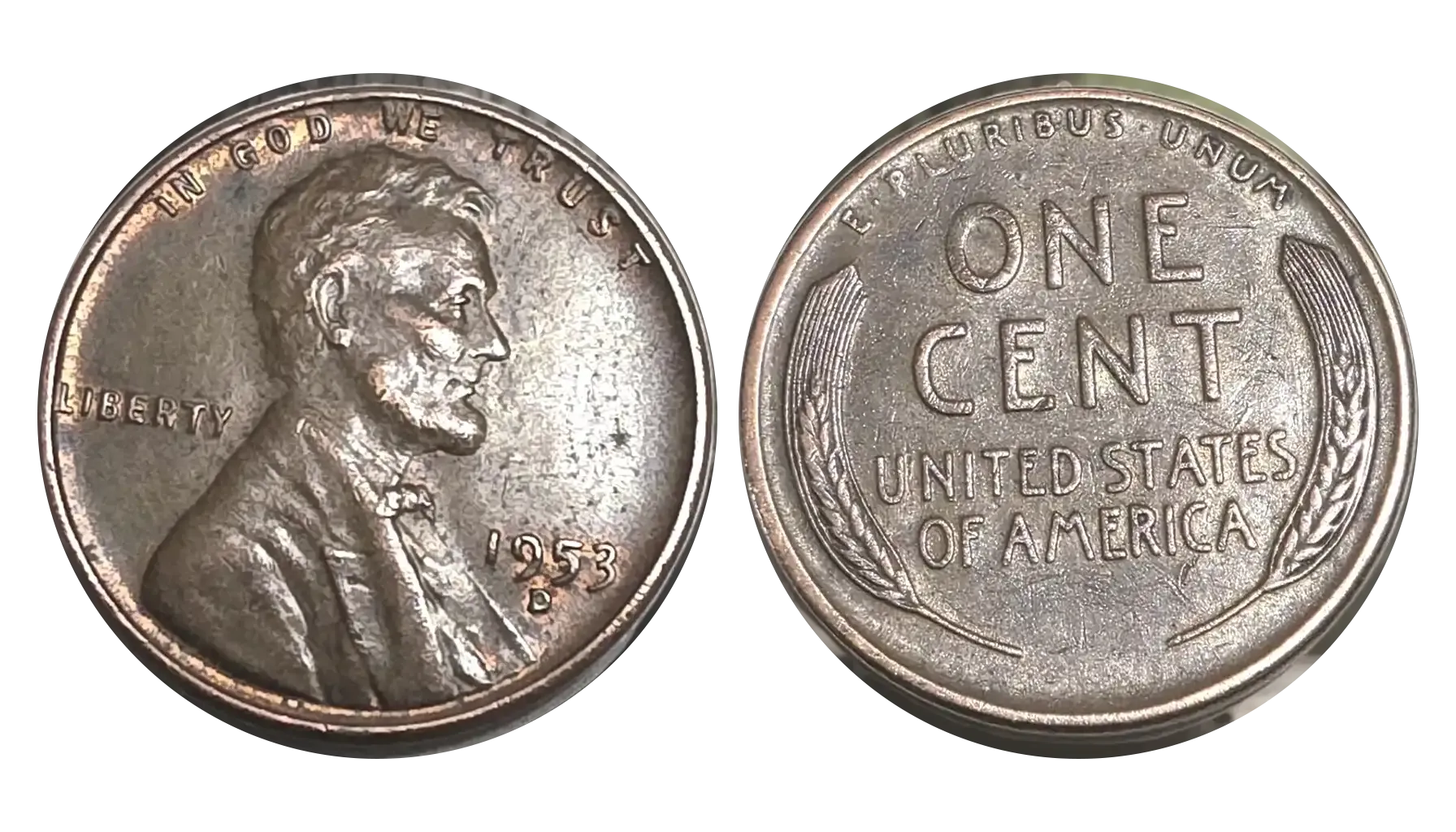
Identifying a valuable Wheat issue is a perfect entry point for new collectors because this year is abundant enough to find easily. Here is a summary guide to identifying the item as a professional.
Pay attention to the top varieties
Check the color
Check the MS
As a beginner, you want to differentiate between an ordinary one and an investment-grade one.
The Cheek/Jaw Test – look at Lincoln's cheekbone and jawline. If the skin looks smooth and has a soft glow (luster), it is Uncirculated. If those high points are flat and dull, it is Circulated.
The Wheat Ears – on the back, check the tiny lines at the top of the wheat stalks. If every line is crisp and separate, the coin is in high demand.
Collectors Tips
Do Not Clean Your Coins
Never use soap, water, or polish. Cleaning a coin removes its skin and can reduce a $100 coin to a $1 coin instantly.
Buy a Loupe
A simple 10x triplet magnifying loupe is the single best investment you can make. It allows you to see the notching on doubled dies that the naked eye misses.
Check Your Edges
Look for Clipped Planchets where a crescent-shaped piece of the coin is missing. This is a common 1953 S Wheat penny error that beginners often overlook as damage.
FAQ
What makes a 1953 penny rare?
The Red color and MS-67+ make an item rare.
Is a 1953 penny copper?
The item is copper; only 5 % is a metal mix.
Should I clean my 1953 penny?
Cleaning your item is a big mistake; you shouldn’t.
Is there a 1953 S penny?
Yes, look for the San Francisco issues.
What is the error on a 1953 penny?
Despite the traditional defects, look for the BIE die crack or off-center.
What to look for on a 1953 penny?
Try to pay more attention to S and D issues with the RPM defect.
How much money is a 1953 penny worth?
1953 Wheat penny D issues up to $2,500+ in MS-67+.
What is the rarest 1953 D penny?
The D over horizontal D is the rarest 1953 penny D issue.
How much is a 1953 penny worth no mint mark?
An ordinary MS-63 1953 D wheat penny worth and no mint mark reaches $3–$5 dollars.

 Facebook
  X (Twitter)
  Pinterest
  LinkedIn