Contents:
As a collector or a history lover, you might easily recognize this silvery shine and the profile figure. The value of 1964 Kennedy half dollar goes beyond 50 cents for many reasons, and today we examine exactly how.
We will look through the current US coin chart and analyse prices to build your knowledge of the market and its fluctuations.
Historical Overview of the 1964 Kennedy Half Dollar
Before answering how much is a 1964 half dollar worth, let’s look at the key factors defining its price and making it different from other dollar coins. They are connected not only with the historical perspective, but with the metal contents as well.
Introduction to JFK Coinage & Historical Context
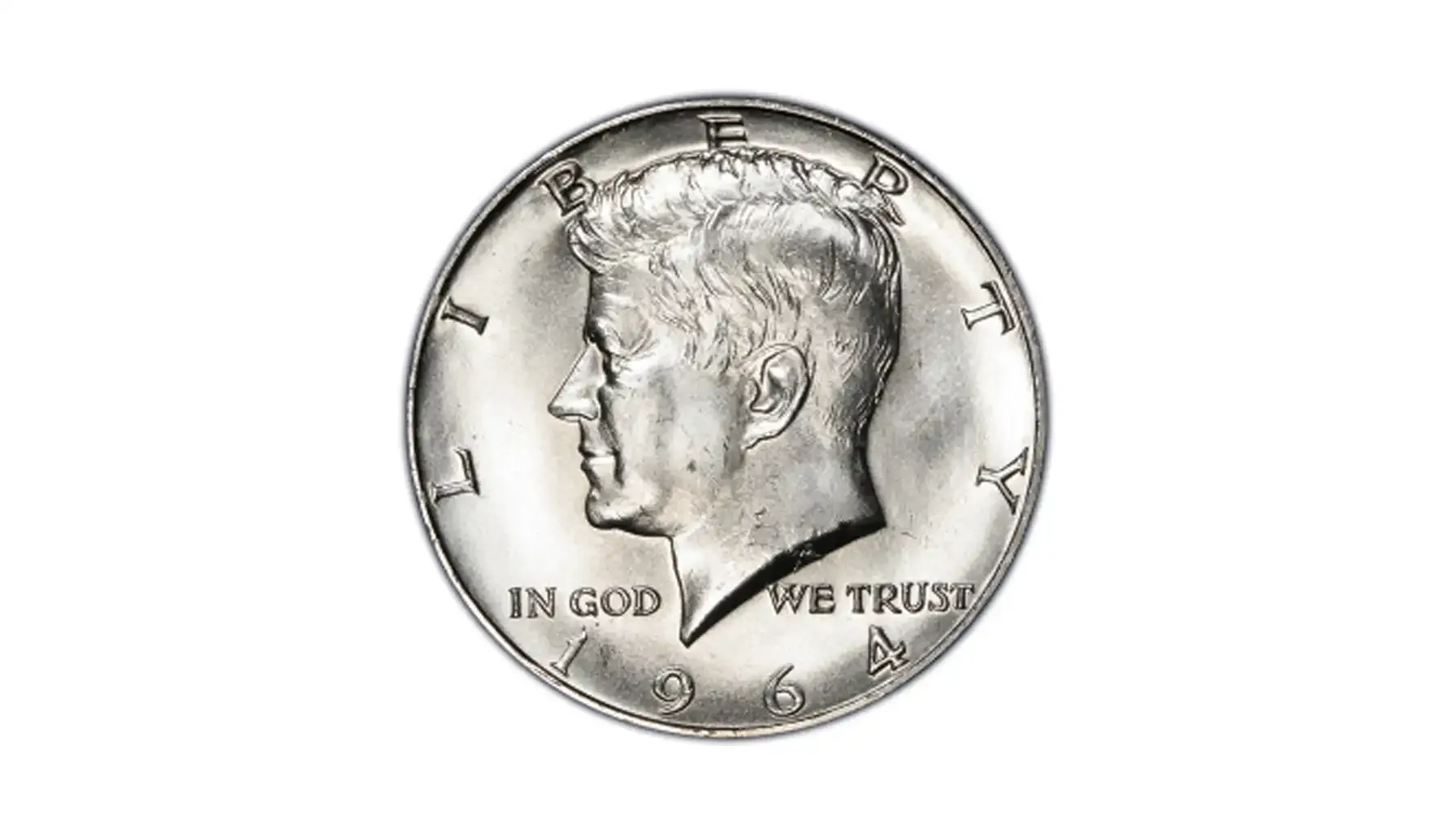
The 1964 silver half dollar value remains among the highest examples for its context and composition, and it stands in line with examples from earlier centuries. Conceived only months after the tragic assassination of President John F. Kennedy in November of 1963, it was to be a national tribute to the president.
“The Kennedy Half Dollar was an instant success and the entire mintage was absorbed by eager collectors and people who wanted souvenirs of this popular president.”
— Ron Guth, Author and Numismatist
From the PCGS Overview of the JFK Dollar Series
The obverse bears a bold profile of President Kennedy, while the reverse carries the Presidential Seal: an eagle clasping arrows and an olive branch. These design elements together bring strength, leadership, and peace-fine attributes mirroring the national sentiment of the 1960s.
Why 1964 Was Special – First Year of Issue
Another fact to consider is that the Kennedy Half Dollar debuted in 1964 as the only year of issue that contained 90% silver. This issue, with its combined mintage of over 273 million coins, struck at the Philadelphia and Denver Mints, started the end of America's silver circulation era, famous for its Morgans. Silver costs increased, so the Mint lowered silver content to 40% by 1965, and removed it altogether by 1971.
The first-year edition is highly collectible because of its metallic composition, historic timing, and emotive value; it is also the pivot point between traditional coinage in silver and clad modern issues.
Mint | Mintage | Composition | Silver Content |
Philadelphia (no mint mark) | ~156 million | 90% Silver, 10% Copper | 0.3617 troy oz |
Denver (D) | ~129 million | 90% Silver, 10% Copper | 0.3617 troy oz |
San Francisco (S – Proof only) | ~3.9 million | 90% Silver, 10% Copper | 0.3617 troy oz |
The San Francisco proof strikes were minted for collectors and display remarkable mirror-like finishes. High-grade proofs from this mint, especially with unique die details, are among the most valuable Kennedy Half Dollars in existence.
Silver Content and Specifications
The 1964 Kennedy half dollar no mint mark raises its price as each coin contains nearly one-third of an ounce of silver. It attracts investors as well as numismatists.
Coin specifications:
Composition: 90% silver, 10% copper
Silver weight: 0.3617 troy ounces
Total weight: 12.5 grams
Diameter: 30.6 mm
Edge: Reeded with 150 reeds
Even heavily circulated examples retain intrinsic value due to their silver content. The melt value generally aligns with the current silver spot price. In 2025, it averages around $12–$13. However, collector-grade pieces trade far above melt value due to condition, rarity, and demand.
Identifying 1964 Kennedy Half Dollars
The 1964 issue is quite recent, so it doesn’t make premiums simply for its age, unlike the Liberty Peace dollar. To define the 1964 Kennedy half dollar value today for each particular coin, you must get acknowledged with the key characteristics of coins.
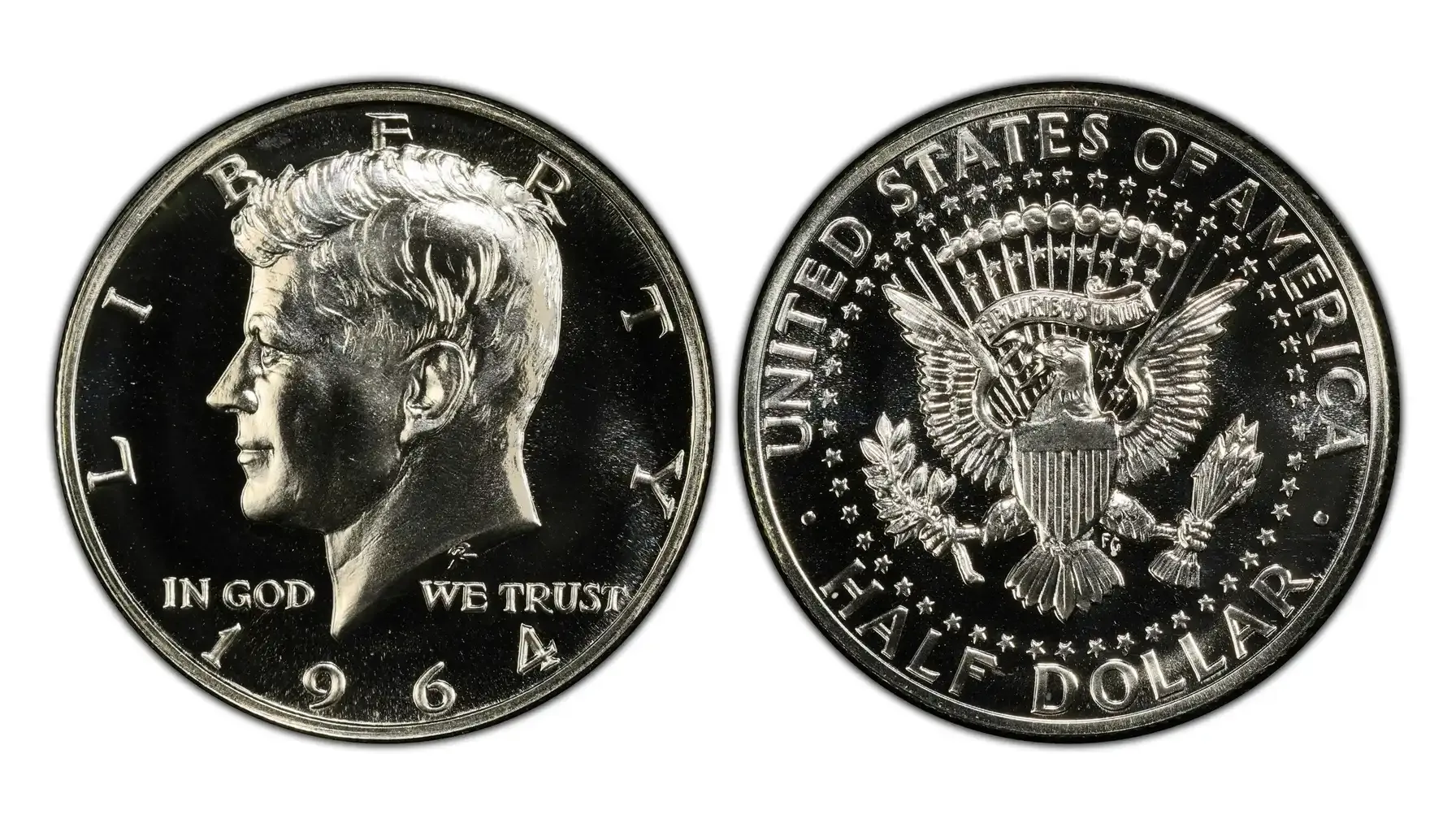
Mint Marks – Philadelphia, Denver, No Mint Mark Explained
Philadelphia (no mint mark): The most common issue, found in both circulation and collector sets.
Denver (D): Identified by a “D” mintmark on the reverse below the eagle’s claw; these often show sharper strikes.
San Francisco (S): Found on proof coins, with the mintmark placed beneath Kennedy’s neck on the obverse.
The mintmark plays a key role in determining scarcity and market value. Proofs from San Francisco command the highest premiums due to their limited production and superb finish. While scanning coins, address Coin ID Scanner for stronger assurance of their origin.
Visual Characteristics and Key Features
High-grade 1964 coins display crisp details, sharp lettering, and a distinct separation between hair strands and facial features. The reverse’s eagle should show clear feather texture and full definition in the shield lines. Coins with strong luster and minimal bag marks are considered premium examples.
Differences Between Proof, MS, and Circulated Coins
There are three main forms that a 1964 Kennedy Half Dollar will take: proof, mint state, and circulated. Each of these carries different physical and market characteristics that strongly influence its value.
Proof Coins: Struck at the San Francisco Mint, proofs were produced with polished dies and specially prepared planchets that created mirror-like surfaces and sharp relief details. Proofs are not to be circulated but are usually housed in protective holders. Some bear the rare “Accented Hair” variety—identified by extra hair detail above Kennedy’s ear—making them especially prized by collectors.
Mint State (MS): Uncirculated business strikes from the Philadelphia and Denver mints have no wear but might have light contact marks due to normal handling. Coins grading MS65 or higher are scarce and may command thousands of dollars depending on luster and strike sharpness.
Circulated Coins: These are coins displaying signs of daily use, such as surface wear, dull luster, and light scratches. Their value closely aligns with the silver content, but even lightly circulated examples will still be of interest to collectors because of the historic 90% silver composition.
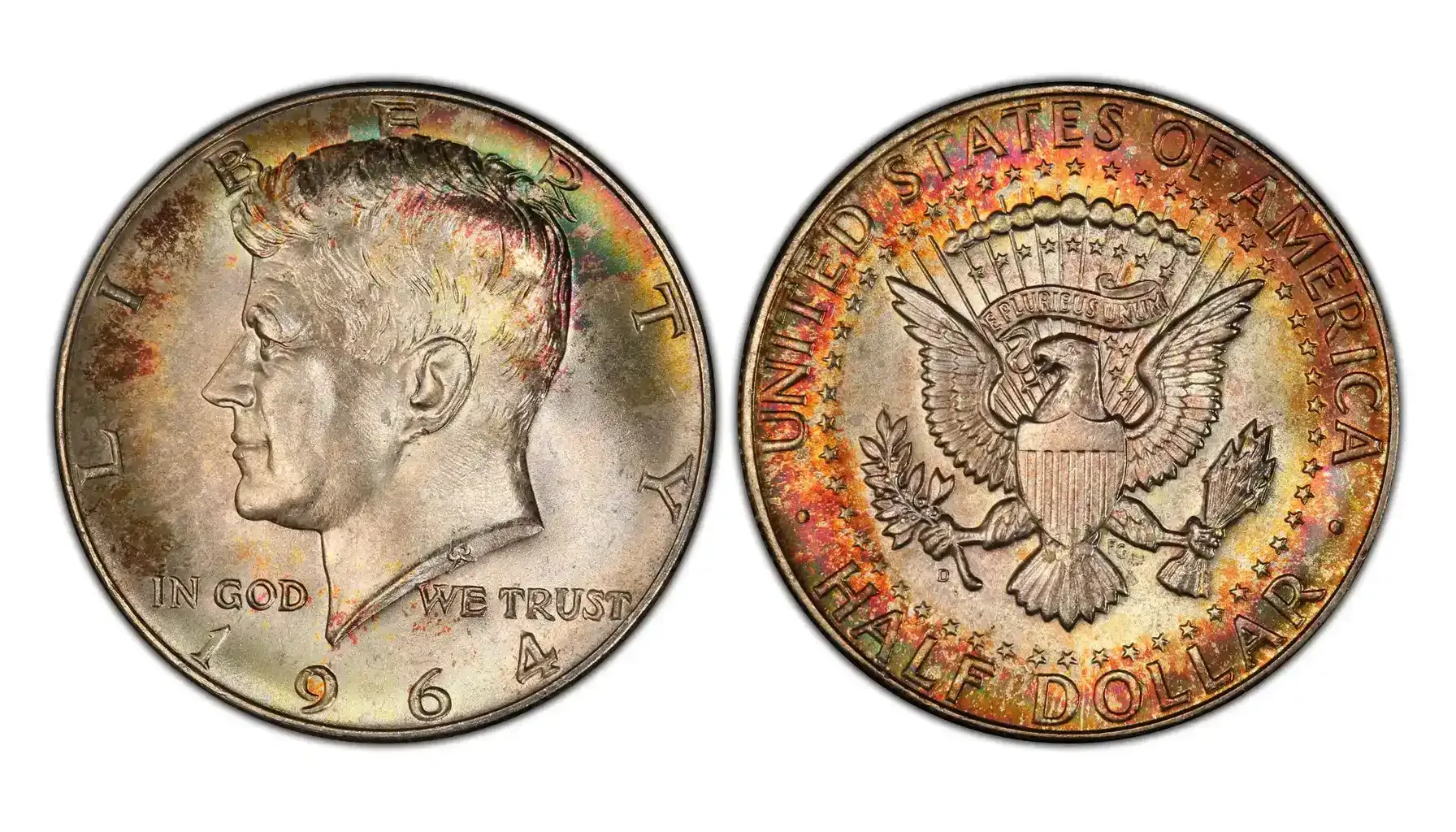
1964 Kennedy Half Dollar Value by Type & Condition
Let’s figure out which 1964 Kennedy half dollars are worth the most via a simplified chart. If you want some brief data without too many explanations, you’ll find it all below.
Value Table (Good–MS65) Including Silver Melt vs Numismatic Value
The pristine proof examples are rare, but thanks to the lower Kennedy 1964 half dollar value in lower grades, even a casual collector can own such an epochal artefact.
Condition | Approximate Circulated Value | Approximate High-Grade Value (MS65+) | Silver Melt Value (2025) |
Good (G) | $15-$20 | N/A | ~$12 |
Very Good (VG) | $20-$25 | N/A | ~$12 |
Fine (F) | $25-$30 | N/A | ~$12 |
Very Fine (VF) | $30-$40 | N/A | ~$12 |
About Uncirculated (AU) | $40-$80 | ~$150 | ~$12 |
Mint State 60–64 | $80–$250 | $200–$1,200 | ~$12 |
Mint State 65+ | $300–$2,500 | $3,000+ | ~$12 |
How Mint Marks Affect Rarity and Market Price
Mintmarks significantly impact both availability and price.
Philadelphia (no mint mark): Most common issue; easily obtainable and often collected for silver content.
Denver (D): Roughly equal in number to Philadelphia coins but valued slightly higher for sharper strikes and small die variations, including minor doubled-die examples.
San Francisco (S): Proof-only mint, with about 3.9 million coins issued. High-grade proofs and “Accented Hair” versions are scarce and command strong premiums in today’s market.
Special die varieties, especially 1964-D Doubled Dies, and error coins with off-center strikes or clipped planchets, fetch premiums far above standard market rates.
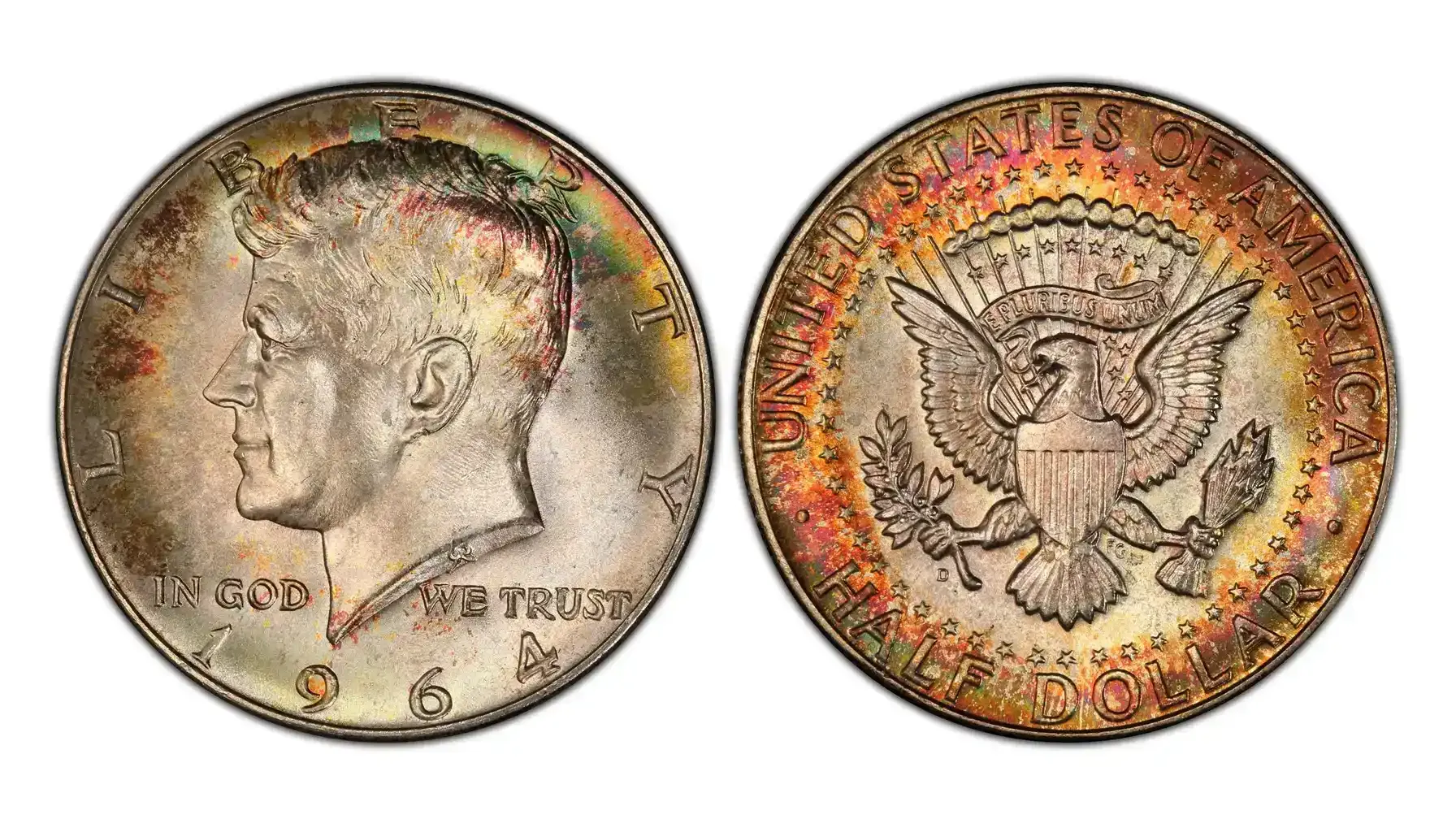
Collectors’ Insights on High-Value Coins
The Kennedy Half Dollar 1964 still generates impressive results during auctions, simply due to its historical importance and aesthetic. The main collector points to note are:
Certified coins graded MS65–MS67 sell in the $1,000–$5,000 range consistently.
Proof "Accented Hair" types have reached $10,000+, depending on cameo contrast and preservation.
Rare 1964 SMS (Special Mint Set) specimens, believed to have been experimental strikes, are among the most valuable of all, with prices exceeding $100,000 at major auctions.
Early Kennedy halves, especially the 1964 issue, are both sentimental and material representations for those building long-term numismatic collections. Their blend of history, silver composition, and market liquidity makes them enduring investments.
Grading and Inspecting Your JFK Half Dollar
Proper grading is important to ascertaining what the true market value of a 1964 Kennedy Half Dollar is. Professional grading, such as that provided by PCGS and NGC, grades coins based on strike quality, surface condition, and luster.
Key Features Graders Examine (Strike, Luster, Wear)
Strike: The sharpness of details around Kennedy’s hair, cheek, and the eagle’s feathers on the reverse.
Luster: The original mint bloom, which wears off as coins are handled.
Wear: Any loss of texture or visible flattening from handling.
Extra Tip: If you are buying coins in rolls or just got a lot of them, check them through the Coin ID Scanner firstly, then choose the most appealing for pro grading.
Rare Varieties and Notable Errors
Even though the silver content makes the price high enough, 1964 Kennedy half dollar errors make it even higher sometimes. Learn to observe your belongings patiently under the magnifying glass: a trained eye can see real treasures sometimes.
Known Varieties (Double Die, Clipped Planchet)
Accented Hair (Proof only): Additional hair detail above Kennedy’s ear and stronger relief. Found on early San Francisco proofs.
Double Die: Doubling visible on obverse lettering or Kennedy’s profile.
Clipped Planchet: Missing rim section due to faulty metal cutting—highly collectible.
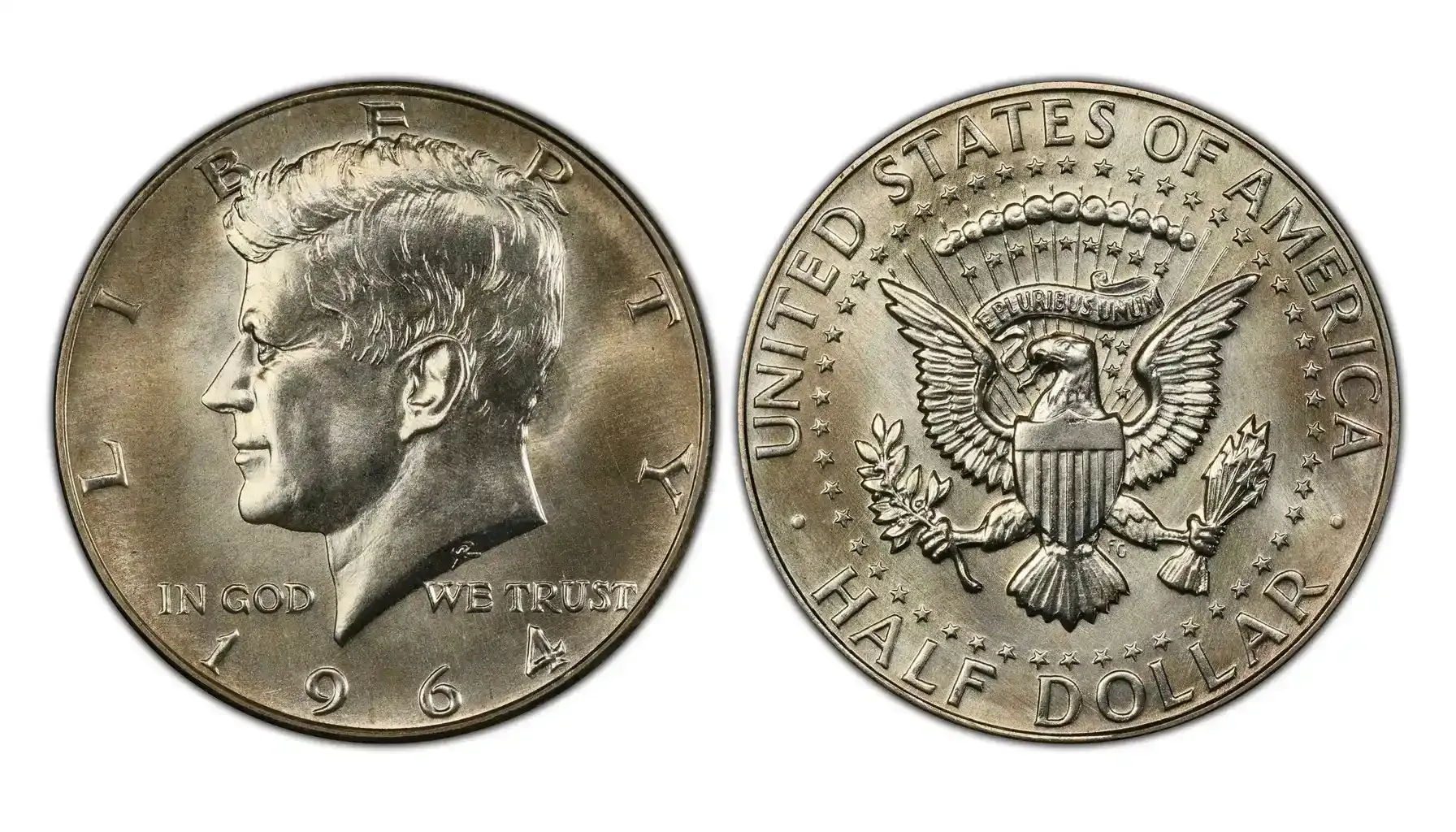
Error Coins and Their Market Impact
Minting flaws such as off-center strikes, die breaks, or planchet cracks can double or triple value. Each unique flaw attracts error specialists who pay significant premiums for distinct examples.
Famous Sales and Auction Records
1964 Special Mint Set (SMS) coins have sold for over $100,000 due to their mysterious origin and exceptional quality.
Accented Hair proofs often trade above $10,000 when certified PR68 or higher.
High-grade MS67 business strikes have realized $20,000+ at top auction houses.
FAQ
How much is a 1964 Kennedy Half Dollar worth today?
Most circulated coins are worth $15–$20, but certified 1964 Kennedy half dollar uncirculated or rare error varieties exceed $20,000.
Which 1964 half dollars are the most valuable?
The 1964 SMS and Proof “Accented Hair” versions are the rarest and most valuable, followed by top-graded MS67 business strikes.
How to tell a 1964 JFK half dollar from other years?
It is the only Kennedy Half Dollar made with 90% silver, and it carries distinct brightness and sound compared to later issues, raising the 1964 JFK half dollar value significantly.
What is the silver content in a 1964 half dollar?
Each coin contains 0.3617 troy ounces of silver, amounting to nearly one-third of a troy ounce. It makes the minimum value 1964 Kennedy half dollar equal to the current silver market price.
How to grade a 1964 Kennedy half dollar?
Check for wear on the hair above the ear and eagle’s wings. Professional grading by PCGS or NGC ensures accuracy for premium 1964 silver dollar value.
What is the error on the 1964 D half dollar?
Collectors look for doubled dies, die cracks, and off-center strikes. The 1964 D Kennedy half dollar value is especially high with a doubled die mistake.

 Facebook
  X (Twitter)
  Pinterest
  LinkedIn