Contents:
1900 is the beginning of a new century, history, and the penultimate year of President William McKinley's administration.
Many collectors want a 1900 liberty silver dollar. They even use coin value checker online to find it. But once you're on this page, you don't have to search anymore. Now you will find out everything.
Historical overview of the 1900 Morgan Silver Dollar
Country | USA |
Denomination | 1 Dollar |
Diameter | 38.1 mm |
Weight | 26.73 g |
Thickness | 2.4 mm |
Edge | Reeded |
Composition | 90.0% Ag, 10.0% Cu |
Years of Minting | 1878-1904; 1921, 2021-present |
Minting Context and Why 1900 Matters
The very first coin in this series was the 1878 Silver Dollar. It continued until 1904, and then again briefly in 1921.
By 1900, the U.S. Mint was completely absorbed in the production of coins. Mainly due to the Bland-Ellison Act, and then the Sherman Silver Procurement Act. He obliged the government to purchase a huge amount of silver for coinage.
Design, Specifications and Silver Content
George T. Morgan is an English engraver. He became the seventh chief engraver of the U.S. Mint.
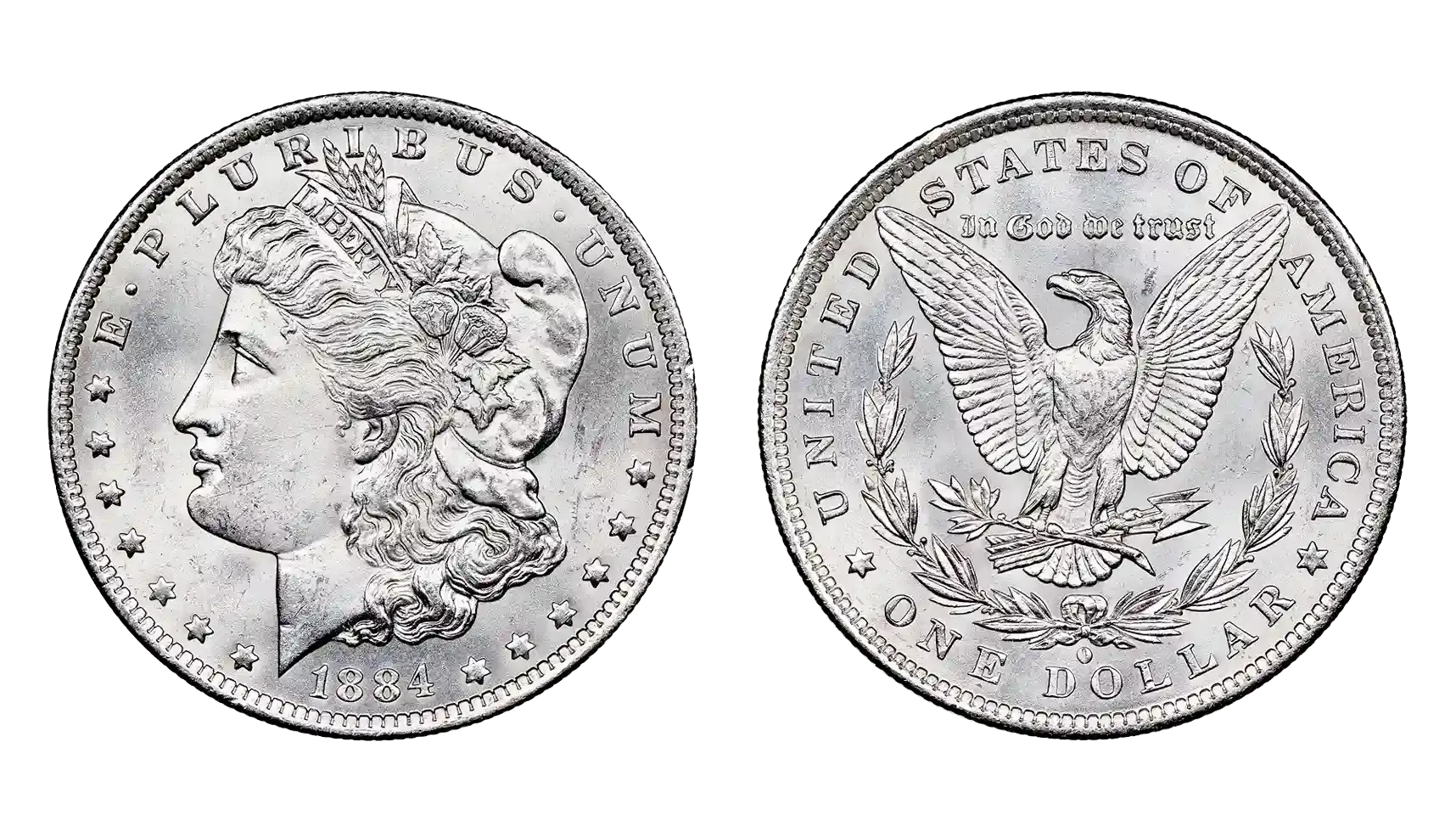
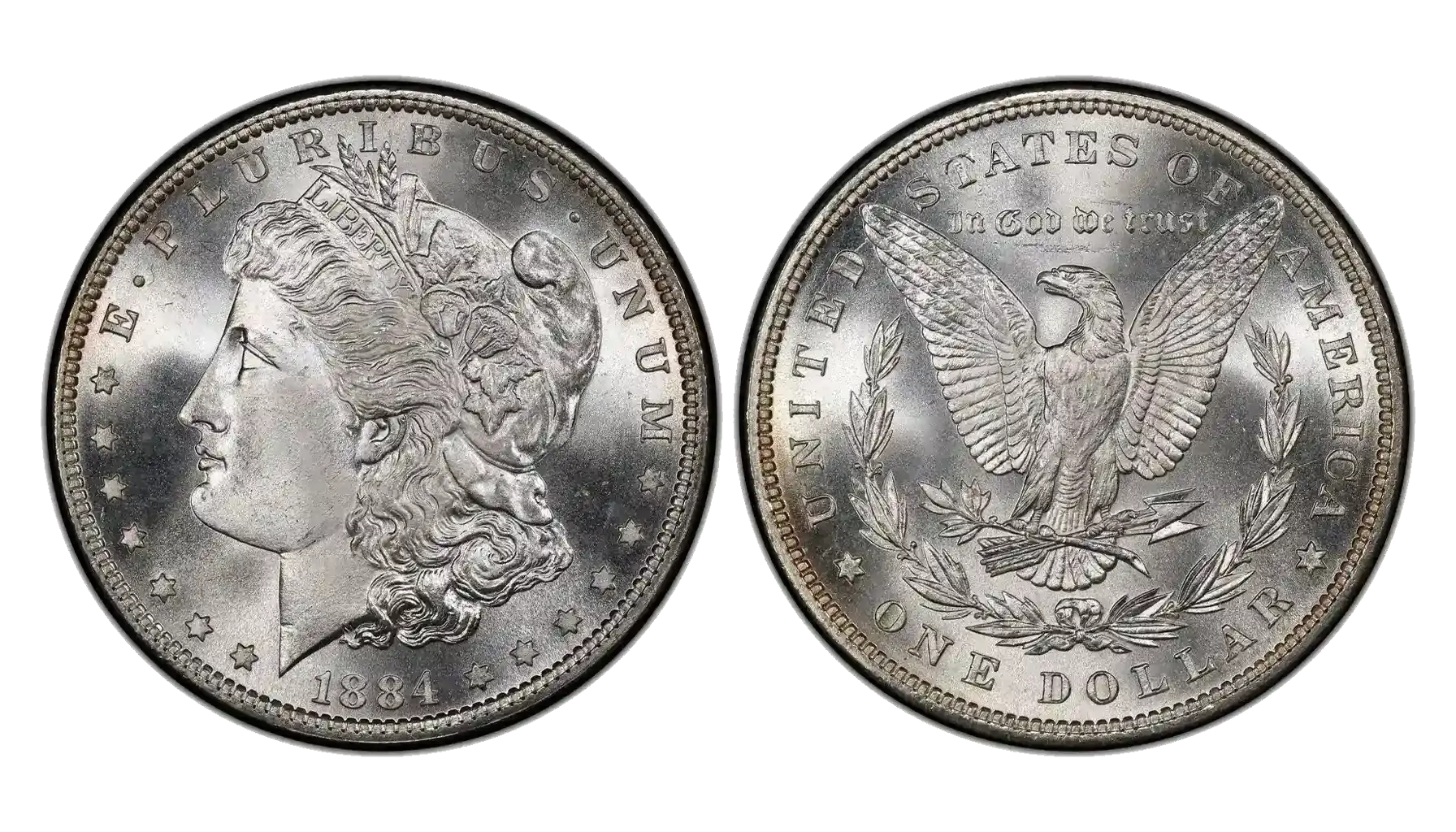
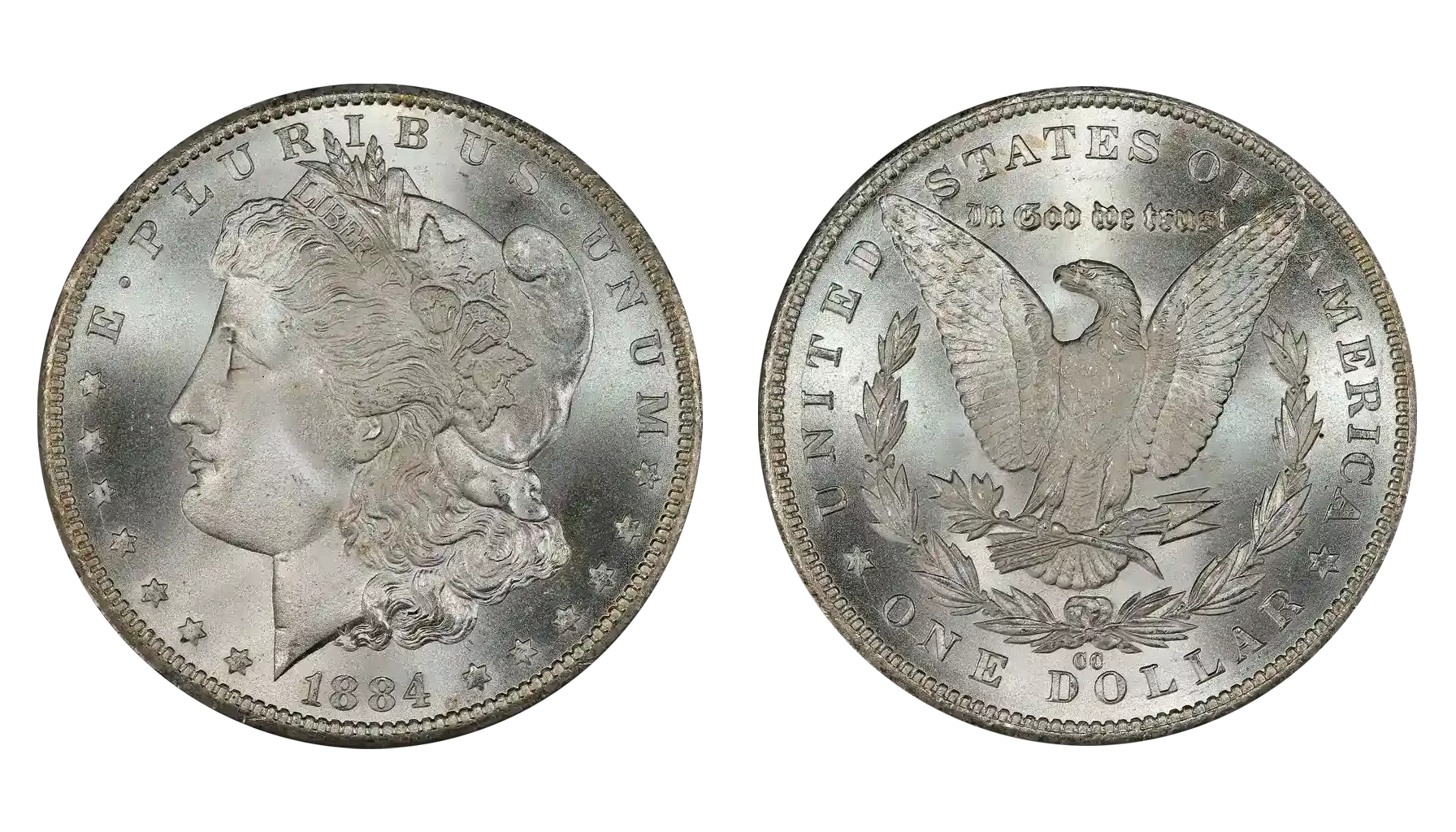
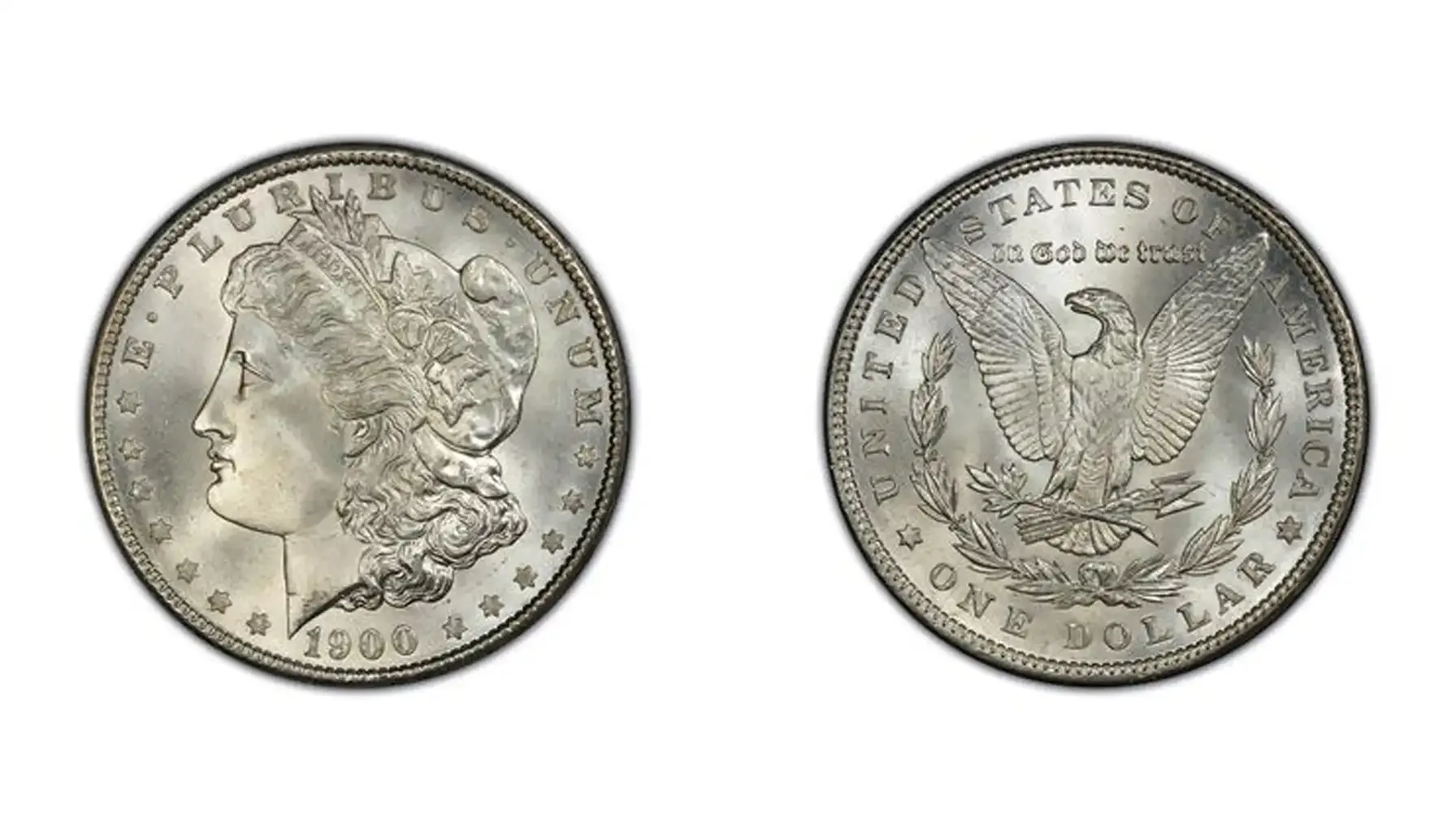
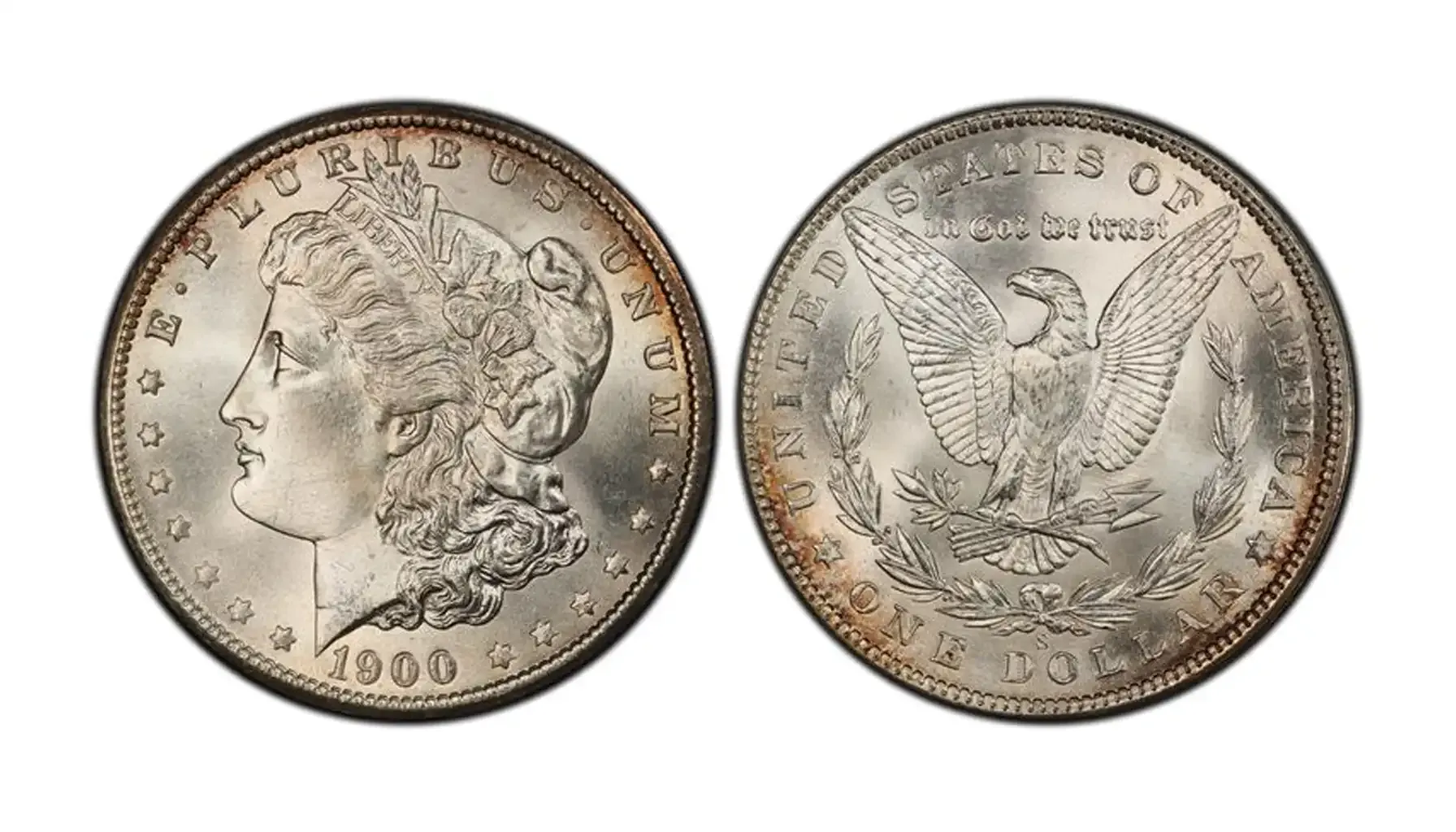
On the obverse is Lady Liberty. She wears a Phrygian cap decorated with wheat and cotton. It's about agriculture in the USA. It is surrounded by thirteen stars symbolizing the original colonies, as well as the motto "E PLURIBUS UNUM" and the date "1900".
On the reverse is an eagle with outstretched wings clutching arrows and an olive branch symbolizing war and peace. The eagle is surrounded by a wreath, and the inscriptions "UNITED STATES OF AMERICA" and "ONE DOLLAR."
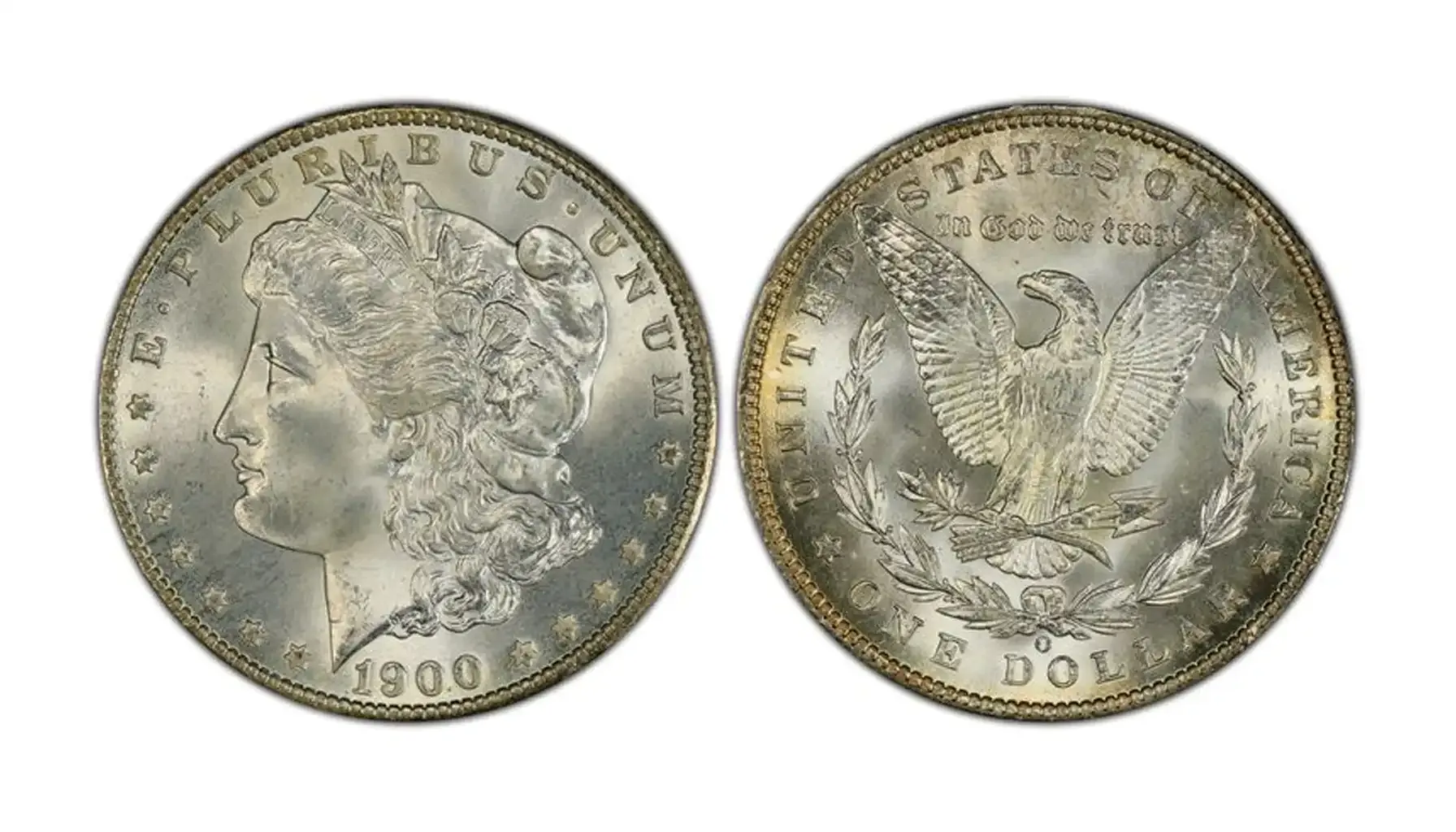
The weight is 26.73 grams and the diameter is 38.1 millimeters. They consist of 90% silver and 10% copper. This means that each coin contains about 0.77344 troy ounces of pure silver. So $1 in 1900 worth today also depends on the spot price of metals.
Production Numbers by Mint (P, O, S) and Survival Rates
Philadelphia: 8,830,000
New Orleans: 12,590,000
San Francisco: 3,540,000
However, millions of copies were later melted down, especially during the passage of the Pittman Act in 1918. This is all to help finance the First World War and stabilize silver prices.
“The U.S. eventually melted a total of 270,232,722 silver dollars. Of that amount, 259,121,554 were sold to the United Kingdom at the cost of one dollar per troy ounce.”
— unnamed Morgan Dollar profile
Wikipedia
Many other coins were widely distributed, which led to significant wear and tear. Because of this, the actual number of coins preserved, especially in their original form, is lower than can be assumed from the initial data on minting.
Where to Find the Mint Mark on a 1900 Dollar Coin
No Mint Mark | From Philadelphia |
Letter “O” | From New Orlean |
Letter “S” | From San Francisco |
Mint Mark Locations Explained (Philadelphia, New Orleans, San Francisco)
On all copies of this issue, the mint mark is located on the reverse side of the coin. You'll find it just below the eagle's tail feathers and above the letters "DO" in the word "DOLLAR."
Philadelphia: Coins minted at the Philadelphia Mint do not bear the mint mark. If you look under the eagle and see nothing, it means that your coin was minted in Philadelphia.
New Orleans: The coins of the New Orleans Mint will have a small letter "O" at this location.
San Francisco: The coins of the San Francisco Mint will have a small letter "S".
Visual Examples and Photo Callouts
Flip the coin. Look under the tail of the eagle. If it's empty, then it's Philadelphia. If you can make out the letter "O", it means she's from New Orleans.
And if you notice the letter "C", it means that the coin was issued in San Francisco. A good magnifying glass or jewelry magnifier can be useful here.
How Mint Marks Change Rarity and Value
It's all because of the circulation. If it is large, then there is a better chance of finding a well-preserved specimen. However, you should also be careful here. In some cases, a large print run may be a bad sign on the contrary.
1900 Morgan Silver Dollar Value by Mint & Grade
Value Table (G–MS Grades) with Melt VS Numismatic Price
Grade | 1900-P MS | 1900-O | 1900-S MS |
AU-50 | $50 - $70 | $50 - $70 | $100 - $150 |
MS-55 | $65 - $67 | $65 - $67 | $250 - $290 |
MS-63 | $90 - $110 | $90 - $110 | $900 - $975 |
MS-64 | $125 - $180 | $125 - $150 | $1,200 - $1,350 |
MS-65 | $260 - $350 | $185 - $300 | $1,600 - $2,000 |
MS-66 | $575 - $1,600 | $575 - $1,100 | $2,700 - $6,750 |
MS-67 | $5,000 - $25,000 | $3,250 - $12,000 | $37,500 |
Price Differences: 1900 vs 1900-O VS 1900-S
The denomination is distinguished by the brand and finish. 1900-P and 1900-O have similar, more modest values for circulating grades and lower grades of MS. However, the Philadelphia release may cost more if it is a Deep Mirror Prooflike.
How much was a dollar worth in 1900?
It had significantly more purchasing power than the dollar does today. Due to inflation, what could be bought with a dollar in 1900 requires a larger amount in modern currency.
In general, a dollar in 1900 could buy goods and services that would cost about $30 to $35 today.
Recent Auction Highlights and Market Datapoints
NGC-rated coins have slightly different price dynamics compared to PCGS. Sometimes they are sold at lower prices for comparable grades. For example, NGC MS-65 coins range from $863 to $2,650, and MS-66 coins range from $2,115 to $3,600.
For this reason, along with such services, use the Coin ID Scanner application. It will allow you to scan a coin, determine its price and collect information about it.
How to Grade and Inspect Your 1900 Morgan Dollar
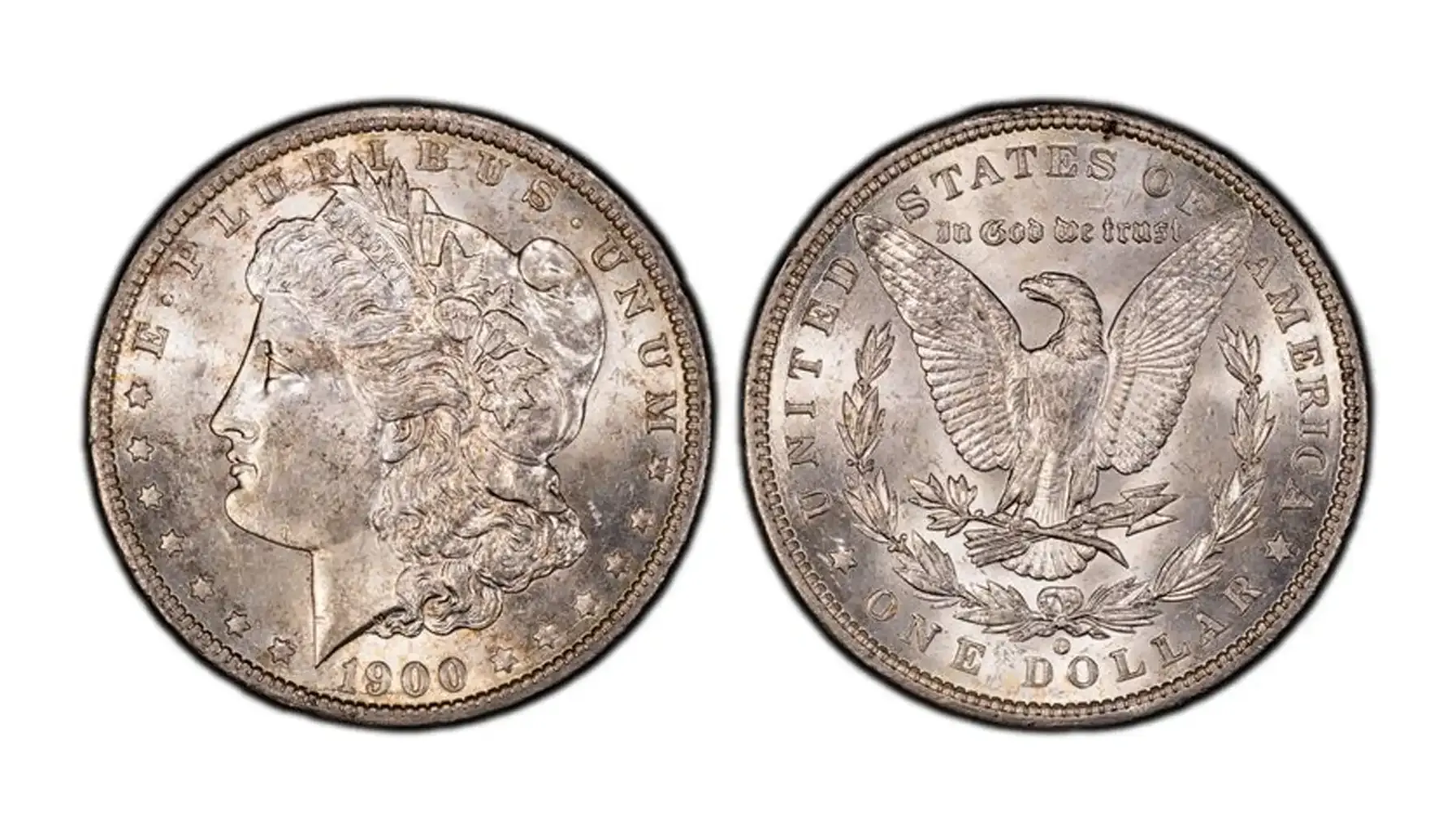
Key Features Graders Look for (Strike, Wear, Luster)
Strike: It is how clearly the design elements are imprinted on a coin. Strong embossing means that all the small details are clear. A weak stroke leads to blurring or incompleteness of details.
Wear: this is the most obvious indicator of quality. The wear is manifested in the smoothing of the highest points of the pattern due to the reversal.
Luster: This is an original effect that appears on coins in circulation when they are tilted in the light. This is caused by the flow lines of the metal during coinage.
DIY Inspection Checklist before Professional Grading
Use a good, bright, diffused light source.
Use a 5-10-fold jewelry magnifying glass
Never touch the front and back sides with your fingers.
Examine Liberty's hair above the ear, on the cheek, and at the highest points of the eagle's chest and wings
Look for scratches, dents, bag marks, and any other signs of cleaning.
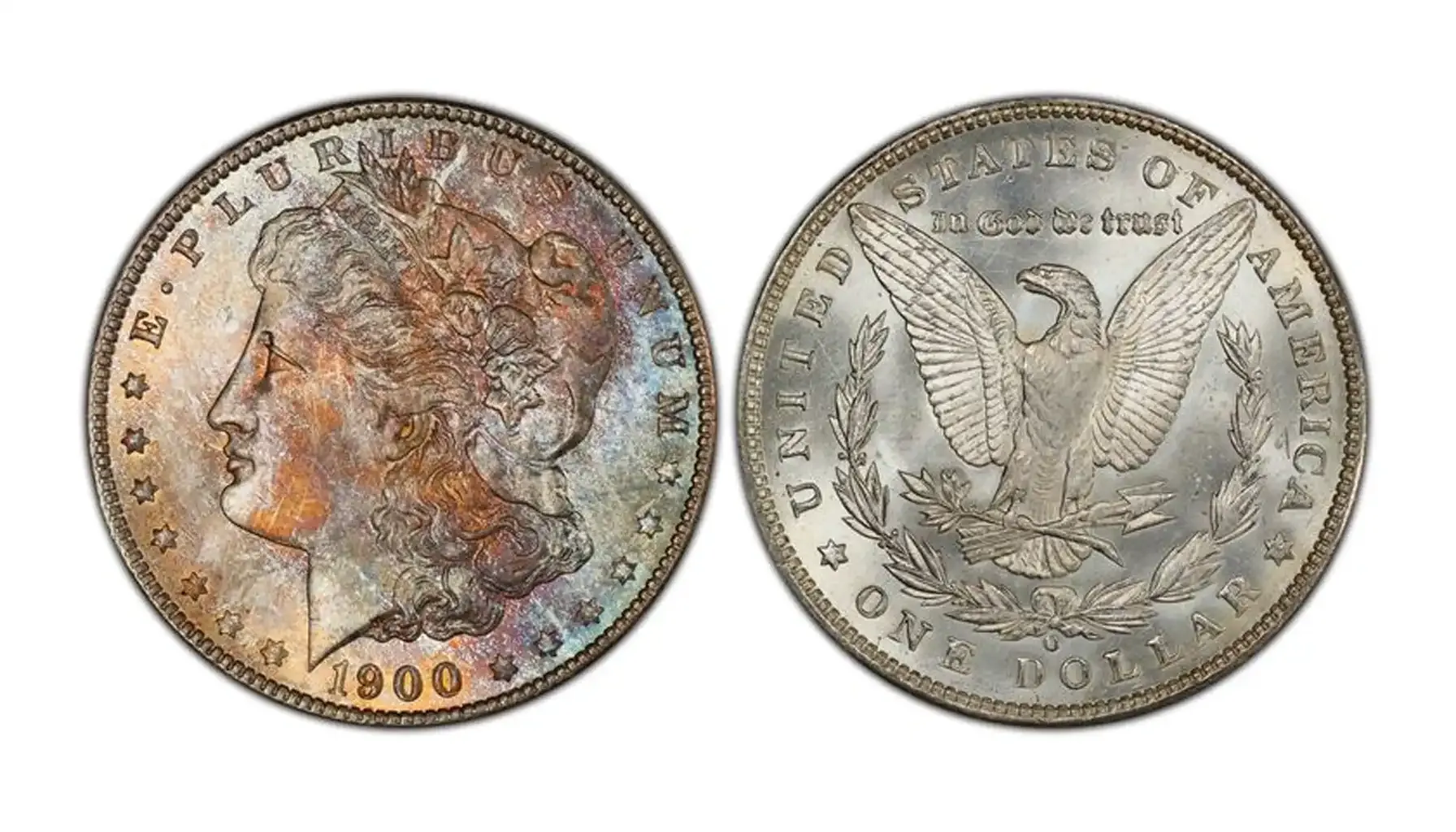
Natural toning can be attractive and even add 1900 silver dollar value, but artificial toning is the opposite.
When to Send to PCGS/NGC for Certification
If your 1900 coin seems really rare to you, then send it for certification to PCGS professional grading service or NGC.
They will verify the authenticity of the coin's damage and handling. Also, if you want to sell it, then certified coins are more expensive because buyers trust the quality and authenticity.
Rare Varieties, Errors and High-Value Specimens
Known Die Varieties and Collectible Markers
Doubled Dies: Design elements are shifted or doubled. This usually happens with a date or inscriptions.
Repunched Mint Marks (RPMs): The mint mark has been stamped several times. As a result, there is a visible overlap or shadow.
Die Cracks/Breaks: Minor cracks that appear on the surface of the coin due to the stress on the stamp.
Clashed Dies: Prints from the front of the stamp appear on the reverse. Or vice versa, when the stamps hit each other without a gap between them.
Error Coins and How They Affect Value
Off-Center Strikes: The planchet was not precisely centered during coinage. As a result, part of the drawing was missing, and an empty crescent moon appeared.
Broadstrikes: The coin was minted without a retainer. She became wider and thinner than usual.
Wrong Planchet Errors: The copy was minted on a letterhead intended for a different denomination.
Double Strikes: The coin was minted twice, with the second coinage slightly offset.
Famous Sales and Reference Examples
As an example, an ideal instance of MS-67+ 1900- years of release. It is with exceptional brilliance and chiseling. It can easily surpass the $10,000 mark. Coins with errors that have been authenticated are also the most expensive.
Care, Storage and Preservation for Morgan Dollars
Storage Options and Environmental Risks
Air-Tite Holders: These are hard plastic capsules that securely hold the specimens. They do not allow them to come into contact with each other or be exposed to the air.
PCGS/NGC Slabs: Professionally processed specimens are supplied in sealed holders. They provide the best protection.
Mylar Flips: Safe for storing polyester collections. Avoid any PVC molds. They may contain chemicals that turn coins green and permanently damage their surface.
Coin Cabinets/Safes: Store your coins in stable conditions, away from sudden temperature fluctuations, high humidity and direct sunlight. A cool, dry place is ideal. Humidity can change the value of 1900 silver dollar, because of corrosion, especially on silver.
Handling, Cleaning (What Not to Do) and Insurance
Always hold the coin by the edges. Oils and acids on your skin can leave indelible fingerprints. They are almost impossible to remove.
Never clean them. Cleaning, even the most gentle, reduces its value. When cleaning, the original patina and shine disappear, leaving microscopic scratches that are visible to inspectors.
If there are valuable items in your collection, it is better to insure it. Many insurance companies now offer many options.
Provenance, Documentation and Increasing Resale Value
Keep track of where and when you purchased a copy. Also all previous owners, if known.
Keep all certificates of authenticity, verification reports, or purchase receipts.
Make notes about the instance and take high-quality photos of it.
FAQ
How much is a 1900 silver dollar worth today?
Everything, of course, depends on many aspects, but here's the main thing: the cost of coins issued in Philadelphia or New Orleans is from 65 to 110 dollars.
Is the 1900-S Morgan dollar rare?
Yes, this is the rarer version of all the others in this release. The circulation is quite small.
Where is the mint mark on a 1900 dollar coin?
It is on the reverse, below the eagle's tail feathers. Philadelphia coins have no mark, New Orleans coins have an "O," and San Francisco variants have an "S."
What is the silver content of a 1900 Morgan dollar?
It is 90% silver and 10% copper. Also it contains 0.77344 troy ounces of silver.
How many 1900 silver dollars were made?
In general: 24 960 000. By Philadelphia mint: 8,830,000; by New Orleans mint: 12,590,000; by San Francisco mint: 3,540,000.

 Facebook
  X (Twitter)
  Pinterest
  LinkedIn