Contents:
Rich nature, culture, cuisine, and unusual entertainment — all of this is Thailand. But as for coins of Thailand, things are a bit more diverse and complex here. Many numismatists use a coin checker to decide whether to acquire a particular coin or not. And you, too, will now learn about this in our guide.
Overview of Thai Coins
The Thai Baht banknotes and coins are considered part of one of the oldest monetary systems in the world. The main currency unit is the Baht, with Satang as a fractional denomination. One Baht is equal to 100 Satang.
These specimens have a unique design, depicting current monarchs and various architectural objects and significant symbols of Thailand. Over a long period, the materials from which these specimens were minted have changed considerably; they have evolved from precious metal ingots to modern alloys.
Today, most circulating high-value Thai Baht coins are made of nickel, copper, aluminium bronze, or are part of bimetallism. It is thanks to these compositions that the specimens are durable, long-lasting, and well-suited for daily use.
Coin Thailand Currency System
Although 1 Baht is equal to 100 Satang, Thai Baht coin denominations for satang of 1, 5, and 10 are rarely encountered in circulation; more commonly used are 25 and 50 Satang, as well as 1, 2, 5, and 10 Baht.
Prices in stores are usually rounded to the nearest 25 or 50 Satang, or to a whole Baht.
Year of Minting
There is also a unique aspect here. The year of minting on the Thai Baht banknotes coins is indicated according to the Buddhist calendar, which is 543 years ahead of the Gregorian calendar. For example, 2550 BE corresponds to 2007 in the commonly accepted Gregorian calendar.
Thailand Coins in Circulation
King Maha Vajiralongkorn: Introduced from 2018
Type | Material | Obverse | Reverse |
25 Satang | Copper | King Maha Vajiralongkorn | Wat Phra Mahathat Woramahawihan |
50 Satang | Copper | Wat Phra That Hariphunchai | |
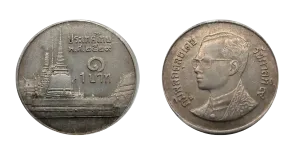
1 Baht | Copper-Nickel | Wat Phra Kaeo | |
2 Baht | Nickel-plated Steel | Golden Mount at Wat Saket | |
5 Baht | Copper-Nickel | Wat Benchamabophit | |
10 Baht | Bimetallic | Wat Arun |
Rare Thailand Coins
Pot Duang
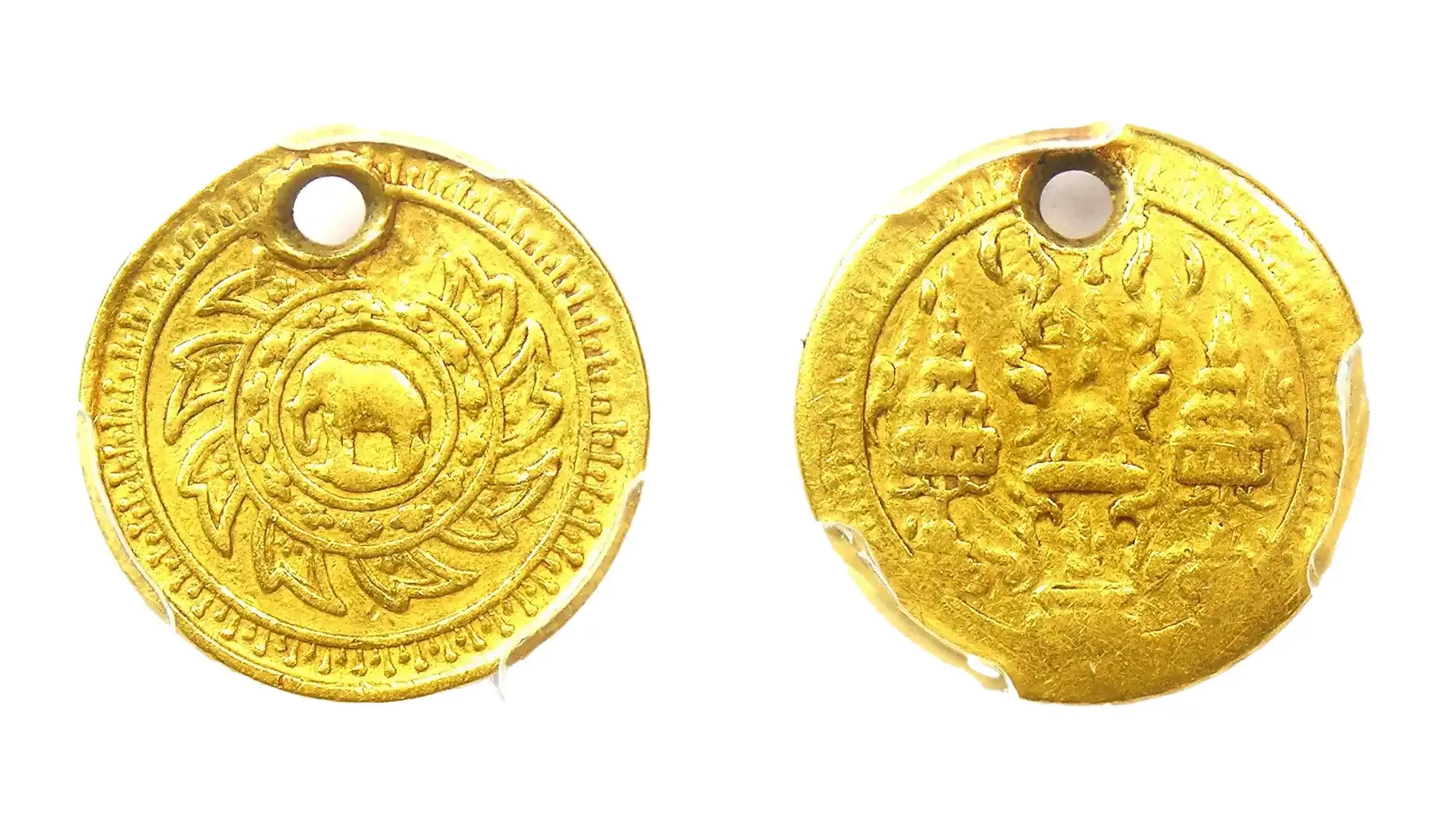
These are the so-called "bullet coins." They are the ancestors of Thai currency and were used in Siam, the old name for Thailand. For many centuries, they were the main currency in circulation before European-style round coins appeared. They are quite rare due to their ancient existence. They have a unique shape and are historically significant.
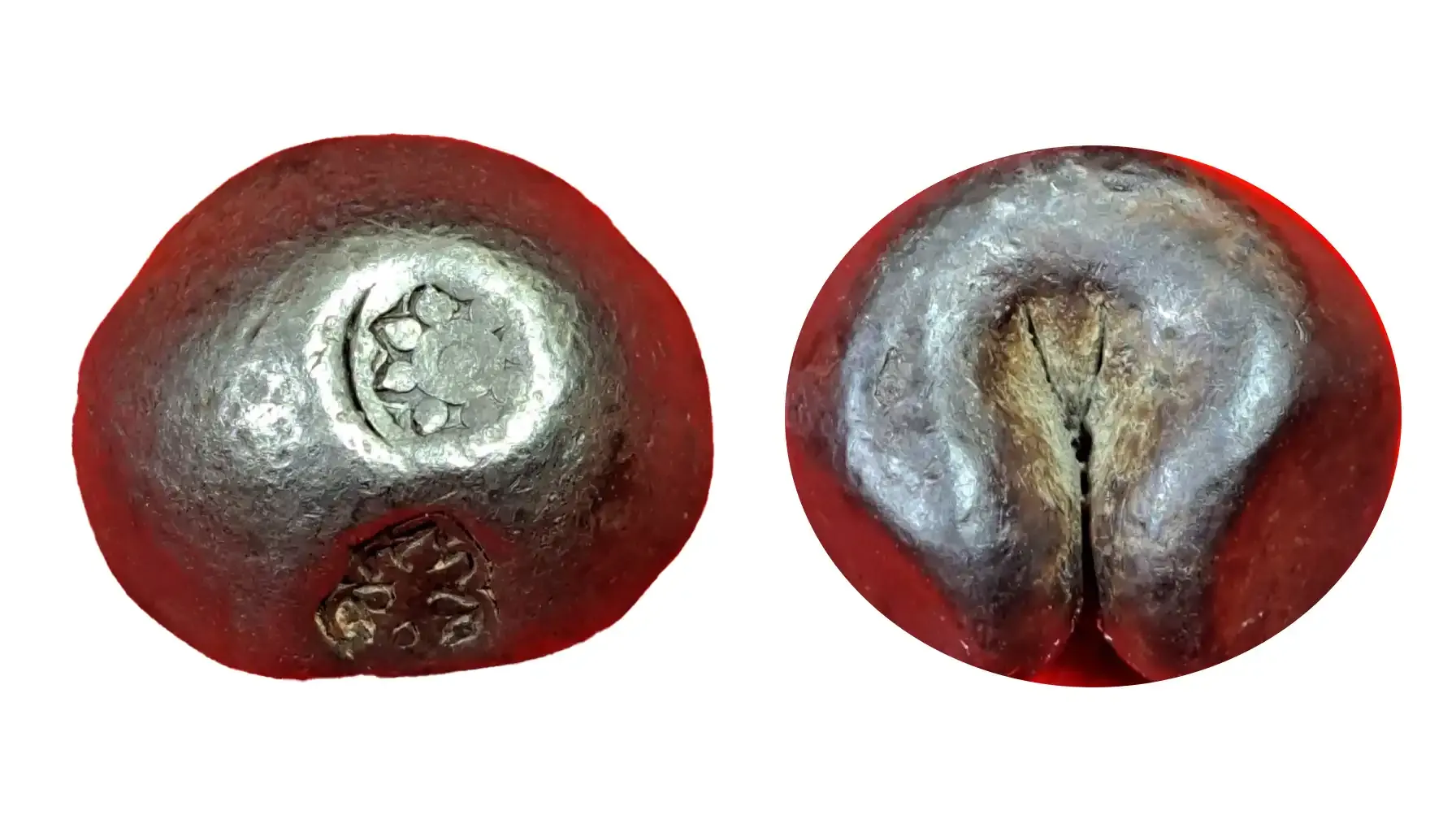
Each specimen bears imprints of royal symbols, which changed with the accession of a new ruler. Early issues from the Sukhothai or Ayutthaya kingdoms are considered particularly valuable. These specimens are very rare and truly popular.
Material
Primarily silver coins. Gold is sometimes found, but it is quite rare.
The "Crossed Swords" Baht
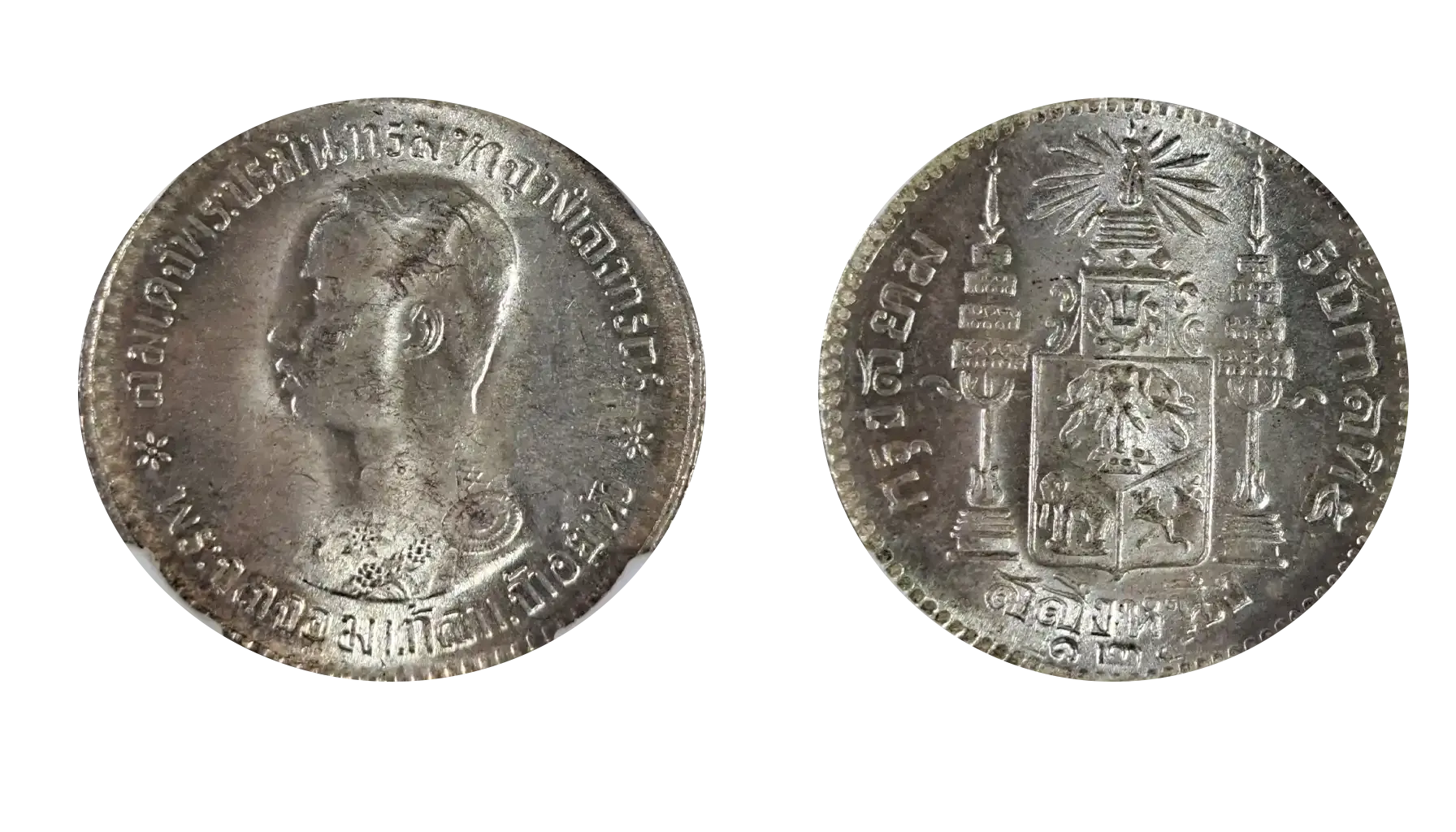
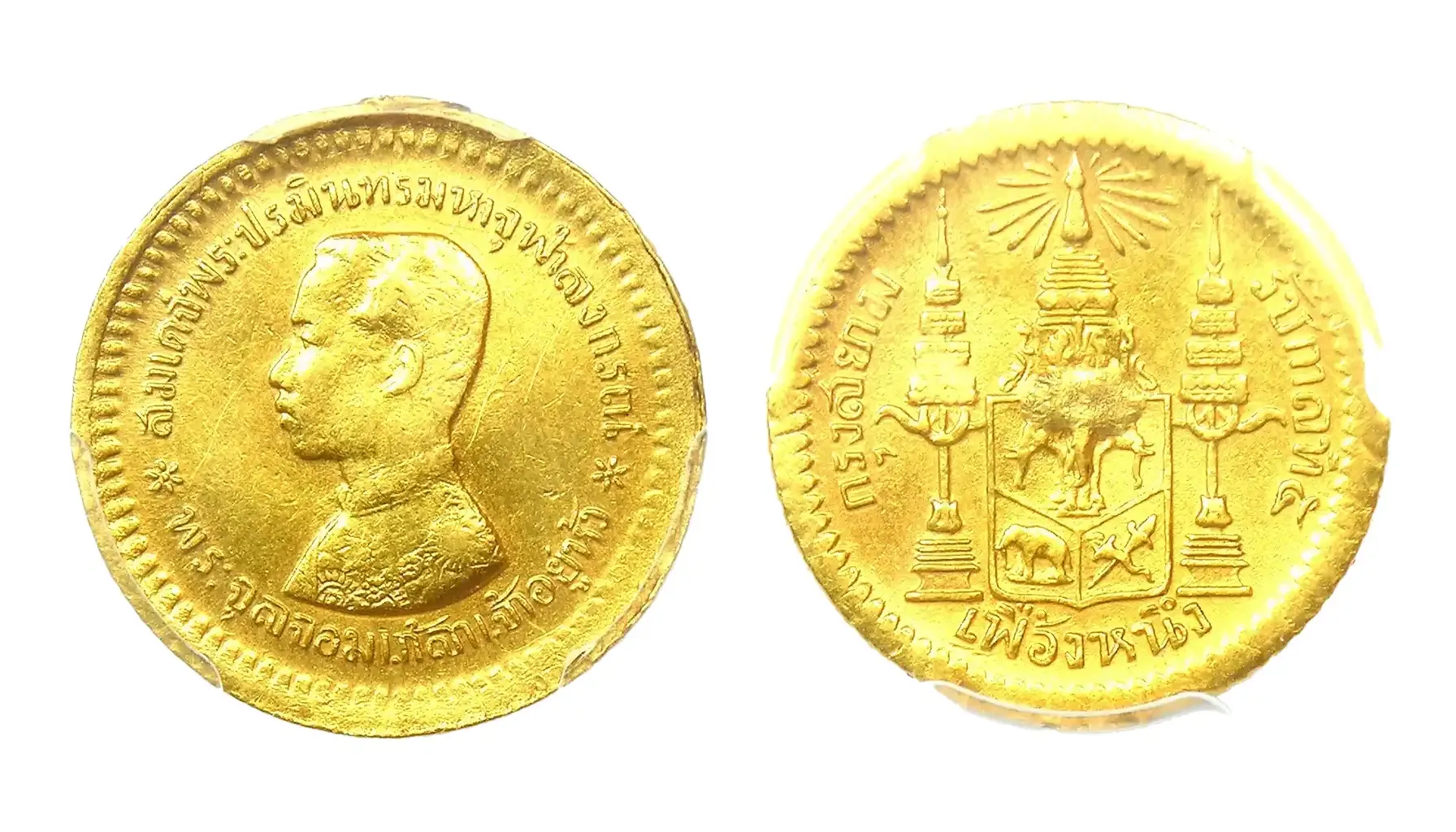
Chulalongkorn's reign, from 1868 to 1910, saw him become one of Thailand's most famous and revered rulers. He is known for his reforms that greatly contributed to the country's development.
His coins are witnesses to Siam's transition to a modern, European-style monetary system. The obverse features the king's portrait in military uniform. The reverse displays the Thai coat of arms, consisting of two crossed swords under a royal crown, encircled by a wreath.
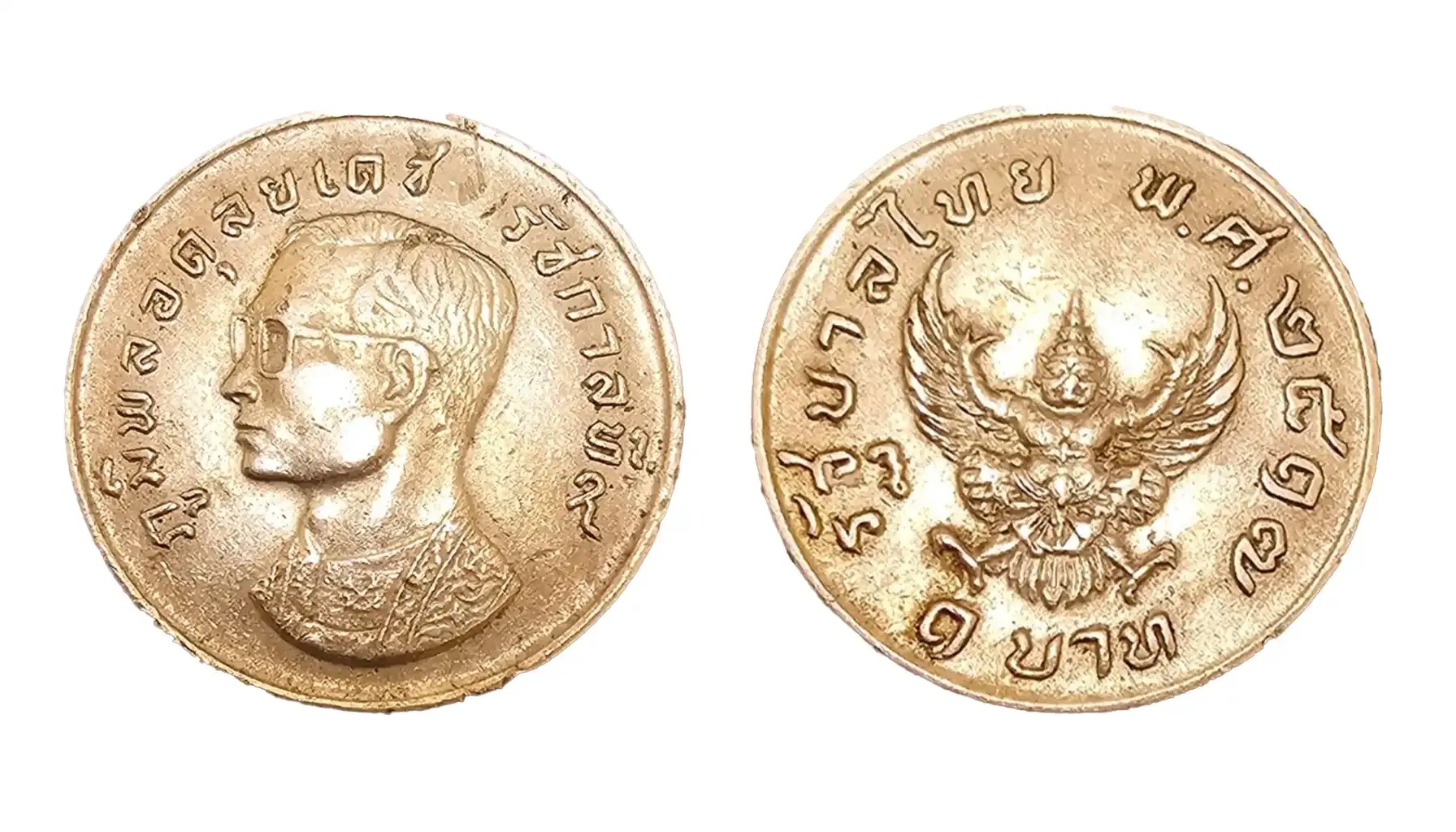
King Bhumibol Adulyadej
This is one of Thailand's rarest and most interesting specimens. It has a denomination of 10 Baht and was minted in 2533 BE, which corresponds to 1990 in the Gregorian calendar. It has one of the lowest mintages in history, which is why it is so rare and popular.
The obverse features a portrait of the King, and the reverse shows the famous Wat Arun temple in Bangkok. The specimen itself is bimetallic, with a nickel ring and a copper centre.
Thailand Coins Value Guide
The value of these specimens can range from a few dollars to thousands, depending on the year and other factors. For example, the most expensive coins are in preservation states, uncirculated or about uncirculated. However, when it comes to ancient coins, there may be a different grading, since very few specimens have reached uncirculated quality.
It is also important to consider mintage: the lower the mintage, the higher the price. Some specimens individually fetch high prices because of events associated with them, so certain issues may be in increased demand — for example, Rama IX issues are valued highest among local collectors. Precious metal content also matters: base alloys are cheaper than precious gold or silver.
Identifying Thai Coins
Steps for Identification
1. Identify the Monarch on the Obverse: The Most common are King Bhumibol Adulyadej or King Maha Vajiralongkorn.
2. Determine the Denomination: This can be one, two, five, ten, or indicated by Thai numerals.
3. Minting Year: It is usually indicated on the reverse of the coin, less often on the obverse. Be aware that it is given according to the Buddhist calendar.
4. Reverse Design: The reverse depicts a specific temple or symbol.
1 Baht | Wat Phra Kaeo |
2 Baht | Wat Saket (Golden Mount) |
5 Baht | Wat Benchamabophit |
10 Baht | Wat Arun |
25 Satang | Wat Phra Mahathat Woramahawihan |
50 Satang | Wat Phra That Hariphunchai |
5. Material and Edge: Copper-nickel coins are silvery, aluminium bronze is yellowish, bimetallic 10 Baht coins have two colours. As for the edge, it can be smooth, reeded, or inscribed.

 Facebook
  X (Twitter)
  Pinterest
  LinkedIn