Contents:
Lira is a legendary currency, even if, by today, it is almost gone. Yet, this currency deserves its spotlight, and today, we will look into its history and value.
What is Italian lira coins value? How many big changes did it have over the years? Does it have a symbol? We shall answer all these questions and even more.
In the past, only experts could identify rare coins, and it would cost you time and money. Today, apps can alleviate some of the pain and recognize coins for you.
Gold Lira Coin History and Gold Lira Coin Value
As a gold coin, the Italian lira is very precious. Before we look into its value, though, we should look into its rich past.
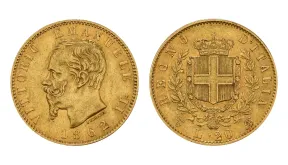
Lire had a “lifespan” from 1861 to 2002. Since its arrival, lira were minted in copper, gold, and silver. Lira gold coins, in particular, were primarily minted during the Kingdom of Italy (1861–1946) era.
Alas, since 2002, lire have been replaced with euros after Italy entered the Eurozone. Now all we can remember about the currency is its coins. We don’t even have an Italian lira symbol to speak of, as often the symbol of a pound (£) was used to signify it.
“This is a historic change, and Italians realize that… To be sure, the lira is already missing …”
— Tommaso Castellani
United Press International
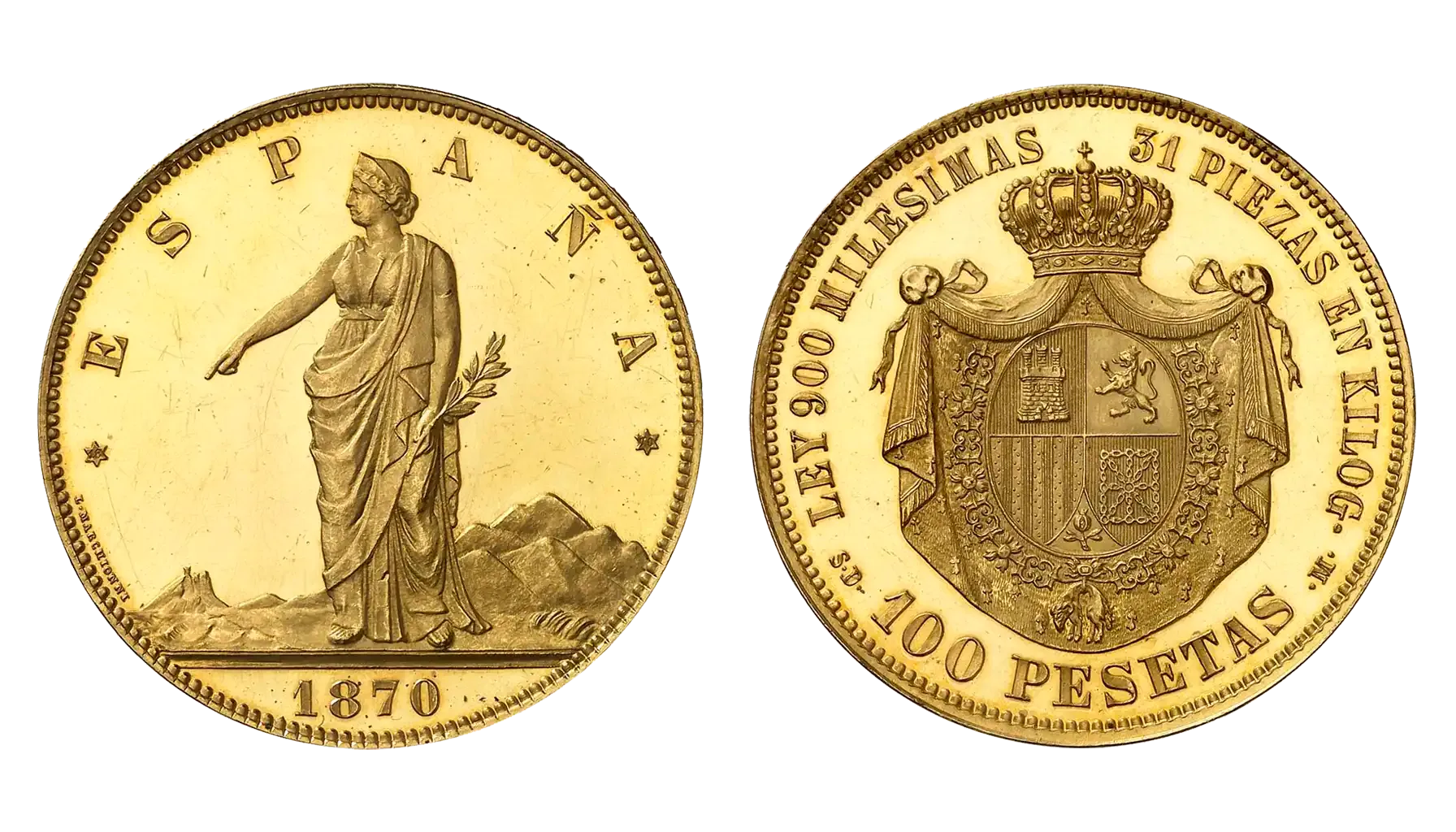
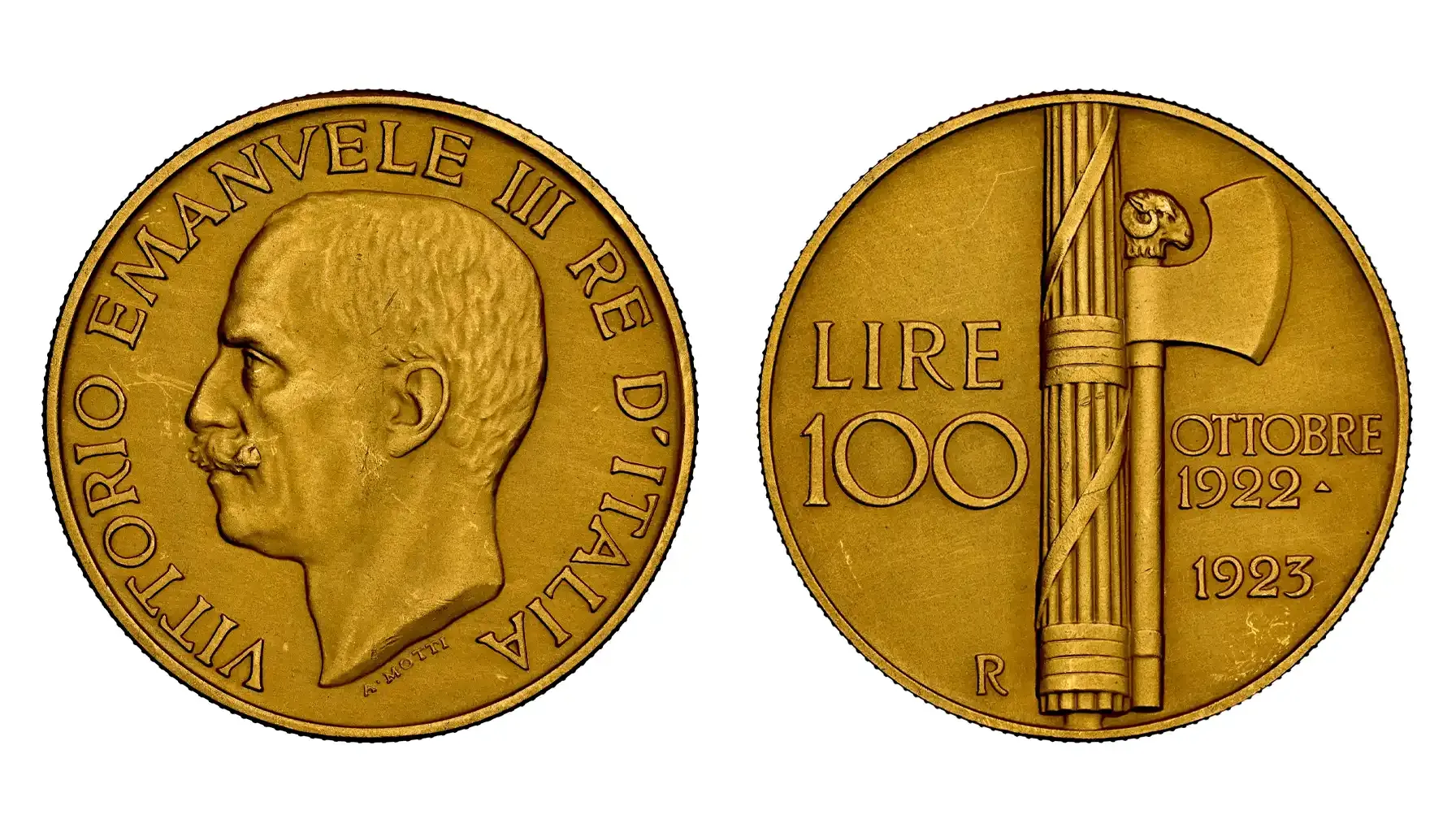
Still, even discontinued, this currency still holds a lot of value among collectors. The most recognized gold issues came in these denominations:
20 Lire
50 Lire
100 Lire
Of course, there were other denominations, but those were less valuable. Larger denominations, such as the “100”, were often produced in smaller quantities.
In the modern market, lire are very attractive. Their price is influenced by:
Gold content: Usually, the higher the denomination, the more the gold. The current gold spot price fluctuates daily, so if you decide to trade a piece, it would likely go for a different price than you once bought it for.
Rarity: Coins from low-mintage years and proof issues are scarce, making them rare. Collectors are always interested in rare picks.
Condition: Well-preserved examples preserved in Mint State are rare to come by, especially for old coins.
Historical significance: Some coins were tied to short-reign monarchs or transitional periods, making them rare.
Now, with how fickle gold prices are and how many varieties exist, one could barely come up with their general values.
Denomination | Gold Content | Starting Value (USD) | Approximate Value (EUR) |
20 Lire | 5.81 Grams with .900 fineness) | At least $686 | ~€591 |
50 Lire | 14.51 Grams with .900 fineness) | At least $1,715 | ~€1,476 |
100 Lire | 23.03 Grams with .900 fineness) | At least $2,720 | ~€2,343 |
Keep in mind that each issue technically had a different gold content. For example, 50 lire started with almost 15 grams but regressed down to almost 4 grams of gold in the bits.
Overall, gold lire are very valuable, and most cost at least several hundred dollars. As gold demand in 2025 is rising, these coins are sold like hot butter.
How Italian Lira Coins Have Changed Over Time
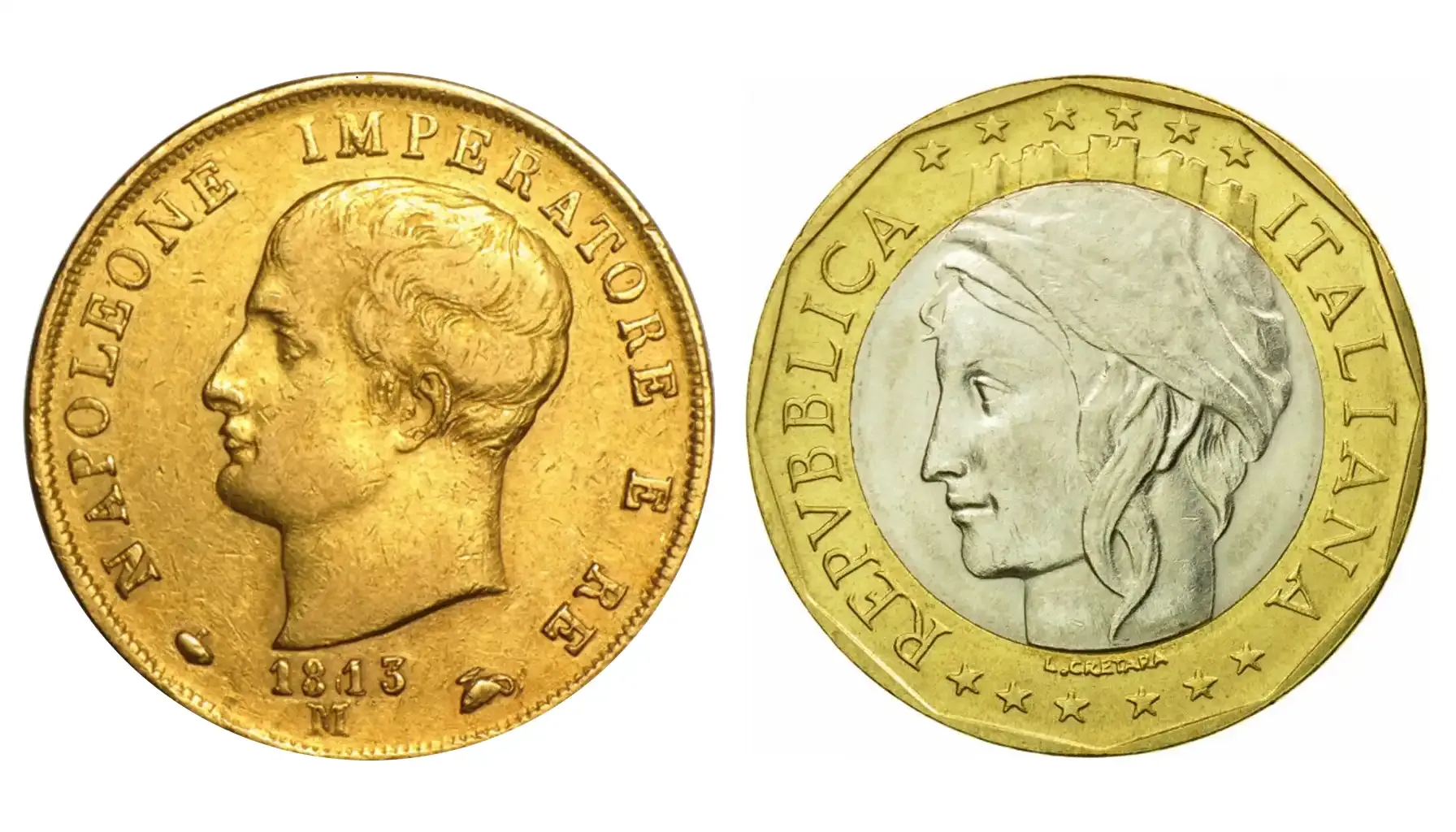
For a coin that lived through the mid-19th century until the final withdrawal in 2002, lire sure has changed a lot. But how exactly?
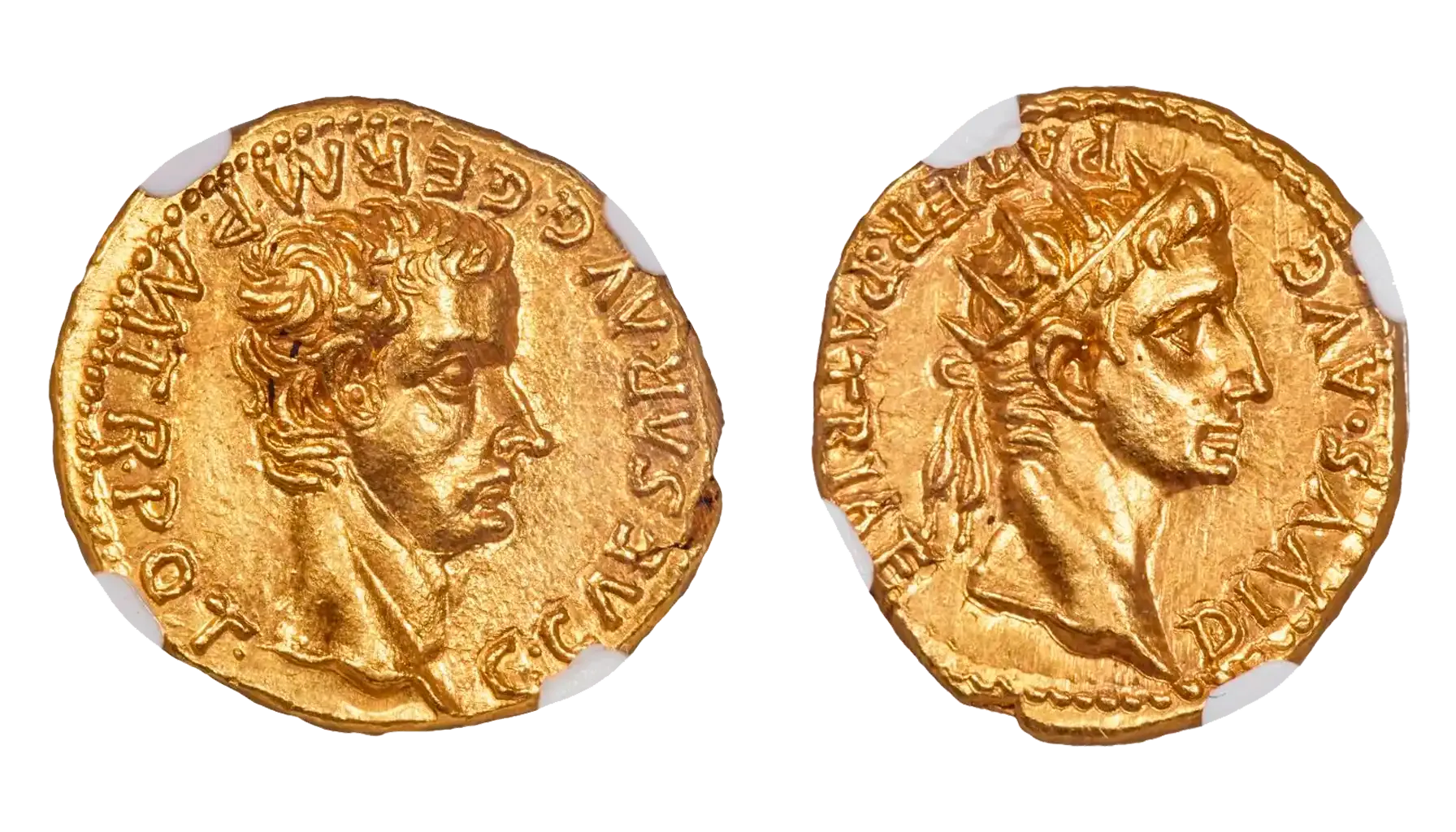
The earliest issues appeared during the Napoleonic era. Only 20 and 40 lire came in gold composition. The early designs bore Napoleon’s portrait and displayed monarchical themes.
During the Restoration period (which came after Napoleon was defeated), these coins almost faded into obscurity and were officially used only in northern Italy and Sardinia.
Since the Kingdom of Italy was established in 1861, the lire came back to power. They were minted in big numbers, though mostly in copper. A bit later, the currency would be produced in cupronickel, too.
The coins remained unchanged for decades until World War I. Rising metal prices pushed the government to reduce silver content and focus on cupro-nickel and aluminum-bronze bits.
After the fall of the monarchy in 1946, the coins took on a modern look. Now, instead of monarchs, the designs would feature agricultural motifs and industry. Aluminum became the most common metal due to its low cost and light weight.
The last change came in 1997, with an attempt at bimetallism. The government tried to make a new composition from several metals, but it was already too late. Lire was replaced with the euro (which was bimetallic, too).
Conclusion
Thus, the story of an old Italian coin came to an end. Joining the Eurozone demanded sacrifices, and Italy had to change to a new currency.
Europe has had many currencies throughout the years. Would you like to learn more about them? The Coin ID Scanner app can scan such coins and tell their values, years, and history. The main function of the app is coin identification, but it is also an encyclopedia of all kinds of coins, with guides and blogs.

 Facebook
  X (Twitter)
  Pinterest
  LinkedIn