Contents:
First of all, note that it is not a single, officially issued coin type, but a collector term used for ancient Carthaginian money associated with Hannibal Barca’s era (late 3rd century BCE), and in some cases coins believed to depict him symbolically or historically.
Many coin collectors are interested in these historical specimens. But why?
Introduction to Hannibal Barca Coins
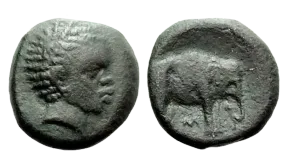
These are silver and bronze money pieces struck by Carthage during the Second Punic War. They were used to pay troops in Iberia, North Africa, and Italy.
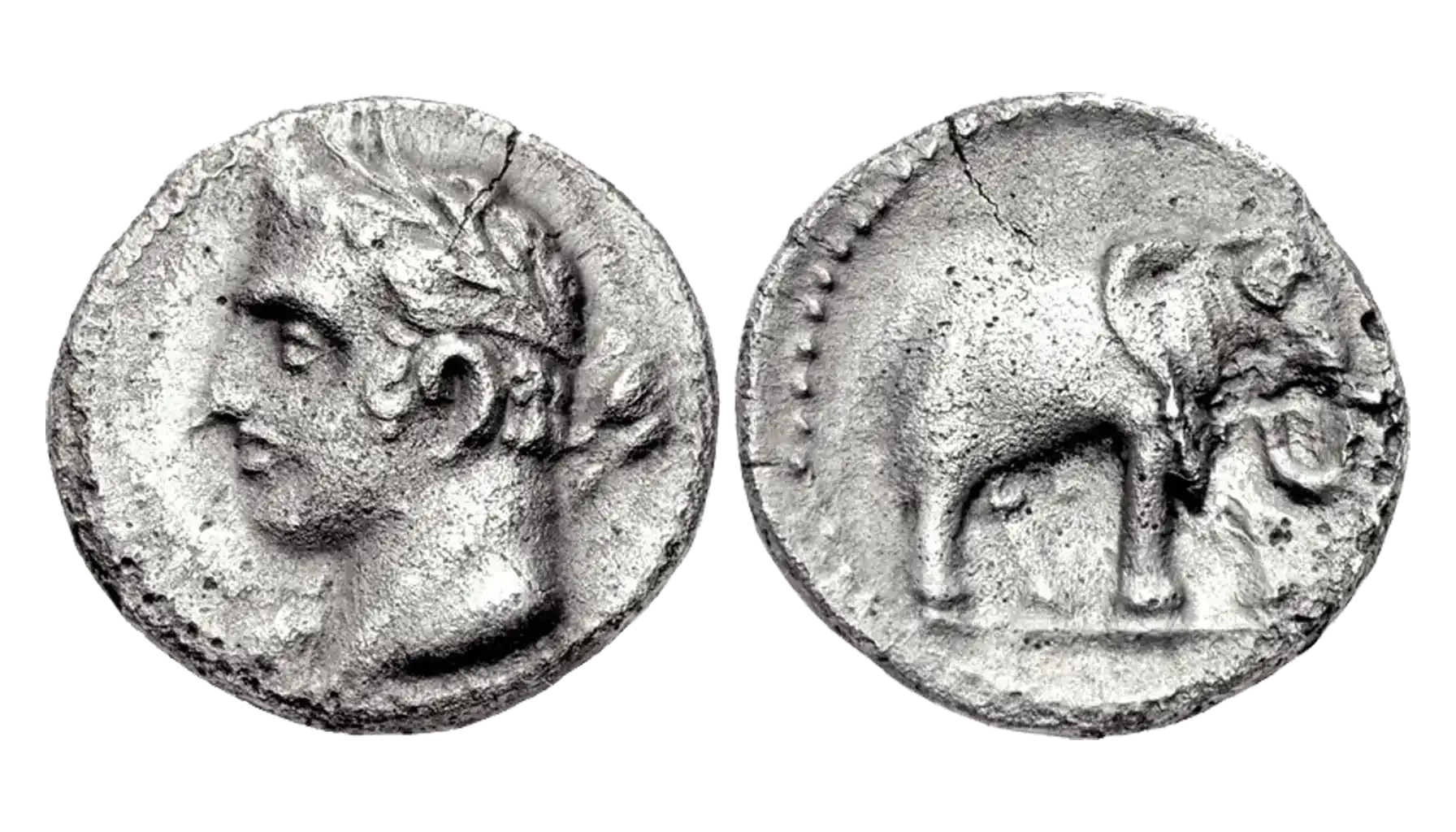
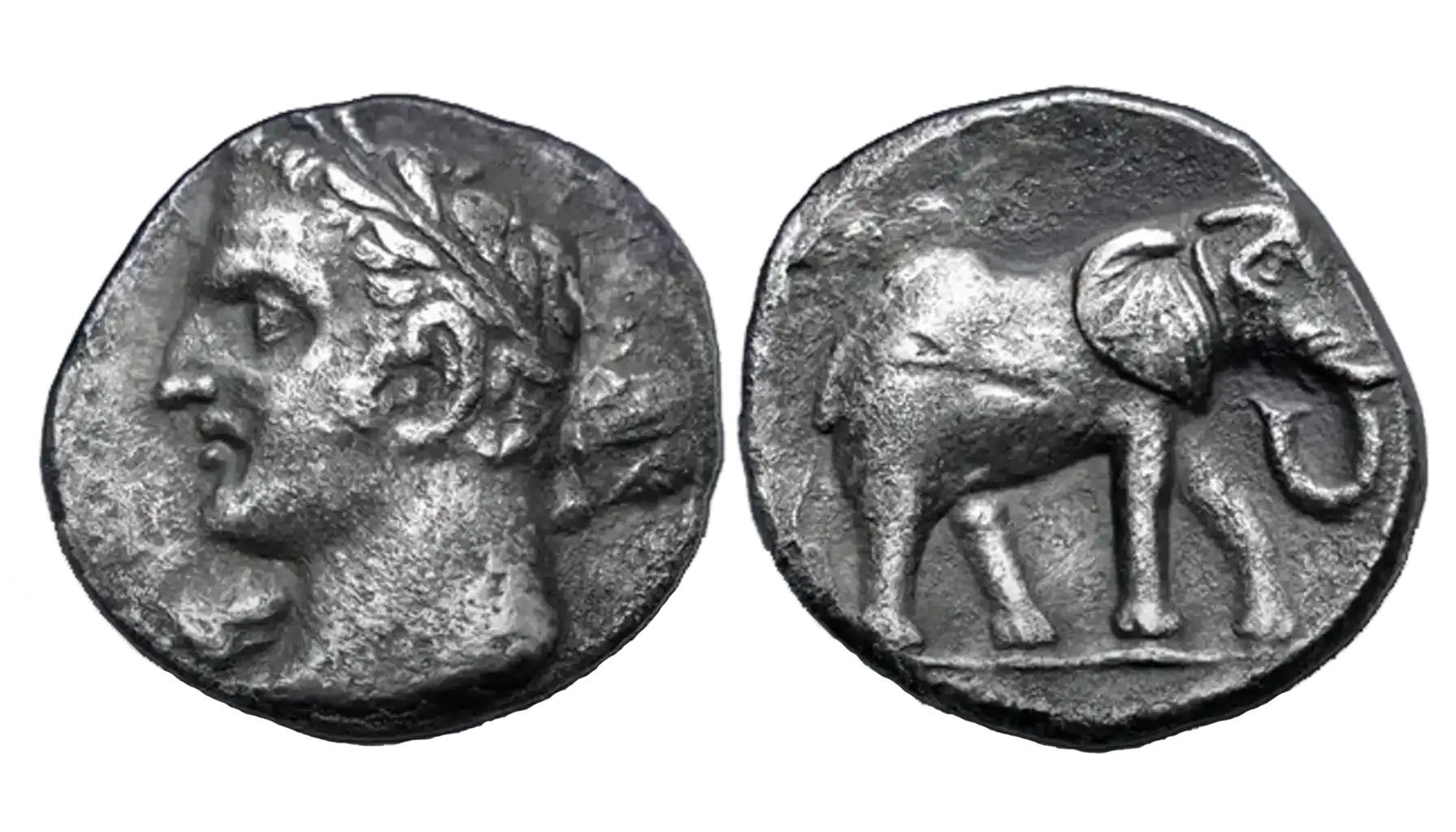
They may feature:
Male head wearing a laurel wreath or helmet (often interpreted as Melqart or a generic Carthaginian hero)
Reverse with a horse, palm tree, or war elephant
Punic inscriptions
They are often called “Hannibal coins” because they were minted during his lifetime, financed his army and campaigns, and circulated in areas under his control.
Important: Hannibal’s name does not appear on these metal money pieces.
Historical Context of Hannibal and Carthage
In the late 3rd century BCE, Hannibal Barca became the leading military figure of Carthage. Warfare was funded through tribute, trade, and coinage. So, minting was a necessity.
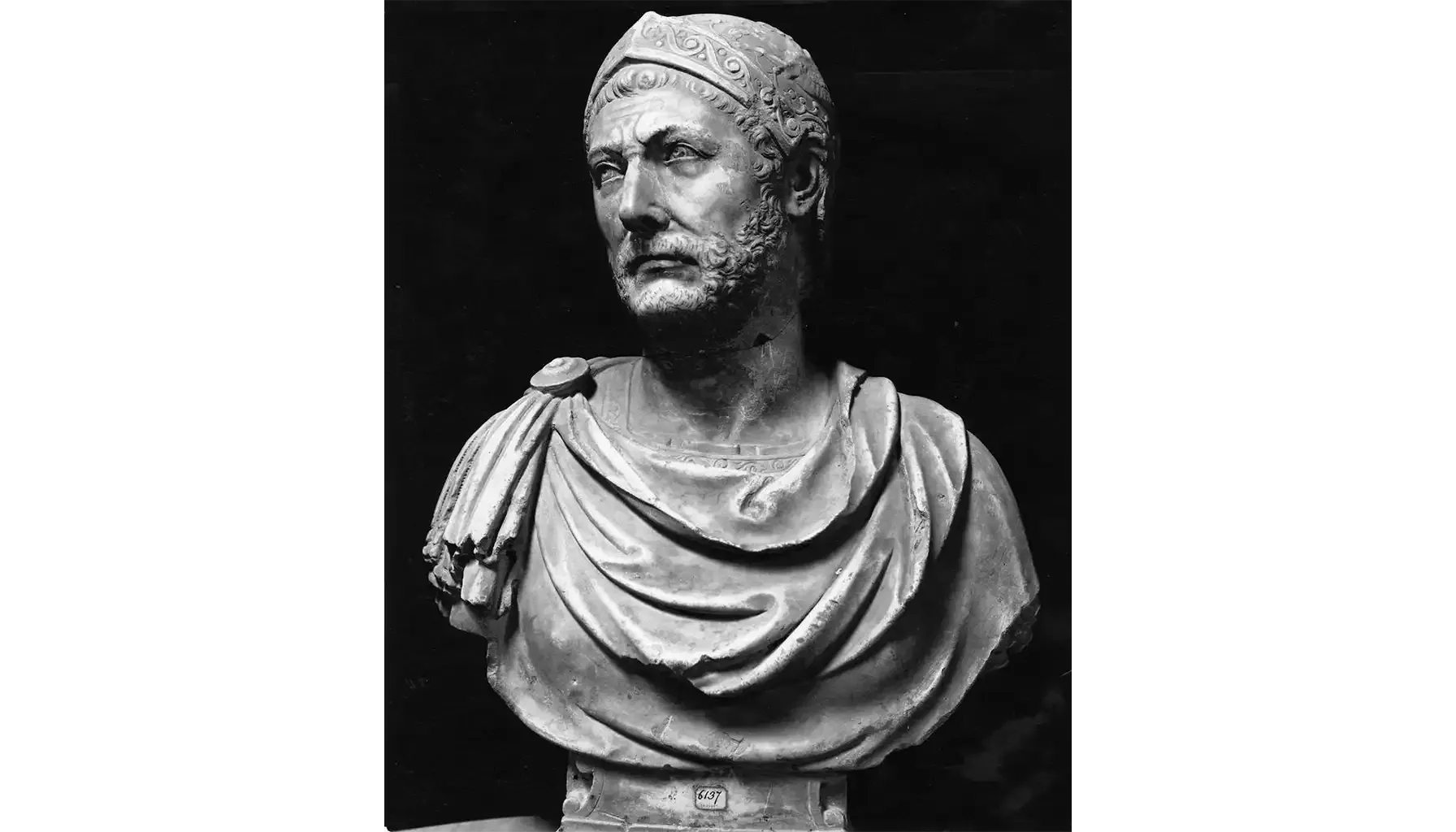
The Second Punic War (218–201 BCE) against Rome took place there. After earlier defeat, Carthage rebuilt its strength in Iberia, where Hannibal took command and launched his campaign, including the crossing of the Alps.
Hannibal coins Carthage produced were struck to pay troops and support long-distance operations. They feature traditional symbols, e.g., horses and elephants. Carthage did not draw living leaders on its coinage, which is why no confirmed ancient specimen shows Hannibal himself.
Related article: Ancient Money Value Guide.
Types of Hannibal Coins
Type | Metal | Region of Issue | Imagery | Notes |
Carthaginian wartime | Silver, bronze | North Africa (Carthage) | Male head (Melqart or heroic figure), horse, palm tree | Financed military operations |
Iberian–Carthaginian | Silver | Iberia (Spain) | Bearded male head, horse, palm | Minted while Hannibal commanded Carthaginian forces in Iberia |
Elephant | Silver, bronze | North Africa, Iberia | War elephant, rider, elephant head | Symbolic of Carthaginian military power |
Barcid family | Silver | Iberia | Idealized male head, Punic symbols | Linked to the Barcid dynasty; attribution to Hannibal himself is debated |
Mercenary payment | Bronze | Various campaign regions | Simple designs, Punic motifs | Produced rapidly to pay troops during extended campaigns |
Modern commemoratives | Various | Modern mints | Portrait of Hannibal, elephants, battle scenes | Modern fantasy coins; not an ancient Hannibal Barca coin type |
“The coinage of Carthage during Hannibal’s life was based on the Phoenician shekel weight standard of 7.2 grams (or 7.5 grams for gold). Coins in circulation included the 3/8 shekel (about 2.8 grams) in electrum, an alloy of about 50% gold (12 kt or less) and silver”.
— Mike Markowitz, a member of the Ancient Numismatic Society of Washington
The Coins of Carthage During Hannibal’s War With Rome, CoinWeek
Identifying Genuine Hannibal Coins
Step 1: Timeframe
They must come from the late 3rd century BCE, the era of the Second Punic War. Pieces dated earlier or later fall outside his historical period and should not be attributed to him.
Step 2: Place of Issue
Authentic examples originate from Carthage or territories under Carthaginian control, mainly North Africa and Iberia.
Step 3: Design
Carthaginian coinage used symbolic imagery, not named rulers. Horses, palm trees, elephants, and idealized male heads are usual. Any claim of a confirmed portrait of Hannibal should be treated with skepticism.
Step 4: Surface Aging
Ancient silver shows natural toning and wear. Bronze pieces usually display stable corrosion.
Or download the Coin ID Scanner and identify your specimen with ease!
Collectibility and Market Value of Hannibal Coins
Value depends on period, metal, condition, and documentation. These factors influence:
Period: Late 3rd century BCE (Second Punic War)
Metal: Silver commands higher demand than bronze
Imagery: Elephants, horses, palm trees
Condition: Clear strike and honest wear
Provenance: Auction records or scholarly attribution
Also read: Aztec Gold & Silver Money Value.
Market Snapshot
Bronze issues: generally affordable, condition-sensitive
Silver issues: stronger demand, higher prices with solid attribution
Tips for Collectors and Investing in Hannibal Coins
They are ancient historical artifacts, not quick investments. At least, you should treat them like that.
Verify date range and mint region (Carthage/Iberia)
Prefer documented provenance
Accept natural wear; avoid harshly cleaned pieces
Be skeptical of “portrait” claims
Investment Mindset
Favor silver over bronze for liquidity. Expect gradual appreciation, not spikes. And build value through quality and documentation.
Collected carefully, each coin of Hannibal can reward patience and historical focus.

 Facebook
  X (Twitter)
  Pinterest
  LinkedIn