Contents:
Do you know which coin was one of the most prestigious and valuable in the Roman Empire? The answer is right in front of your nose. You don't even need to download a coin finder app for this. Of course, it's the Aureus Roman coin.
What Is an Aureus Coin?
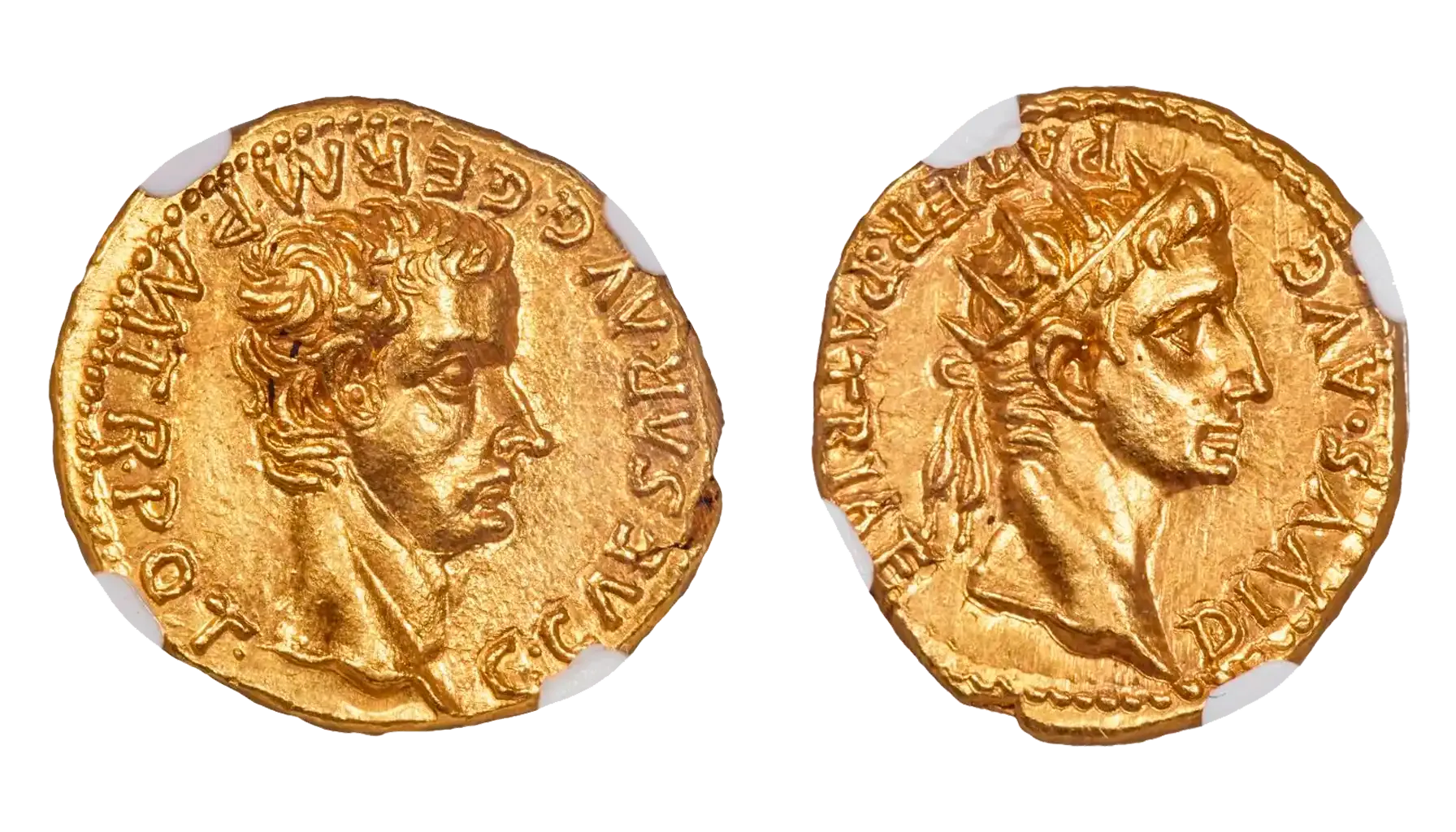
The Aureus gold coin is a specimen from the Coins from the Roman Empire series. Its value exceeds all other silver denarii and bronze sestertii. It was used for large payments, salary disbursements to legionaries, the army and the people, and was also considered a true symbol of imperial greatness. The Aureus coin price can currently reach tens of thousands of dollars.
Characteristics
These specimens were minted from high-purity gold. This ensured stability and high purchasing power.
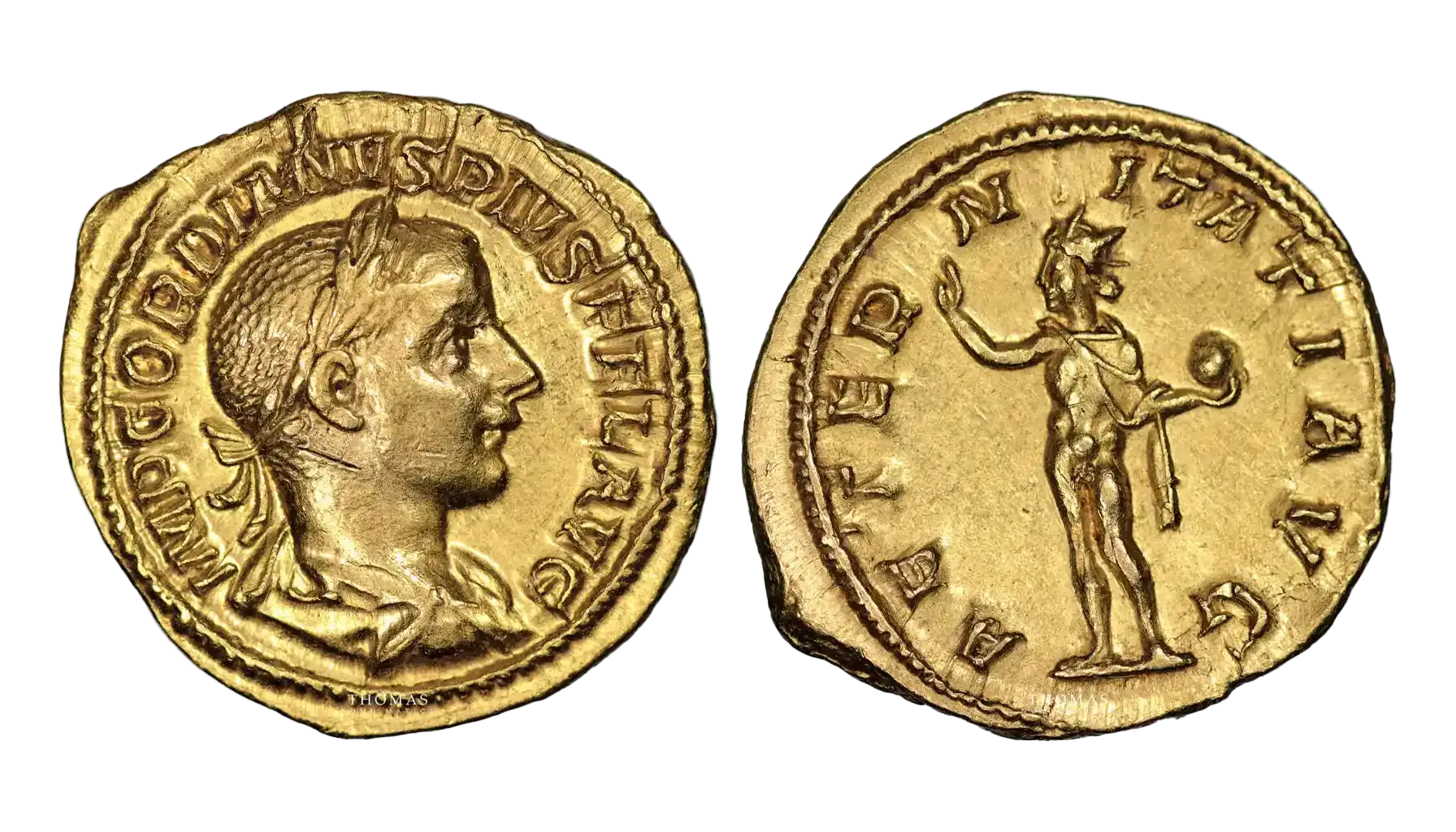
Even Julius Caesar and Augustus standardised the weight of the specimen. But later, it gradually decreased due to economic crises. However, even then, it remained valuable. One aureus was equivalent to 25 silver denarii.
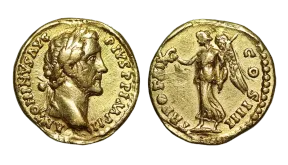
On the obverse of the Roman Aureus coin image, you can see the portrait of the reigning emperor or members of his family. On the reverse, gods, military victories, or commemorative events were depicted. Thus, as in the case of Alexander the Great's specimens, the monetary system also served the purpose of propaganda and the expansion of power.
Roman Aureus Coin History & Origin
Early Issues
Before the monetary system of the Roman Empire was standardised, gold specimens were issued mainly during periods of major wars or emergencies. For example, during the Punic Wars, gold staters and half-staters were minted. There was no system or regularity to them.
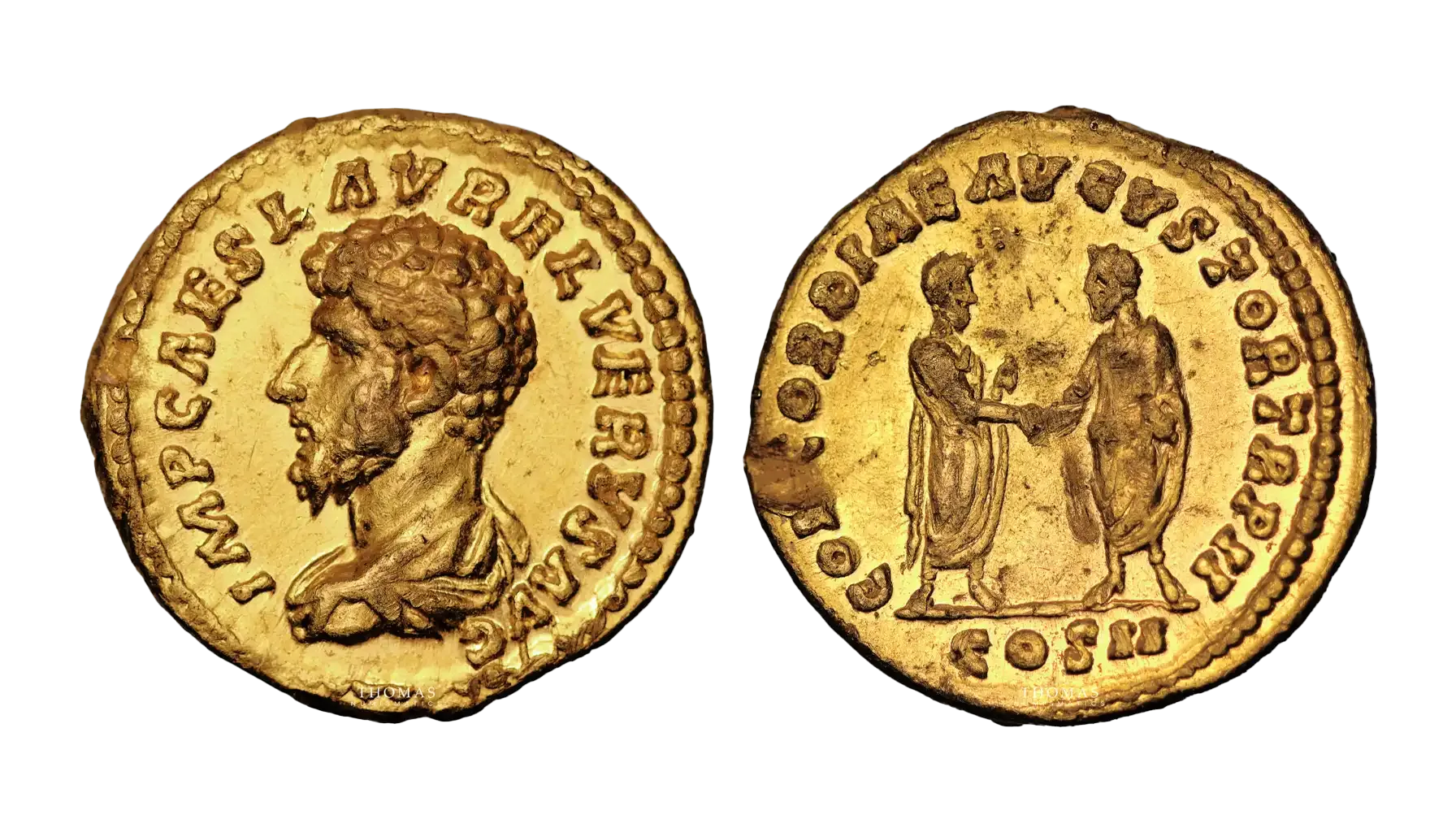
Julius Caesar
Standardisation occurred when Julius Caesar ascended the throne. He needed large funds to finance his political decisions and wars.
Therefore, he increased the minting of gold specimens. And they have become one of the oldest coins in the world. He established a fixed weight and regular issuance. This stabilised the economy and ensured the army's supply.
Augustus
Emperor Augustus continued Julius Caesar's policy. He completed this monetary reform, finally formalising the monetary system where the aureus took the highest place.
Such a system remained unchanged for two centuries of the Empire. Specimens from that time became some of the highest quality and most aesthetically beautiful.
Changes
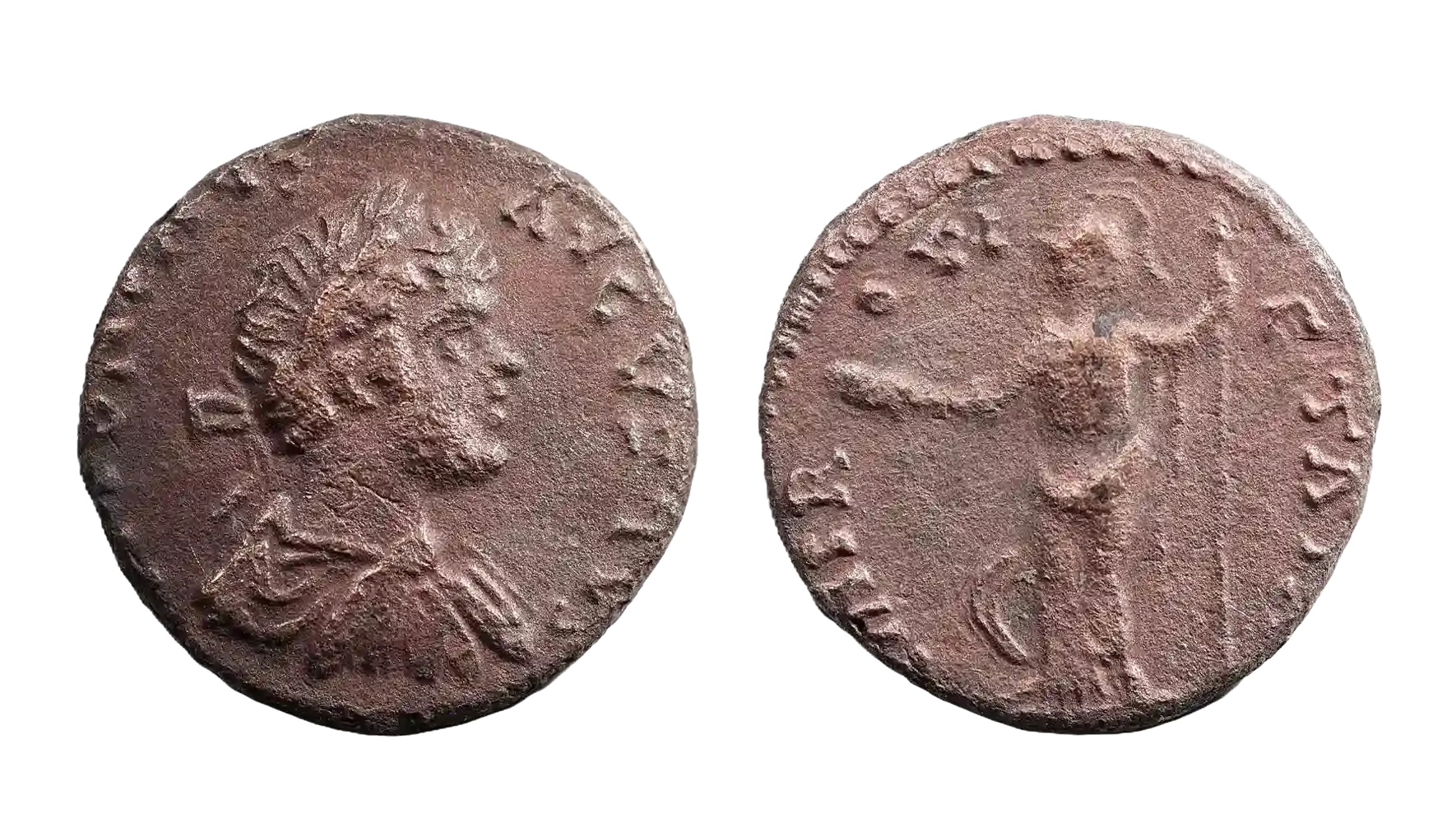
Throughout the 3rd century AD, known as the "Crisis of the Third Century," the economic situation in the empire drastically worsened. Silver specimens were debased, but the aureus, although decreasing in weight, largely maintained its high gold purity. This preserved its value compared to others. Nevertheless, its issuance became more irregular, and in some regions of the empire, it almost disappeared from circulation.
Replacement by the Solidus
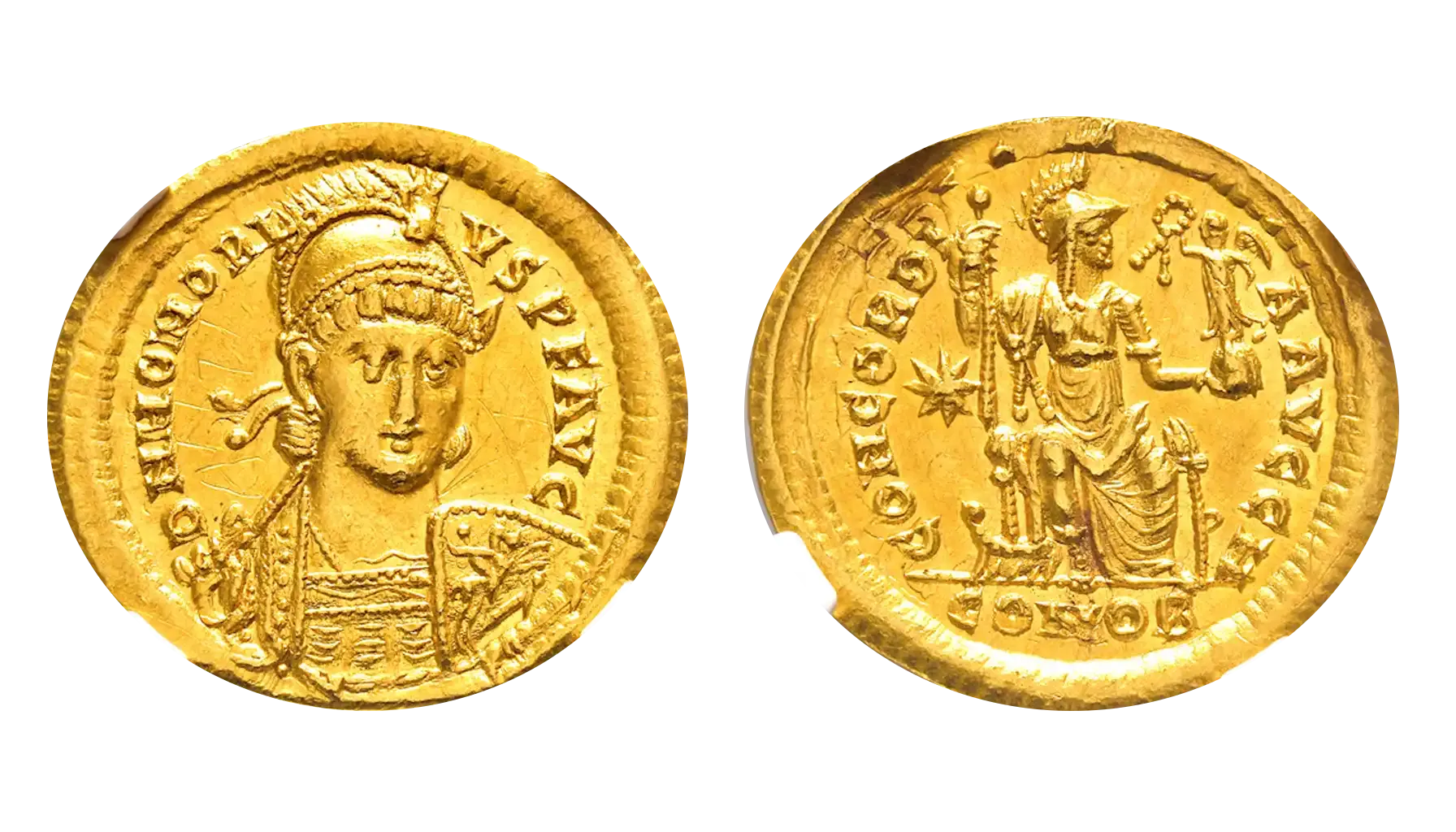
By the beginning of the 4th century, the aureus could no longer effectively serve as a stable foundation for the vast and crisis-ridden empire. Emperor Constantine I the Great carried out a large-scale monetary reform.
He introduced a new gold coin — the solidus. The solidus was lighter than the aureus and gradually replaced it, becoming the main gold currency for the Byzantine Empire for over 700 years.
How to Identify an Authentic Aureus
Metal
Aureus coin for sale were minted from gold. This metal is known for not oxidising and not getting covered with green or black patina, like copper and silver. Therefore, distinguishing an ancient gold specimen is not that difficult.
Weight and Diameter
Also characteristic of this metal is its weight - it is quite dense and should therefore weigh around 8.19 grams if considering the original specimens from the time of Julius Caesar and Augustus.
As for the diameter, it ranges from 18 to 20 mm. It can vary within these limits, as minting was done by hand.

 Facebook
  X (Twitter)
  Pinterest
  LinkedIn