Contents:
The great empire: from Greece to India. The Alexander the Great coin value is not an empty sound for the whole ancient world. From the depths of history, numismatists use various tools and coin identifier apps just to tap into this great power.
History of Alexander the Great Coinage
Before Alexander
Before Alexander's arrival in Greece, city-states used their own currency. Old Greek Coins were not centralized, and individual symbols were depicted on the specimens. This complicated trade between states.
However, the first to begin introducing monetary reforms was not Alexander, but his father, Philip II. He used the standardization of coinage to maintain his power in Macedon. He minted gold staters.
“Struck from the vast wealth acquired through Macedon’s gold mines, these staters played a crucial role in funding Philip’s military campaigns—ultimately laying the foundation for his son Alexander the Great’s conquests.”
– unnamed Philip II Gold Stater page
Austin Rare Coins official website
They depicted Apollo, and this became the basis for the Alexander the Great gold coin. There was also a silver tetradrachm in coinage, the prototype for the silver Alexander the Great coin. With these specimens, Philip II financed his wars and expanded Macedon's influence.
With the advent of Alexander
The son continued his father's path. For his great conquests, he needed a large sum of money for the army and city construction. From the very beginning, he understood the full importance of a unified and stable currency.
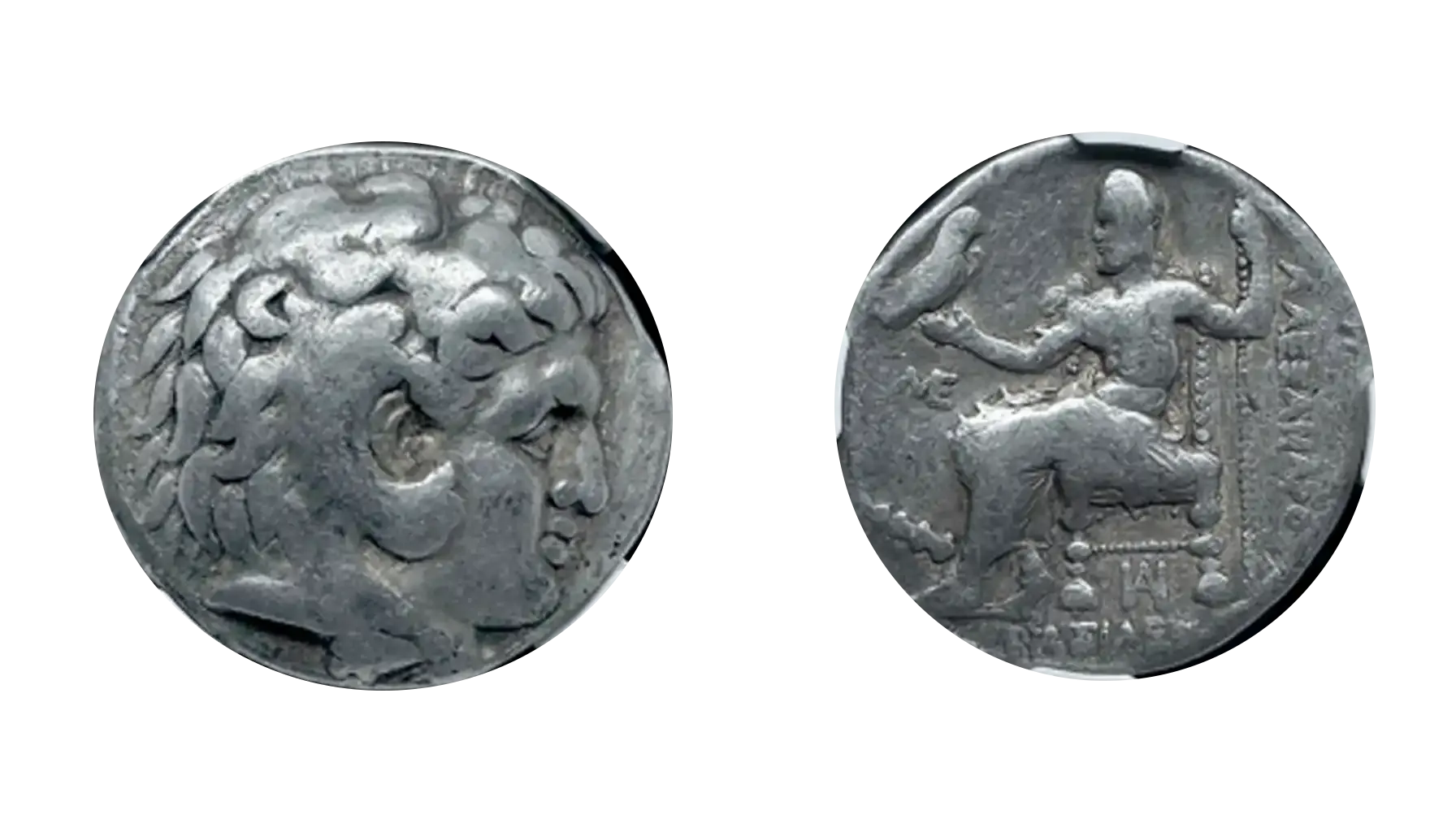
So, Alexander established the Attic monetary standard for his first Alexander the Great silver coin. The standard was widely adopted and facilitated trade throughout his empire in the future. The gold Alexander the Great coin was minted according to the Macedonian standard.
Designs
Alexander skillfully promoted his values and chose symbols for the monetary units that inspired people to heroism.
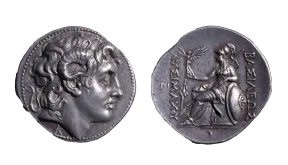
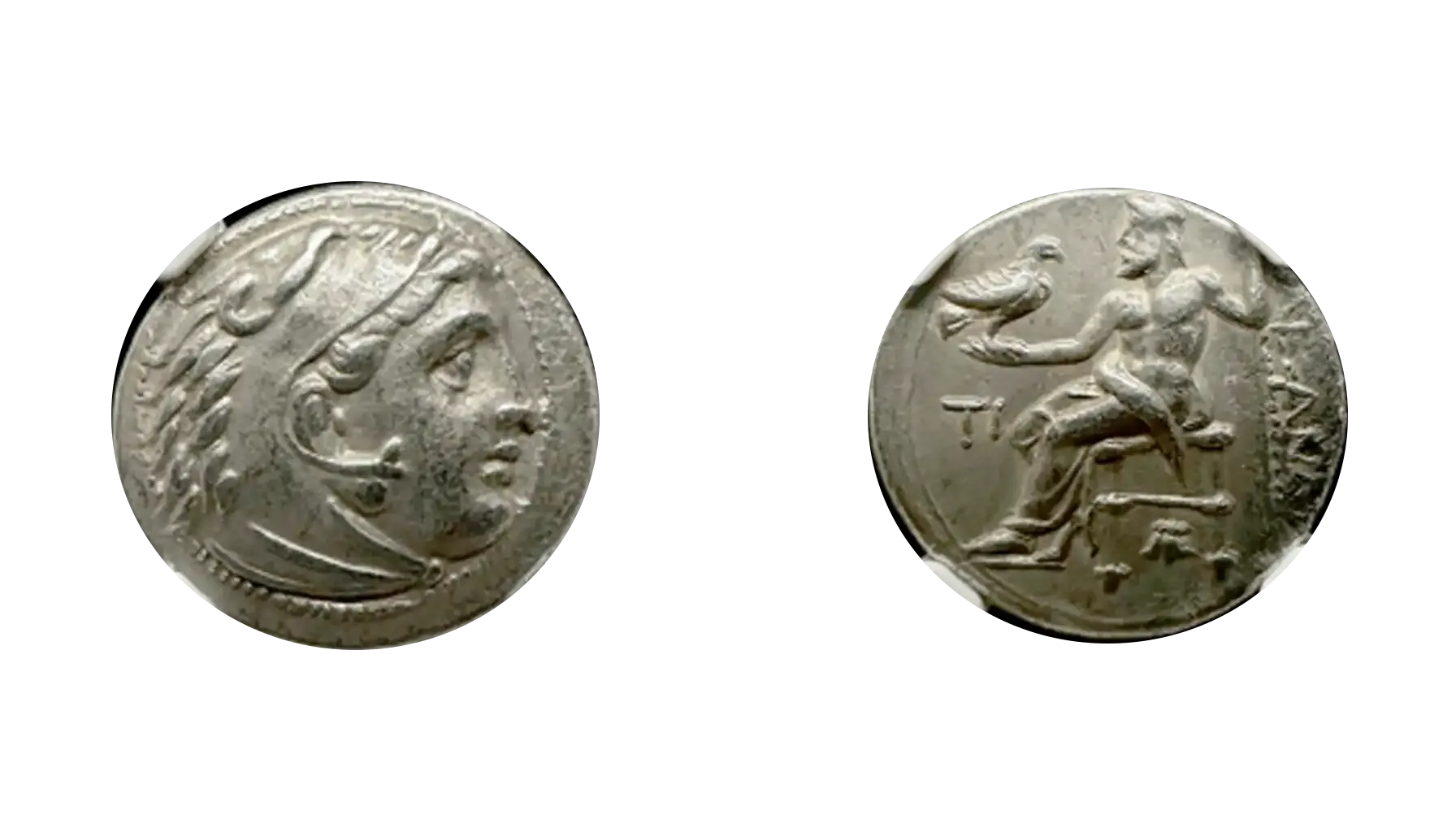
The obverse of the silver featured the Alexander the Great coin portrait of Hercules in a lion's skin. Hercules was associated with strength and victories, and most importantly, was considered the mythological ancestor of the Macedonian kings. The use of his image correctly influenced people.
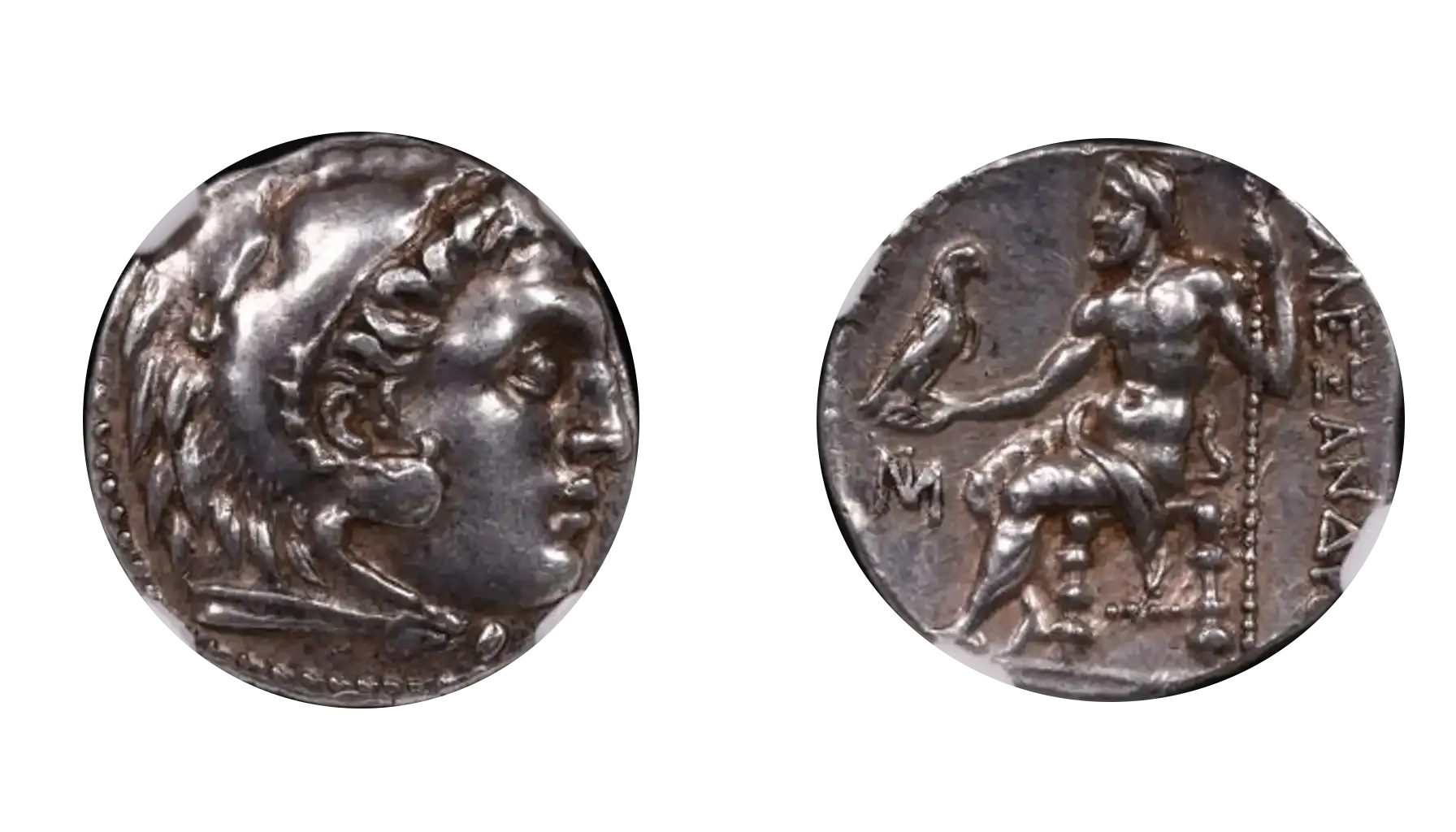
The reverse of the coin of Alexander the Great depicted Zeus, seated on his throne and holding an eagle and a scepter. He is considered the supreme god of the Greek pantheon. His image again symbolized Alexander's power and divinity.
Distribution
As Alexander advanced eastward, gold and silver reserves were actively replenished. The metals were melted down and used for minting. Throughout the ancient world, Alexander founded dozens of mints. They were located in Macedon, Greece, Asia Minor, Syria, Egypt, and even some eastern regions. Each mint had its own mint mark and monogram.
Identifying Authentic Alexander Coins
First of all, it's worth knowing about the different types of Alexander the Great coins for sale. The most common and well-known were made of silver.
Silver
The tetradrachm was the largest of all. It was used for large settlements and international transactions.
The drachm - this Alexander the Great coin real was 4 times lighter than the tetradrachm. It had the same design but was used for everyday transactions.
Didrachms, obols, hemiobols, and other fractional denominations were rarer and used for very small purchases.
Gold
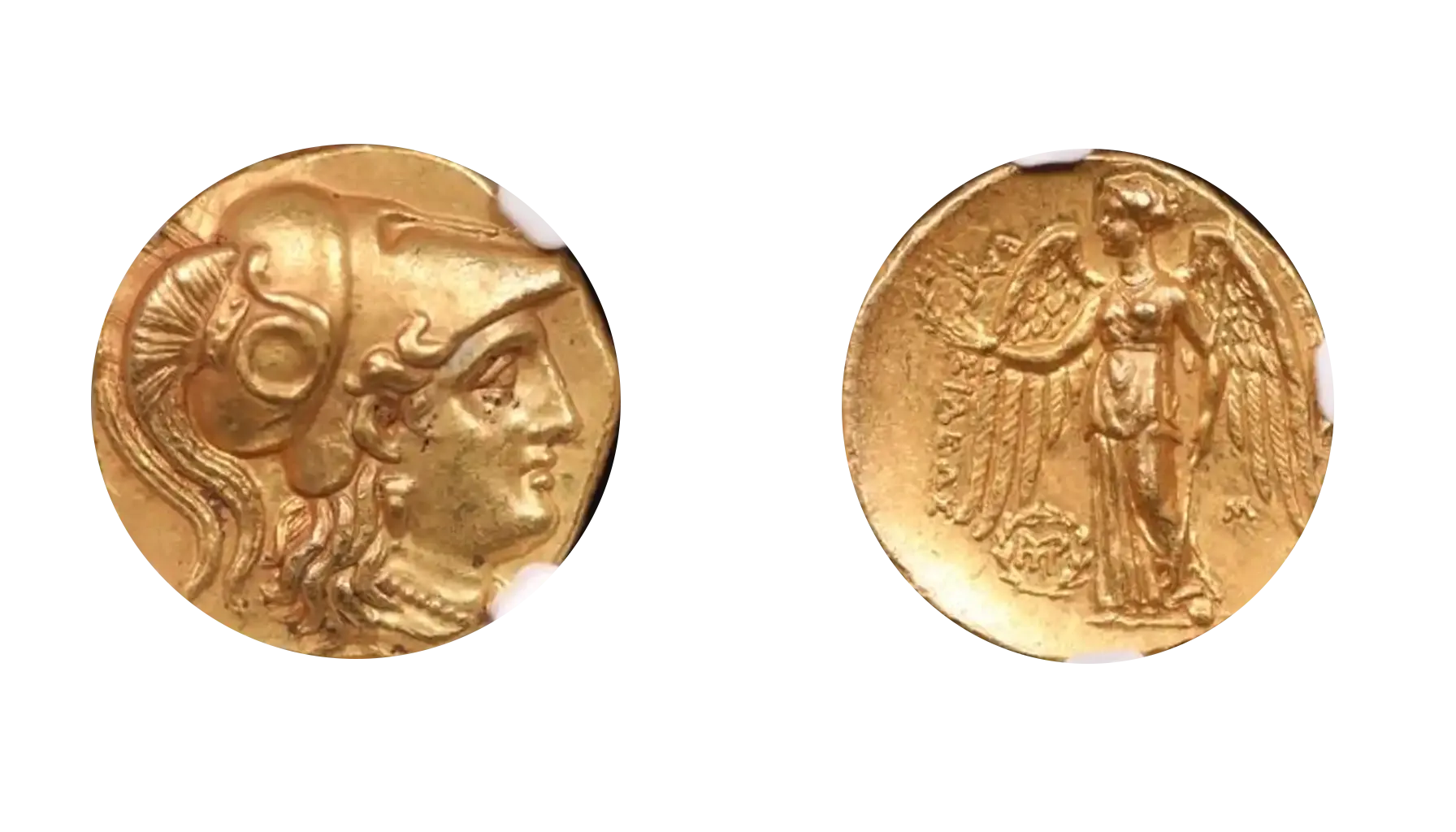
The stater was the main Alexander the Great coin for sale, made of gold. It depicted two goddesses: Athena on the obverse and Nike on the reverse.
The distater - also a gold specimen, but twice as heavy as a stater, is rare.
Identification
After carefully studying all the existing specimens, including those you can examine for an Alexander the Great coin necklace, you can proceed with the purchase.
We recommend using only verified sources and auctions. For example, the Coin ID Scanner application. This is a truly professional tool that allows you to identify rare specimens.
How Much Real Alexander Coins Cost
Prices can vary at different auctions: from $468 to $54,208. Many factors need to be considered here.
Grade
First and foremost, it's the condition. It doesn't matter if it's a coin or an Alexander the Great coin pendant – condition is paramount. If the grade is closer to MS-60, it's already valuable. In the case of Alexander the Great coins value, their value is difficult to determine, as after so many centuries, such specimens are unlikely to even reach a decent condition.
Rarity
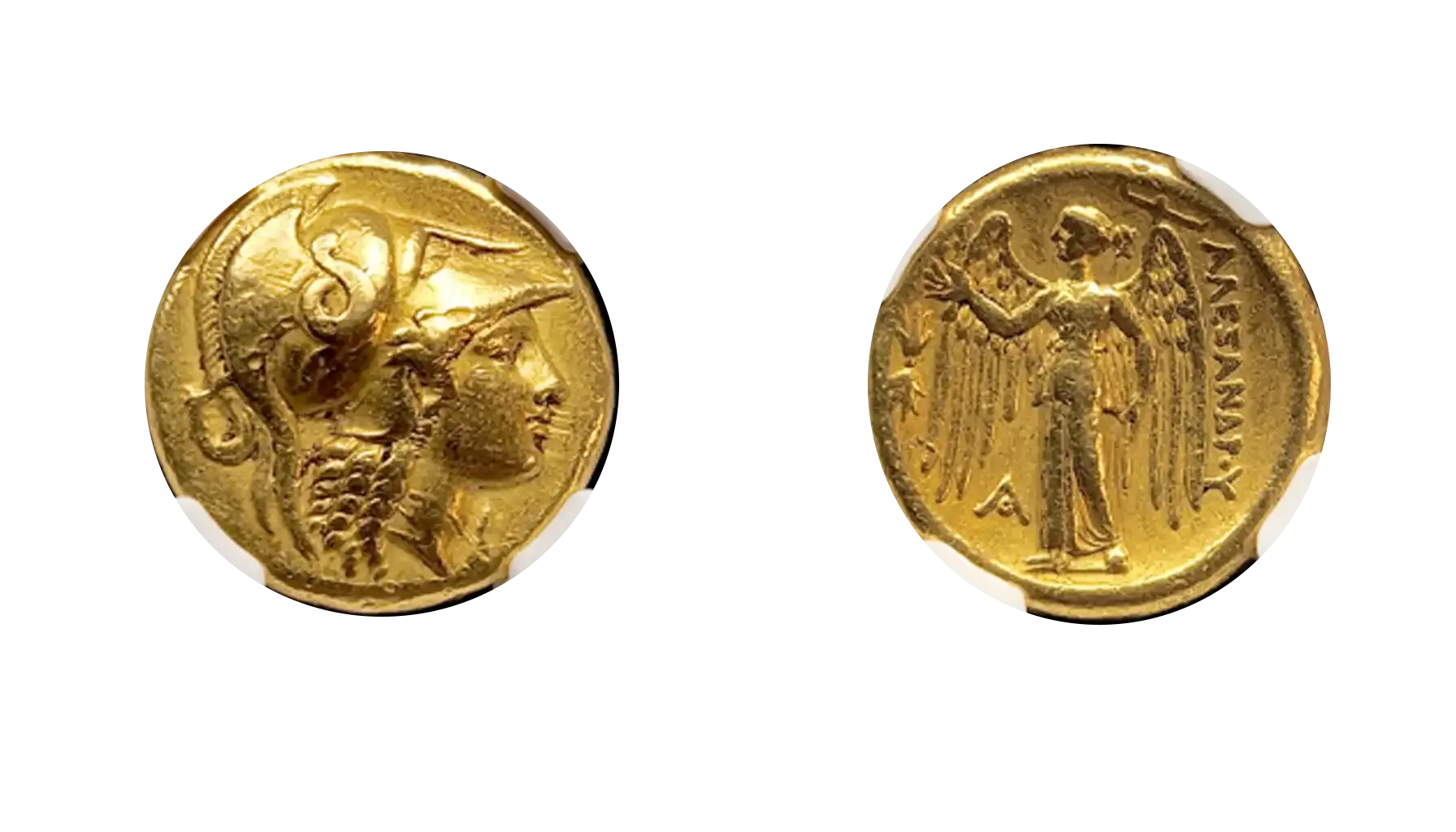
As for Alexander the Great's coin authenticity, a gold stater will be much more expensive than a silver tetradrachm. Also, some mints produced smaller runs, and consequently, their specimens will cost more.
Coins minted during Alexander's lifetime, rather than after, are also valued higher than others.
Auction Houses
To find out the exact prices, it's best to visit auction houses. Heritage Auctions, CNG - Classical Numismatic Group, Leu Numismatics, and Roma Numismatics are leading organizations in this field. On their official websites, you can find current prices for the items you are interested in.
Collecting Ancient Greek Coins
First of all, thoroughly study ancient numismatics, specialized catalogs, and articles. You can participate in online forums on these topics.
Budget
Visit an auction house website and determine how much you are willing to invest in coins. You can start with the least expensive drachms, then move on to tetradrachms and staters.
Choice
Decide which specific period's specimens you want to have in your collection. These could be specimens of Alexander the Great, his father, or entirely different Ancient Coins of Greece. Also, consider their metal composition: gold, silver, or bronze.
Purchase
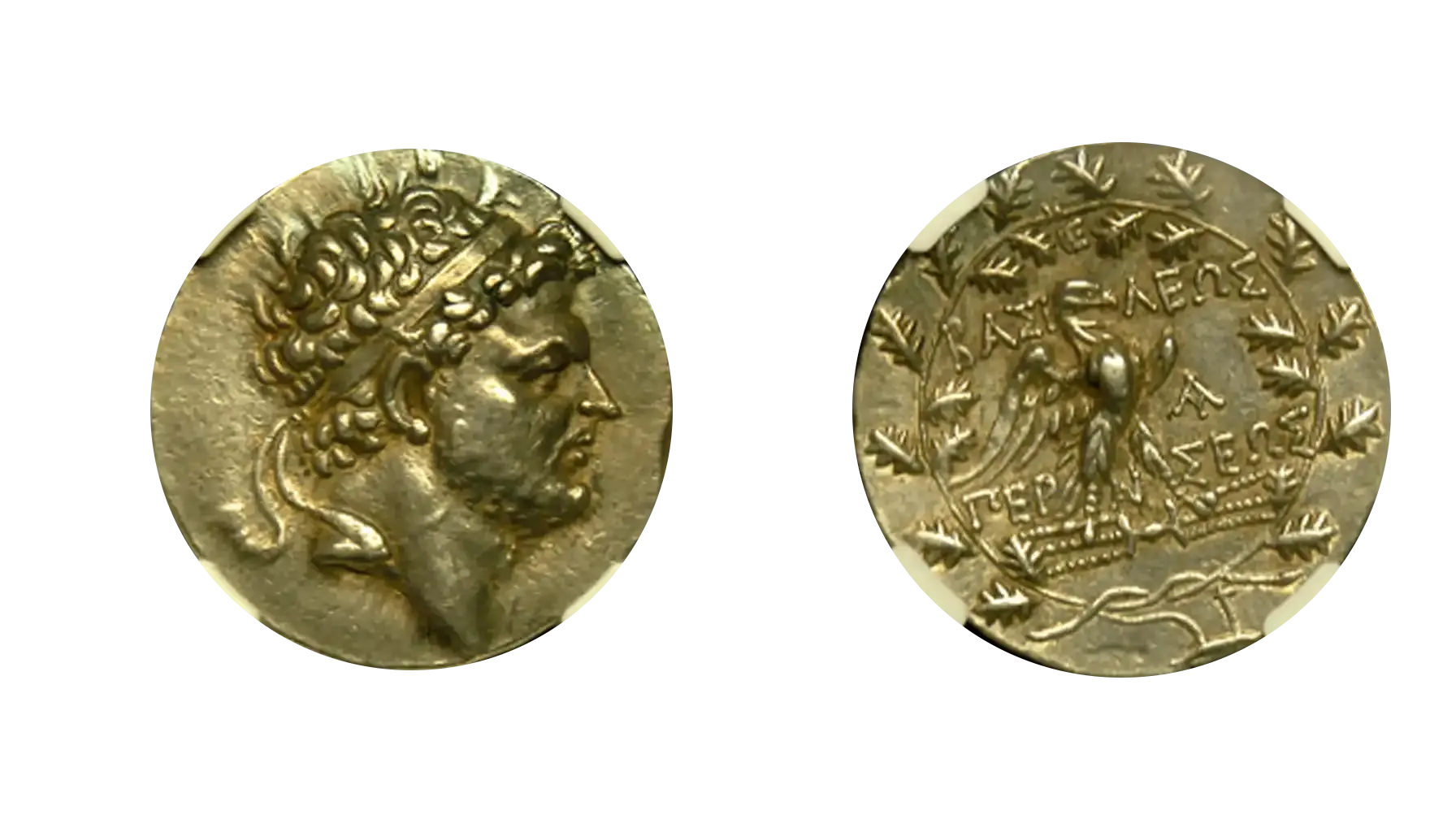
Acquire specimens only from trusted dealers. It is desirable for the specimen to be certified and packaged in a special slab.
Grading
For valuable specimens, certification confirmation is always recommended. If you acquired a coin without it, you can do it yourself by sending it to a professional grading service.
For example, to NGC Ancients or PCGS. The coin will be graded, its authenticity confirmed, and then it will be placed in a hermetically sealed plastic container with a label containing all information.

 Facebook
  X (Twitter)
  Pinterest
  LinkedIn