Contents:
Today, we’re discussing a currency that made a comeback. The drachma was once an ancient coin, but over a century ago, it returned to Greece's economy.
Have you inherited your collection from an older relative, perhaps? You can check value of old coins with apps. Efficient and accurate.
What Is the Greek Drachma
The drachma started as one of the ancient Greek coins. It dates back to around the 6th century BCE. The word drachma comes from the Greek verb drássomai, meaning “to grasp,” originally referring to a handful of metal rods used as money before coinage developed.
Over time, this currency evolved into a standardized coin and became the principal monetary unit across much of the ancient Greek world.
“The drachma was one of the world’s earliest coins.”
— Britannica Money
Official Website
Ancient Greek Drachma Coins
Ancient drachma bits were first minted in city-states such as Athens, Aegina, and Corinth. As is common for many ancient coins, there was a lot of disparity. Each city-state produced its own designs, weights, and standards.
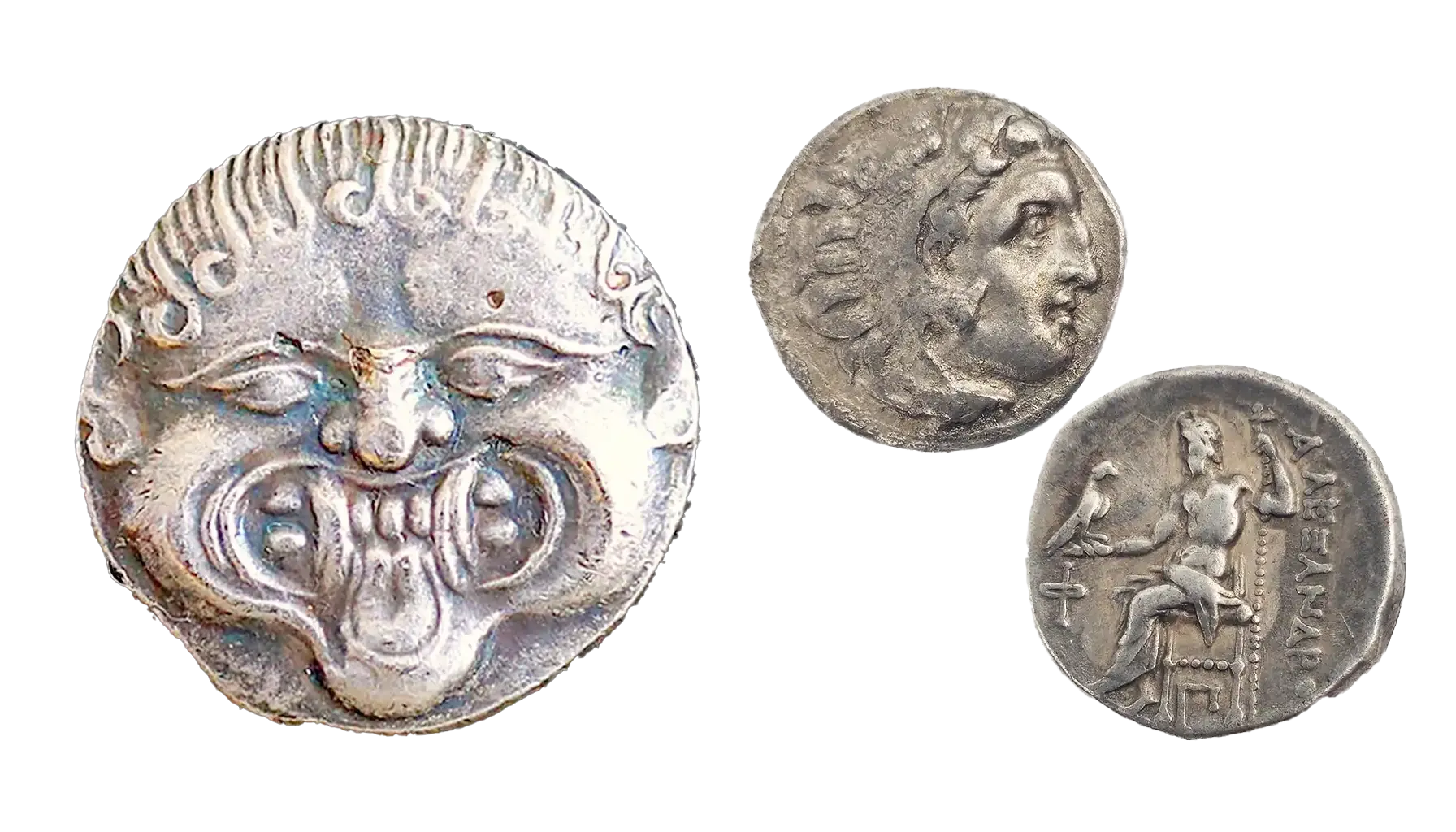
Some old Greek drachmas were gold, some were silver. Some featured animals like turtles and lions, and others featured gods like Athena, Apollo, Zeus, and Artemis (usually, Athenian coinage shows gods).
Interestingly, “pure” drachma coins were not the most used denomination. Instead, many city-states used tetradrachm, which literally means “four drachma”. Back in the past, both denominations were currency and more: political statements, religious offerings, and tools of international trade.
Silver and Gold Drachma Coins

Most issues were minted in silver, which was abundant and well-suited for daily commerce (in the past). Silver drachmas varied in purity and weight depending on the region and era. Athenian issues became one of the most trusted trade coins because Athens had a very strong mintage with a high standard (about 4.3 grams).
Gold drachmas were far rarer. From history, we can learn that only the biggest, wealthiest countries could issue gold coins constantly. Greek city-states had only enough power and wealth to issue gold coins periodically, during periods of great wealth or under powerful rulers.
Modern Greek Drachma Currency
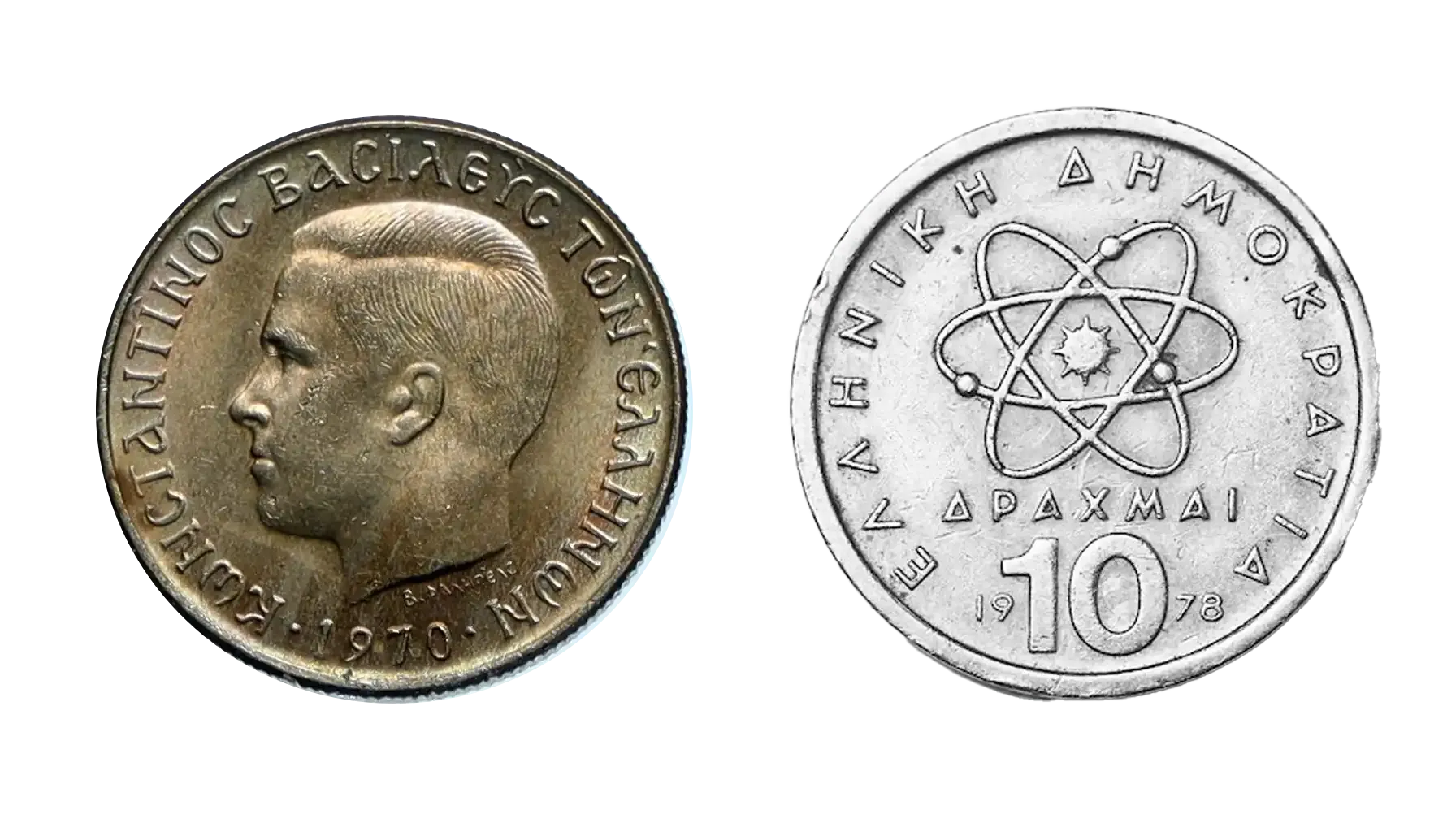
When the Ottoman Empire and its coins came, Greece and its bits were lost for a good while. Centuries later, Greece regained its independence. The drachma was reintroduced as Greece’s official currency in 1832.
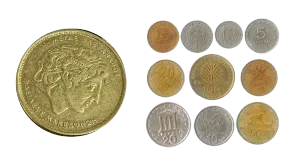
Modern issues were stamped with the historical and national themes. Many featured portraits of Greek kings and national symbols (Olympic games, architecture). While these modern issues lack the ancient mystique of precious metals, they are strong symbolically.
Modern Greek drachmas were issued in both coin and banknote forms:
Type | Denomination | Number | Material |
Coin | Lepton (100 Lepta = 1 Drachma) | 50 | Copper-Nickel |
Drachma | 1 | ||
2 | |||
5 | |||
10 | |||
20 | |||
50 | |||
100 | |||
500 | |||
Banknote | 10 | Paper | |
20 | |||
50 | |||
100 | |||
500 | |||
1,000 | |||
5,000 | |||
10,000 |
These denominations were used in the early 2000s, a few years before the drachma was ultimately replaced by the Euro in 2002.
Valuable Drachma Coins
The value of drachma coins varies widely depending on the bit's age, rarity, condition, metal content, and historical significance. Here’s a little round-up:
Ancient silver drachmas from Athens, especially well preserved, are consistently in demand. The lowest prices start with $100, but most issues are $400+.
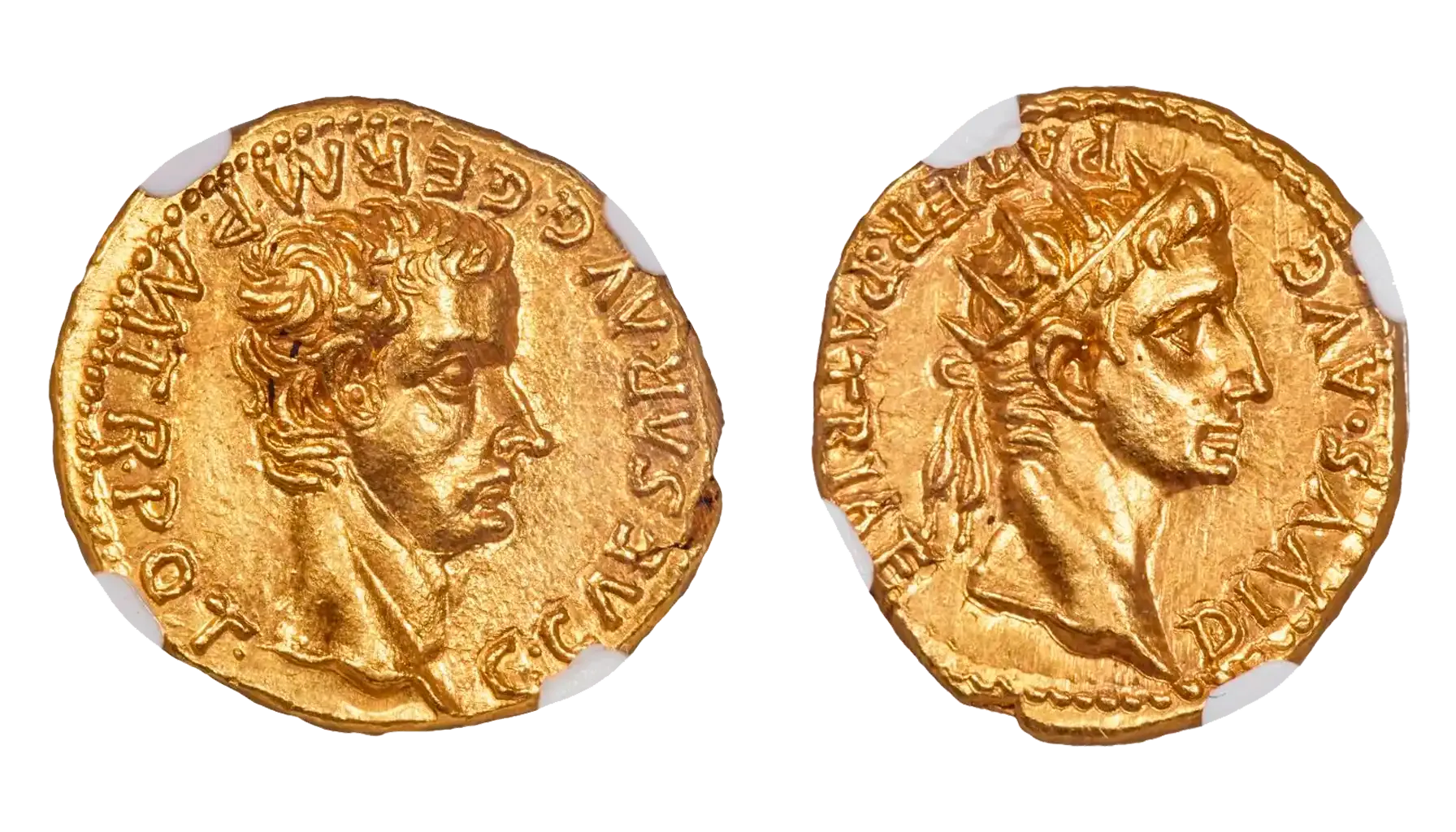
Gold drachmas are typically the most valuable. Gold is valuable by itself, but the scarce mintage of its coins makes its value skyrocket. It’s hard to come by an authentic ancient gold piece, but most are worth $8000+.
Modern bits are worth face value, but limited commemorative issues could be worth $2+.
How to Identify Authentic Drachma Coins
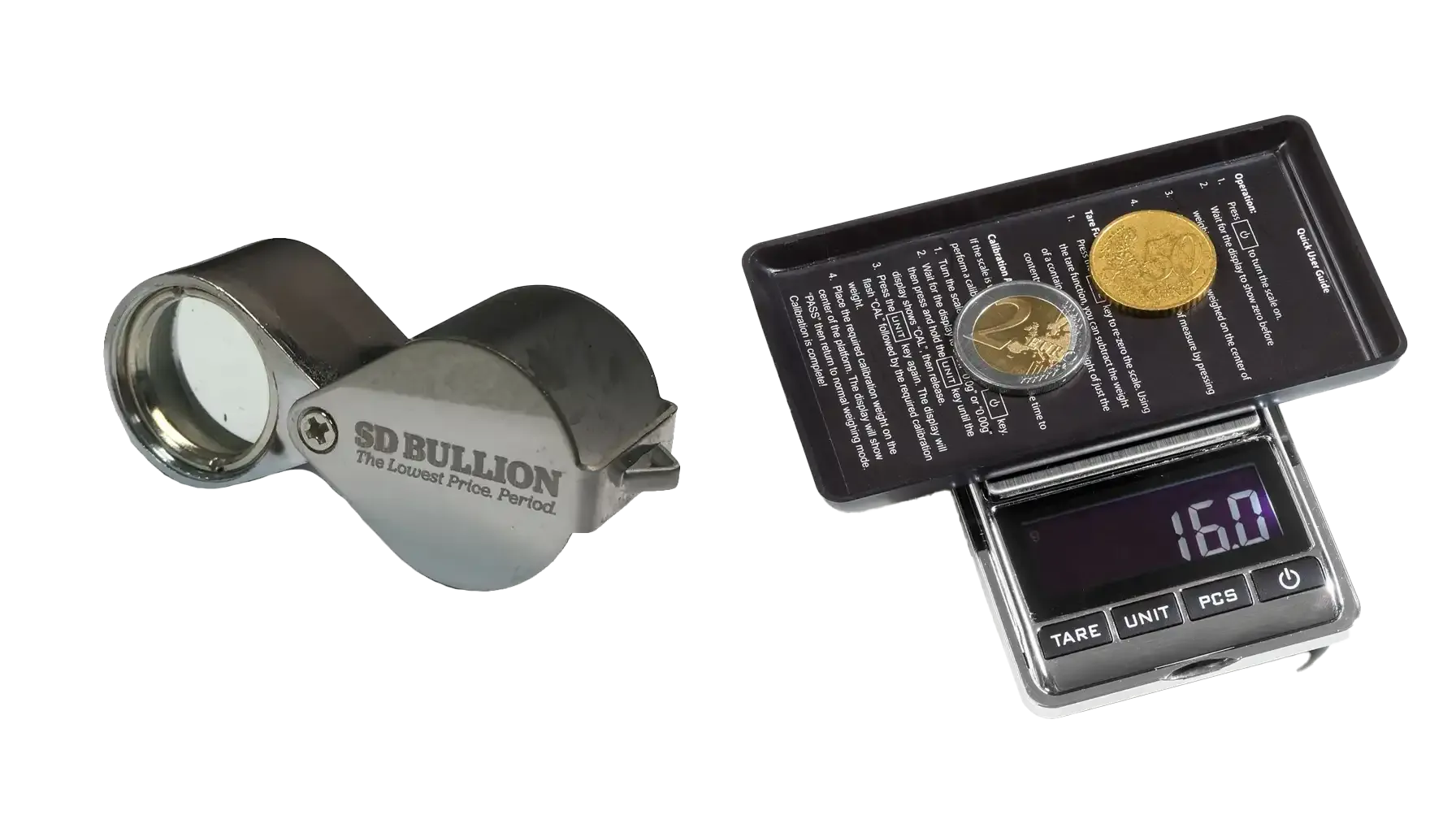
Valuable old issues are often counterfeited. Therefore, you need to learn how to spot the fakers.
A real old bit is typically struck, not cast (i.e., they are rough around the edges). They all show some surface wear, and they are consistent (e.g, all sides are relatively dull). Their weight, diameter, and metal composition are unlike modern bits.
Modern pieces are easier to authenticate, as they are barely counterfeited and fall under easy-to-find standards.
PGC, NGC, and ANACS coin grading services can help identify the coin.
Greek Drachma Collecting Tips
Some people focus on national bits. Others focus on the old bits. You can do both and start collecting both modern and old issues.
If you need a pointer on collecting:
Beginners should start with the modern bits. It’s easier to collect them, and as you do, you gain the necessary experience and resources to start finding the ancient issues.
Always buy from reputable dealers or auction houses. There, the chance of counterfeit is the lowest.
Always keep detailed records of purchases. They help prove provenance in case you lose the bit.
Acid-free holders are one of the best storage options for coins. They help preserve the bit against water and air erosion.
Conclusion
The euro is the main currency of Greece for now. Perhaps, one day, drachma will make another comeback. Until that, we wait.
Have you heard of the Coin ID Scanner? It’s an app for collectors. It can scan coins, identify, and evaluate them in seconds. A time saver and a guide in one app.

 Facebook
  X (Twitter)
  Pinterest
  LinkedIn