Denmark is a state in Northern Europe, the southernmost of the Scandinavian countries. It has a rich history, culture, and popular Denmark silver coins. They have their own special value, and many numismatists often download an app to scan coins for value.
Overview of Danish Coinage
Early Period
The first coins from Denmark appeared around 1825. These were imitations of Carolingian deniers. Later, in the 10th century, Denmark began minting its own issues. They were called penningar. They were usually inspired by issues from other countries.
Bracteates
In the 14th century, thin, one-sided coins of Denmark were common. They were called bracteates. They depicted royal regalia or religious symbols. In the late Middle Ages, skillings and marks began to be minted.
Rigsdaler Period
In the 16th century, a new monetary system, the rigsdaler, was established in Denmark. These were made in the style of German thalers. They were the main silver issues and were in use for several centuries.
Krone
In 1873, Denmark, Sweden, and Norway formed the Scandinavian Monetary Union. As a result of this union, a new monetary system, the krone, appeared. It is divided into 100 øre. This brought the countries closer to the unification of their monetary systems.
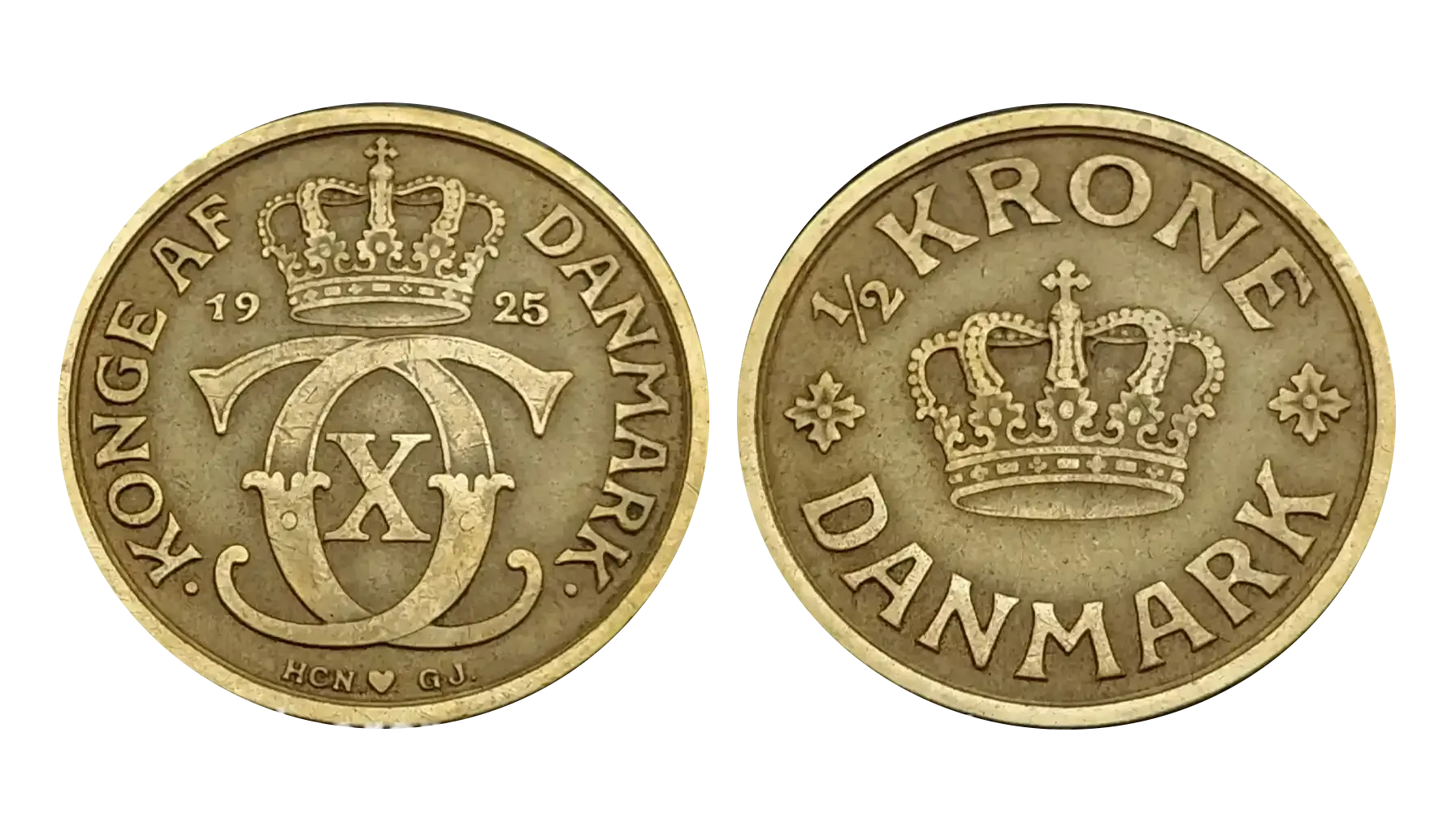
The first kroner were minted from gold and silver. In the 20th century, these metals were gradually replaced by copper-nickel alloys and bronze. Such adopted measures were an important aspect, especially after World War I and World War II coins.
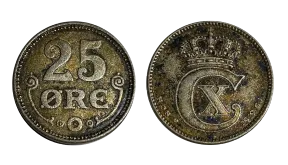
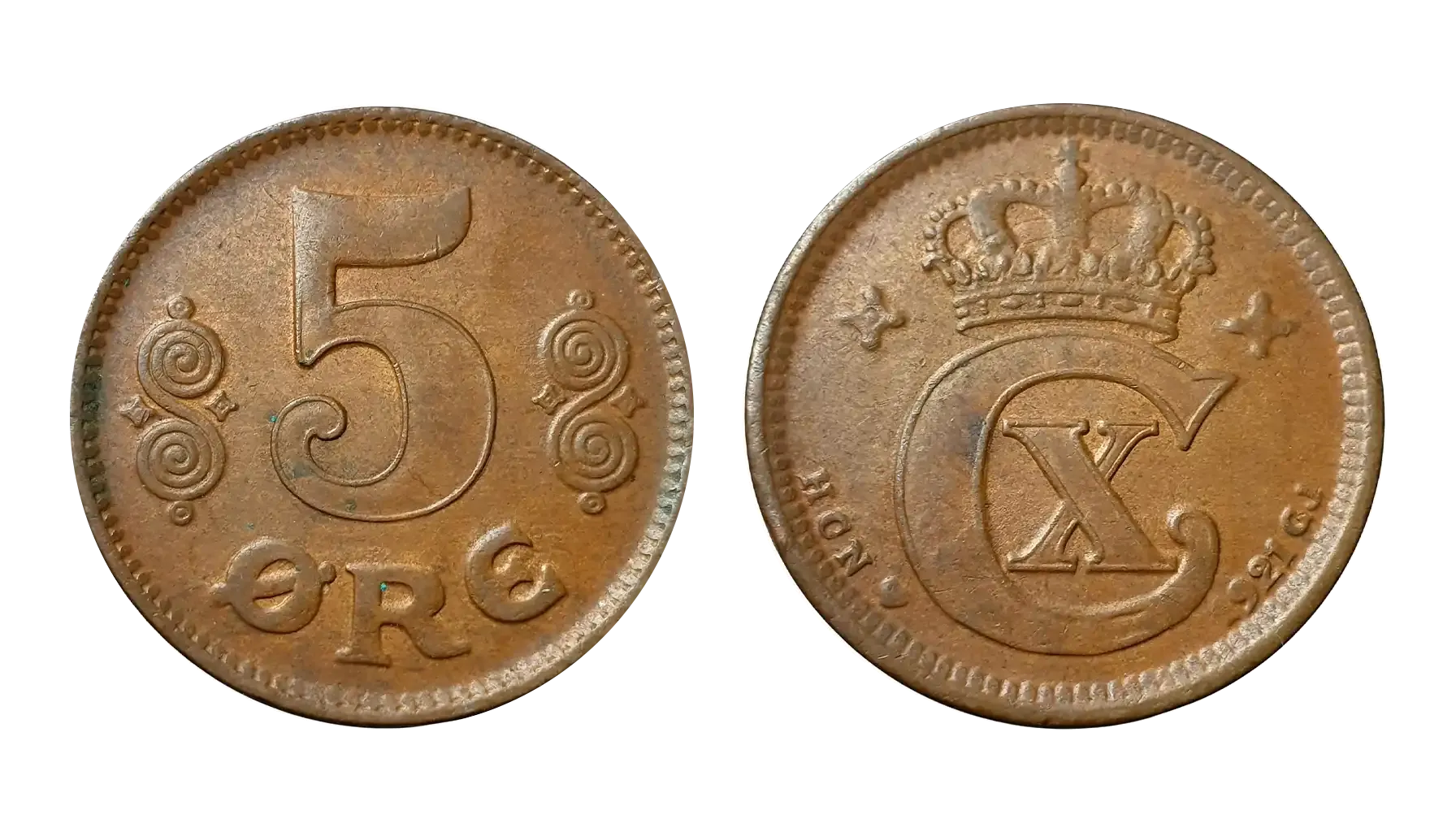
The designs feature ruling monarchs, a coat of arms, or a crowned monogram on the reverse. Today, specimens in denominations of 50 øre, 1, 2, 5, 10, and 20 kroner are in circulation.
The 50 øre specimens are copper-colored, while the others are silver-colored or golden-colored, with a hole in the center for 1, 2, and 5 kroner. The Danish krone is the official currency of Denmark, Greenland, and the Faroe Islands.
Valuable Denmark Coins
Christian IV's Gold Specimens. Christian IV is one of Denmark's most famous and long-reigning monarchs. It was an era of great discoveries, achievements, and participation in the Thirty Years' War. Denmark coins worth money from that period are quite sought after and have Denmark coins value. They also contain gold.
The first issue of the gold 20-krone coin, 1873. This particular specimen symbolizes changes in the monetary system. It is the first issue of a new monetary unit that replaced previous ones. The first coin of Denmark of any issue always holds significance, and this one especially so.
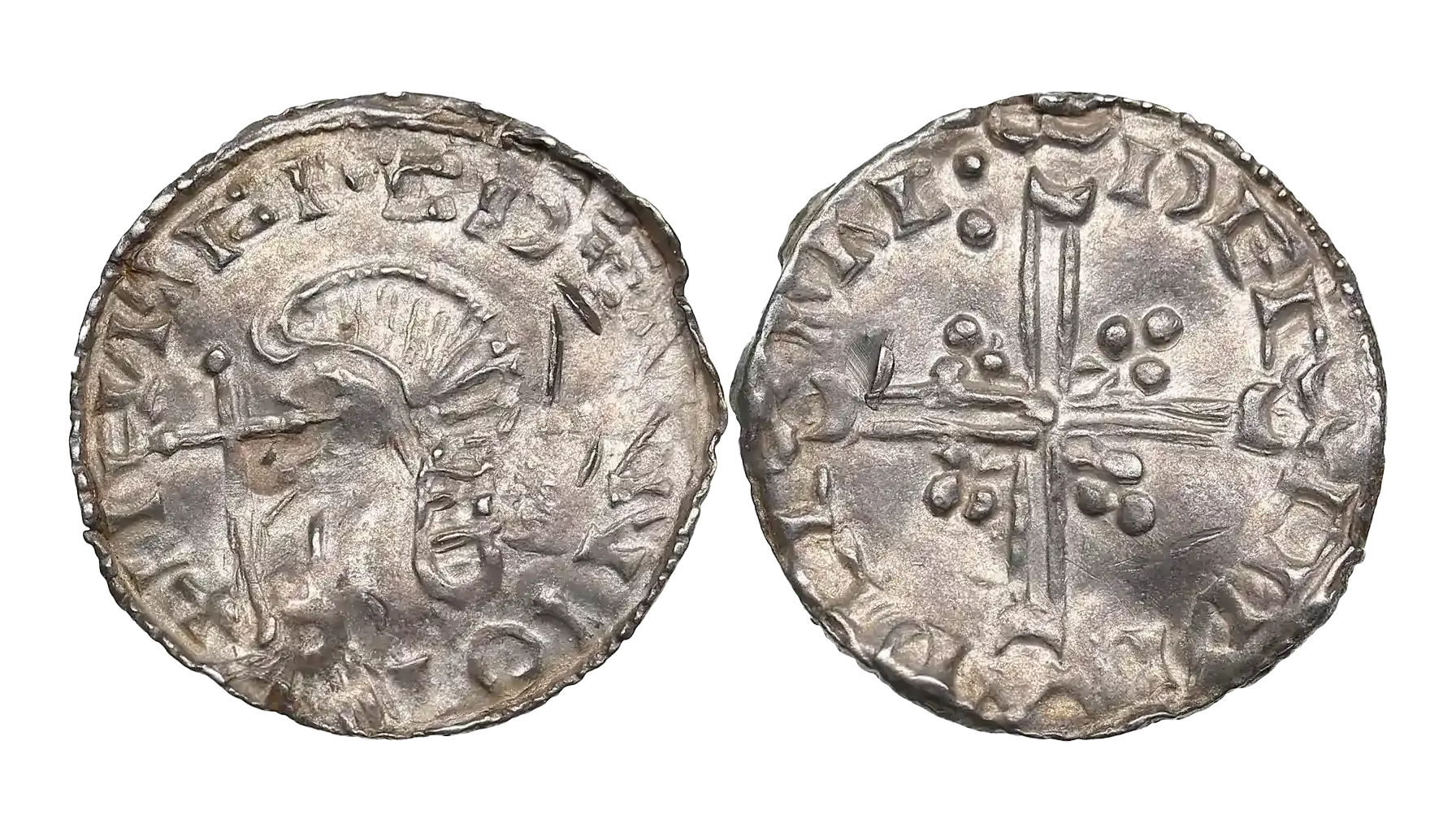
Pennings and bracteates of the Middle Ages and Vikings. These are among the earliest issues. Their age reaches almost a thousand years, and consequently, this makes them valuable. It is very difficult to find a merely preserved specimen, and a well-preserved one is even harder. Therefore, they enjoy great popularity and Denmark coin value.
How to Identify High-Value Danish Coins
First and foremost, you should thoroughly examine the specimen. Make sure it is definitely from Denmark, and look for inscriptions "Denmark" or the monogram of the Danish monarch on it.
Also, determine the denomination of your specimen, its issue date, and material; the price will heavily depend on this, as, for example, gold and silver coins usually cost more. The metal can be identified by its color, weight, and characteristic ring. It is also important to determine the specimen's condition.
Special Tool
You can use PCGS CoinFacts or Coin ID Scanner apps, which will show you the approximate grade of your specimen. Also, look for various errors. Common ones include double die and off-center strike, and despite being frequently found, they are among the most valuable and popular.

 Facebook
  X (Twitter)
  Pinterest
  LinkedIn