Contents:
Austria has a rich history, and so are their coins. The Austrian mint today still produces valuable bits made from gold and silver.
Today, we will look into a popular Philharmonic issue, its mintage, values, and why Bullion Austrian coins are so valuable.
Do you know how to check coin value efficiently? Scanning apps can help you check coins faster and more accurately.
Austrian Mint Coinage Overview
You will find the Austrian Mint in Vienna. The locals call it Münze Österreich. Officially, the Mint was founded only in 1989. In reality, the Mint's origins date back over 800 years, so in reality it’s much older than the U.S. Mint.
Over the years, the Austrian Mint has produced all kinds of bits. Some were bullion, some were circulating. Its older denominations, such as the Gulden, Taler, Kronen, and the Schilling, became monetary cornerstones of Europe.
What currency does Austria use today? Euro, since Austria became a member of the European Union. Now the Austrian Mint operates under the Central Bank of Austria and is known for combining traditional artistry with cutting-edge technology.
Today, the Austrian Mint primarily focuses on:
Bullion coins (notably the Vienna Philharmonic series)
Historic restrikes (such as the Austrian ducat gold coins, Gulden, and Corona)
Collector commemoratives
Circulating euros
Due to this wide coverage, Austrian coins are popular with investors, collectors, and numismatists worldwide.
Modern Austrian Mint Silver Issues
Silver coins have always been popular. In the past, most bits were struck with silver, and nowadays, many choose this metal because it is rich yet somewhat affordable.
What Austrian silver coins are on the market today?
Vienna Philharmonic
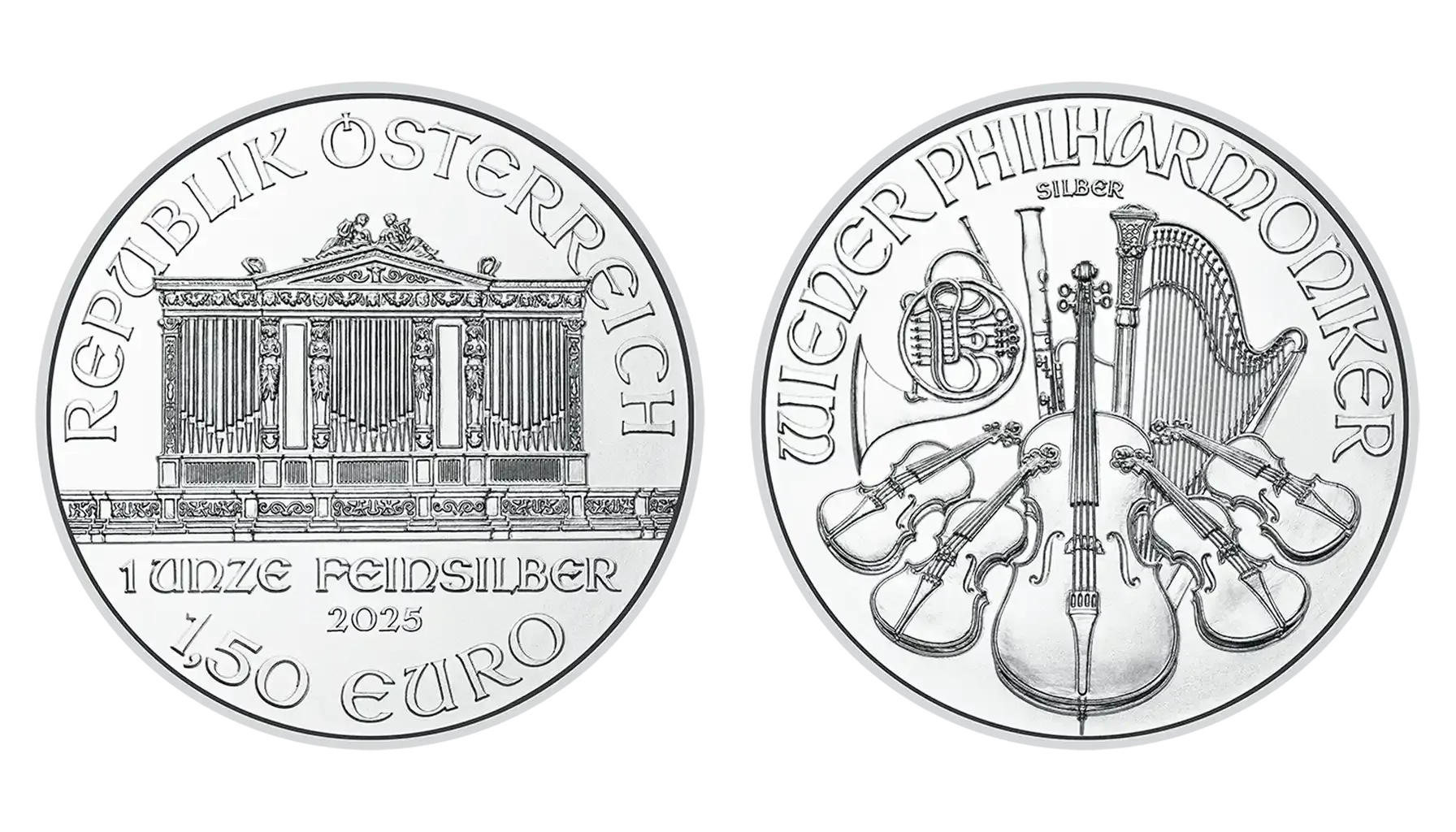
The Silver Vienna Philharmonic series offers the most popular silver coins from Austria. The series has been running since 2008.
The obverse features a pipe organ. It's not just any musical instrument. This pipe organ is from the Golden Hall of the Musikverein in Vienna. You will see the inscriptions "REPUBLIK ÖSTERREICH" (Republic of Austria), the denomination 1.5 EURO, and the year of the release.
The reverse presents a group of instruments: a cello (in the center), four violins surrounding the cello. A Viennese horn is on the left, and a harp is on the right. A bassoon is behind the cello.
Austrian Silver Philharmonic Coin Specifications | |
Country (Issuer) | Austria |
Year of Minting | 2008–present |
Type | Bullion coin (1.5 euros) |
Shape | Round |
Diameter | 37.0 mm |
Metal Composition | .999 Fine Silver (99.9% silver) |
Weight | 1 troy ounce (31.103 g) |
Average Values | ~€76 (~$88) |
The Philharmonic series is incredibly popular among investors and collectors. It doesn't cover just silver. There are also palladium and Austrian Philharmonic gold coins.
“All Vienna Philharmonic bullion coins, whether in gold, silver, or platinum, are dedicated to music, the only language that is truly loved and understood the world over.”
— Münze Österreich
Official Website
Commemoratives
Austria regularly releases themed silver commemoratives. Such commemorative coins honour Austria's past and present by reflecting the country’s culture, science, architecture, and wildlife on a coin’s surface.
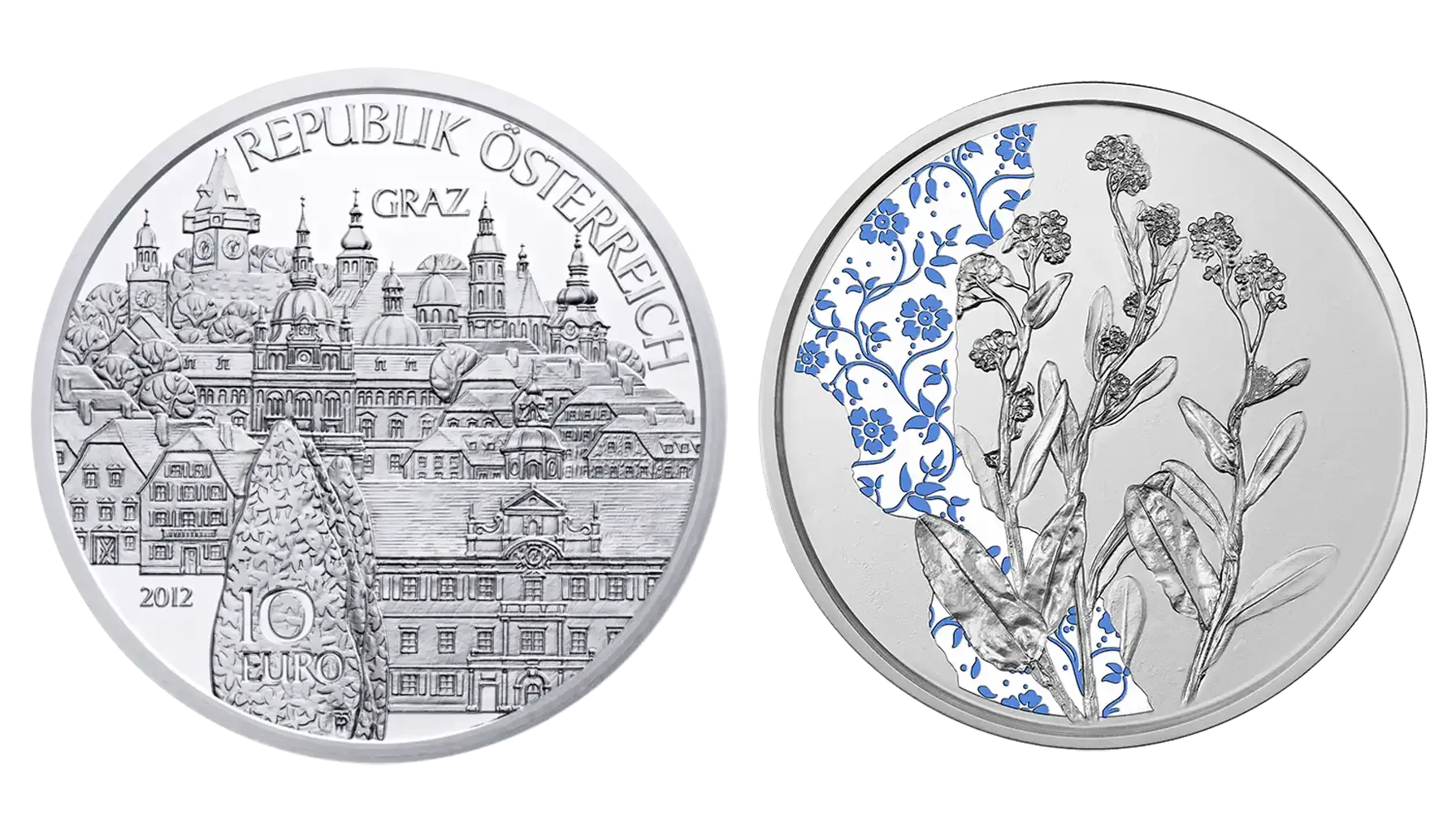
You’ll find many commemorative issues:
Austria’s Federal Provinces series (honors various provinces with silver 10 euros).
Language of Flowers series (honours the local flowers with silver 10 euros).
Standalone commemoratives (not a series, but standalone issues that can appear on any denomination).
Value Guide for Austrian Coins
If you’ve been collecting for some time, you know that silver and gold bits are always worth something. The value of a piece can be numismatic, in terms of rarity and historical importance, and bullion, based on the metal the coin is made from. Gold and silver are precious, and so are their coins.
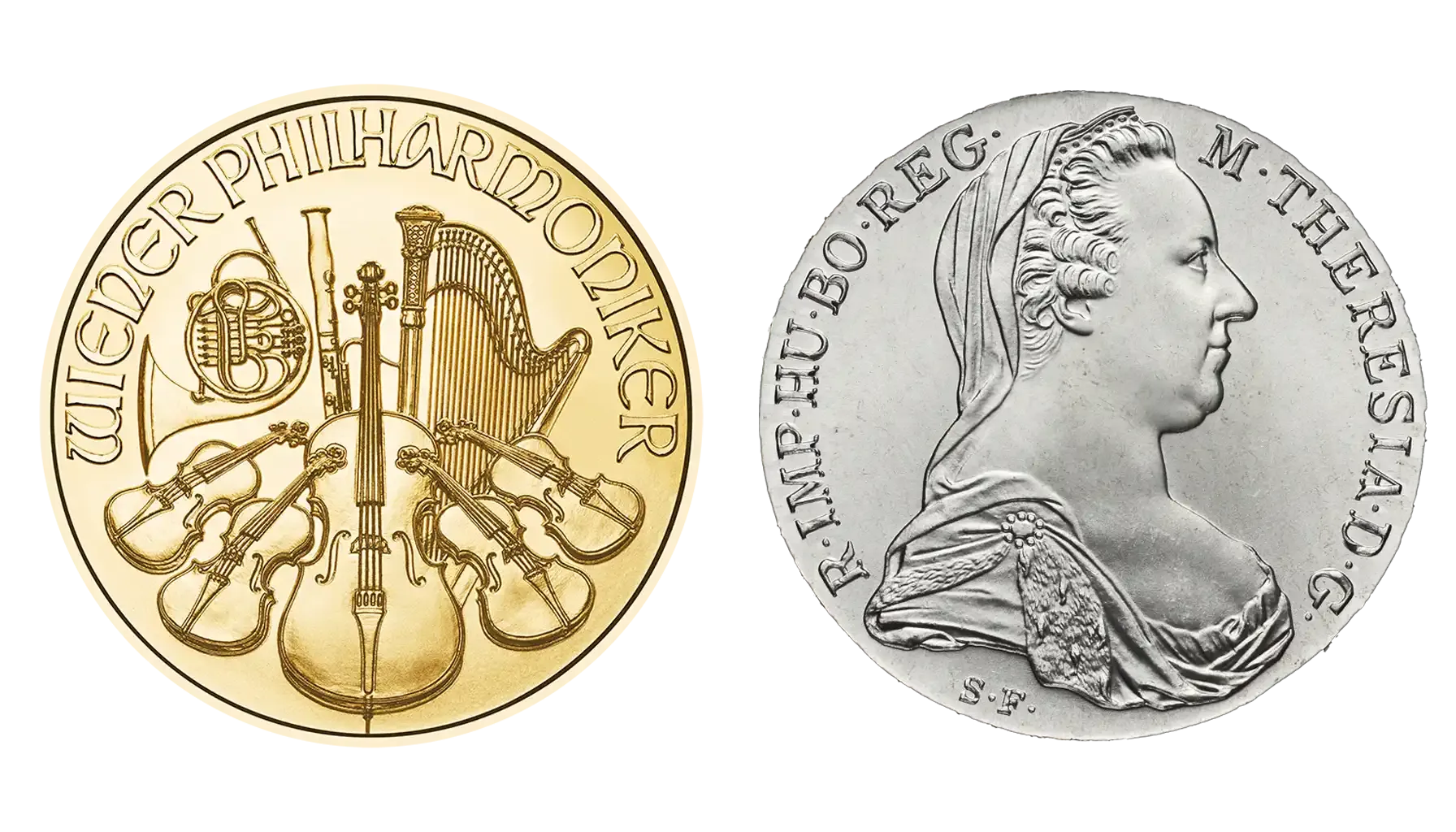
Let's go over the most famous gold and silver issues from Austria and see what makes them even more valuable:
1. Vienna Philharmonic (Gold and Silver)
Austrian Philharmonic coins are too modern to gain historical value. They are almost entirely dependent on the spot price of gold/silver plus a small premium.
A typical Austrian philharmonic silver coin value is ~€76 (~$88).
A typical gold issue is ~€3,719 (~$4,346).
While the Philharmonic series is not the most valuable among its gold and silver peers, it is highly liquid due to global recognition.
2. Austrian Ducats (Restrikes)
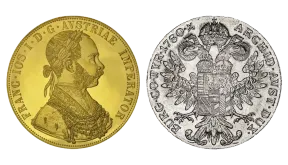
Gold Ducats remain the most iconic Austrian gold coins. Most on the market today are official restrikes dated 1915.
Gold ducats are 0.986 gold and weigh a hefty.1106 Troy Ounce.
Most gold ducats are worth $500+. They trade near bullion value.
An actual old ducat is exceptionally valuable due to its age and metal content.
3. Modern Silver Commemoratives
Modern commemoratives generally have lower values, but they may attract a bigger crowd if they represent important people or events.
4. Historical Austrian Empire bits
This group is very elusive, but it contains one of the most valuable gold and silver bits.
This group includes bits from the Habsburg or Austro-Hungarian Empire (e.g., Maria Theresa Thalers, Kronen).
Condition is the key value factor here. Many old bits are damaged or errored beyond repair, but those left pristine could be worth thousands of dollars.
Conclusion
Europe as a whole seems to be entering a new monetary age. Austria will continue treating it as a beautiful coin for many years to come, for sure.
The Coin ID Scanner app can identify coins from all over the world, including Europe. Now you don’t have to endlessly browse each of your collections. This one app can identify the bits in your collection in seconds, with values and descriptions.

 Facebook
  X (Twitter)
  Pinterest
  LinkedIn