Contents:
Italian coinage is some of the oldest there is. Does the ripe old age make Italian coins valuable, or have they fallen from grace over centuries? The short answer is, they are ripe as ever.
How can you find the Italian coins worth money? Which examples are rare, old, and new? We will give the Italian coinage a proper overview, from its past to its present.
How to check coin value? Nowadays, you need only download an app, and it can scan and evaluate coins for you.
Overview of Italian Coinage History
Italy’s coinage history is a long tale. It spans more than two millennia, older than the Indian Rupee or Japanese yen. Let's see where (or, rather, when) it started, and how it is going now.
Pre-Roman Roots
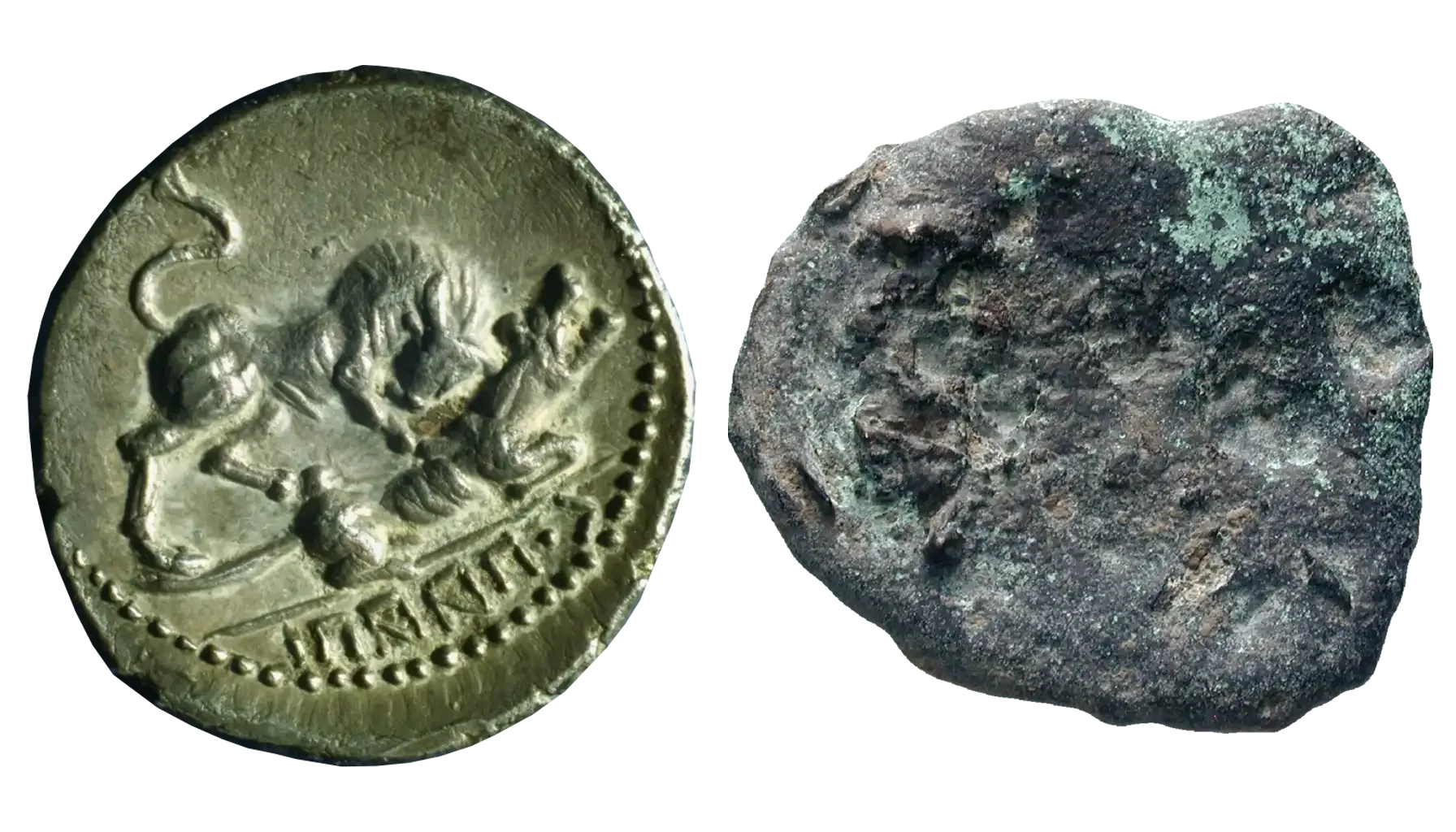
It’s a period when there was no “Italy” yet. There was not even “Rome” to talk about. Long before Italy was unified under a single authority, the region was home to various civilizations: Etruscans, Greeks, and Italic tribes.
Each group was minting its coinage for trade. These early coins were typically crudely struck in bronze and silver.
Ancient Rome
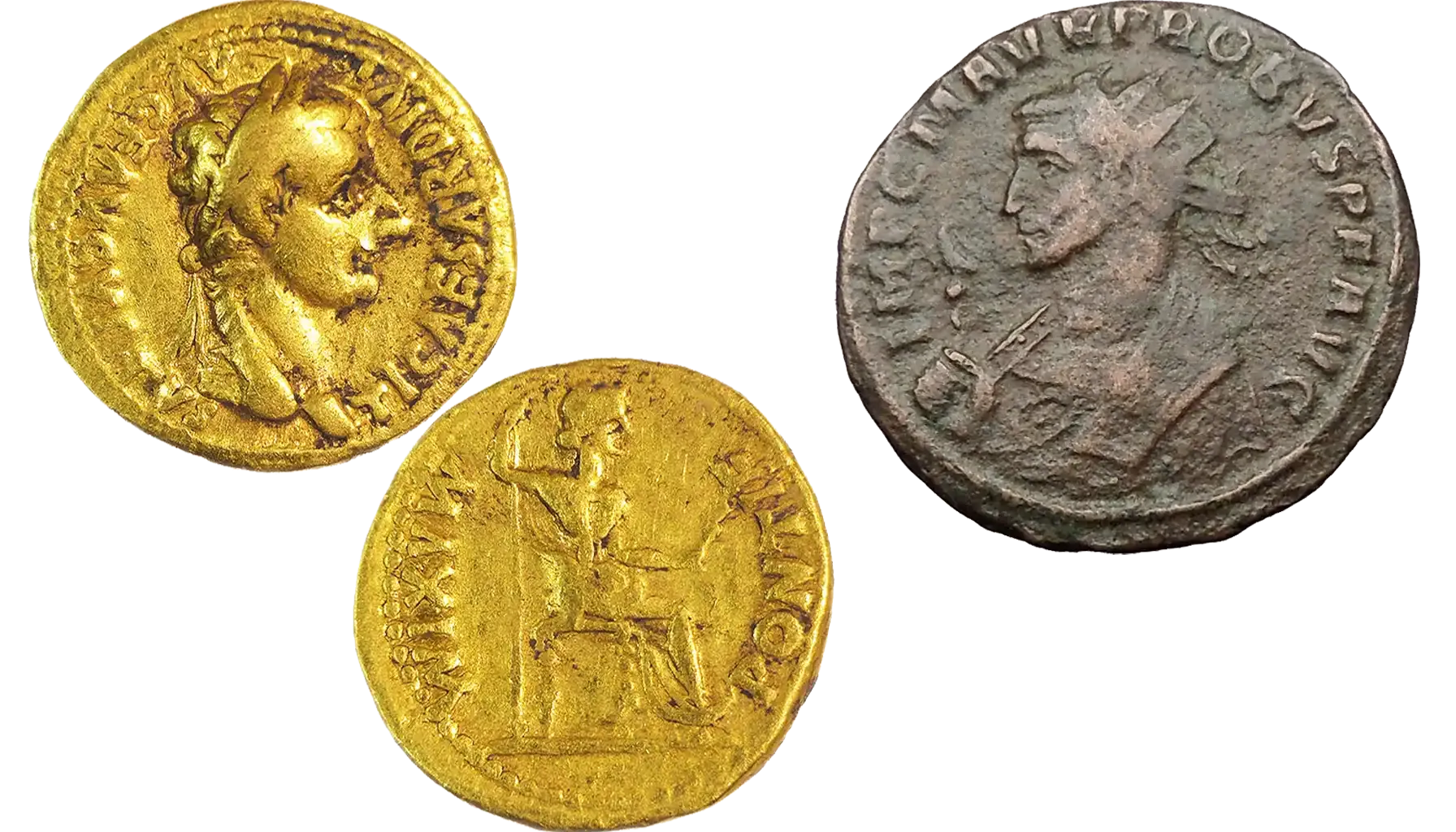
With the rise of Rome, Italy became the center of the world. An empire that dictated many things, including the world’s coinage system. Roman coins set standards for denominations, metal purity, and mass circulation.
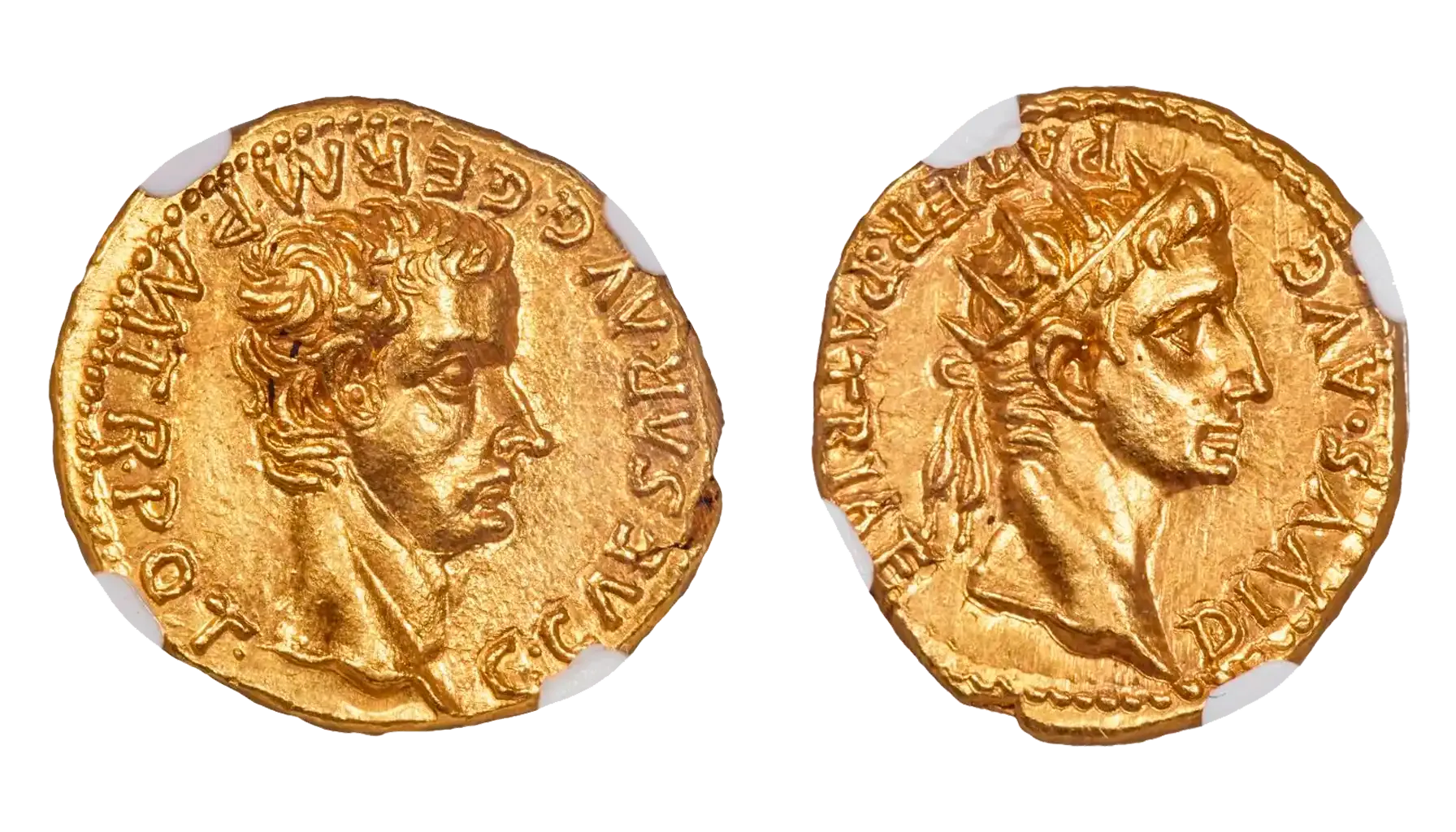
Three coins stood as the foundation: silver denarii, bronze sestertii, and gold aurei. They became the economic backbone and influenced the coinage systems in Europe, Asia, and Africa.
Ancient Roman coins often emphasized power. They featured emperors, military victories, and divine figures.
Medieval Times
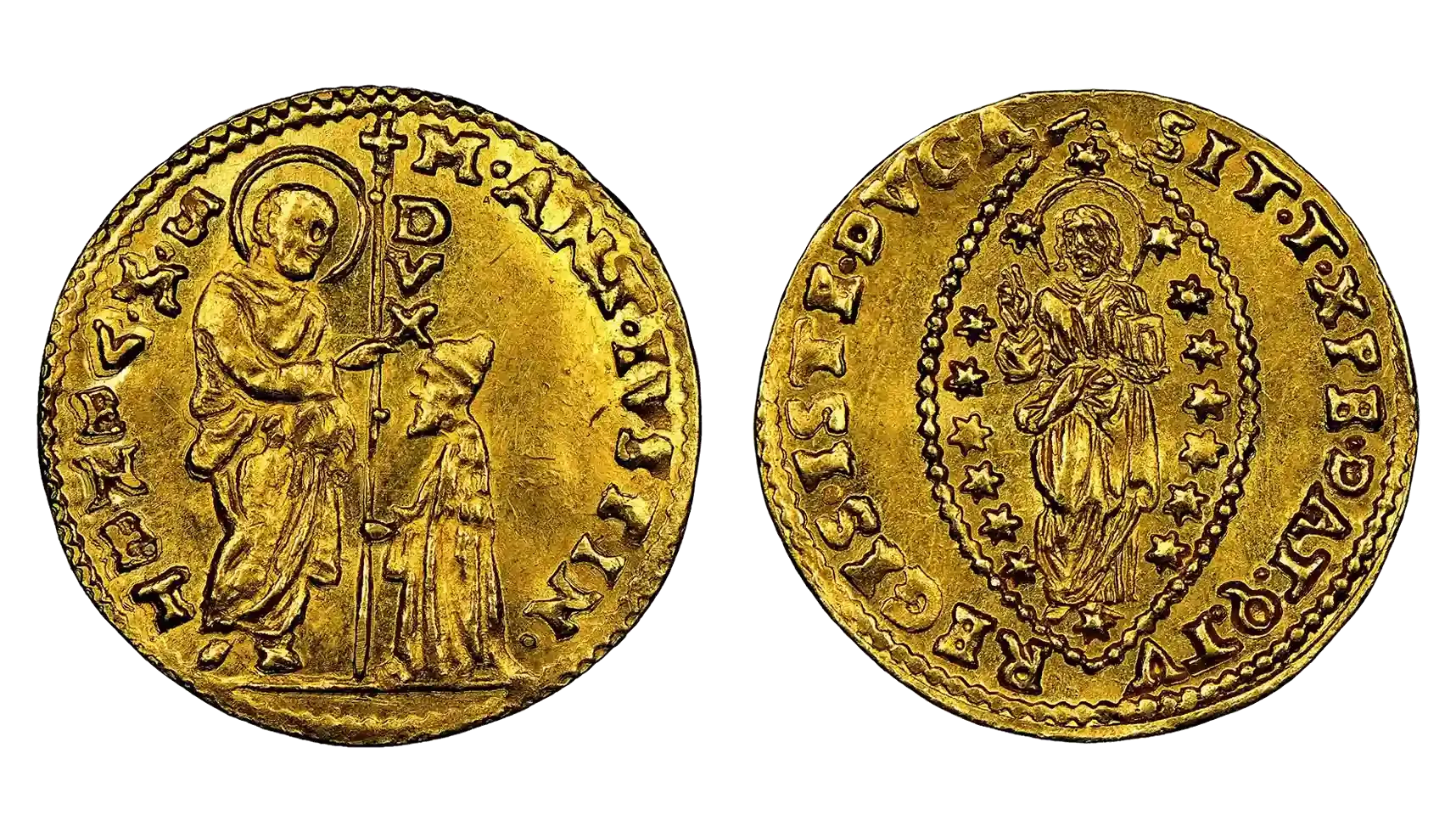
After the fall of the Roman Empire, Italy fragmented into many duchies and republics. Like before the Roman Empire, each land minted its own coinage. Three of them stood out:
Venice issued the gold ducat, one of Europe’s most stable and widely circulated coins.
Florence produced the gold florin, another popular currency.
The Papal States used primarily religious-themed coinage. They aimed to assert religious and political influence.
Unification and the Italian Lira (1861–2001)
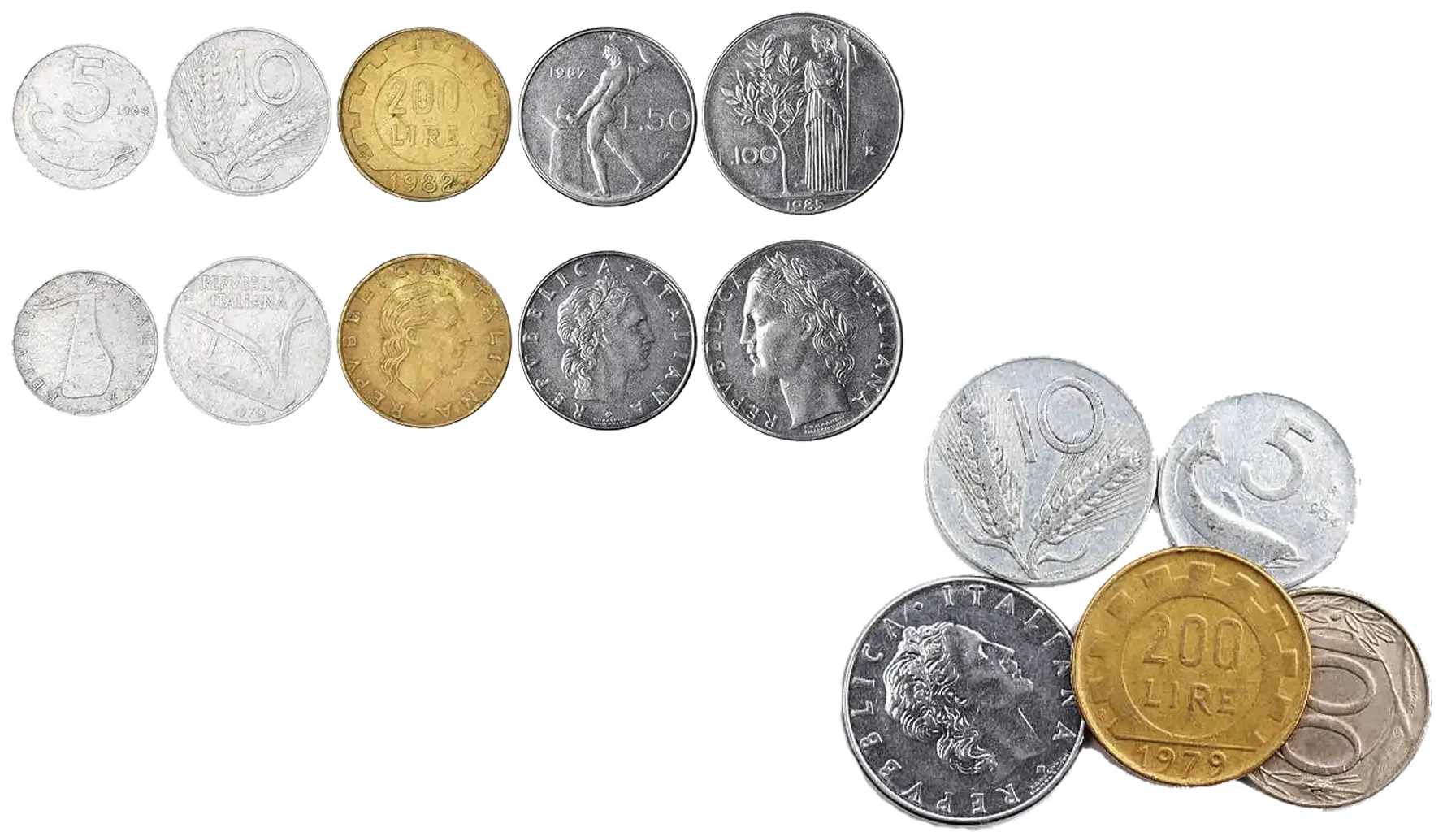
When Italy unified in 1861, the new government needed a standardized national currency. That’s how the Italian lira was born, one of the most influential Italian currencies after the Roman Empire.
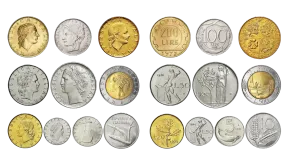
Lira often featured monarchs and monuments. The currency went from gold and silver compositions to cheaper aluminum versions. Lira was frequently reworked until it was finally replaced by the Euro.
The Introduction of the Euro (1999–Today)
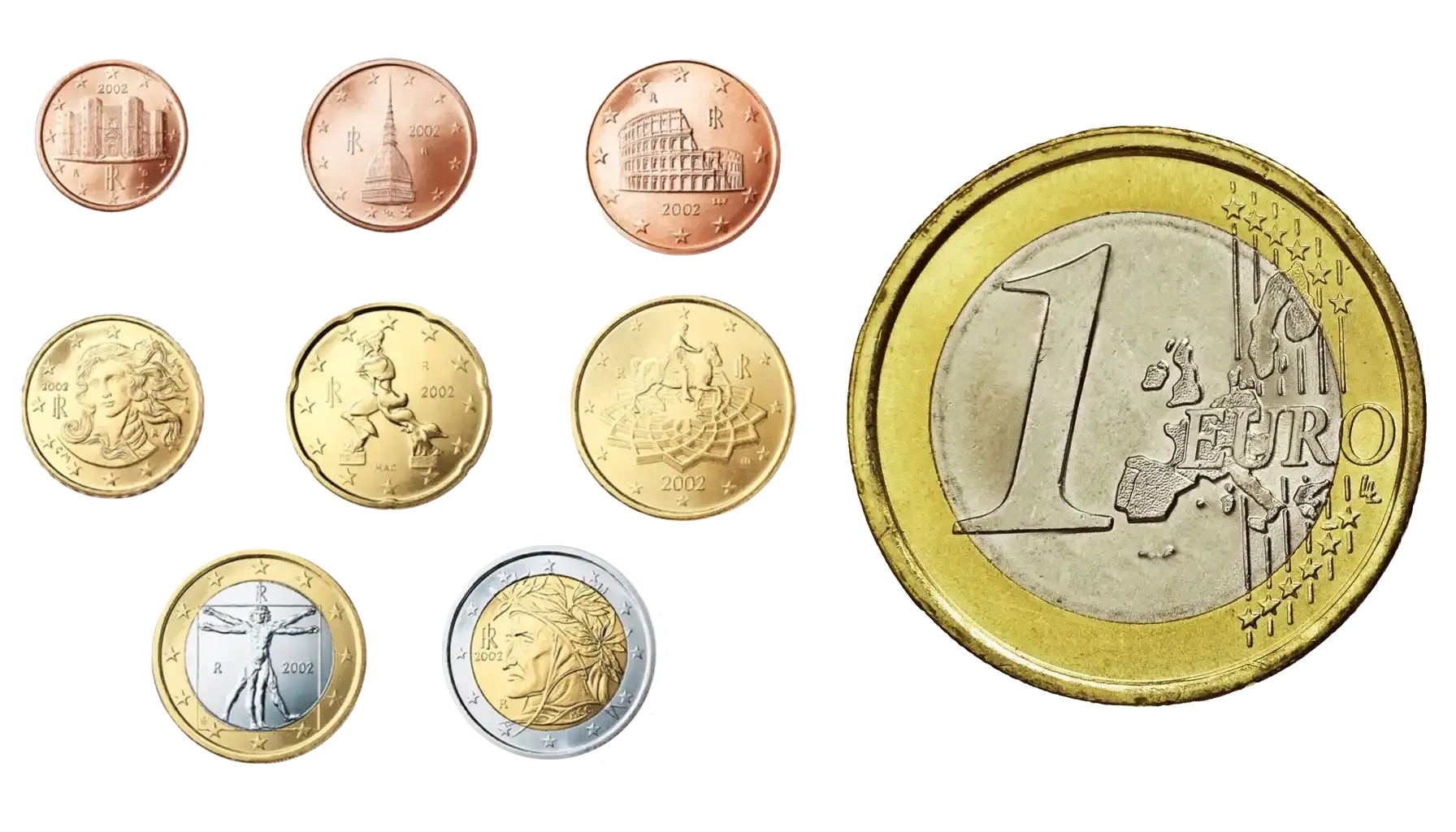
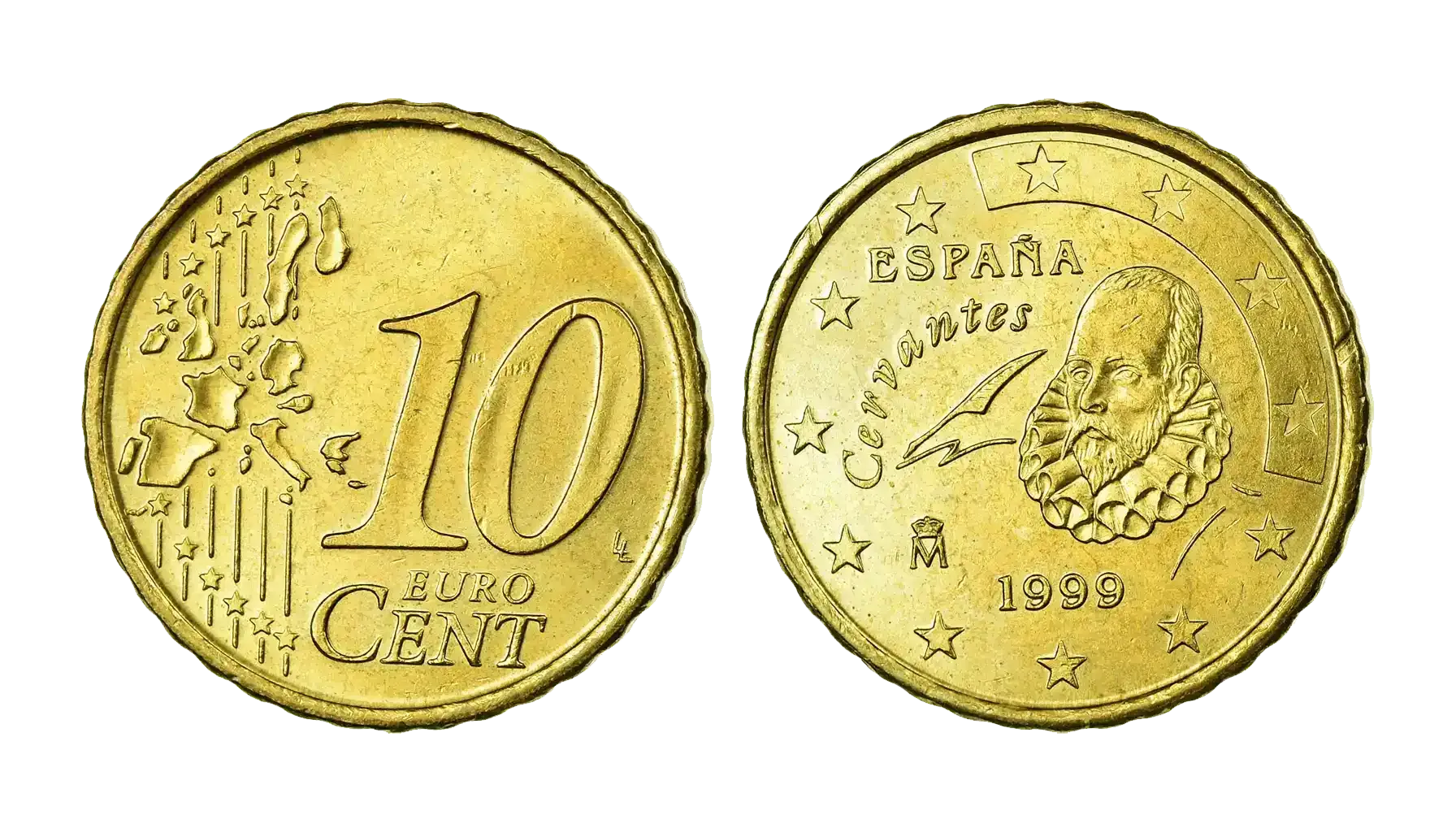
Italy was a founding member of the European Union. When the country joined the Eurozone, it had to change its currency from the lira to the euro, the current Italian coins. It was the only way Italy could gain influence and trade effectively with other European countries.
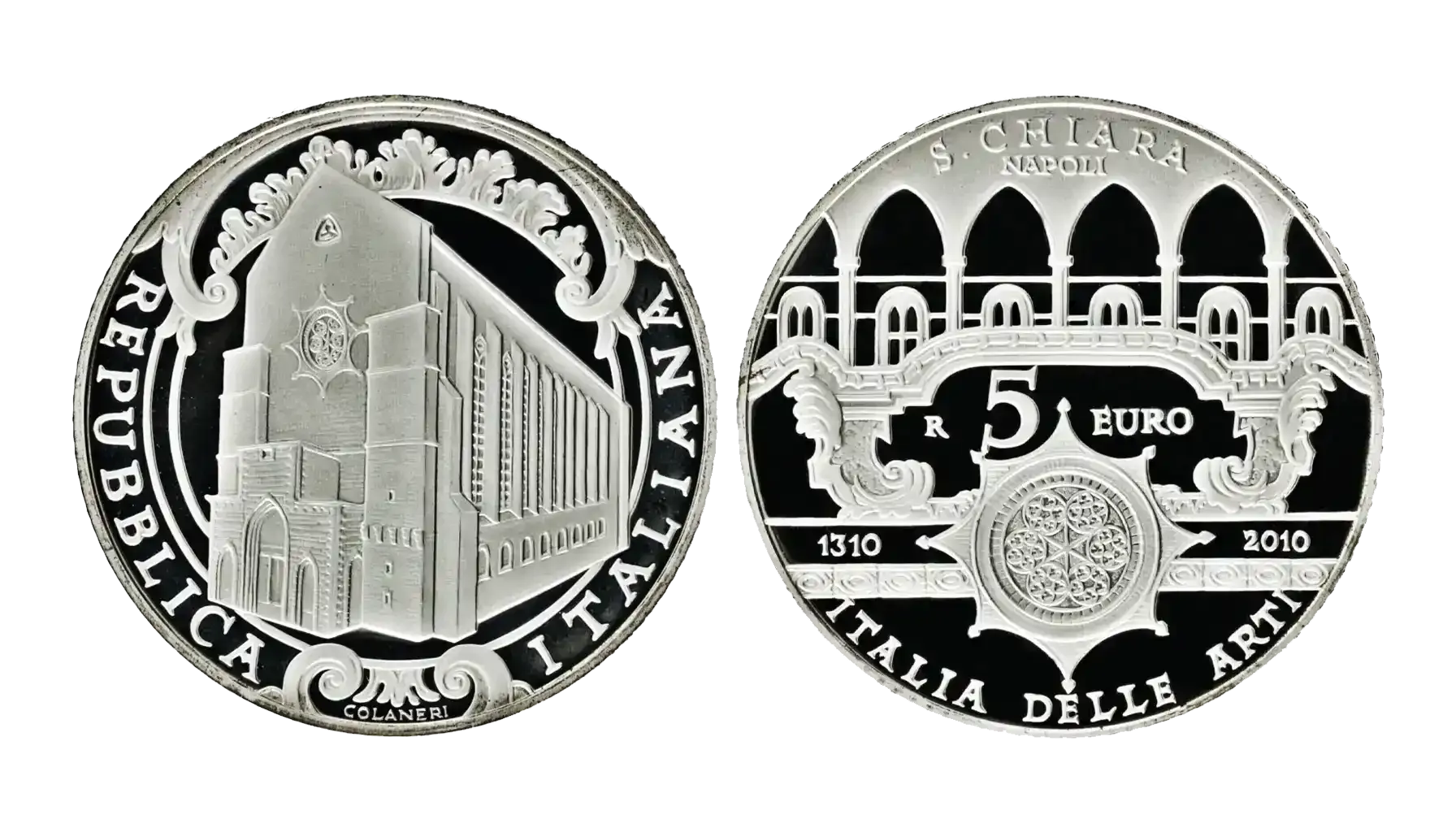
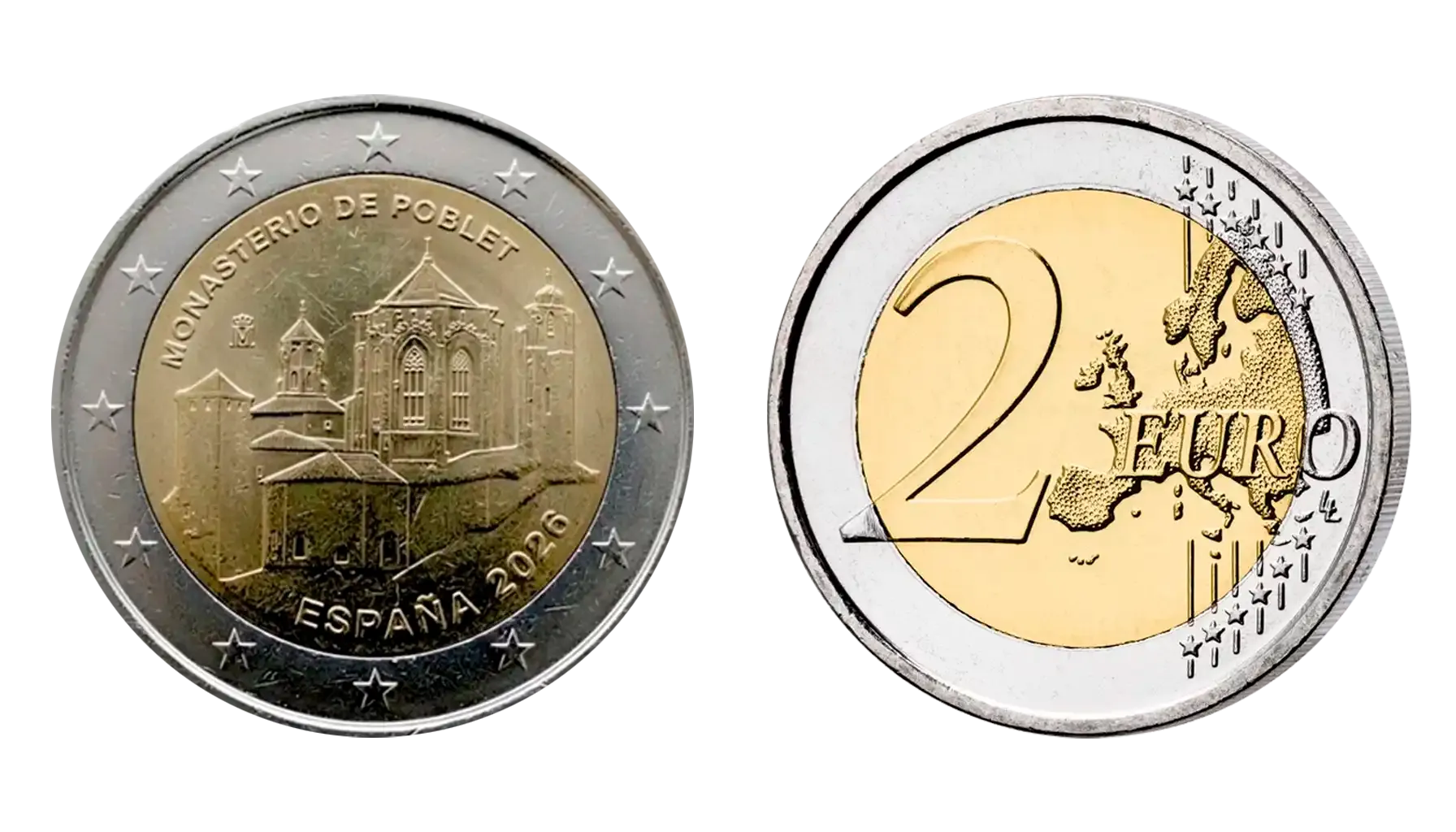
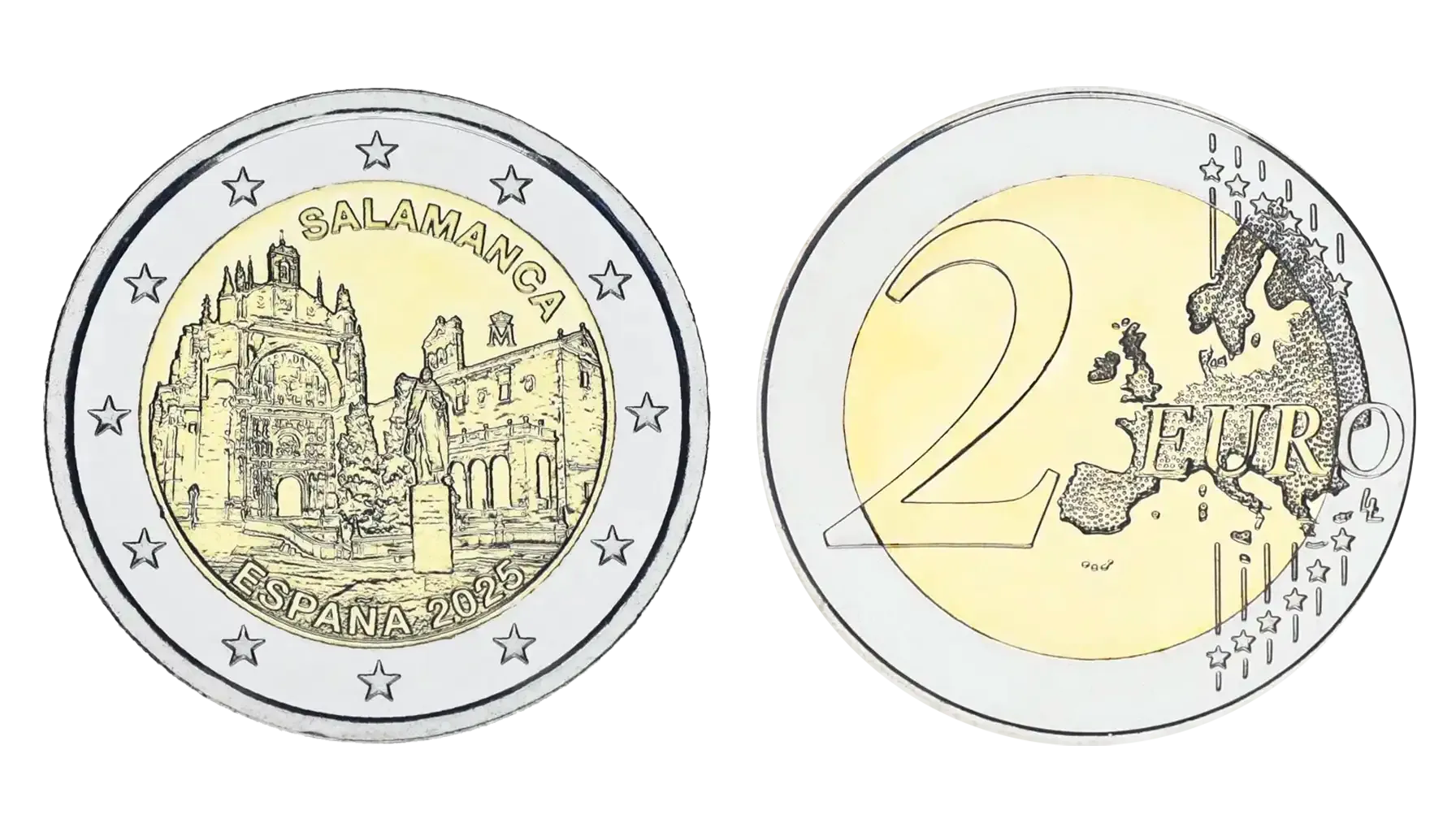
Italian euro coins feature national themes. Some feature important Italians, like Leonardo da Vinci. Other features include architecture, like the Colosseum.
Italy came a long way from crude ancient bronze bits to sleek euro bimetallics. The euro quickly became one of the most popular currencies in the world, and it will likely stay.
“It is a sad day for the death of the Lira but one of joy for the birth of the Euro.”
— Nicolo Lelpo, the Italian Mint Director
The Daily Star Newspaper
Ancient Italian Coins
Ancient Italy produced some of the most historically significant coins in the world. What can we consider old Italian coins? The timeframe is wide, but most will agree that the bits made in Ancient Rome are very old.
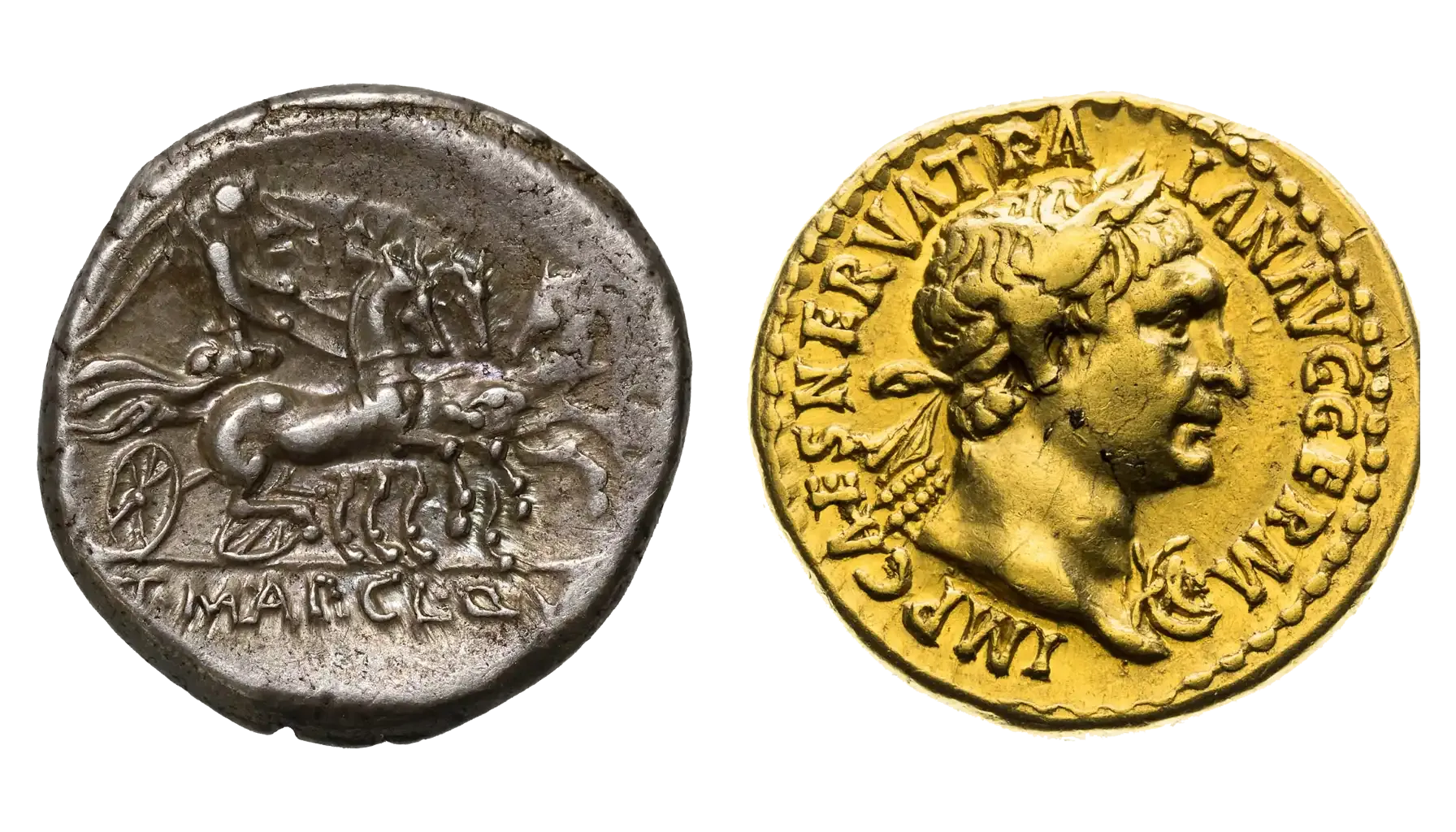
As you already know, Ancient Rome had 3 very influential coins. Each was unique in its technical terms and purpose:
Coin Type | Metal | Purpose | Origin |
Sestertius | Bronze | Public and commercial payments | Introduced around 211 BC |
Denarius | Silver | Every high-value transaction, soldier payment | Introduced around 211 BC |
Aureus | Gold | Major state payments, elite transactions, storage of value, and power display | Introduced in the 1st century BC, later than other currencies |
What about more ancient Italian coins that came before Rome? Those are so rare and old you’d likely only find them in a museum. Too old and too valuable to trade and put in a collection.
How to Identify Valuable Italian Coins
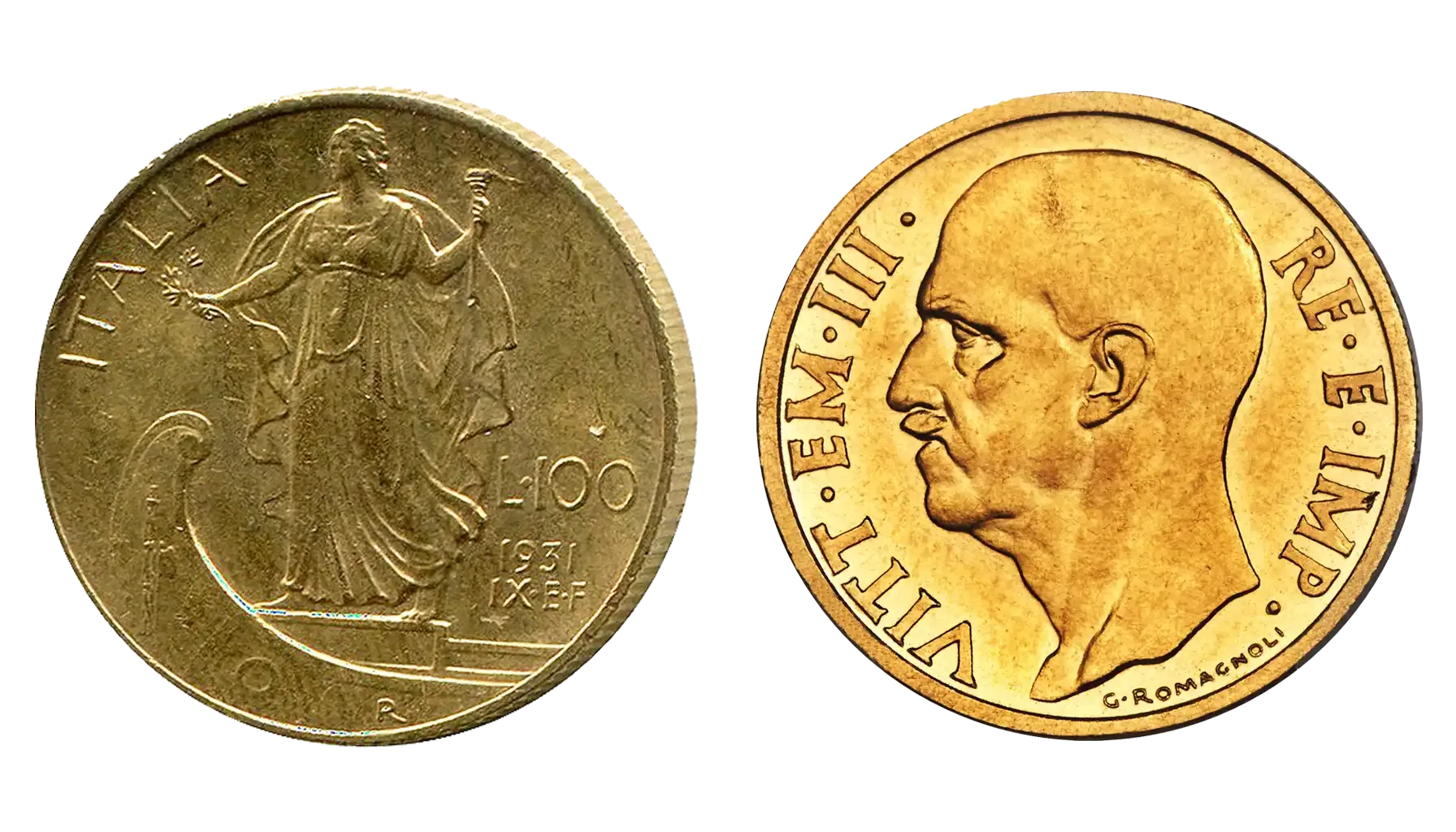
Rome’s successor has many valuable coins. To identify the most valuable examples, you'll need some historical knowledge, a keen eye, and some market knowledge. To make things easier, just look for these Italian coins value signs:
1. Age and historical significance
Older coins, especially those from ancient Rome, tend to be more valuable.
Bits minted during the reign of short-lived rulers often have lower mintage and higher value.
2. Rarity and mintage numbers
Coins with low mintages are often more desirable. They are rare by definition, and collectors like rare bits.
The early lira often had limited production runs.
3. Condition (grade)
Condition is one of the most influential factors in value.
Coins with sharp details and luster are in favour. They are a rare find and have eye appeal.
Coins graded as AU (About Uncirculated) or MS (Mint State) attract the highest bids.
Even common coins can become valuable in exceptionally high grades.
4. Metal composition
Bits have numismatic worth (their historical significance, rarity) and metal value.
If a bit is made from a precious metal, then it is worth more.
Italian gold coins (early lira or aurei) offer the highest value.
Italian silver coins (denarius) offer lower prices than gold, but are still much more valuable than clad or bronze bits.
5. Exclusive variants
Special editions, like proofs or mint sets, often carry higher value.
These exclusive variants also often have a very limited mintage.
6. Demand
Some coins are highly valued simply because people want them.
Roman denarii of popular emperors (like Julius Caesar) will always attract attention and value.
Commemorative euros, showing unique Italian designs, will also be in favour.
7. Authentication and provenance
Authentication is essential for high-value pieces. A certificate authenticates a bit and makes it valuable.
Additionally, old coins win in the value game if they were owned for a long time by important collectors.
With a little bit of luck, perhaps you will find rare Italian coins.
Conclusion
It’s not often you see a country with such a strong monetary background. Italy used to be a shark among money issuers, and it still holds strong centuries, even millennia later.
What instrument could help you scan bits from Europe, Asia, and America? The Coin ID Scanner, an app that can identify coins and even evaluate them.

 Facebook
  X (Twitter)
  Pinterest
  LinkedIn