Contents:
The Japanese 50‑yen remains in regular use throughout Japan. Every day, shops, vending machines, and banks process millions of these items.
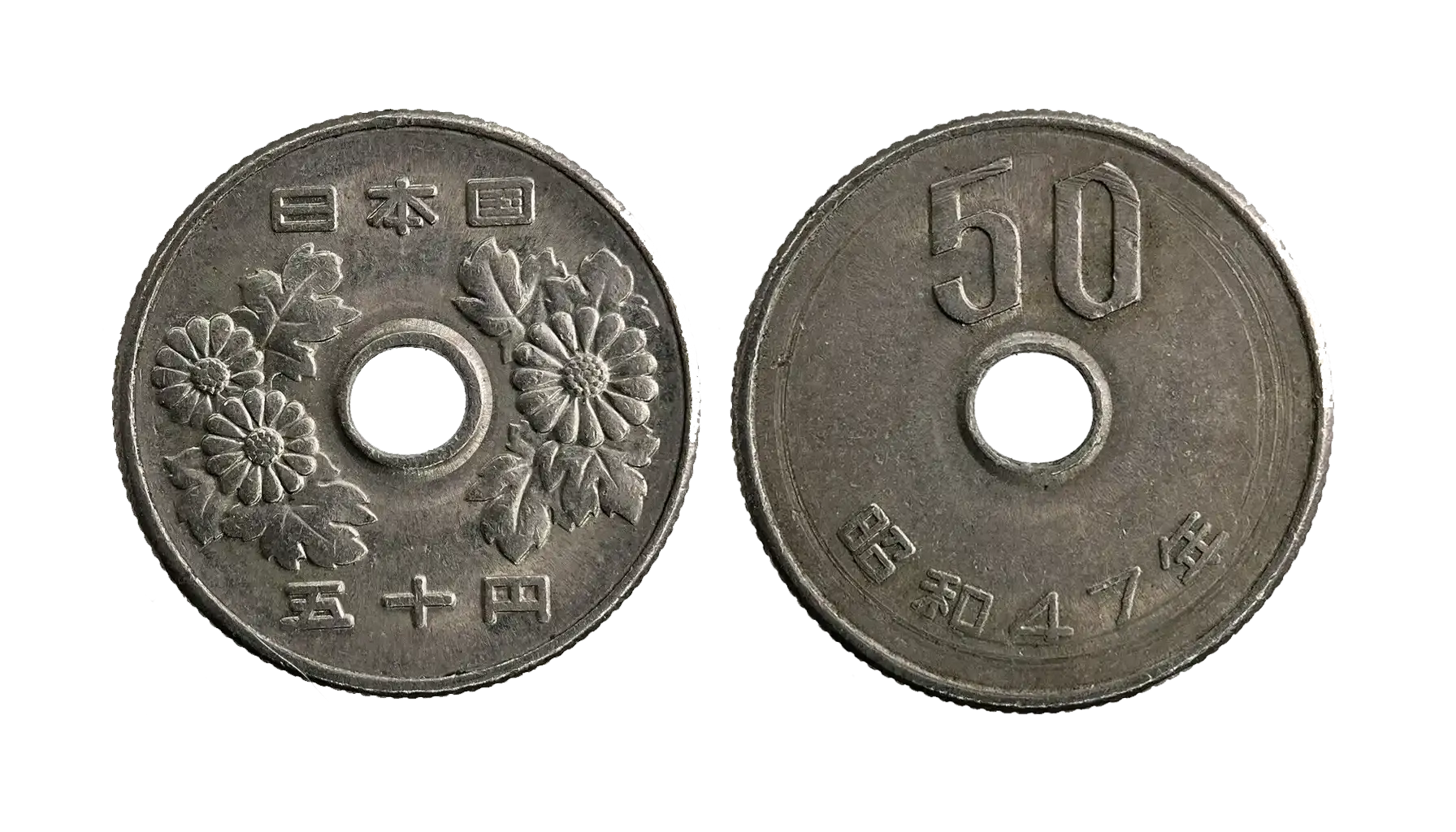
Collectors who live outside Japan frequently notice this item first due to the hole that appears in its centre. The item has a clear history of minting, and experts can assign it a measurable collector's Japanese 50 yen coin value.
Numismatists search for examples with specific dates and in particular conditions. To understand the yen coin fully, people must examine its metal composition and consider the current level of market demand.
How to check my old coin value right now?
History of the Japanese 50 Yen Coin
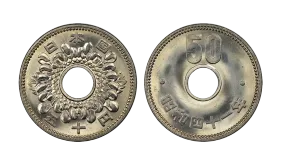
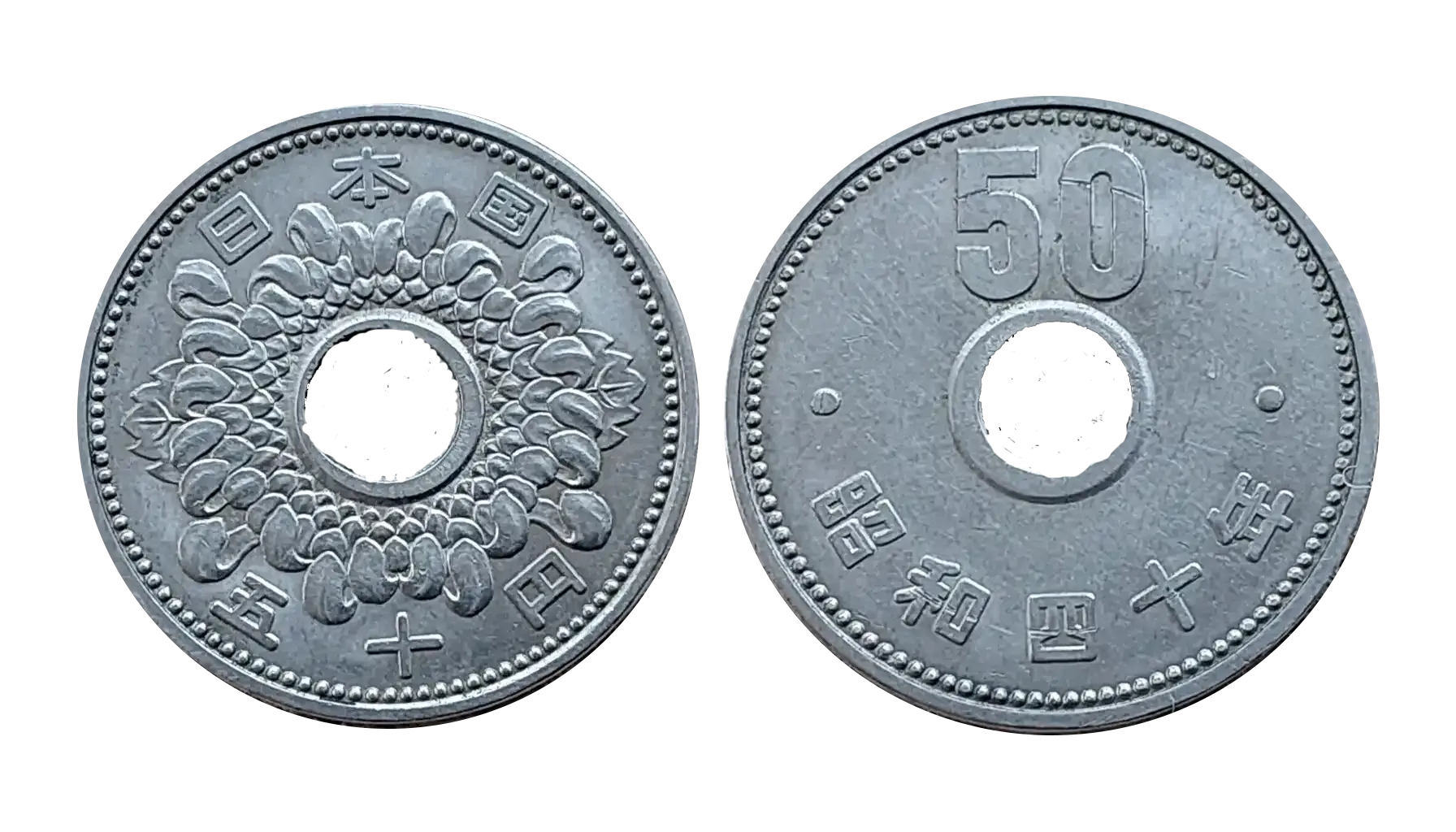
Japan introduced the 50‑yen item in 1955. The initial version of this item included nickel as its main metal component. At that time, the item did not feature a 50 yen coin with hole in its centre.
The First Issue
The first series showed a chrysanthemum on the obverse side. Many people described the item as heavy when they held it. The government later acknowledged that production costs presented significant challenges.
New Design
In 1959, there were changes in the design – a hole appeared in the middle of the item. Because people lacked a hole in previous items, and they were similar in size and design to the 100 yen of the time, people had trouble telling them apart.
While they added the hole in 1959, they kept using pure nickel until 1966. The switch to cupro-nickel didn't happen until 1967.
Modern Standard
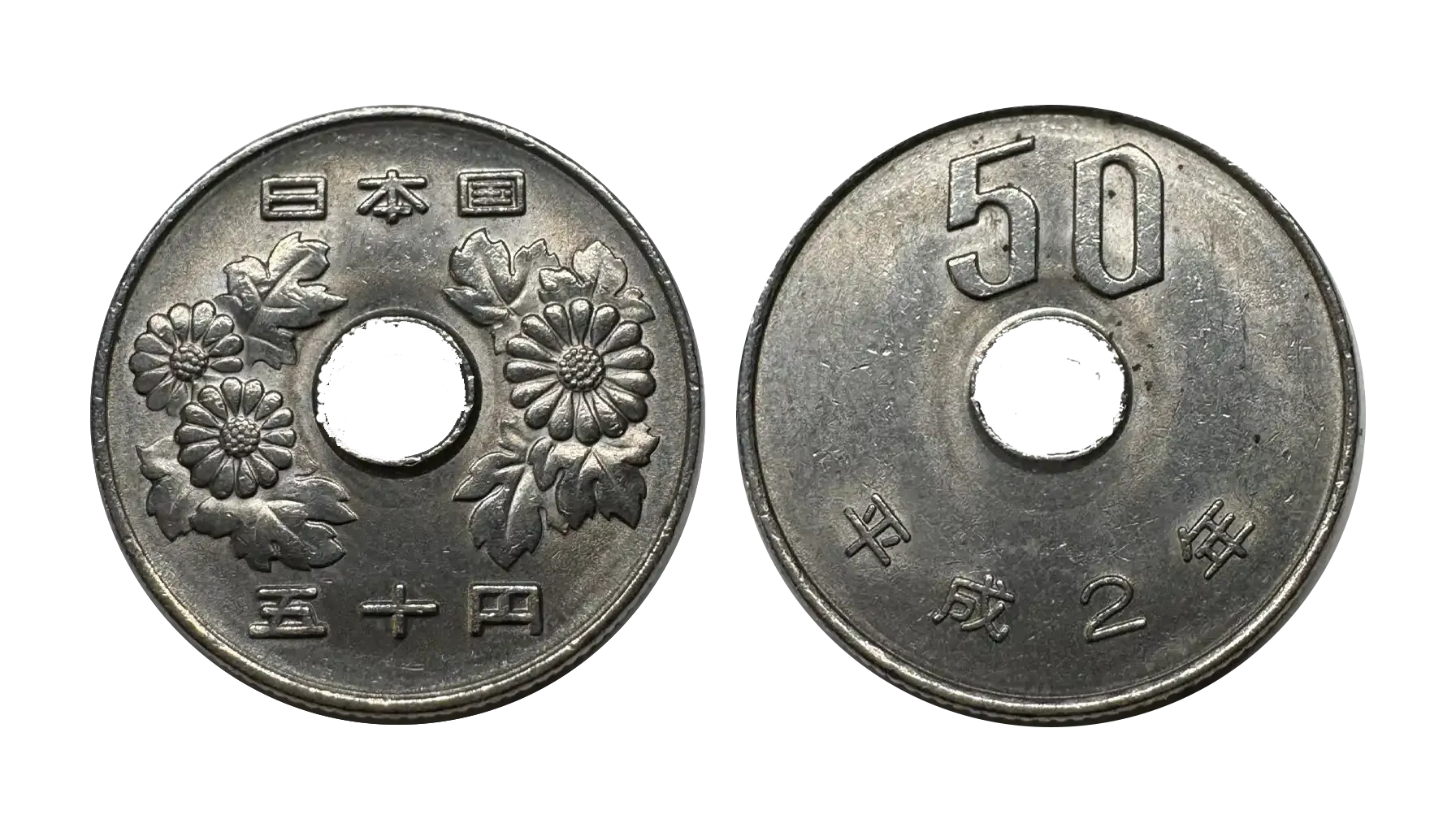
In 1967, the 50‑yen received a new design. The item’s diameter became smaller, reaching 21 mm, and its weight decreased to 4 g. The metal composition changed to cupro‑nickel, and the design began to show three small chrysanthemum flowers.
Officials made this change to create a clearer distinction between the 50‑yen and the 100‑yen. The 100‑yen also changed its metal composition in 1967 – it switched from silver to cupro‑nickel in that year.
Why The 50 Yen Coin Has a Hole
"The main rationale for keeping them [holes] is that the holes make it easy to distinguish those coins from others, particularly for people with visual impairments."
– Alice Gordenker
The Japan Times
At that time, it was much more difficult to make an item with a central hole than a single disc. The precision required to obtain a perfectly centered hole in the high-speed coinage process served as one of the first means of protection, making it much more difficult for counterfeiters to produce high-quality fakes.
However, this is not the only reason:
Metal savings during manufacture
Distinctive design from the 100 yen
Japan 50 Yen Coin Value Today
Today, a standard 50 yen in your pocket is worth exactly its face value – about $0.33 USD (based on 2026 Q1 exchange rates). However, for collectors, the value can vary significantly depending on the year of mintage and the item's condition.
Year | XF | MS-60 | MS-63 |
1967–1976 | $0.80 | $1.30–$5.00 | $1.50–$7.50 |
1977–1986 | $0.80 | $1.30–$3.00 | $1.50–$4.00 |
1987–1988 | $0.80–$60.00 | $1.30–$75.00 | $1.50–$85.00 |
Rare 50 Yen Coins to Look for
1987 – The Japan Mint did not release this item for general circulation; it was only available in official mint sets.
$50–$100+
2010–2013 Sets – during these four years, the use of electronic money exploded in Japan, leading to a surplus of items. The Mint slashed production drastically.
$10–$25
The larger, pure nickel items (1955–1966) are rarely seen in change, but 1960 stands out.
$15–$30+
Errors – since the 50 yen has a hole, it is prone to specific errors that are highly valuable:
Off-Center Hole: If the hole is not perfectly centered, the item can be worth $500 to $1,500+, depending on how extreme the deviation is.
Missing Hole: If the item was never punched and is a solid disc, it is an extremely rare mint error. These can sell for $2,000 to $3,000 at auction in Japan.
Japanese 50 Yen Coin Designs Over Time
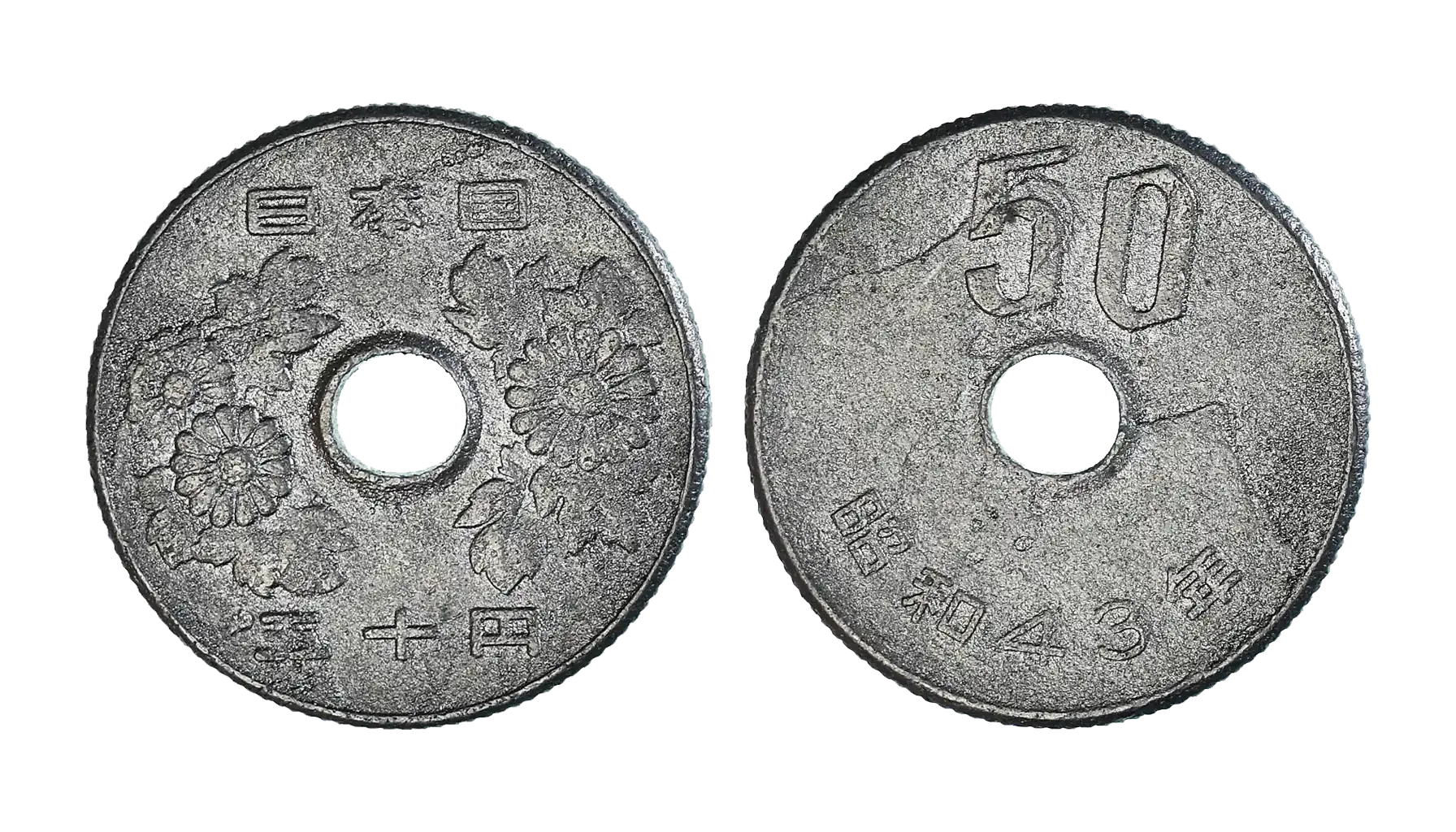
ACollector Tipsll 50 yen ever minted (1955, 1959, and 1967 series) remain legal tender. While legal, the 1955 (no hole) and 1959 (large nickel with hole) versions are rarely seen in change today because their metal value or collector value often exceeds 50 yen.
However, if you spent one at a convenience store, they would technically have to accept it.
Period | Hole | Composition | Size / Weight |
1955–1958 | - | Nickel | 25 mm / 5 g |
1959–1966 | + | Nickel | 25 mm / 5 g |
1967–present | + | Cupro–Nickel | 21 mm / 4 g |
Are 50 Yen Coins Collectible
Of course, these items attract attention and should be in your collection. They are unique, and with the development of digital currency, they will only become more expensive every year.
Collector Tips
Before buying or selling, pay attention to the condition, mintage, circulation, and special copies. Such options are worthy of your eye:
The pure nickel items' premium from 1955 to 1966
Proof sets like 1987
Check other old Japanese coins you should know in 2026.

 Facebook
  X (Twitter)
  Pinterest
  LinkedIn