Contents:
The Japanese 100 yen coin was first minted in 1957. It was postwar time recovery, so the mint used a silver alloy. Which is why it stays so shiny even after so many years.
This first version had a phoenix design and was intended to replace the 100 yen banknote, but it continued to circulate for several more years.
By the 1960s, silver prices suddenly rose. This was a challenge for a Japanese mint. They wanted to prevent hoarding. So they came up with the decision to discontinue silver coinage in 1967 and release pieces in a cupronickel alloy.
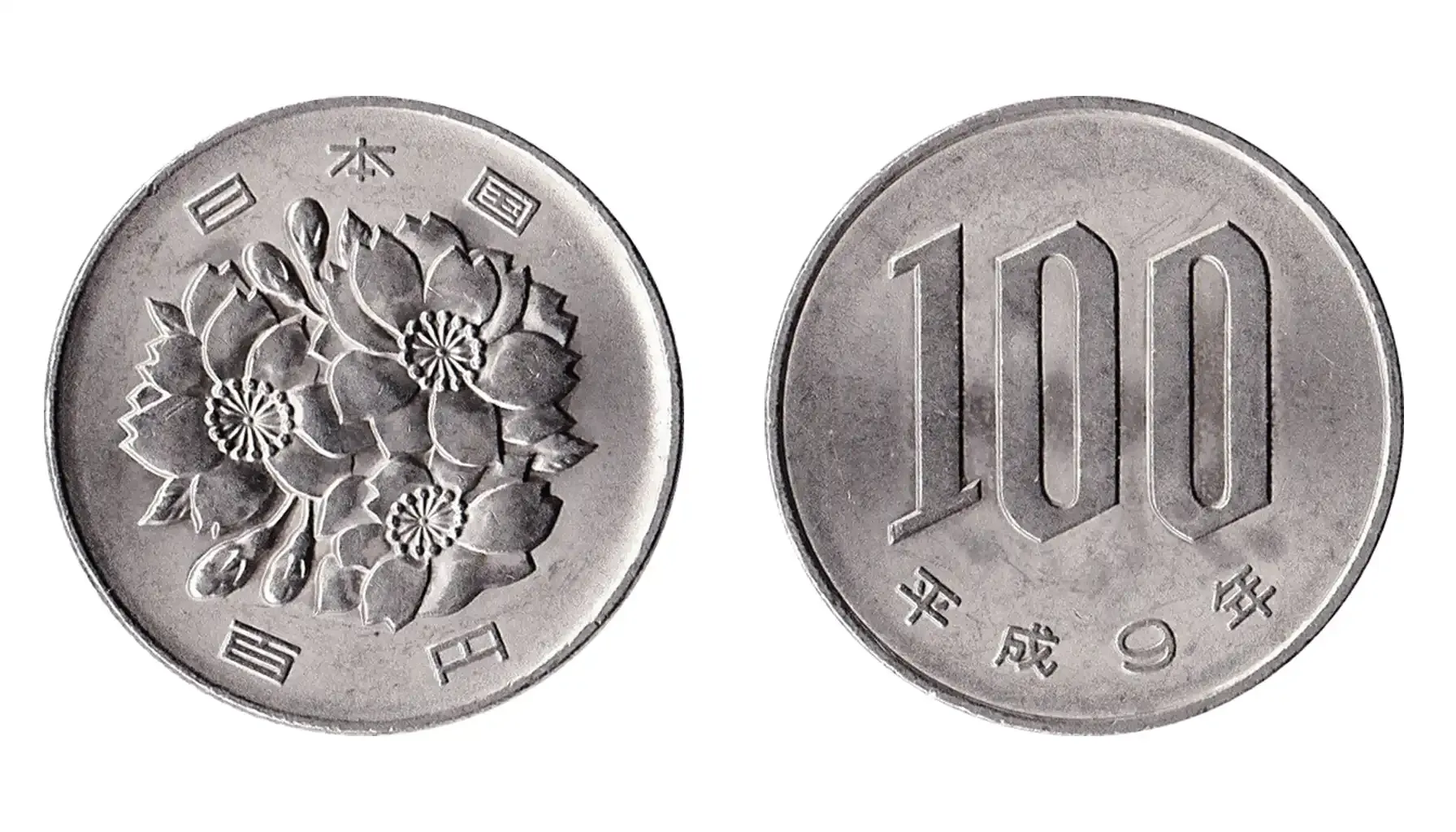
They switched the design to cherry blossoms, which are a symbol of renewal in Japan. Now, this piece is important for a country and a favorite coin for vending machines, arcades, and travelers.
If you think that you have a valuable 100 coin, you'd better check it with an app to identify coins, because the coin is pretty mundane unless you have something rare going on with this piece.
Design and Specifications
The 100 yen was first made in 1957 as a silver coin. It had a picture of a phoenix on the obverse. But in 1959, it changed to a design of a rice plant (they meant growth and harvest).
By the late 1960s, silver became too expensive, so in 1967, Japan switched to a nickel coin that shows cherry blossoms on the front. That same design is still used today.
“By the late 1970s into the early 1980s a myth was established that tied the amount of coins produced with the growing popularity of the arcade game industry, particularly the 1978 game Space Invaders. While there were reports of Japanese cities briefly running out of 100 yen coins, arcade operators would have emptied out their machines and taken the money back to the bank, which kept the coins circulating.”
— Dario Martinelli
from What You See Is What You Hear: Creativity and Communication in Audiovisual Texts
The coin is made of 75% copper and 25% nickel; this alloy gives it a light silver color and makes it strong for daily use. It’s also designed to work perfectly in vending machines and public phones, part of why it’s one of Japan’s most used coins.
Feature | Silver Issues (1957–1966) | Nickel Issues (1967–present) |
Composition | 60% silver, 30% copper, 10% zinc | 75% copper, 25% nickel |
Diameter | 22.6 mm | 22.6 mm |
Weight | 4.8 g | 4.8 g |
Obverse Design | Phoenix / Rice sheaf | Sakura blossoms |
Hidden anti-counterfeiting details. Modern notes of the 100 Japanese yen coin have microscopic lettering, holograms, and raised printing that can be felt by touch. The features are so advanced that they’re used as study models by other countries’ mints.
How to Read the Date on 100 Yen Coins
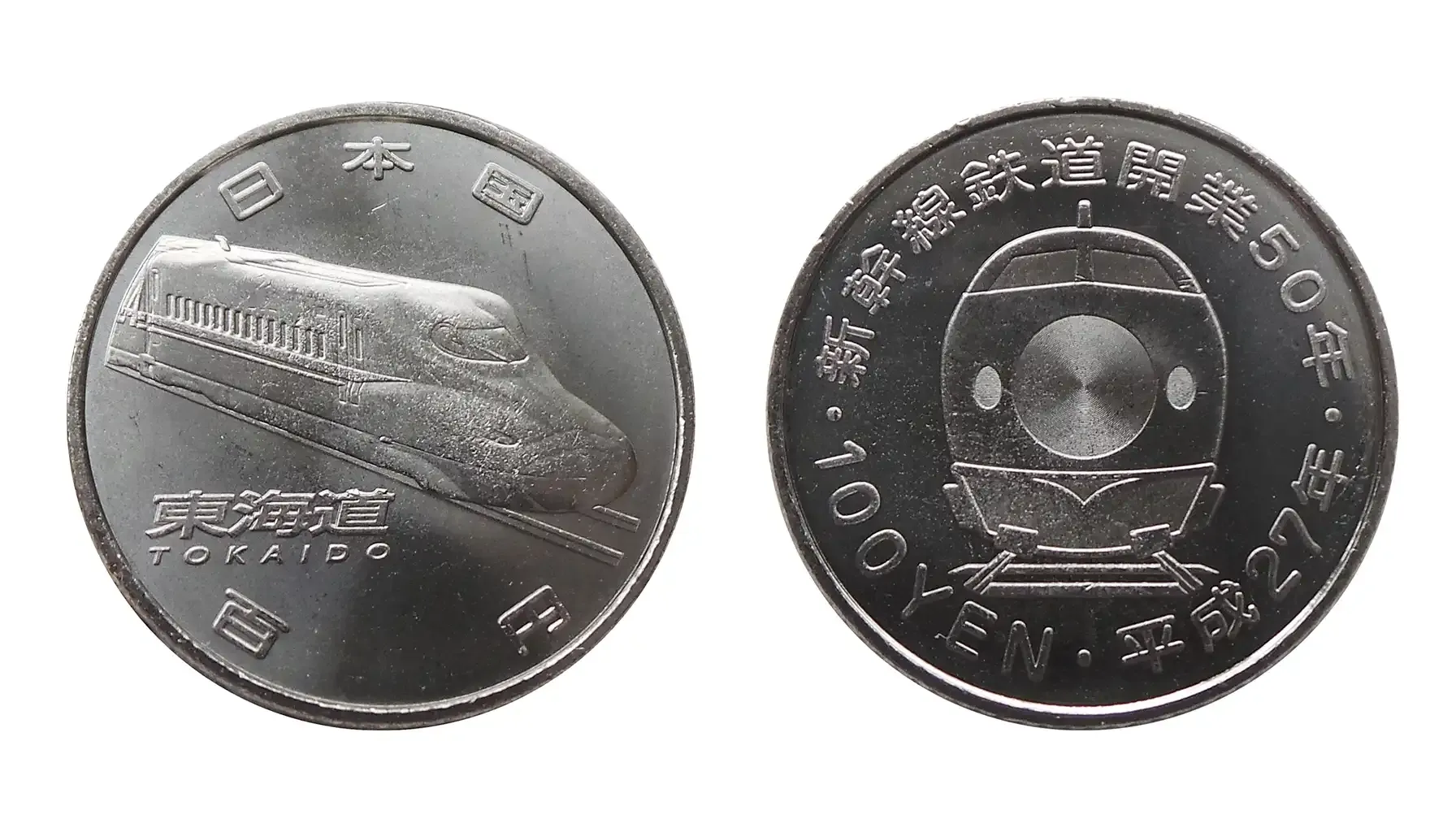
Each 100 yen piece has the date of minting, but it’s expressed differently from Western years. Japan uses the emperor’s era name and the number of years since their reign began.
昭和 (Shōwa): Emperor Hirohito (1926–1989). The first 100 yen note was made in 1957 during Hirohito’s Shōwa era. It was a silver coin with a phoenix on the obverse.
In 1959, the design changed to a rice plant. But the silver became too expensive, so Japan replaced it in 1967 with a nickel version. Now the yen has cherry blossoms, which means renewal
平成 (Heisei): Emperor Akihito (1989–2019). Under Emperor Akihito, the 100 yen kept the cherry blossom design but with the new era name, 平成 (Heisei).
In the late Heisei years, production numbers dropped slightly because digital payments became more common, but the coin remained
令和 (Reiwa): Emperor Naruhito (2019–present). In this era, the 100 yen has the same look. Sakura blossoms on the front and the denomination on the back. The only change is the date inscription, now reading 令和 (Reiwa)
Modern pieces now use Arabic numerals. This date system will help you to determine the currency 100 yen coin value much quicker and verify mintage rarity.
Collector Value and Rare 100 Yen Coins
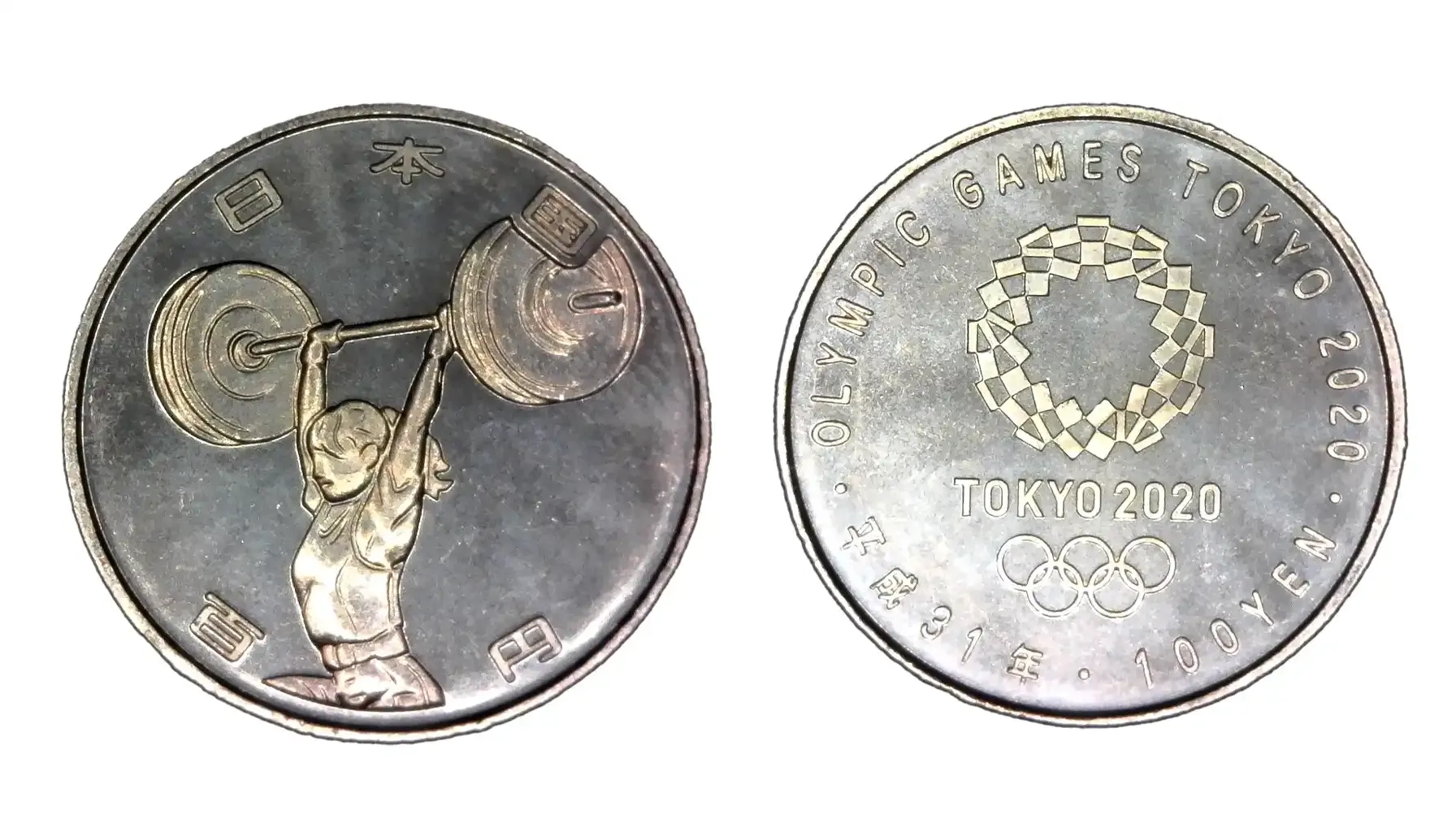
The 100 yen coin value is different for early silver issues. Several dates and versions are rare 100 yen coin examples:
1957–1958 Phoenix design: the very first 100 yen issues, pretty collectible and often sold at a high price
1959–1966 Rice sheaf design: silver versions struck in smaller quantities as Japan prepared for the alloy transition
1964 Olympic commemorative: minted for the Tokyo Summer Olympics; around 80 million were produced, most saved by the public
2001 Heisei 13 issue: it is the lowest mintage. Just over 8 million pieces struck
Commemorative editions: issues with events like Expo '70, the Sapporo and Tokyo Olympics, and the Shinkansen anniversary can cost a lot in higher grades
Older silver examples sell well above face value, but nickel series are the most affordable.
Japan melts down old coins. The mint regularly recalls and melts worn currency to reuse the metal.
Conclusion
The 100 yen coin powers vending machines and arcades; some say the 100 yen piece fueled Japan’s arcade boom. You can collect silver ones if you're a pro collector, or nickel pieces if you don’t want to spend too much.

 Facebook
  X (Twitter)
  Pinterest
  LinkedIn