Contents:
Japan’s ten yen coin has a pretty long history. It was made in the Meiji era (1871), and was one of the first coins made of gold.
Japan tried to align its new currency with Western monetary systems, so it made a bunch of gold coins. The modern bronze version (which they release today) was made after World War II in 1951.
Overview of the Japanese 10 Yen Coin
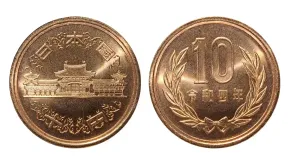
The Japanese 10 yen coin, early gold issues were for official and commemorative use. The current bronze design is circulating all across Japan now.
If you have an early gold coin and have never checked it before, there is a coin finder app to help you do that instantly.
Design and Features of the 10 Yen Coin
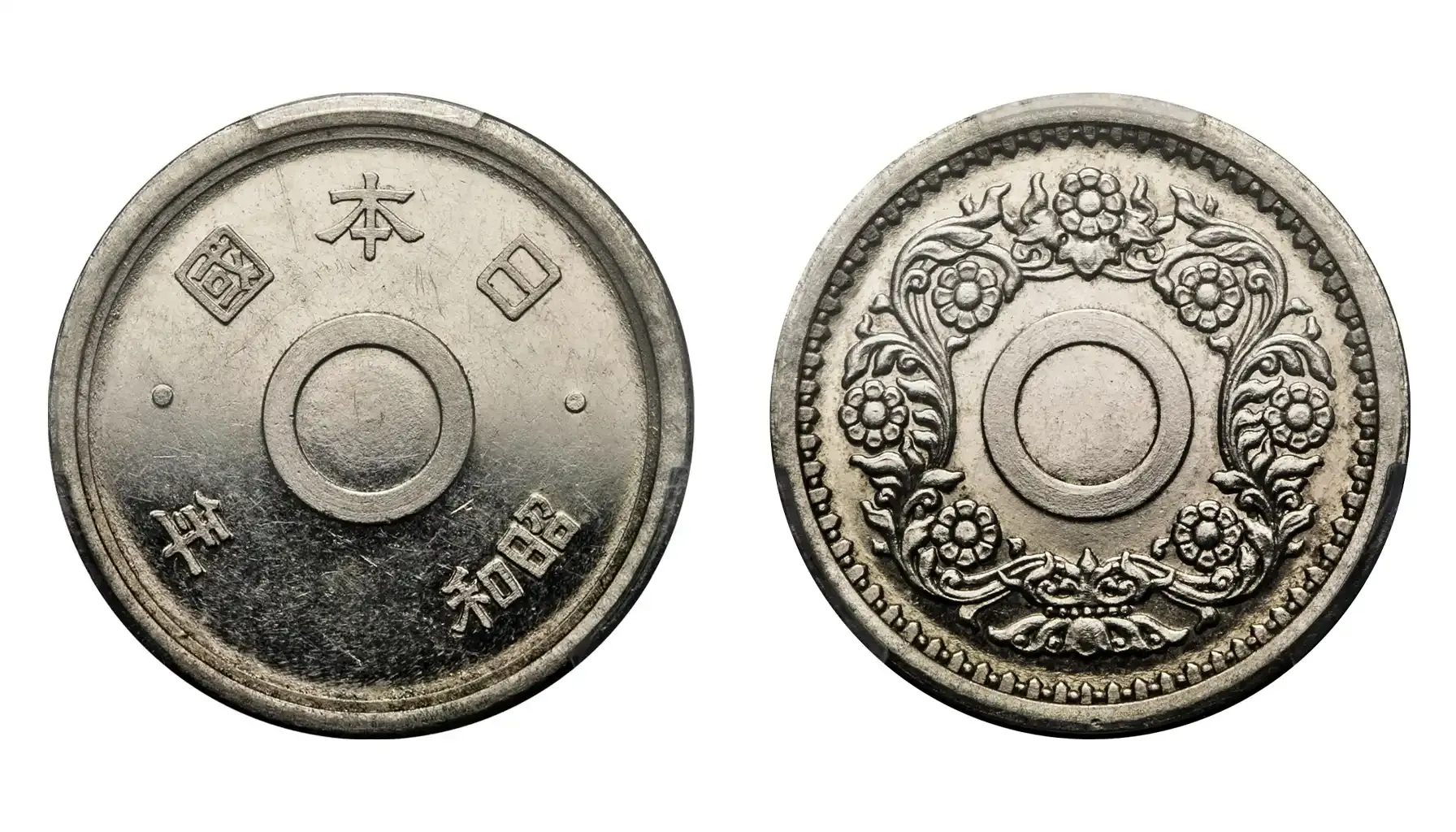
The 10 yen was first made in 1871, it was back when Japan started using the yen as its main currency. At that time, it was a gold coin, but because this metal was too expensive, production stopped a few years later.
After World War II, in 1951, Japan brought the 10 yen back, but as a bronze coin. The early versions had small ridges on the edge and were called “Giza 10.”
The yen was once worth about a dollar. When Japan adopted the yen in 1871, it was set equal in value to one U.S. dollar to encourage international trade. But inflation and war costs changed that balance.
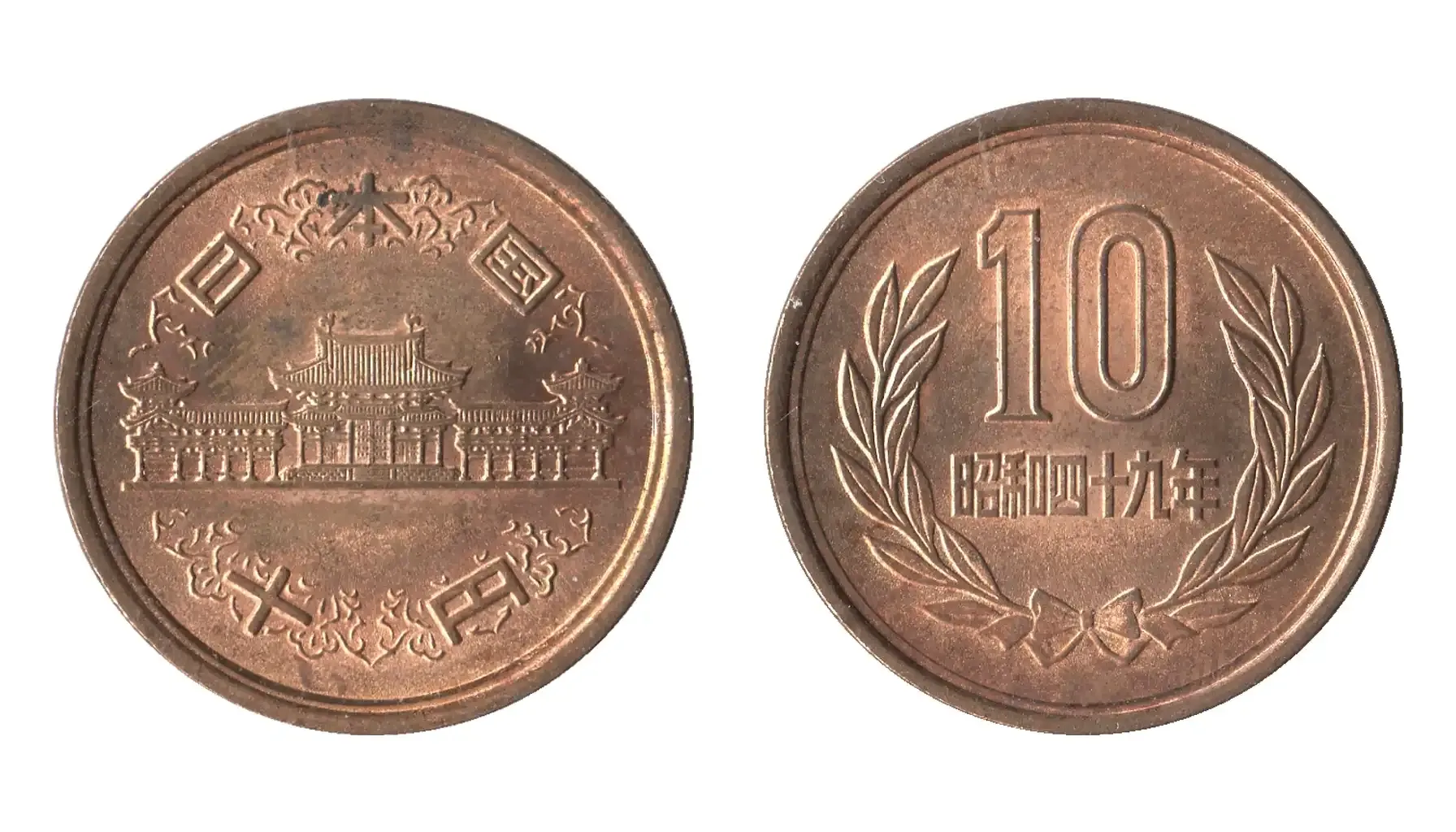
Later, in 1959, the edge became smooth, which is the style still used today. The front has the Phoenix Hall from Byōdō-in Temple. The Phoenix Hall of Byōdō-in is a Buddhist temple building in Uji, a city near Kyoto, Japan.
The back of this piece has bay laurel leaves. Even though it’s a small coin, it’s very common and has hardly changed for more than 70 years. The reverse has the value written in Arabic numbers, and they are surrounded by laurel leaves. It is a motif about prosperity.
Feature | Detail |
Composition | 95% copper, 3–4% zinc, 1–2% tin |
Weight | 4.5 grams |
Diameter | 23.5 mm |
Edge | Reeded (1951–1958), Smooth (1959–present) |
Obverse | Phoenix Hall of Byōdō-in |
Reverse | Bay laurel wreath |
First Minted | 1871 (gold version), 1951 (bronze version) |
There are some minor design changes that were made over the years. For example, between 1951 and 1958, the edges were reeded. They have names “Giza 10” or “jagged tens”. In 1959, those edges got smoothed out.
When the Meiji government came to power in 1868, Japan was determined to modernize and move away from its old feudal systems. Until then, local domains used their own currencies, making trade complicated.
“The New Currency Act of 1871 introduced Japan's modern currency system, with the yen defined as 1.5 g (0.048 troy ounces) of gold, or 24.26 g (0.780 troy ounces) of silver, and divided decimally into 100 sen or 1,000 rin.”
— Mitsura Misawa, professor of finance
from Cases on International Business and Finance in Japanese Corporations. Hong Kong University Press
In 1871, the government released the statement that the yen was the new national unit of money. It was modeled after Western decimal systems, like in United States and Europe.
The first yen coins were minted in Osaka that same year. They were made of gold, silver, and copper. The denomination was linked to international standards so Japan could trade on equal terms with other nations.
The 5, 10, and 20 yen which came out early, adopted a gold standard. But, because of the Satsuma Rebellion and its consequences, Japan abandoned gold circulation in the late 1870s.
Identifying Japanese 10 Yen Coin Dates
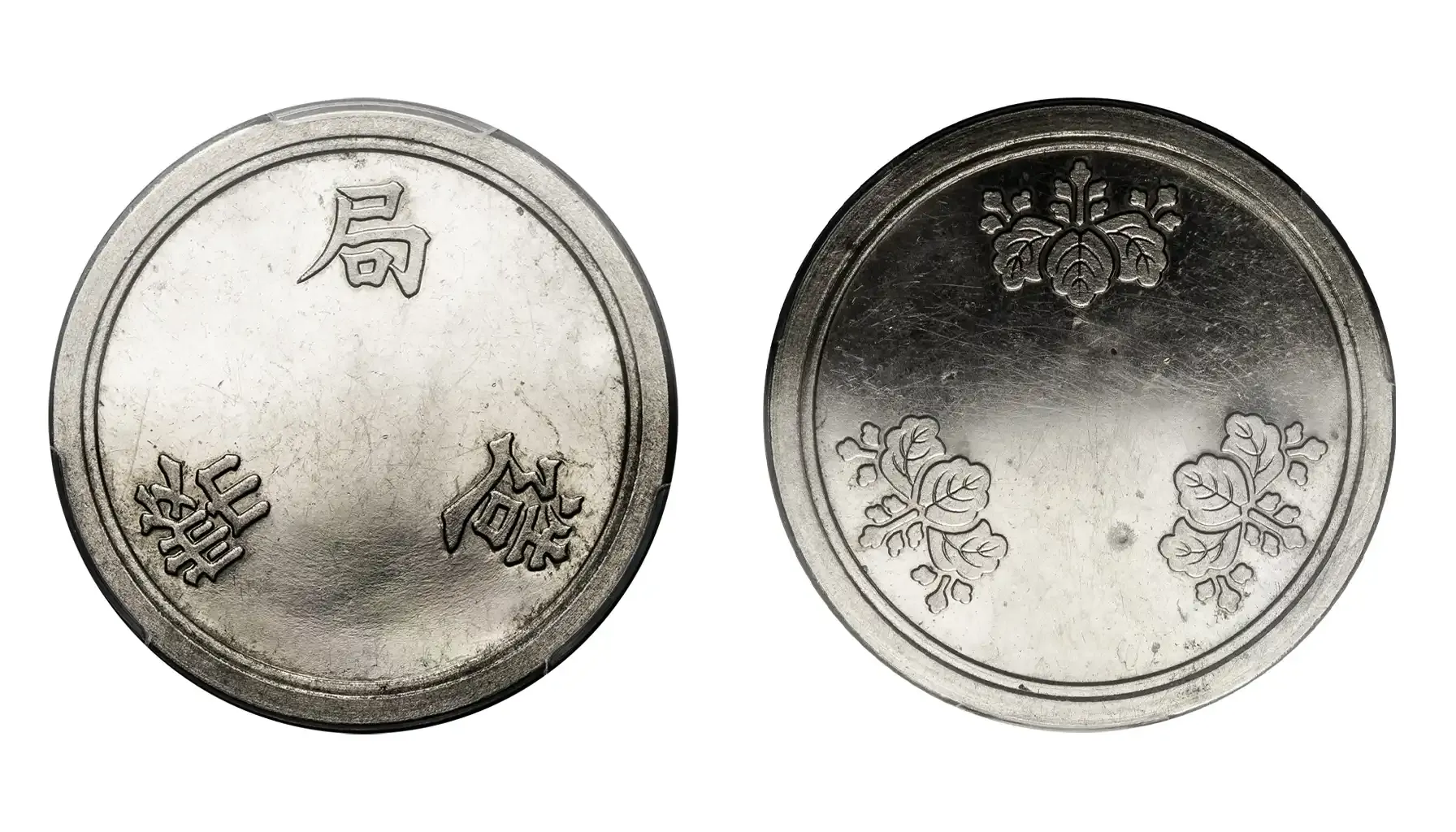
The Japanese 10 yen coin date system is based on the emperor’s reign:
昭和 (Shōwa): Emperor Hirohito’s era (1926–1989). The modern 10 yen was created during the Shōwa era, in 1951, when Japan was rebuilding after World War II. The first version was made of bronze and had reeded edges; it had the nickname “Giza 10.”
This design had the Phoenix Hall from Byōdō-in Temple, which meant peace and tradition. In 1959, the coin was redesigned with smooth edges, so it was easier to mint and more practical for everyday use. That version became the standard and is still familiar today
平成 (Heisei): Emperor Akihito’s era (1989–2019). During the Heisei era, the 10 yen coin design stayed mostly the same, but the way the date was written changed. The coins showed the emperor’s new era name, 平成 (Heisei), followed by the year of his reign. The minting quality also improved.
令和 (Reiwa): Emperor Naruhito (2019–present). With the start of the Reiwa era, new coins began to show the mark 令和 (Reiwa). The design stayed unchained; it was still the Phoenix Hall and laurel leaves, but these new issues were made under Emperor Naruhito.
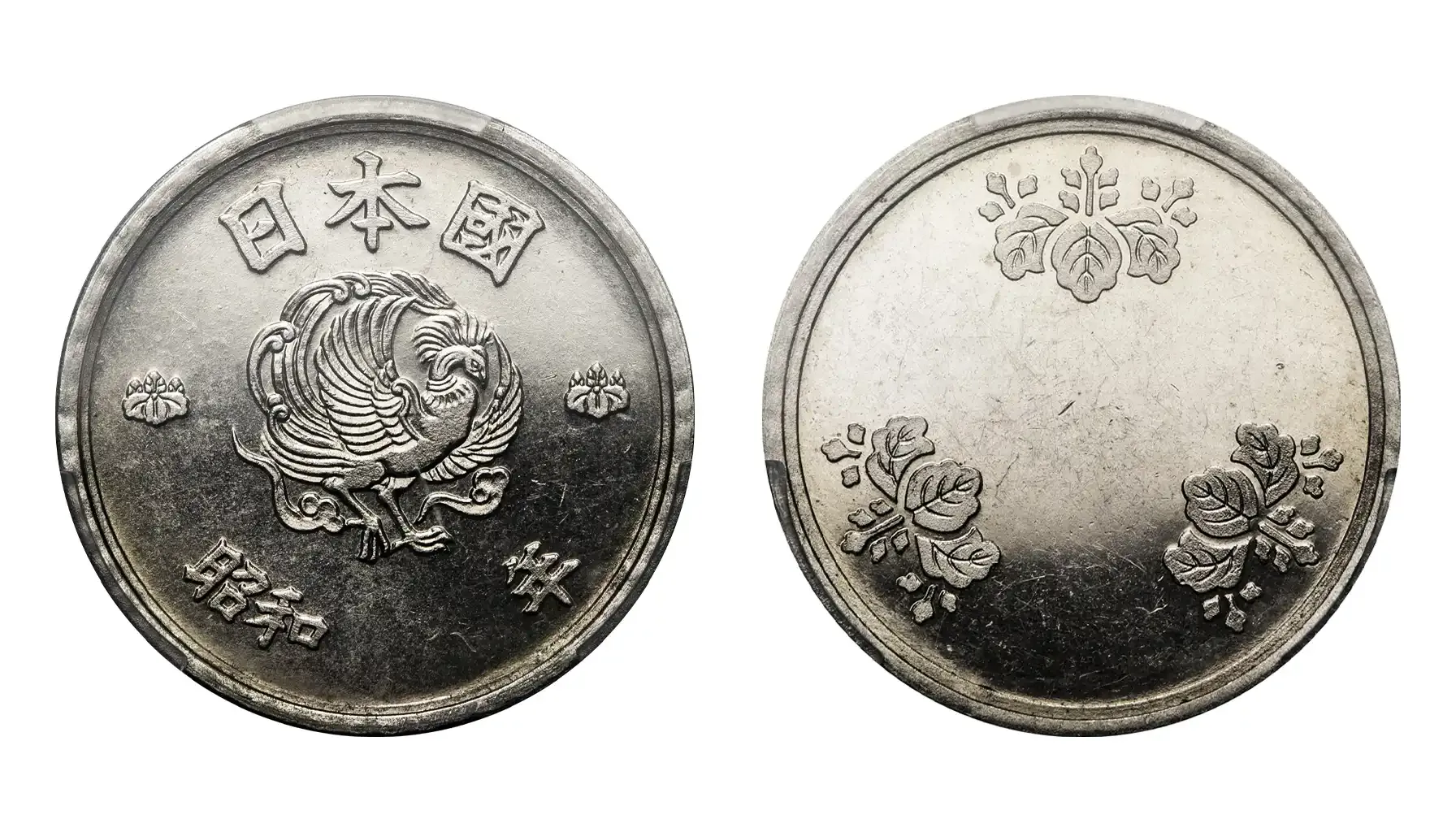
It is a Japanese tradition of linking time to the emperor’s rule, a practice that dates back more than a thousand years. It’s still used today on official documents, calendars, and money.
10 Yen Coin Value and Rare Years
Most modern issues retain face value, but certain years are surprisingly sought after. The 10 yen coin value, early versions from the 1870s and 1890s in particular, are extremely scarce.
Shrines don’t like certain denominations. The words for “ten” (tō) and “yen” (en) together sound like to-en, meaning “distant connection.” People prefer the five-yen piece, pronounced go-en, which sounds like “good fate.
The reeded-edge Giza 10s can be collected only if they are in pristine and uncirculated form. The valuable Japanese 10 yen coin from 1986, with a modified depiction of Byōdō-in, gained attention in Japan after a 2019 TV report claimed one example sold for over $1,000 USD.
1871 (Meiji 4): first issue, rare Japanese 10 yen coin and historically important
1880 (Meiji 13): presentation-only release; only a few known to exist
1951–1958 (Shōwa 26–33): reeded “Giza” design; valuable in mint state
1986 (Shōwa 61): slight redesign; late-year version considered collectible
There are no portraits of living people. It’s a long-standing rule that living humans are never featured on banknotes or coins in Japan.
Conclusion
The yen is Japan’s official currency, so most of the coins cost their face value only. But some of the pieces, like the gold ones, are just precious. If you think that you possess one, double-check it to avoid fakes.

 Facebook
  X (Twitter)
  Pinterest
  LinkedIn