Contents:
Unlike earlier Jefferson Nickels with clearer strike characteristics, the 1979 issue demands closer inspection. Minor differences in surface quality and detail can separate ordinary examples from those worthy of certification.
These distinctions are not intuitive and are best understood through direct comparison with grading data and an established coin value list with real market behavior.
1979 Jefferson Nickel Overview
The coin is a standard late-series issue struck in very large numbers during a period of industrial-scale coin production. By the end of the 1970s, the design had been in continuous use for over forty years, and the coin was treated strictly as a workhorse denomination.
There were no design changes, metal transitions, or special minting programs tied to this year.
Identifying the 1979 Jefferson Nickel
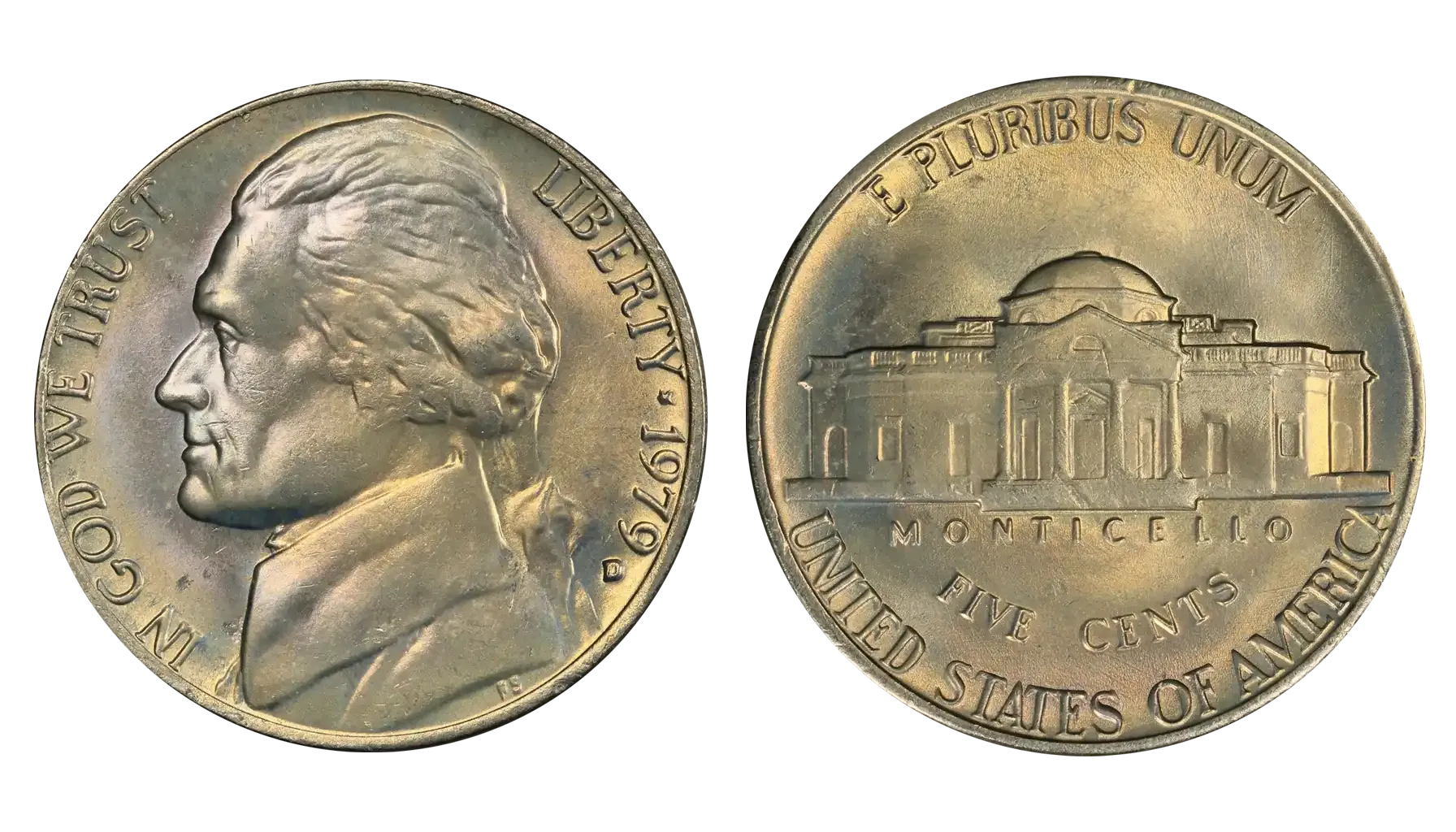
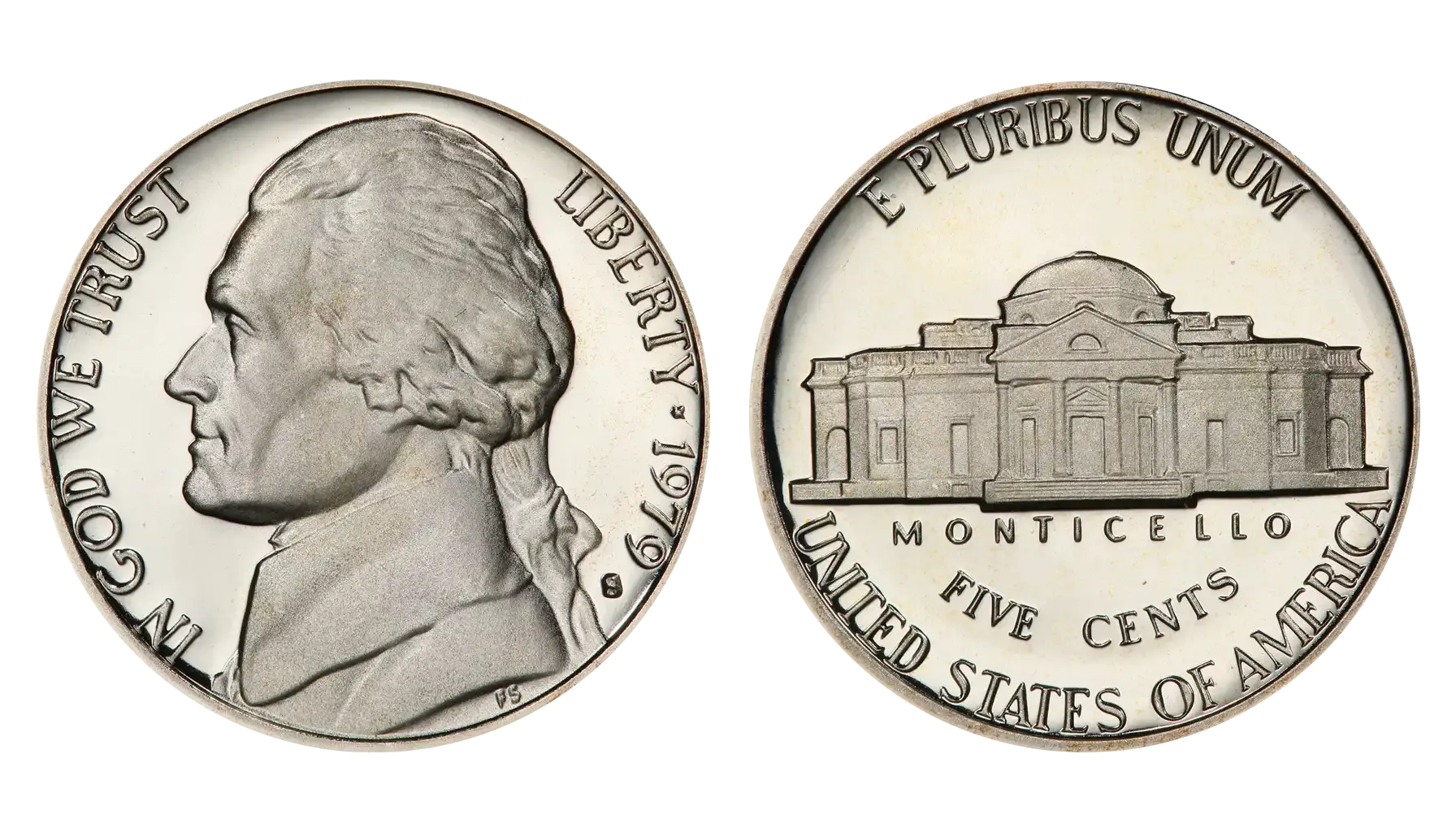
The obverse displays Felix Schlag’s left-facing portrait of Thomas Jefferson. The date “1979” is positioned to the right of the portrait, with “IN GOD WE TRUST” to the left. If present, the mint mark appears just to the right of the date.
The reverse features Monticello in a frontal view. Architectural details, particularly the steps and window areas, are frequently weak.
On circulated coins, wear first becomes visible on Jefferson’s cheekbone, jawline, and hair above the ear. On the reverse, the steps flatten quickly, often making lightly circulated pieces difficult to distinguish from weakly struck mint-state examples.
Coin ID Scanner
For modern issues where value depends on condition rather than rarity—Coin ID Scanner works best as an organization tool.
Identification and technical reference in one place
The app returns core specs (composition, weight standard, diameter) and series context.
Baseline value awareness
Displayed value ranges reflect market levels for the type. These are starting points—useful for sorting and prioritizing—not substitutes for certified grade pricing or Full Steps premiums.
Efficiency, not judgment
Coin ID Scanner does not determine grades, identify mint errors, or certify Full Steps. It simplifies the early stages so your time is spent where expertise matters.

Mint Marks and Varieties: No, D, and S
Three regular issues were produced:
Philadelphia (no mint mark): Circulation strikes
Denver (D): Circulation strikes
San Francisco (S): Proof-only strikes
Where is the mint mark on a 1979 nickel?
It is located on the obverse. Look to the right of Jefferson’s portrait, just beside the date “1979.” If you see a 1979 no mint nickel, then it must be a Philadelphia issue.
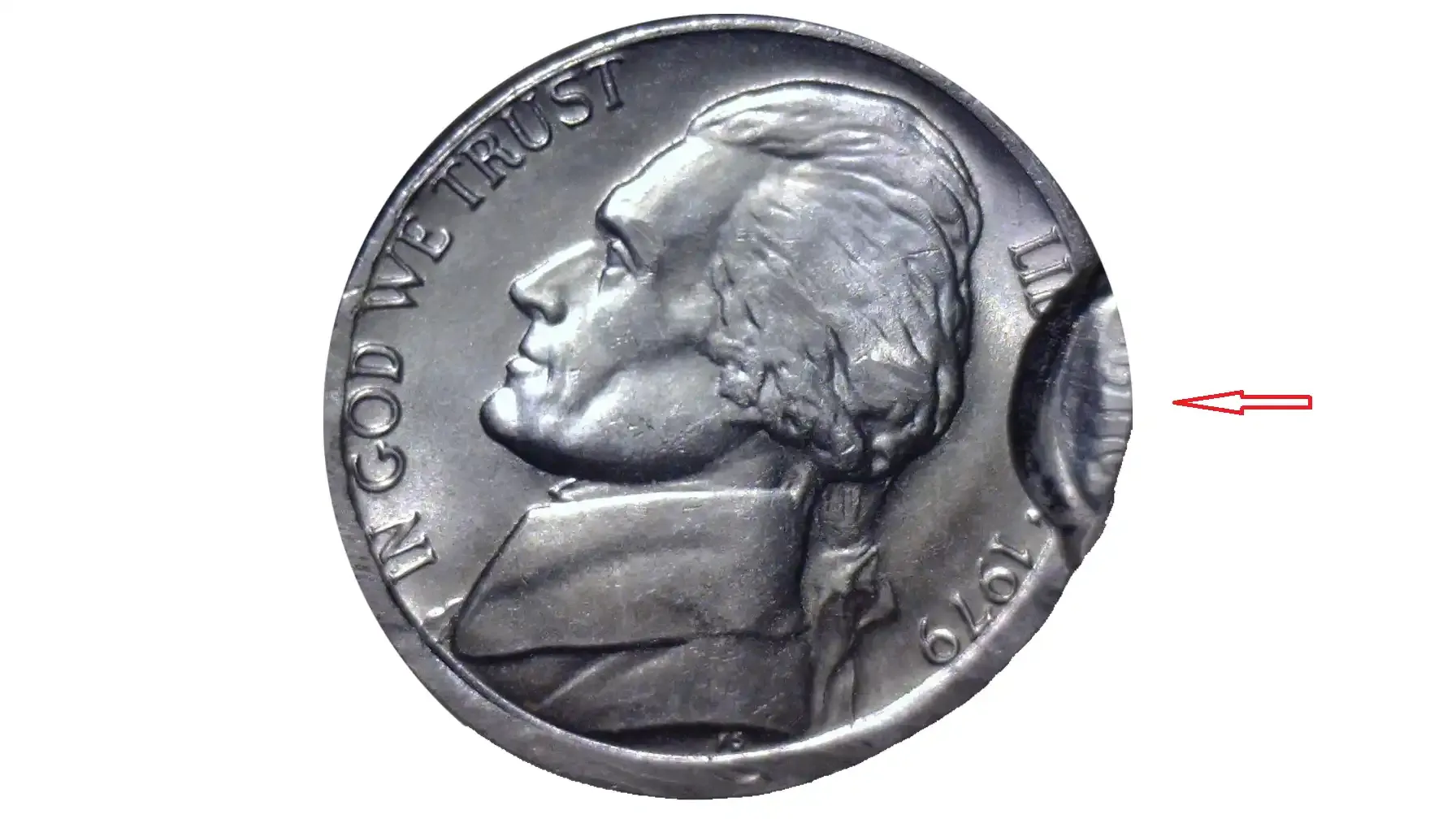
The coin is not associated with any major 1979 nickel errors, e.g., doubled die or overdate varieties. Minor die cracks, chips, and general strike weakness are common but considered normal for the year.
Design Features and Metal Composition of the 1979 Nickel
The coin follows standard Jefferson series specifications:
Designer: Felix Schlag
Composition: 75% Cu, 25% Ni → 1979 copper nickel
Weight: 5.0 grams
Diameter: 21.2 mm
Edge: Plain
Proof coins from San Francisco feature mirrored fields and frosted devices. Many surviving examples show haze or reduced contrast, a known issue with late-1970s proof sets and their original packaging materials.
1979 Jefferson Nickel Value by Condition and Mint
Grade | 1979 Nickel Value No Mint Mark | 1979 D Nickel Value | 1979 S Nickel Value |
Circulated (G–VF) | Face value | Face value | — |
Extremely Fine (XF) | Face value | Face value | — |
About Uncirculated (AU) | $0.05–$0.10 | $0.05–$0.10 | — |
Mint State MS63 | $0.30–$0.60 | $0.30–$0.60 | — |
Mint State MS65 | $1.00–$2.00 | $1.00–$2.00 | — |
Mint State MS66 | $6–$12 | $6–$12 | — |
Mint State MS67 | $25–$60+ | $25–$60+ | — |
Proof PR65 | — | — | $1.00–$2.00 |
Proof PR69 Deep Cameo | — | — | $6–$15 |
How much is a 1979 nickel worth? Value increases sharply for coins with strong eye appeal and sharply defined Monticello steps. Certified Full Steps examples account for most premium sales. Moreover, the 1979 nickel error value might be higher than usual.
“Auction Record: $1,898 • MS63 • 07-30-2003 • Bowers & Merena”
— 1979 5C (Regular Strike) page
PCGS website
Common Errors and Collector Tips for 1979 Nickels
An average 1979 nickel error list with pictures includes:
Off-center strikes
Broadstrikes
Partial collars (railroad rims)
Die cracks and retained cuds
Clipped planchets
Lamination flaws
Strike-through debris, including on proof coins and on specimens from the 1979 D nickel error list
Mechanical doubling is common and carries no added value.
Is a 1979 Nickel Worth Anything?
It may become a source of some money. But you should:
Treat 1979 as a quality-selective date.
Examine step definition carefully; most coins fall short.
Avoid heavily marked mint-state pieces despite numeric grade.
Check proof coins for haze, spotting, and contrast loss.
Remember that even the 1979 nickel no mint mark value can surprise you one day.
Also read: Panama Balboa Coin Value.
The 1979 Jefferson specimen is easy to acquire but difficult to improve. Anyway, it still remains a useful and instructive modern issue for collectors interested in grading standards and strike analysis.

 Facebook
  X (Twitter)
  Pinterest
  LinkedIn