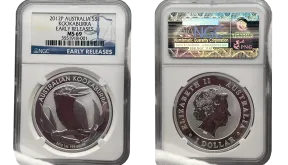
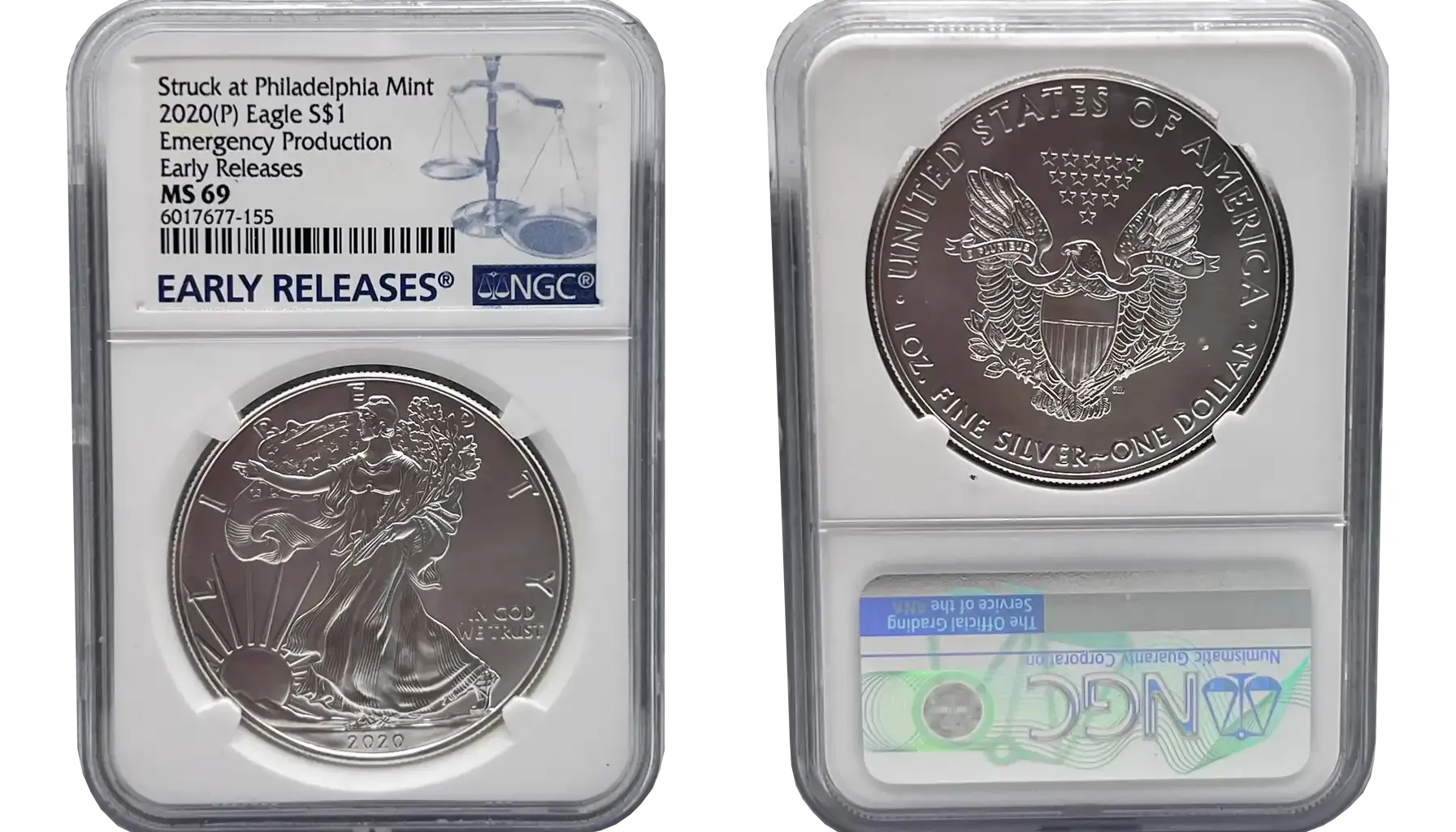
A slabbed coin is a coin that has been authenticated, graded, and sealed inside a hard, tamper-evident plastic holder by a major third-party grading service.
It is his protective, labeled container, called a “slab.” Inside it is a certified grade, a barcode, and a serial number linked to an online database. Speaking of online databases, before getting your coin appraised, we recommend you use a coin scanner online and see if it is worth it.
What Is a Slabbed Coin?
They became popular in the mid-1980s. It was after PCGS and later NGC launched formal third-party grading. Their goal was to remove disputes about condition and authenticity.
“In 2018, Coin World numismatic magazine reported that counterfeit PCGS slabs complete with holograms were being sold on the website AliExpress. They reported that the real slabs are ‘sonically sealed’ but fake slabs snap together. The magazine also reported the discovery of a fake South African gold Krugerrand which was in a counterfeit NGC slab with a hologram.”
— Unknown author
from the Wikipedia Coin Slab page
Before slabbing, collectors relied on seller opinions, which varied. Today’s slabs are appraised based on the 70-point Sheldon scale, where 1 represents Poor and 70 represents flawless Mint State or Proof condition.
A slabbed coin is trusted because it has been reviewed by specialists trained to spot cleaning, tooling, counterfeits, altered dates, and other issues. The sealed holder also shields it from fingerprints, moisture, and mishandling.
Because of this, they sell more easily, especially when buying or selling online or sight-unseen. Many collectors specifically search for slabbed coins for sale because they are transparent, with grading standards and long-term protection.
How Coin Slabbing Works
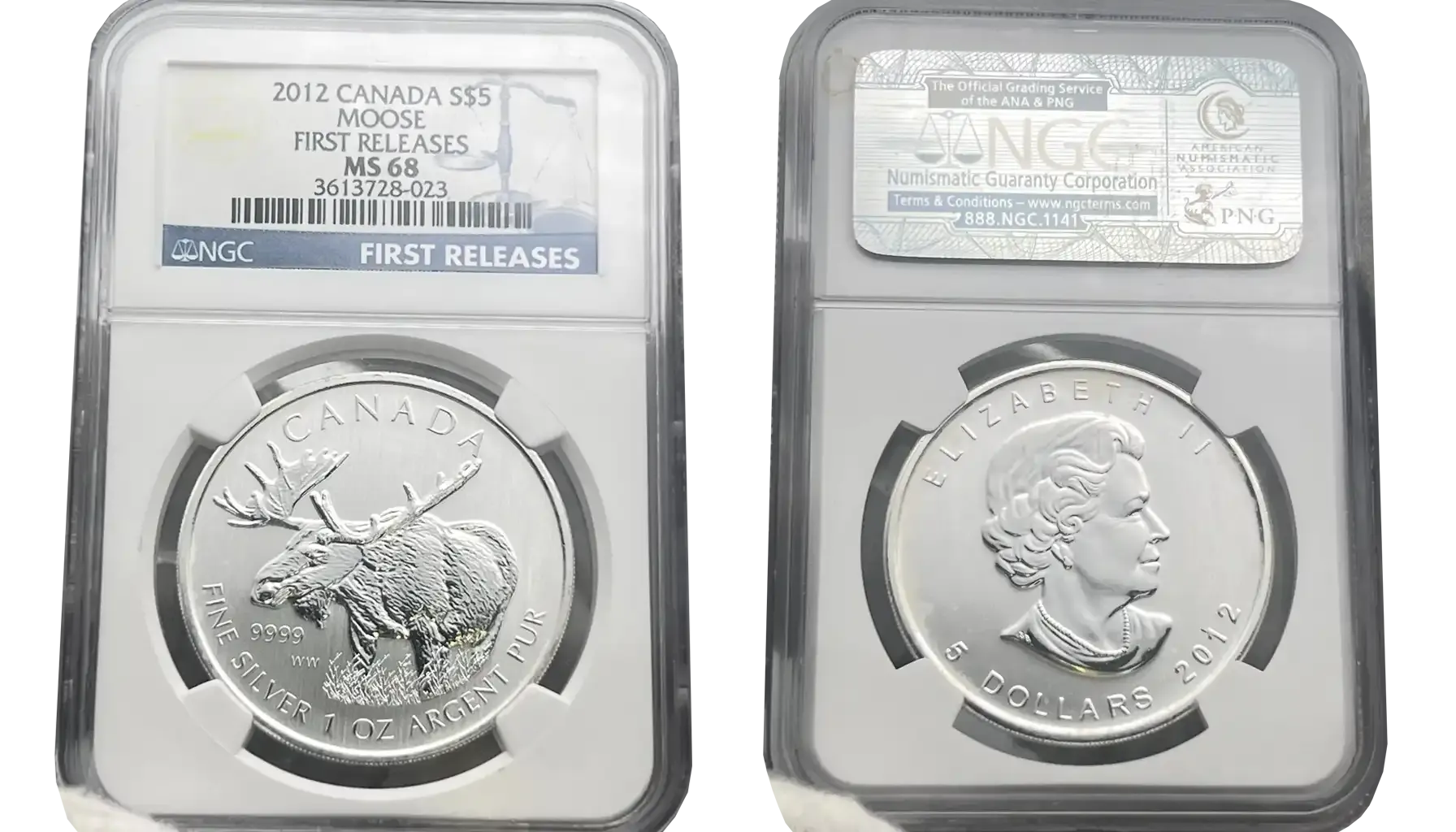
The process begins when a collector submits a raw piece to a grading service like PCGS, NGC, ANACS, ICCS, or CAC Grading.
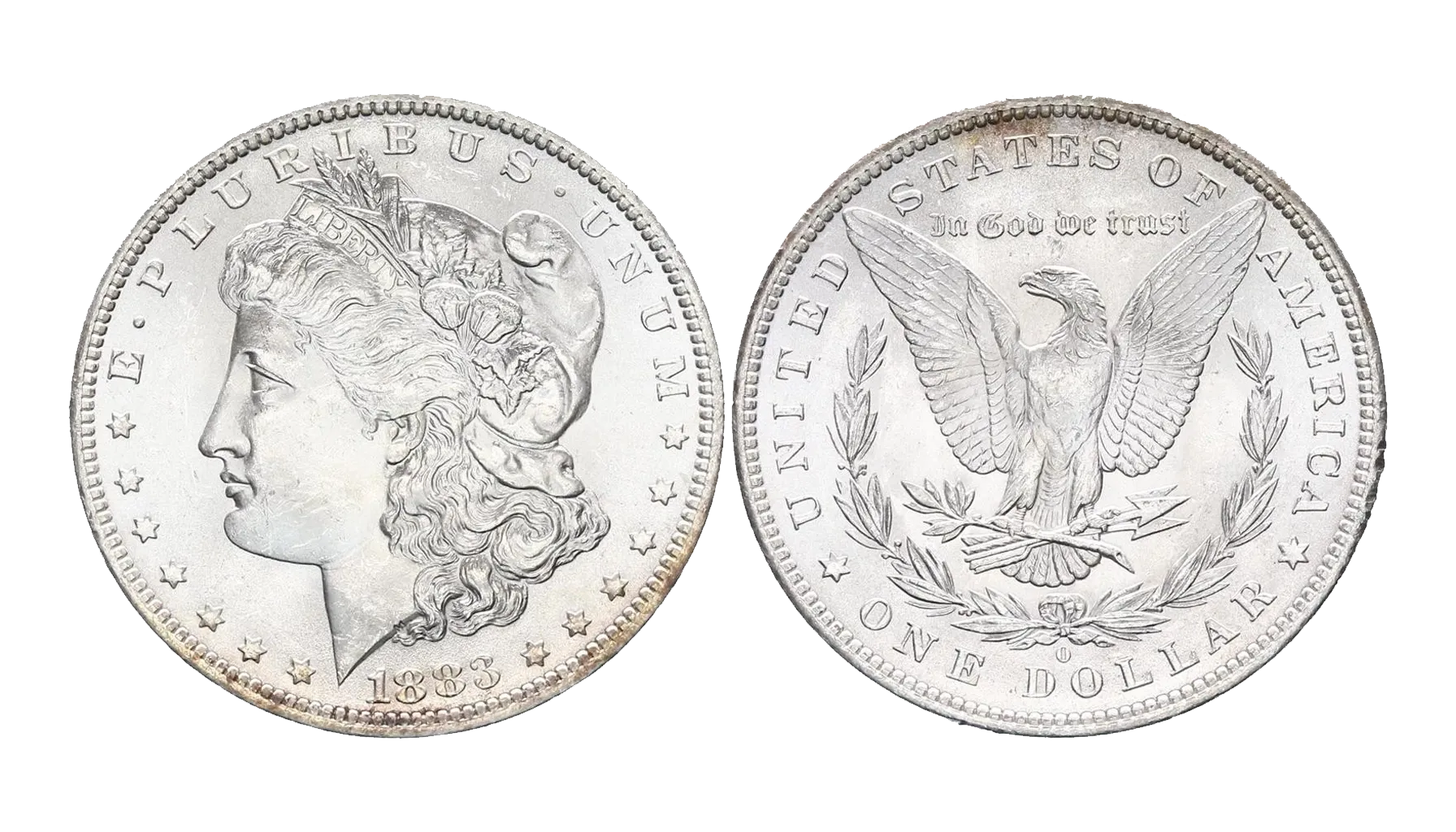
The coin is checked for authenticity and screened for counterfeits. It is usually done for valuable coins like Morgan dollars, early U.S. gold, ancient coins, and major world issues
After authentication, the piece is graded on the Sheldon scale. Graders examine luster, strike, eye appeal, marks, wear, surfaces, and originality
Multiple graders usually review the same piece to ensure accuracy before agreeing on a final grade
The final grade, date, mint mark, attribution, and certification number are printed on the label
The piece is placed in a clear acrylic capsule that is sonically sealed, fusing the plastic shut so it can’t be opened without visible damage
Modern slabs have added security features like holograms, barcodes, and QR codes. Early “rattler” slabs (1986–1989) did not have these and allowed slight movement inside the holder
Slabbing protects the coin long-term, prevents handling damage, standardizes grading, and increases buyer confidence
Drawbacks of Slabbed Coins
Advantages | Disadvantages |
Guaranteed authentication from trusted grading companies, reducing the risk of buying counterfeits. | Grading fees can exceed the value of lower-value pieces, making slabbing impractical for inexpensive pieces. |
Standardized grading on the Sheldon scale gives buyers confidence and stabilizes market value. | Slabs take up significantly more storage space than raw pieces in flips or albums. |
Long-term protection from scratches, handling wear, moisture, and environmental damage. | The acrylic holder prevents collectors from directly handling or feeling the coin. |
Security features like holograms, barcodes, and certification numbers help verify legitimacy. | Counterfeit slabs exist, and some can look convincing without careful verification. |
Increased marketability, they often sell faster and at higher prices. | Grade disputes can be costly, requiring resubmission or cross-grading to correct. |
Permanent encapsulation preserves rare pieces in their certified condition. | The piece cannot be viewed outside the holder unless the slab is broken open. |
How to Verify a Slabbed Coin
Every collector should know how to check a piece.
Look up the certification number on the grading company’s website. PCGS, NGC, and ANACS all have searchable online databases. They show the coin’s grade, date, variety, and high-resolution images. If the number does not match the database, that’s an immediate red flag
Examine the holder closely. Modern ones should be sonically sealed, not snapped together. Counterfeits show visible seams or can be pried apart. Real ones use holograms, microprint security features, and UV-reactive elements. The label should have sharp, professional printing
Inspect the piece itself. Many fake ones contain pieces with the wrong mint mark, incorrect details, or plating rather than solid metal. Compare it with certified images or auction records
Buying from trusted dealers, reputable auction houses, or established marketplaces reduces risk. When unsure, collectors can also use the “reholder” service offered by grading companies, which confirms authenticity and replaces old or suspicious holders
Slabbed coins are now the standard for rare and valuable pieces; slabbing remains one of the most important tools in numismatics.

 Facebook
  X (Twitter)
  Pinterest
  LinkedIn