Contents:
In America, the year 1960 is associated in the numismatic world with the last era of minting true silver coins. In contrast to modern copper-nickel coins, the value of this coin is determined by two factors: silver content and collector demand. Some examples sell for prices close to the value of the metal – $5.50. Others with anomalies – $400+.
How Much Is a 1960 Dime Worth?
Do you remember how valuable the previous 1959 item was? The actual numismatic market price depends on several factors:
Full Bands
Anomalies
Item Specifications
What Defines Full Bands?
To earn the FB (PCGS) or FT (Full Torch - NGC) designation, a piece must be a business strike (non-proof) and exhibit:
Complete Separation – the two sets of horizontal bands (upper and lower) on the reverse torch must show full, uninterrupted separation.
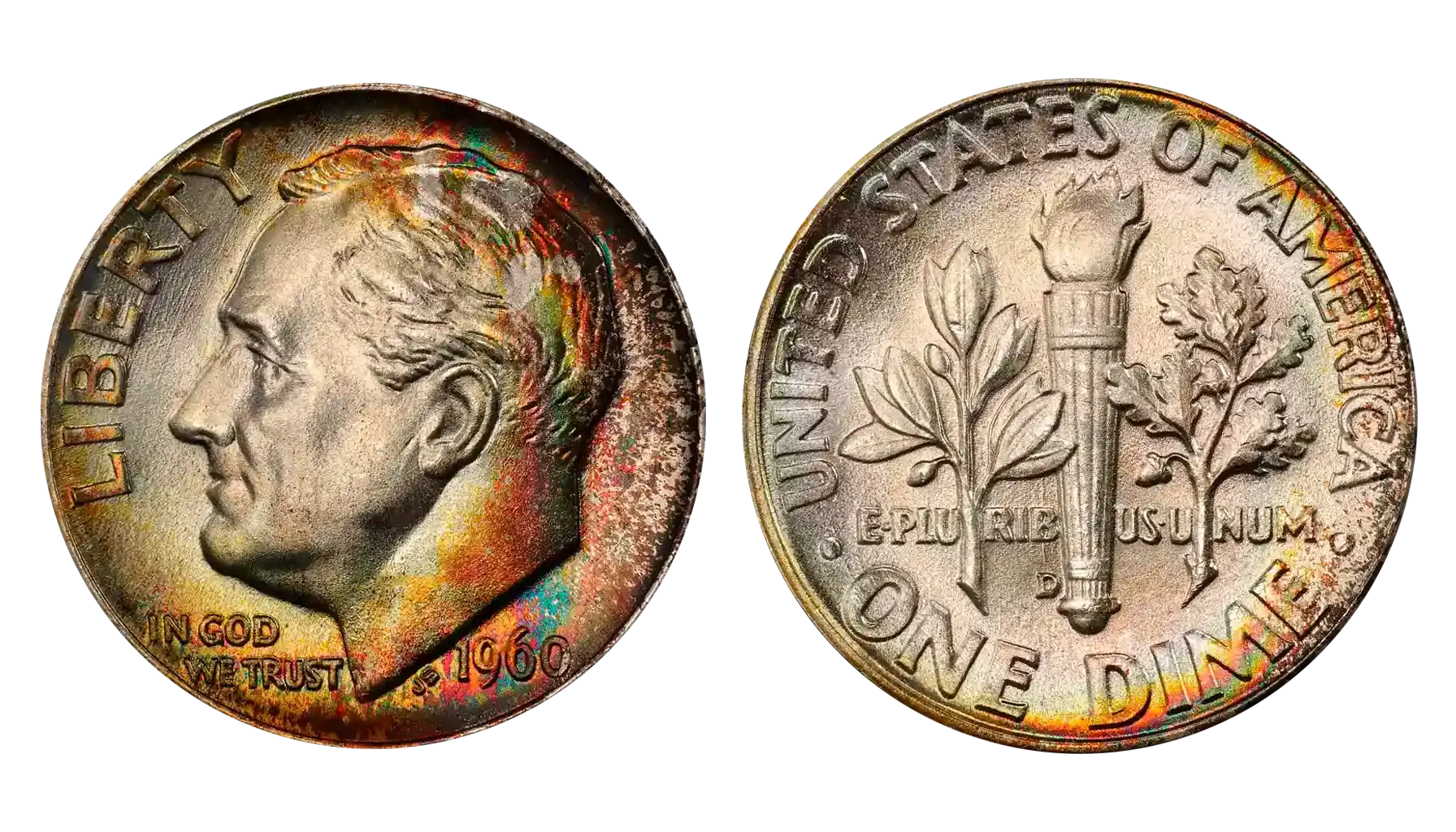
Zero Obstructions – there can be no scratches, marks, or metal flow issues that blur the line between the bands.
Vertical Lines – while the horizontal bands are the primary focus, the vertical lines on the torch must also be well-defined to support the overall grade.
Colltor’s Checklist for FB
If you are searching through original that year Mint Sets, use this checklist:
Check the Lower Bands
The lower horizontal bands on the torch are almost always the first to show weakness. Use a 20x loupe to ensure the line goes all the way across.
Avoid Sliding
Many items have die slide errors, which create the illusion of a line, but it’s actually smeared metal. True FB must be a crisp, struck-in line.
Toning
Nowadays, silver pieces with target toning (concentric circles of color) and an FB designation can command a 30 % bonus over the chart values above.
1960 Roosevelt Dime Value Chart
The chart shows how preservation multiplies worth. A value of 1960 dime rises from $20 in worn condition to over $1,600 at MS-68.
Grade | P | 1960 D Dime Value |
MS-65 | $20–$35 | $18–$30 |
MS-67 | $120–$250 | $80–$180 |
MS-67+ | $450 | $350 |
MS-68 | $1,600 | $950 |
S – PR-69 DCAM – $45–$100
S – PR-70 DCAM – $350–$600
How Much Silver Is in a 1960 Dime?
1960 Dime Silver content in the item – .900 fine
How to identify your item? Three ways would help the beginner and pro numismatist.
1960 Dime No Mint Mark – minted in Philadelphia. These often suffer from "mushy" strikes, making high-grade versions rare.
D – minted in Denver. Look for the small "D" on the reverse side, located to the left of the base of the torch.
Edge Check – a real silver item will have a solid silver-colored edge. If you see a copper-colored stripe on the edge, the coin is a later clad version (1965–present) or a counterfeit.
1960 Dime Error List
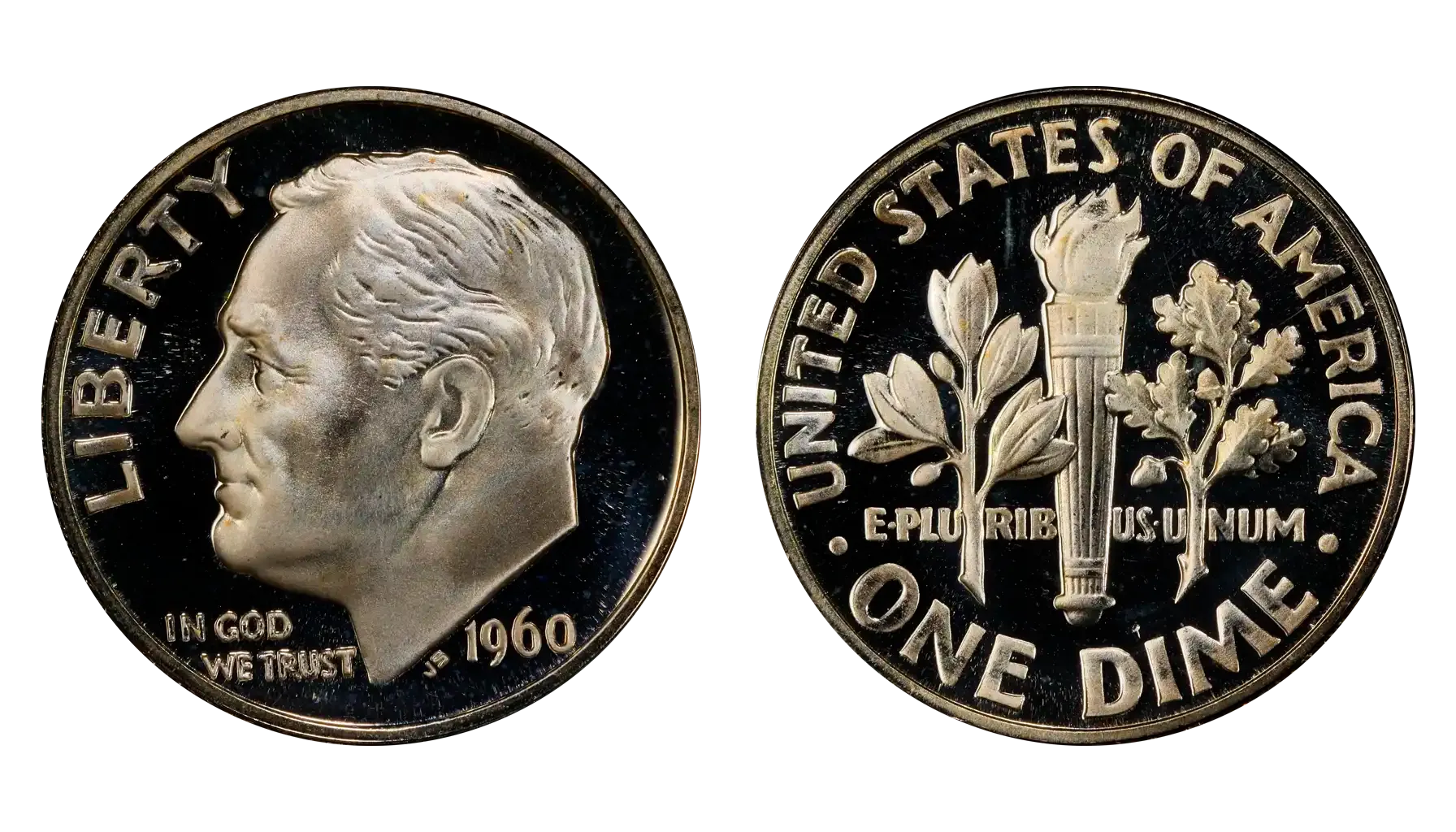
D Repunched Mint Mark
Since mint marks were hand-punched into the dies in the year, the "D" was sometimes struck twice and created an overlapping "D over D" look (RPM). The special equipment can help you: a loupe to look at the "D" mint mark on the reverse. You may see a second "D" shifted slightly North, South, or West.
$20–$150
Clipped Planchet
A clip happens when the machine that punches out the coin blanks overlaps with a previous hole in the silver strip. A crescent-shaped piece is missing from the edge. To be authentic, the design details near the clip should show a slight fading.
$25–$120
Die Cracks and Cuds
As the dies for the 1960 D dime error wore out, they cracked, allowing silver to flow into the cracks during the strike. A defect is a raised, blank blob of silver attached to the rim. Smaller cracks look like thin, raised wires across the design.
$15–$75
Rare 1960 Dime Errors That Increase Value
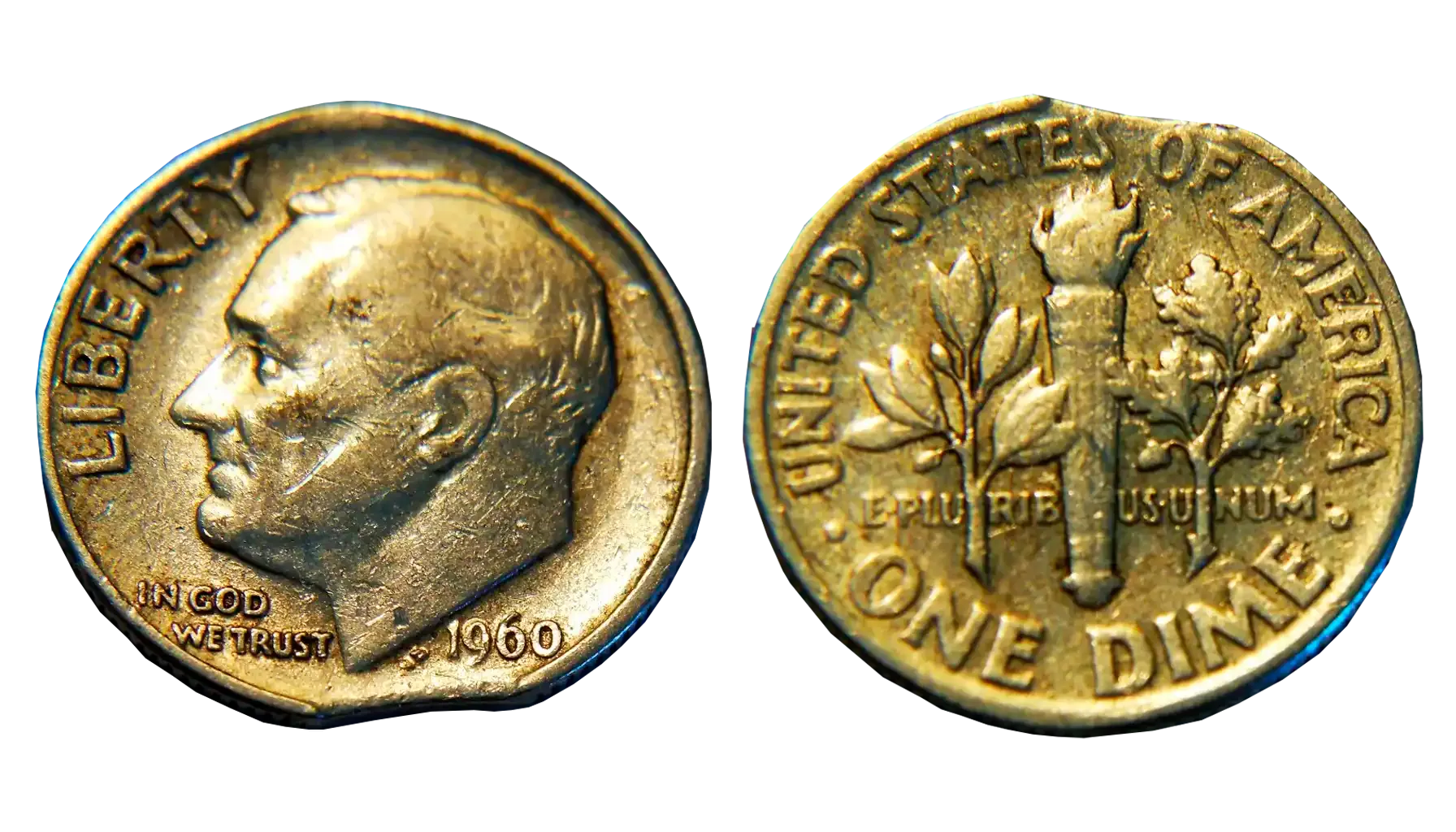
How much is a 1960 silver dime worth with anomalies? Since the year is a silver year, missing clad errors do not exist for this date. Is a 1960 dime silver at first glance?
If you find an item that looks like copper, it is likely a science experiment (electroplating) or a very rare wrong planchet error (e.g., struck on a cent). Below is the table of basic item characteristics.
Error | Details | Price MS-66+ |
RPM (D / D) | Overlapping “D” mark | $150+ |
Doubled Die | Doubling on “TRUST” | $500+ |
Off-Center | 50 % shift + clear date | $400+ |
All in all, a dime is an excellent investment. Moreover, all denominations from the year are valuable, like the 1960 Franklin half-dollar.
DDO
The double die obverse is the most sought-after variety for the year. It occurs when the die is struck twice by a hub, leaving a doubled image. Usually doubling in the letters
$30–$550+
Attention: This error is most dramatic and valuable on Proof strikes. Check your Proof sets for doubling on Roosevelt’s eye and the lettering.
Off-Center Strike
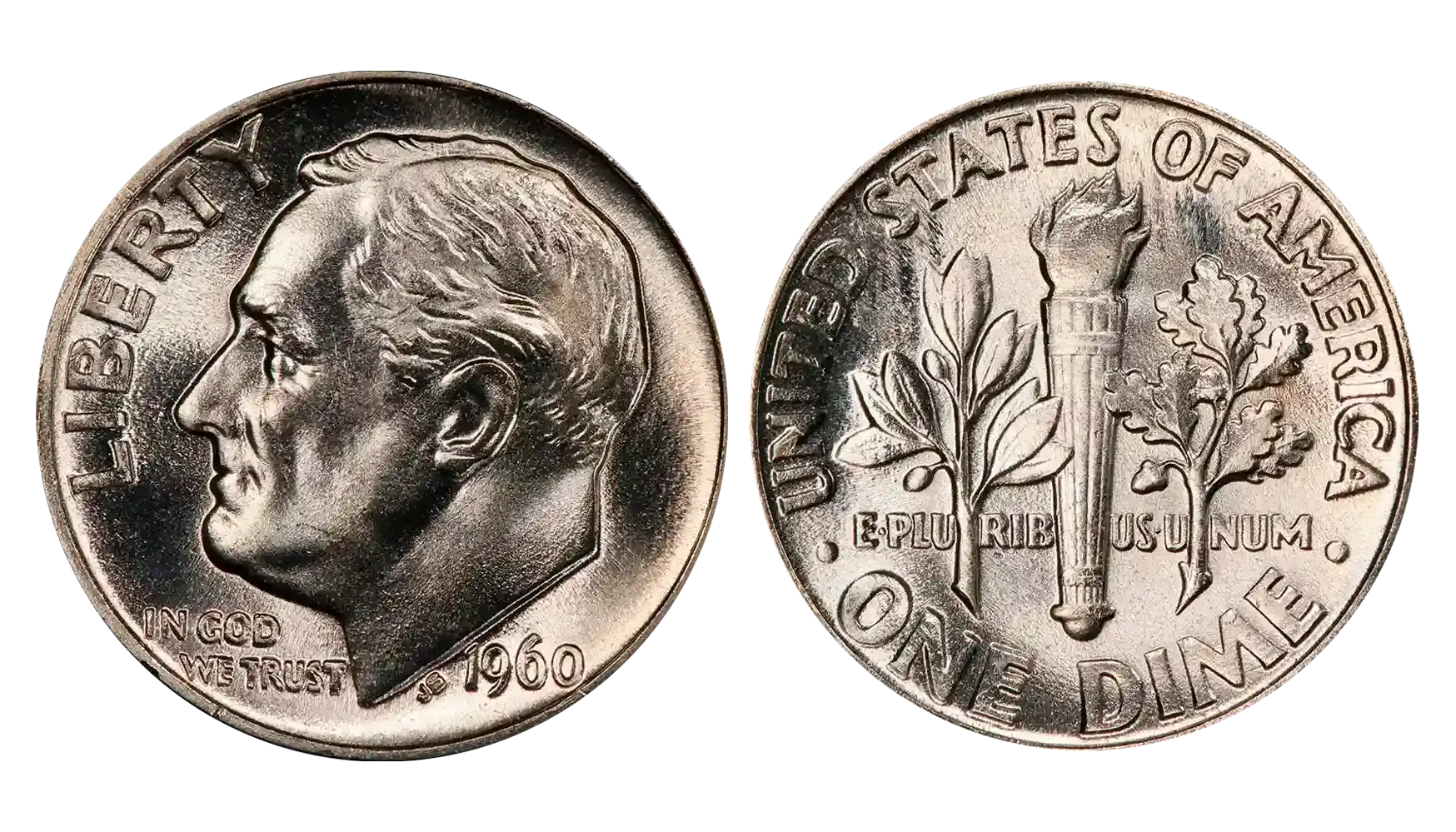
This occurs when the silver planchet is not correctly centered in the press. Part of the design is missing, and a portion of the coin is blank.
$25–$450
1960 Dime Specifications
Weight | 2.50 g |
Diameter | 17.90 mm |
Thickness | 1.35 mm |
Edge | Reeded |
Designer | John R. Sinnock |
What is a 1960 dime worth in the secondary market?
Item Analysis
Is a 1960 dime worth anything through the markets? As you analyze your pieces, these specifications act as a defense against common collector traps. Below is the full list of traps.
The Weight Test
If you suspect a piece is an error (such as a wrong planchet strike), the scale is your best tool.
2.50 grams – standard silver item.
3.11 grams – struck on a 90% silver Quarter planchet (Extreme rarity/size distortion).
2.27 grams – is a trap. If it weighs 2.27g, it is likely a counterfeit or a later clad one that has been altered.
The Reed Count
An original item has exactly 118 reeds. In 2026, high-quality counterfeits often fail this specific count. If the reeds look clunky or spaced unevenly, use a microscope to count the reeds.
What Makes a 1960 Roosevelt Dime Valuable?
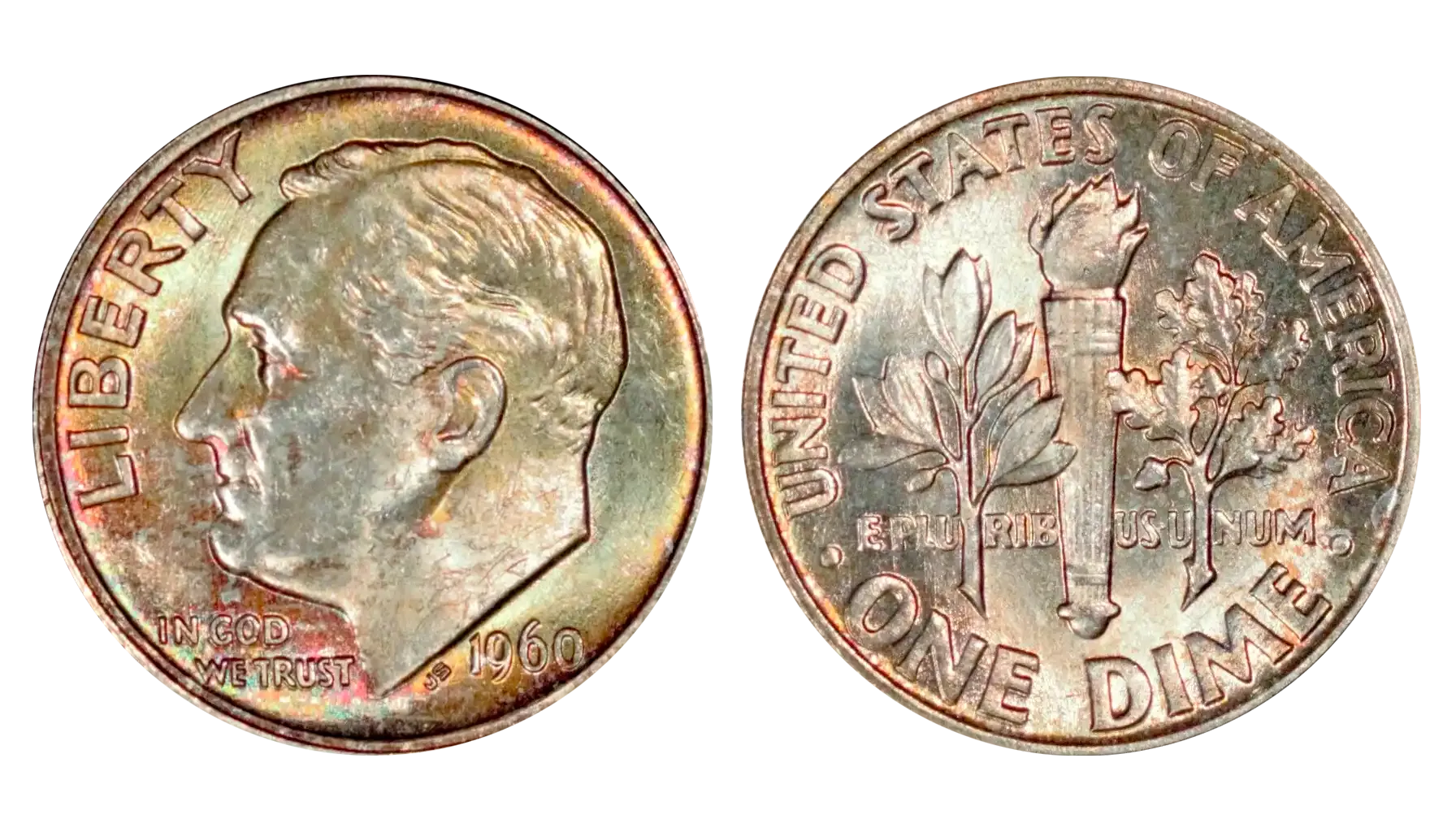
Several factors make a standard one a valuable collectible. First, the condition influences price. A coin graded MS-68 by PCGS or NGC is worth significantly more than coins with lower grades.
Second, the Full Bands (FB) designation increases the 1960 silver dime value by many dollars. The horizontal bands on the reverse must be completely separated, without any metallic bonds.
Third, the presence of imperfections also increases value. Off-center strikes and other manufacturing errors attract the attention of specialized buyers.
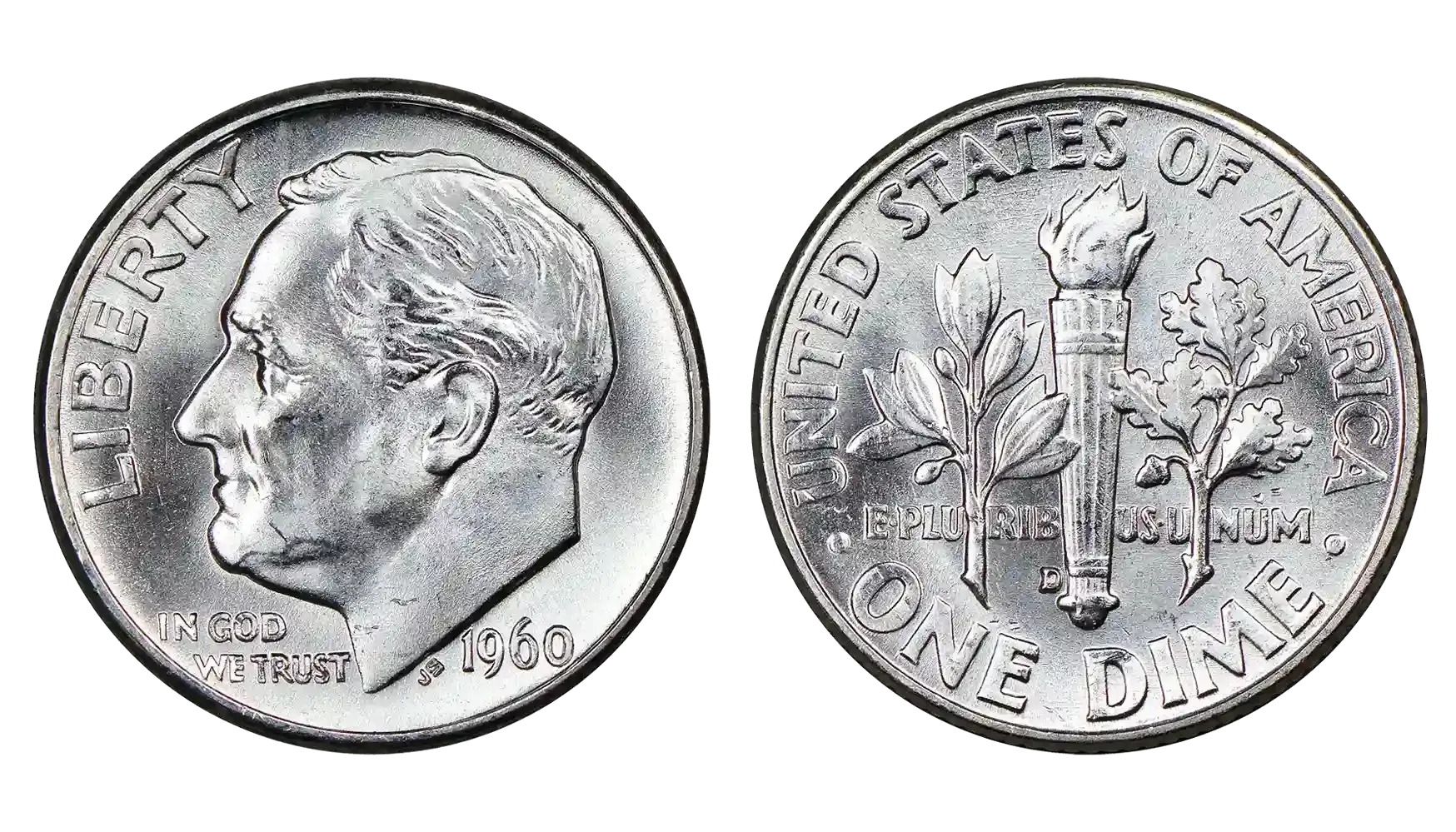
Fourth, San Francisco proofs possess a visual appeal unmatched by circulated coins. The PR-69 Deep Cameo item from 1960 features mirrored fields and matte images.
Fifth, original mint packaging adds value. A piece still in its original proof or mint set is worth more than a coin in its original box. Sixth, competition for complete sets drives up prices for high-quality pieces.
The $2,875 1960 dime value today of a Denver item in MS-68 FB condition demonstrates how these factors combine to create exceptional value. Seventh, appearance matters. Coins with rich luster and perfect centering attract higher bids.
How to Identify a 1960 Dime
"Collectors should always weigh their specimens; a 90% silver dime must be exactly 2.50 grams. Anything less in a 1960 date suggests a potential counterfeit or extreme environmental wear."
– Q. David Bowers, numismatist
CoinAppraiser Expert Commentary
In the year, items were struck at two locations. The mint mark is located on the reverse, at the bottom left of the torch's base, just above the date.
1960 P dime – 70,390,000. Generally harder to find with Full Bands (FB) due to weaker die strikes.
Denver – 200,160,400. A D mint mark is present. These often have higher luster but more marks from mass production.
San Francisco – 1,691,602. These have no mint mark but are easily distinguished by their mirror-like, reflective fields.
Diameter Check
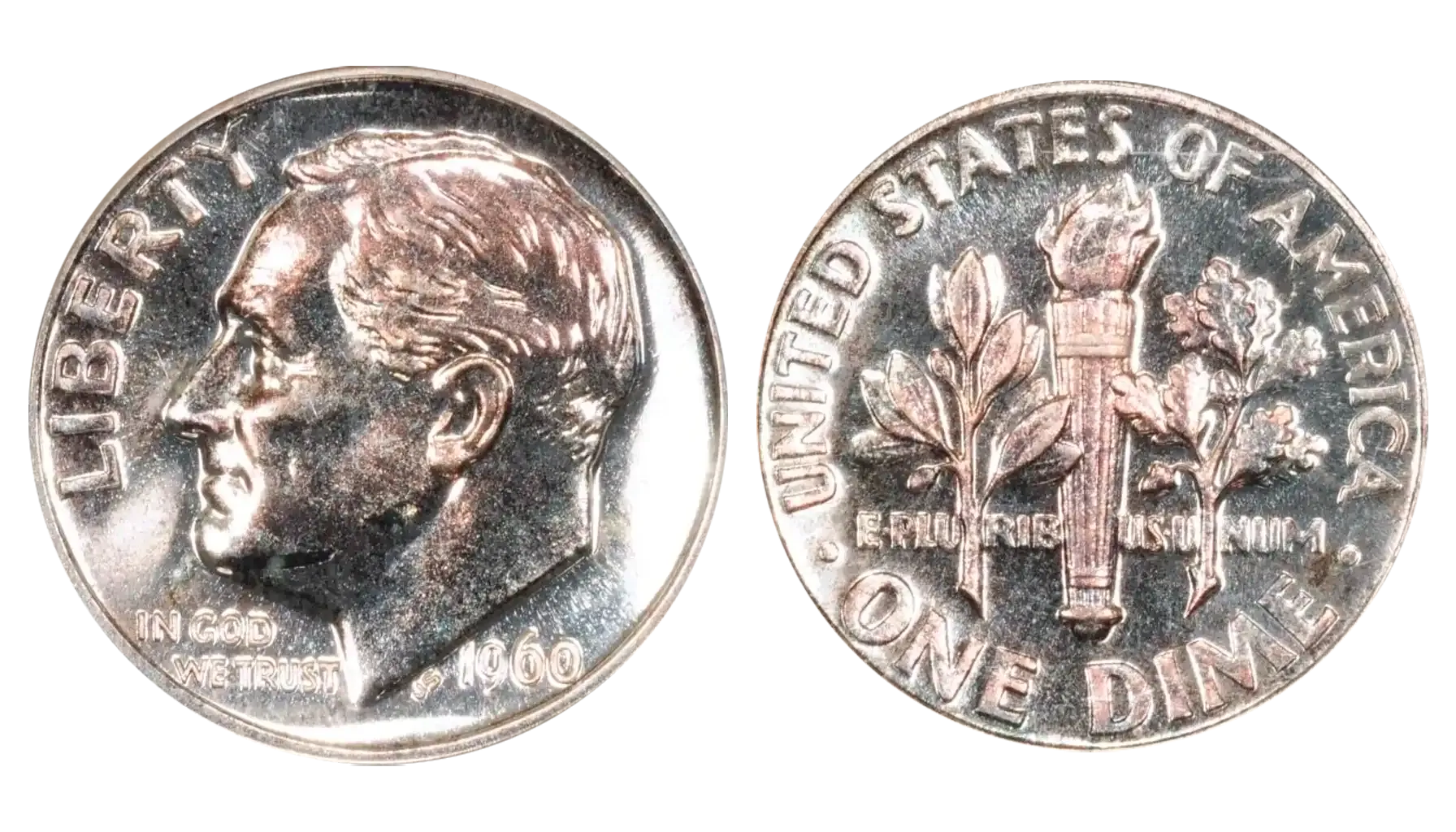
Measure with digital calipers. A standard item is 17.91 mm. If your coin is wider (e.g., 18.5 mm) and the edges are smooth, it is a Broadstruck error, which in 2026 carries a premium of $25–$60.
Where to Sell or Appraise a 1960 Silver Dime
To sell successfully, you must understand who is buying your item in 2026.
The Stack-Collector – bulk 90 % silver bags – hedging against inflation; purely focused on silver spot price
The Registry Hunter – MS-67 or MS-68 with Full Bands (FB) – the customer is obsessed with being #1 on the PCGS/NGC leaderboards. They will overpay for a single grade point.
The Variety Specialist – DDO (Doubled Die) or RPM (Repunched Mint Mark). – Focused on completing the book of all known mint errors for the 1960 series.
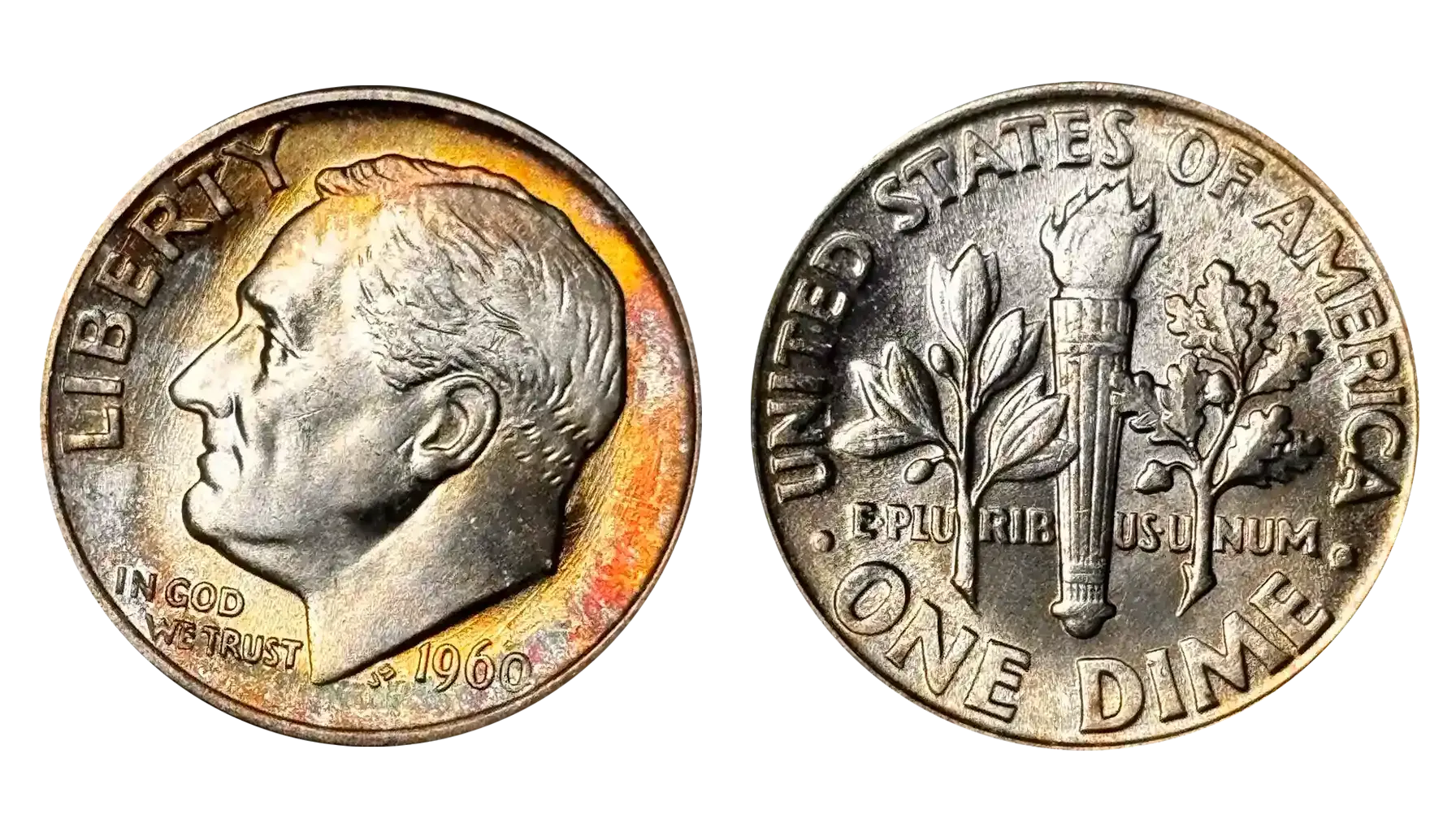
The Aesthetic Buyer – vibrant rainbow toning – they prioritize visual beauty over technical strike perfection.
The Online Platforms List
GreatCollections is the best online platform for rare and toned items. Nowadays, GreatCollections is the dominant platform for these types of items. Recent records show MS-67+ toned pieces fetching strong prices from Registry Set bidders. This is where you go if your coin has rainbow colors.
Bullion Exchanges are the best variant for large junk silver quantities. If you have a bag of circulated pieces, sell them to a reputable bullion dealer like JM Bullion or APMEX. In the current market, these are traded for their ~$5.75 silver melt value rather than their design.
FAQ
What is the error on the 1960 silver dime?
The rarest defects from the error list are DDO and RPM.
Is there anything special about a 1960 dime?
The item has .900 silver and highly valuable Full Bands prices.
Is a 1960 dime all silver?
Only 10 % of the item is copper.
Where is the mint mark on a 1960 dime?
On the reverse, near the bottom left, you can see the mark.
How much is a 1960 dime worth?
The price ranges from $5.50 to $400.
What are 1960 dimes made of?
The item composition is a mix of copper and silver.
What is the melt value of a 1960 dime?
Almost $5.75 silver on today, 2026 Q2.

 Facebook
  X (Twitter)
  Pinterest
  LinkedIn