Contents:
Coins, like people, show their true value under pressure. People, like coins, may appear ordinary until seen in the right light... The United States Mint is a well-known institution that has long been designing and producing coins for both collecting and commerce. At first, its numismatic tradition consisted in using the allegorical depictions of power, liberty, independence, and peace. Times change, and so do the coins.
Among the first real figures to have been perpetuated in metal were the Founding Fathers, with the Franklin half dollar series being one of the most tragic and equally captivating to explore. In this material, let us check coin value, explore the main design characteristics, and finally define what may affect the worth of a coin with such a powerful figure on it. Let us see.
Quick Historical Facts about the Half Dollar 1960
First Non-President on a Regular Coin: Benjamin Franklin became the first non-president featured on a regular-issue US coin when the Franklin 50C was introduced in 1948.
Mint Director’s Inspiration: Nellie Tayloe Ross, the first female US Mint Director, was a long-time admirer of Franklin and promoted the idea of putting him on the 50-cent coin.
Obverse Design Based on a Medal: The obverse (front) portrait of Franklin was adapted from a 1933 medal designed by Chief Engraver John R. Sinnock, itself inspired by a bust by sculptor Jean-Antoine Houdon.
Liberty Bell on the Reverse: The reverse features the Liberty Bell, inspired by the 1926 Sesquicentennial 50C design, with the iconic crack, which initially drew some disapproval from the Commission of Fine Arts.
Small Eagle Added by Law: As required by the Coinage Act of 1873, which mandates an eagle on all coins larger than a dime, a tiny eagle should be present on the surface either way.
Controversial Initials: Sinnock’s initials “JRS” on Franklin’s bust sparked rumors that the coin bore Joseph Stalin’s initials, despite official denials.
Launch Date and Celebration: The coin was released on April 30, 1948, coinciding with the anniversary of George Washington’s inauguration.
Circulation Run: The Franklin 50C series ran from 1948 to 1963, ending with the introduction of the 1964 Kennedy Half Dollar following JFK’s assassination.
High Mintage Numbers: By the end of its run, over 465 million pieces were struck for circulation, which makes it one of the more common collectible half dollars ever.
Related article: 10 Most Valuable Franklin Half Dollars: Everything You Need
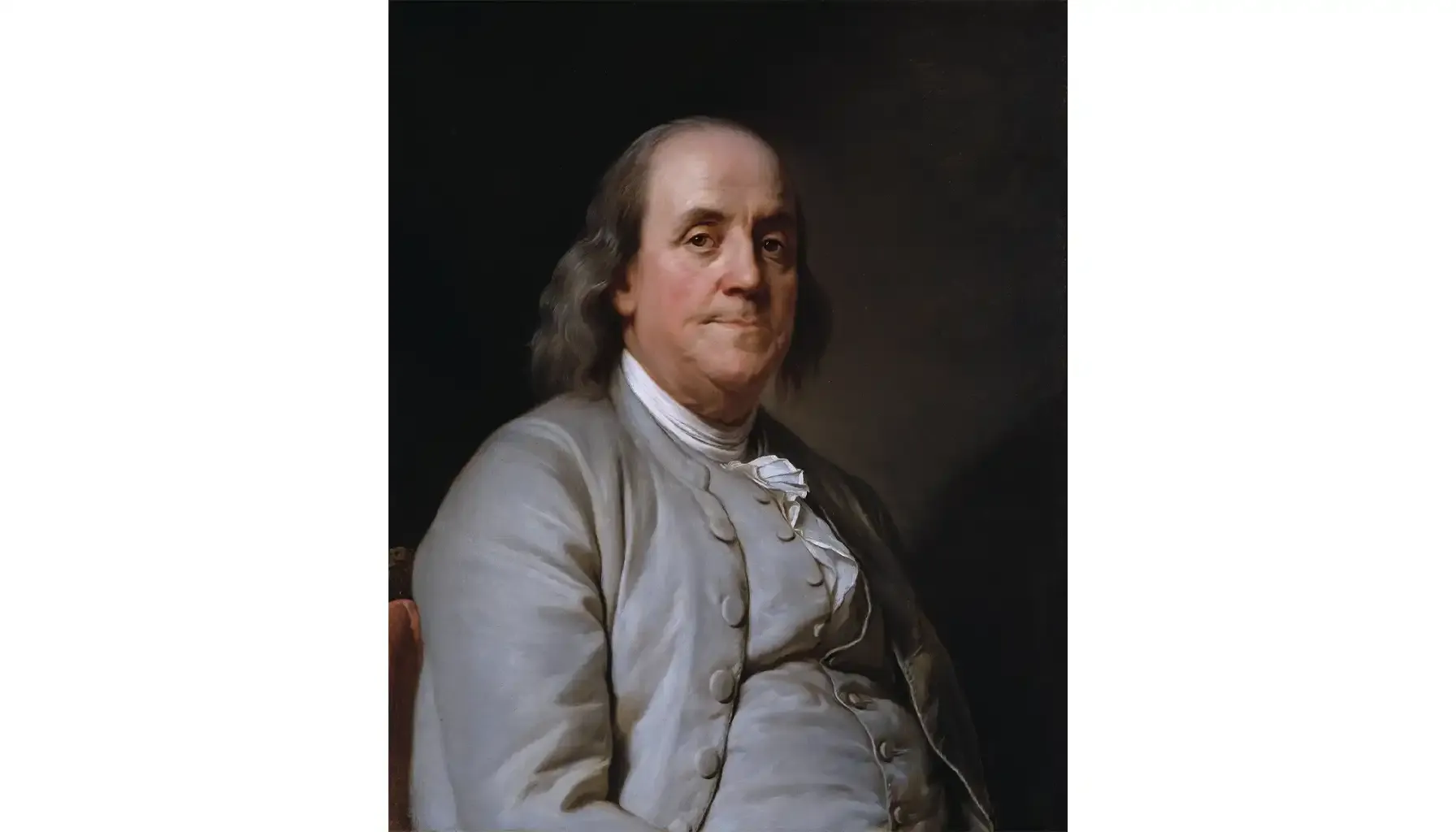
Design Features and the Main Characteristics
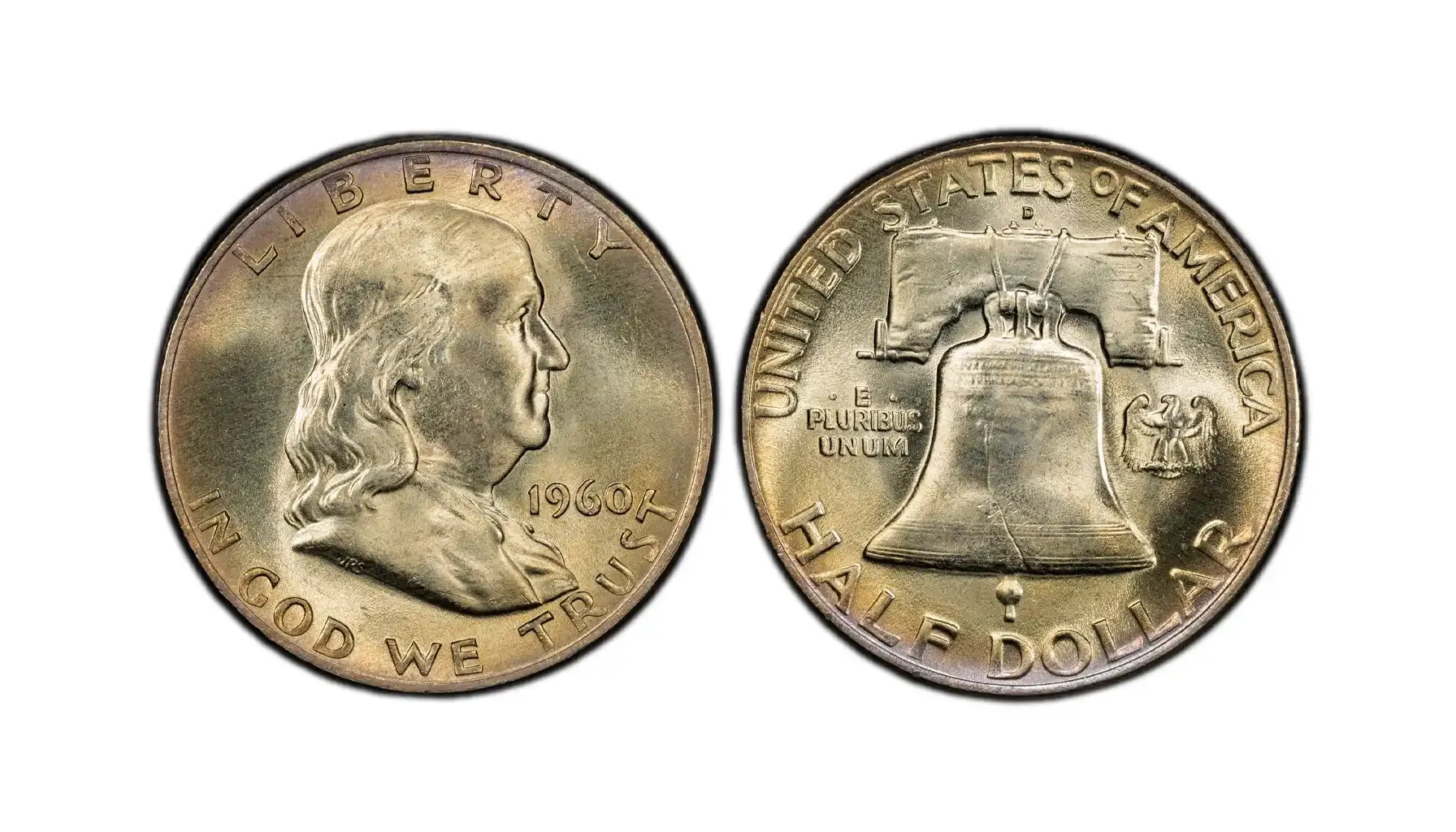
Obverse (Front): The obverse introduces a right-facing portrait of Benjamin Franklin by Chief Engraver John R. Sinnock in a realistic style, with the word “LIBERTY” above his head, the motto “IN GOD WE TRUST” placed along the bottom rim, the initials JRS on the truncation of his bust, and the year 1960 just to the right of Franklin’s profile.
Reverse (Back): The reverse side is dominated by the iconic Liberty Bell with a prominent crack. To the right of the bell is a tiny eagle, added solely to satisfy the Coinage Act of 1873, which required an eagle on all coins above the denomination of ten cents. As for the inscriptions, these include “UNITED STATES OF AMERICA” and “HALF DOLLAR” around the rim, “E PLURIBUS UNUM” to the left of the bell, and a mint mark just above.
Specifications of the Coin | |
Denomination | 50 cents |
Year | 1960 |
Composition | 90% silver, 10% copper |
Weight | 12.50 g |
Diameter | 30.6 mm |
Thickness | 2.15 mm |
Edge | Reeded |
Silver Content | ~0.3617 troy ounces |
Unique Designations: What Does FBL Mean?
One of the most important (and unique) collector designations for the Franklin Half Dollar series is FBL, which means Full Bell Lines. As such, this term refers to the horizontal lines at the bottom of the Liberty Bell, being clearly struck and uninterrupted.
Why It Matters: The Franklin Half Dollar series is notorious for weak strikes, particularly at the bell lines.
What Collectors Look For: To qualify as FBL, the lines on the Liberty Bell must be sharp and fully separated, without major breaks, weakness, or marks from contact with other coins. The best way, though, is to review the official certificates and public recognition of the 1960 Benjamin Franklin half dollar specifically.
1960 Silver Half Dollar Strike Types by Mint
1960 50C (Regular Strike)
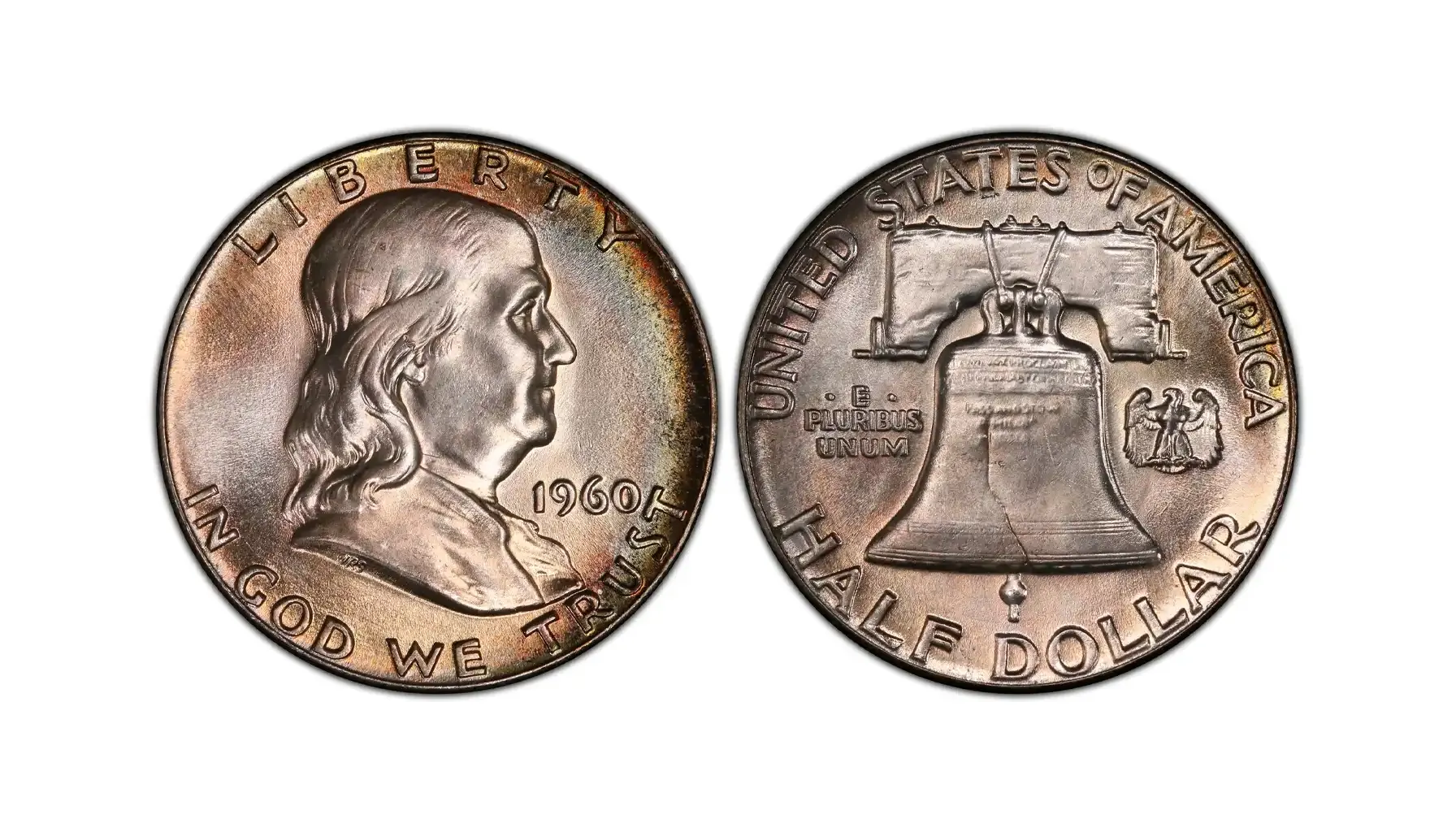
Produced by: Philadelphia Mint
Mintage: 6,024,000
Designations: MS, FBL
Auction Record: $28,200 for MS67FBL
Only six million – this might sound like a joke, but for a coin series of such a high level, the quantities seem to be low. Most scientists state that the 1960 Ben Franklin half dollar is a semi-key issue in the series, which means that while it could not be considered the rarest date, it is noticeably harder to find than the bulk of other years.
1960-D 50C (Regular Strike)
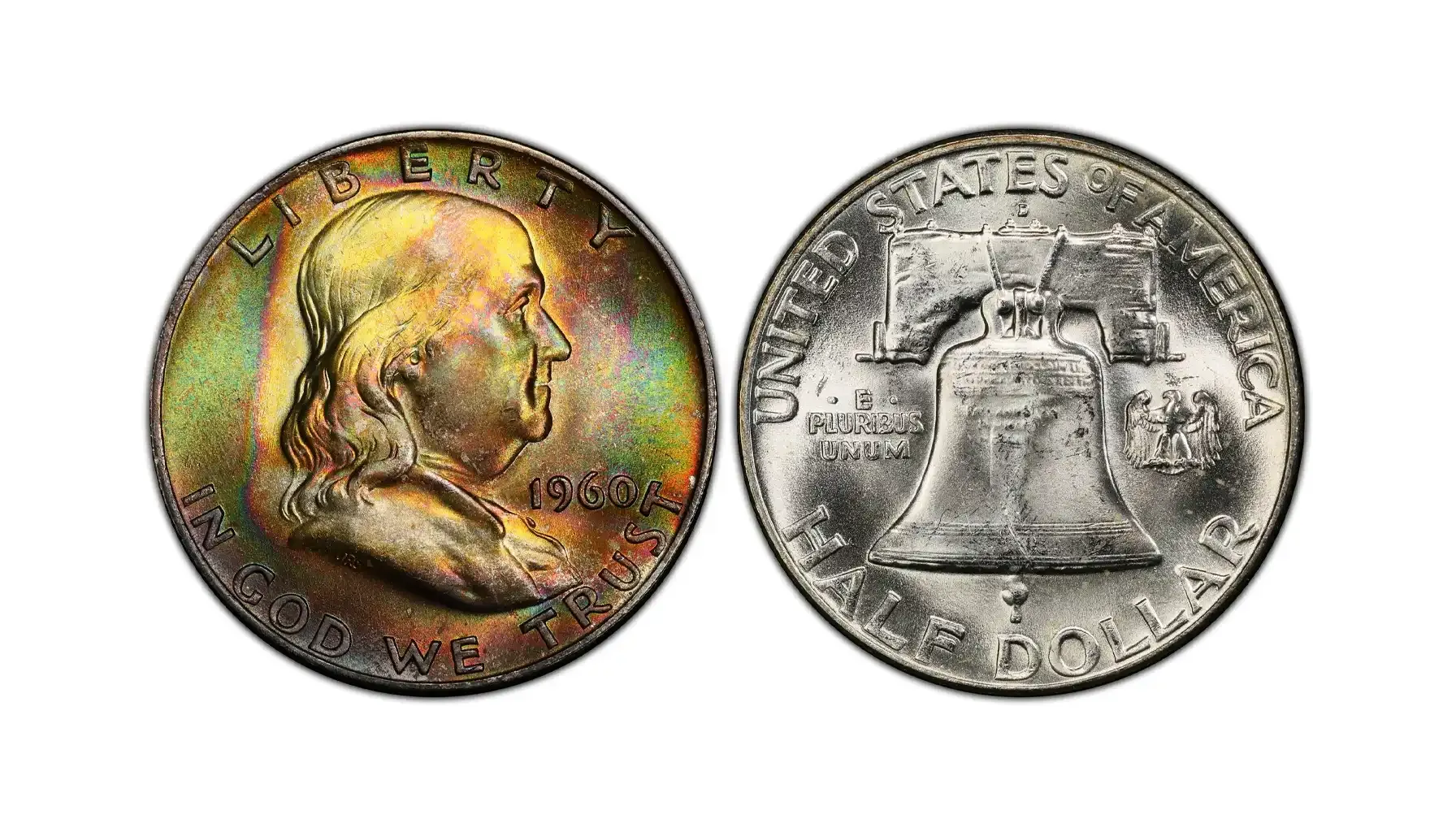
Produced by: Denver Mint
Mintage: 18,215,812
Designations: MS, FBL
Auction Record: $12,075 for MS66
The Denver Mint, being the most fruitful that year, produced more than triple the quantity of Philadelphia, which is why these might be available in circulated grade. Nonetheless, sharp strikes are elusive, and well-defined FBL specimens remain difficult to secure.
1960 50C (Proof)
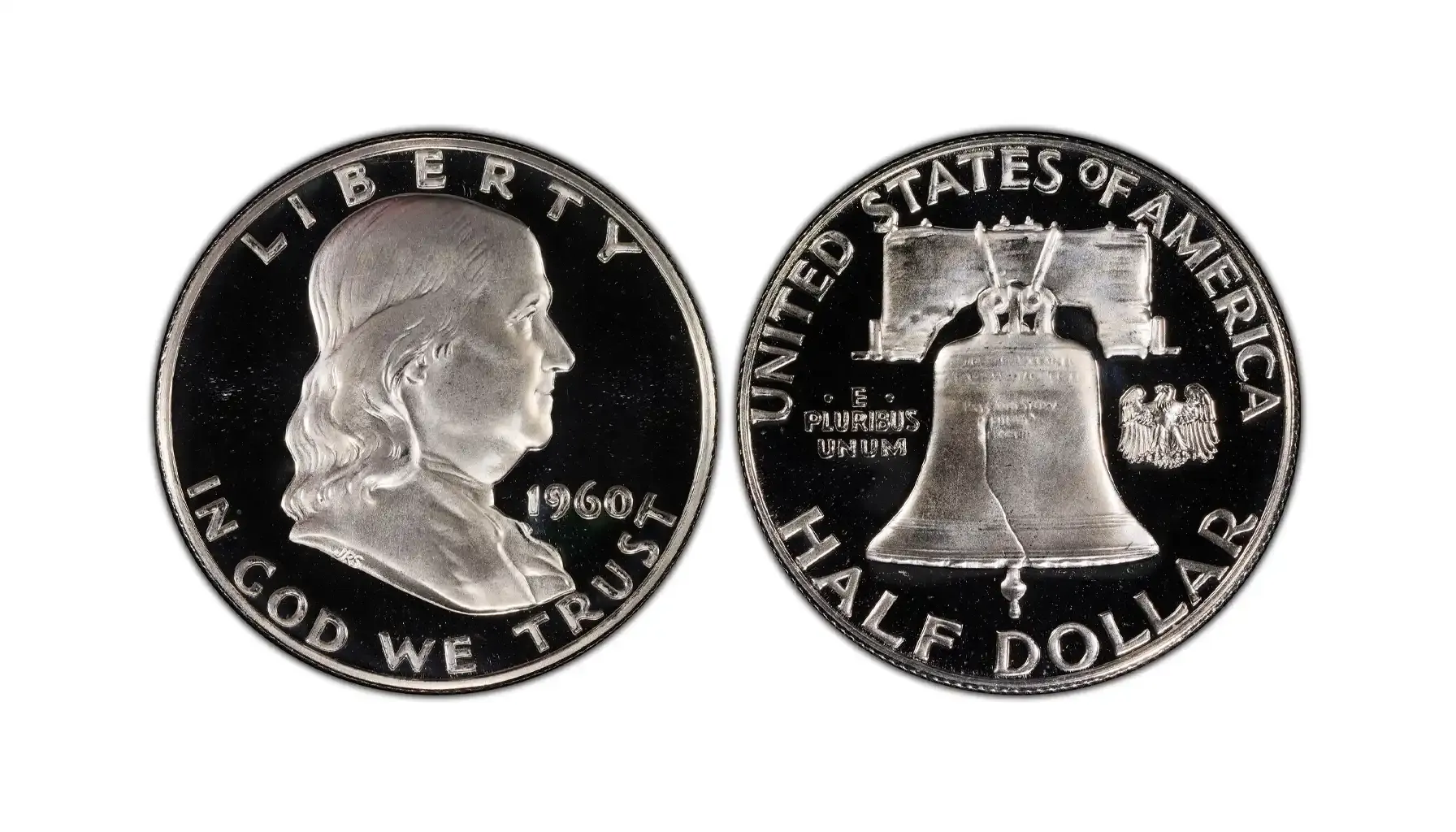
Produced by: Philadelphia Mint
Mintage: 1,691,602
Designations: PR, CAM, DCAM
Auction Record: $16,450 for PR69DCAM
Should one be thinking about the high 1960 Ben Franklin half dollar value, the first type of issue that should come to mind is the proof version, struck exclusively in Philadelphia. Basically, there were 3 designation examples to collect, i.e., PR proper, Cameo, and Deep Cameo, showing frosty design elements contrasted against mirrored backgrounds.
1960 Half Dollar Silver Content & Intrinsic Value
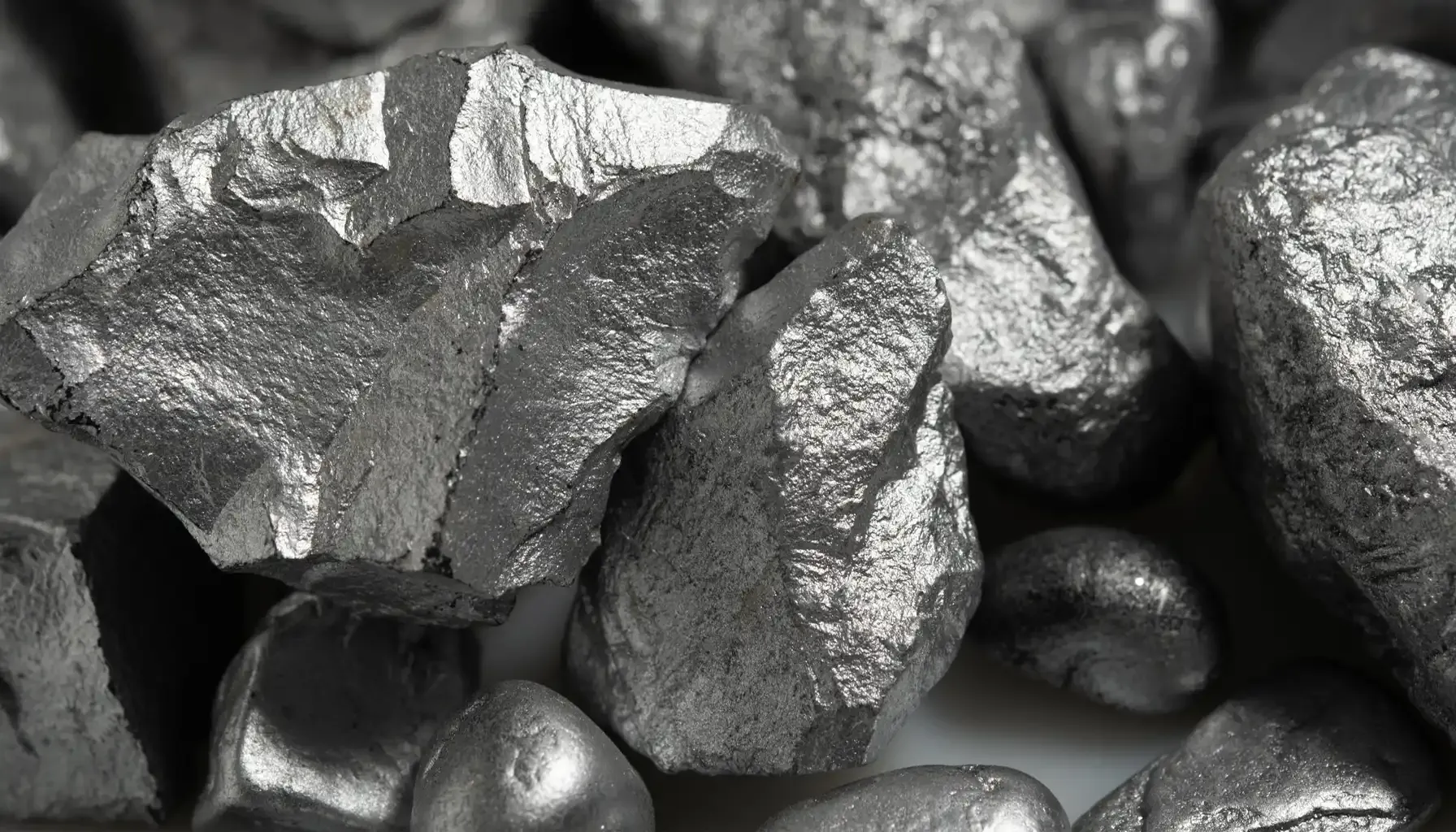
Like all pieces within the series, the 1960 issue was struck in 90% silver and 10% copper, the standard composition for US half dollars before 1965. Each sample generally weighs 12.50 grams, which translates into 0.3617 troy ounces of pure silver.
Thanks to this high silver content, every coin has an intrinsic or "melt value" that no one can take off. The exact worth fluctuates daily with the spot price of silver, yet, as of August 2025, the melt value of a single 50C is about $14.05:
0.3617 troy oz × $38.85 (spot price per oz) ≈ $14.05
This silver content guarantees that even a worn or damaged coin retains a solid base value tied to bullion markets. This is how a coin of daily use may turn into a valuable asset with great potential to grow even more.
See also: Silver Price Predictions 2030: How High Could It Go?
Current 1960 Half Dollar Value (2025)
Although there is a strong intrinsic value from its precious content, the true 1960 silver half dollar value depends on several nuanced factors, namely:
Condition/Grade: Higher grades (like MS-65, MS-67, and above) substantially increase value, as do coins with desirable luster and minimal wear.
Strike Quality/Full Bell Lines (FBL): Coins with complete, unbroken bell lines are significantly more valuable (presuppose better strikes).
Mint of Origin and Rarity of High Grades: Although 1960 coins are relatively common overall, high-grade survivors, especially with FBL, are comparatively rare.
So, how much is a 1960 half dollar worth?
Condition | 1960 (P) | 1960‑D | 1960 Proof |
Circulated (VF–AU) | ~$15–$17.50 | ~$15–$20 | – (Not applicable) |
Lower Uncirculated (MS‑60 to MS‑63) | ~$22–$27 | ~$24–$110 | ~$18–$405 (PR) |
High Uncirculated (MS‑65) | ~$60–$150 | ~$150–$285 | – (DCAM only) |
Premium (MS‑65 FBL or DCAM Proof) | Up to ~$28,200 for MS‑67 FBL | ~$150–$285 | ~$1,000+ |
*Prices are approximate and may fluctuate over time.
When Prices Go Up…
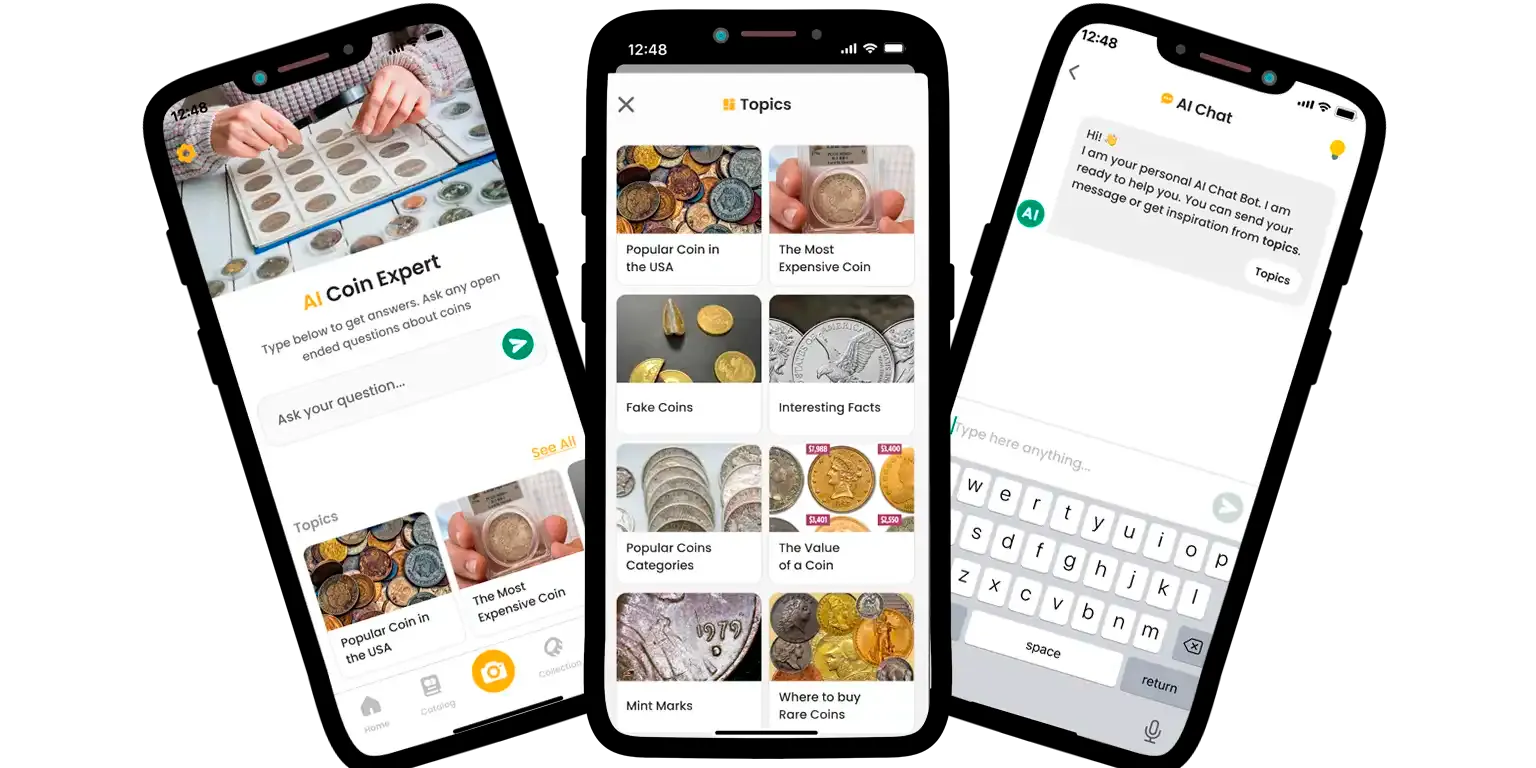
Collectors often think they must navigate the numismatic world alone, believing that figuring out values, grades, and rarities by trial and error is part of the experience. The truth is, support does not diminish the joy of collecting – never! Today, one may easily rely on additional digital tools like Coin ID Scanner to identify, study, and analyze coins faster, smarter, and more organized.
Here is what Coin ID Scanner brings to your collection:
Instant Coin Recognition: Take a picture of the coin or manually enter its name for it to be identified within seconds.
Accurate Value Estimates: Review current price ranges based on grade, rarity, and market trends.
Comprehensive Database: Find comprehensive data on US and foreign coins, including mintage numbers, historical background, and even more.
Collectors' Toolkit: Save scans, build digital inventories, and monitor your collection over time.
The 1960 half dollar coin value represents something more monumental than its silver or its mint mark – emotions, the thrill of collecting, the curiosity of discovery, and the pride of holding coins in private collections. Explore the numismatic world and pass it on to new generations to come.

 Facebook
  X (Twitter)
  Pinterest
  LinkedIn