Contents:
The 1950 Benjamin half dollar features a portrait of a very prominent American, Benjamin Franklin, who was a writer, scientist, and one of the founding fathers. The series of these coins is highly appreciated among numismatists not only because of the high silver content, but also because of the image of B.Franklin, whose ideas are still being inspired.
And it would seem that many years have passed since he published his works, but there are still his followers who are ready to compete for a token with his image and know the exact way on how to identify coins of these.
The Design and Its Meaning
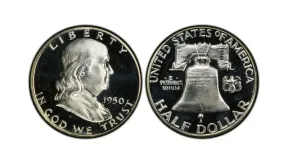
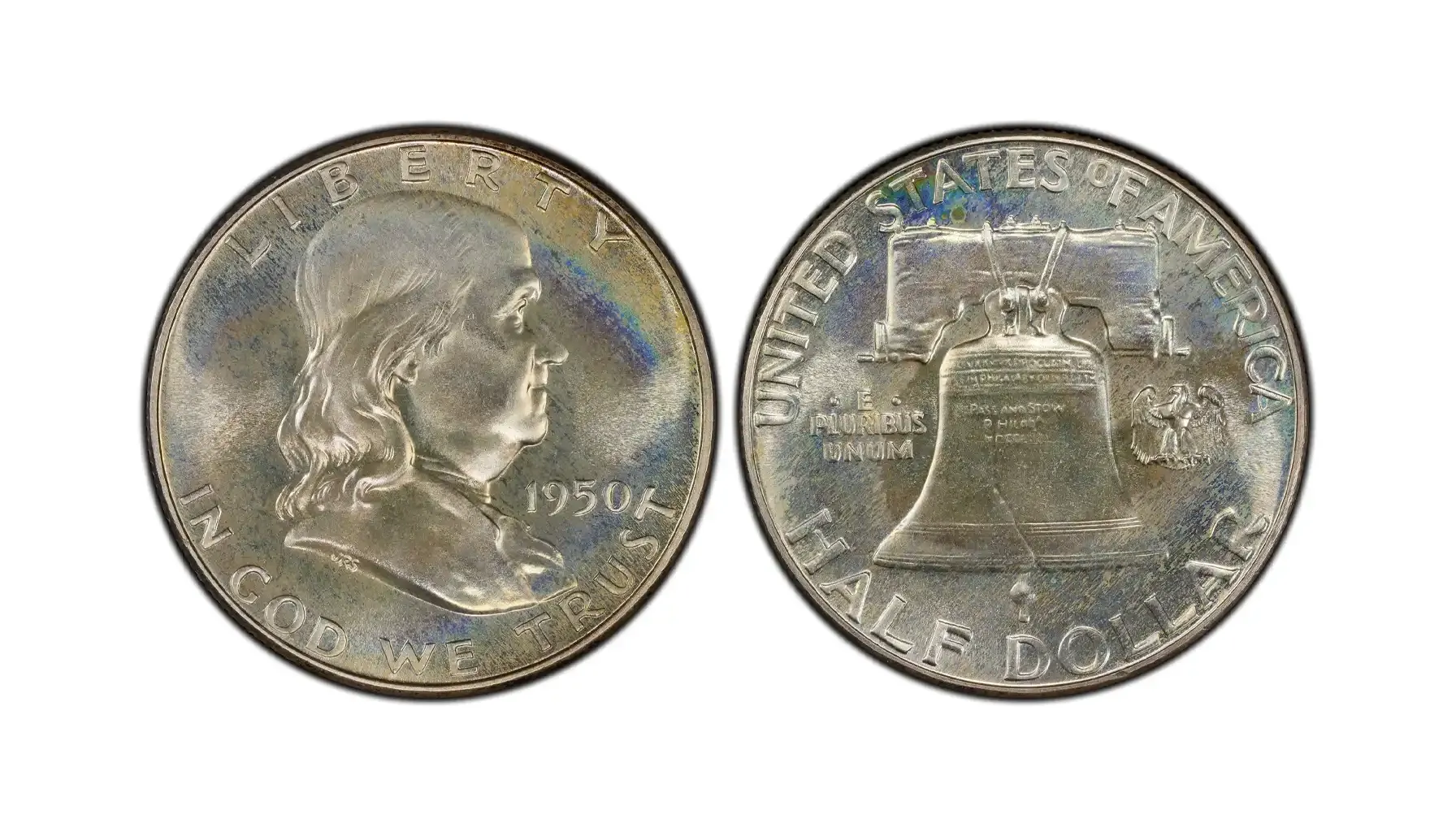
The front side shows a strong profile of Benjamin Franklin, wearing a suit from his time and looks to the right. Below his chin, you can see the year, 1950.
The words "LIBERTY" and "IN GOD WE TRUST" are placed around the edges of the coin.
On the back side the coin features a large and famous image: the Liberty Bell. The design of the bell is based on the one shown on the 1926 Sesquicentennial of American Independence Half Dollar. Near the bell's clapper, you can see the crack.
To the right of the bell, there is a small eagle with its wings open.
The words "UNITED STATES OF AMERICA," "HALF DOLLAR," and "E PLURIBUS UNUM" are placed around the bell.
The Actual Silver Weight: the 1950 Half Dollar Silver Content
The ASW is the amount of pure silver in a coin, without the weight of the other metals. The 1950 Franklin Half Dollar is made of an alloy of 90% silver, like many US Half Dollars do, and 10% copper. The total weight of the coin is 12.5 grams.
Calculation: 12.5 grams × 0.90 = 11.25 grams of pure silver.
This means that the melt 1950 Franklin half dollar value will change with the price of silver in the market.
How Much Is a 1950 Half Dollar Worth?
Coin Variation | Approximate Half Dollar 1950 Value Range |
1950-P Franklin Half Dollar (Circulated) | $15 - $30 |
1950-P Franklin Half Dollar (Uncirculated) | $20 - $150+ |
1950-D Franklin Half Dollar (Circulated) | $15 - $30 |
1950-D Franklin Half Dollar (Uncirculated) | $25 - $175+ |
1950 Franklin Half Dollar (Proof) | $250 - $2,500+ |
1950 Repunched Mint Mark (RPM) | $20 - $1,000+ |
1950 Doubled Die Reverse (DDR) | $50 - $800+ |
1950 Strike-Through Error | $25 - $150+ |
The 1950 silver half dollar value can change based on market demand, condition, grading, and the specific characteristics of individual coins.
1950-P Franklin Half Dollar
Mintage: 7,742,123
Weight: 12.5 grams
Diameter: 30.6 millimeters
Composition: 90% silver and 10% copper
Auction Record Note: A high-grade 1950-P Franklin Half Dollar was sold for a significant amount on an auction platform called Heritage Auctions in a sale in the middle of 2023 over $4,700.
Grade | Market Value |
G-4 (Good) | $14 |
F-12 (Fine) | $15 |
XF-40 (Extremely Fine) | $16 |
MS-60 (Mint State) | $20 |
MS-65 (Gem Uncirculated) | $150 |
The 1950 Ben Franklin half dollar value can change based on market demand, condition, grading, and the specific characteristics of individual coins.
1950-D Franklin Half Dollar
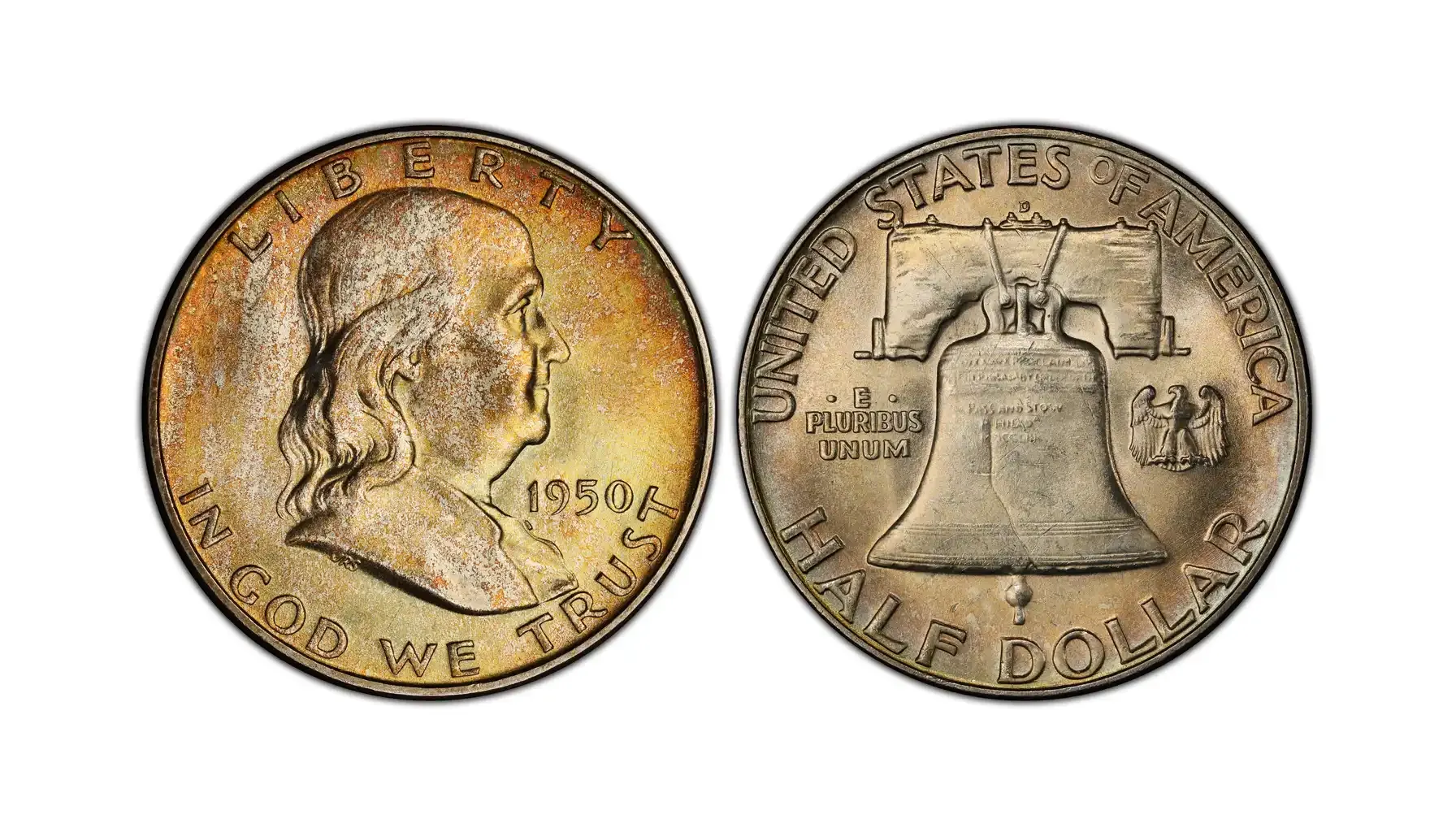
Mintage: 8,031,600
Weight: 12.5 grams
Diameter: 30.6 millimeters
Composition: 90% silver and 10% copper
Auction Record Note: A 1950-D Franklin Half Dollar, graded MS66 by a company, was sold on GreatCollections Coin Auctions in the spring of 2024 for a price over $2,000.
Grade | Market Value |
G-4 (Good) | $14 |
F-12 (Fine) | $16 |
XF-40 (Extremely Fine) | $17 |
MS-60 (Mint State) | $25 |
MS-65 (Gem Uncirculated) | $175 |
The 1950 D half dollar value can change based on market demand, condition, grading, and the specific characteristics of individual coins.
1950 Franklin Half Dollar Proof
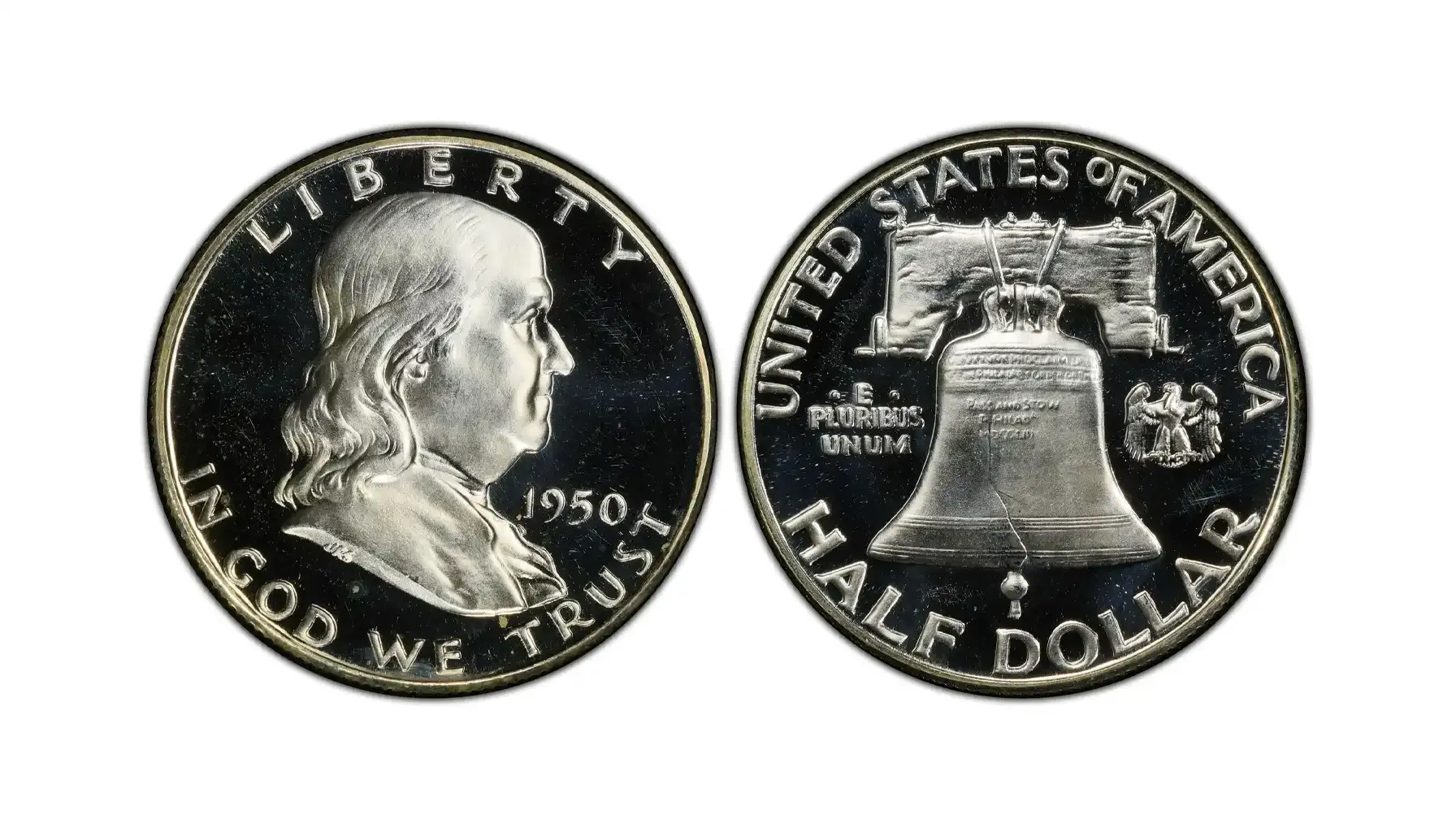
Mintage: 51,386
Weight: 12.5 grams
Diameter: 30.6 millimeters
Composition: 90% silver and 10% copper
Auction Record Note: A Proof coin graded PR67 was sold by Stack's Bowers Galleries in the summer of 2023 for a price of over $66,000.
Grade | Market Value |
PR-60 (Proof) | $250 |
PR-65 (Proof Gem) | $700 |
PR-67 (Proof Superb Gem) | $2,500 |
PR-68 (Proof Ultra Gem) | $21,000+ |
The 1950 half dollar value today can change based on market demand, condition, grading, and the specific characteristics of individual coins.
Notable 1950 Half Dollar Errors
Doubled Die
If the hub is not perfectly aligned for each strike, it creates a subtle, or sometimes dramatic, doubled image on the die itself - coins struck with this die will show the doubled design.
The 1950 Proof Franklin Half Dollar has a very popular and dramatic variety called the Quadrupled Die Obverse (FS-101), which shows clear doubling in the letters of "IN GOD WE TRUST" and "LIBERTY" and the date.
"Bugs Bunny" Die Clash
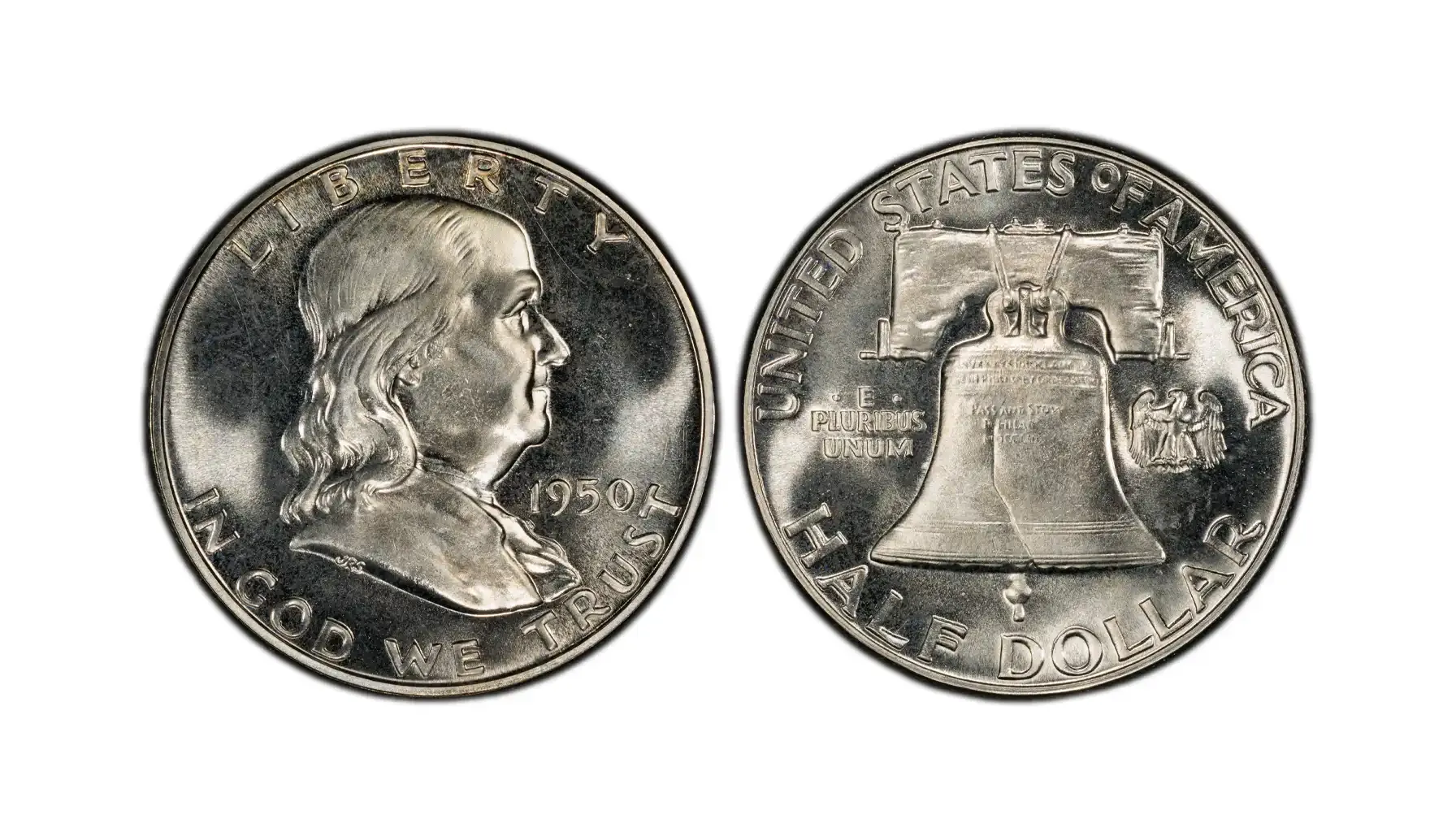
A die clash happens when the front and back dies strike each other without a coin blank in between. The design from the dies is transferred to the opposing die, creating a faint outline. On the "Bugs Bunny" variety, a part of the eagle's wing from the reverse die leaves a mark on Franklin's mouth on the obverse die.
Repunched Mint Mark (RPM)
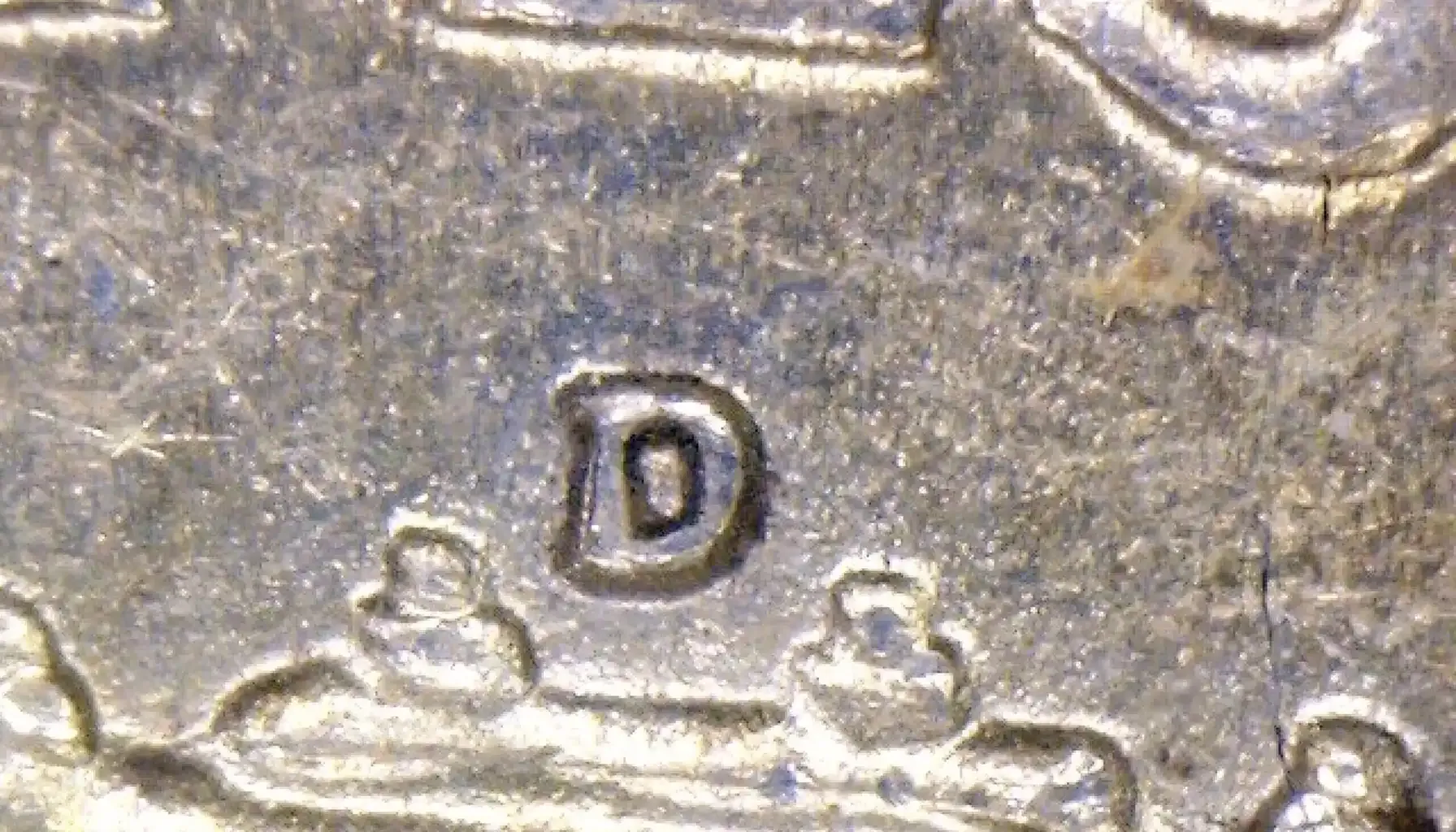
This creates a ghosting or doubling effect on the mint mark itself. For the 1950-D Franklin Half Dollar, the most valuable RPM is the FS-501 variety. It shows a very clear doubling of the "D" mint mark, making it a favorite for collectors who specialize in these types of varieties.
Off-Center Strike
An off-center strike is a true mint error that occurs when the coin blank, or planchet, is not properly centered when it is struck by the dies. The 1950 half dollar coin value with off-center error depends on how far off-center the strike is and if the date and mint mark are still visible.
Strike-Through Error
A strike-through error happens when a foreign object or material, such as a piece of cloth, grease, or a small metal shaving, gets on the coin blank and is struck into the surface of the coin along with the design.
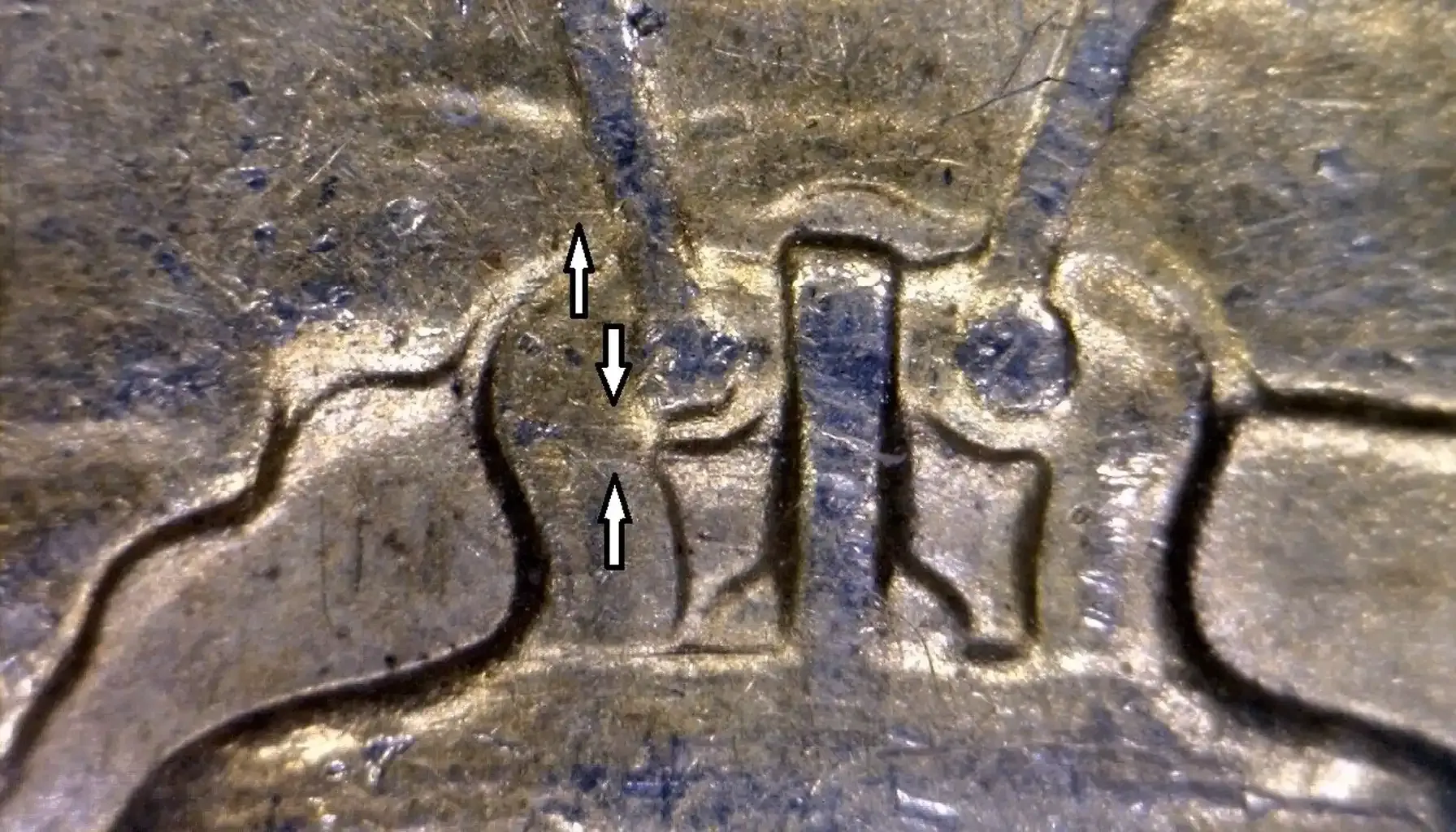
Full Bell Lines
This is not a mistake or an error, but a special designation given to coins that are exceptionally well-struck. A coin with a Full Bell Lines designation means that all the small, horizontal lines at the bottom of the Liberty Bell are fully visible and unbroken.
Tips on Storage
Proper storage is key to keeping your tokens in good condition and protecting their 1950 Benjamin Franklin half dollar value.
Use Good Holders: Never put these silver coins in paper envelopes or plastic bags that are not made for coins - the chemicals in these materials can damage the coin's surface. Instead, use plastic holders that are approved by coin experts, like mylar flips or coin capsules.
Avoid Touching the Coin: The oils and acids from your hands can leave marks and damage the coin over time, that’s why always hold the coin by its edges, and never touch the front or back surfaces.
Keep Them in a Safe Place: Store your coins away from places with a lot of moisture or big changes in temperature.
Frequently Asked Questions
What is the "Bugs Bunny" variety?
It's an error on some Franklin half dollars where the obverse and reverse dies clashed, leaving a faint outline of the eagle's wings,making it look like Franklin had large, protruding teeth, similar to the cartoon character Bugs Bunny.
What are "Full Bell Lines" (FBL)?
"Full Bell Lines" is a special designation that indicates a coin's condition and strike quality and means the six horizontal lines on the bottom of the Liberty Bell on the reverse are all clearly and fully visible.
Where can I find the mint mark on a Ben Franklin half dollar 1950?
The mint mark is located on the reverse side of the coin, just above the wooden yoke of the Liberty Bell. A "D" mint mark indicates the coin was minted in Denver, coins from the Philadelphia Mint have no mint mark.

 Facebook
  X (Twitter)
  Pinterest
  LinkedIn