Contents:
Your coin might be worth thousands! This is not a clickbait statement but an assumption rooted in the history of American coinage, the development of designs, and unique features that may identify the coin as rare. Sometimes, it is only about the person depicted, cultural circumstances, composition, or the overall beauty, yet even small details, e.g., mint marks, unusual strikes, or subtle errors, may increase the coin's worth.
Half dollars have never been more valuable than they are today, but what about their specific issues, like the 1954 Benjamin Franklin half dollar? Having been minted over half a century ago, this coin has earned a place in collections as a high-value legal tender with both financial and numismatic significance. So, how much is a 1954 half dollar worth, and what makes certain examples so highly prized? Let us check.
Quick Answers First
If you are here for a fast answer, here is what you should know about the 1954 Ben Franklin half dollar value:
Average Circulated (worn coins): $10-$25
Uncirculated (Mint State): $40-$150+
High-Grade Gems with Full Bell Lines (FBL): $500-$2,500+
Rare Varieties & Errors: Can exceed $10,000 (according to the numismatic auction platforms and guides).
Composition: 90% silver, 10% copper
Silver Melt Value (2025): About $9 (minimum, even in poor condition)
Do Not Be Quick to Leave
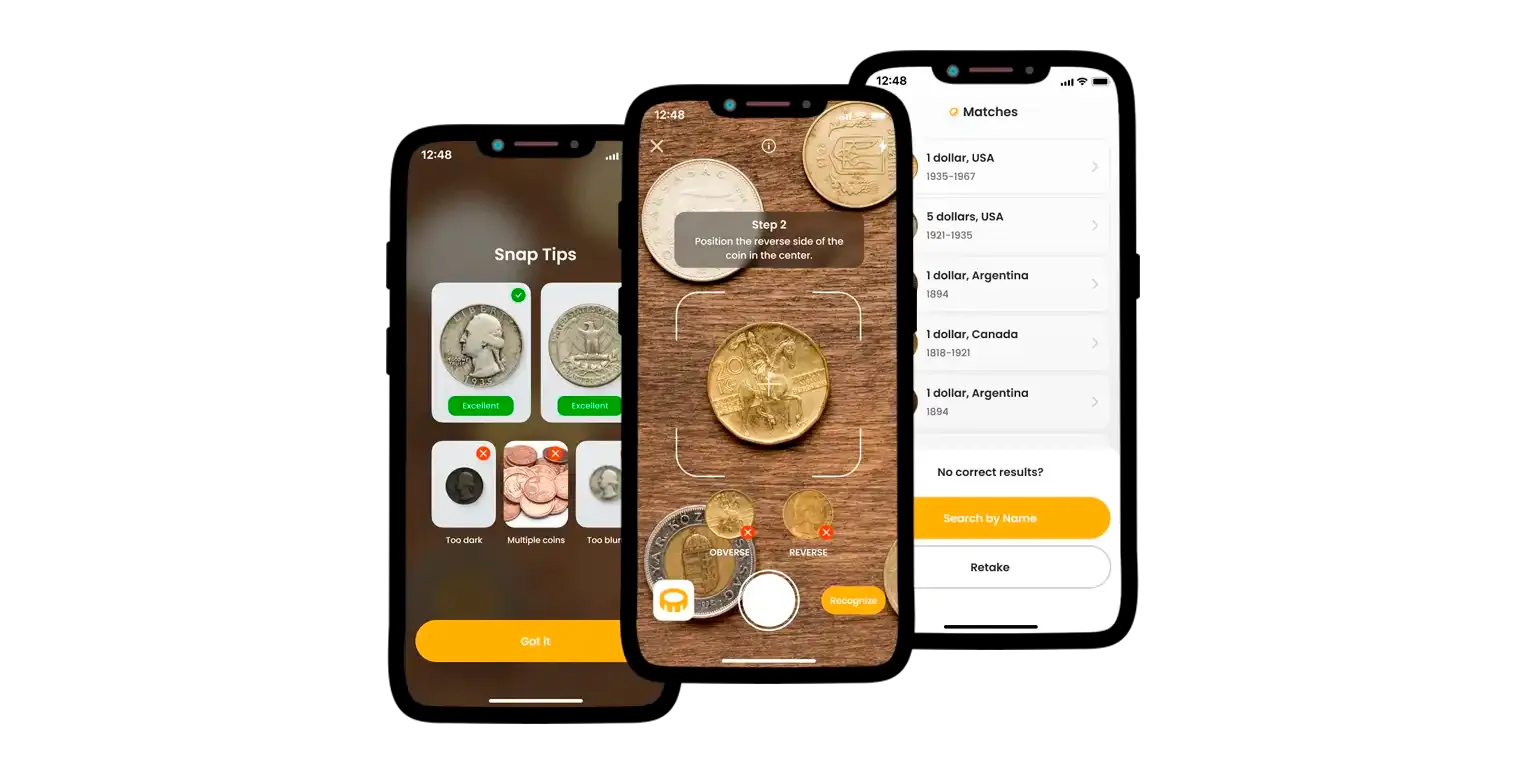
The quick values are fine, but what is even finer is knowing more about the coin’s background, strike types, and varieties to decipher the real worth. Even the least noticeable detail may change the price, and this may directly affect the collection you own. Below is the data generously provided by Coin ID Scanner, i.e., the app that may help one spot unusual varieties on the spot. Let the treasure hunt begin!
Snapshot of the 1954 Ben Franklin Half Dollar
The stories of the Franklin half dollars take us back to 1948, when there was released the first 50-cent coin, carefully designed by chief engraver John R. Sinnock and later completed by his successor Gilroy Roberts. Initially, it was inspired by a 1933 medal Sinnock modeled before. This was the crucial work that inspired Mint Director Nellie Tayloe Ross to commission the engraver to honor one of America’s most influential figures of all time, Benjamin Franklin.
Ross wholeheartedly believed that Franklin’s legacy deserved to live on a coin used in everyday life. Fortunately, she was right to do so. Nonetheless, as most numismatists stated, Franklin himself had once opposed portraits on coins, but Ross was adamant: the Founding Father might have approved of a posthumous tribute that celebrated his influence, no matter what.
The Commission of Fine Arts, responsible for advising on the artistic quality of US coinage and medals, strongly objected to the Liberty Bell design (reverse), criticizing the prominence of its crack and the awkward placement of the small eagle. This, however, did not stop the Mint from issuing. These days, the Ben Franklin half dollar 1954 is a classic mid-series collectible that may be worth thousands, if not dozens of thousands, of dollars worldwide.
Specifications of the Coin | |
Denomination | 50 cents |
Year | 1954 |
Series | Franklin Half Dollar (1948-1963) |
Composition | 90% silver, 10% copper |
Weight | 12.50 g |
Diameter | 30.6 mm |
Thickness | 2.15 mm |
Edge | Reeded |
Silver Content | ~0.3617 troy ounces |
Design & Historical Background
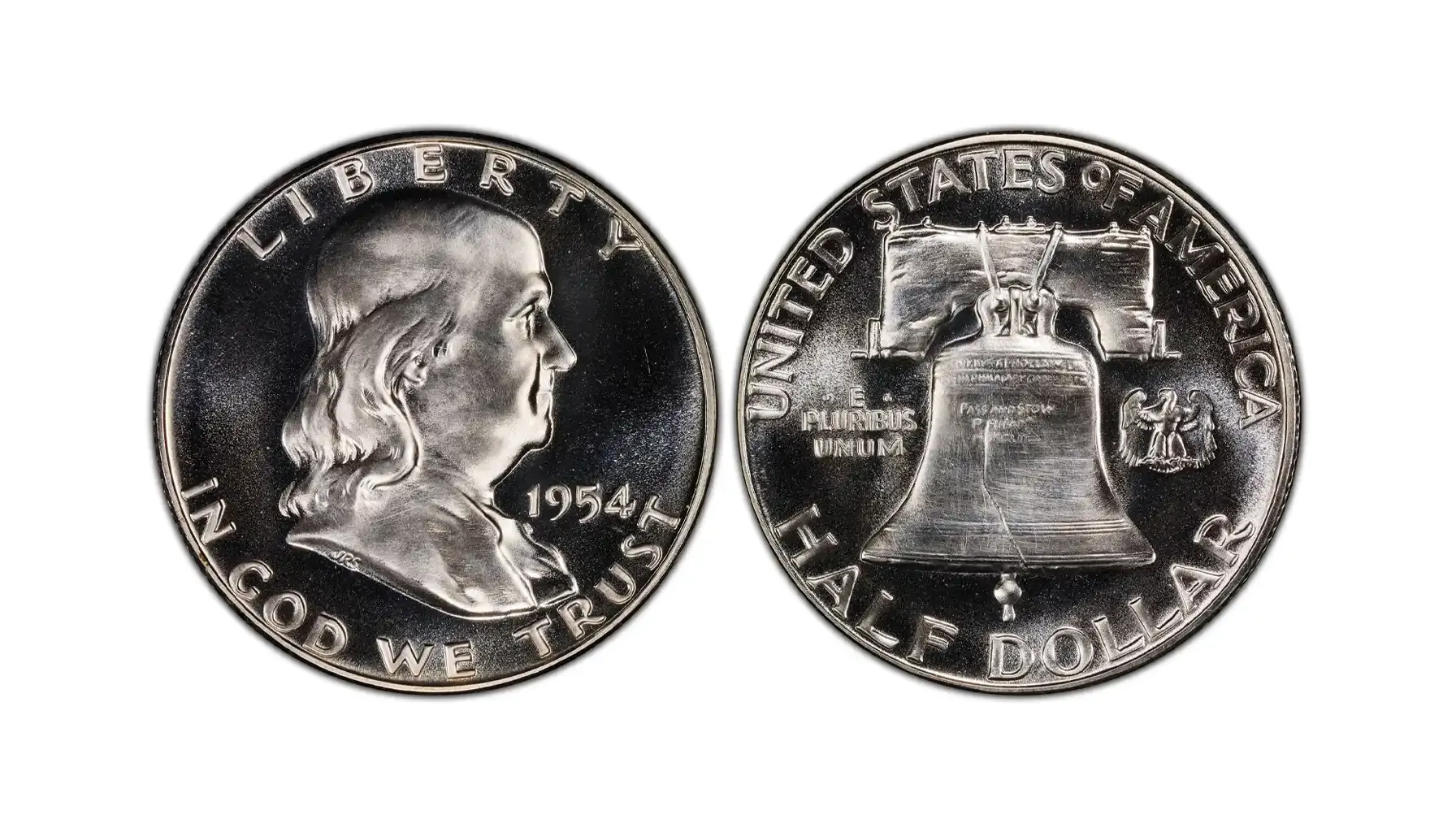
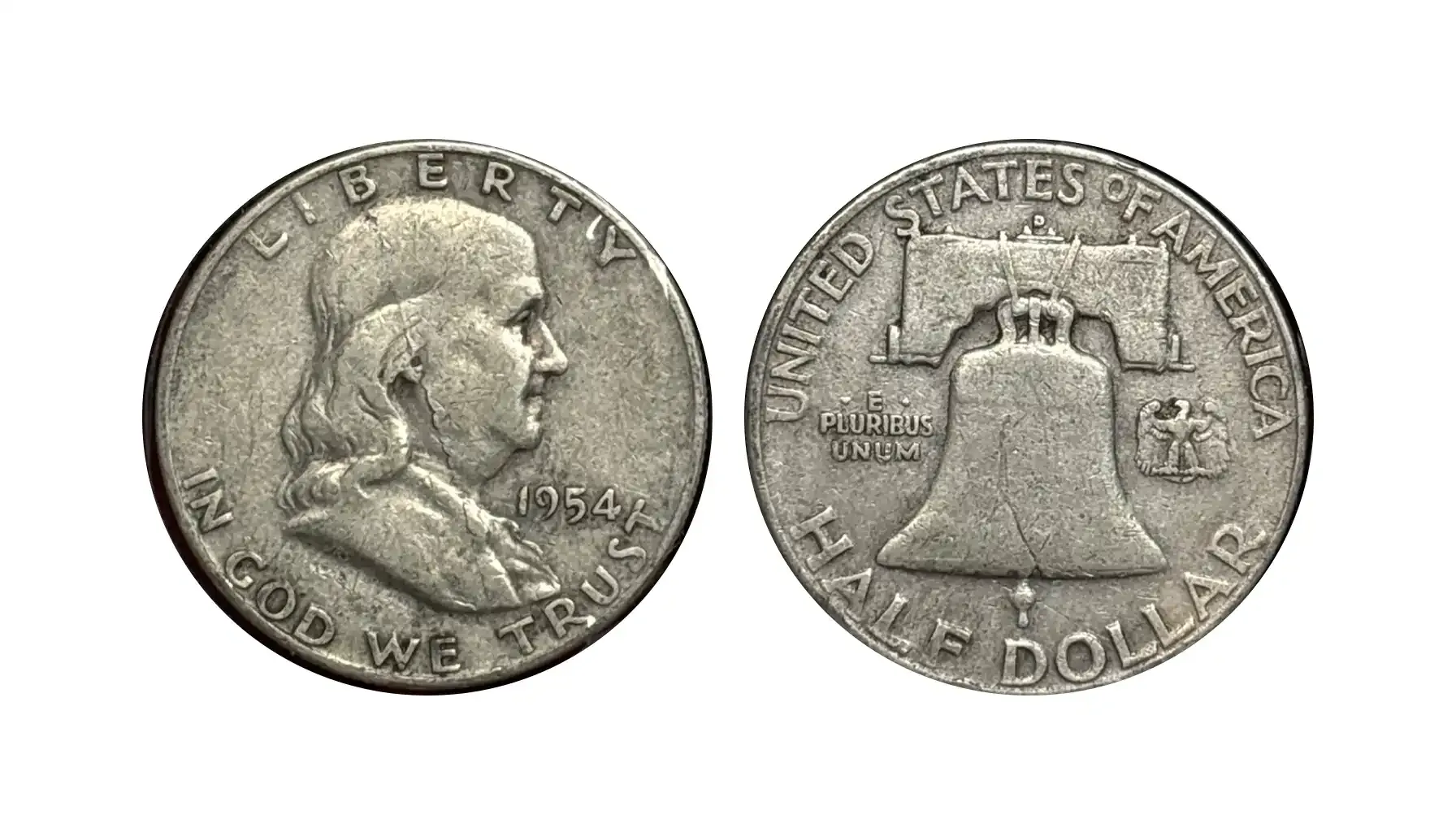
Obverse: The obverse side displays an intricate profile of Benjamin Franklin facing right, complete with the inscriptions “LIBERTY” along the upper rim, “1954” beneath Franklin's chin, and “IN GOD WE TRUST” along the bottom edge.
Reverse: The reverse side reveals the Liberty Bell with an iconic crack, as well as a small soaring eagle to the right (as a measure to comply with US coinage law), the inscriptions "UNITED STATES OF AMERICA" along the top edge, the denomination "HALF DOLLAR" along the bottom edge, a mint mark above the bell, and the national motto "E PLURIBUS UNUM" located to the left.
A Unique Tribute
But what could make the 1954 silver half dollar rare? Well, for the first time, a coin depicted a non-allegoric, non-presidential figure, which is a rarity in American coinage. Franklin, a Founding Father, inventor, and diplomat, was chosen for his immense influence on the nation rather than for political office. As easy as that.
Related article: Unexpected Wealth: 10 Coins to Look For in Pocket Change
Strike Types by Mint
1954 50C
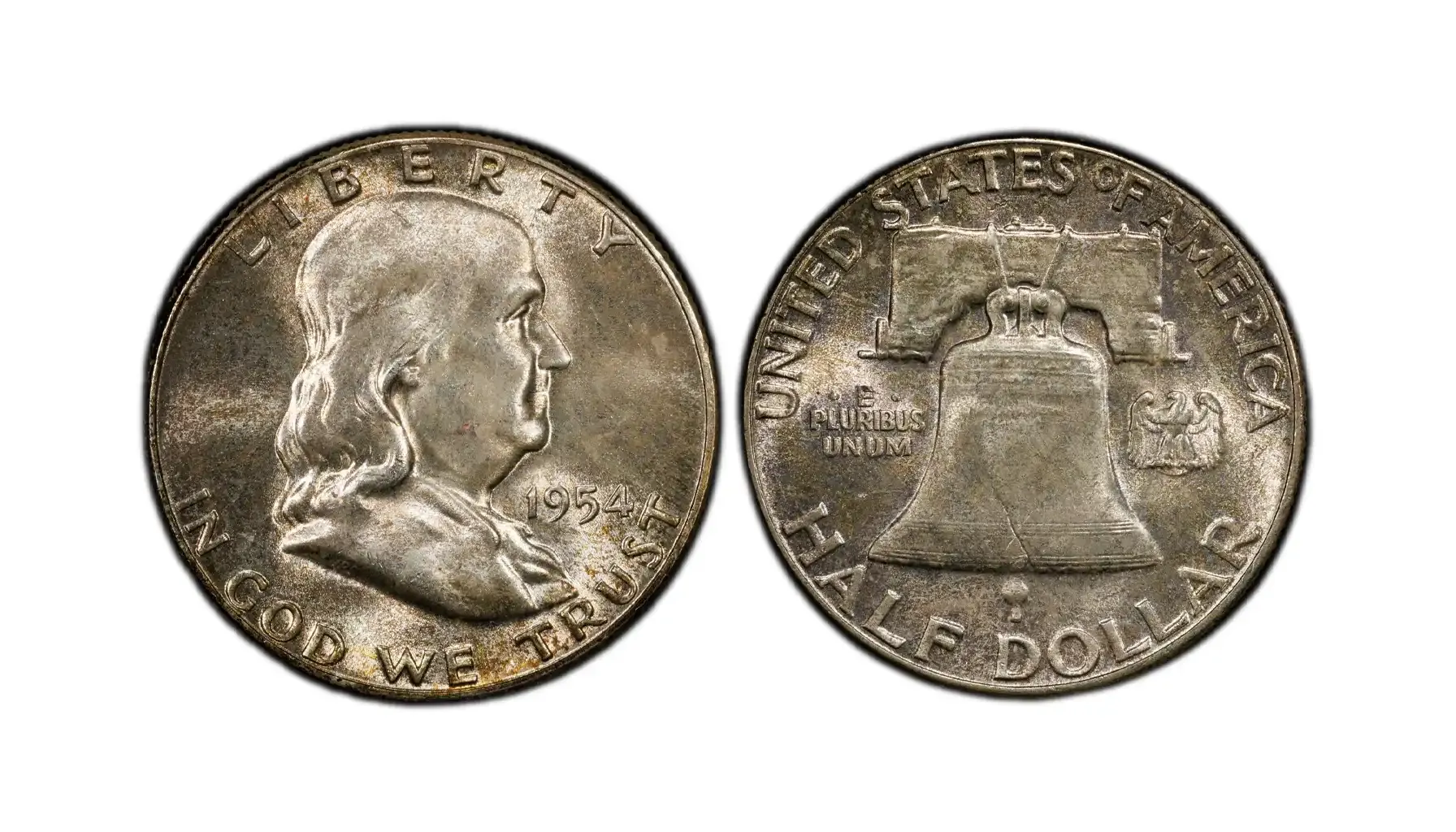
Produced by: Philadelphia Mint
Mintage: 13,188,203
Designations: MS, FBL
Auction Record: $14,100 for MS67FL
While this strike is among the more common Franklin Half Dollars, the coins produced by the Philadelphia Mint remain a desirable type of investment in precious metals and numismatic creations in general (thanks to their consistent presence in collections and the potential for high-grade examples to reach premium values).
1954-D 50C
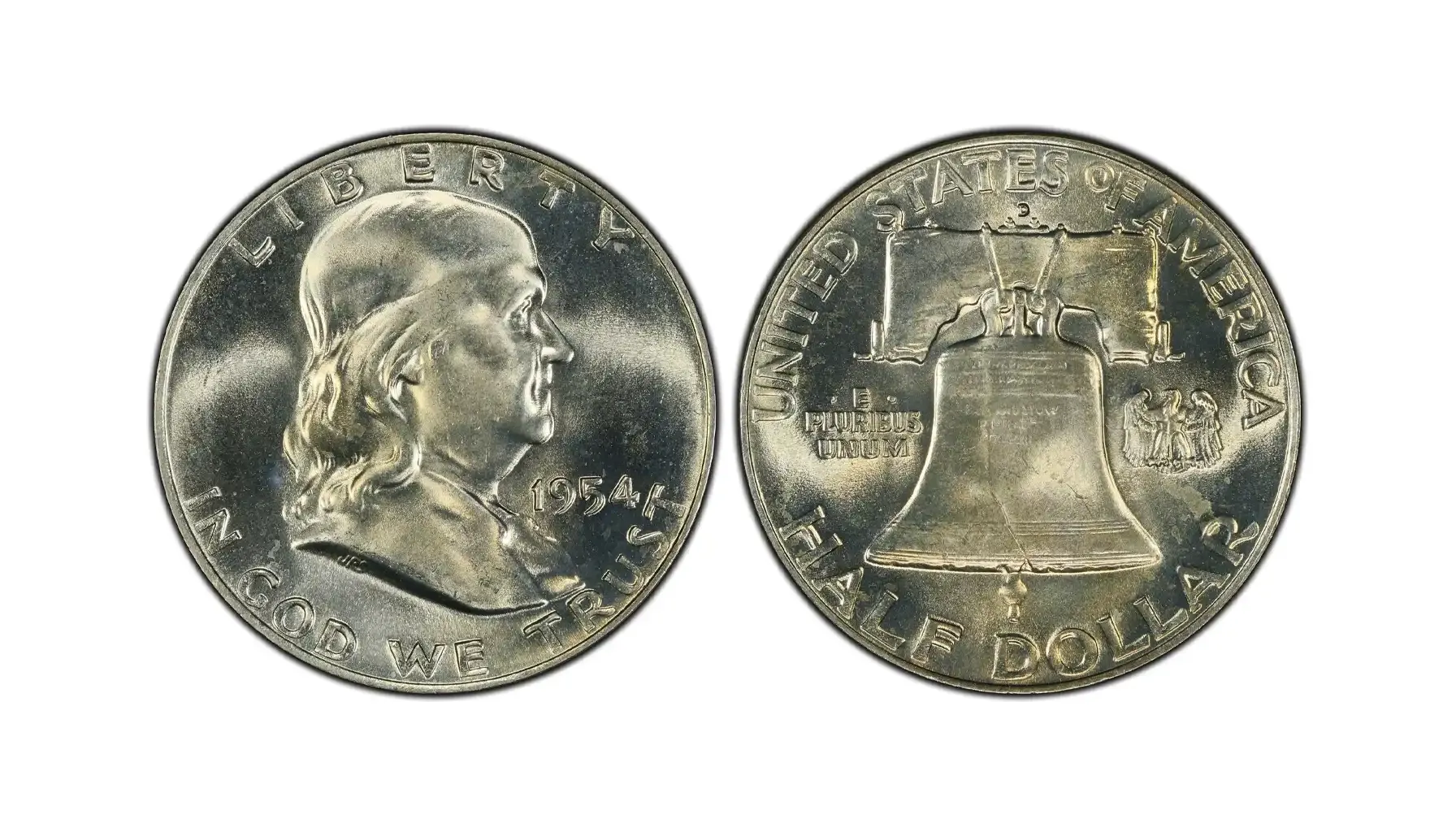
Produced by: Denver Mint
Mintage: 25,445,580
Designations: MS, FBL
Auction Record: $21,275 for MS67
When it comes to a more extensive production, one may definitely think of the Denver facility, which may boast the highest mintage of all 1954 circulation coins. Notwithstanding the fact that these are widely available, exceptional uncirculated examples, particularly those with Full Bell Lines, are still appreciated for their rarity relative to the sheer volume of coins produced.
1954-S 50C
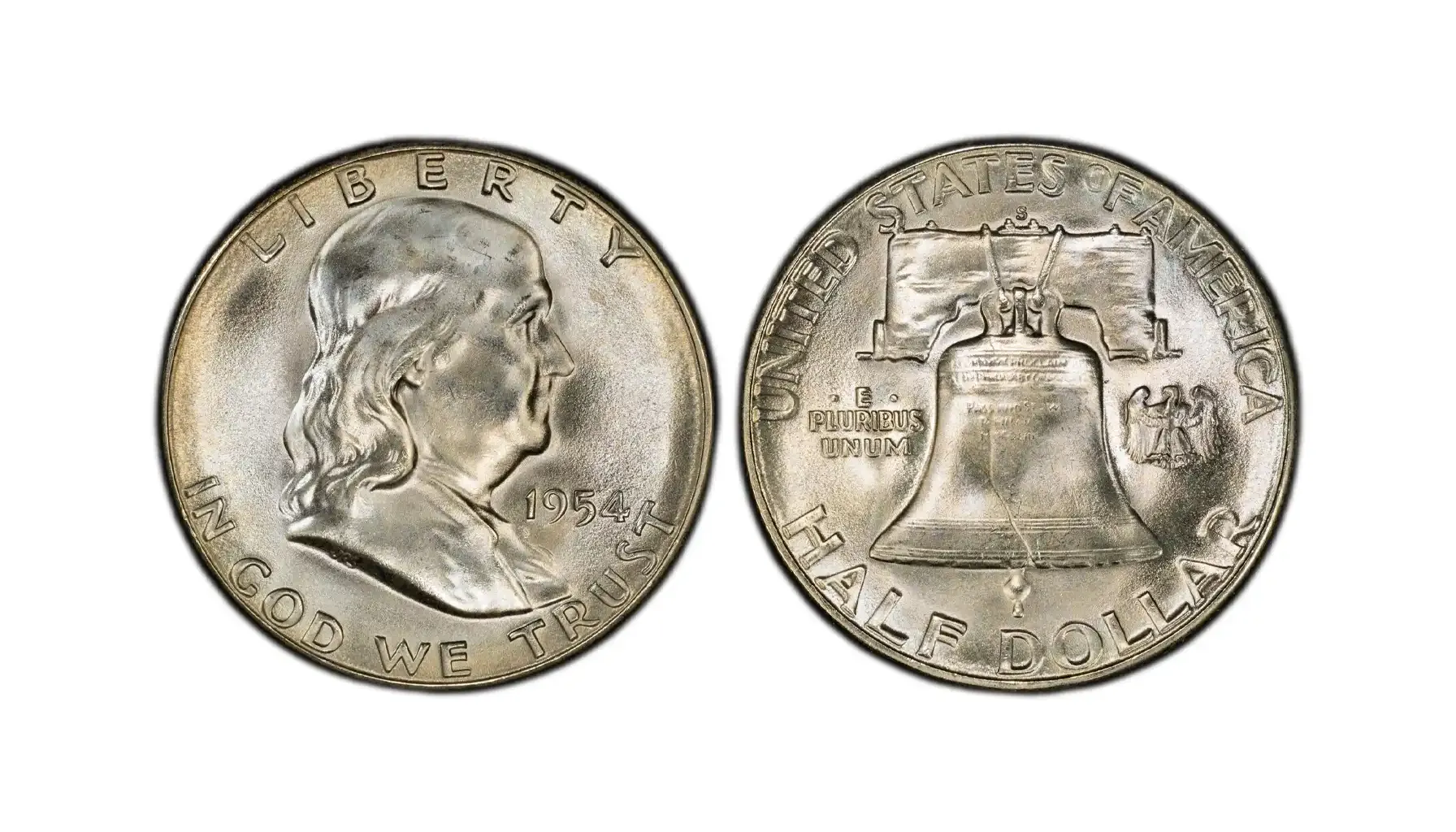
Produced by: San Francisco Mint
Mintage: 4,993,400
Designations: MS, FBL
Auction Record: $13,853 for MS67FL
Finally, we have come to the scarcest circulation strike (do not confuse with the proofs), which is decently priced and never neglected by collectors. The 1954 S Franklin half dollar is not the loudest representative of the coin line, but its values are still high enough to be considered precious.
1954 50C Proof
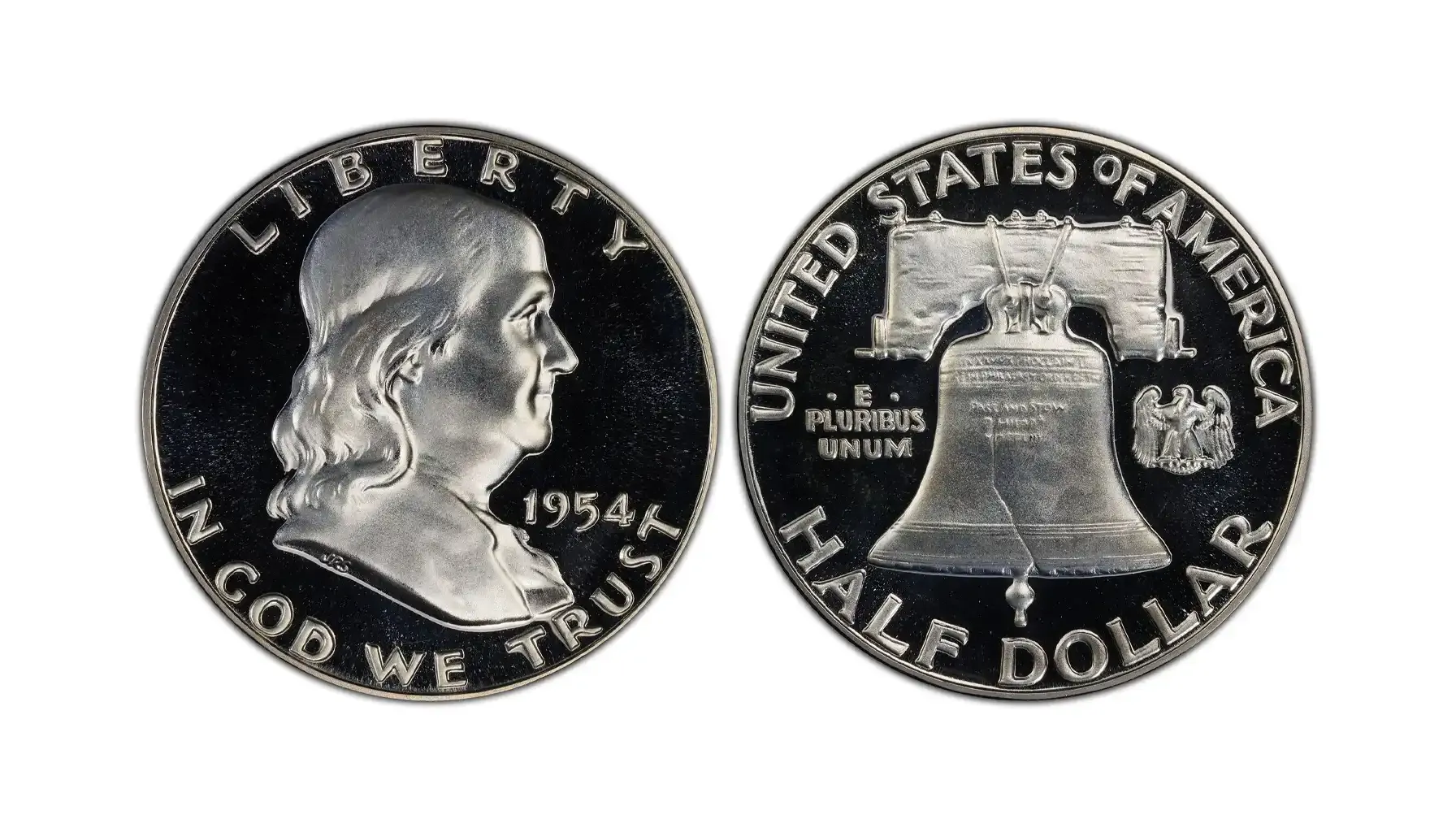
Produced by: Philadelphia Mint
Mintage: 233,300
Designations: PR, CAM, DCAM
Auction Record: $23,000 for PR68
The proofs have always been seen as the most valuable pieces in the series, but the truth is that the initial preservation does not allow them to grow in value like their Philadelphian counterparts do. Anyway, their scarcity, coupled with the meticulous production process used for proofs, ensures that high-grade examples can achieve remarkable auction results, often far exceeding circulation strikes of the same year.
1954 Franklin Half Dollar Value by Condition & Mint Mark
The 1954 half dollar coin value is not a stable variable, for it is usually comprised of several factors, some of which are innate and cannot change on their own. These include:
Condition/Grade (the higher, the better; Good (G) to Mint State (MS), with additional distinctions such as Full Bell Lines (FBL))
Mint Mark (no mint mark for Philadelphia, "D" for Denver, and "S" for San Francisco)
Strike Type (roof coins (PR, CAM, DCAM) are generally rarer and more valuable, though it is not a common rule)
Errors & Varieties (unusual strikes, doubling, or other mint errors)
Market Demand & Silver Value (fluctuating silver prices and collector interest as of now)
Let us focus on the grading distinctions and take into consideration the condition of a coin. So, what is a 1954 half dollar worth?
Coin | Grade | Typical Value Range |
1954 (P) 50C | G–VG | $10 – $15 |
F–VF | $16 – $22 | |
EF–AU | $23 – $40 | |
MS60–MS63 | $45 – $70 | |
MS64–MS65 | $75 – $120 | |
MS66+ FBL | $200 – $500+ | |
1954-D 50C | G–VG | $10 – $15 |
F–VF | $16 – $22 | |
EF–AU | $23 – $45 | |
MS60–MS63 | $50 – $80 | |
MS64–MS65 | $90 – $150 | |
MS66+ FBL | $250 – $600+ | |
1954-S 50C | G–VG | $12 – $18 |
F–VF | $19 – $28 | |
EF–AU | $30 – $50 | |
MS60–MS63 | $55 – $90 | |
MS64–MS65 | $100 – $160 | |
MS66+ FBL | $300 – $700+ | |
1954 (P) 50C Proof | PR60–PR63 | $250 – $500 |
PR64–PR65 | $550 – $1,200 | |
PR66–PR67 | $1,500 – $4,000+ | |
PR68+ | $15,000 – $23,000+ |
*Values are approximate and may fluctuate over time. For the most relevant data, please consult reputable numismatic auction platforms or coin grading services like NGC.
Rare Varieties & 1954 Half Dollar Errors
Curved Clip
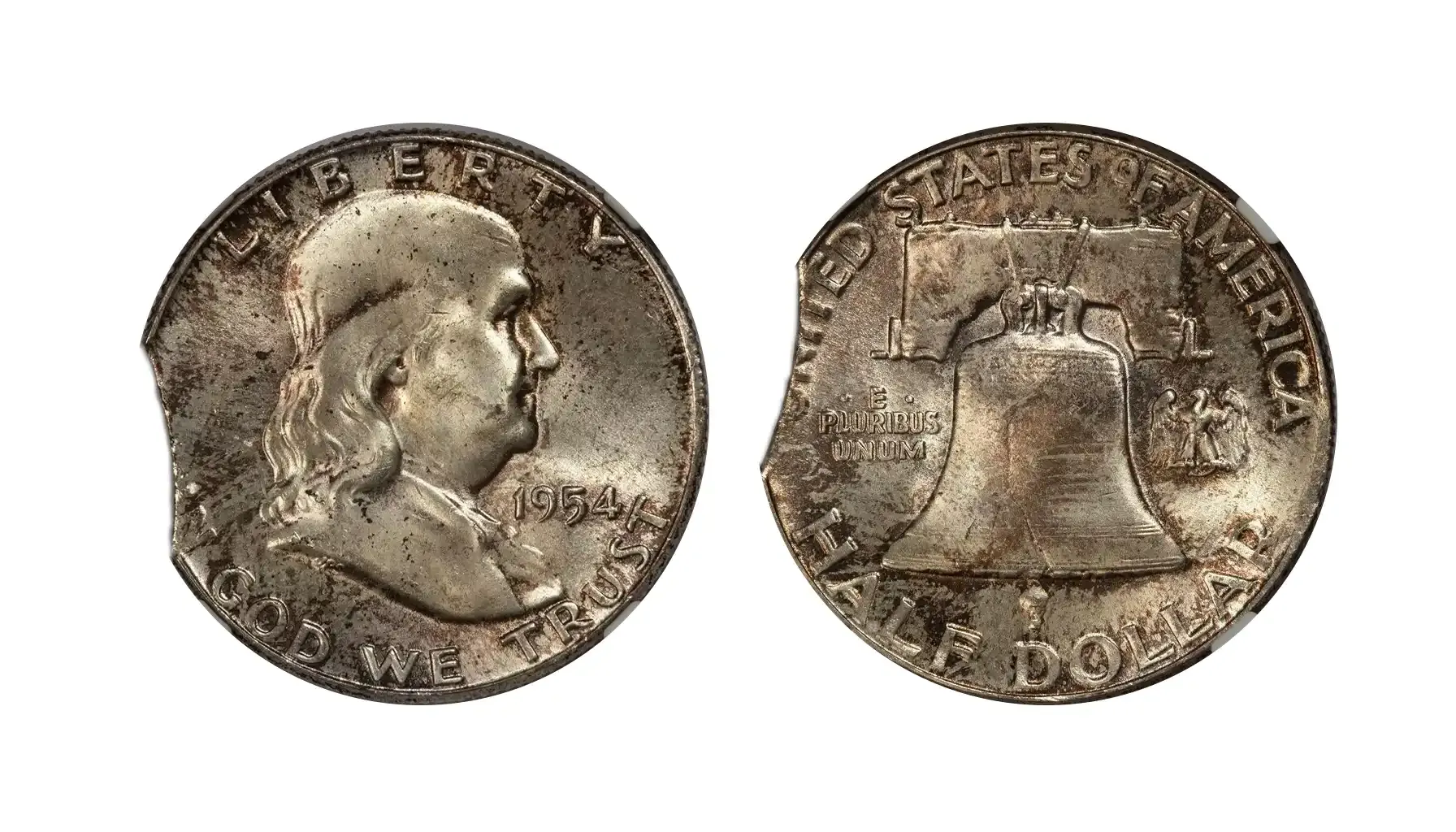
Estimated Value: $750
At times, the coin’s planchet may be improperly cut, resulting in smooth, curved segments missing from the edge. This is usually called a curved clip, a highly appreciated error, thanks to its visual appeal and overall scarcity.
Reverse Struck-Through
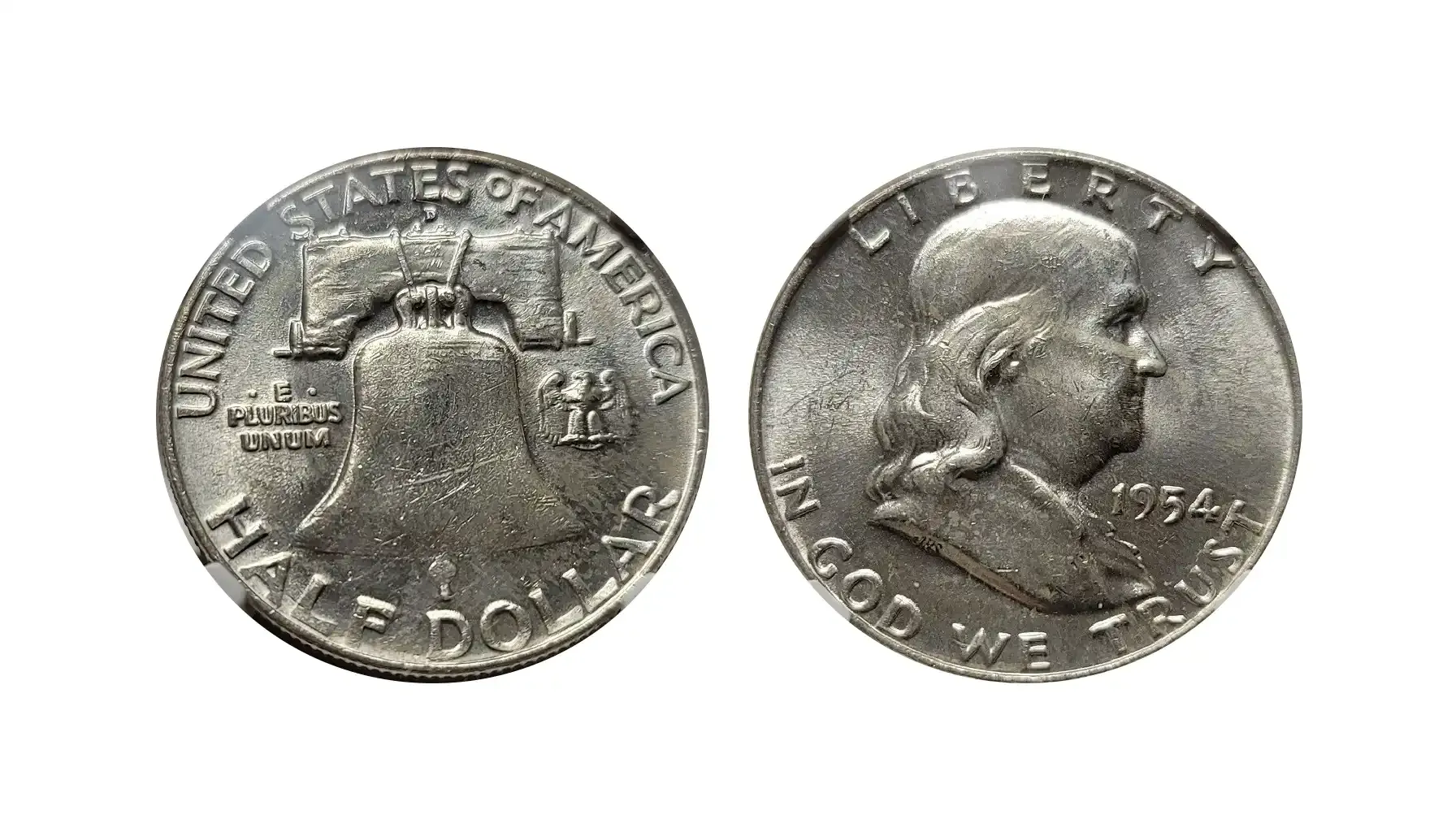
Estimated Value: $220
Some deviations, though, may not be obvious, but this is where their charm is hidden. The reverse struck-through errors usually happen when debris or foreign material lodged on the reverse die during striking creates a partially missing or distorted impression. Each sample is a unique creation, yet so as to see it, one needs a numismatist with patience in the first place.
Die Clash (“Bugs Bunny”)
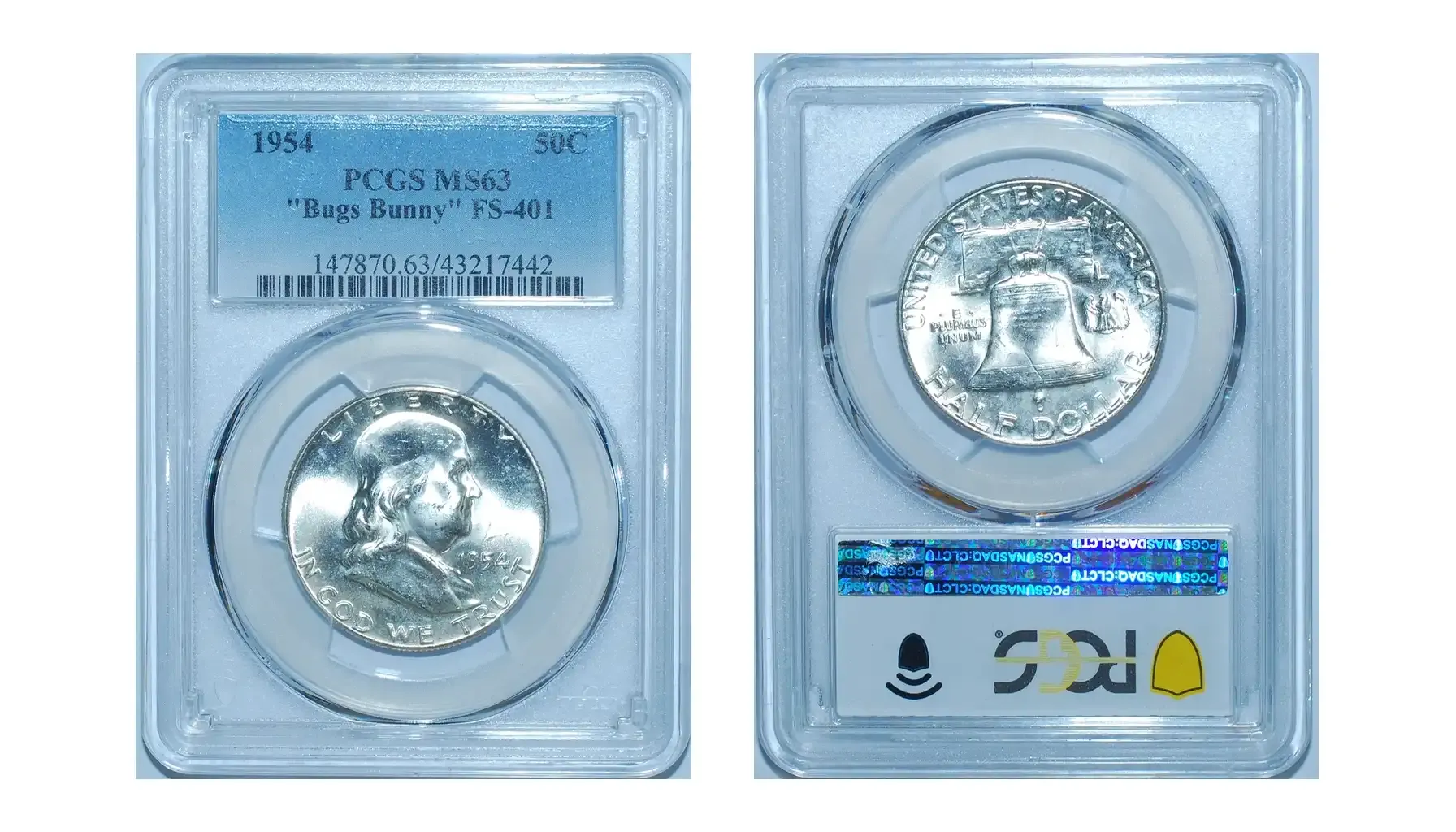
Estimated Value: $166
Among the most peculiar anomalies that one may explore is definitely the Bugs Bunny type. This die clash usually occurs when the obverse and reverse dies strike each other without a coin between them. The result is the amusing or cartoon-like distortions, earning nicknames like “Bugs Bunny”.
Extreme Brockage Crack
Estimated Value: $120
In this rare phenomenon, a previously struck coin adheres to the die and impresses onto a new planchet, with a mirror-like reverse image being the outcome of this act. When combined with a planchet crack, the result is an exceptionally unusual error that is both dramatic and quite good to look for.
Every coin in the collection is a blessing: preserve them and connect with the hands, minds, and stories to tell.

 Facebook
  X (Twitter)
  Pinterest
  LinkedIn