Contents:
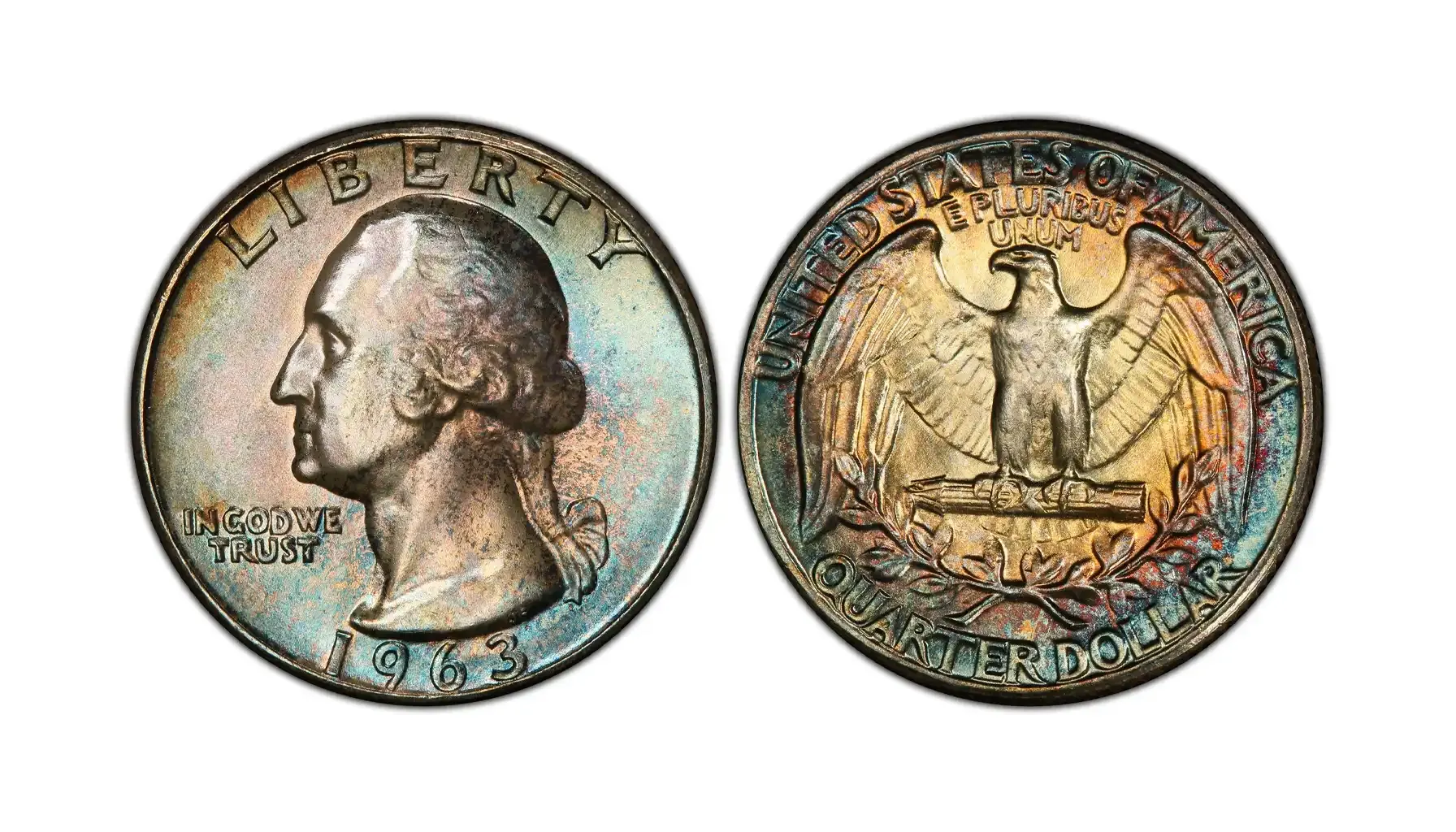
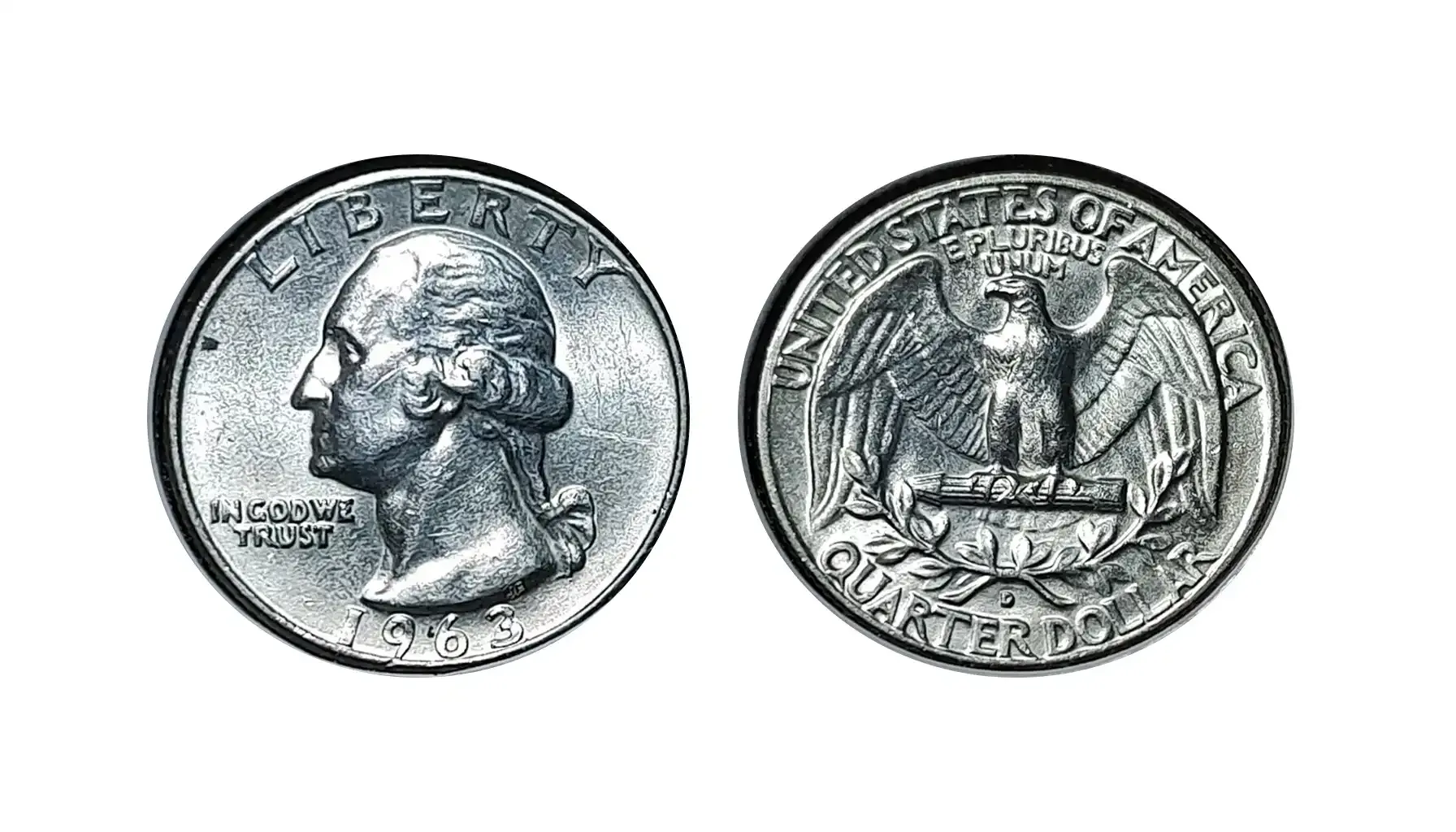
A 1963 quarter is a Washington coin minted in the United States during the final years of silver coinage. It's a collectible coin both for its silver content and, in some cases, its condition or error varieties. But how much is a 1963 quarter worth?
In general, it’s a 25-cent coin struck in the U.S. between 1932 and 1964, when quarters were made of 90% silver and 10% copper. After 1964, quarters transitioned to a copper-nickel clad composition.
Coin ID Scanner team has prepared a research for you:
Feature | Details |
Denomination | 25 cents |
Year of Issue | 1963 |
Series | Washington Quarter |
Obverse Design | George Washington (by John Flanagan) |
Reverse Design | Heraldic eagle with arrows and olive branch |
1963 Quarter Silver Content | 90% Silver (~0.1808 troy oz), 10% Copper |
Weight | 6.25 grams |
Diameter | 24.3 mm |
Thickness | 1.75 mm |
Edge | Reeded (119 reeds) |
Mint Marks | None (Philadelphia), D (Denver) |
Mint Mark Location | Reverse, below wreath, above "R" in "QUARTER" |
Mintage (Philadelphia) | 74,316,000 |
Mintage (Denver) | 135,288,184 |
Mintage (Proof - Philadelphia) | 3,075,645 |
Strike Type | Business Strike, Proof |
Historical Background
Is a 1963 quarter silver? It was minted during the final stretch of the silver coin era in the United States, just two years before the Coinage Act of 1965 eliminated silver from circulating dimes and quarters.
At the time, the U.S. Mint was still producing coins with intrinsic metal value. This means the silver content of a quarter (0.1808 troy ounces) was worth nearly as much as, or more than, its face value during times of rising silver prices.
The Washington quarter itself had been introduced in 1932 to commemorate the 200th anniversary of George Washington’s birth. Originally intended as a one-year commemorative issue, its design by sculptor John Flanagan proved popular and was adopted as the standard quarter design for decades. By 1963, this design had become a familiar part of daily life in American commerce.
The early 1960s were a period of increasing demand for coinage, fueled by population growth and expanding economic activity. As a result, mintage numbers for coins like those described were quite high, especially from the Denver Mint (that’s why the 1963 quarter no mint mark value is higher).
Although the design remained unchanged, production quality varied, and collectors today often distinguish between business strikes and proof coins, which were produced with higher precision and detail at the Philadelphia Mint. The 1963 proof set was one of the last with silver coins.
But is a 1963 quarter worth anything? You’ll find out later in this article.
Mint Marks
It may have one of two mint mark possibilities, depending on where it was struck:
1. Philadelphia Mint — No Mint Mark
Coins struck in Philadelphia in 1963 do not carry a mint mark.
This includes both business strikes and proof coins.
Philadelphia quarters from this year are identified solely by the absence of a mint mark.
2. Denver Mint — “D” Mint Mark
Quarters struck in Denver feature a “D” mint mark. Where is the mint mark on a 1963 quarter? It’s located on the reverse side of the coin. You can find it just beneath the wreath, above the “R” in “QUARTER.”
Quick Visual Check:
Flip the coin to the reverse.
Look above the “R” in the word “QUARTER.”
If there’s a small “D”, it's from Denver, i.e. 1963 quarter D mint mark.
If there's no mark, it’s from Philadelphia, i.e. 1963 no mint mark quarter.
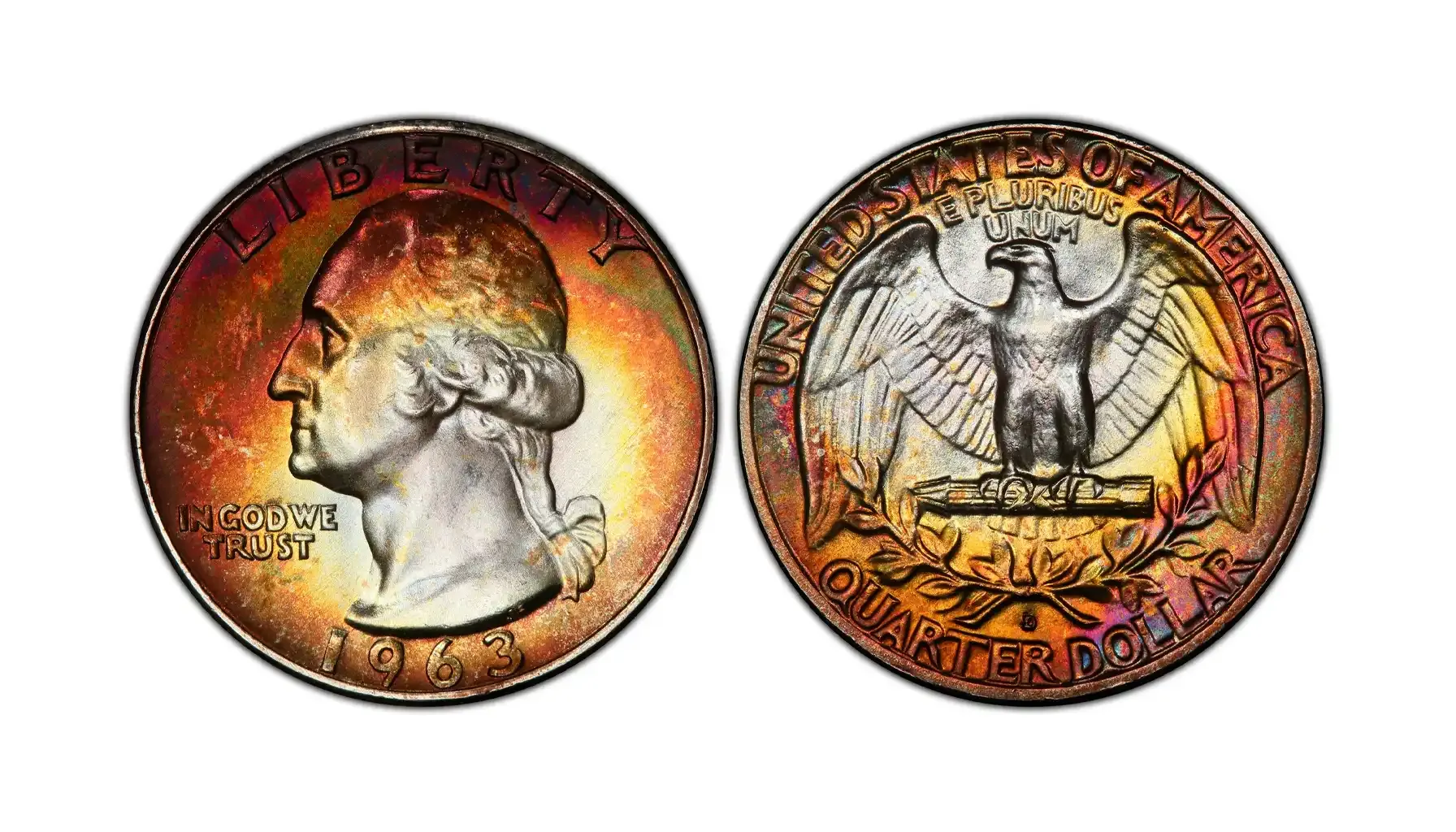
San Francisco did not mint circulation quarters in 1963, so no “S” mint mark exists for business strikes that year.
1963 Quarter Value Today
Grade | 1963 quarter value no mint mark | 1963 D quarter value | 1963 Proof quarter value |
Poor to Good (P–G4) | $4.50 | $4.50 | Not applicable |
Very Good (VG8) | $5.00 | $5.00 | Not applicable |
Fine (F12) | $5.50 | $5.50 | Not applicable |
Very Fine (VF20) | $6.00 | $6.00 | Not applicable |
Extremely Fine (XF40) | $6.75 | $6.75 | Not applicable |
About Uncirculated (AU50) | $7.50 | $7.50 | Not applicable |
Mint State 60 (MS60) | $10.00 | $11.00 | — |
Mint State 63 (MS63) | $14.00 | $15.00 | — |
Mint State 65 (MS65) | $25.00 | $30.00 | — |
Mint State 66 (MS66) | $45.00–$65.00 | $60.00–$90.00 | — |
$125.00–$175.00 | $200.00–$300.00 | — | |
Proof (PR60–PR63) | — | — | $12.00–$18.00 |
Proof (PR64–PR65) | — | — | $20.00–$35.00 |
Proof (PR66–PR67) | — | — | $40.00–$80.00 |
Proof (PR68) | — | — | $100.00–$150.00 |
Proof Cameo (PR66 CAM) | — | — | $85.00–$150.00 |
Proof Deep Cameo (PR67 DCAM) | — | — | $200.00–$400.00+ |
Disclaimer: So, how much is a 1963 silver quarter worth? The prices may vary due to different market trends.
All circulated coins are valued above face value due to silver content (0.1808 troy oz per coin).
Proof coins were never intended for circulation and have mirror-like fields with frosted details.
MS66 and higher require third-party certification (e.g., PCGS, NGC) to fetch top prices.
Cameo (CAM) and Deep Cameo (DCAM) designations apply only to proofs and have a higher 1963 silver quarter value.
1963 Quarter Error List
1. Doubled Die Obverse (DDO)
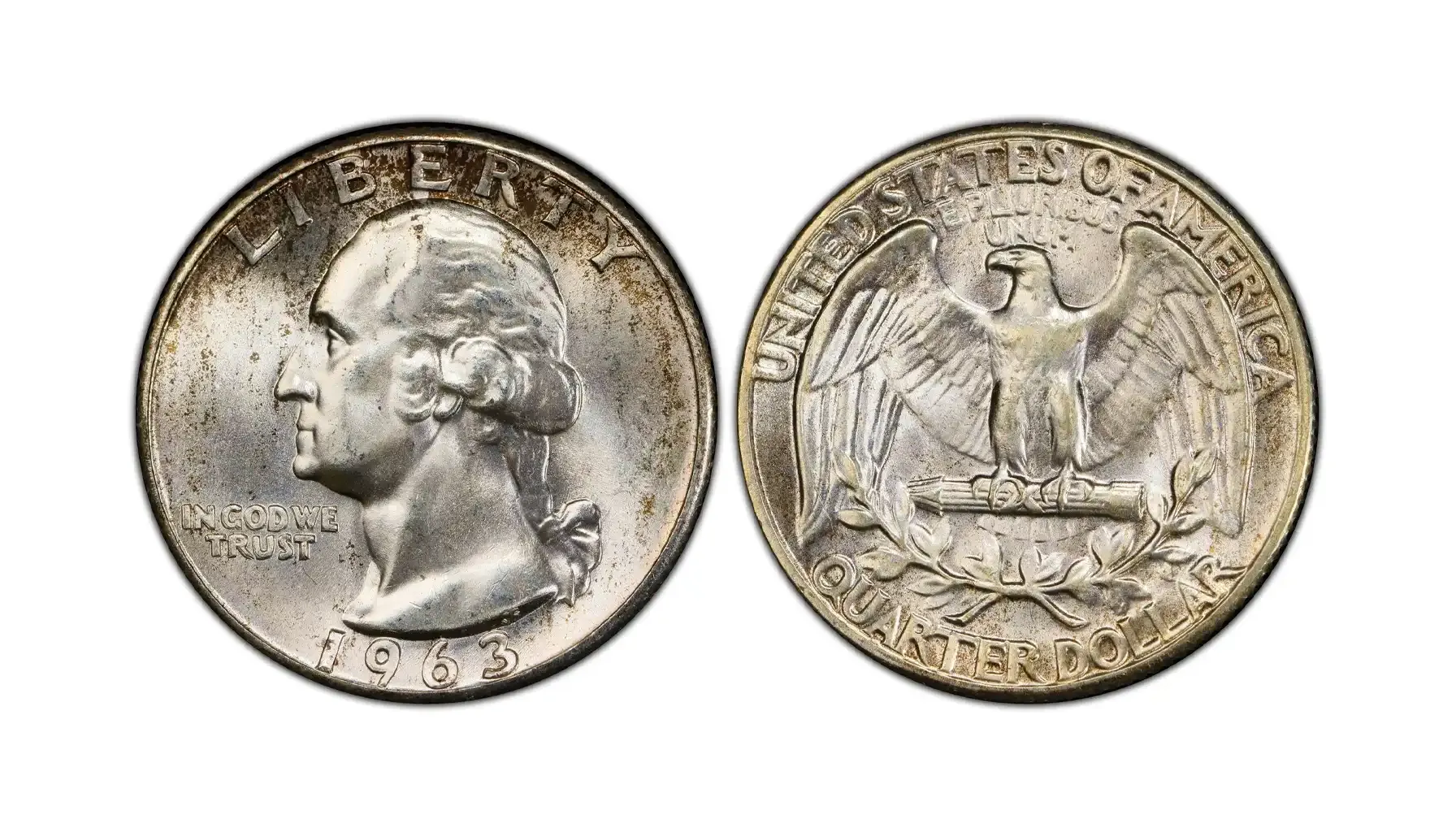
This error occurs when the coin die is misaligned during hubbing. This creates visible doubling on the front.
There will be doubling in “LIBERTY”, “IN GOD WE TRUST”, or the date “1963”, as well as extra thickness in letters or numbers.
Rarity: Rare, but known examples exist
Value of 1963 quarter with this error:
XF40: $75–$125
MS63: $200–$400
MS65+: $600+
2. Repunched Mint Mark (RPM) — 1963-D only
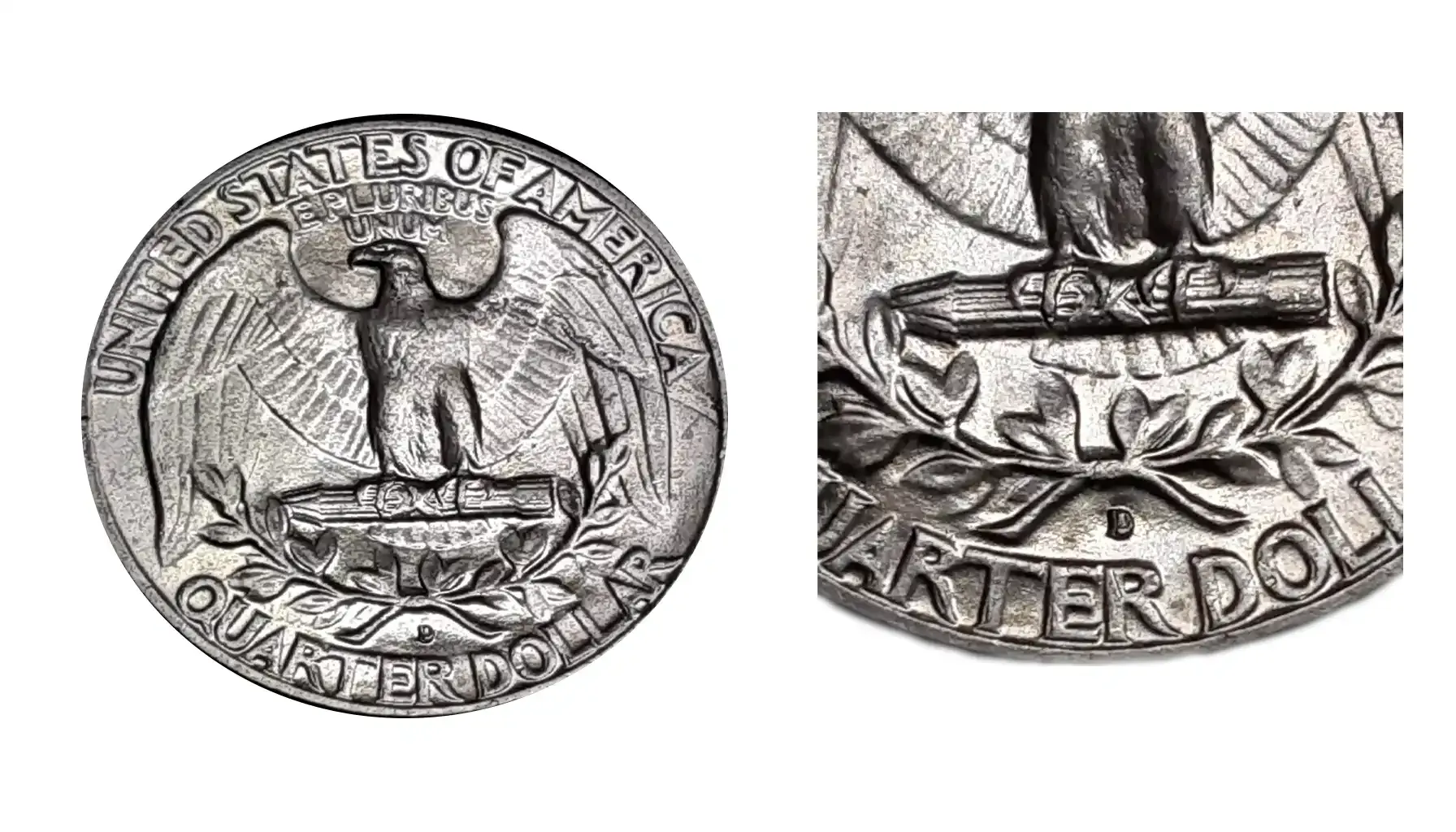
It occurs when the Denver “D” mint mark was punched more than once in different positions. You’ll find a shadow D or two overlapping Ds. It may appear northeast or southwest of the main mint mark
Rarity: Moderately rare; several varieties known (especially RPM-001)
1963-D quarter value in this case:
VF20: $20–$30
MS63: $50–$75
MS65: $100+
3. Off-Center Strike

The coin is misaligned when struck, resulting in part of the design missing.
Design will be not centered; date must still be visible to have value. The further off-center, the more valuable (up to ~60%).
Rarity: Uncommon
What is a 1963 quarter worth?
5–10% off: $15–$40
20–50% off: $75–$200+
4. Clipped Planchet
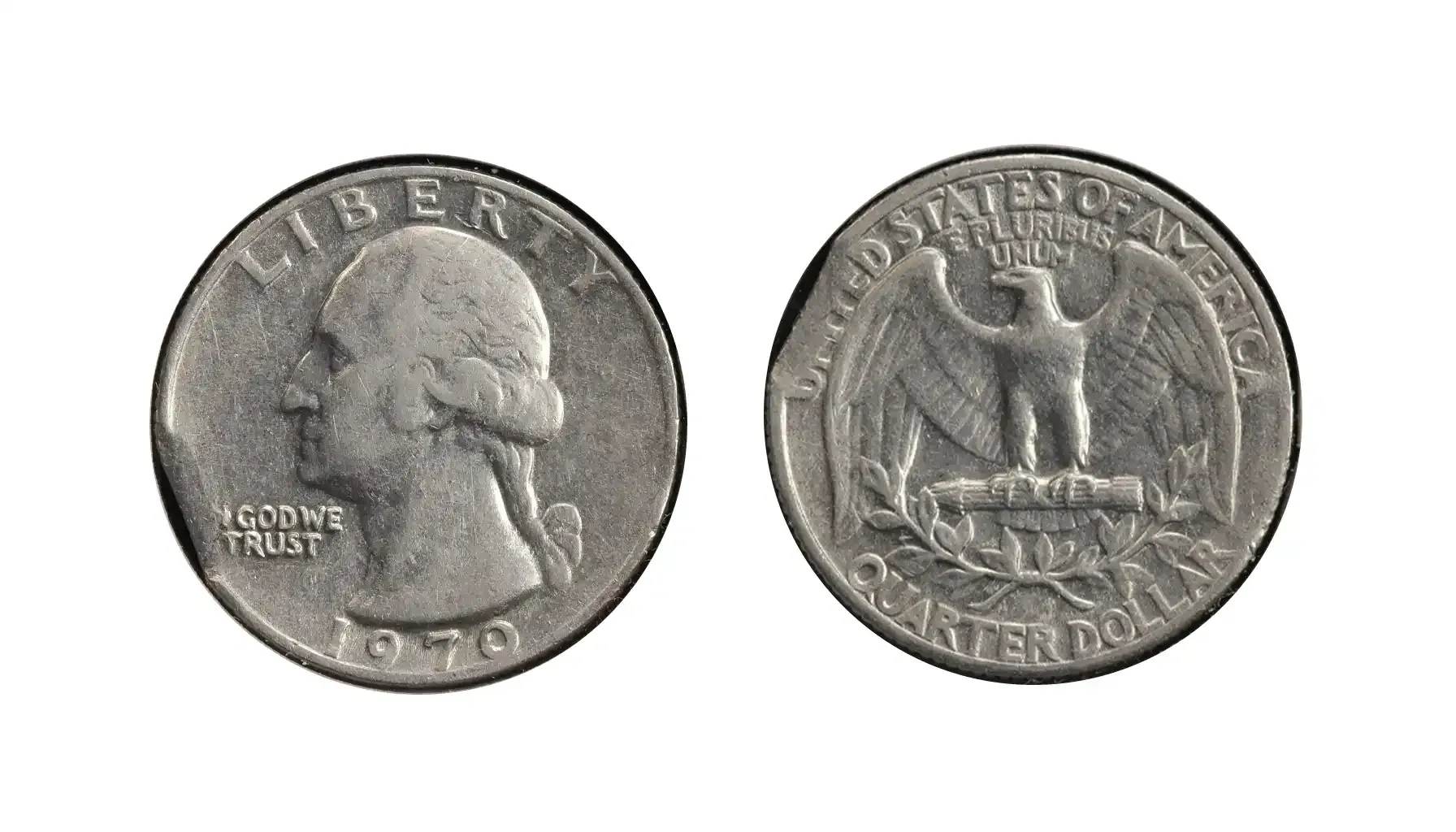
A portion of the coin is missing due to a blank (planchet) being improperly punched.
A curved or straight “bite” missing from the edge. Blades must be clean, not jagged or damaged (damage = no value).
Rarity: Moderately rare
1963 Washington quarter value:
Small clip: $25–$50
Large clip: $75–$150
5. Die Cracks & Cuds
Caused by a worn or damaged die.There will be raised, vein-like lines (die cracks), a raised blob of metal on the rim or design edge (cud).
Rarity: Varies
How much is a quarter from 1963 worth?
Die cracks: $10–$40
Small cud: $30–$75
Large cud: $100–$200+
6. Struck Through Errors

Debris or objects interfere during striking, leaving an impression. Look for thin lines, fabric patterns or recessed areas on the surface. In general, it may look like scratches but are part of the strike.
Rarity: Scarce but not unique
What is a 1963 silver quarter worth in this case? $25–$100+, depending on severity
Authentication
Many error coins can be subtle or faked. To ensure legitimacy:
Use a 10x loupe or microscope
Compare against verified examples in Cherry Picker’s Guide
Submit rare errors to PCGS or NGC for certification
or…
Use an app like Coin ID Scanner to snap a photo, identify your coin and get estimated values instantly.
Silver Melt Value
As of August 2025, the approximate silver melt value of a quarter 1963 issue can be calculated based on its silver content.
How much silver is in a 1963 quarter? 90% silver, 10% copper
Actual Silver Weight (ASW): 0.1808 troy ounces
Melt Value=Spot Price of Silver×0.1808
Let’s use a common 2025 spot price of $27.50 per troy ounce as an example:
Melt Value=27.50×0.1808≈$4.97
If you’re selling silver quarters for melt, remember that dealers pay 90–95% of melt 1963 quarter silver value. Numismatic (collector) value may exceed melt, especially for uncirculated or error coins.

Price Outlook
The value of a 1963 quarter has traditionally followed the silver spot price, and recent trends suggest this will continue—or even accelerate—in the short to medium term.
Silver has climbed approximately 30–32%, driven by industrial demand and supply constraints. Investors and analysts foresee this momentum carrying into the future:
Near-term (late 2025): Technical analysis points to a breakout above key resistance levels (around $38–$41/oz), with targets potentially approaching $50 if momentum sustains.
Mid-term (2026): Firm forecasts anticipate silver trading in the $34–$38 range.
Long-term (2025–27): Some bullish outlooks forecast silver hitting $49–$50 by 2025, and possibly reaching $75 or higher by 2027–2028.
But true collector worth may significantly exceed this—especially for uncirculated, certified or error-strike examples. As seen with rare high-grade 1963 D Washington quarter coins, auction records may be very high, though such examples are exceptional.
FAQs
Can I still find 1963 quarters in circulation today?
It's unlikely. Due to their silver content, most 1963 quarters were pulled from circulation after 1965 when the U.S. switched to clad coinage. Today, they’re mainly found in coin collections, dealer inventories or silver bullion lots.
How can I tell if my 1963 quarter is uncirculated?
Look for sharp details, no wear on high points like Washington’s hair or the eagle’s wings, and original mint luster. An uncirculated coin should show no signs of handling, such as scratches, dings, or finger oils. Use a magnifier and compare to grading photos if unsure.
What does a “Full Bell Lines” designation mean, and does it apply to 1963 quarters?
No — Full Bell Lines (FBL) refers to Franklin half dollars, not Washington quarters. For quarters, the equivalent strike designations are things like Full Head (FH) or Full Strike, but these are not commonly applied to this series by grading companies.

 Facebook
  X (Twitter)
  Pinterest
  LinkedIn