The 1959 Benjamin Franklin half dollar is part of the series issued from 1948 to 1963. The coin has the same characteristics as the rest of the Franklin run, but it still keeps the attention of collectors. Why? This dollar is one of the last U.S. coins struck in 90% silver for circulation.
How much is a 1959 half dollar worth? The answer depends on nuances, explained below. But if you need a quick answer, try the app to identify coins. It provides you with all necessary details: short history data, minting details, like silver or other compositions and even shows you recent market costs – all in one place for your convenience.
The Legacy of the 1959 Franklin Half Dollar
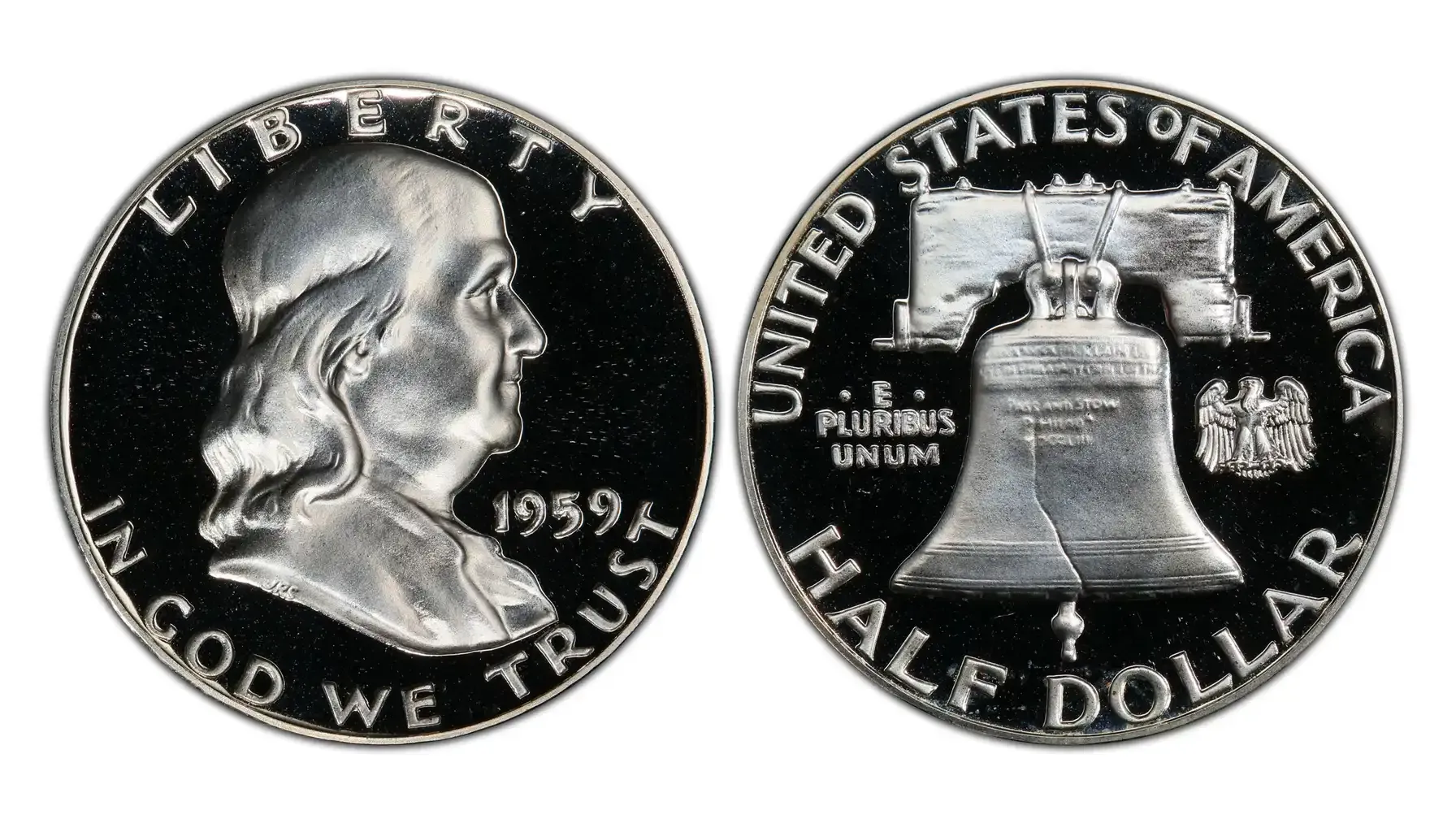
The 1959 Ben Franklin half dollar was struck in two versions: ordinary pieces for mass use and proof coins for special Proof Sets, which also included the Lincoln Cent, Jefferson Nickel, Roosevelt Dime, and Washington Quarter.
Two mints were involved in the minting process: Philadelphia and Denver. 1959 D Franklin half dollar pieces were issued for general use only. 1959 Franklin half dollars without mint mark (Philadelphia) were intended for circulation use (regular strike) and for collectors (proofs).
Mintage Numbers:
Philadelphia (no mint mark): 6,200,000
Denver (D): 13,053,750
Philadelphia Proof: 1,149,291
Coin Specifications
Feature | Details |
Metal | 90% silver, 10% copper |
Weight | 12.50 g |
Diameter | 30.6 mm |
Edge | Reeded |
Silver content | 0.36169 troy oz |
Designer | John R. Sinnock |
If you also collect U.S. silver coins, you may see other U.S. silver coins for comparison.
Design Details
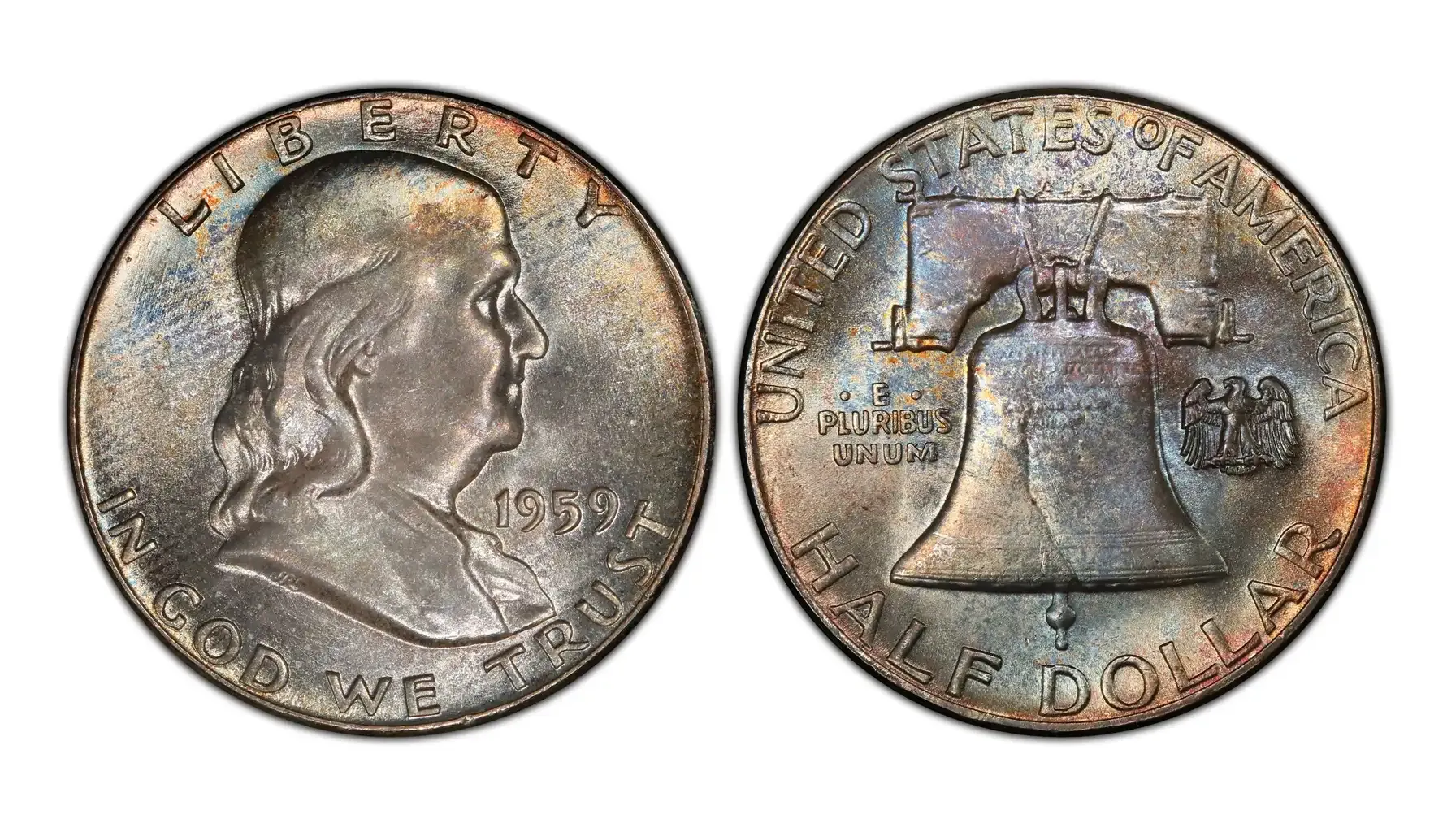
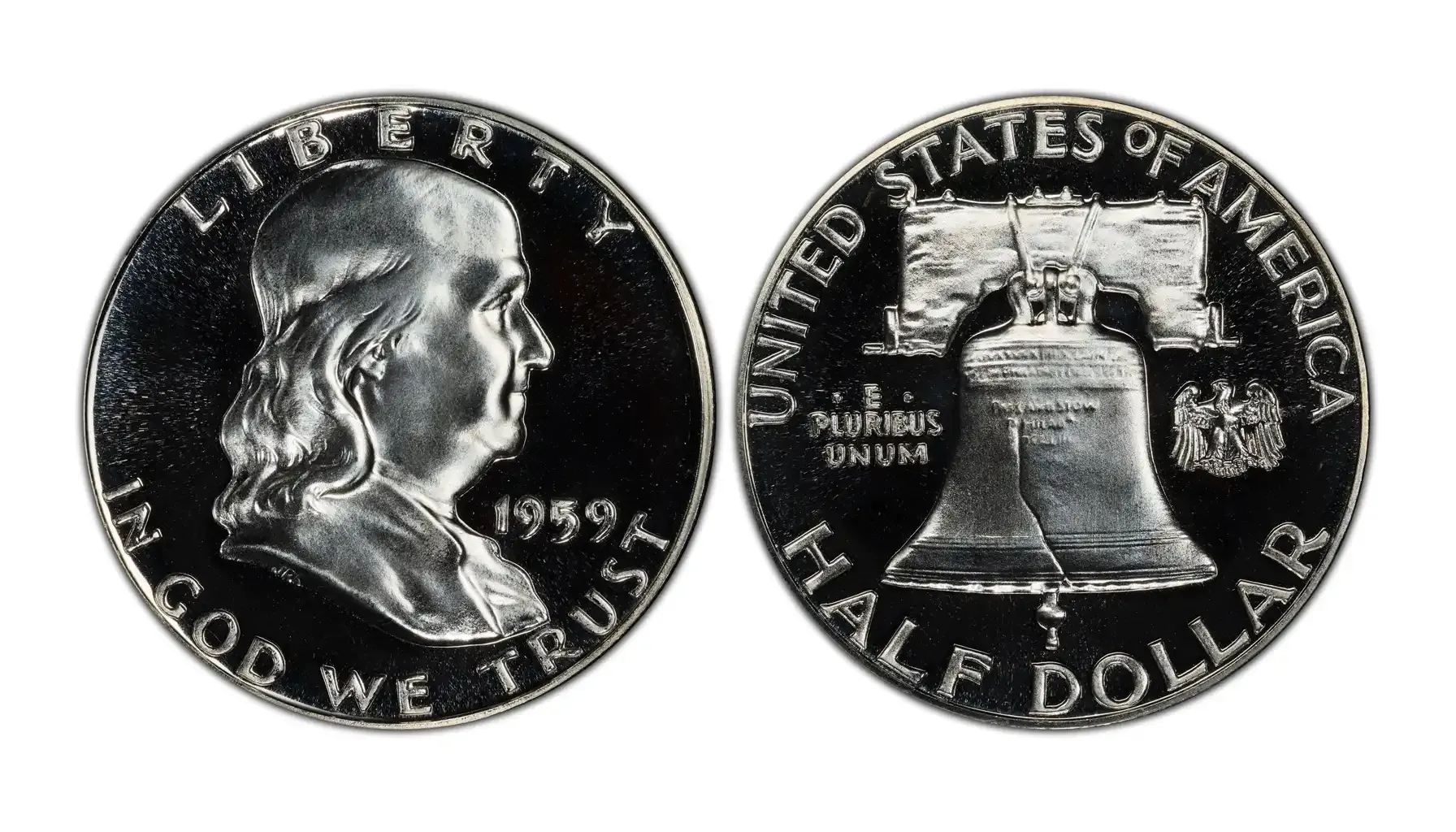
On the obverse of the piece is a Benjamin Franklin portrait, looking right. Inscriptions on the coin include: “LIBERTY”, date, “IN GOD WE TRUST”. The reverse shows the Liberty Bell at the center and a small eagle to the right, as required by U.S. law at the time. The mint mark (on Denver pieces) is located above the bell beam.
This design was unchanged for the whole series, i.e., date, coins version, its condition or possible minting errors are the main factors affecting 1959 Franklin half dollar value.
“At the time of issue, the design was criticized by many, perhaps because it is rather plain in comparison to the "classic" Liberty Walking style. However, in recent years Franklin half dollars have emerged as popular pieces, and today they are highly desired by numismatists.”
— Unnamed article “Franklin Half Dollar”
Stack’s Bowers Galleries, Coin Resource Center
1959 Half Dollar Value and What Determines It
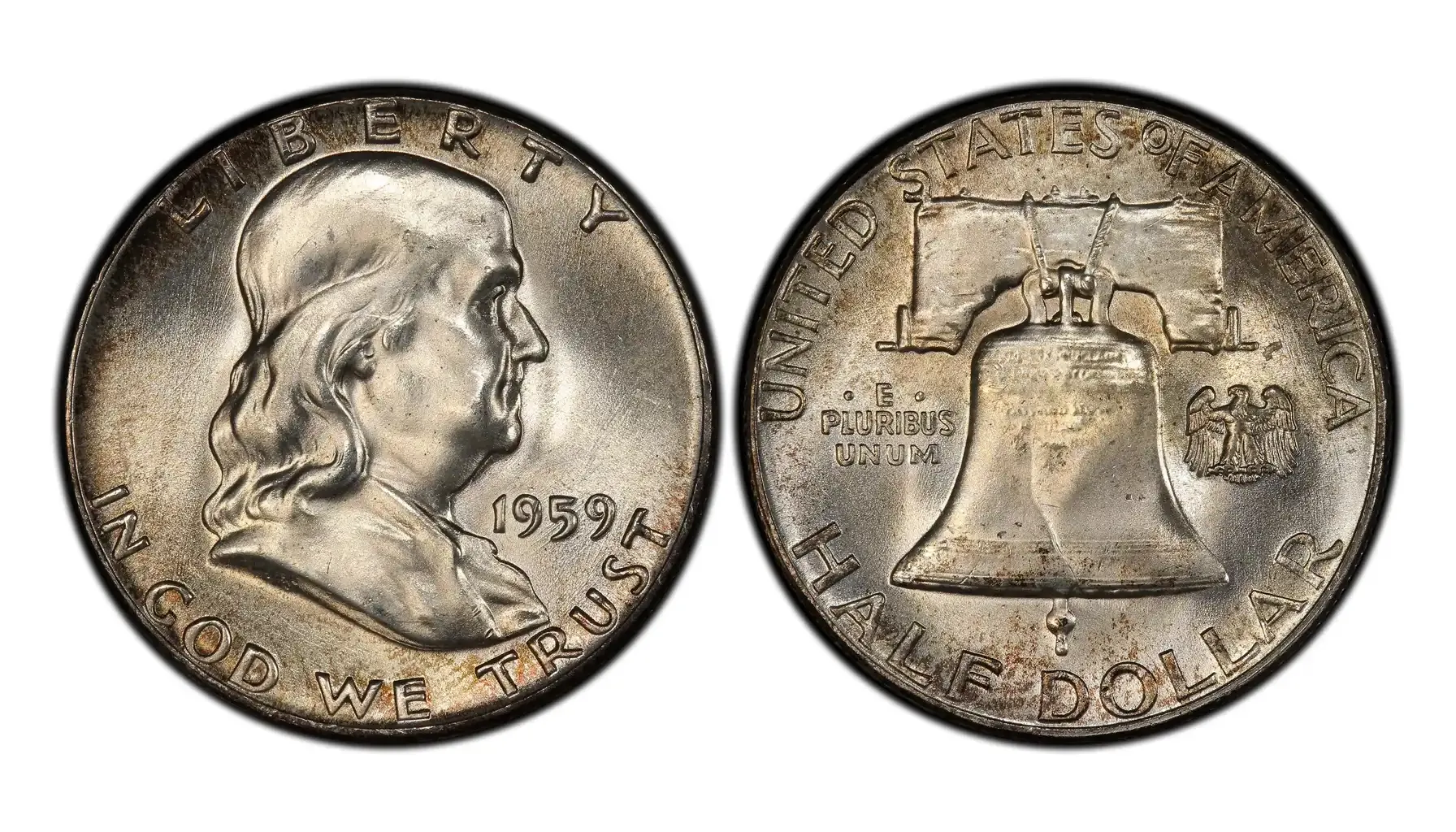
The market worth of 1959 pieces varies and depends on grade, strike type, surface quality, and eye appeal. If it comes to usual strikes, 1959 D half dollar value is usually above the Philadelphia issue in uncirculated condition. Proof coins sit in a separate category and follow their own price range. Please refer to the table to check current market costs.
Coin / Grade | F12 | XF40 | AU50 | MS63 | MS65 | PR65 |
1959 (P) | $12 – $15 | $16 – $20 | $22 – $30 | $32 – $45 | $75 – $110 | — |
1959-D | $12 – $16 | $17 – $22 | $24 – $34 | $35 – $50 | $80 – $125 | — |
1959 Proof (no mint mark) | — | — | — | — | — | $45 – $120 (up to $250 for Cameo) |
*Values are indicative and may vary by market. MS63–MS65 — range for regular copies without Full Bell Lines (FBL). FBL versions can cost 2–5 times more, especially in MS65+. Proof Cameo and Deep Cameo are rare — prices can reach $400–$1000+.
Common Varieties and Errors
Certain varieties and mint errors (not signs of wear) also influence any coins’ price, and the 1959 issue is not an exception. The most common errors on these 50c coins are:
“Bugs Bunny” clash – A die clash near Franklin’s mouth; looks like teeth or lines. Adds +$10–$40 in collectible condition.
Doubled Reverse (DDR) – doubling on reverse letters; price range is $40–$250+ depending on grade and strength.
Die cracks – thin raised lines from a worn die; costs are between +$2–$15, more for bold cracks.
Planchet defects – imperfect metal planchet with spots, missing details or rough texture. The value is about $5–$60+.
The 1959 Silver Half Dollar and Its Intrinsic Worth
1959 silver half dollar value also comes from its silver content. Each piece contains 90% silver with a total of 0.36169 troy oz of pure silver. This creates a melt value that can change with silver spot prices. Check silver uses and prices for a broader market view.
Collectors track two numbers: silver melt price and numismatic premium. Circulated examples often trade close to their melt value. Coins in high grades and proofs carry higher collector value.
Conclusion
This 50 cent piece is a simple and affordable option to add to the collection. It does not have strong investment potential: most coins sell close to their silver content. But the piece still holds value for its place in history, as one of the last 90% silver coins made for circulation.
For beginners, it is a good specimen to start a collection. It is easy to find and using this example the person can learn how grade, mint mark, and small varieties can affect price. This piece will not bring high returns, but it is a neat addition for anyone who is interested in U.S. silver issues. Many new collectors also look at the 1946 Walking Liberty 50 cent coins as the earlier series to compare design, features and collection potential.
If you have any doubts about values or coin details, the Coin ID Scanner app can help with identification, pieces’ details and recent price ranges. Users can even try a built-in helper for questions or store and manage all information about collection easily.

 Facebook
  X (Twitter)
  Pinterest
  LinkedIn