Contents:
The 50-cent piece has a distinct place in Australia’s coinage. Collectors value it for its varied designs, rare minting errors, and long history. From the first silver release to today’s commemorative issues, each coin carries a small part of the country’s story.
The History of the Australian 50 Cent Coin
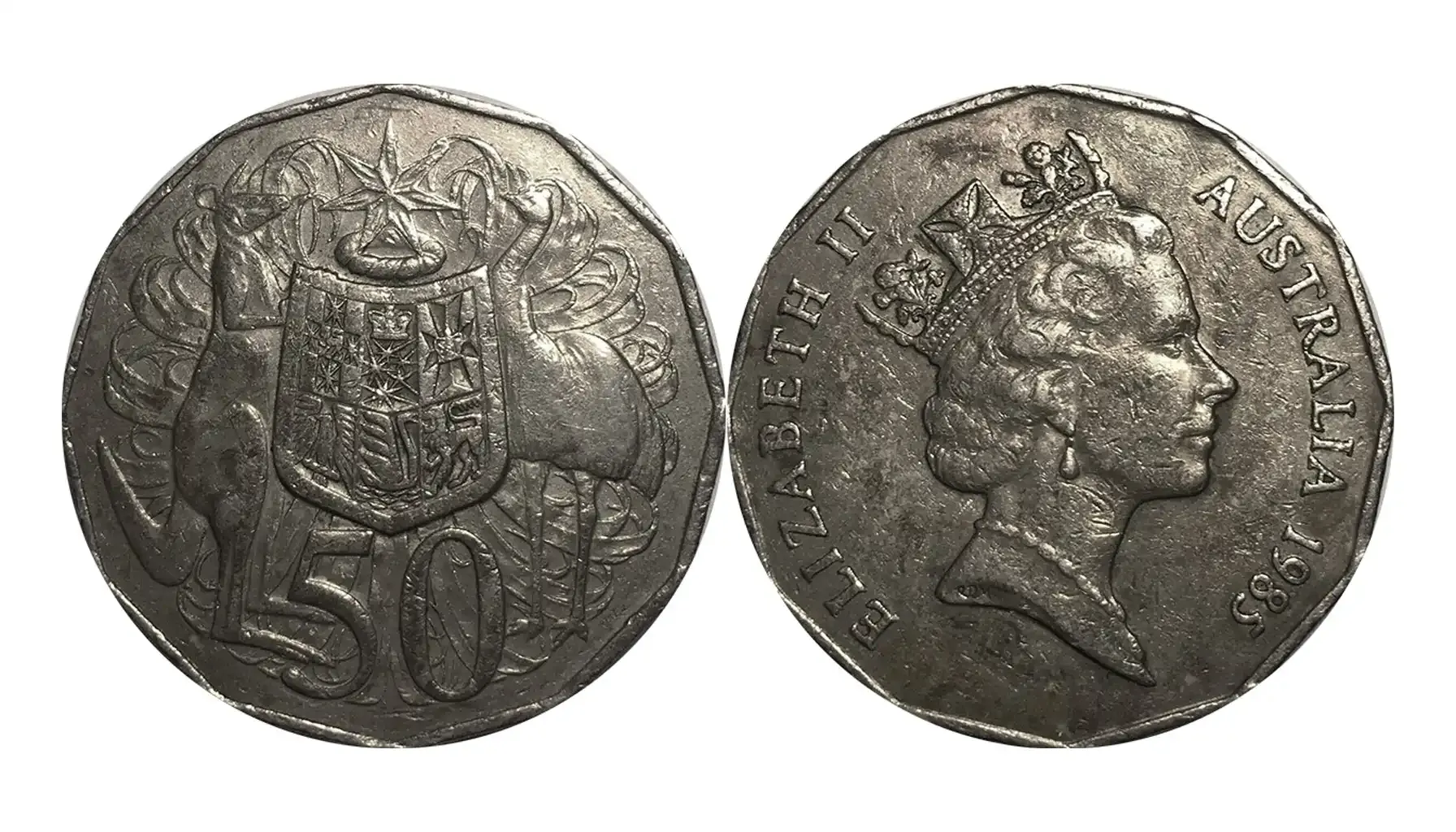
The first specimen was issued in 1966. It was made of 80% pure silver and had a round shape. Due to rising metal prices, production was quickly discontinued—the silver content made the specimen more expensive than its face value.
In 1969, a new twelve-sided version, the 50 cent coin Australia, was minted, made of a copper-nickel alloy. It proved more practical and wear-resistant.
The design changed over the years, with special issues marking significant events. These pieces can be found in the official Australian 50 cent coin list, which is regularly updated on the Royal Mint website.
The 1966 silver pieces are considered rare today—most were melted down due to the high cost of silver.
The Iconic Round 50 Cent Coin

This is the most famous variety. It has become iconic due to its short circulation period and high precious metal content.
Parameter | Value |
Year of Issue | 1966 |
Metal | 80% silver |
Weight | 13.28 g |
Diameter | 31.5 mm |
Mintage | 36.45 million |
Approximate Price | $10–20 |
The round 50 cent coin value in the market is determined by the condition of the surface and the preservation of its original luster. An undamaged specimen can be worth many times more than a regular circulation piece.
“Low mintages often lead to lower survival rates for older coins… ‘Lower mintage coins are also coveted by many collectors, which can help increase their numismatic value.’”
— from an article on coin-valuations by NASDAQ
Nasdaq Website
Rare Australian 50 Cent Coins and Notable Varieties
Among these pieces are unique specimens issued in limited editions or containing production errors. Some have become true numismatic legends.
Examples of rare varieties:
Double Bar (1979)
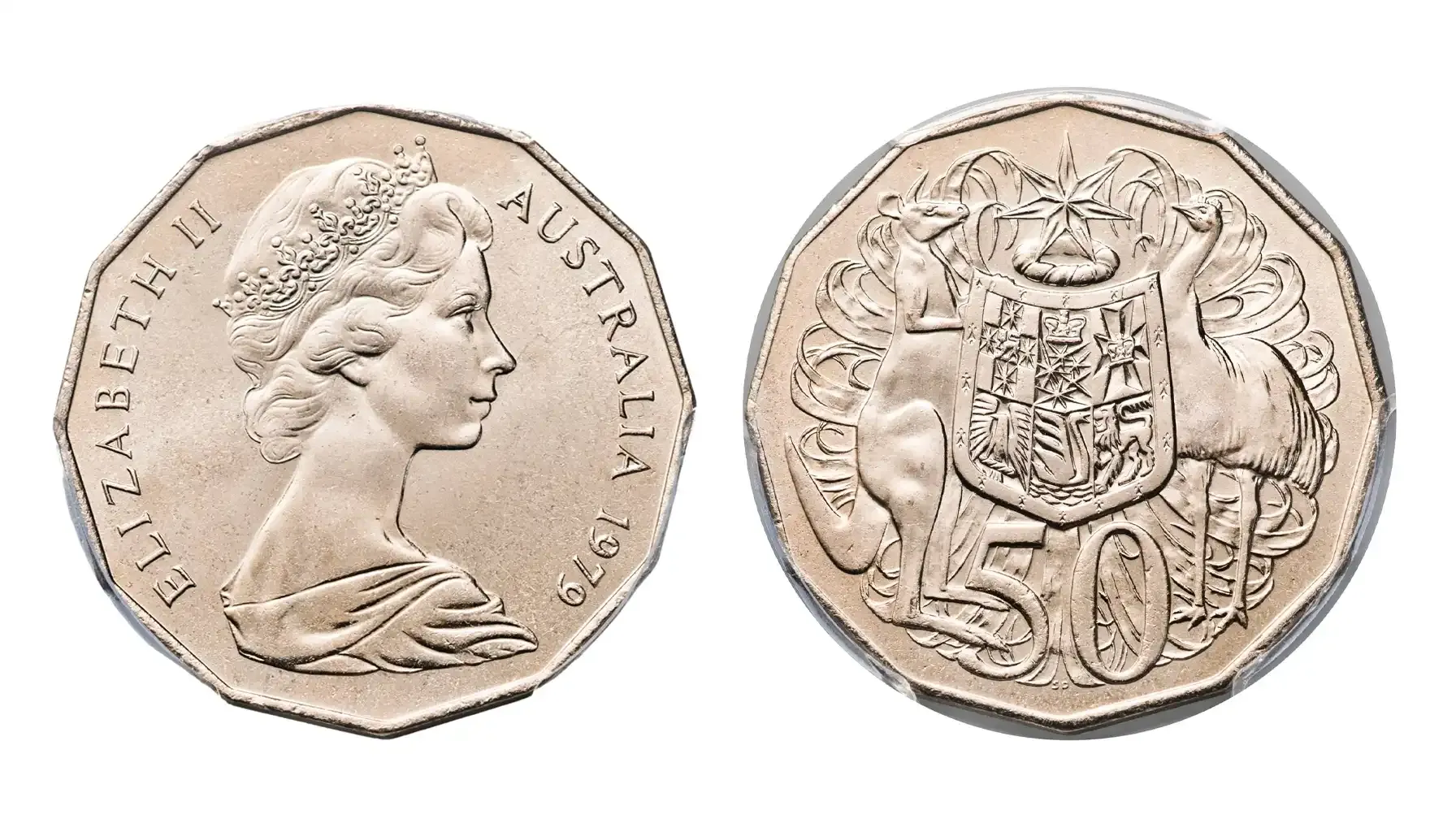
This release is distinguished by two short lines behind the kangaroo's mane, caused by die wear. This feature is easily visible under a magnifying glass. Collectors classify it as a rare 50 cent coins Australia and value it for its ease of identification—finding an authentic example is difficult.
Weary Dunlop 50 cent coin (1995)
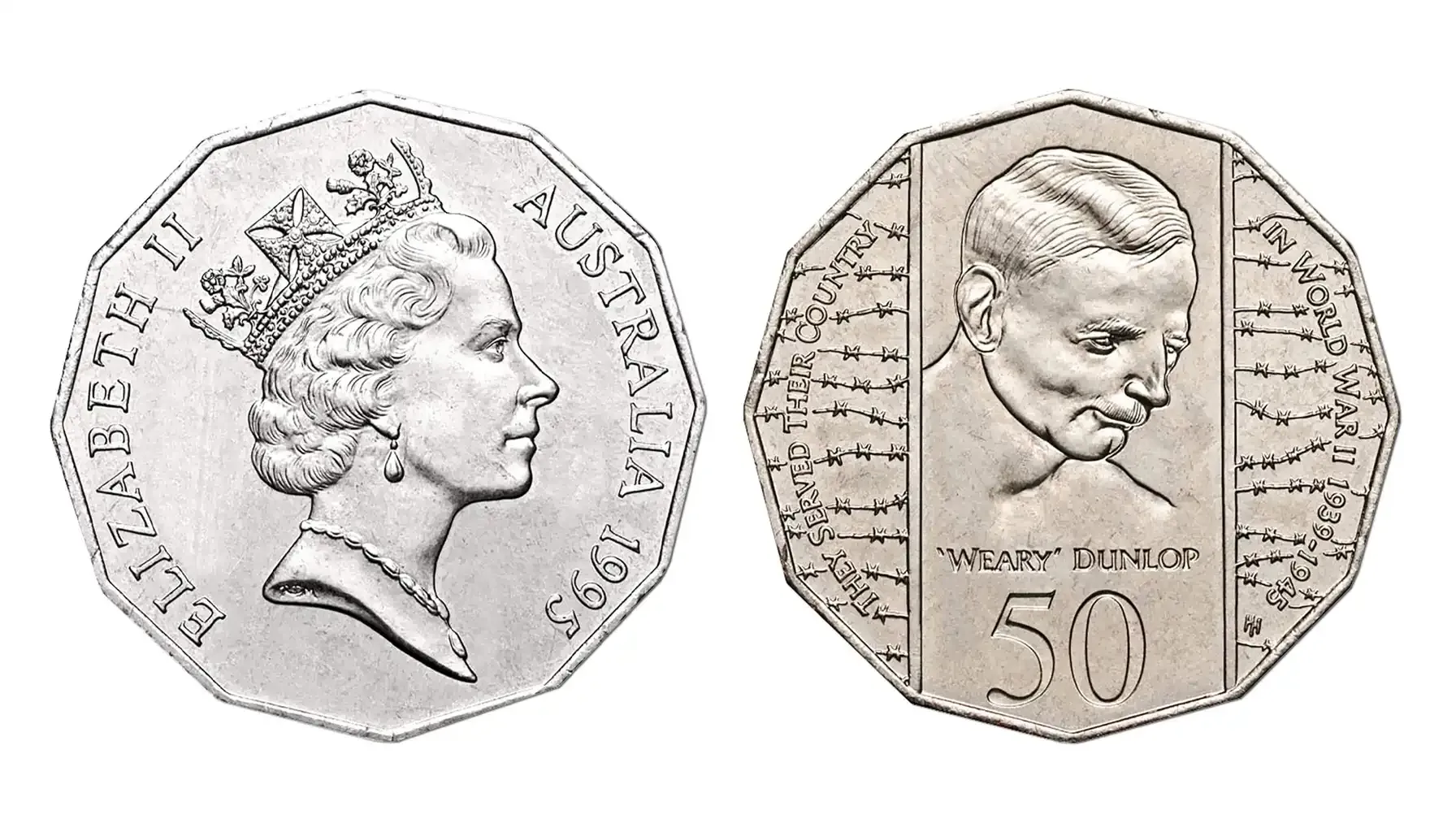
The issue is dedicated to Australian surgeon Edward Dunlop. The reverse features his portrait and a medical symbol, executed in high detail. The piece stands out among other commemorative issues due to its limited mintage.
Millennium Incuse Flag (2000)

A noticeable feature of this coin is the indented Australian flag. This is not a design feature, but rather the result of a misaligned die. Such specimens are rare, especially in circulation. Authenticity is determined by the smooth lines of the flag and the integrity of the margins.
Federation Series (2001)
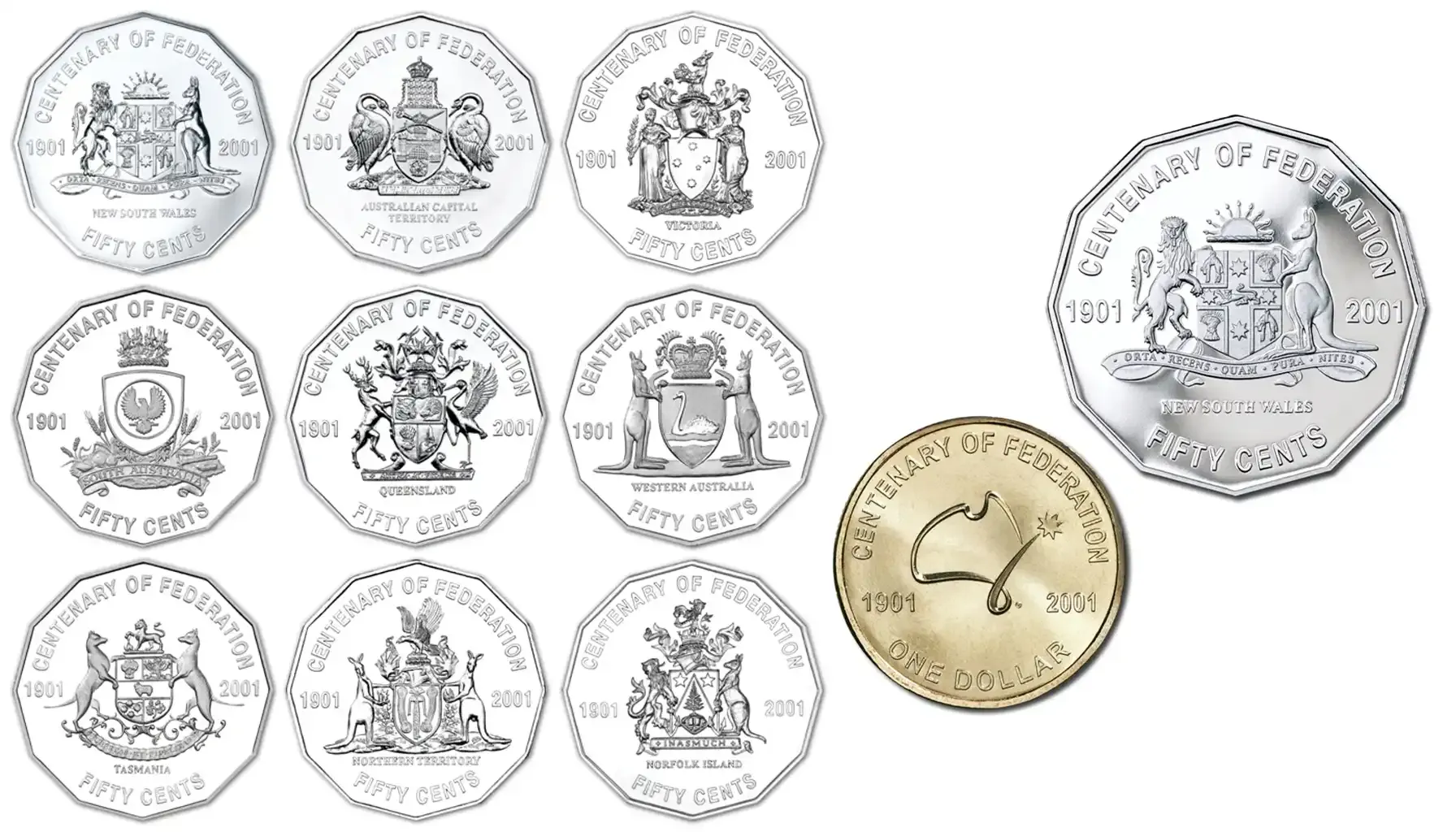
A series of nine coins, each representing the coat of arms of a separate state. They were issued to commemorate the centenary of Australia's Federation. Due to the small mintages and variety, these specimens are highly sought after by collectors.
Minting errors are a separate and very important category. Rare Australian 50 cent coin errors often turn an ordinary piece into a highly sought-after collector's item. Among the most well-known are:
Double strike – a second strike of the die, creating a "double" image.
Off-center strike – a misaligned design, in which part of the design extends beyond the edge.
Clipped planchet – a coin with a clipped or underfilled edge.
Die crack – a die crack leaving a noticeable line on the surface.
Rotated die error – a misalignment of the obverse and reverse axes, visible when the piece is rotated.
To determine how rare a coin is or whether it contains a minting error, collectors often use an Australian coin value checker online—a tool that shows an approximate market price and describes the features of a particular issue.
Most Valuable and Most Wanted 50 Cent Coins
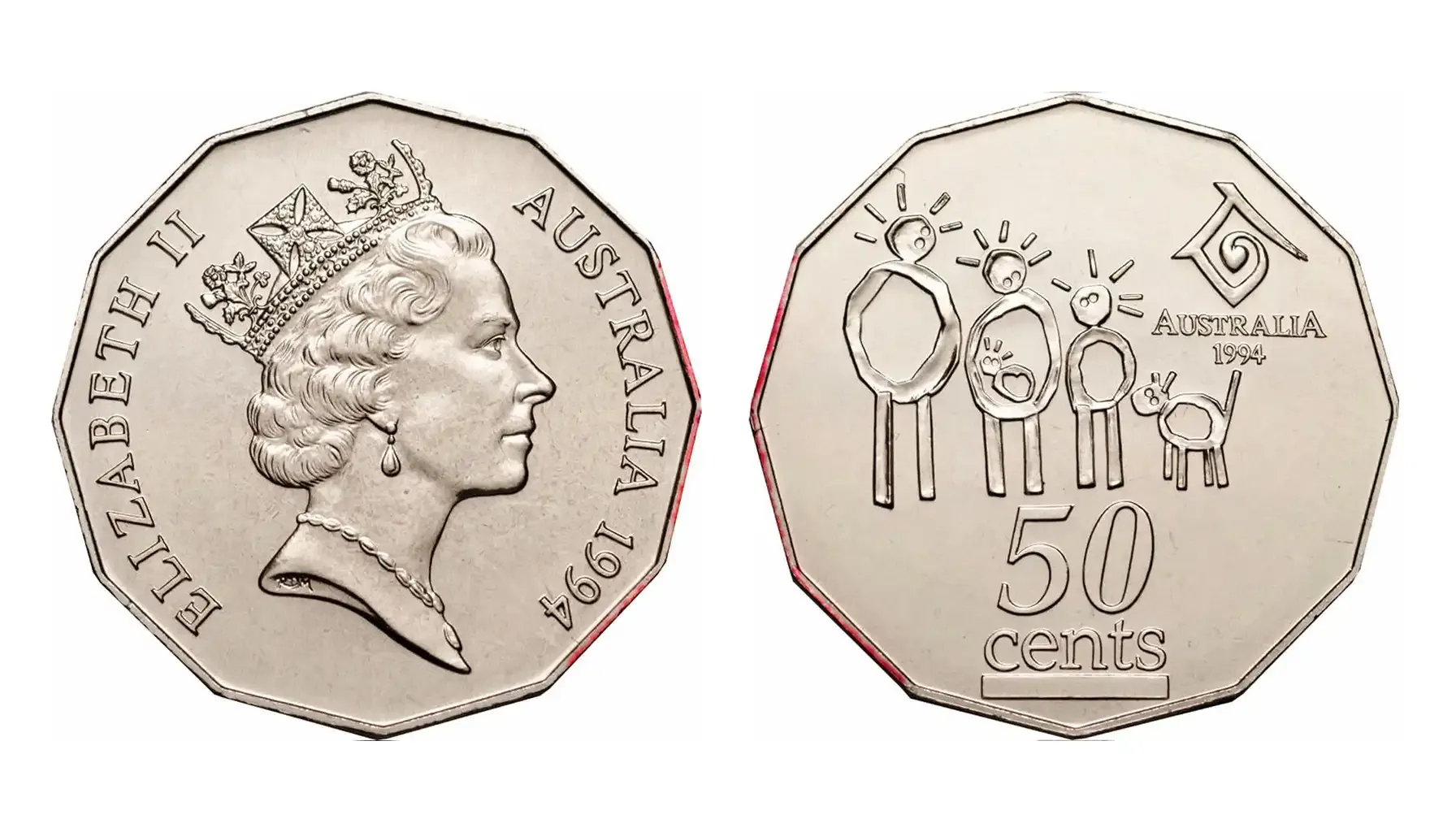
Some examples are included in the list of most wanted valuable rare Australian 50 cent coins, and their prices rise every year. Specimens in pristine condition are prized by collectors, especially Proof issues and those in factory packaging.
Coin | Approx. Price (USD) | Notes |
Round 50c (1966) | $15–25 | 80% silver, valued for metal content and historical significance |
Double Bar (1979) | $40–80 | Variety with two lines behind the kangaroo’s head |
Weary Dunlop (1995) | $3–6 | Commemorative issue honoring Sir Edward “Weary” Dunlop |
Millennium Incuse (2000) | $40–120 | Error coin featuring an incused (recessed) flag design |
Federation Series (2001) | $20–45 | Nine regional designs plus the national coat of arms |
Coat of Arms Error (2010) | $80–150 | Minting error showing a doubled or misaligned coat of arms |
Prices are current at the time of writing.
This data is organized into a detailed 50 cent coin value chart, where you can easily view price ranges based on both condition and rarity.
For collectors who want to broaden their sets, it’s helpful to look into other denominations as well. The Australian one-dollar coin series, for example, includes several issues with rare minting errors and limited production numbers.
And when considering premium specimens, professional catalogs also offer the most valuable 50 cent coin value chart, which helps collectors evaluate the investment potential of their finds.
For example, in 2024, a rare Millennium Incuse Flag sold on eBay for $820, compared to an average price of $100—an increase of more than eightfold.
The Ongoing Legacy of the 50 Cent Coin
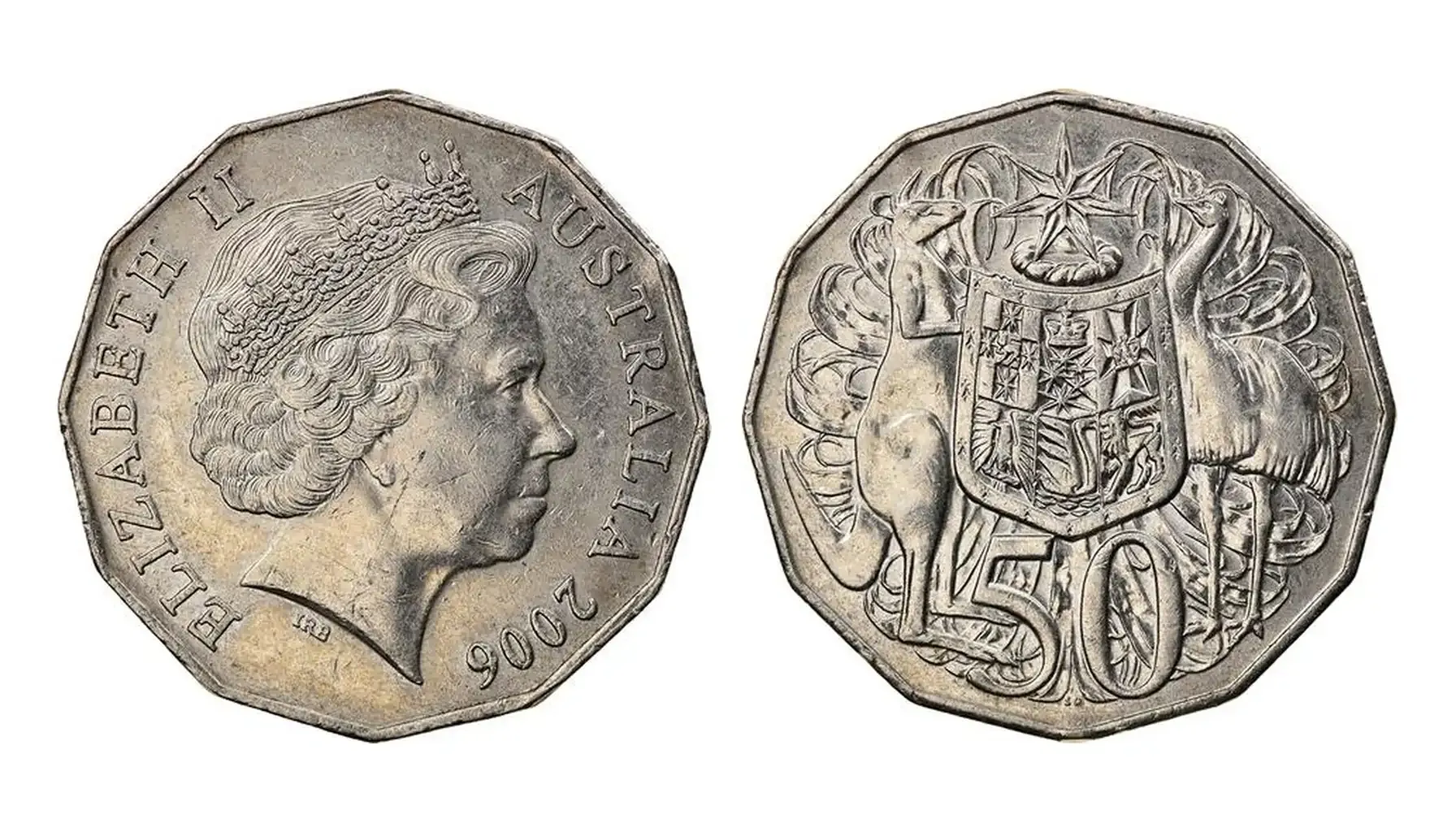
Modern, valuable rare 50 cent coins continue to attract the interest of collectors and investors. Several issues with unique designs are released each year. These pieces immediately attract attention, as limited editions sell out quickly, and demand remains high.
Prices depend on more than just age. Five key factors influence prices:
Mintage rarity: the fewer pieces issued, the higher the base price.
Surface condition (grade): pieces without signs of circulation are valued 3-5 times higher.
Minting errors: any defects confirmed by a certificate increase the price.
Historical or thematic significance: commemorative and military issues are usually in high demand.
Market demand: tracked through catalogs and marketplaces like eBay, Noble Numismatics, and Downies.
Even after decades, the Australian 50 cent coin value remains highly strong. Rare specimens retain most of their worth, especially if preserved in their original capsules. Many collectors view them as a "metal asset," adding them to their portfolios alongside silver dollars or commemorative issues.
Want to check the value of your coin? Try the Coin ID Scanner app — take a quick photo, and it will show whether the coin is genuine and what it’s roughly worth. It’s an easy tool for beginners who aren’t yet confident in pricing their finds.
Beyond apps, it helps to know a few basics about valuation. Coins with very low mintages — usually fewer than 50,000 pieces — often gain value as the years pass. When a design marks a major event, such as the Olympics or the Federation’s anniversary, prices at auction can easily go two or three times above what’s listed in catalogs.
Coin | Average Price (AUD) | Notes |
Round 50c (1966) | $20–30 | 80% silver, valued for both metal and history |
Double Bar (1979) | $25–50 | Variety with two lines behind the kangaroo’s head |
Weary Dunlop (1995) | $5–10 | Commemorative issue, common in circulation |
Millennium Incuse Flag (2000) | $300–1,000+ | Error with recessed flag; some graded examples sold for AU $950+ |
Federation Series (2001) | $150–200 | “Centenary of Federation” proof set; retail around AU $175 |
Prices are current at the time of writing.
FAQ
How much is a round 50-cent coin worth?
Approximately $10-20, but in Proof condition the price can exceed $50.
How many sides does a 50-cent coin have?
Modern coins have 12 sides.
What is a round 50-cent coin worth?
The value depends on the condition and silver content, usually 20-30 denominations.
Which 50-cent coin is worth $15,000?
A rare example with a 2010 minting error featuring a double coat of arms.
What is a double bar 50 cent coin?
This 1979 variety is distinguished by two lines behind the kangaroo's mane—a favorite among collectors.

 Facebook
  X (Twitter)
  Pinterest
  LinkedIn