Contents:
The Standing Liberty quarter series can be roughly divided into a few minor categories, i.e., Type 1 with no stars below the eagle and Type 2 featuring the stars, though the placement of the date changed, which prompted the appearance of the Type 2b variant in 1925 (the most immaculately done variant of them all).
The 1925 shift to a recessed date was a practical fix: early issues were easily worn and, hence, could not gracefully survive circulation. These pieces are valuable, but there is something more powerful behind the names.
The 1928 quarter is one of exceptional beauty, high standards, and exorbitant worth – everything, appreciated by true collectors today. Nonetheless, it is not a single coin to explore. But what are the main types of these rare coins? How much is a 1928 quarter worth, and how to identify these numismatic creations on the spot?
1928 Standing Liberty Quarter Overview
In 1916, the United States Mint introduced the 1916 Standing Liberty quarter, the first coin of its kind. There was a general tendency to revolutionize American culture, and the monetary sector was subject to changes, too. Since the Barber quarters, as well as other denominations of the series, were considered too bland and artless, the launch of the new program was inevitable.
After Charles E. Barber failed to present the sketches for a new iteration of American coins, the Mint invited a few prominent sculptors, Adolph Weinman, Hermon MacNeil, and Albin Polasek, who had not worked in the engraving department before. As a result, for a quarter, there was chosen the concept by MacNeil, though it quickly became controversial and technically challenging to strike.
As for the refinements, the first took place in 1917, when Liberty’s exposed breast was covered with chain mail, and the reverse featured the repositioned eagle and three stars placed beneath it. Beginning in 1925, the date was recessed into the design, and it was the last format to appear within the series.
“Beginning in 1925, the dates on the Standing Liberty Quarter Dollars were recessed, giving them more protection from wear. <...> All date and mintmark combinations in this series are affordable, but Full Head versions of every date command a premium.”
— Ron Guth, renowned numismatist, licensed Certified Public Accountant
PCGS CoinFacts, 25C Type 2b, Stars Below Eagle (Recessed Date)
Identifying the 1928 Liberty Quarter: Design & Specs
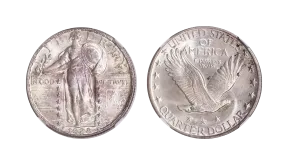
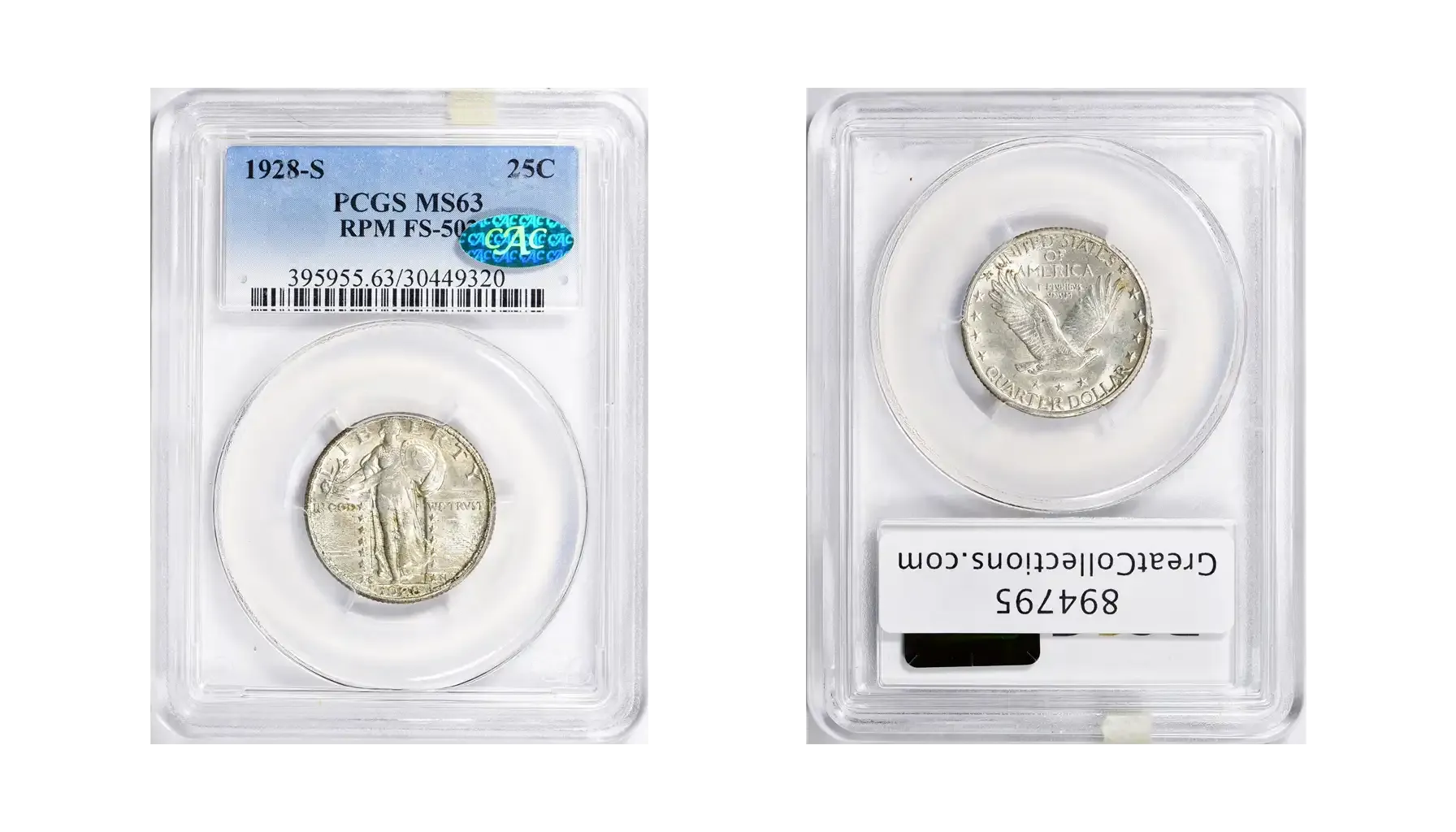
Obverse: The full-length figure of Liberty, standing in a gateway, with a shield and an olive branch in her hands, “LIBERTY” across the top, “IN GOD WE TRVST” placed on either side of Liberty, a tiny mint mark to the left of the pedestal, and the year of mintage “1928” at the bottom.
Reverse: A naturalistic depiction of an eagle in flight, the inscriptions “UNITED STATES OF AMERICA” at the very top of the coin, “E PLVRIBVS VNVM” between the wings, the stars beneath the eagle and around the edge, and the denomination “QUARTER DOLLAR” at the bottom.
The Main Features | |
Denomination | 25 cents |
Composition | 90% silver, 10% copper |
Weight | 6.30 g |
Diameter | 24.30 mm |
Thickness | 1.75 mm |
Edge | Reeded |
Shape | Round |
Silver content | 0.18084 troy oz silver |
Mint marks | None for Philadelphia “D” for Denver “S” for San Francisco |
Mint Marks and Varieties of the 1928 Quarter
1928 25C
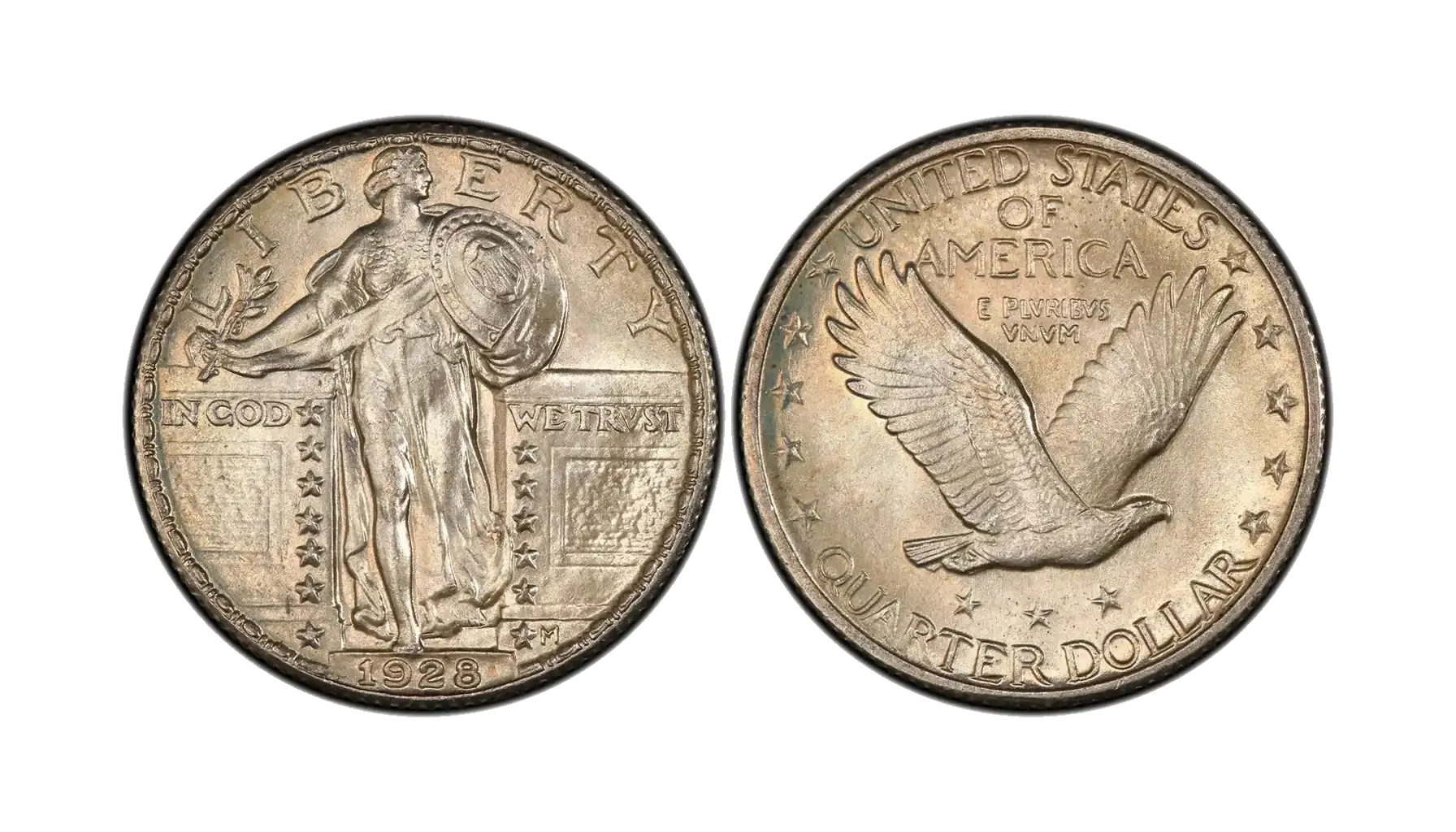
Produced by: Philadelphia Mint
Mintage: 6,336,000
Auction Record: $120,000 for MS67+FH
The product of the Philadelphia Mint with the highest 1928 Liberty Quarter value in the series. Although it is the most available out of these three types, exceptional strikes (especially with Full Head designations) are much rarer to find.
1928-D 25C
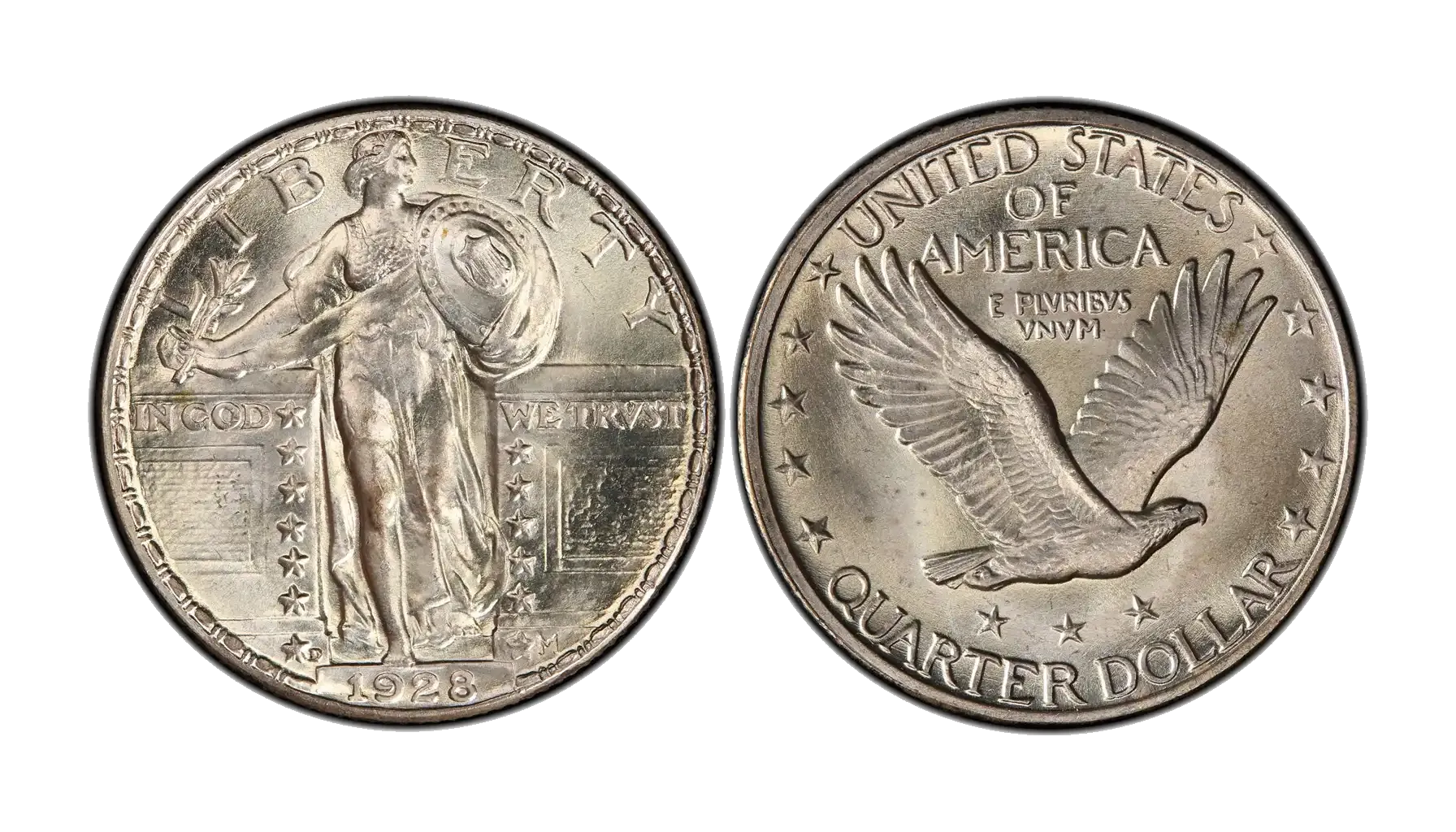
Produced by: Denver Mint
Mintage: 1,627,600
Auction Record: $70,500 for MS67+FH
The lowest-mintage Standing Liberty quarter 1928 issue. High-end grades are extremely rare and are barely recorded (only 2 pieces in MS67+ and none in MS68 or above). The 1928 D Standing Liberty quarter is a beloved coin whose prices may only grow.
1928-S 25C
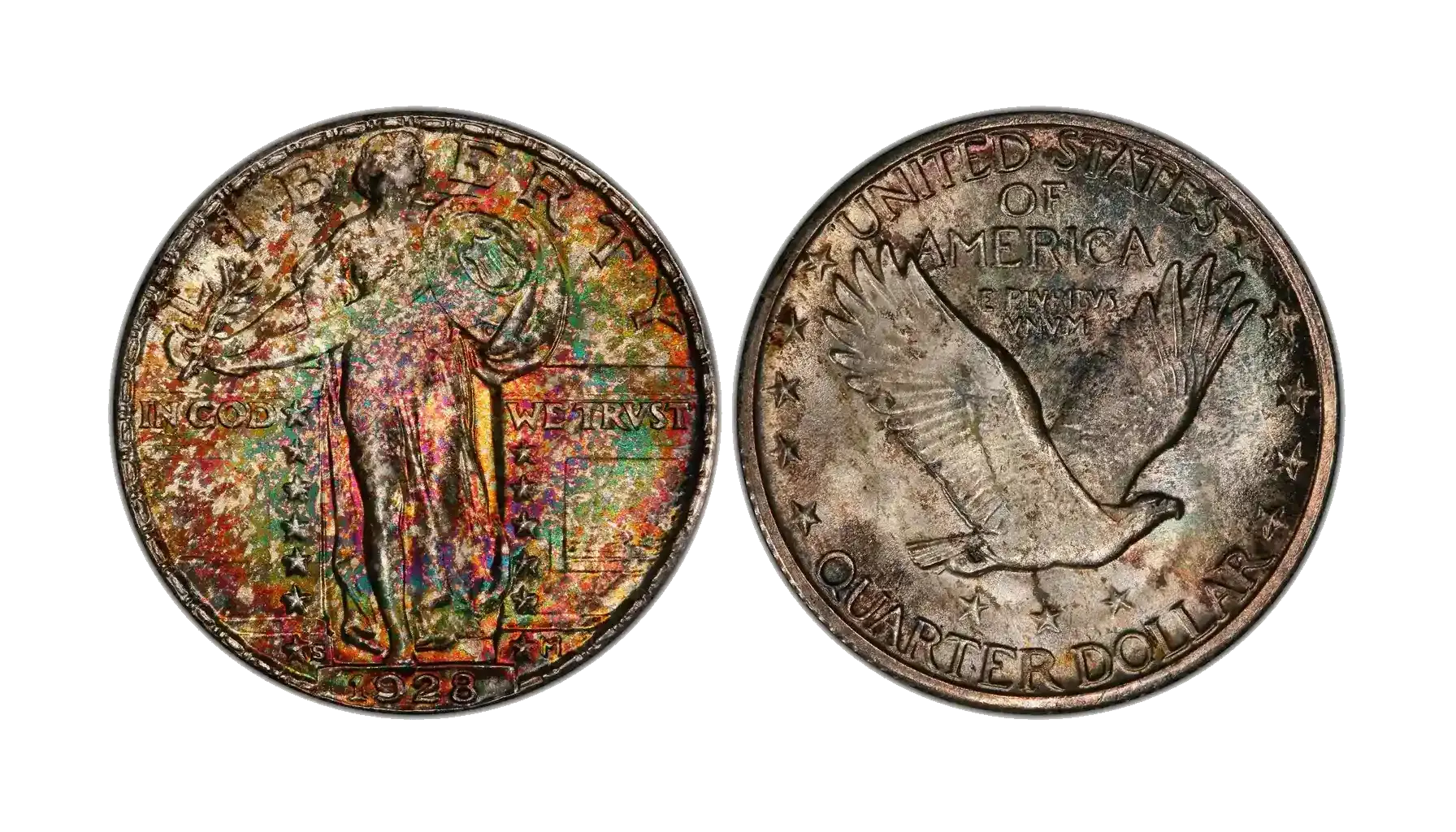
Produced by: San Francisco Mint
Mintage: 2,644,000
Auction Record: $29,900 for MS68
A mid-mintage 1928 S quarter type that can be challenging to find when in high grades of the scale. Nonetheless, it is not as scarce as the previous entries, which makes the 1928 S Standing Liberty quarter value stuck at a more approachable level.
1928 Quarter Value by Condition and Mint
The worth of the quarters cannot be fixed: it is the result of the market movements, current economic situations, precious metals rates, and grades in general. Nonetheless, one should rest assured: the 1928 D quarter value, as well as that of other types, is always high enough.
Grade | 1928 25C | 1928-D 25C | 1928-S 25C |
G4 | $17–$18 | $17–$18 | $17–$18 |
VG8 | $20–$22 | $20–$22 | $20–$22 |
F12 | $27–$35 | $27–$35 | $27–$35 |
VF20 | $40–$45 | $40–$45 | $40–$45 |
XF40 | $75–$80 | $75–$80 | $75–$80 |
AU50 | $90–$95 | $90–$95 | $90–$95 |
MS60 | $200–$240 | $240–$260 | $215–$235 |
MS63 | $365–$425 | $350–$385 | $325–$360 |
MS64 | $475–$575 | $450–$500 | $425–$525 |
MS65 | $625–$700 | $575–$675 | $600–$725 |
MS66 | $750–$1,350 | $900–$1,200 | $900–$1,150 |
MS67 | $3,500+ | $3,850–$6,250+ | $3,000–$7,500 |
Factors Affecting the 1928 Standing Liberty Quarter Value
Mint mark: As a rule, the rarer the mintage (which can be inferred from the mark), the higher the price.
Condition (grade): Wear level is the most definitive factor in price formation.
Strike quality (FH): Coins with Full Head designations tend to be more valuable, thanks to their survival rate.
Surface/eye appeal: Cleaning, scratches, corrosion, or dull surfaces can usually reduce value for good.
Collector Tips and Where to Buy 1928 Silver Quarters

We shall tell you one more thing: do not trust the resources that throw out “instant values” without precise evaluation, certificates, photos, or indicated grades. For safer transactions, please refer to:
Reputable dealers in major numismatic organizations;
Established coin auction platforms (e.g., Heritage Auctions);
Grading services like PCGS, NGC, or ANACS to check the coin in advance;
Digital assistants like Coin ID Scanner to identify the type and mint mark, check possible grade ranges, and organize collections at once.
Nonetheless, remember: this material is made for reference purposes. Truths may change, so keep up with the market as you collect.

 Facebook
  X (Twitter)
  Pinterest
  LinkedIn