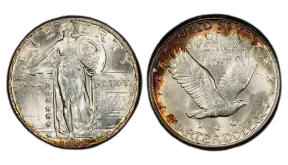
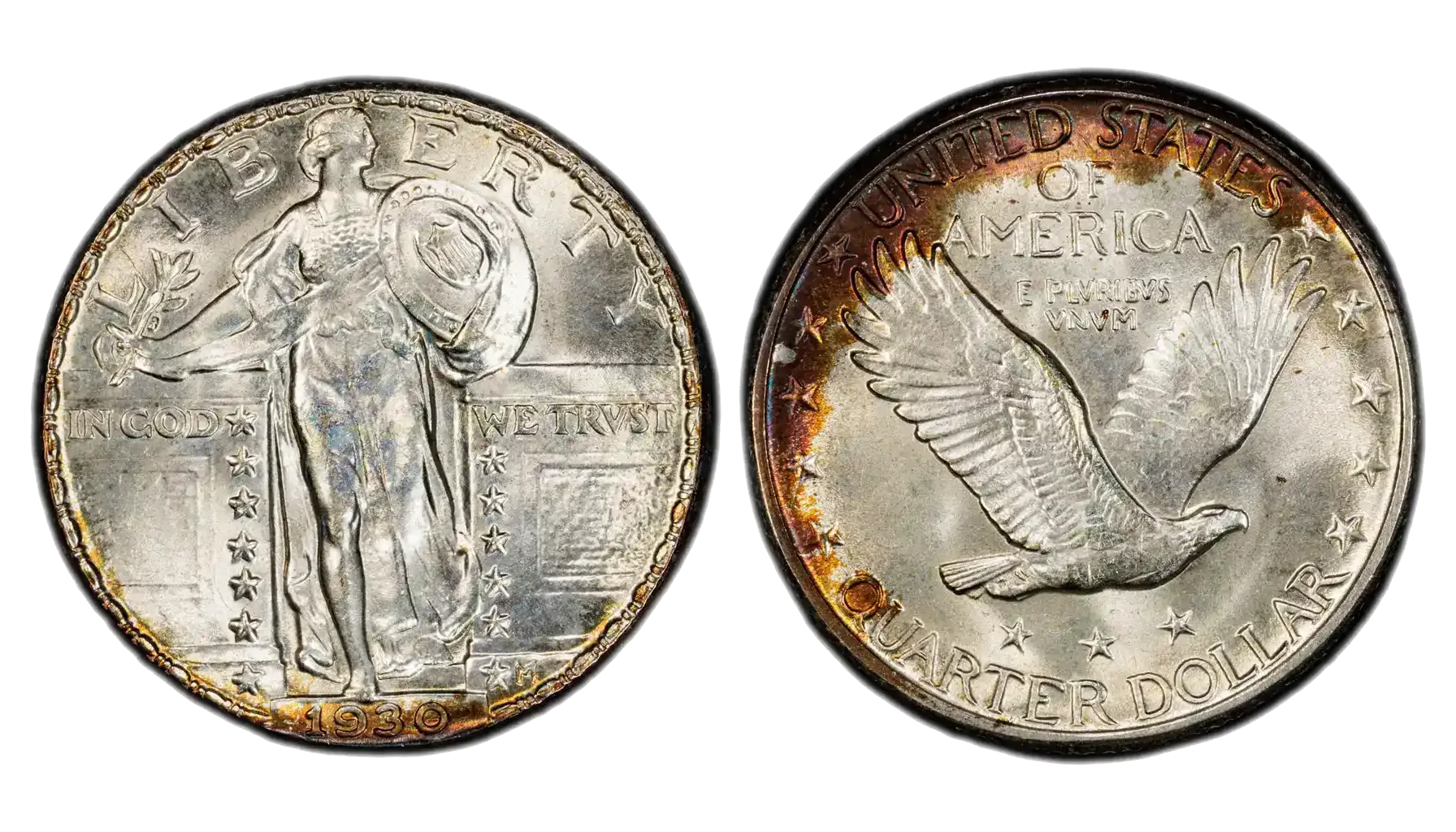
The 1930 Standing Liberty Quarter is a U.S. silver quarter that marks the final year of the Standing Liberty series, which ran from 1916 to 1930.
It was designed by Hermon A. MacNeil. It shows Liberty with a shield and olive branch on the front and an eagle in flight on the back. The coin is made of 90% silver and 10% copper, weighs 6.25 grams, and has a reeded edge.
Two versions were struck:
1930 (Philadelphia, no mint mark): 5,632,000
1930-S Standing Liberty Quarter (San Francisco): 1,556,000
The 1930 issue is collected both for its beauty and for being the last of its kind before the Washington Quarter series began in 1932. But how much is a 1930 quarter worth exactly? How to check coin value?
Feature | Details |
Designer | Hermon A. MacNeil |
Composition | 90% Silver, 10% Copper |
Weight | 6.25 g |
Diameter | 24.3 mm |
Thickness | 1.75 mm (approx.) |
Edge | Reeded |
Silver Content | 0.1808 troy oz |
There is no such coin as a 1930 Walking Liberty Quarter.
Standing Liberty Quarter (1916–1930): The quarter-dollar design in use during 1930 was the Standing Liberty Quarter, designed by Hermon A. MacNeil.
Walking Liberty Half Dollar (1916–1947): The “Walking Liberty” design (by Adolph A. Weinman) was used on the half dollar. It never appeared on a quarter.
Mint Marks
The mint mark tells you where the coin was made.
Where to look? On Standing Liberty Quarters (all years), the mint mark is placed on the obverse (front) of the coin, to the left of the date at the bottom.
No mint mark → Struck at the Philadelphia Mint.
“S” mint mark → Struck at the San Francisco Mint.
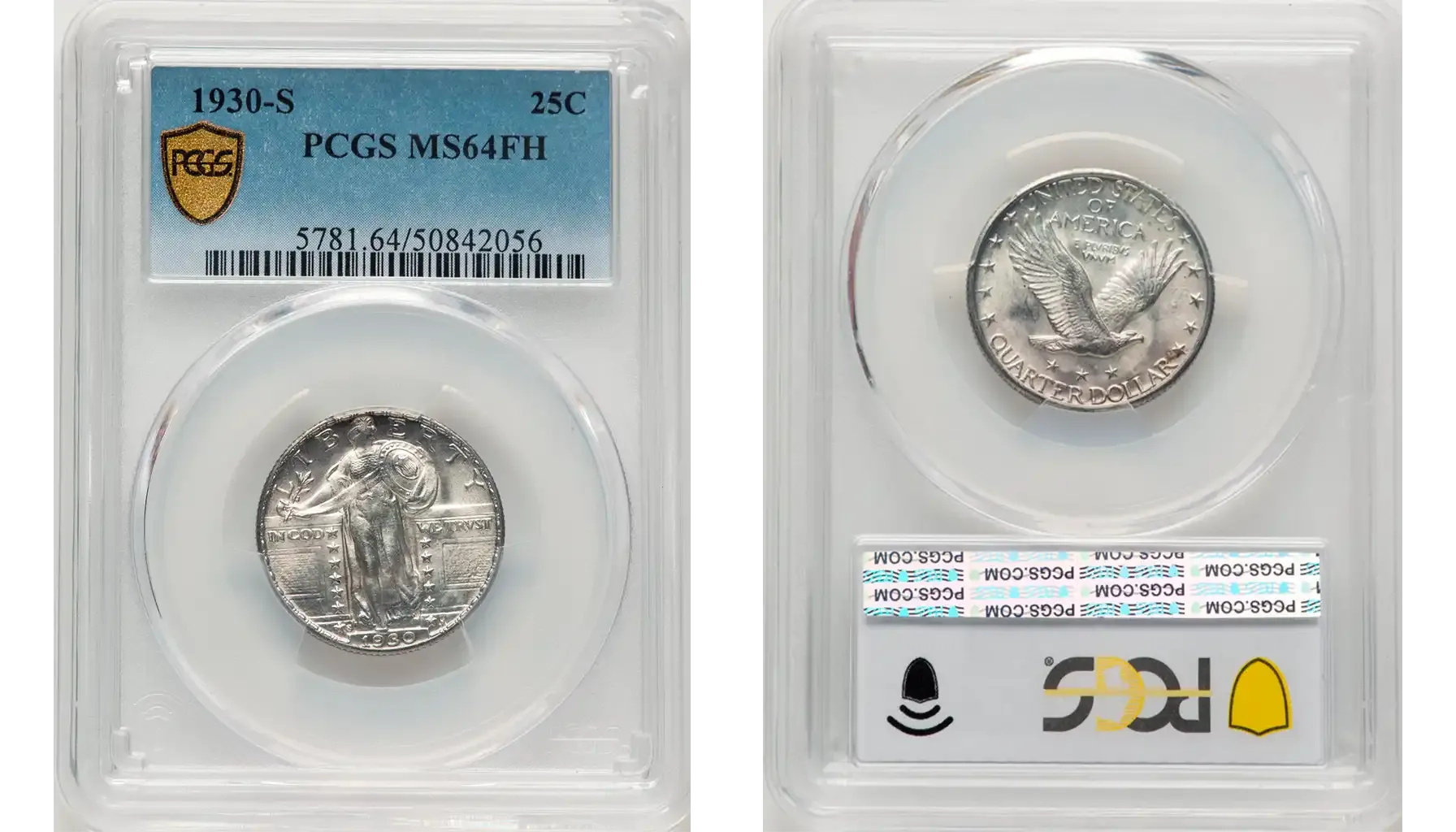
There was no Denver issue in 1930, and there has never been a 1930 Standing Liberty Quarter mint mark M on U.S. coins.
The San Francisco (S) coin is scarcer than the Philadelphia one. That’s why it mostly has a higher 1930 S Standing Liberty Quarter value, especially in higher grades.
1930 Quarter Value Today
Grade | 1930 no mint mark quarter value | 1930 S quarter value |
Good (G-4) | $10 – $15 | $20 – $25 |
Very Good (VG-8) | $18 – $25 | $25 – $35 |
Fine (F-12) | $25 – $35 | $40 – $60 |
Very Fine (VF-20) | $40 – $60 | $70 – $90 |
Extra Fine (XF-40) | $70 – $90 | $120 – $150 |
About Unc. (AU-50) | $120 – $180 | $150 – $200 |
Mint State (MS-60) | $200 – $300 | $280 – $400 |
MS-63 | $350 – $450 | $450 – $600 |
MS-65 | $600 – $800 | $900 – $1,200+ |
Note: The 1930 Standing Liberty Quarter value above is average.
Silver Content & Base Value
Each coin contains 0.1808 troy ounces of silver.
With silver around $25/oz, the intrinsic melt value sits near $8–9, which is the floor price for any heavily worn or damaged example.
Collectors usually pay above melt, even for low-grade pieces, because the coin is historic and the last year of issue.
Full Head (FH)
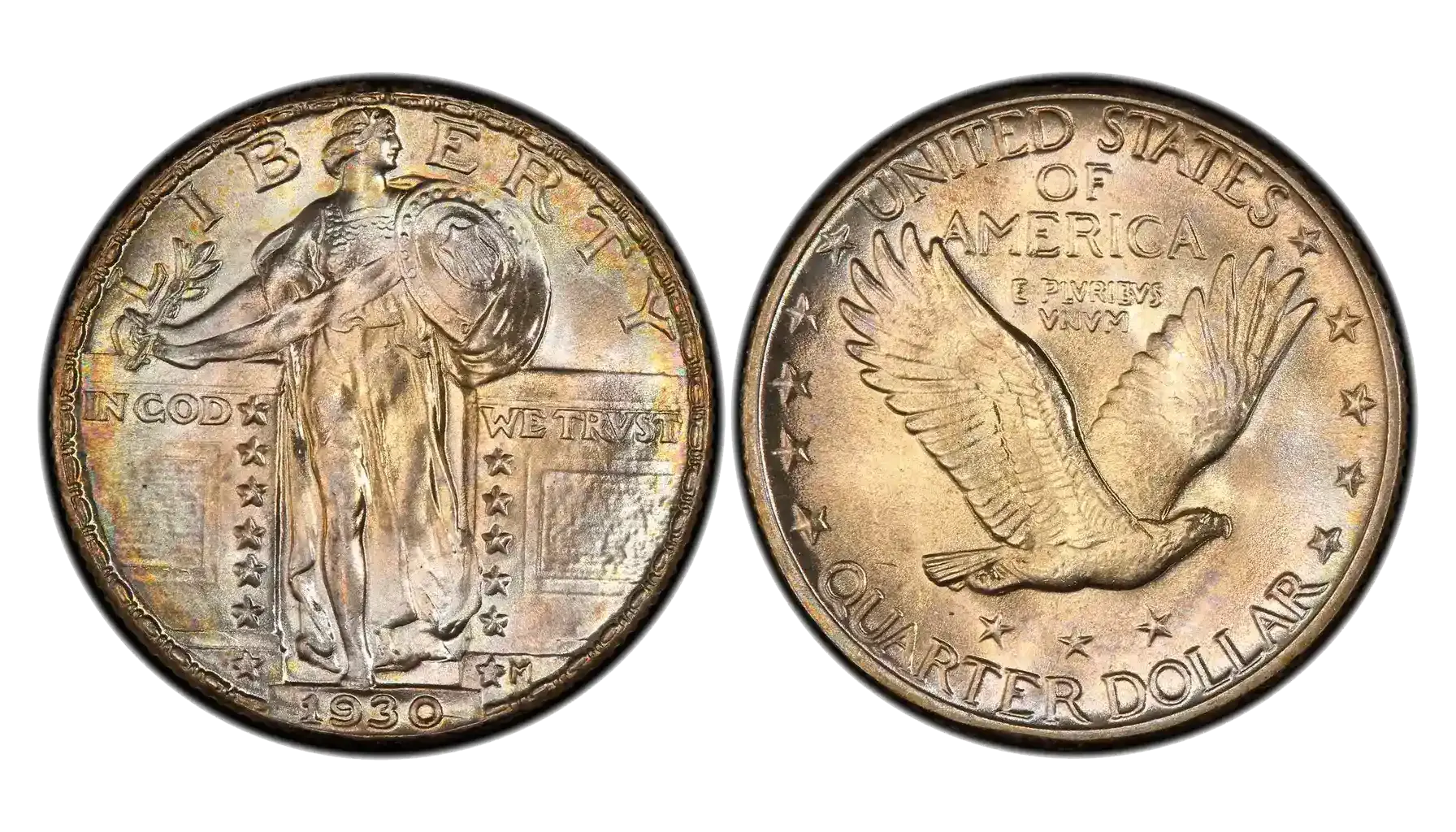
The most critical factor is whether Liberty’s head shows complete details.
On many coins, strikes were weak in this area, leaving the head flat.
Coins certified as Full Head (FH) bring substantial premiums, often double or triple the value of a non-FH coin of the same grade.
For example:
A 1930-S in MS-65 without FH might bring ~$1,000.
With FH, the same coin could exceed $3,000.
Collectability
The 1930 issue marks the end of the Standing Liberty series. This means that it’s historically important.
In 1931, no quarters were produced at all, and in 1932 the Washington Quarter replaced this design for George Washington’s 200th birthday.
Because it is the final-year coin, it is a “must-have” for both type collectors and series specialists.
Market Considerations
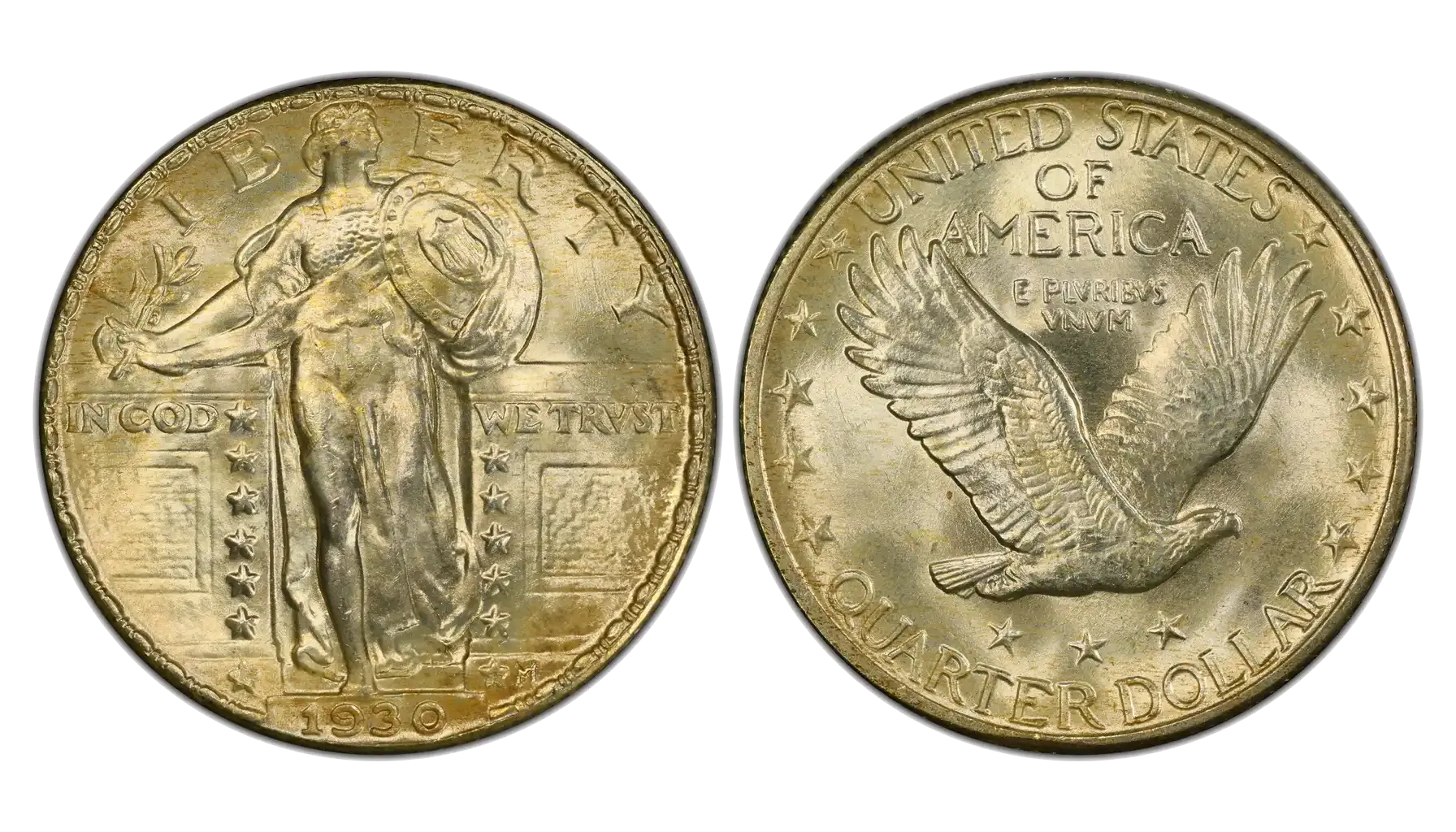
Certified coins (PCGS/NGC) generally command higher prices than raw coins, especially in Mint State or Full Head.
The market is stable, with long-term demand, since Standing Liberty specimens are considered one of the most artistic U.S. coin designs.
Prices are strongest for the 1930 quarter for sale with Full Head, high eye appeal, and good provenance.
How Much Was a Quarter Worth in 1930?
In 1930, a U.S. quarter — including the Standing Liberty Quarter — had a face value of 25 cents, which was a meaningful amount of money during the Great Depression.
25 cents in 1930 ≈ $4.50–$5.00 today (adjusted for inflation).
It represented about half an hour’s wage for many workers at the time (average hourly wage was ~50¢).
It was enough to cover a small meal, a ride on public transit, or a night at the movies.
Because silver was used in the coin (90% purity), it also had metal 1930 silver quarter value. In 1930, the silver content (~0.18 troy oz) was worth around 4–5¢, much less than its spending power.
In 1930, it had far more buying power than today — roughly equivalent to about $5 in modern money, enough for essentials or small luxuries.
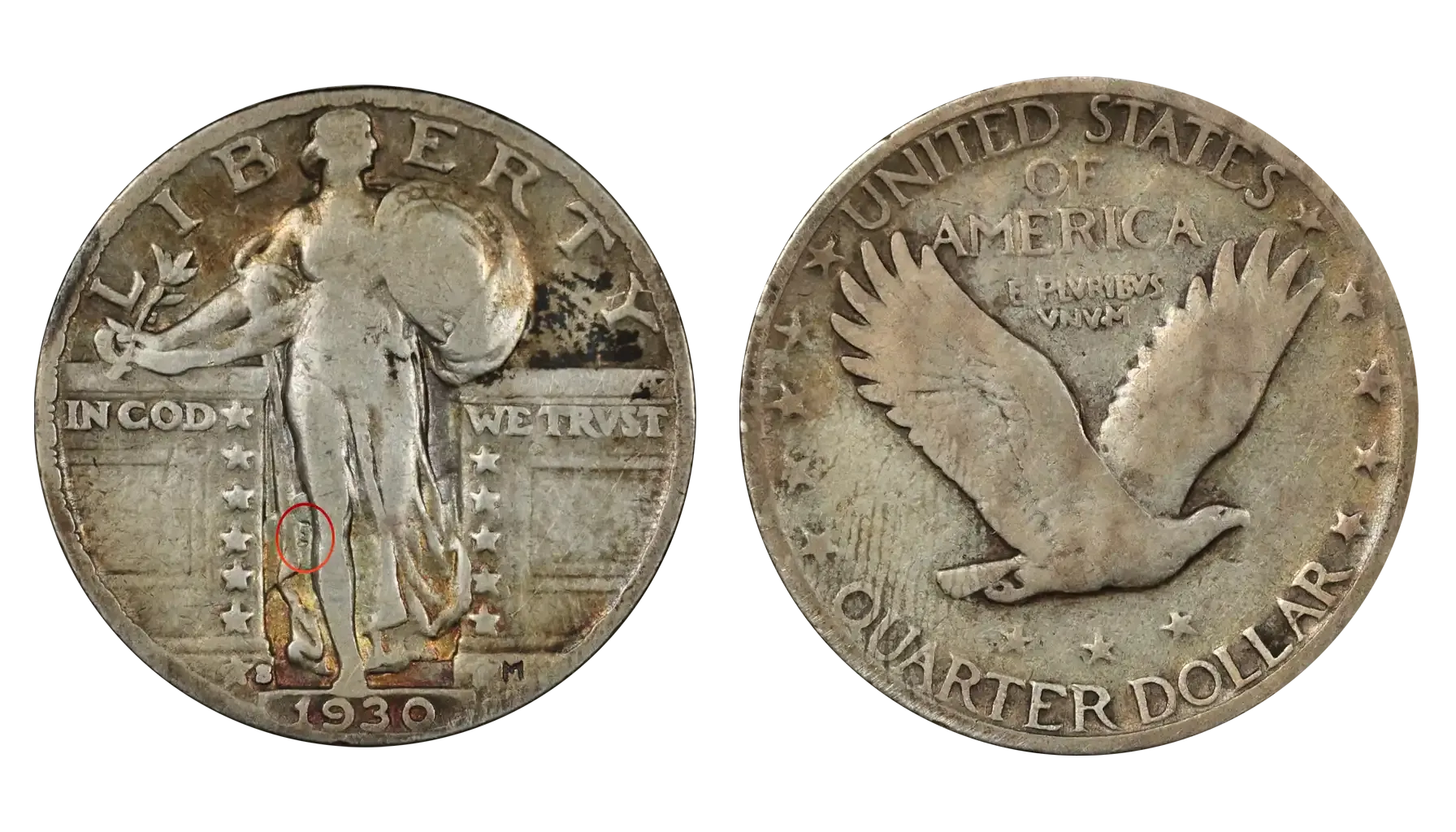
Errors
Off-Center Strikes
Cause: The blank planchet wasn’t properly centered in the press.
Appearance: A portion of the design (date, Liberty’s shield, eagle’s wings) may be missing, with blank metal visible.
The more off-center the strike, the higher the premium. Collectors love examples where the date is still visible, since that confirms authenticity and year.
1930 Liberty Quarter Value Range:
Minor (5–10% off): $75–150
Moderate (15–30%): $200–400
Major (40%+): $500+ if date is intact
Broadstrikes
Cause: The collar die that holds the coin in place during striking was missing or defective.
Appearance: The coin looks wider, with a “stretched” rim and no reeding on the edge.
Standing Liberty Quarter 1930 Value: $100–250
Clipped Planchets
Cause: A blanking punch overlapped an already cut planchet, producing a “bite” out of the coin.
Appearance: Crescent-shaped (curved clip) or straight-edged (straight clip) cuts. Often shows “Blakesley Effect” — weakness opposite the clip.
Value of 1930 Quarter: $50–200
Die Cracks, Breaks & Cuds
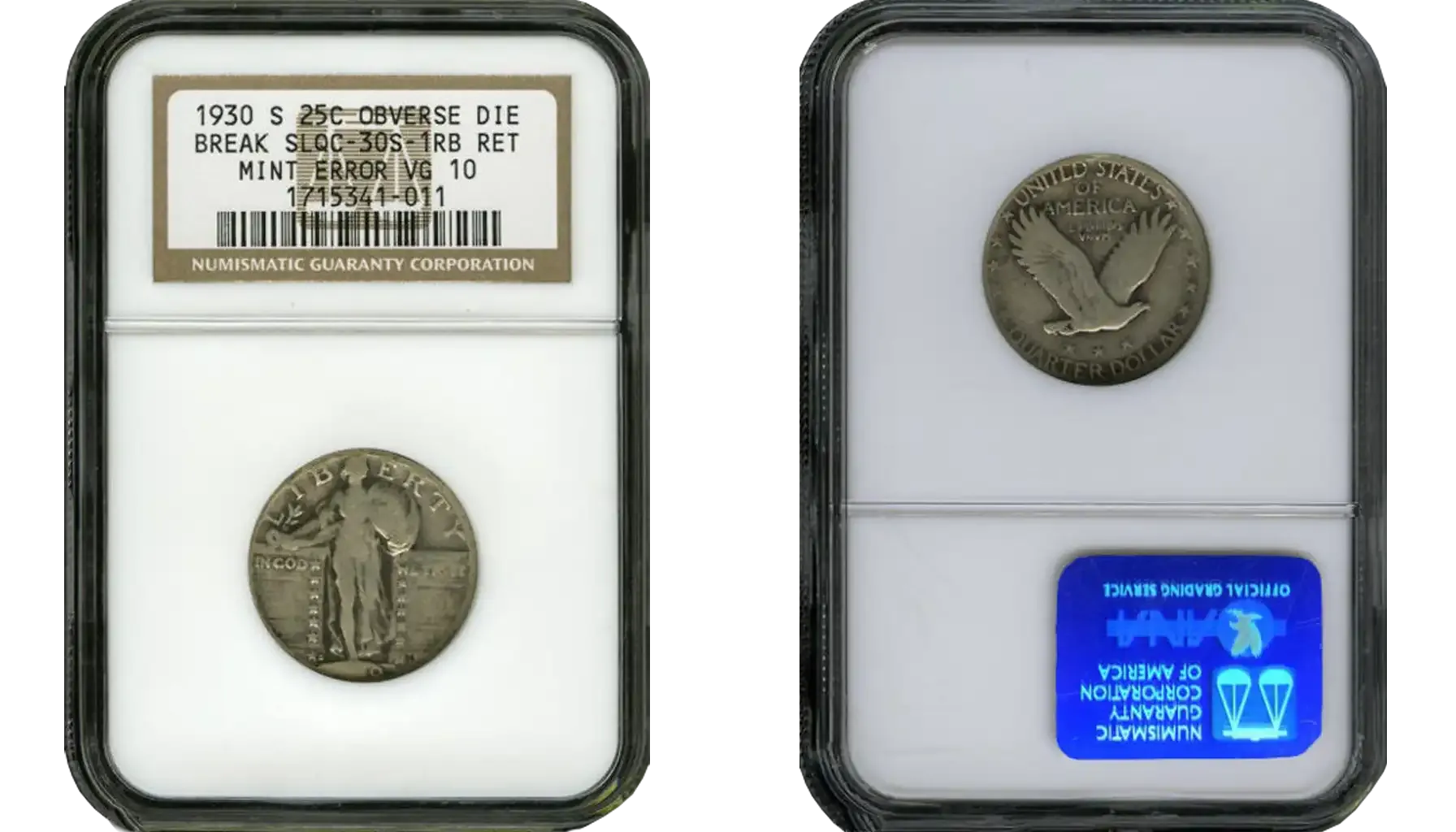
Cause: Aging or damaged dies used beyond their intended life.
Appearance: Raised lines (die cracks) or missing metal-filled blobs (cuds) near the rim or lettering.
1930 US Quarter Value:
Small die cracks: $30–50 over regular value
Large cuds: $100–300
Double Die Strikes (Doubling)
Cause: Misalignment when the die was hubbed.
Appearance: Doubling in date, stars, letters, or Liberty’s features.
No major doubled die varieties are officially catalogued for this year, but minor doubling is possible.
If dramatic enough, it might add $75–200. A major discovery piece could be far higher.
Lamination Errors
Cause: Impurities or flaws in the metal strip from which blanks were cut.
Appearance: Flakes or peeling layers of metal on the surface.
Value Range: $50–150
What Collectors Look For
Date Visibility → Especially important for off-center or clipped coins.
Eye Appeal → Dramatic errors fetch more than subtle ones.
Authenticity → Must be a true mint error, not post-mint damage.
Certification → Graded by PCGS, NGC, or ANACS as “Mint Error” boosts trust and 1930 quarter dollar value.
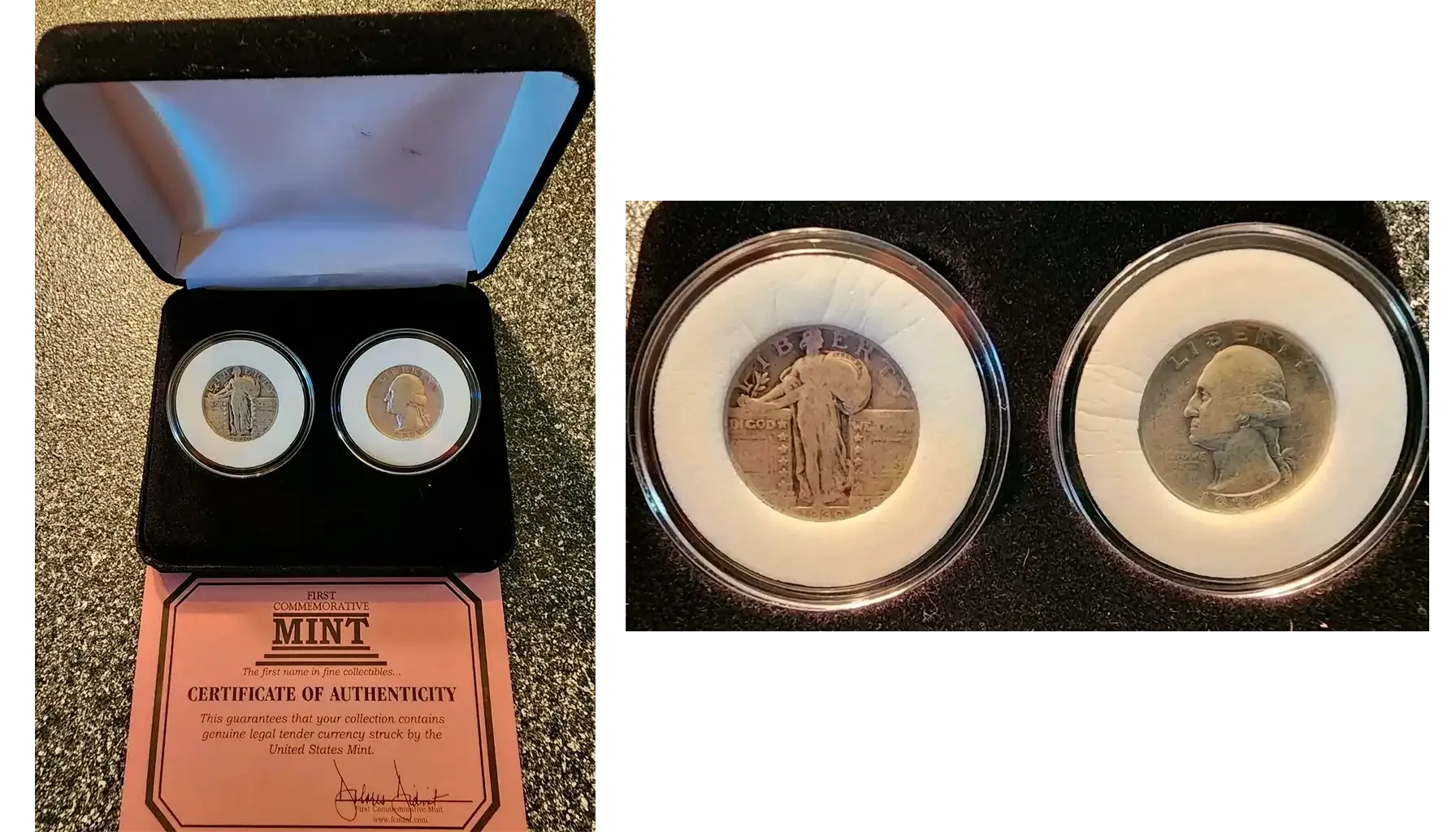
A normal coin in average condition is collectible because it’s the final issue.
When paired with a mint error, demand multiplies — type collectors, error specialists, and Standing Liberty fans all want one.
While no legendary varieties (like overdates) are known for this year, dramatic errors still may be expensive.
And if you want to identify a coin, try the Coin ID Scanner app: take a photo, and the app will tell you everything about it!

 Facebook
  X (Twitter)
  Pinterest
  LinkedIn