Contents:
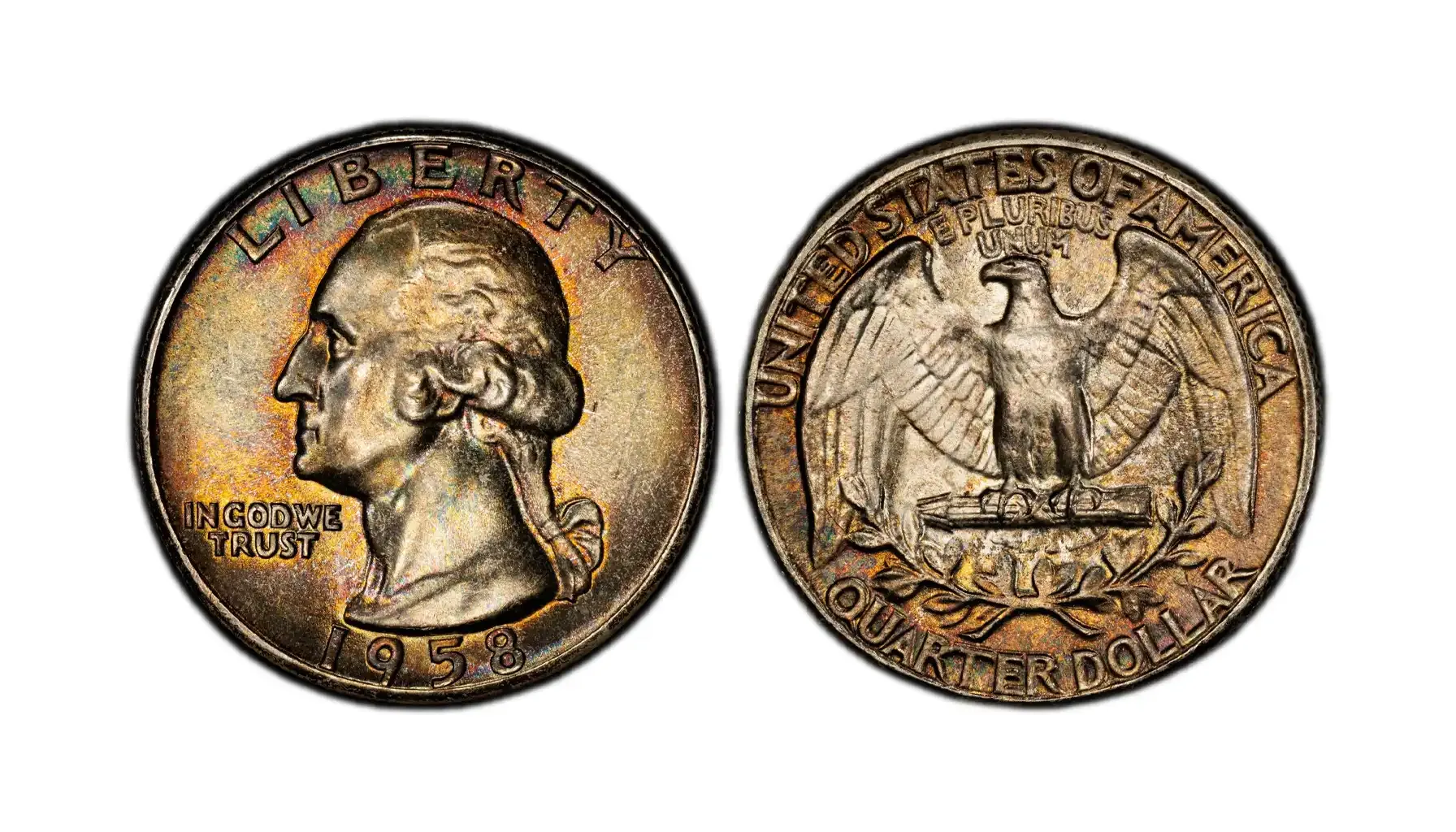
The 1958 US Quarter is a 25-cent coin minted in 1958 as part of the Washington Quarter series, which began in 1932. It features a portrait of George Washington, the first President of the United States, and was originally issued to commemorate the bicentennial of his birth.
You can identify the coin with a Coin ID Scanner app or get it appraised by NGC or PCGS services.
Feature | Details |
Obverse | George Washington’s portrait (by John Flanagan) |
Reverse | Eagle with outstretched wings holding arrows and olive branches |
Metal Composition | 90% Silver, 10% Copper |
Weight | 6.25 grams |
Diameter | 24.3 mm |
Edge | Reeded |
Mints | Philadelphia (no mint mark), Denver (1958 D Washington quarter) |
Historical Background
The Washington Quarter was first issued in 1932 to commemorate the 200th anniversary of George Washington’s birth (born 1732). At the time, the U.S. government wanted a circulating coin to honor the nation’s founding father rather than producing a commemorative half dollar, which was more traditional.
The original plan was to issue the design only for one year, but due to its popularity and aesthetic appeal, the Washington Quarter replaced the Standing Liberty Quarter permanently starting in 1934.
Is a 1958 quarter silver? It belongs to the silver era of U.S. coinage (pre-1965), during which quarters were struck from:
90% silver
10% copper
In 1958, the U.S. was in the midst of the Cold War, the post-war economic boom, and the Eisenhower presidency. Coin designs during this period were stable, conservative and patriotic.
As it was still struck in 90% silver, it’s more valuable today than its post-1965 counterparts. But what is a 1958 quarter worth exactly?
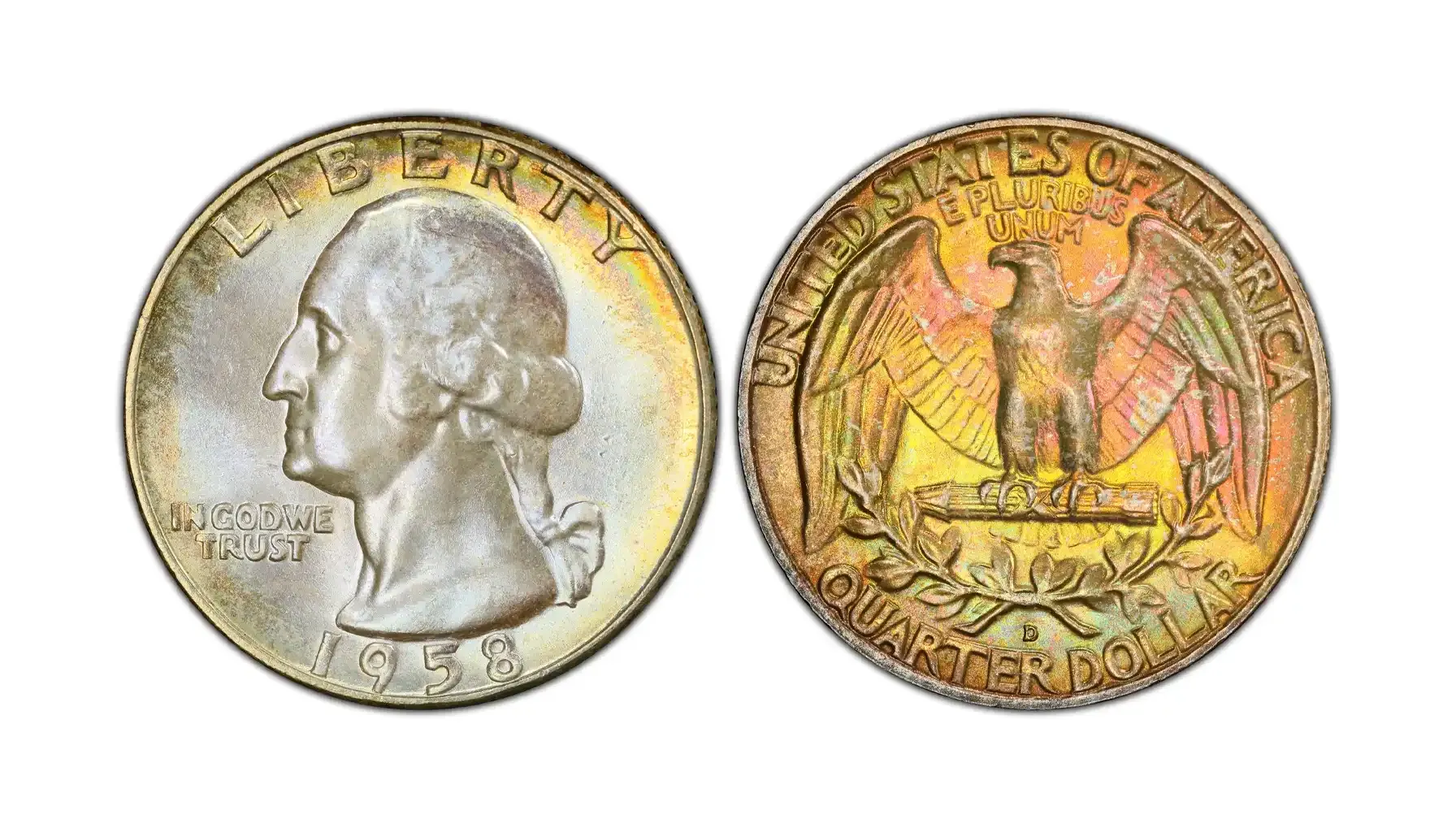
Mint Marks
A mint mark is a small letter stamped on a coin indicating the U.S. Mint facility where the coin was produced.
On the coin discussed it’s located just below the wreath, above the "R" in "QUARTER DOLLAR" on its reverse side.
From 1932 to 1964, Washington Quarters had the mint mark on the reverse side. In 1968, it was moved to the obverse.
Mint Location | Mint Mark | Mintage Volume |
Philadelphia | none | 6,360,000 |
Denver | D | 78,124,900 |
San Francisco did not strike regular-issue quarters in 1958, so no "S" mint mark exists for this year.
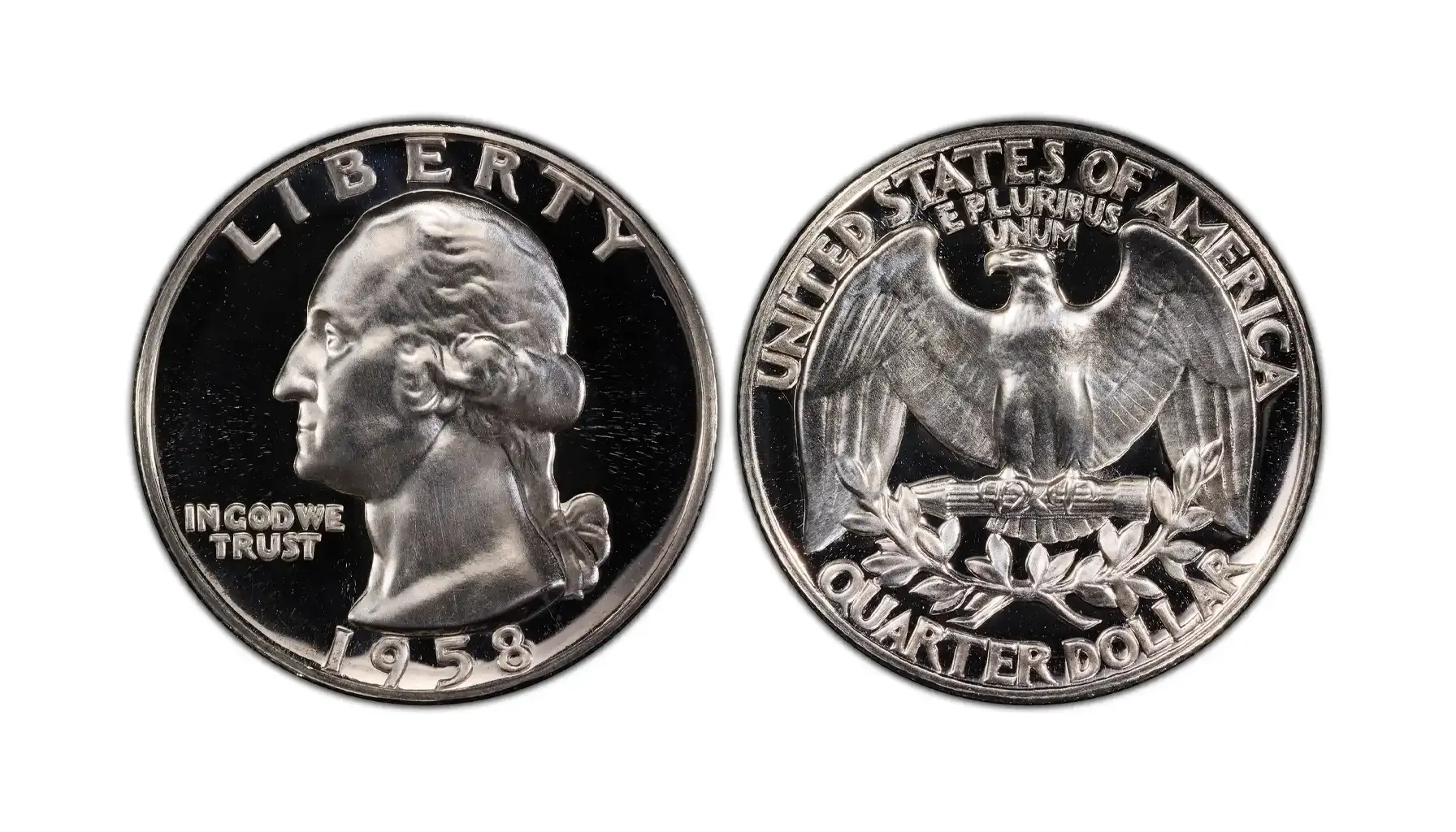
1958 Proof Quarter
It’s a specially struck version of the regular quarter 1958 issue, produced exclusively at the Philadelphia Mint. Unlike standard circulation coins, proof ones were not intended for everyday use. They were made specifically for collectors and included in official U.S. Mint proof sets.
The coin was struck using specially polished dies and planchets, often with multiple strikes to ensure sharpness. As a result, the fields (backgrounds) are deeply reflective, and the raised elements (like Washington’s portrait or the eagle) are sharply defined — sometimes with a frosted appearance. This creates a cameo or even deep cameo effect if the contrast is strong enough.
The U.S. Mint produced 875,652 proof sets in 1958, and many examples of the quarter survive today in pristine condition due to protective packaging.
Is a 1958 quarter worth anything if it’s proof? Lower-grade proofs may sell for around $10–$20, while near-perfect examples with deep cameo surfaces can reach $150 or more.
How Much Is a 1958 Quarter Worth?
Grade | 1958 Quarter Value No Mint Mark | 1958-D Quarter Value |
G4–VG8 (Good–Very Good) | $6.00 | $6.00 |
F12–VF20 (Fine–Very Fine) | $6.25–$6.75 | $6.00–$6.50 |
EF40–AU50 (Extremely Fine–About Uncirculated) | $7.00–$10.00 | $6.50–$9.00 |
AU55–AU58 | $10–$16 | $8–$14 |
MS60 (Uncirculated) | $18–$25 | $14–$20 |
MS63 (Choice BU) | $30–$45 | $22–$35 |
MS65 (Gem BU) | $60–$85 | $40–$60 |
MS66 | $110–$180 | $70–$120 |
MS67 | $500–$950+ | $300–$650+ |
MS68 or higher | $2,000–$5,000+ | $1,000–$3,000+ |
Disclaimer: The prices are average and may fluctuate.
Silver Melt Value
The 1958 Washington Quarter is composed of 90% silver and 10% copper, making it valuable for its silver content alone—even in worn condition. But what is its 1958 quarter SILVER value?
Composition & Weight:
Weight: 6.25 grams
Silver Content: 90%
Actual Silver Weight (ASW): 6.25 g×0.90=5.625 g silver≈0.1808 troy oz
Current Silver Price (Approximate): Let’s assume spot price = $27.65 per troy oz (You can check the live price for exact value.)
Silver Spot Price (USD/oz) | Melt Value |
$25.00 | $4.52 |
$27.65 (current est.) | $5.00 |
$30.00 | $5.42 |
$35.00 | $6.33 |
$40.00 | $7.23 |
1958 Quarter Error List
Error | Occurs On | What Is It? | Estimated 1958 Silver Quarter Value |
Repunched Mint Mark (RPM) | 1958 D quarter only | “D” mint mark appears doubled—usually northeast or southwest. Most visible under magnification. | $35–$150+ |
Double Die Obverse (DDO) | 1958 (rare) | Doubling on IN GOD WE TRUST or LIBERTY. Confirm with loupe or microscope. | $100–$600+ |
Double Die Reverse (DDR) | 1958 (rare) | Doubling on E PLURIBUS UNUM or eagle’s wing/legs. | $75–$400 |
Clipped Planchet | Both mints | Curved or straight "bite" missing from the edge. Can be partial or full clip. | $30–$150 |
Off-Center Strike | Both mints | Design not centered; coins 5–15% off-center are collectable. 40–60% off-center with full date = premium. | $50–$250 |
Broadstrike (No Rim) | Both mints | Coin struck without retaining collar, causing a flat, expanded look. Edge has no reeding. | $40–$100 |
Die Crack or Cud | Both mints | Raised lines or blobs where the die fractured. Larger cuds near rim fetch higher prices. | $25–$150 |
Struck Through Grease | Both mints | Parts of the design appear missing or faded due to debris on the die. | $15–$75 |
Lamination Error | Both mints | A flaky or peeling surface caused by metal impurity during planchet production. | $30–$100+ |
Wrong Planchet Strike | Extremely rare | Struck on a dime or foreign planchet. Weight and size differ. Must be authenticated. | $300–$2,500+ |
Repunched Mint Marks (RPMs) Were Hand-Punched
In 1958, the "D" mint mark on Denver coins was manually punched into each die. This sometimes led to misalignments, which are now prized as RPM varieties. Tiny positional shifts created "shadow D’s" that collectors hunt using magnification.
Double Dies Are Not Just "Double Strikes"
Many beginners confuse double die errors with double strikes. A double die happens during hubbing, when the die itself receives a misaligned design impression—before it ever strikes a coin. That makes DDO/DDR coins like those suspected in 1958 far rarer and more valuable.
Some Errors Are Caused by “Grease”
A common but underappreciated error is the strike-through grease error. In 1958, the Mint used oil and grease to lubricate dies. If too much built up, it could fill details of the design, making letters, dates, or even Washington’s face look ghostly or missing.
Off-Center Strikes Are Usually Trash—Except on 1958 Silver Quarters
In most modern clad coinage, off-center strikes are fun but not very valuable. But on 90% silver coins, even a 10% off-center strike can triple the value of 1958 quarter, since it's much rarer to find errors from the silver era still intact.
Wrong Planchet Strikes Are Extremely Rare but Real
Though no certified examples are known for 1958 quarters, it’s theoretically possible to find a Washington Quarter struck on a nickel, dime, or foreign planchet.
How much is a 1958 silver quarter worth in such cases? These errors can be worth $1,000+, especially when the incorrect weight confirms the mistake.
Is It a 1958 Liberty Quarter?
No — the correct name is not “1958 Liberty Quarter.”
The proper name is the 1958 Washington Quarter.
The confusion comes from the word “LIBERTY” being displayed on the obverse (front) of the coin, above George Washington’s head. However:
"Liberty" is not the coin’s title — it is a motto featured on almost all U.S. coins.
The official series is named after the person depicted: George Washington.
The coin is part of the Washington Quarter series, which began in 1932.
Not to Be Confused With
Name | Years | Notes |
Standing Liberty Quarter | 1916–1930 | Depicted Lady Liberty standing with shield and olive branch |
1838–1891 | Liberty seated on a rock with a shield | |
Barber Quarter (Liberty Head) | 1892–1916 | Often informally called "Liberty Head" |
How Can You Identify It?
A. Weight Test
Use a digital coin scale. A real 1958 United States quarter should weigh 6.25g ±0.1g. Lighter = worn or counterfeit.
B. Edge Inspection
Look at the coin’s edge:
Real silver = solid silver-colored edge.
Modern clad coins = copper-colored core visible.
C. Sound Test
Tap gently on a wooden surface or flip it in your hand. Silver coins produce a clear, high-pitched ring. Clad coins sound dull.
D. Magnet Test
Silver is non-magnetic. If it sticks to a magnet, it’s fake.
E. Acid Test / XRF (Advanced)
Avoid unless you’re a professional. These are destructive or require equipment.
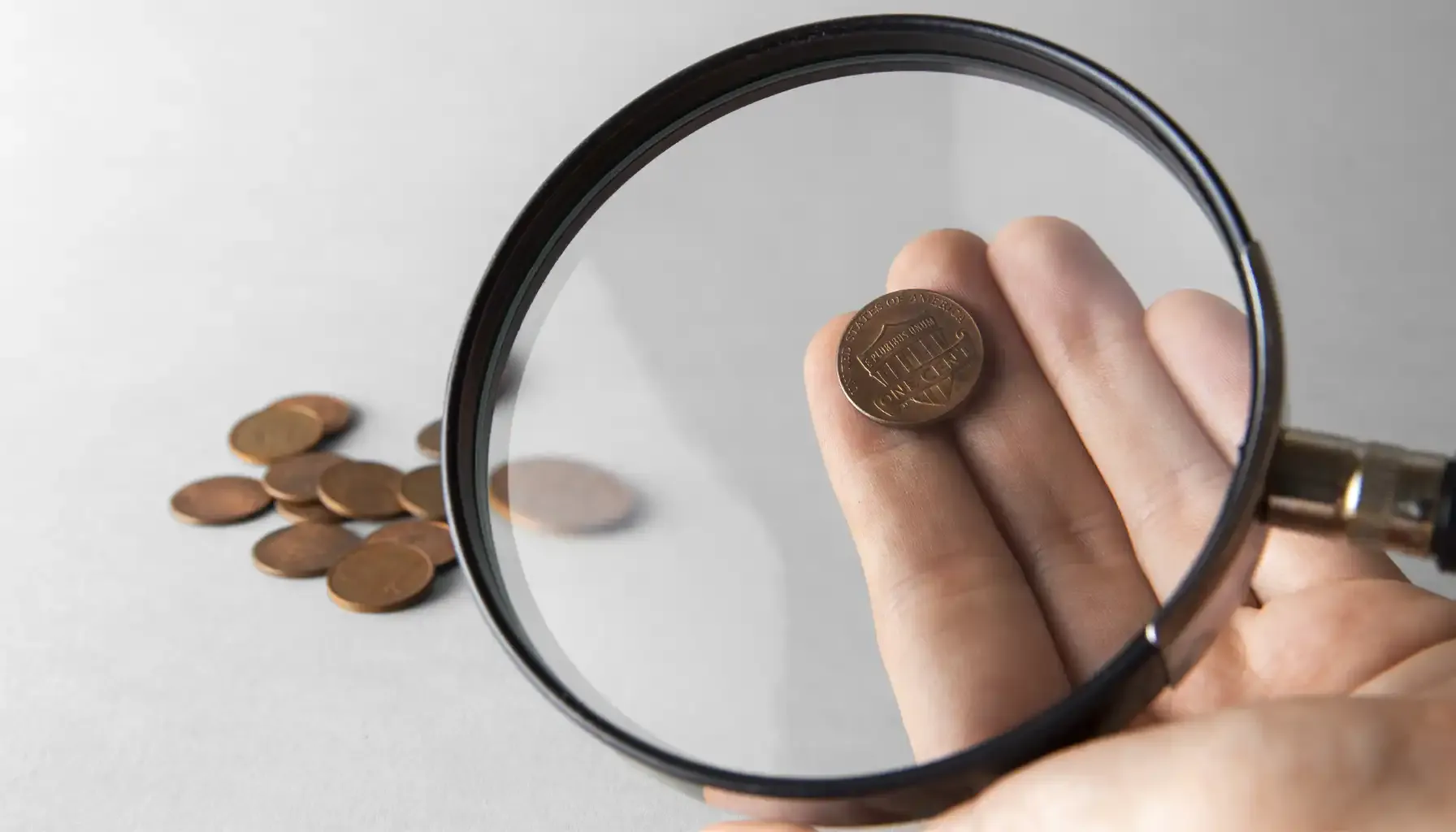
F. Identify with Coin ID Scanner App
Use Coin ID Scanner (iOS/Android) to:
Photograph the coin
Instantly identify it
Get estimated 1958 Washington quarter value
Manage your collection digitally
It’s helpful for beginners who are unsure about coin grades or mint marks.
Conclusion
There are two main mint versions from 1958: one from Philadelphia, 1958 quarter no mint mark with lower mintage, and the other from Denver, marked with a "D" and more widely circulated.
In 1958, a quarter could buy a gallon of gas or a loaf of bread. Today, that same coin, even in worn condition, is worth more in silver than the face value of a 1958 quarter, and in mint state or with an error, it can sell for hundreds or even thousands of dollars at auction.

 Facebook
  X (Twitter)
  Pinterest
  LinkedIn