Contents:
Before you go to the auction, be prepared for the fact that some people have a huge craving to pass off fake as reality, so do your best to understand the periods and identify coins yourself.
Type I vs Type II Identification
Breast vs Chain Mail
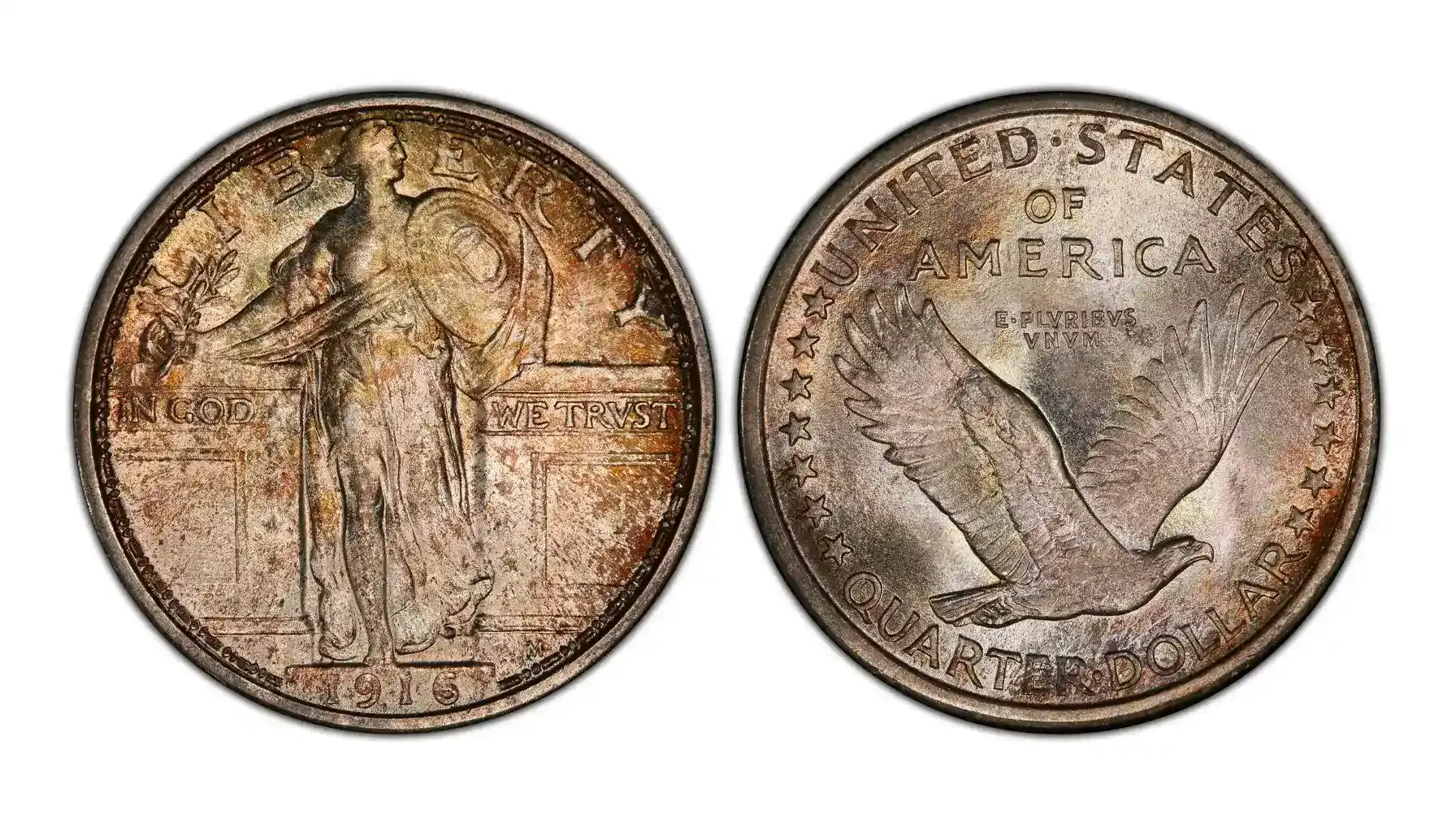
The main difference you can see between the types is in the picture of the goddess Liberty.
Type I
Design from 1916 and first part of 1917.
Liberty's Exposed Chest: On the front side of the coin, on the right side of the Liberty figure — the chest that is not covered.
Date Placement: The year "1916" is pressed on a small platform where the Liberty figure stands, and because the date sticks out, it is easy for it to wear off, so on AU coins the date is often completely gone.
Type II
Design from late 1917 to 1930.
Chain Mail: The uncovered chest part of Liberty is covered by a chain shirt.
Date Placement: The date is moved into a small lower place under the platform.
Since 1916 coins were only made in the Type I design, finding a 1916 coin in any condition shows it is a Type I, and the difference of $4,000+ happens because few Type I coins were made compared to the millions of Type II coins made later.
Identifying Features
Motto Position ("E PLURIBUS UNUM"): On the back side of the coin, the motto is placed over the eagle, and how clear and complete it is, especially the bottom parts of the letters.
Stars on the Back: On the back of the 1916 Type I coin, there are 13 stars around the eagle, five on the left, three on top, and five on the right, which stands for the 13 original colonies.
No Mint Mark: The 1916 Liberty Quarter coins were only made in Philadelphia, so they do not have a mint mark, and all 1916 quarters must be without a mark, because if you see a D or S mark, it means 1916 Standing Liberty Quarter for sale is a fake or you are wrong about the year.
Clarity of the Shield and Helmet: On the front side, the small parts of Liberty's helmet and the straight and horizontal lines on the shield are the first places to show wear.
So, how much is a 1916 quarter worth?
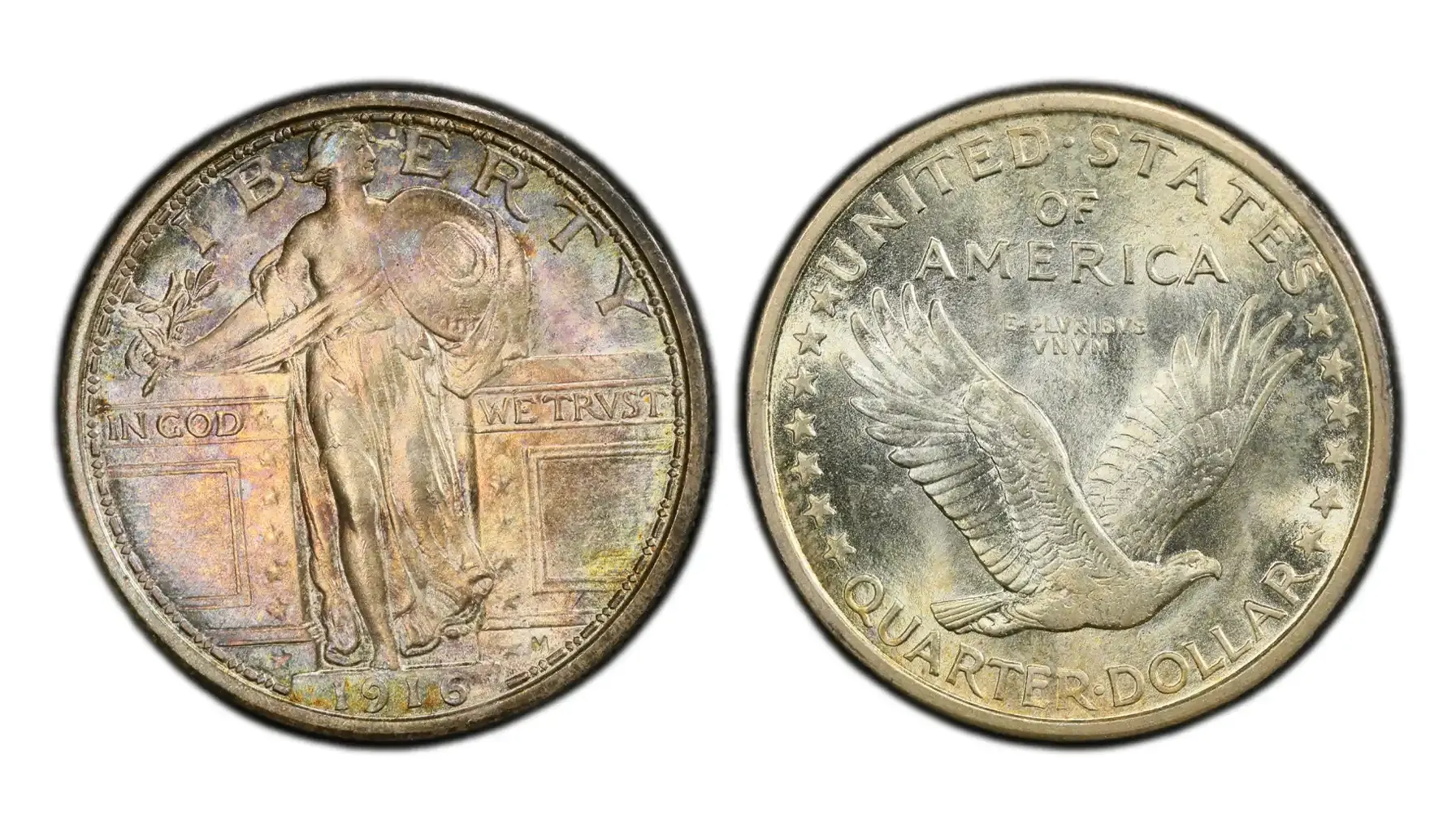
1916 Quarter Value
Type I
Condition | Approximate 1916 Standing Liberty Quarter Value |
G-4 | $400 – $800 |
VG-8 | $850 – $1,500 |
F-12 | $1,500 – $2,500 |
VF-20 | $2,500 – $4,000 |
AU-50 | $4,500 – $8,000 |
MS-63 | $10,000 – $15,000 |
$15,000 – $30,000+ |
The 1916 dateless Standing Liberty Quarter value can change based on market demand, condition, grading, and the specific characteristics of individual coins. And 1916 D quarter value is unknown, because it doesn’t exist.
Type II
As we said before, confirmed 1916 Standing Liberty Type II coins do not exist in the official set of coins made, so any 1916 coin you see is a Type I, and if you find a quarter with the 1916 date but with the Type II change, it will likely be a fake.
“At some point in the history of the S-L 25c, some "authorities," chief among them the late Walter Breen, claimed that the reason for the change from Type 1 to Type 2 was public outcry over the salacious nature of Liberty's exposed breast.
The 5th edition of A Guide Book of United States Coins Mega Red, called this idea "revisionist history" and further stated, "No contemporary articles or documents have been located to reinforce this assertion.”
— Mike Thorne, professional numismatist
Numismatic News
Full Head Premium
Full Head is a mark given by the coin grading companies PCGS and NGC for coins in MS condition that have kept the complete small parts of Liberty's helmet. Because the 1916 Type I coin was raised, Liberty's head was one of the highest parts and quickly wore out even during the making of the coin.
What is needed for FH:
Hair: A clear line of hair above the ear must be visible
Laurel Wreath: Three leaves of the laurel wreath must be clearly seen
Helmet: The small parts of the helmet must be clearly seen, including the edges of the helmet and its top line
Standards for Standing Liberty Quarters
Grading Scale
Grade | Front | Back |
G-4 | Liberty's head is a smooth outline, the date is often not readable | The eagle is a flat outline, and no feathers can be seen |
VG-8 | The outline of the hair can be seen, but the small parts are worn off, the date can barely be read | The shapes of the eagle's wings and legs |
F-12 | The shape of the helmet and the outlines of the hair can be seen well | The main shapes of the wing feathers, but there are no small details |
VF-20 | The side lines on the shield are clear, but the middle straight line might be worn off | Smaller feather details on the wings, the feet and claws are clear |
EF-40 | Only small wear on the highest parts | Clear feathers, but small wear on their ends |
AU-50+ | No use of the coin, but the shine is worn off on the helmet, knee, and elbow | The coin still has more than 50% of its original shine |
MS-60+ | The coin has no wear at all | The FH mark |
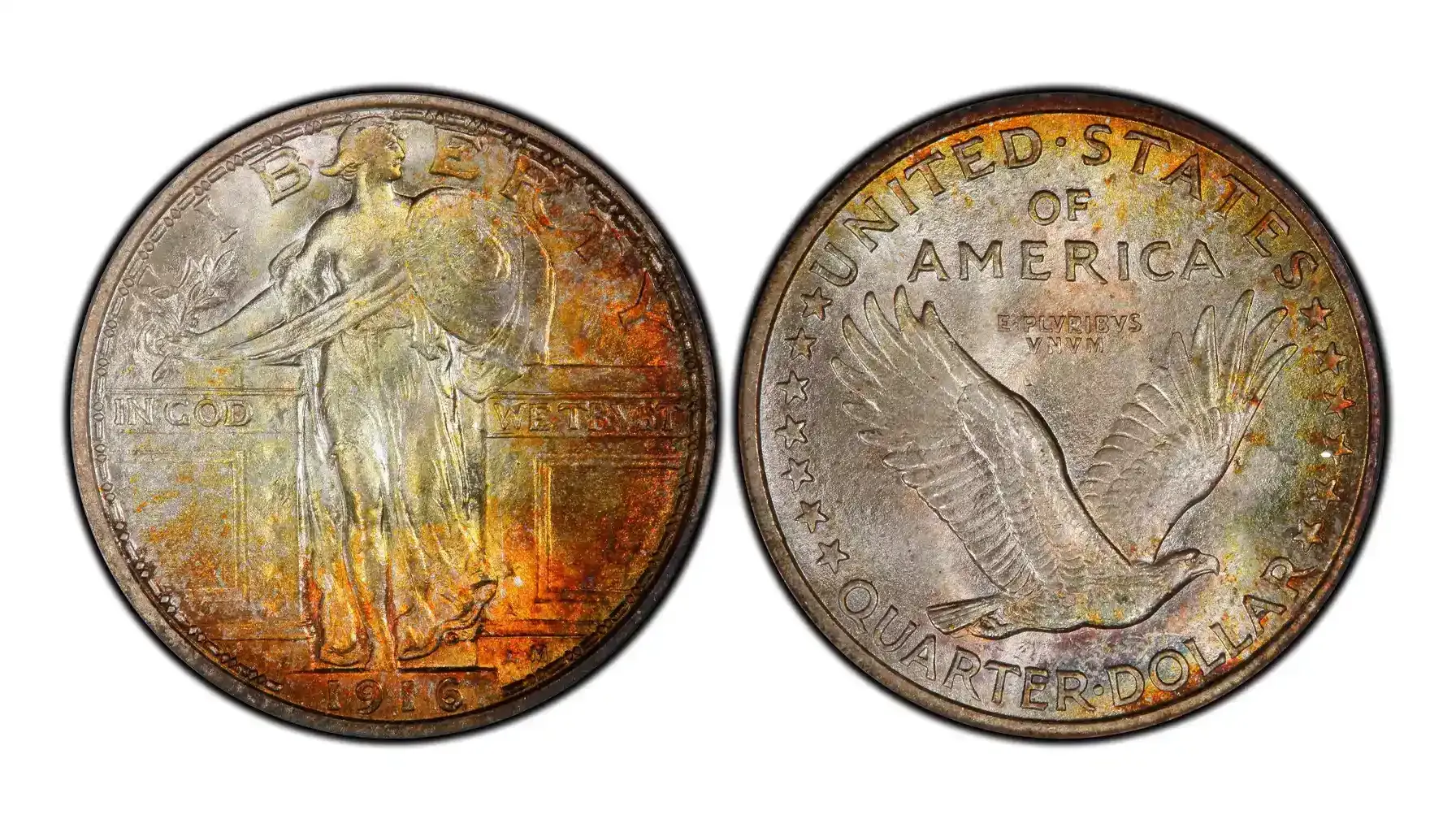
Common Wear Patterns
The Date: The 1916 date is the first thing to wear off.
Liberty's Head: Any wear here losing the small parts of the helmet or hair lowers the chance of getting the FH mark.
Liberty's Left Knee: Wear in this place is normal for coins that were used a lot.
The Shield: Losing the horizontal or straight lines on the shield moves the coin to the Fine category or lower.
The Elbow: Liberty's right elbow is also a place where wear happens fast.
End Note on Grading: Because the 1916 date wears out easily, most collectible coins that are sold are in the VG-8 or F-12 grades.
Investment Potential
Price Trends for 1916 Quarters
Stability for Basic Grades: Coins in G-4 and VG-8 conditions are always wanted, and 1916 quarter dollar value grows slowly because there are not many of them.
Fast Growth for High Grades: The biggest growth in price is seen in the MS-63 category and higher, especially if the coin has the FH mark, because over the last twenty years, MS-65 FH coins have shown a big growth in price, since there are few of them.
Rarity of FH: The Standing Liberty Quarter 1916 with FH is one of the hardest to find in the series, and past sales at auctions have set high price records.
Rarity
Mintage: 52,000 coins
Estimated Number Left: only about 15,000 to 20,000
MS Condition: fewer than 150-200 coins
FH Coins: fewer than 50
Conclusion
If you doubt the authenticity of your coin and are not sure that the appraiser said the correct grade at the auction, then try scanning the token through the Coin ID Scanner, or you might have bought a rare and expensive 1916 Type II coin that does not exist...
FAQ
How rare is the 1916 Type II quarter?
It doesn’t exist.
What percentage have Full Head details?
Less than 25%.
Should I get my 1916 quarter graded?
Yes, you should do this, because the lowest value of 1916 quarter, even in bad condition, is a few hundred dollars, so get a professional grade from PCGS or NGC.
What's the difference between Type I and Type II 1916 quarters?
Type I: the 1916 date is on a high platform and wears out easily, and this is the only type officially made in 1916.
Type II: There 1916 Type II.
How much is a 1916 Type I quarter worth compared to Type II?
The 1916 Type I coin price in Good condition starts from $400.
How can I accurately grade my 1916 Standing Liberty quarter?
Look for the scratches and details, or easily scan the token via Coin Id Scanner or get the professional grade from PCGS or NGC.
How many 1916 Type II quarters still exist today?
Zero.

 Facebook
  X (Twitter)
  Pinterest
  LinkedIn