Contents:
- Historical Background of the 1917 Quarters
- Type 1 vs Type 2: Key Identification Features
- The “Full Head” Designation and Its Importance
- Grading Standing Liberty Quarters
- Current Market Values by Type and Grade
- Buying and Selling Considerations
- Modern Tools for Advanced Collecting
- FAQ: 1917 Standing Liberty Quarter Questions Collectors Ask
- Conclusion
The 1917 Standing Liberty quarter comes in two different types, and knowing which one you have could mean thousands of dollars' difference in value. At first glance, both coins look nearly identical, but small design changes made in the middle of that year completely transformed the series.
This guide explains everything collectors need to know: how to spot 1917 standing liberty quarter type 1 vs type 2 differences, understand Full Head grading, identify rare varieties, and determine accurate 1917 quarter value. By the end, you’ll be able to tell which version of your coin you own and how much it could be worth, often in under a minute of inspection.
Historical Background of the 1917 Quarters
Category | Standing Liberty Quarters (1916–1930) |
Mint | Philadelphia, Denver, San Francisco |
Obverse Designer | Hermon A. MacNeil |
Reverse Designer | Hermon A. MacNeil |
Composition | Silver |
Fineness | 0.900 |
Weight | 6.25 g |
ASW (Actual Silver Weight) | 0.1808 oz |
Melt Value | $9.53 (as of 10/15/2025) |
Diameter | 24.3 mm |
Edge | Reeded |
Coin Type | 1917 Standing Liberty Quarter |
The Design Change Mid-Year
Not everyone liked the design of previous coins, and some people wanted to create something new.
“If, however, a change is made we all hope that more serviceable and satisfactory coins are produced than the recent Saint-Gaudens double eagle and eagle and the Pratt half and quarter eagle. The buffalo nickel and the Lincoln penny are also faulty from a practical standpoint. All resulted from the desire by the government to mint coins to the satisfaction of artists and not practical coiners.”
— Philadelphia Mint Superintendent Adam M. Joyce
For the Michigan Manufacturer and Financial Record
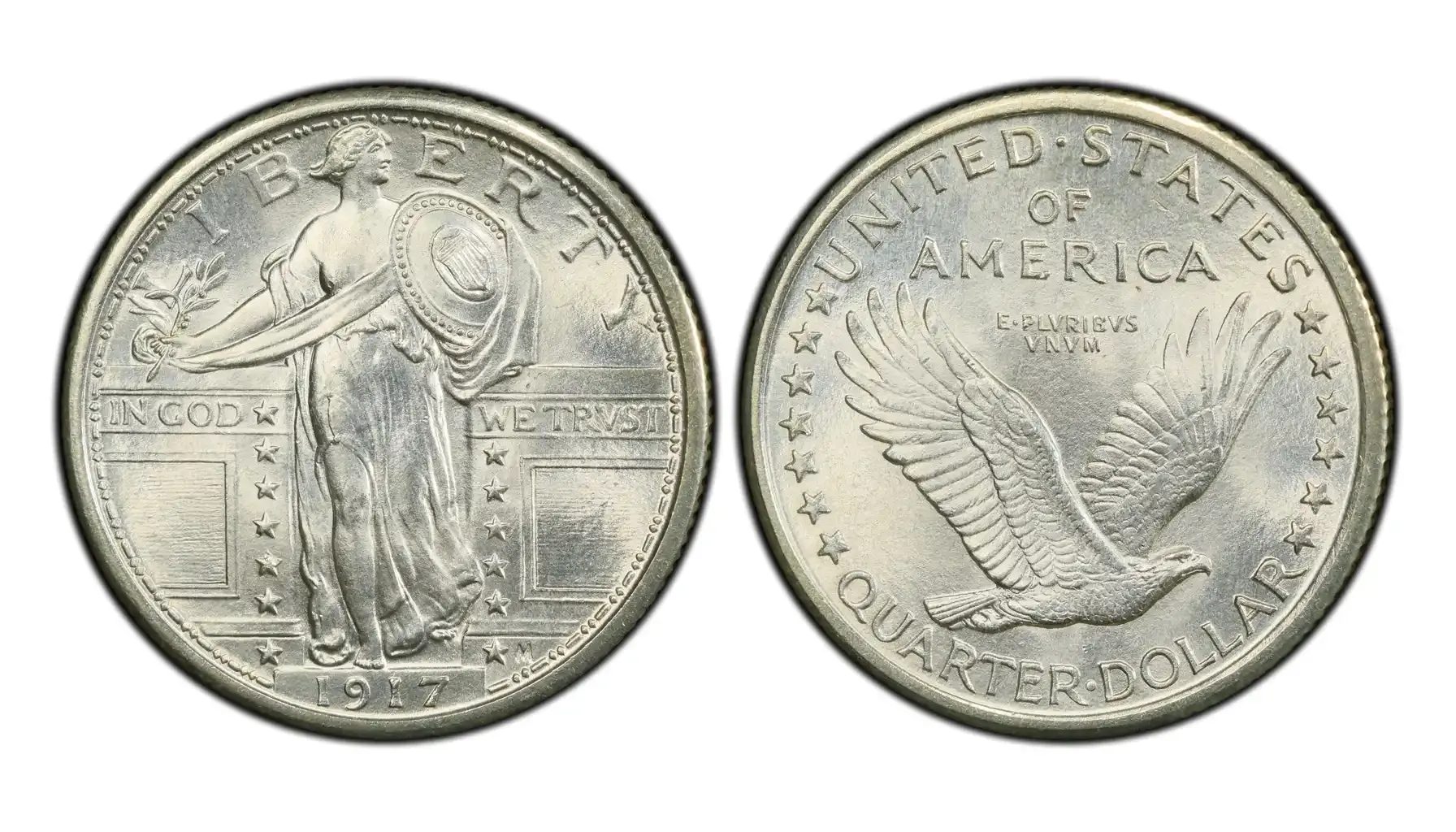
The 1917 Standing Liberty quarter began as a continuation of the short-lived 1916 design, but controversy forced a quick revision. Sculptor Hermon A. MacNeil’s original design had Lady Liberty standing in a doorway, holding a shield and an olive branch, symbols of defense and peace.
In the first 1917 version, Liberty’s gown exposed her right breast, which many Americans at the time found inappropriate. Midway through the year, the U.S. Mint quietly modified the design, covering Liberty in a suit of chain mail armor.
This change divided the series into two distinct types: Type 1 (bare-breasted) and Type 2 (armored), which are both struck within the same year.
Significance of the World War I Period
The timing of the design change coincided with America’s entry into World War I. The 1917 Liberty quarter shield showed the nation’s readiness to defend itself; her olive branch represented hope for peace.
Type 1 vs Type 2: Key Identification Features
Obverse Design Differences
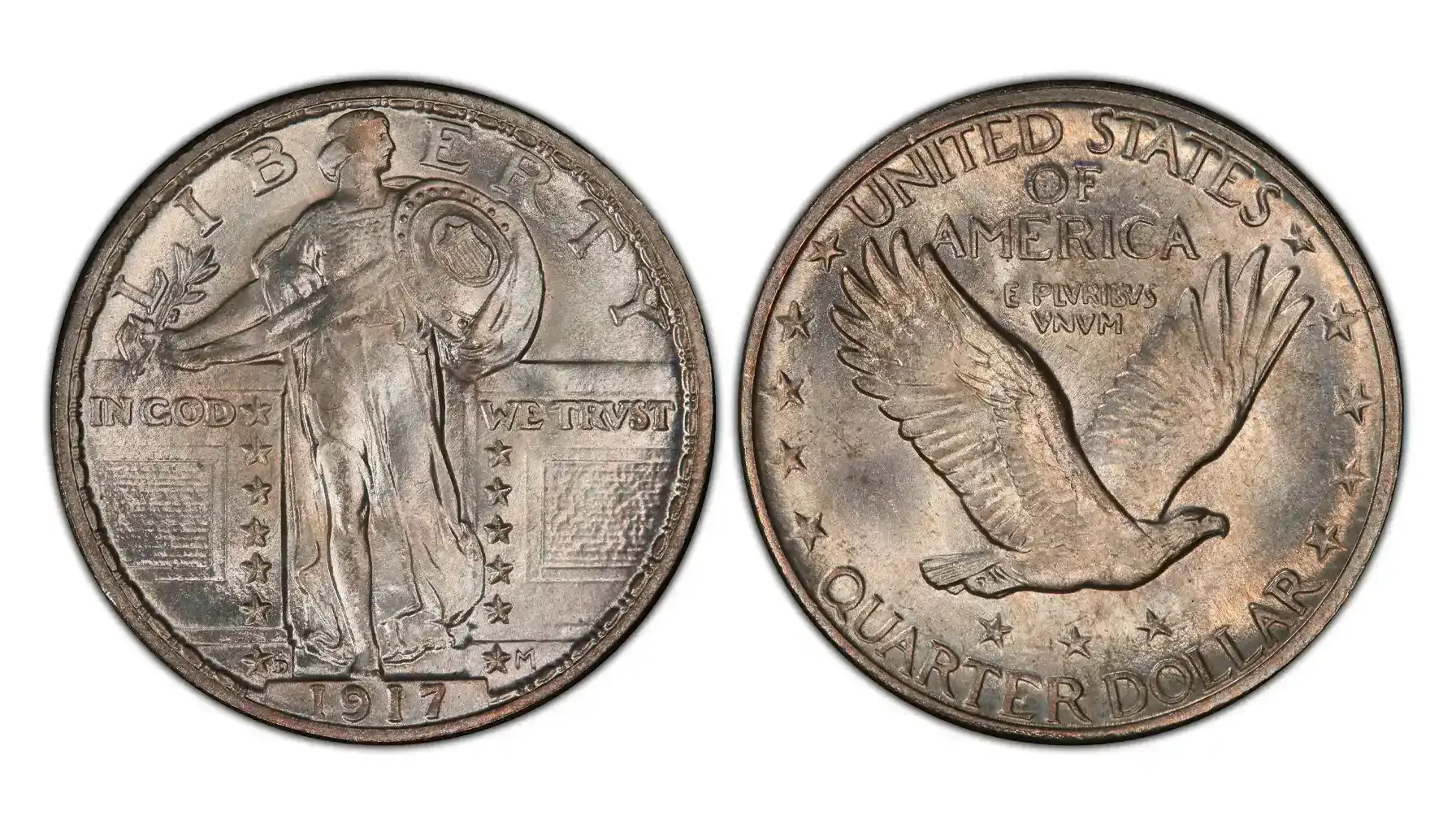
The easiest way to tell the two apart is on the front: the first type shows Liberty with an exposed breast, while the second type depicts her wearing chain mail armor.
The modification was meant to make the image “more modest” after public backlash in early 1917. Type 2 also has a stronger outline around the gateway and sharper detailing on Liberty’s shield.
Reverse Design Changes
On the first variation, the eagle flies low, with no stars beneath it and seven stars on the left, six on the right. On the second variation, the eagle was raised higher, with three stars added below to fill empty space and rebalance the design.
Mint Marks and Their Locations
The 1917 quarters were minted in Philadelphia (no mint mark), Denver (D), and San Francisco (S). The mint mark appears on the obverse, to the left of the date, just above and to the right of Liberty’s shield. 1917 Standing Liberty quarter Type 1 and Type 2 coins were struck at all three mints. Those mintages vary widely, some combinations are especially rare and valuable to collectors tracking 1917 coin value by mint and type.
The “Full Head” Designation and Its Importance
What Makes a Full Head Quarter
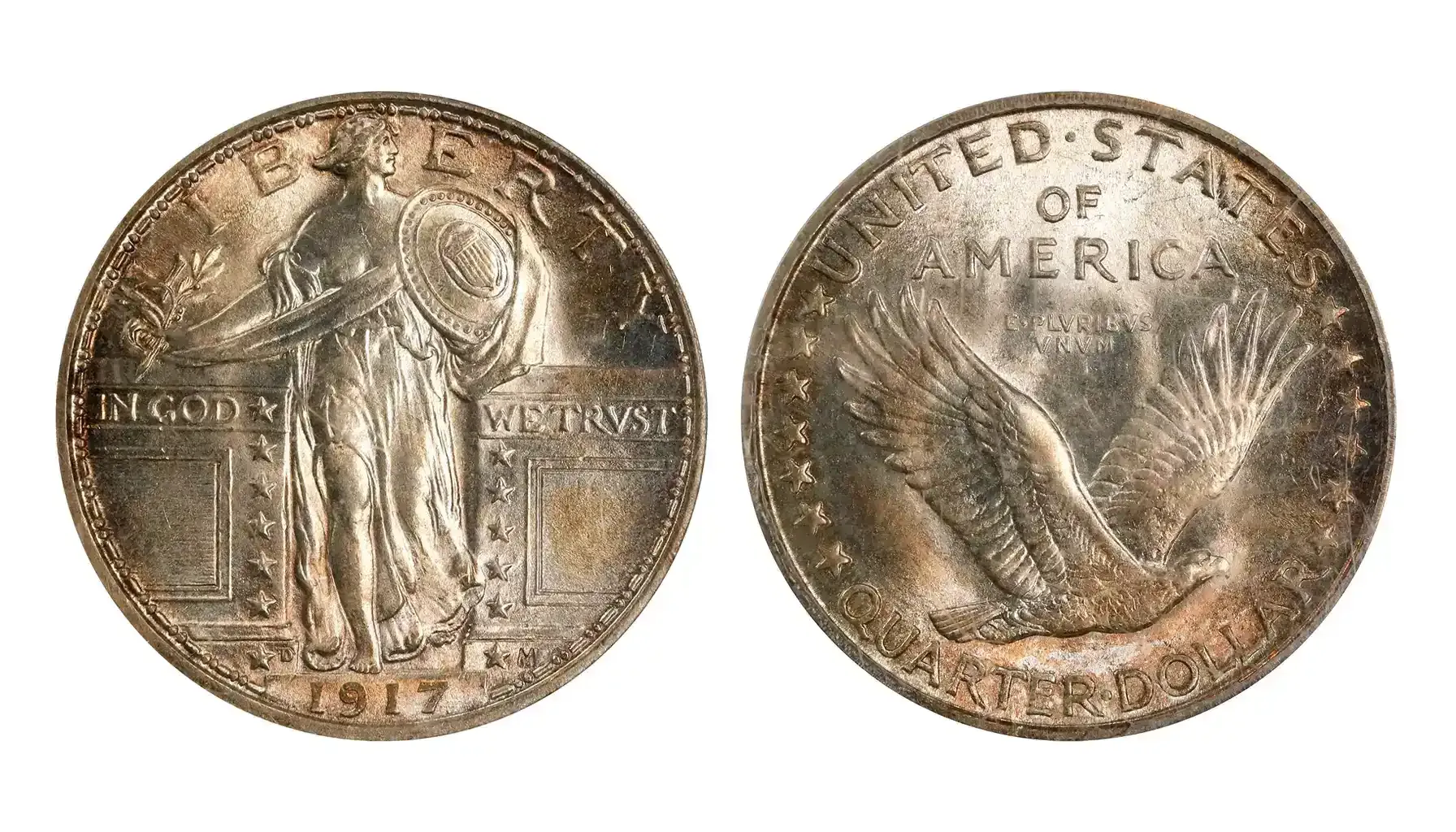
One of the most important grading details is the “Full Head” (FH) designation. It refers to the clarity of Liberty’s head, the three distinct lines in her helmet. A “Full Head” coin has a complete definition with no wear or weak strike across these details.
Because the head was one of the highest points on the coin, it often struck weakly or wore down first, so true FH examples are relatively scarce.
How Full Head Affects Value
How much is a 1917 quarter worth? The difference in price between a regular uncirculated coin and one with a Full Head can be much bigger than you think. For example, a 1917 First Type quarter in Mint State may sell for $300–$400. An FH example can exceed $1,000 or more. The same pattern is for 1917 Second Type quarters, though they tend to be more common overall.
Identifying Full Head Examples
To determine if your 1917 quarter qualifies as Full Head, look closely, preferably under magnification, at Liberty’s helmet. All three horizontal lines must be sharp and separate, the cheek should appear rounded, and the hair detail above the forehead must be visible.
Weakly struck or worn coins often lose one or more of these features, disqualifying them from the FH category. PCGS and NGC both use this designation in their grading process, often giving you a much higher certified 1917 Standing Liberty quarter value.
Grading Standing Liberty Quarters
Unique Challenges of This Design
Many examples show uneven wear, like sharp detail on Liberty’s shield but flatness on her head or gown folds. Even well-preserved pieces may appear weakly struck, so graders must separate true wear from minting imperfections.
Key Areas to Examine for Wear
When grading, pay special attention to these zones:
Liberty’s knee and breast area are the first spots to show flattening
Shield and olive branch: details fade quickly in lower grades
Eagle’s breast and wings on the reverse: commonly worn on circulated coins
Helmet lines are pretty important for determining Full Head qualification
Common Preservation Issues
The silver alloy used in quarters (90% silver, 10% copper) is soft, so the surface is prone to scratches and contact marks. Improper cleaning is another frequent problem because it can permanently lower the value, even if the coin appears shinier.
Toning, fingerprints, and environmental corrosion can also reduce grade. Just handle coins by the edges and store them in archival-safe holders.
Current Market Values by Type and Grade
Type 1 Quarter Values
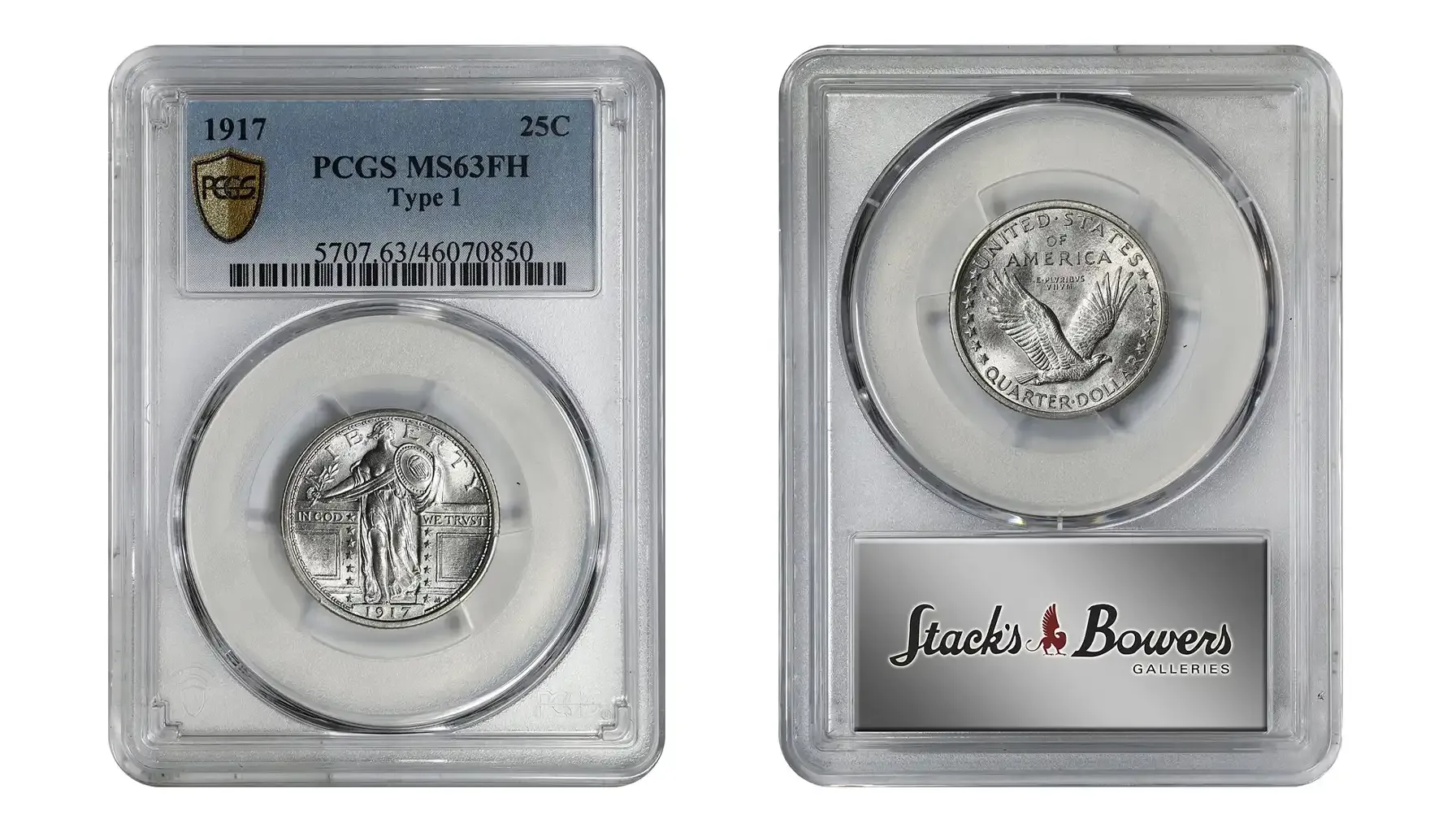
The 1917 Type 1 Standing Liberty quarter was struck for only part of the year, so its availability is limited, but not extremely rare in circulated condition.
Approximate market 1917 standing liberty quarter type 1 value:
Good (G-4): $35–$50
Fine (F-12): $65–$90
Extremely Fine (XF-40): $130–$180
About Uncirculated (AU-50): $190–$250
Mint State (MS60–MS63): $275–$400
Full Head (MS65 FH and above): $800–$1,500+
Type 2 Quarter Values
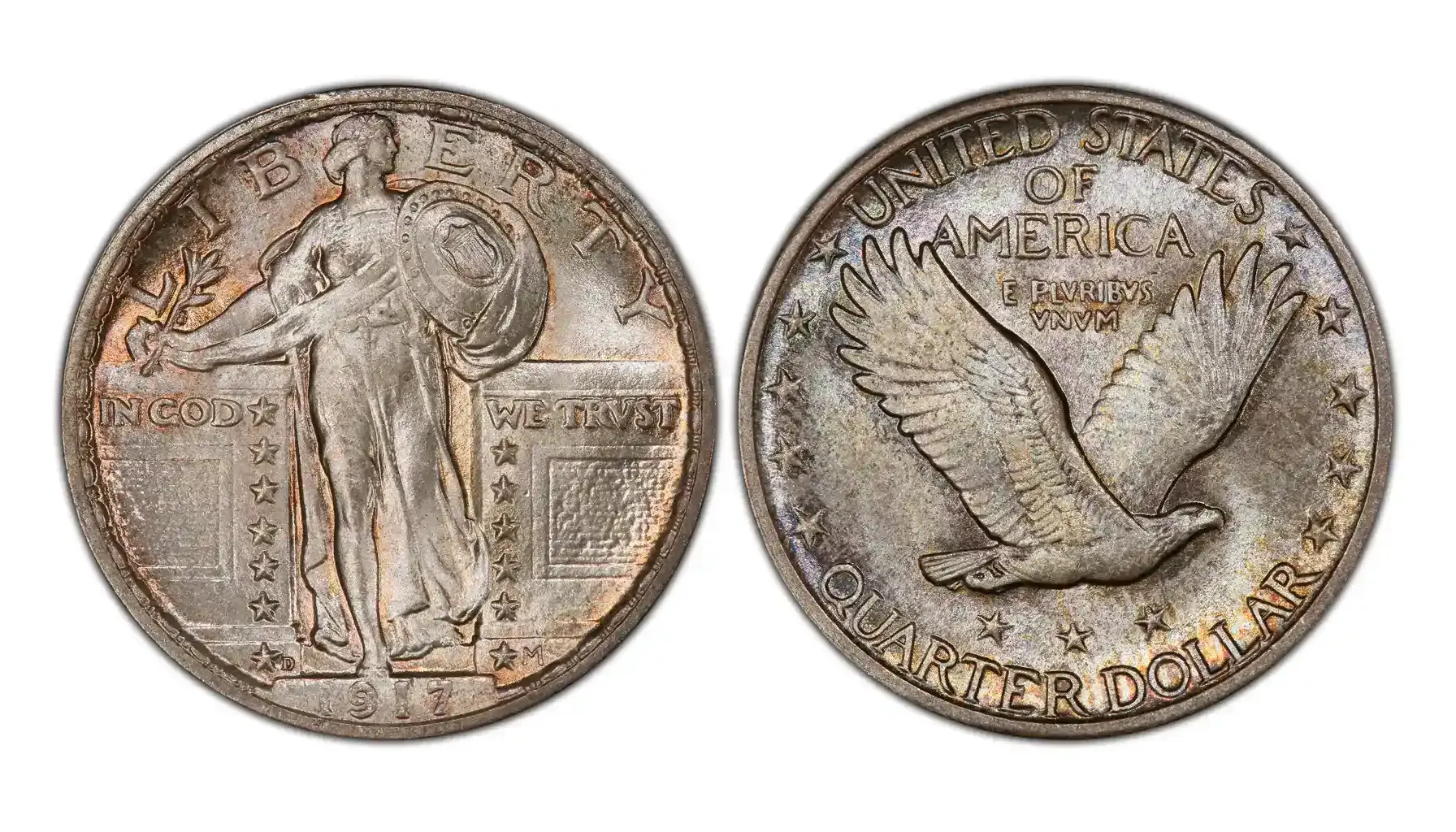
The 1917 Type 2 quarter is slightly more common but is still valuable in upper grades.
Estimated values:
Good (G-4): $25–$40
Fine (F-12): $55–$75
Extremely Fine (XF-40): $100–$150
About Uncirculated (AU-50): $160–$220
Mint State (MS60–MS63): $240–$350
Full Head (MS65 FH and above): $700–$1,200+
Rare Varieties and Premiums
The quarters from this year don’t have major doubled dies or overdates. But strong strike varieties from the Denver and San Francisco mints can cost more. Coins with exceptional luster, natural toning, or outstanding eye appeal also sell above guide prices.
Buying and Selling Considerations
Authentication and Certification
Counterfeits do exist, often made from altered or cast pieces. To protect your investment, purchase coins certified by PCGS, NGC, or ANACS. Grading services verify authenticity and assign a grade that can affect price. Certified coins are also easier to resell because buyers have confidence in their condition and legitimacy.
When buying raw (uncertified) coins, inspect edge reeding, metal color, and strike detail. Real quarters should show a consistent silver tone and fine texture.
Market Trends for Standing Liberty Series
1917 quarter Type 1 coins tend to appreciate faster thanks to their short mintage and controversy over Liberty’s design. But high-grade Type 2 pieces with Full Head strikes continue to draw competitive bidding at auctions.
Long-term collectors favor well-preserved examples. Market data from PCGS and Heritage Auctions shows steady growth for certified coins graded MS65 or better.
If you plan to sell, list your coin through reputable auction houses or online marketplaces that specialize in numismatics, not generic resale sites.
Proper presentation and verified grading can raise final sale prices by 20–40%.
Modern Tools for Advanced Collecting
Specialized Reference Apps
Technology has made collecting easier than ever. Apps like Coin ID Scanner allow users to instantly identify coins and estimate their market value with a quick photo. These tools use AI recognition to detect mint marks, strike types, and wear patterns. Many collectors rely on these apps to verify coin value or to track changes in price trends over time.
Professional Grading Services
PCGS (Professional Coin Grading Service) and NGC (Numismatic Guaranty Company) have expert authentication, precision grading, and tamper-evident encapsulation that preserves the coin’s condition.
You can submit your 1917 quarter to one of these services can turn a $200 coin into a $2,000 one, especially if it has a Full Head design.
Online Market Analysis Tools
Modern numismatics relies on data. There are websites like PCGS CoinFacts, NGC Price Guide, and Heritage Auctions Archives where you can analyze historical prices, auction results, and grading population reports.
This way, buyers can make informed decisions before purchasing or selling. Tracking these statistics reveals patterns, for instance, how the 1917 Standing Liberty quarter value peaks during silver price surges or major anniversary years.
FAQ: 1917 Standing Liberty Quarter Questions Collectors Ask
How can I quickly tell Type 1 from Type 2?
Look at Liberty’s chest on the obverse. The Type 1 shows Liberty with an exposed breast, while the Type 2 adds a chain mail covering. On the reverse, Type 1 has no stars under the eagle, and Type 2 has three stars below it.
What’s the most valuable 1917 quarter?
The 1917 Type 1 Full Head in high mint state (MS65 or better) can sell for over $1,500; exceptional Type 2 Full Head examples have reached similar prices at major auctions.
Why are Full Head quarters so expensive?
A “Full Head” means the strike was strong enough to show all three raised lines in Liberty’s helmet. It’s rare because many coins from that period were weakly struck, so sharp examples are prized by collectors.
Should I get my 1917 quarter graded?
Yes, especially if it looks uncirculated or has Full Head detail. Professional grading by PCGS or NGC verifies authenticity and can multiply the coin’s value compared to a raw example.
How does the mint mark affect the 1917 quarter value?
Coins without a mint mark were made in Philadelphia, while “D” and “S” marks represent Denver and San Francisco. Mint marks are located on the obverse, to the left of the date. The 1917-D and 1917-S often have higher prices in mint condition because of their lower surviving populations.
Conclusion
The 1917 Standing Liberty quarter remains one of America’s most fascinating coins. The distinction between the two types it’s a moment in U.S. history when public opinion directly shaped coinage.
If you have one, maybe you would like to understand which version you have and perhaps spot a Full Head, because market trends can mean the difference between a $50 find and a $1,000 treasure.
To make it easier, use trusted grading services or digital tools like the Coin ID Scanner app. They’ll help you confirm authenticity, recognize valuable varieties, and keep track of current updates, all from your phone.
If you’re lucky enough to own one of these silver classics, preserve it carefully and consider grading.

 Facebook
  X (Twitter)
  Pinterest
  LinkedIn