Contents:
Since 1916, this quarter has attracted and formed public numismatic opinion. The United States of America remembers those years as a complex mint production and economic pressure.
This guide focused on major coin features and the current 1921 quarter value. Immerse yourself in the world of useful information for beginners and professionals in the field of numismatics.
Expand your personal collection with a free coin appraisal app.
1921 Standing Liberty Quarter Overview
Historical records indicate that the year saw the return of production after a two‑year suspension. The Mint resumed striking items following this extended break.
Notably, the Philadelphia Mint produced all items, with no contribution from branch mints. Numismatic data confirms that the year’s total mintage remained substantially lower than that of subsequent issues.
Item Specifications
The table shows the principal item information; however, some features remain undisclosed. The mintage is 1,916,000 pieces, fineness is 0.9 millimeters, and the melt value is $16.95.
Period | 1916–1930 |
Edge | Reeded |
Composition | Silver |
Weight | 6.25 g |
Diameter | 24.3 mm |
Designer | Hermon A. MacNeil |
Historical Note: The Great Transition
The Great Transition is another name for 1921. Economic recession, silver dollar redesigns, and the production of one of the most valuable items nowadays.
Morgan and Peace Dollar: The United States Mint produced two completely different dollar designs.
Record Low-Mintages: The D Walking Liberty Half Dollar is particularly famous, with only 208,000 coins struck – the lowest mintage in the entire series.
Another item is a Mercury dime with mintages of only about 1.2 million each. This year, the Standing Liberty Quarter issue had a mintage of just 1.9 million, making it a highly sought-after collectible for collectors.
Identifying the 1921 Standing Liberty Quarter
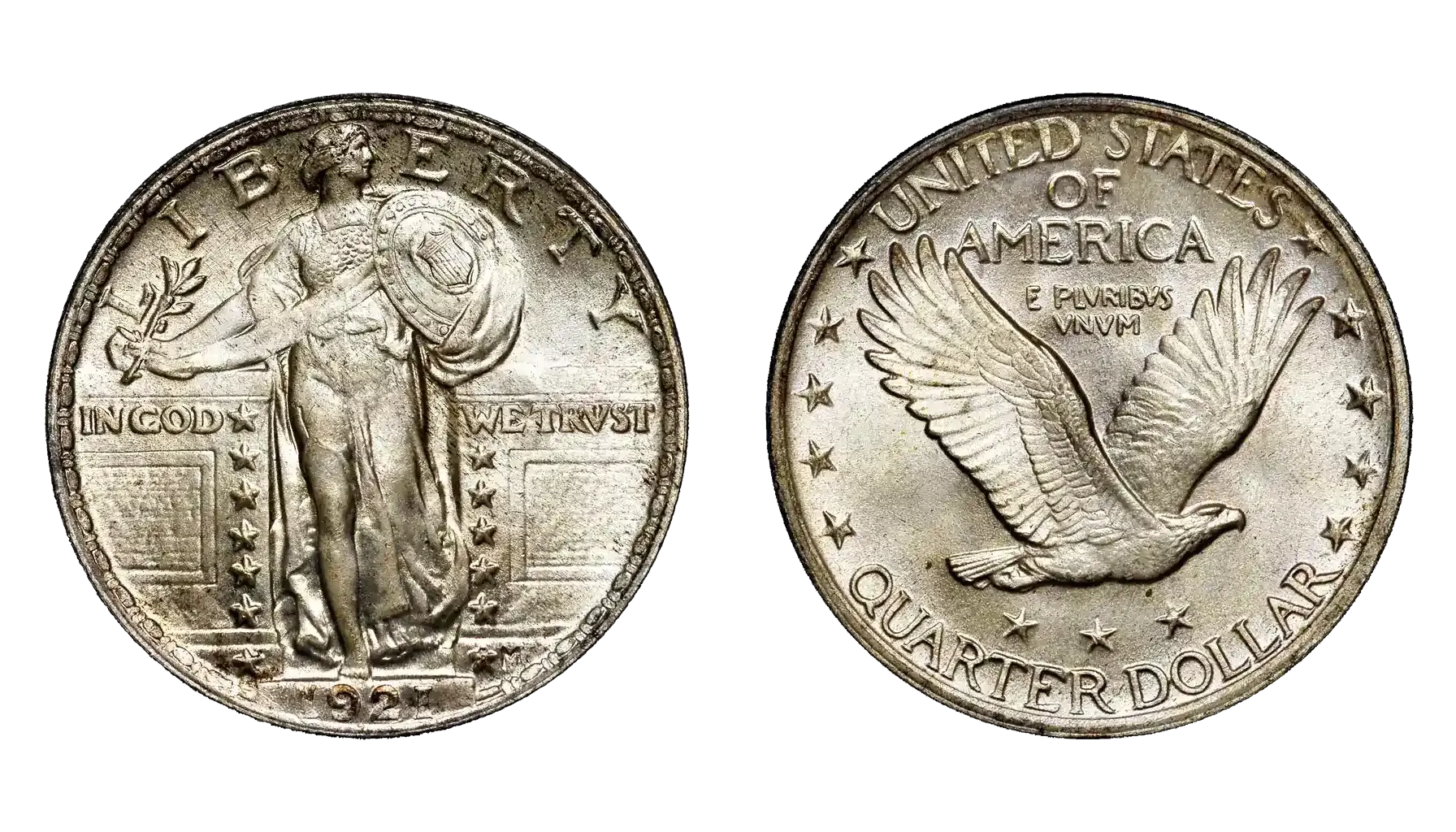
The unique striking pattern in this year's items, where the lower portion of the date frequently appears shallower than intended – a reversal of the typical striking issue seen in other years (where the upper portion fails to fully impress).
This characteristic aligns with a broader pattern observed in items from 1917 to 1924, where the final digit of the date consistently proves to be the most resistant to die wear, often serving as the primary identifying feature.
Identification relies on several clear elements.
Liberty faces right and holds a shield.
The date appears recessed near the base.
The eagle on the reverse shows a flat relief without stars beneath.
The coin lacks a mint mark, which confirms Philadelphia origin.
Wear often affects the date area, which requires close inspection. These traits confirm the authenticity of the liberty item.
Mint Marks and Varieties of the 1921 Quarter
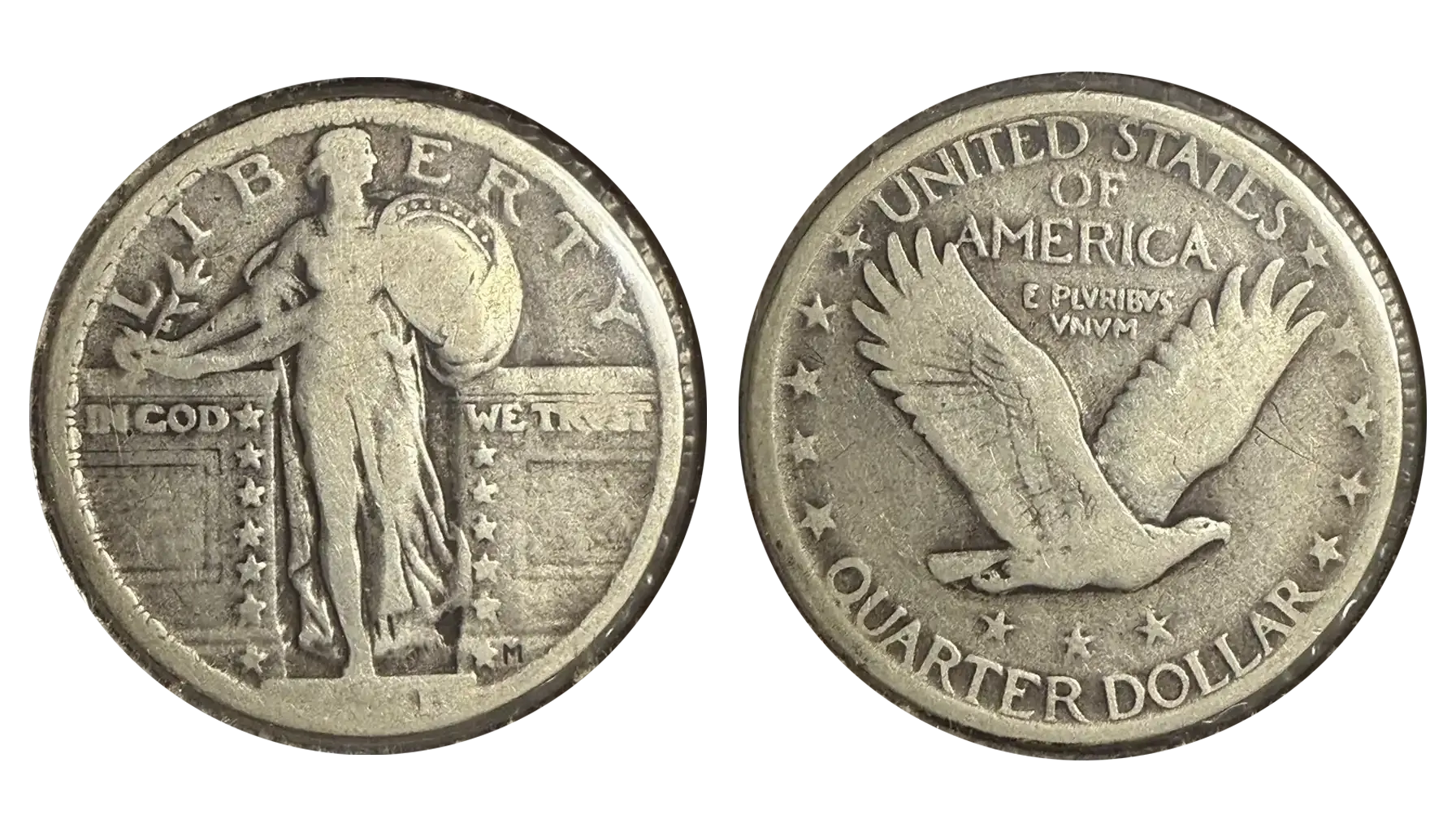
How much is a 1921 quarter worth in the modern world? As the year 2026 unfolds, collectors eagerly pay hefty premiums for those rare coins struck with exceptional force, revealing every nuance of the original design.
Mint – Philadelphia
Mint Mark – None
Mintage – 1,916,000
“According to the NGC Price Guide, as of January 2026, a Standing Liberty Quarter from 1921 in circulated condition is worth between $150 and $1500. However, on the open market 1921 Quarters in pristine, uncirculated condition sell for as much as $8650.”
– NGC Coin Explorer
NGC
1921 Quarter Value by Condition and Mint
Circulated examples continue to demonstrate moderate demand levels among collectors. Meanwhile, coins in superior grades attract the attention of advanced buyers and frequently become focal points of registry competition.
Notably, the 1921 Standing Liberty quarter value exhibits a significant appreciation in value once its condition exceeds the Extremely Fine benchmark.
Good | Fine | Extremely Fine | Uncitculated |
$175 | $475 | $800 | $1,150 |
Condition mint state items reach more than eight thousand dollars. The cost spectrum starts from $2,900 for MS-65 to $8,650 for MS-67.
MS-65 – $2,900
MS-65+ – $3,650
MS-66 – $3,850
MS-66+ – $5,150
MS-67 – $8,650
Factors Affecting the Value of a 1921 Standing Liberty Quarter
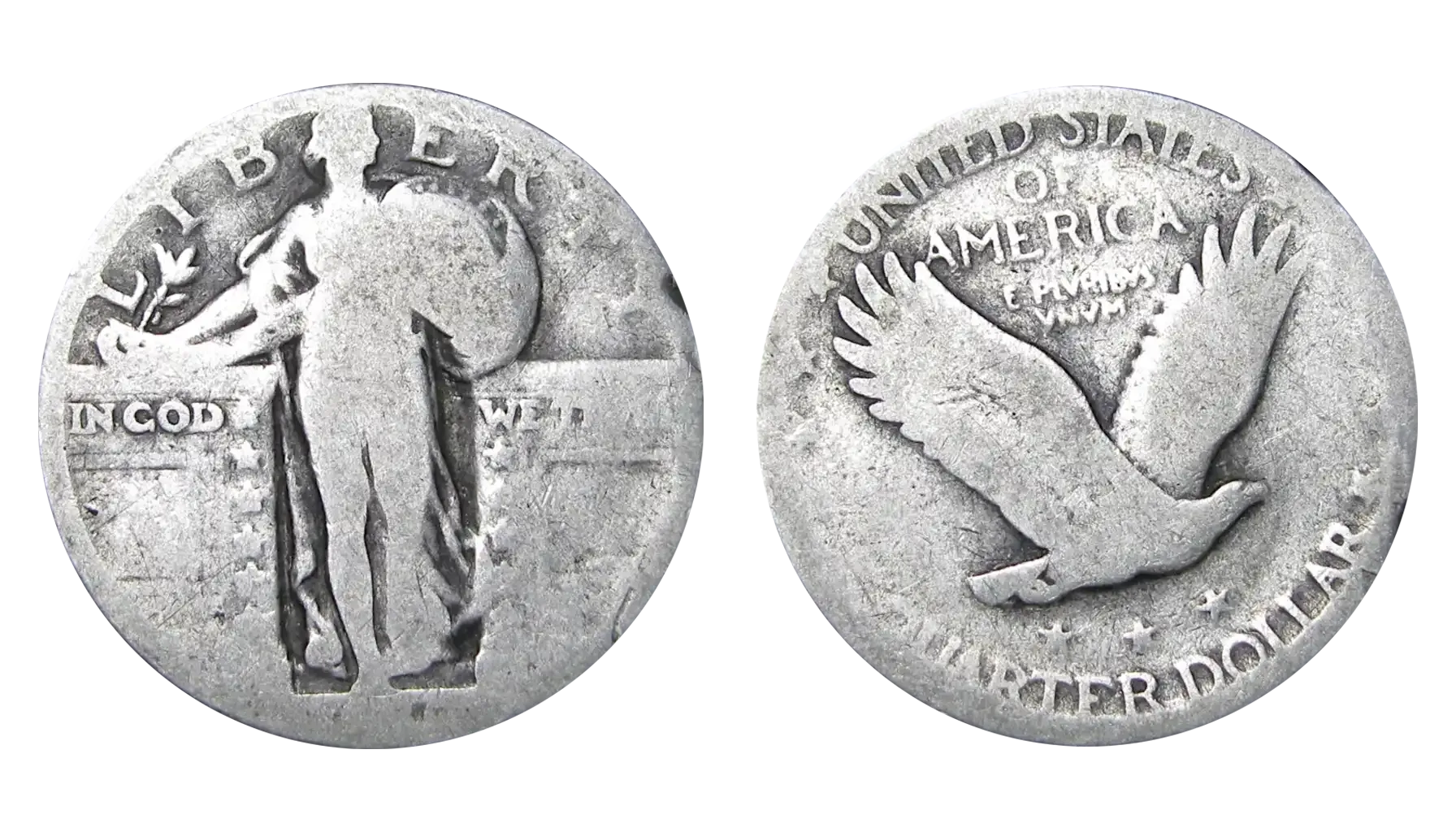
The strike quality impacts surface detail visibility and overall market appeal. Coins demonstrating complete head detail consistently attract higher demand levels and achieve premium pricing.
Specimens retaining original surfaces typically command stronger valuations. However, the “right” toning increases the price range several times.
The evidence of cleaning substantially undermines buyer confidence and diminishes resale potential. Certification by providing the necessary transparency in high‑value transactions.
These combined factors ultimately determine the 1921 quarter worth in the modern world.
Collector Tips and Where to Buy 1921 Quarters
Although these measures may seem straightforward, their diligent implementation is crucial to mitigate risks associated with counterfeits and fraudulent activities.
№ | Step | Details |
1 | Caring | Do not clean your item; take gloves |
2 | Certification | PCGS, NGC |
3 | Online Platforms | eBay, professional auctions, open markets |
4 | Knowledge | Bookguides such as the Red Book |

 Facebook
  X (Twitter)
  Pinterest
  LinkedIn