Contents:
The 2005 coin interest grows as new studies review important characteristics for the numismatic world. The coin attracts attention from groups that explore the early State Quarters series. Collectors who examine value trends confirm that grade and surface quality shape market direction for this release.
Minnesota State Quarter Overview
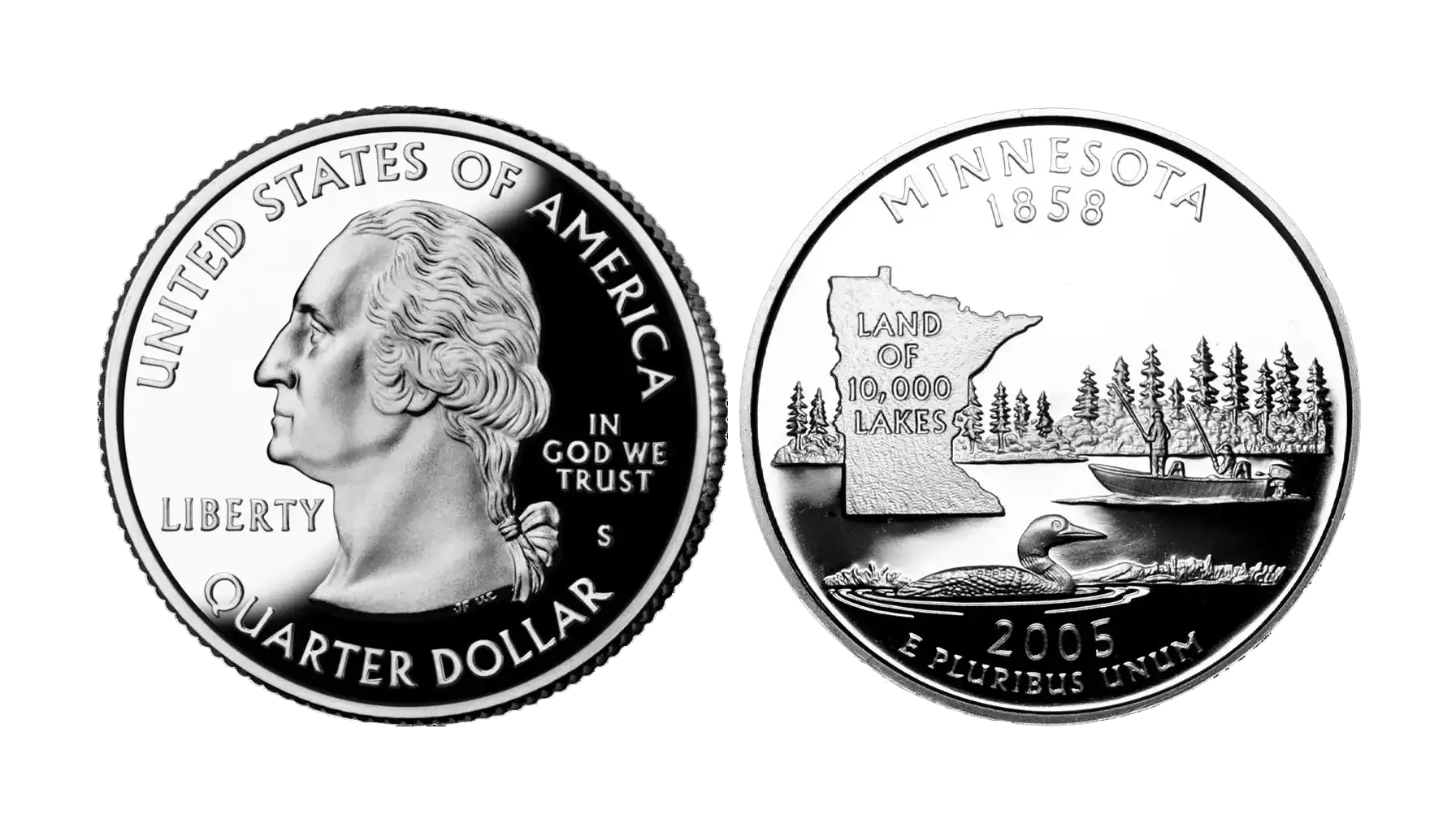
The reverse shows the state outline, a modest lake scene, a fisherman in a boat, and a dense forest. These elements reflect the natural variety and the strong outdoor tradition of the region – the obverse maintains the Washington portrait with firm line structure and stable metal flow across the fields.
Demand for the coin segment rises when high-grade rolls reveal strong luster and full details on the pines. Philadelphia and Denver handled standard strikes, while San Francisco produced proof coins with sharper contrasts. Distinct traits across these mints allow precise attribution and support expanded research across advanced surveys.
Diameter | 24.3 mm |
Weight | 5.67 g |
Metal | Copper-Nickel Clad Copper |
Edge | Reeded |
Designer | John Flanagan / Charles L. Vickers |
The reverse design features a tree-lined lake with two people fishing in a boat, a loon swimming on the water, and a textured outline of the state containing the inscription "Land of 10,000 Lakes." The same obverse designer, John Flanagan, developed the Kansas coin.
With the lowest circulation mintage of 2005’s quarter releases, the Minnesota Quarter trades as a slight rarity within its cohort, yet remains widely accessible in the market.
2005 Minnesota Quarter Value and Errors Guide
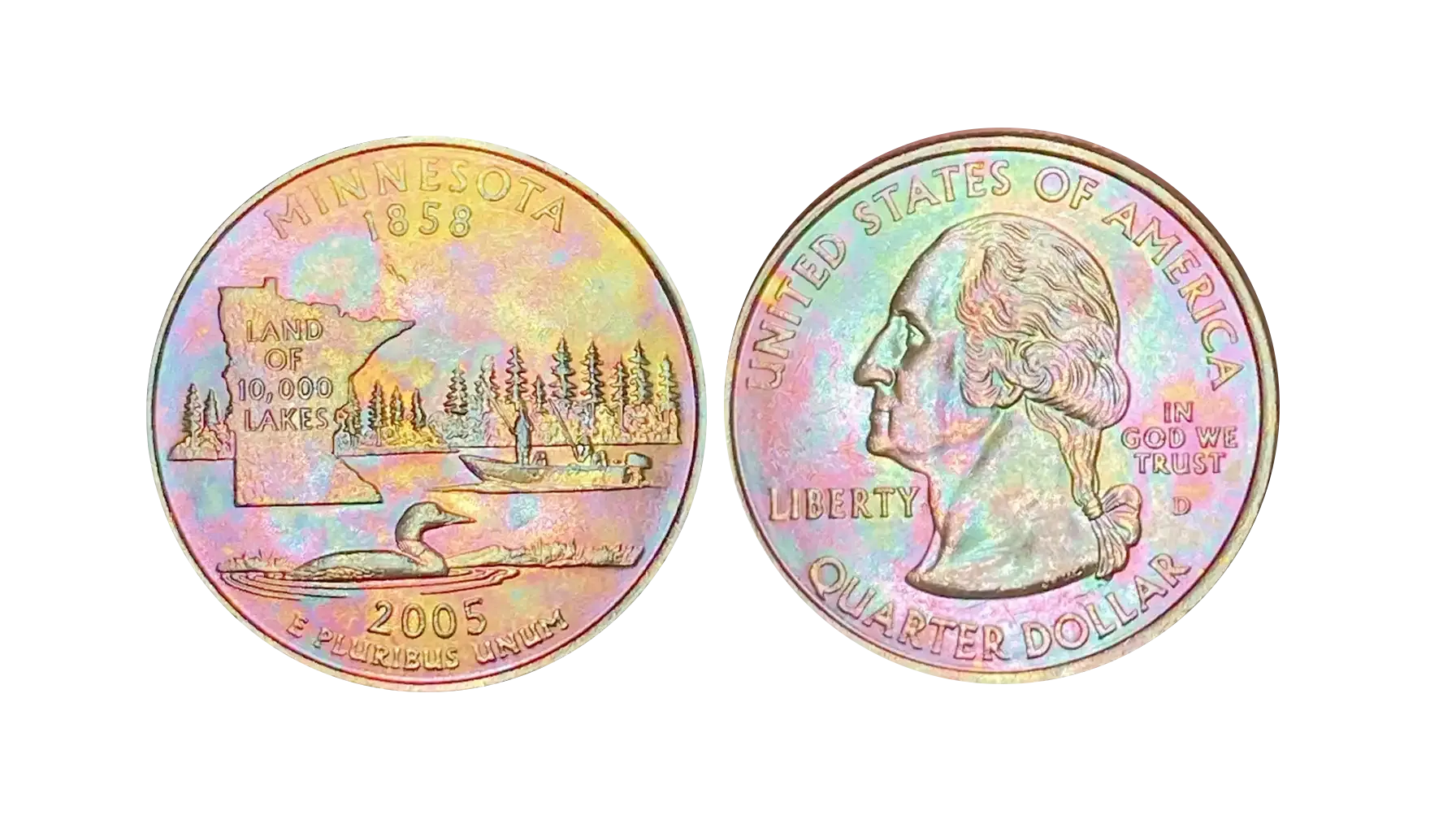
The market price of a coin typically fluctuates based on its assigned grade as well as the specific mint mark it bears. Circulated coins hold a base value, while MS-66 and MS-67 examples draw stronger attention. A small group of coins shows faults that raise interest within the broader 2005 Minnesota Quarter error category.
Some pieces show light doubling on pines, thin strike-through lines on the lake area, or minor die chips near the outline. Weak metal flow occurs on certain Denver issues, while selected Philadelphia coins display shallow texture shifts near the boat. These traits produce a strong contrast and expand the full error range across current studies.
Mint | Circulation | Mintage | MS-67 | MS-68 |
P | Standard | 239,600,000 | $10–$25 | $646 |
D | Standard | 248,400,000 | $10–$25 | $100–$200 |
S | Collector Proof | 3,262,960 | $10–$20 | N / A |
S | Silver Proof | 1,678,649 | $30–$45 | N / A |
Note: The Philadelphia and Denver mints together made almost double the number of 2005 Oregon coins compared to this coin.
2005 Minnesota Extra Tree Errors
“Among these is the 2005-P Minnesota Quarter with doubled die reverse. This scarce major Philadelphia variety, officially designated by PCGS as the FS-801 Doubled Tree DDR-001 (regular strike) is the most pronounced and desirable of more than four dozen different doubled die varieties involving the appearance of an extra spruce tree on the reverse of the 2005-P Minnesota Quarter.”
– Joshua McMorrow-Hernandez, a numismatist
PCGS
The extra tree fault stands among the most reviewed features of this release. Analysts note raised metal along tree lines that creates the illusion of one or more additional trunks.
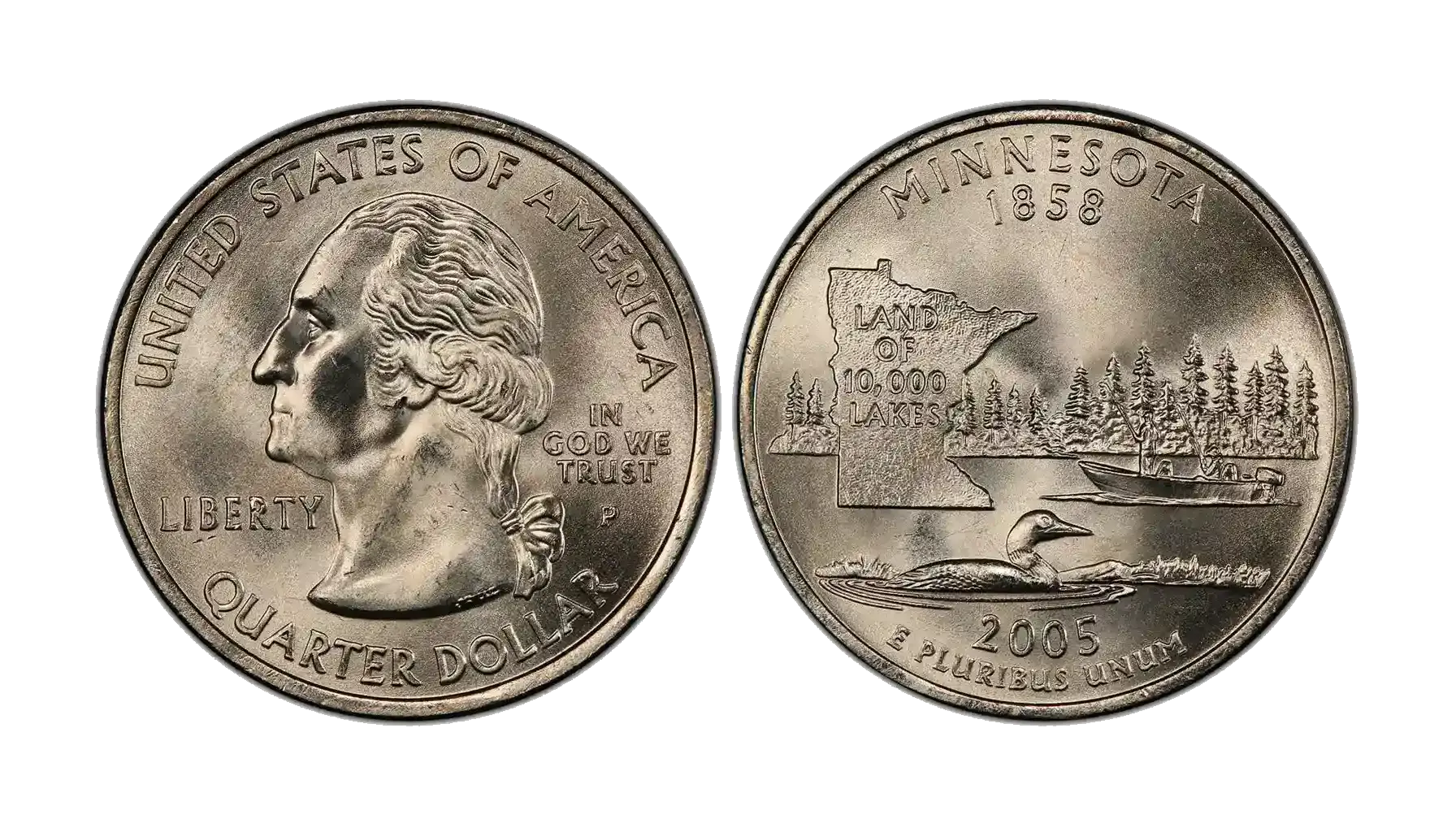
The fault appears in multiple die states with different shapes and positions. Some versions show a short vertical bar, while others display wide metal distortion with clear separation from neighboring trees.
These forms support steady research as advanced groups compare strike intensity, field reflectivity, and trunk outline shape. This segment attracts strong attention across the entire Minnesota State Quarter error landscape because each variant offers unique faults.

 Facebook
  X (Twitter)
  Pinterest
  LinkedIn