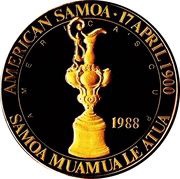
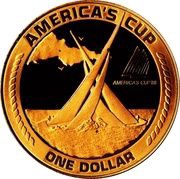
1 Dollar America's Cup with rope-like ornamentation, 1988
United States
Bronze,31.1 g,39 mm
Value: n/a
Results: 1280
Results: 1280
United States
Bronze,31.1 g,39 mm
Value: n/a
United States
Bronze,31.1 g,39 mm
Value: n/a
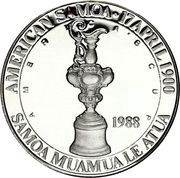
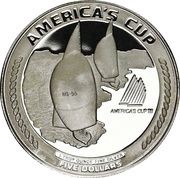
United States
Silver (.999),31.1 g,38 mm
Value: n/a

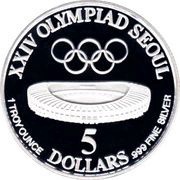
United States
Silver (.999),31.1 g,41 mm
Value: n/a
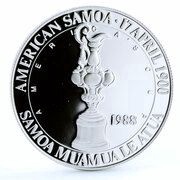
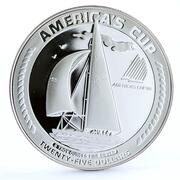
United States
Silver (.999),155.5150 g,63 mm
Value: n/a
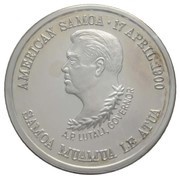
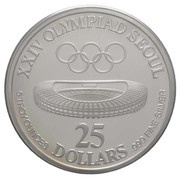
United States
Silver (.999),155.52 g,63 mm
Value: n/a
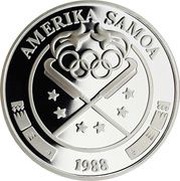
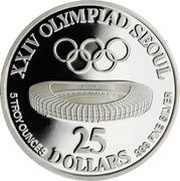
United States
Silver (.999),155.52 g,63 mm
Value: n/a
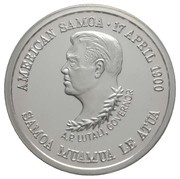
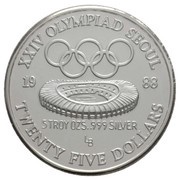
United States
Silver (.999),155.52 g,63 mm
Value: n/a
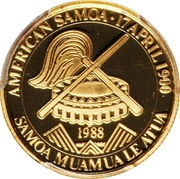
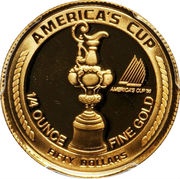
United States
Gold (.900),8.64 g,22 mm
Value: n/a
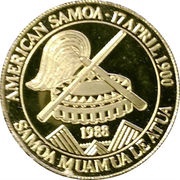
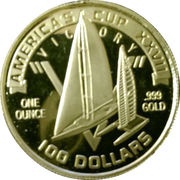
United States
Gold (.999),31.1 g,30 mm
Value: n/a
Loading more...
American specimens are rarely considered a holistic system, although they best illustrate how money has changed in the United States. US pieces are the result of specific laws, crises, and decisions that still influence the market today.
The formation of coins US began with the Coinage Act of 1792. The law established a principle under which a piece’s denomination was based on a strictly defined precious metal content.
In the 19th century, silver denominations alternately strengthened their position and lost importance due to price fluctuations and political debates. These shifts are clearly reflected in mintages and composition.
In the 20th century, the gradual abandonment of the gold standard and a series of economic crises made minting more pragmatic. The piece ceased to be a direct equivalent of metal and became a unit of account. It was at this point that the division between circulating and investment issues emerged—a distinction that continues to shape the market for all US coins today.
American design is built around recognizability. Portraits of presidents and national symbols maintained a consistent visual logic for decades, making it easy to distinguish different minting periods.
Each American piece is defined by strict physical parameters. Diameter, thickness, and edge type function as a technical passport. These characteristics make it easiest to separate early issues from later mass-circulation series.
During an in-hand examination, collectors usually check American coins' value by looking at:
How evenly the relief is struck;
Whether there is wear on the high points;
If the surface has been altered after minting;
Whether the parameters match official mint specifications.
The modern system clearly separates functions. US dollar coins formally exist, but their use in circulation is limited. The main flow of transactions relies on banknotes, while metal pieces play a secondary role.
US gold coins and their silver counterparts are not intended for everyday payments. They are purchased for metal content and liquidity. Since 1986, the clearest example has been the American Eagle Gold coin.
In silver, that role belongs to the American Silver Eagle Coin, whose value moves in step with the metals market. This is precisely why US coin values can differ by multiples even within the same denomination.
The American market is convenient due to its transparency. Catalogs, auction archives, and statistics make it easy to quickly understand which US coins worth money and which remain standard issues.
Interest is most often concentrated around rare US coins, but rarity here is not always tied to age. Minting errors, short production runs, and transitional types can sometimes matter more than the year of issue. It is precisely these pieces that appear on lists of the most valuable US coins.
Collectors usually choose one main direction:
Circulation pieces in high grades;
Investment series such as the American Eagle coins;
Transitional issues with modified composition;
Systematic sets are organized by type and denomination.
For market navigation, US coins names and summary tables are especially useful, showing the relationship between condition and demand. Even a simple US coins chart often provides more practical insight than a general description of a series.