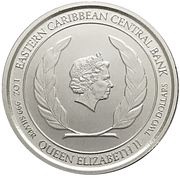
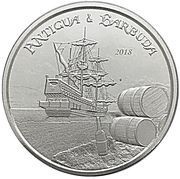
2 Dollars - Elizabeth II Rum Runner, 2018
Antigua and Barbuda
Silver (.999),31.1 g,38.6 mm
Value: $55.14-149.00
Results: 26
Results: 26
Antigua and Barbuda
Silver (.999),31.1 g,38.6 mm
Value: $55.14-149.00
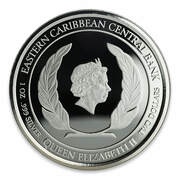
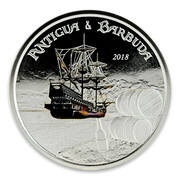
Antigua and Barbuda
Silver (.999),31.1 g,38.6 mm
Value: n/a
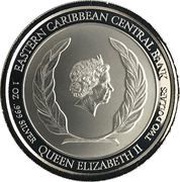
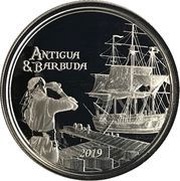
Antigua and Barbuda
Silver (.999),31.1 g,39 mm
Value: $55.14-149.00
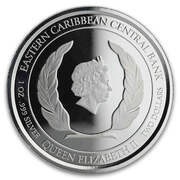
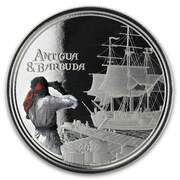
Antigua and Barbuda
Silver (.999),31.1 g,39 mm
Value: n/a
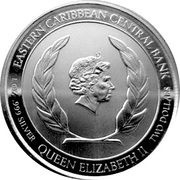
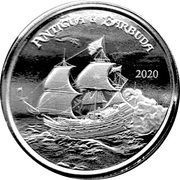
Antigua and Barbuda
Silver (.999),31.10 g,39.0 mm
Value: n/a
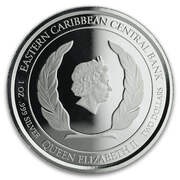
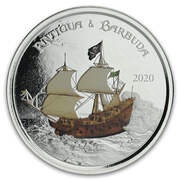
Antigua and Barbuda
Silver (.999),31.10 g,39.0 mm
Value: n/a
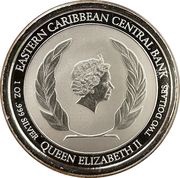
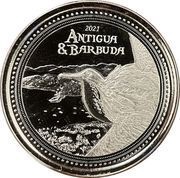
Antigua and Barbuda
Silver (.999),31.1 g,39 mm
Value: n/a
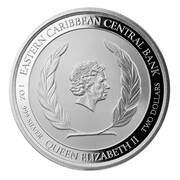
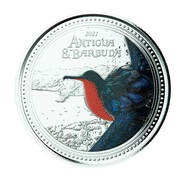
Antigua and Barbuda
Silver (.999),31.1 g,39 mm
Value: n/a
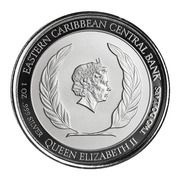
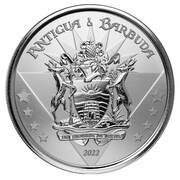
Antigua and Barbuda
Silver (.999),31.1 g,39 mm
Value: $41.64
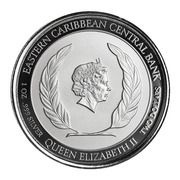
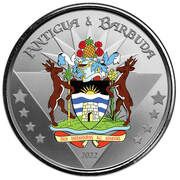
Antigua and Barbuda
Silver (.999),31.1 g,39 mm
Value: n/a
Loading more...
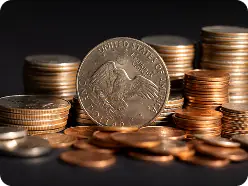
This Caribbean state’s monetary history moved forward without abrupt shifts, though it did pause at several key moments.
Before independence in 1981, the country had no monetary system of its own. British and regional currencies were used instead, with fiscal policy set by the colonial administration. Independence didn’t lead to a separate national currency either.
The new state joined the East Caribbean dollar zone, and because of that, Antigua and Barbuda coins never formed a full series for everyday circulation. Their role was different. Most issues were issued as commemorative and collector's editions, often dedicated to important dates, sporting events, or the islands' natural heritage.
For a small country, mass minting made no sense, while limited editions allowed them to appeal to foreign markets.
The design is almost always focused on visual appeal. Unlike utilitarian currencies, strict and minimalist solutions are rare here. Each Antigua coin is built around a theme that is easily understood without knowledge of the region's history.
The following appear most often on the reverse:
Caribbean fauna;
Sailing ships and scenes of maritime trade;
Symbols of independence and national identity;
Cultural motifs associated with island life.
Depending on the year and the series, the obverse usually shows either the monarch’s portrait or the official coat of arms. As for the technical side, metals, weight, and diameter are selected with collector issues in mind rather than everyday circulation. Therefore, the specimens are often minted from silver or gold, and the surface quality meets proof standards.
It is also important to note that Antigua coins were often produced outside the country. This is a common practice for small states, allowing them to control quality and produce products aimed at the international market.
The country uses the East Caribbean dollar in everyday life, and Antigua and Barbuda coins are rarely used in retail transactions. Their current role is purely as collector's items.
Since the 1990s, issuance has shifted toward thematic series. These are most commonly:
Independence anniversaries;
International sporting events;
Series aimed at precious metals investors;
Limited-edition gift sets.
Interest in these pieces is rarely driven by the search for quick profit. Collectors choose them for other reasons. First, because of their limited mintages, many series were issued in small batches and quickly sold out among private collectors. Second, because of their thematic focus—there are almost no "empty" designs.
Furthermore, they fit easily into thematic collections:
Coins of the Caribbean region;
Issues of small states;
Modern commemorative series;
Specimens with nautical themes.
Most of the attention, though, goes to pieces issued in the 1980s and 1990s. Back then, the market wasn’t settled yet. Ideas were tested on the fly, rules weren’t fixed, and the results show it. Unusual layouts, uneven execution, less polish—today all of that reads as a clear marker of the period, not a flaw.