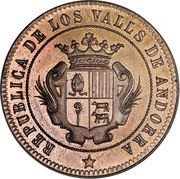
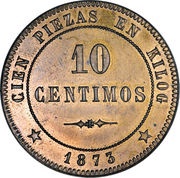
10 Céntimos Pattern, 1873
Andorra
Copper,10 g,30 mm
Value: n/a
Results: 467
Results: 467
Andorra
Copper,10 g,30 mm
Value: n/a
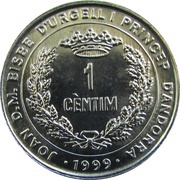
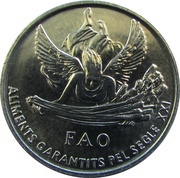
Andorra
Aluminium,1.25 g,22 mm
Value: $3.59-51.99
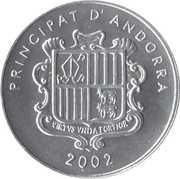
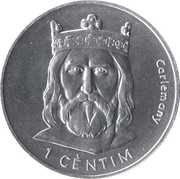
Andorra
Aluminium,2.1 g,27 mm
Value: $2.50-99.99
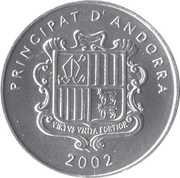
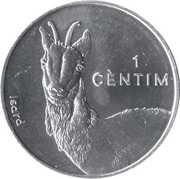
Andorra
Aluminium,2.13 g,27 mm
Value: $2.50-13.00
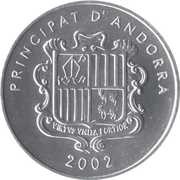
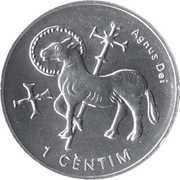
Andorra
Aluminium,2.14 g,27 mm
Value: $2.50-18.13
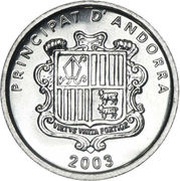
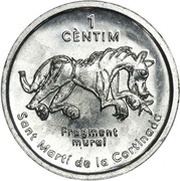
Andorra
Aluminium-magnesium,2.12 g,27 mm
Value: n/a
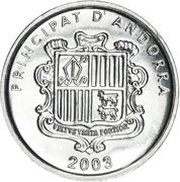
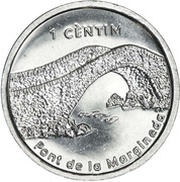
Andorra
Aluminium-magnesium,2.12 g,27 mm
Value: $2.19-17.99
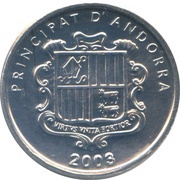
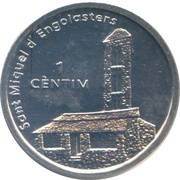
Andorra
Aluminium-magnesium,2.12 g,27 mm
Value: $13.00
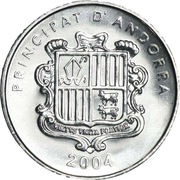
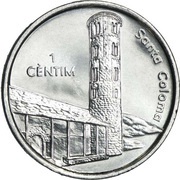
Andorra
Aluminium-magnesium,1.9 g,27.0 mm
Value: $0.99-1.50
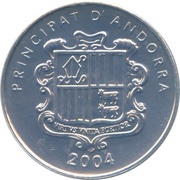
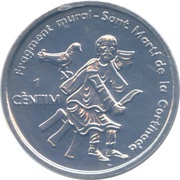
Andorra
Aluminium-magnesium,1.9 g,27.0 mm
Value: $1.00-24.99
Loading more...
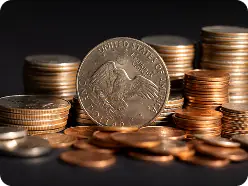
The country managed for a long time without its own currency, but nevertheless managed to develop a recognizable numismatic profile.
For everyday payments, the principality went without its own coins right up to the 21st century. The French franc and the Spanish peseta circulated side by side, a practical outcome of Andorra’s political setup and its reliance on nearby economies.
The shift came with Andorra’s currency agreement with the European Union in 2011. By 2014, that deal translated into something tangible—the nation received the right to issue its own euro coins. For the first time, it became visible inside the single currency zone, not just on paper.
From the start, mintages were kept tight. These coins were never meant for mass circulation and quickly found their place among collectors.
The Andorra coin's design is built around national identity, without being overloaded with symbols. The obverse uses the standard European euro side, while the reverse is entirely dedicated to local themes. Andorra doesn't change the theme annually, instead working with consistent imagery.
Andorra euro coins feature:
The principality's coat of arms is a symbol of political autonomy;
Images of Romanesque architecture;
Stylized natural motifs of the Pyrenees;
Laconic inscriptions without decorative elements.
In terms of metal and parameters, the specimens fully comply with euro standards. There are no experiments with composition or shape. The country has consciously integrated into the overall system, not attempting to differentiate itself through technical deviations.
Today, Andorra's monetary system is fully integrated into the eurozone. Specimens are freely accepted in other EU countries, but rarely leave the Principality.
The current market can be roughly divided into two areas:
Negotiable denominations are used in everyday transactions within the country;
Collectible pieces purchased in sets or directly from dealers.
Mintages remain relatively small, and annual quotas are strictly limited by the agreement with the EU. This creates a situation in which even ordinary specimens quickly disappear from circulation.
Official sets are issued, aimed at the external market. These do not contain unique denominations, but differ in the quality of the mintage and packaging.
There are no long historical series or complex transitions between currencies, but there is a clear and transparent issue logic.
Andorran coins represent a rare example of a country that joined the eurozone without full EU membership. This makes them interesting as part of modern European monetary history.
For collectors who like order, these coins are easy to work with. There aren’t many dates, mintages are transparent, and prices tend to stay within a stable range.
That’s what makes this area so manageable. The field stays compact, well documented, and grounded in reality, with a clear link between each issue, the country behind it, and the economic context in which it appeared.