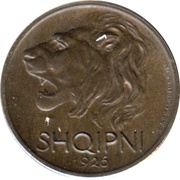
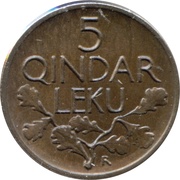
5 Qindar Leku, 1926
Albania
Bronze,4 g,18 mm
Value: $18.00-310.00
Results: 193
Results: 193
Albania
Bronze,4 g,18 mm
Value: $18.00-310.00
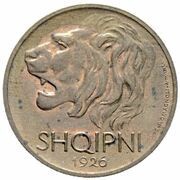
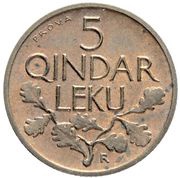
Albania
Bronze,4 g,18 mm
Value: $18.00-310.00
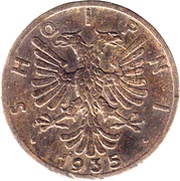
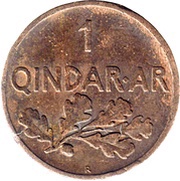
Albania
Bronze,2.9 g,18.6 mm
Value: $2.79-88.85
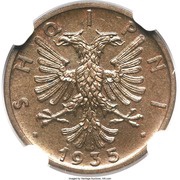
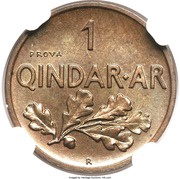
Albania
Bronze,3 g,18 mm
Value: $2.79-75.05
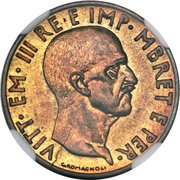
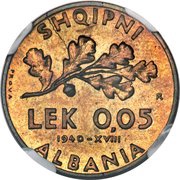
Albania
Aluminium bronze,3.1 g,19.5 mm
Value: $8.00
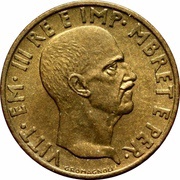
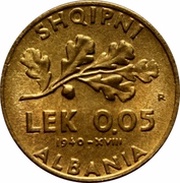
Albania
Aluminium bronze,2.95 g,19.5 mm
Value: $7.20-31.00
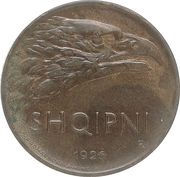
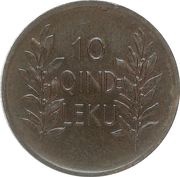
Albania
Bronze,6 g,22 mm
Value: $18.00-310.00
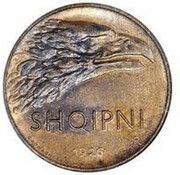
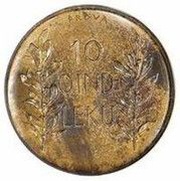
Albania
Bronze,6 g,22 mm
Value: n/a
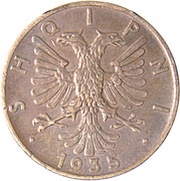
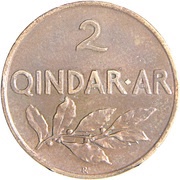
Albania
Bronze,4.46 g,21 mm
Value: $12.34-69.00
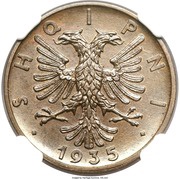
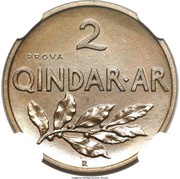
Albania
Bronze,6 g,21 mm
Value: n/a
Loading more...
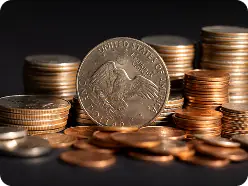
Albanian specimens rarely appear in major international catalogs, but within local circulation, they existed for a long time as a practical and flexible means of payment.
What is the currency of Albania? The modern Albania currency took shape relatively late. Until the early 20th century, foreign money circulated simultaneously within the country—Ottoman, Austro-Hungarian, and Italian issues. There was no unified national system, and the piece mainly served a utilitarian function as a means of exchange.
The situation changed after the proclamation of independence. In 1926, the lek was introduced, and it was at that moment that a stable currency of Albania emerged, oriented toward domestic regulation. At an early stage, minting volumes were limited, and some denominations were produced outside the country, which affected the availability of the first series.
The lek was not freely convertible, and during the socialist period, capital circulation remained largely closed. As a result, many issues survived in relatively small quantities.
Visually, an Albanian coin is easy to distinguish from neighboring Balkan issues. State symbols take priority in the design, not portraits of political figures. Most pieces feature coats of arms, eagles, architectural elements, and inscriptions written in Albanian. The compositions remain restrained and concise.
Of particular interest are Albanian gold coin issues, which were struck in small batches and were not intended for circulation. Such pieces were created from the outset as representative or collectible items.
Most circulating issues fall into the category of Albanian lek coins. They were produced from non-precious alloys, which made them durable in everyday use but less attractive for long-term accumulation. At the same time, the state of preservation of these specimens is often better than that of earlier series.
After the transition to a market economy, the system was updated. Modern Albanian coins received standardized dimensions and more wear-resistant materials. Specimens are used in a limited way, as banknotes dominate everyday transactions.
In practice, monetary circulation is built around a set of Albanian lek banknotes and coins, where the piece plays a supporting role.
Particular attention should be paid to Albanian gold coins, which are aimed at collectors and investors. Their mintages are small, and distribution is often carried out through specialized channels.
Interest in Albanian numismatics is based on the limited availability of material. These specimens are often absent from standard selections, which makes each find more significant.
Collectors pay attention to:
Short minting periods;
Small production runs;
The political context of issuance;
The absence of repeated designs.
Even an ordinary Albania coin can prove to be in demand if it belongs to a transitional period or is well preserved. This is especially true for early series, which are rarely encountered outside the region.
The Albanian market is not overloaded with catalogs and price guides. This requires a more attentive approach, but at the same time leaves room for independent research. For this reason, Albanian coins are often chosen by those who are interested in the history of monetary circulation rather than solely in the investment aspect.