Contents:
The first half of the 20th century is the key era for American coinage. This period involved many legendary issues and designs, mythical mistakes and unimaginable for today's silver contents.
One significant interest for coin collectors remains the 1935 silver dollar bill. Today we will cover all you need to know as a history lover, investor, or a hobbyist numismatist with a special interest in dollar coins.
Historical Overview of 1935 Silver Dollars
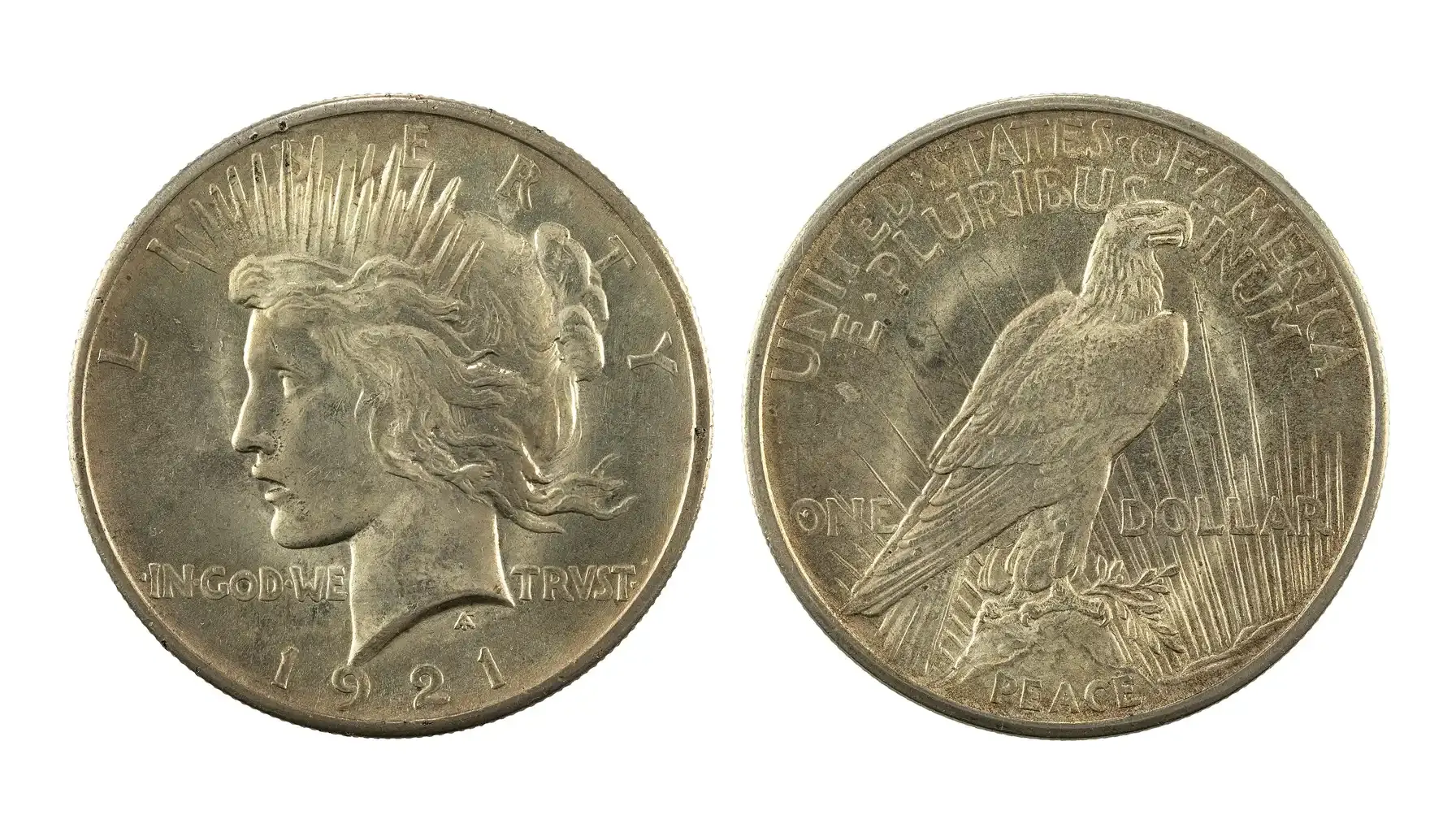
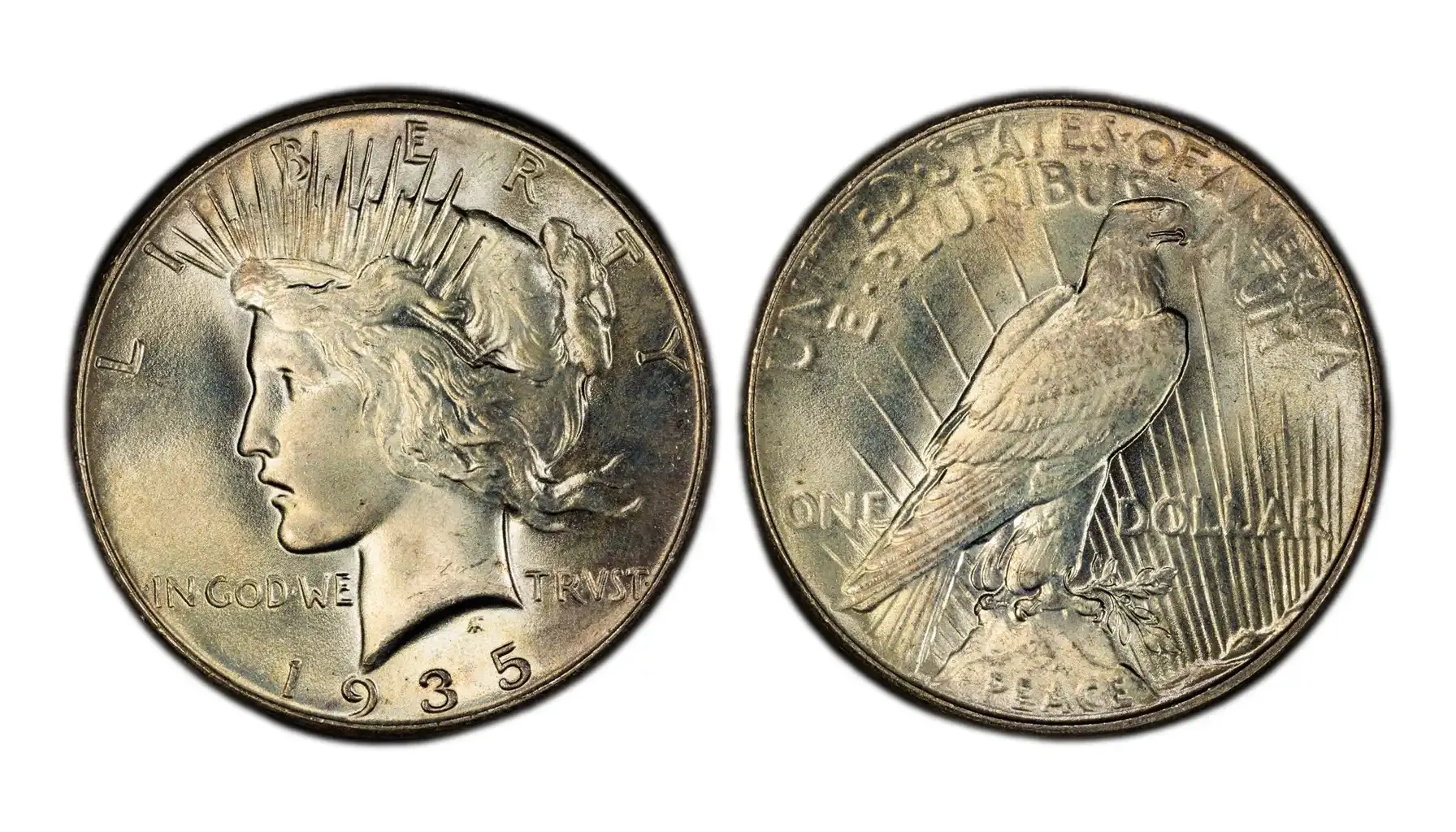
“The Peace dollar depicts the obverse of Miss Liberty, facing left, wearing a diadem of spikes (in somewhat similar style to that seen on the Statue of Liberty). LIBERTY is above, while IN GOD WE TRUST and the date are below. The reverse shows an eagle perched on a rock, with a laurel branch, and with PEACE inscribed below. UNITED STATES OF AMERICA and EPLURIBUS UNUM are above, while ONE DOLLAR is to be seen just below the center. Rays of an unseen sun emanate from the lower right.”
— David Bowers, Author and Collector
From the "United States Coins by Design Types - An Action Guide for the Collector and Investor"
The 1935 issue was minted in Philadelphia (no mint mark) and San Francisco (“S”), just like in previous years, with a combined total of around 3.54 million coins. Not only was this the last year of issue, but the mintage was far lower compared to earlier years. Further depletion in the mid-20th-century melting reduced the surviving number in higher grades.
Minting Context and Why 1935 Matters
By 1935, production of the Peace Dollar had already fallen off significantly because the demand for silver coinage was shrinking. The U.S. Mint struck one final batch to complete government silver purchase requirements and effectively bring to a close the era of an identifiable Roaring Twenties and early Depression years series of coin production.
This is especially true for the 1935-S variety, considered particularly desirable for its lower mintage, and specifically because of the elusive “4 RAYS” reverse variety wherein four visible sun rays appear beneath the eagle’s tail.
It was actually due to a modification of the dies, and it became one of the most in-demand subtypes of Peace Dollars. Well-preserved 1935-S coins with that particular feature may sell for more than $20,000, depending on grade and luster.
Design, Specifications, and Silver Content
All 1935 Peace Dollars are made from 90% silver and 10% copper. Their weight is 26.73 grams and a diameter equals 38.1 mm. Each coin carries about 0.7734 troy ounces of pure silver. It gives each example a reliable intrinsic value. It moves with silver market trends and provides a solid basement for the price.
Collectors, however, value these coins far above their metal content. Condition plays the largest role in pricing:
Circulated coins can usually trade between $35 and $60.
Lightly worn (AU) pieces can fetch anywhere from $80–$120.
Uncirculated: MS 60–63: Between $150 and $350
Superior examples are MS 65+ and above $700, and top-graded MS 66–67 pieces reach several tens of thousands.
Prices can reach upwards of $63,000 for pristine specimens from San Francisco, showing quite well how rare perfect survivors are.
Production Numbers by Mint (Philadelphia, San Francisco) and Survival Rates
The 1935 Peace Dollar value is defined not only by its age, as well as with the Morgan series. Certain signs make it more valuable, and the mint mark type is one of them. Learn them for proper evaluation.
Mint | Mintage | Notable Varieties | Relative Scarcity |
Philadelphia (no mark) | ~1,576,000 | Standard design | Moderate |
San Francisco (“S”) | ~1,964,000 | 3 Rays & 4 Rays types | Higher |
Although millions were struck, the number of coins surviving in mint state condition is far smaller. Decades of circulation, melting, and improper storage have left most examples with surface wear or toning. Collectors generally find the Philadelphia issue more available, but the San Francisco 4 RAYS variety remains a key rarity within the Peace Dollar series.
Understanding 1935 Dollar Bills
The 1935 $1 bill stands out not as a coin but as one of America’s most recognized pieces of paper currency — the 1935 $1 Silver Certificate. Issued during the Great Depression, this note represented an era when paper money was directly backed by physical silver held by the U.S. Treasury. Holders could technically exchange it for an equivalent amount of silver on demand, a policy that ended in the 1960s.
Types of 1935 $1 Bills (Silver Certificates, Federal Reserve Notes, etc.)
The 1935 paper bill series includes multiple variations because of design adjustments and different printing conditions. This range involves sub-series 1935A to 1935H. Each features minor differences in signature combinations, plate sizes, or lettering.
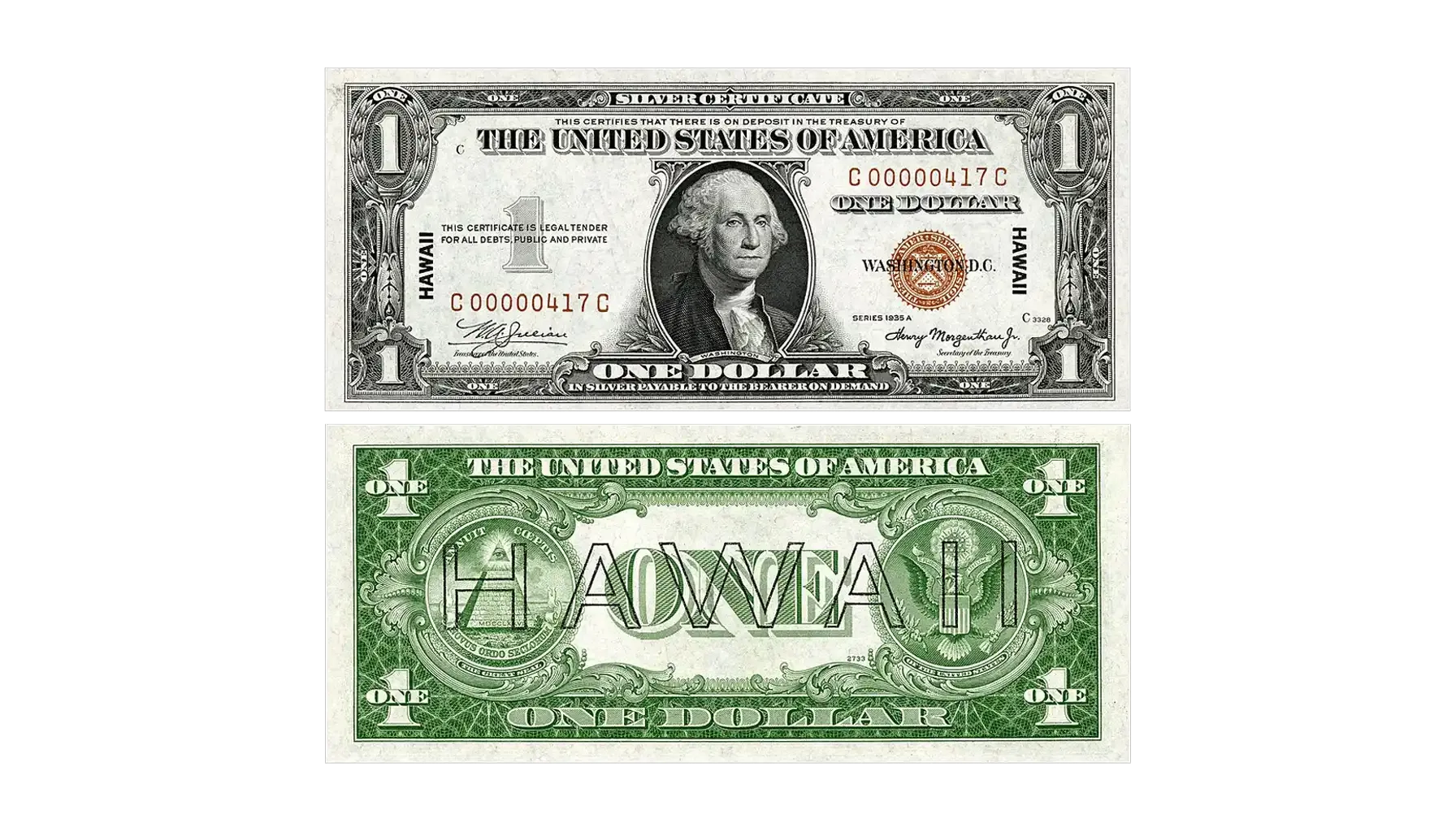
Among them, two subtypes hold exceptional historical interest — the Hawaii overprint notes and the North Africa notes. These special issues were circulated during World War II and can be identified by unique overprints: brown “HAWAII” markings or yellow Treasury seals. Both versions are rare today and command notable premiums among collectors.
Design, Features, and Printing Variations
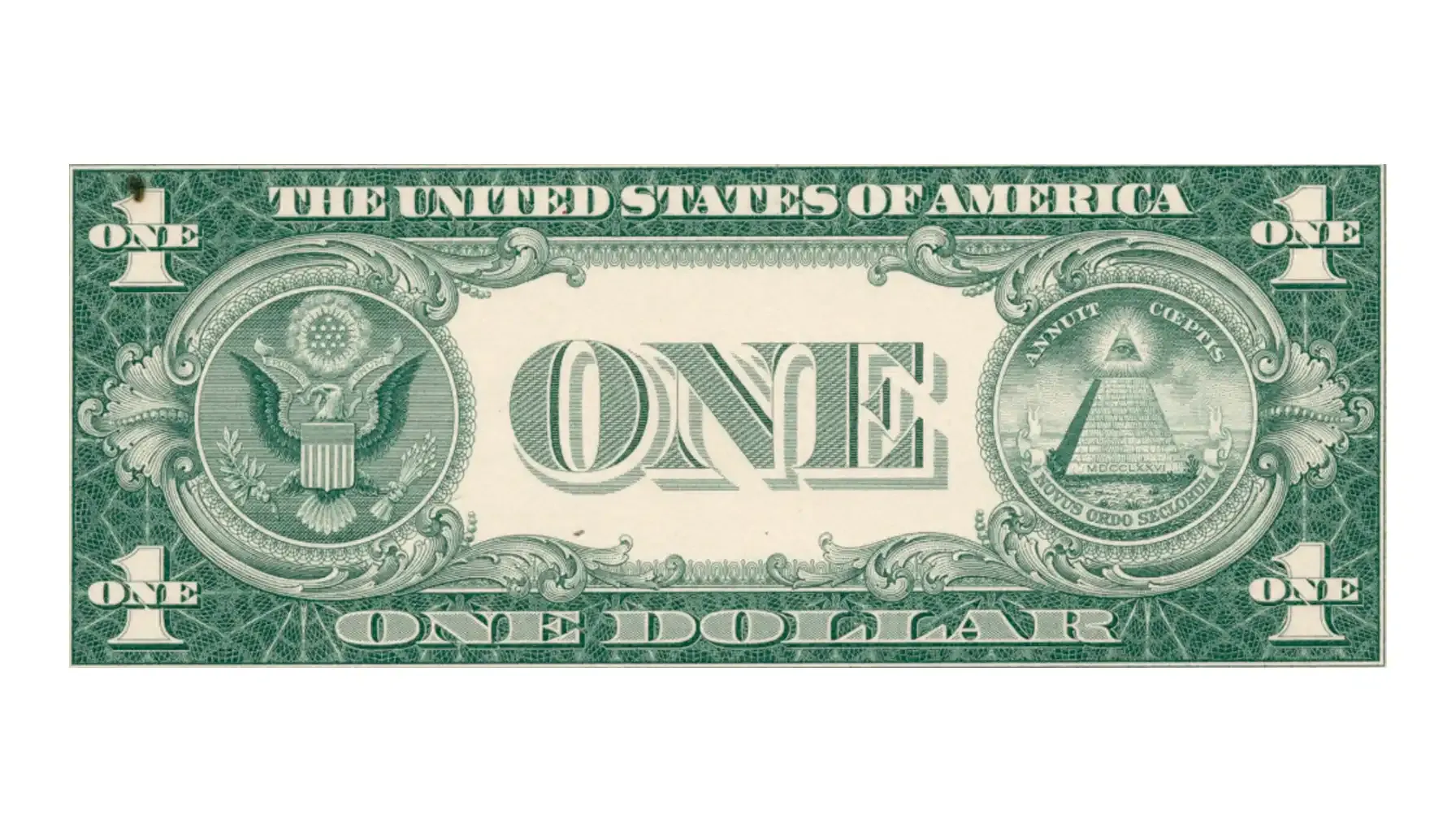
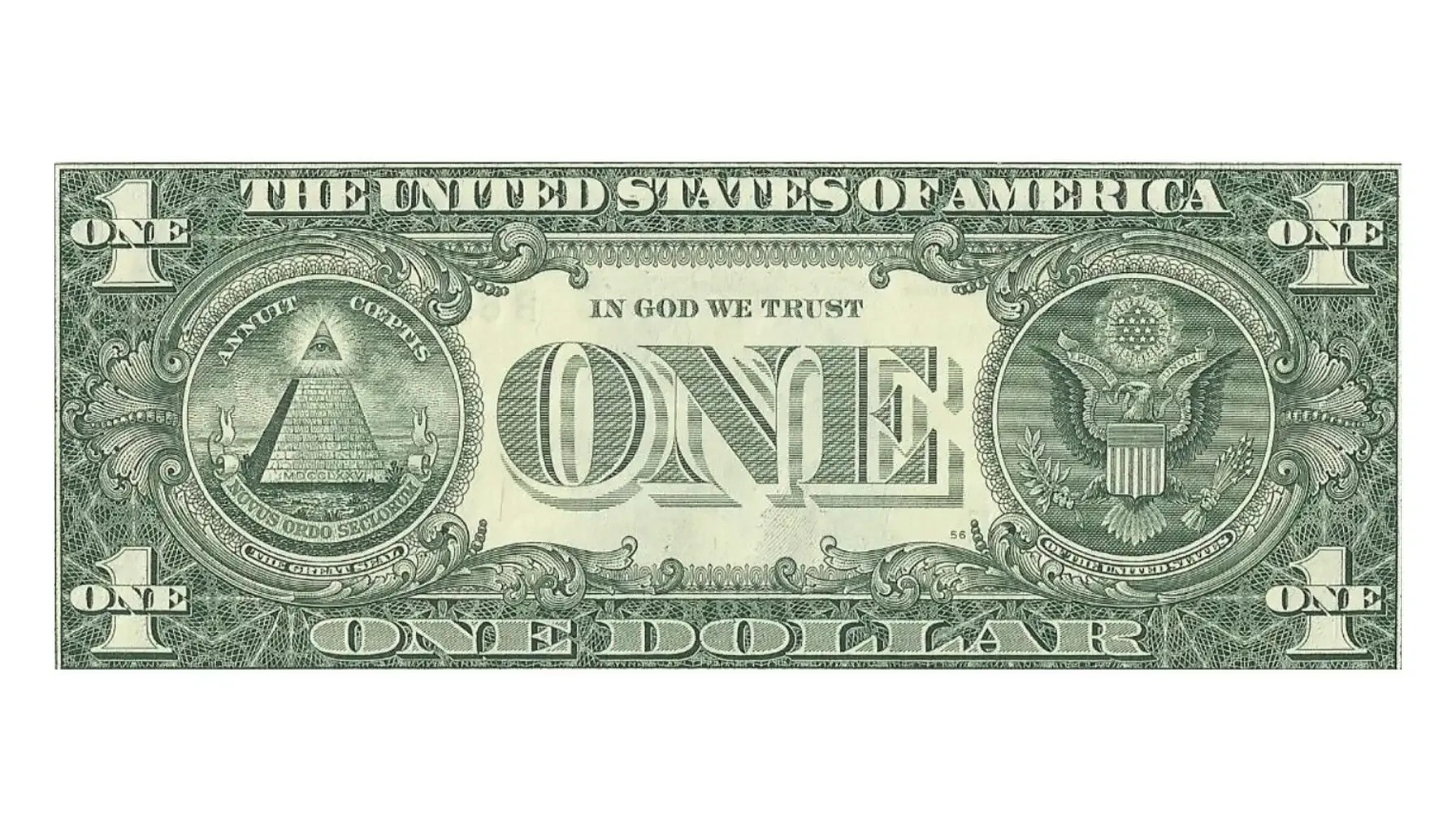
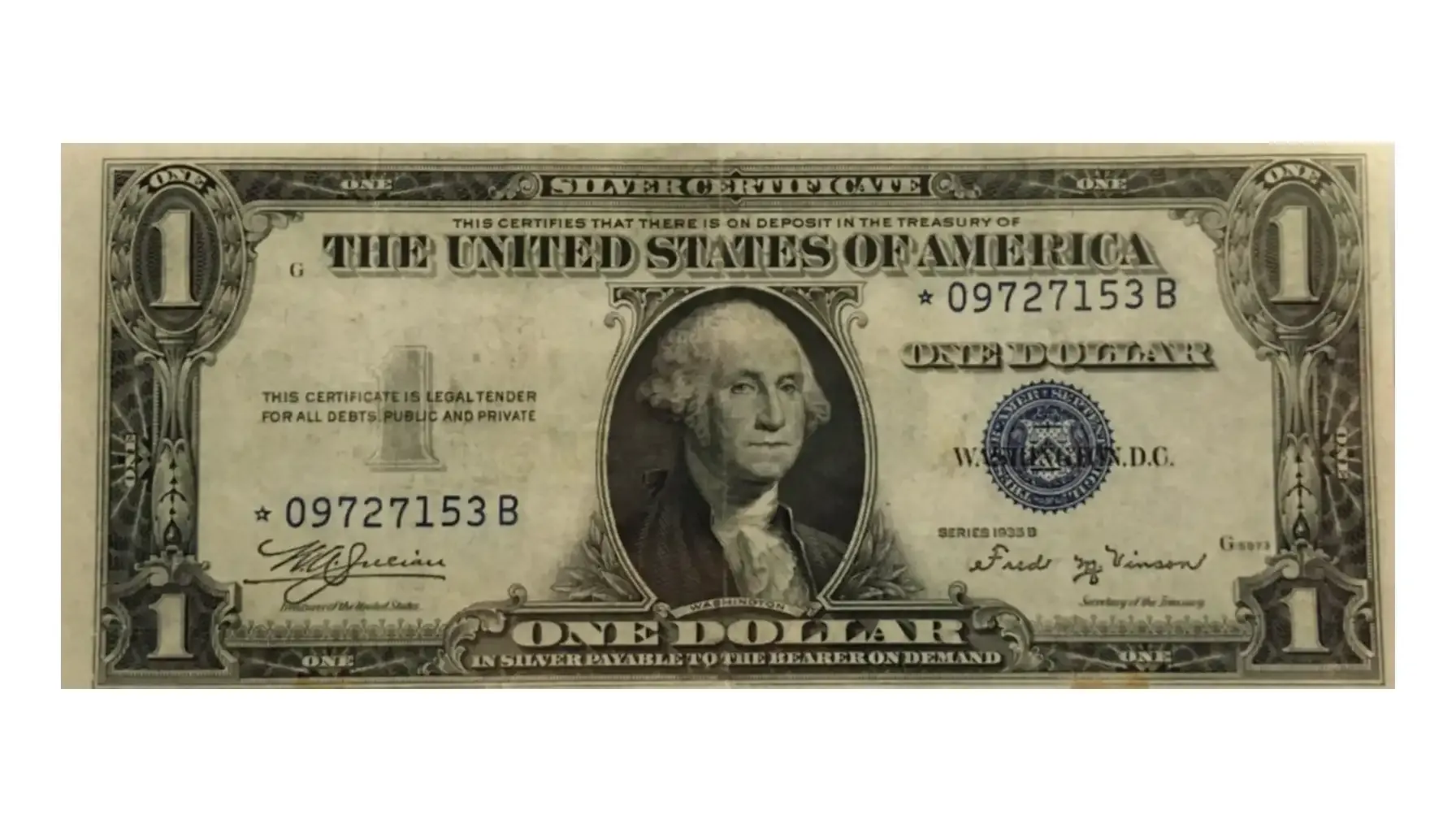
You cannot mistake the 1935 $1 silver certificate design for anything else. On the obverse, there is George Washington’s portrait, a blue Treasury seal, and matching serial numbers. The reverse displays the iconic Great Seal of the United States — the bald eagle on one side and the pyramid with the “All-Seeing Eye” on the other — imagery still seen on modern $1 notes.
Printing adjustments across the various sub-series created slight but collectible distinctions. For example:
Signature changes between different Treasury officials.
Minor variations in serial number typography and seal placement.
Experimental series, where altered paper or ink formulations were tested.
These differences, though subtle, allow specialists to identify each note’s production stage and rarity.
Common Serial Numbers and Signatures
Every 1935 $1 bill carries two key identifiers: the series designation and the Treasury officials’ signatures. The series year appears below Washington’s portrait, while signatures vary across issues. These features help determine authenticity and production sequence.
Collectors often look for low serial numbers (00000001–00001000), radar notes (palindromic numbers), and solid serials (e.g., 77777777). All of them usually fetch premiums far beyond standard pricing.
Where to Find Mint Marks and Serial Numbers
To figure out how much is a dollar bill from 1935 worth, you should remember the design features to look through them rapidly. While Coin ID Scanner can evaluate a silver dollar for you, dealing with paper bills on your own can be frustrating sometimes.
Mint Mark Locations for Coins (P, S)
These identifiers are mint marks for the 1935 Peace Dollar. Coins minted in Philadelphia bear no mark, while those from San Francisco bear an "S" mint mark, located on the reverse below the tail feathers of the eagle. It is interesting to note that this tiny difference can often equate to a coin's rarity and its market value, with San Francisco issues commanding overall higher prices.
Identifying Series and Signatures on Bills
Series designations on 1935 $1 bills help narrow down the printing details of the note. From Series 1935 to 1935H, each series represents minor design or administrative changes over time. Signatures by various Treasury officials are found near the lower corners of the note, along with serial numbers, and are key components in authenticating the note and in establishing its date.
How Mint Marks and Serials Affect Rarity and Value
Mint marks on coins and serial identifiers on bills both serve as shortcuts to understanding rarity.
The “S” mint mark on the 1935 Peace Dollar adds immediate premium value.
Star notes or special serials on 1935 $1 bills dramatically increase desirability due to their short print runs.
For coins, strike quality and surface preservation matter most; for bills, color integrity and fold-free surfaces define grade and market appeal.
Pro Tip: Using tools such as the Coin ID Scanner app, collectors can instantly identify official details, mint origins, and estimated value ranges by photographing their coins. It simplifies cataloging and helps track market trends for both silver dollars and related paper currency.
1935 Silver Dollar Value by Mint & Grade
Save this section to quickly recognize the price fluctuations of the 1935 S peace dollar and make a decision whether to buy, sell, or wait for better prices.
Value Table (G–MS grades) with Melt vs Numismatic Price
If you are looking for a Peace Dollar to fulfill your collection or sell it, the following price range might help you make the right decisions.
Grade | Philadelphia Mint (Approximate Value) | San Francisco Mint (Approximate Value) |
G (Good) | $35 | $45 |
VG (Very Good) | $40 | $50 |
F (Fine) | $45 | $60 |
VF (Very Fine) | $50 | $65 |
EF (Extremely Fine) | $60 | $75 |
AU (About Uncirculated) | $80 | $120 |
MS 60-63 | $150-$350 | $350-$800 |
MS 65+ | $700+ | $1,000+ |
MS 66-67 | $10,000+ | $20,000+ |
Special Varieties ("4 RAYS") | Premiums often >> $20,000 | Premiums often >> $30,000 |
*The prices are valid for November, 2025. For more recent updates, watch out the market news in the Coin ID Scanner app.
Price Differences: 1935 vs 1935-S
The 1935 San Francisco Mint “S” Peace Dollar, especially with the “4 RAYS” variety, is substantially more valuable than the Philadelphia version due to lower mintage and rarity. San Francisco Mint is known for releasing coins of a higher quality or proof-levels.
1935 Dollar Bill Value
Don’t hesitate while evaluating how much is a 1935 silver certificate dollar worth. Here is a table with the current condition of the numismatic market. It might vary according to the buyers’ interest, but the general price range stays the same.
Value Table by Condition (VG–UNC)
Understand the 1935 1 dollar bill value easily with our united data. Uncirculated examples might be expensive, but fine and circulated ones stay accessible for collectors.
Bill Condition | Typical Value Range |
VG (Very Good) | $1 to $3 |
Fine | $3 to $7 |
VF (Very Fine) | $7 to $15 |
XF (Extremely Fine) | $15 to $50 |
AU (About Unc.) | $50 to $150 |
UNC (Uncirculated) | $150 to $1,000+ |
*The prices are valid for November, 2025. For more recent updates, watch out the market news in the Coin ID Scanner app.
Rare Serial Numbers, Star Notes, and Collector Premiums
Star notes and rare serial number bills (especially North Africa and Hawaii overprints) significantly boost value, sometimes surpassing $1,500 in high-grade conditions. Error notes and experimental prints may similarly attract collector premiums.
FAQ
How much is a 1935 silver dollar worth?
Most circulated coins sell for $35–$60, but mint-state or rare 1935-S examples can reach thousands. For more correct evaluation, check the grade and variety.
How much is a 1935 $1 bill worth?
Common circulated 1935 C dollar bill value is only around $1–$7. However, star notes, palindromic numbers, overprints, or uncirculated bills may bring $50–$1,000+.
Where is the mint mark on a 1935 dollar coin?
It is always beneath the eagle’s tail feathers on the reverse. An “S” indicates San Francisco; absence of a mark means Philadelphia.
What types of 1935 $1 bills exist?
Main types include silver certificates (1935–1935H series) and special Hawaii/North Africa overprints.
How to identify a 1935-S silver dollar?
Find the “S” mint mark below the eagle. Check for the distinct “4 RAYS” reverse pattern, it might indicate a highly-priced rare variety.
Are 1935 silver dollars rare?
They are relatively scarce compared to other years, especially in high-grade mint condition and among San Francisco issues. The “4 RAYS” variety is notably rare and highly valued among Peace Dollar specialists.
How many 1935 $1 bills were printed?
Billions of 1935-series $1 silver certificates were printed across all subseries (1935 to 1935H). It makes circulated examples accessible, but star notes, error notes, and WWII overprints are far less frequent and attract premiums.
How to store and preserve 1935 coins and bills?
Store coins in non-PVC holders or airtight capsules to prevent oxidation. Keep bills flat in acid-free sleeves and don’t expose them to direct sunlight or humidity. Maintain a stable, low-humidity environment and handle collectibles with gloves only to preserve surfaces and paper integrity.

 Facebook
  X (Twitter)
  Pinterest
  LinkedIn