Contents:
- Historical Context of the 1886 Dollar
- Mint Marks & Varieties for 1886
- Specifications & Composition of the 1886 Morgan
- 1886 Dollar Coin Value Ranges
- Points of Premium: Varieties & Condition Upgrades
- Authentication & Verification Tips
- Investing & Market Trends for the 1886 Morgan
- FAQ About the 1886 Dollar Coin
The classic dollar. What's so special about it? Of course, the year of manufacture is 1886. Witness a pivotal era in American history and coinage.
In this article: how to check old coin value, important factors, mint marks, rare varieties, and evaluation criterias.
Historical Context of the 1886 Dollar
“The mintage of the 1886-P Morgan dollar is just under 20 million coins. Due to this, the 1886-P Morgan dollar is one of the most common in uncirculated grades today. In fact, NGC has graded nearly a thousand examples in MS67!”
– unnamed author
NGC official website
Position in the Morgan Dollar Series
The first in this series was the 1878 Silver Dollar coin. Therefore, by 1886, the coin was firmly established in circulation. As for the year itself, it was the peak of production.
All because of the Bland-Ellison Act, which required the U.S. Treasury to purchase and mint a significant amount of silver every month.
U.S. Mint Operations and Silver Sourcing in 1886
At that time, there were only three 1886 coin productions: in Philadelphia, New Orleans and San Francisco.
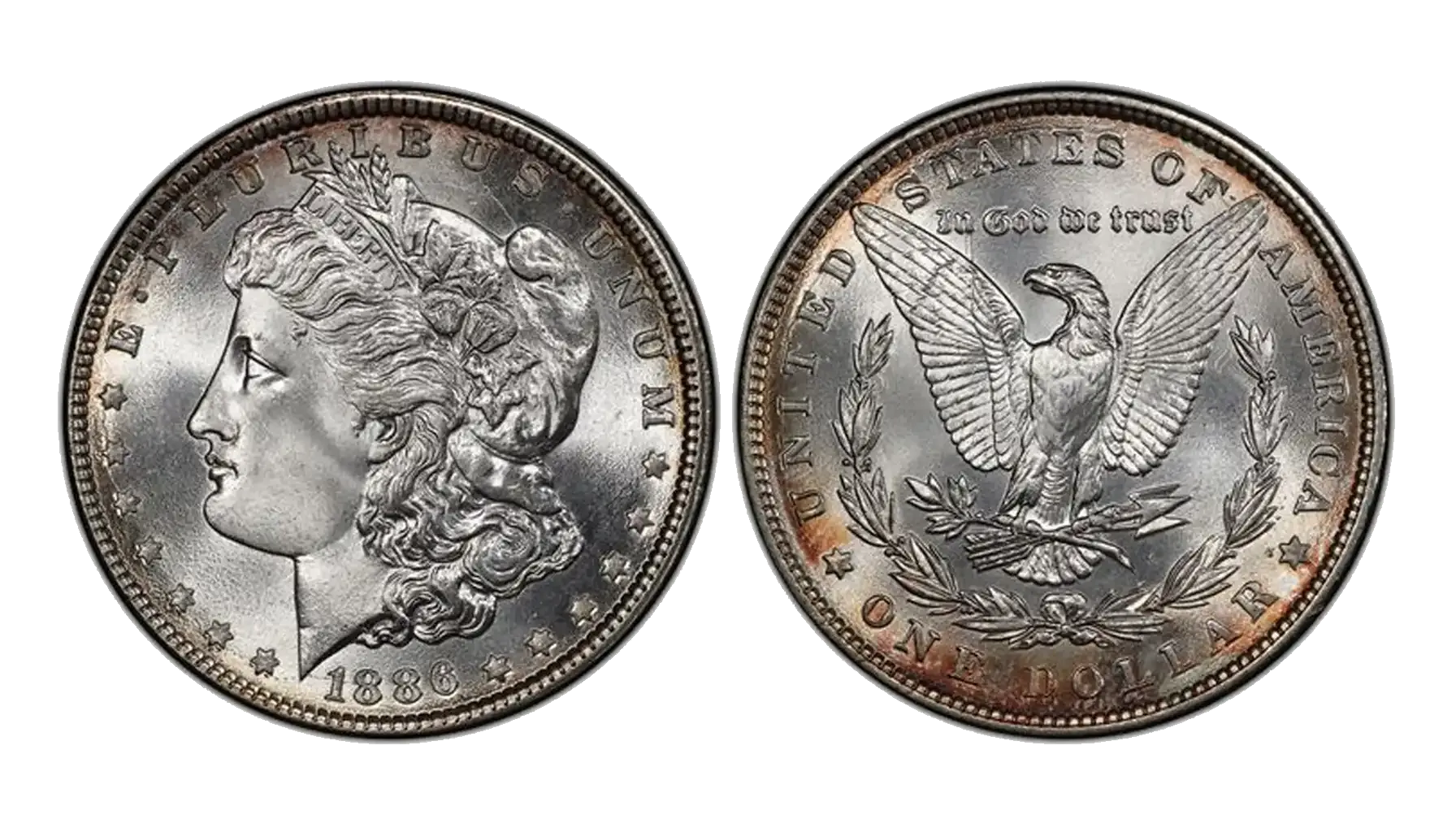
The huge volume of silver processed often led to differences in the quality of the coinage and the condition of the stamp in different industries.
Why 1886 Matters among Collectors
The most banal thing is the usefulness of the Morgan Dollar collection with all the years. Although it is not so rare, finding specimens in perfect condition is also not such an easy task. It is also a fact that there are different mints.
Mint Marks & Varieties for 1886
Mint Mark | Mintage | Quality | Collector Focus | Value Impact |
None | 19,963,000 | Generally Consistent | Accessibility and high-grade | Lowest base and high grades |
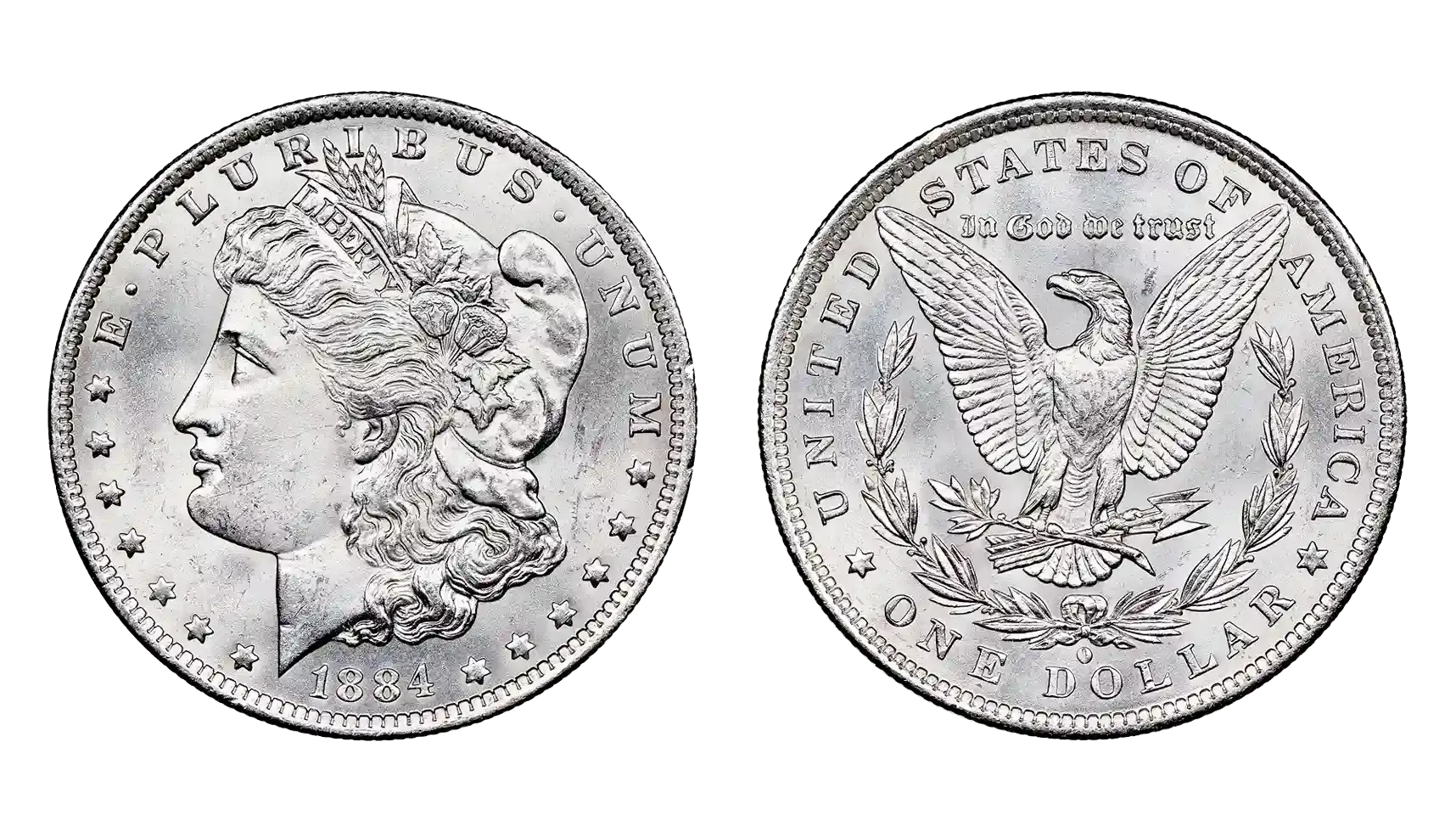
O | 10,710,000 | Often Softer | Strong strike examples | Higher than P |
S | 750,000 | Sharp,good luster | Rarity, exceptional condition | Much higher because of rarity |
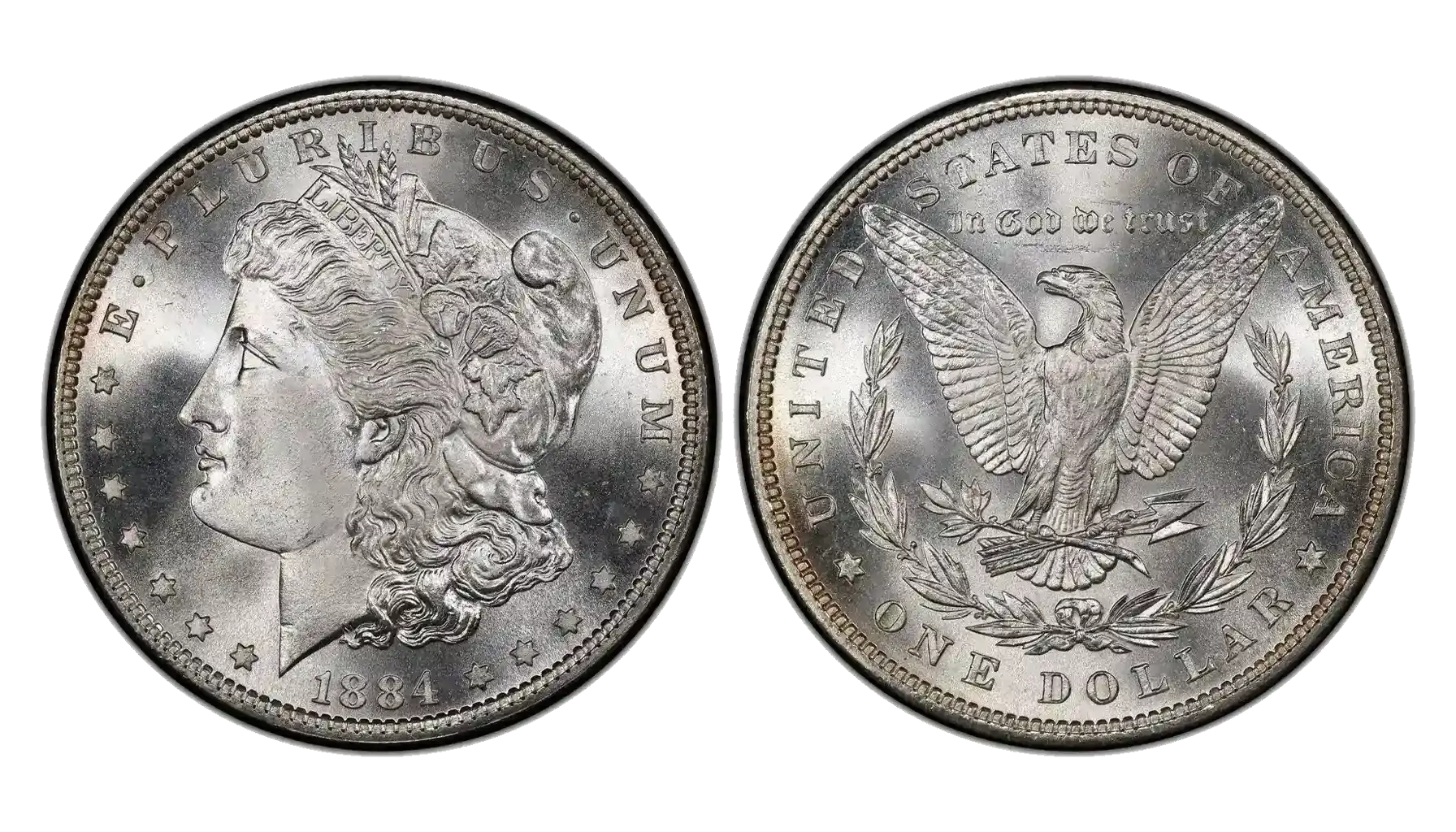
Philadelphia (No Mint Mark) — Standard Variety
The US mint Philadelphia copies do not have a mint mark. This mint produced the largest number of 1886 Morgan silver dollar no mint mark coins. Their circulation was 19,963,000 copies.
Because of the Morgan dollar no mint mark’s large number, these copies are the most common and affordable. However, it is quite difficult to find a copy in really good condition.
The Morgan silver dollar no mint mark value is often highly dependent on its condition. Therefore, it can be high if you find an uncirculated Morgan silver dollar value.
1886-O (New Orleans) Variant
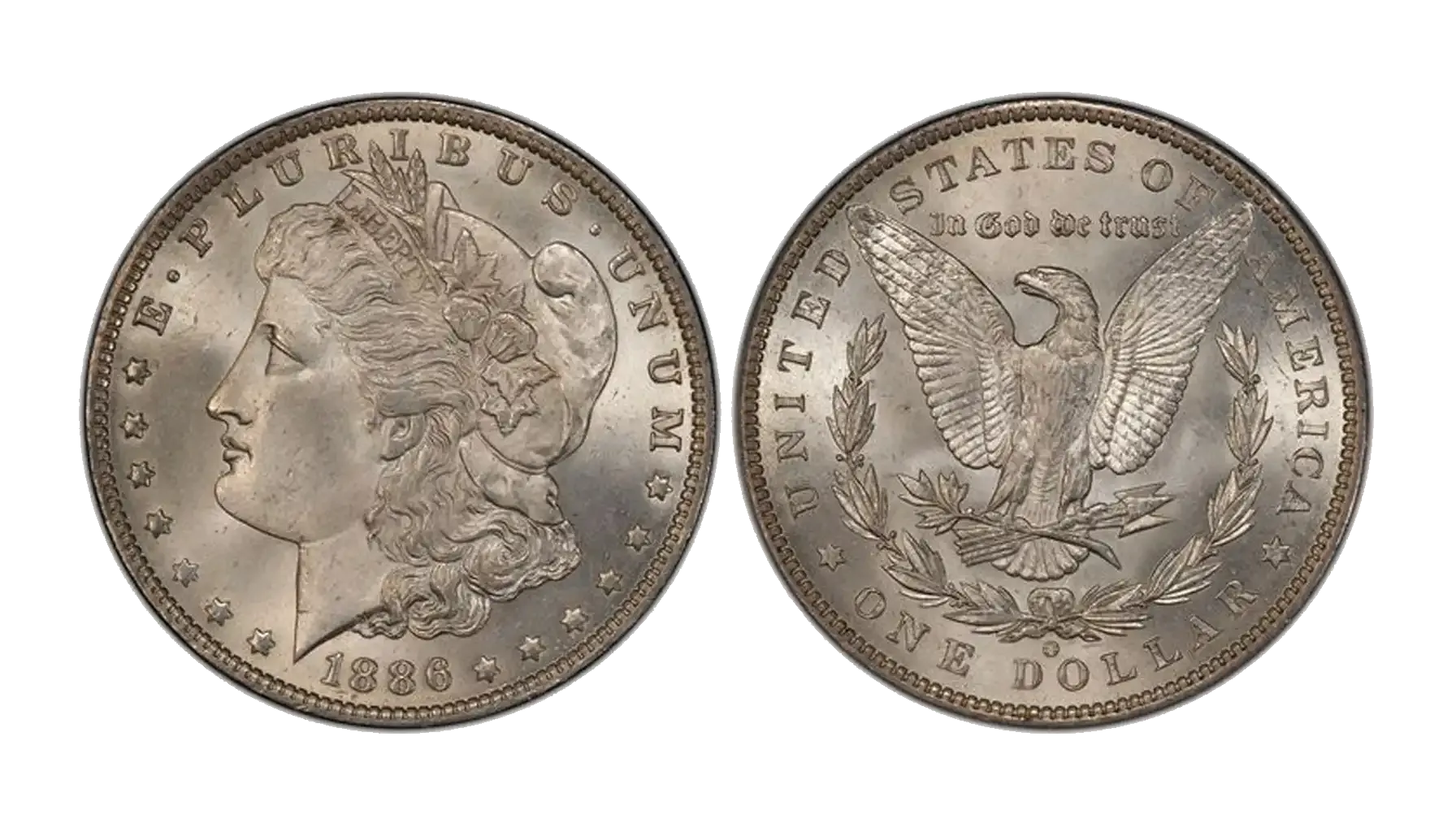
In New Orleans, 10,710,000 copies were minted. These coins often have a softer coinage compared to their counterparts from Philadelphia or San Francisco.
That is, the details from New Orleans may not be so clear. Even if the copies were not in circulation.
1886-S (San Francisco) — Rarity and Features
San Francisco produced the least amount. The circulation was only 750,000 copies.
Because of this, instances with this mint mark are much higher. However, they are clearer and shine better.
Specifications & Composition of the 1886 Morgan
Silver Content, Weight, Diameter
Composition: 90% of silver and 10% of copper.
Weight: 26.73 grams,
Diameter: 38.1 mm.
Actual weight of Silver (ASW): 0.77344 troy ounces.
Edge, Reeding, Strike Characteristics
The edge is embossed, which means it has parallel grooves.
The characteristics of the coinage may vary depending on the mint. San Francisco usually has the sharpest strokes. They're softer in New Orleans.
Standard Tolerances and Variation
Despite the high precision, the coinage process at the end of the 19th century allowed minor deviations in weight and diameter within the accepted tolerances.
1886 Dollar Coin Value Ranges
Grading Scale (Good → MS / Prooflike)
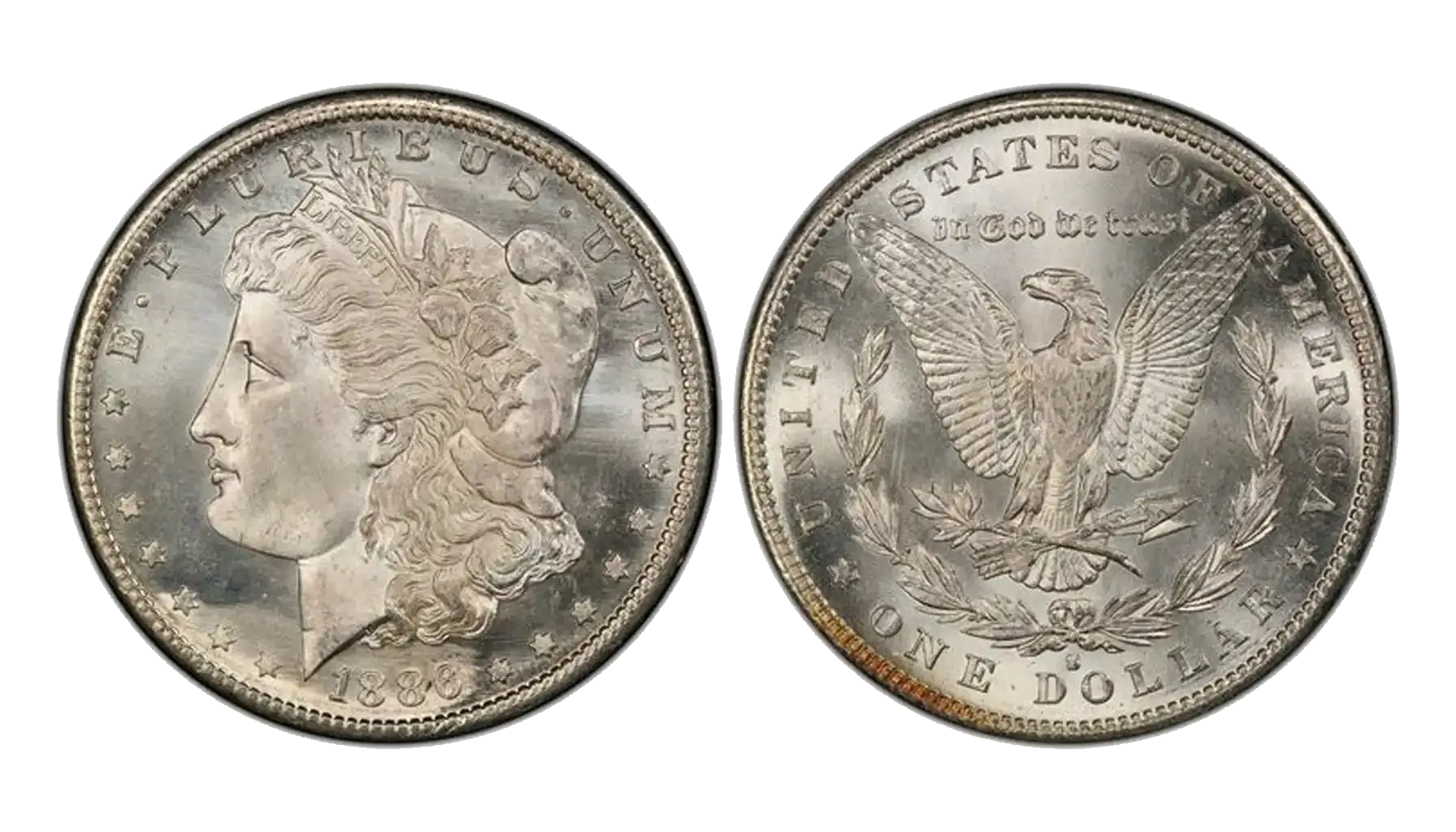
The quality and condition of the specimen is the main value. The standard rating scale ranges from good (G) for heavily worn coins to very thin (VF), extremely thin (EF), almost not in circulation (AU), and minted (MS) for coins not in circulation.
The 1886 silver dollar value no mint mark is generally the lowest of the three mints, but high-grade examples are still sought after.
Within the Mint state, the stamps range from MS-60 to MS-70. Some coins also have a Prooflike (PL) or Deep Mirror Prooflike (DMPL) surface, which provides additional value due to its reflective fields.
The 1886 S Morgan silver dollar value is clearly the highest due to its low mintage.
Value Ranges by Grade & Mint Mark
Grade | Philadelphia | New Orleans | San Francisco |
Good (G-4) | $30 - $40 | $35 - $45 | $100 - $150 |
Fine (F-12) | $45 - $60 | $50 - $70 | $200 - $300 |
Extremely Fine (EF-40) | $70 - $90 | $80 - $120 | $400 - $600 |
About Uncirculated (AU-50) | $100 - $150 | $150 - $250 | $800 - $1,200 |
Uncirculated (MS-60) | $175 - $250 | $300 - $500 | $1,500 - $2,500 |
Uncirculated (MS-65) | $400 - $700+ | $1,000 - $3,000+ | $5,000 - $15,000+ |
Recent Auction Examples and High-End Sales
Recent examples of high-end auctions and sales. When a copy is of good quality, it is often expensive at large auctions.
An MS-67 coin from PCGS Coin Grading Service can be sold for $50,000 when an MS-65 coin is in the thousands.
Points of Premium: Varieties & Condition Upgrades
Condition Rarities (Deep Mirrors, Cameo, Strong Luster)
Well, what makes a 1886 silver dollar rare in the eyes of advanced collectors?
Coins with a mirror surface (DMPL) or a mirror-like surface (PL) are an original gloss or matte contrasting "cameo". They have a higher value. Exceeds the nominal value of 1886 silver dollar.
Die Varieties or Error Strikes
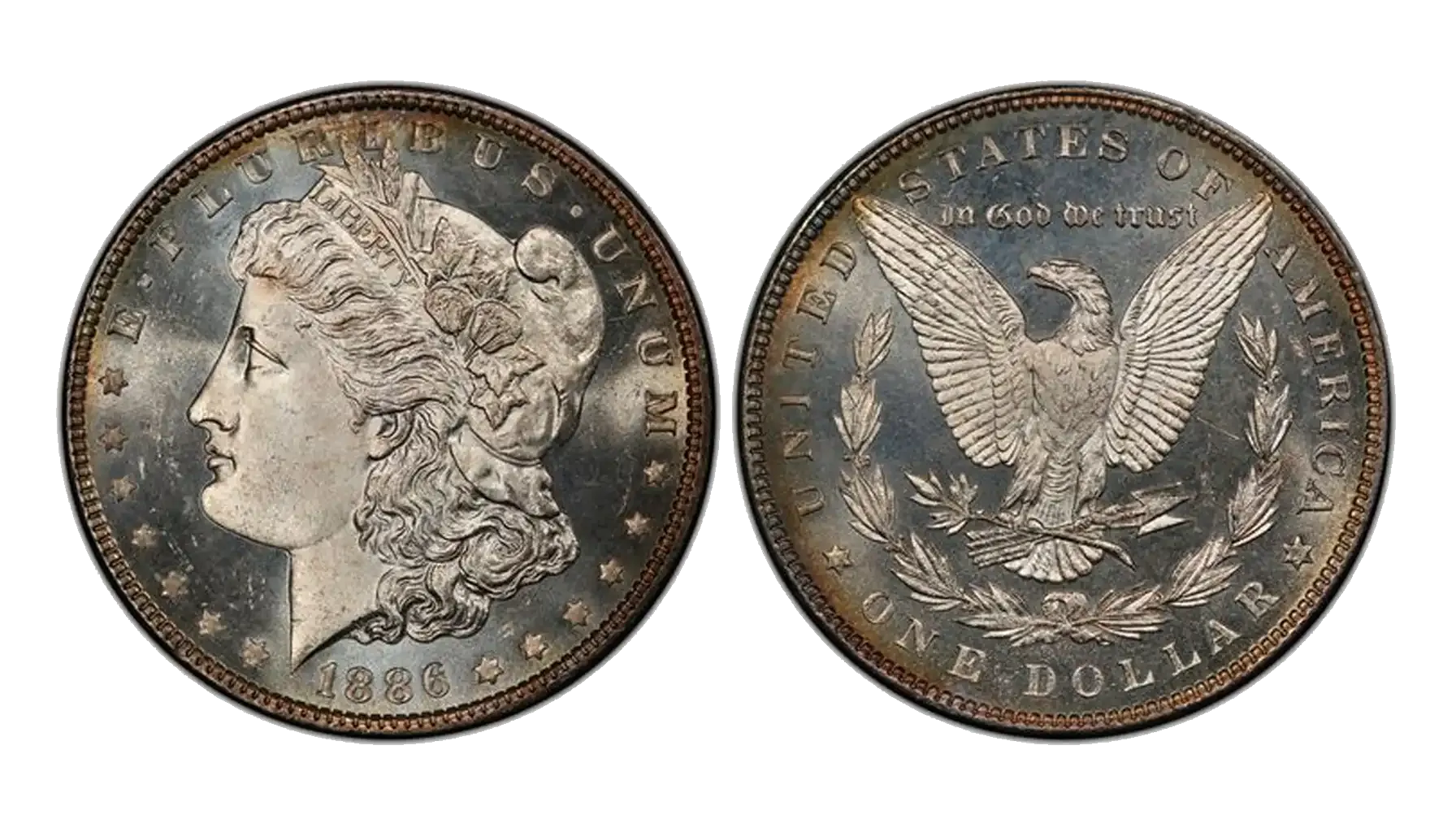
Shape changes, over-pressing of stamps, double stamps or cracks on stamps are also valuable. Rarer errors, such as off-center or Planchet errors, attract significant premiums from specialized collectors.
Provenance, Certified Pedigree Coins
The history of a coin, or its origin, creates a "pedigree" that enhances its appeal. Be sure to register your 1886 one dollar coin on specialized services.
Authentication & Verification Tips
Tip Category | What to Check | Purpose |
Home Tests | Weight, diameter, sound, non-magnetic | Spot obvious fakes |
Surface Inspection | Original cartwheel luster, genuine die lines | Avoid cleaning/artificial toning |
Professional Grading | Send to PCGS or NGC | Authenticate, grade, encapsulate |
Home Tests: Weight, Dimension, Sound, Magnetism
The first thing you should do is check the weight: 26.73 g, and the diameter: 38.1mm. There is also a characteristic "ringing" of silver and non-magnetism.
To correctly evaluate a specimen at home, you can also use the Coin ID Scanner app. It will scan your coin and show its value, history, and other detailed information.
Surface Observations (Luster, Die Lines, Toning)
In good light, check for the original gloss in the form of wheels, authentic stamp lines and natural toning.
When to Seek Professional Grading (PCGS, NGC)
A professional PCGS or NGC assessment is required. They authenticate, sort, and encapsulate the coins. They ensure the trust of customers and help to evaluate the value of an instance.
Investing & Market Trends for the 1886 Morgan
Price Trajectory over Decades
Despite any market changes, prices for this copy are still rising. Although they may fluctuate depending on economic conditions, the value is still quite high.
The shoddy composition of the coin also plays a role here. The price of this metal also continues to rise.
Comparison to Other Late 19th-Century Morgan Dollars
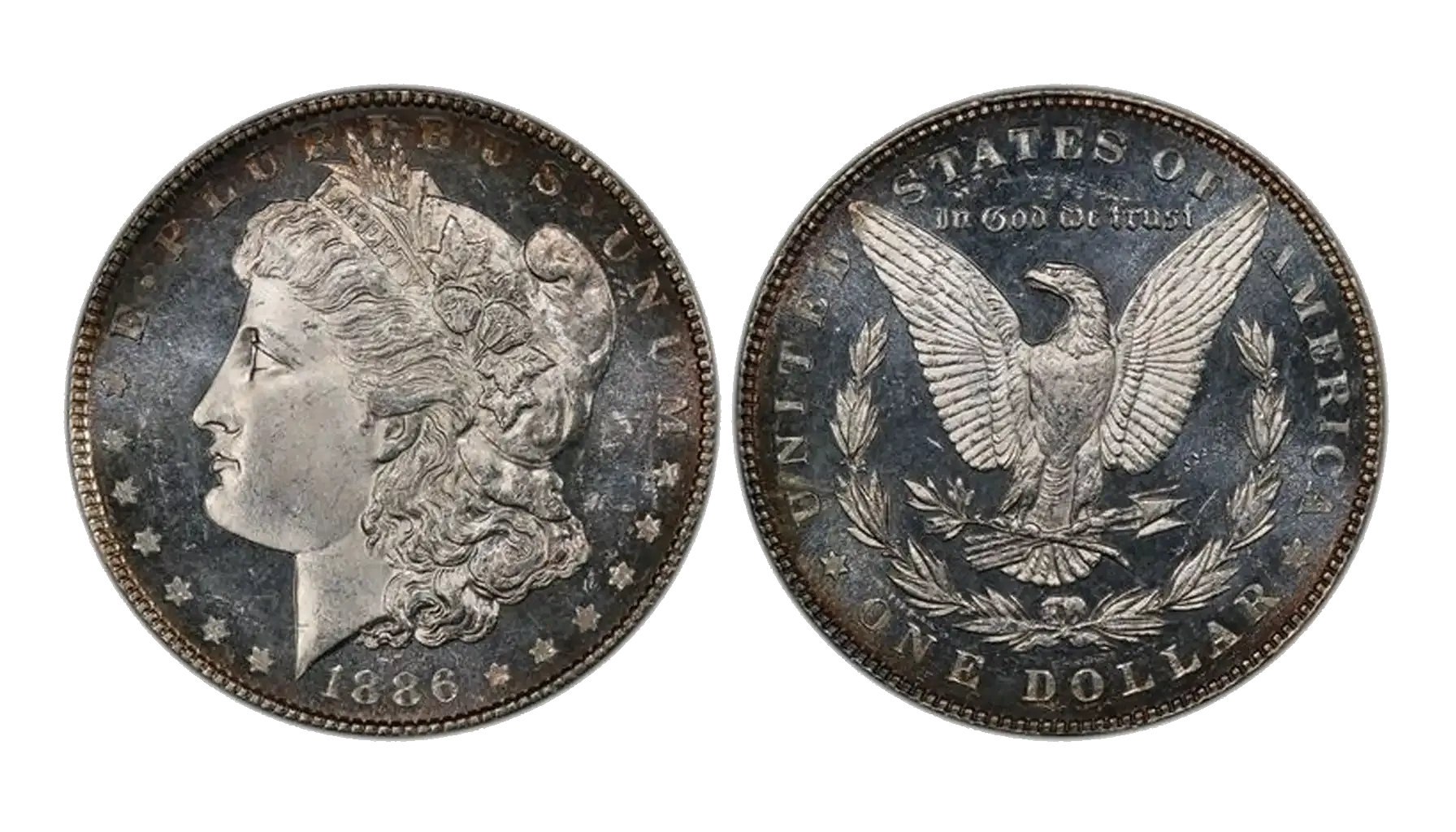
The 1886 issue is often compared to other dates in the late 1880s.
In general, the coins of this decade are not so expensive. However, the specific years 1886 stand out among all. They are more rare and unique.
Advice for Novice Investors
Start with well-preserved specimens.
Adjust to your budget.
Verify the authenticity of the instance.
Contact a professional.
Study the market value before buying.
FAQ About the 1886 Dollar Coin
What makes a 1886 Morgan Dollar valuable?
What makes a 1886 Morgan Dollar valuable? First of all, this is a small print run of some mints. Secondly, the condition. And thirdly, it is the presence of errors, polishing or certification.
How can I identify the mint mark on 1886 Morgan?
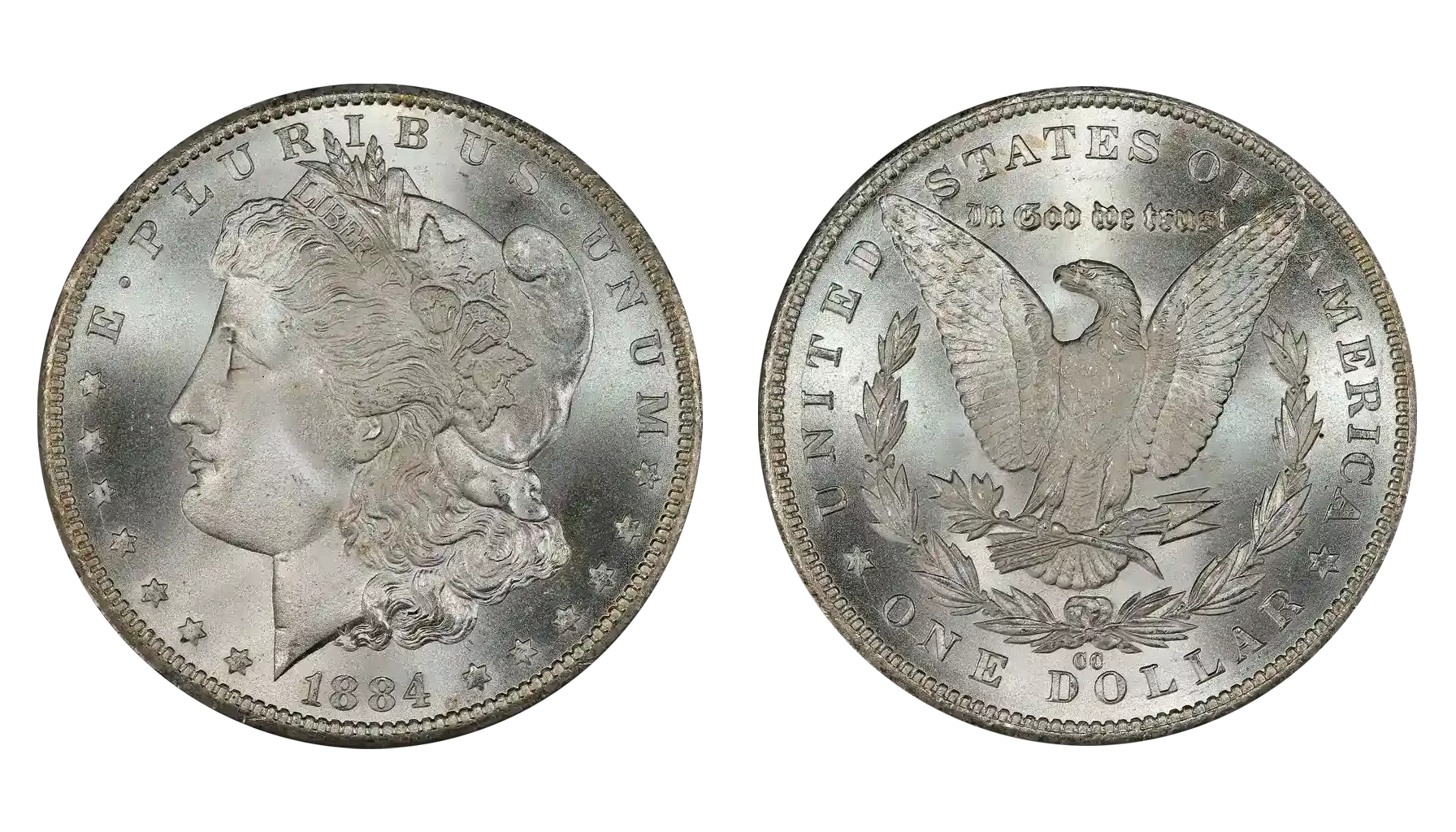
The mint mark is found on the reverse side of the coin, under the eagle. There is no mint mark on the coins minted in Philadelphia.
What is the silver content in the 1886 Dollar?
The composition is 90% silver and 10% copper. It contains 0.77344 troy ounces of silver.
Are 1886-O or 1886-S rarer / more valuable?
San Francisco is significantly rarer and more valuable due to a much smaller circulation of 750,000 copies compared to New Orleans at 10,710,000 copies.
How can I tell if my 1886 Morgan is genuine?
Weigh it and measure the diameter Try to hear a distinctive sound Make sure it is not magnetic.
What grading grade(s) command the highest premiums?
High-quality uncirculated materials, especially with deep mirrored surfaces like Prooflike or Prooflike, or with strong cameo contrast, deserve the highest praise.
What was the original mintage of 1886?
The total initial circulation of all three enterprises was 31,423,000.
Where can I check current prices or sell my 1886 Morgan?
You can check the current prices using reputable price guides and auction results or the Coin ID Scanner app.

 Facebook
  X (Twitter)
  Pinterest
  LinkedIn