We don’t hear about Vietnamese coins often, but they are just as important to numismatics as some other more popular currencies like dollars and euros.
Today, we will give Vietnamese coinage a proper overview, from its Vietnamese veteran challenge coins to its common modern issues.
Have you ever used a coin value checker app? An excellent choice for anyone interested in trading and numismatics. Such apps can check values in seconds.
Does Vietnam Use Coins Today
First things first, the official currency of Vietnam is the dong (Đ, the code name VND). While the country itself dates back thousands of years, its currency is not among the ancient coins.
Does Vietnam have coins? Vietnam technically issues bits, but barely uses them.
Modern Vietnam primarily relies on banknotes for daily transactions, even for very small denominations. Coins were considered inconvenient, heavy, and unfamiliar compared to paper notes, which had been the norm for decades when the dong was first used in 1978.
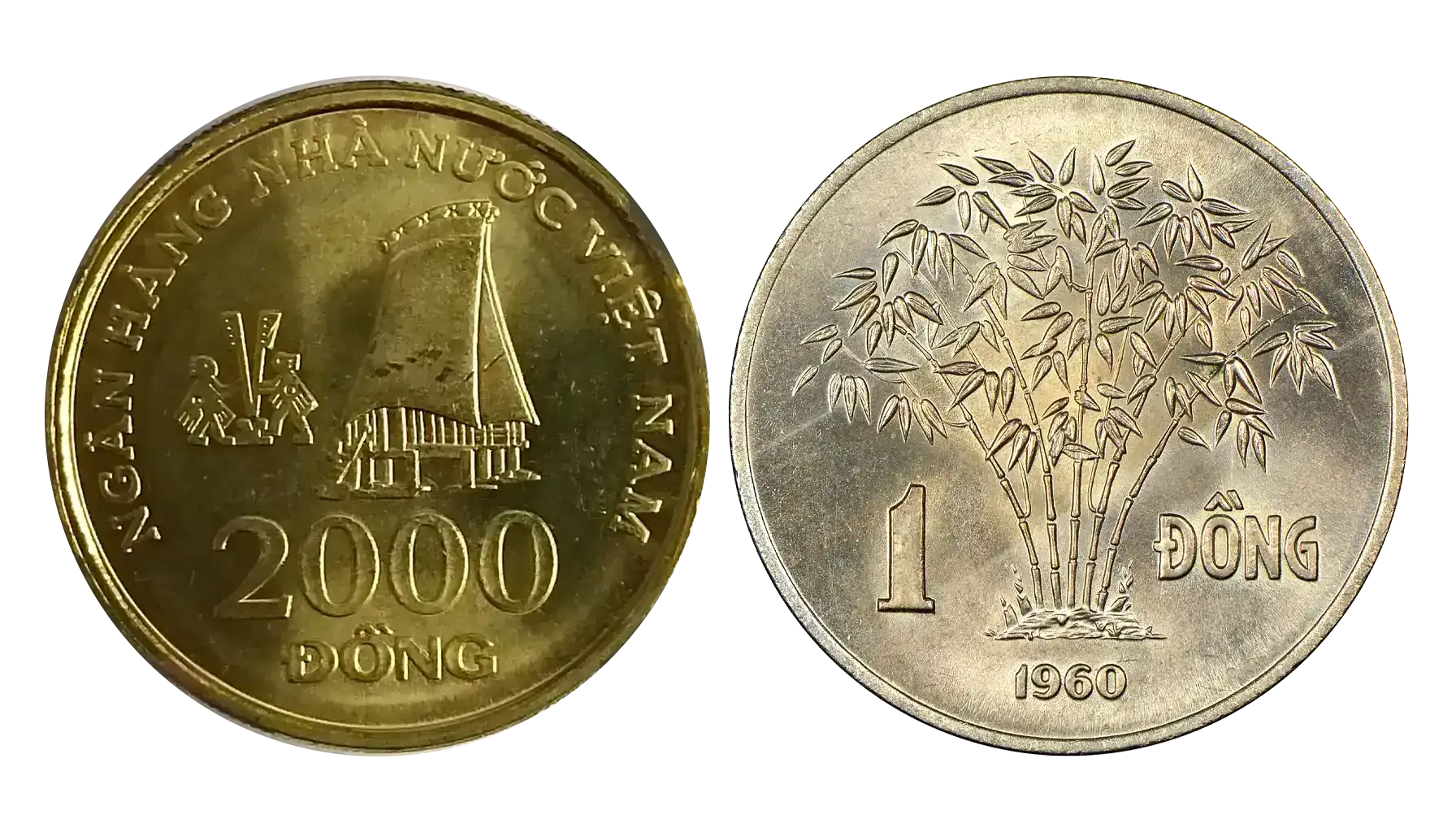
While coins remain legal tender, they are often seen in circulation and are more often encountered in collections, souvenir sets, or bank archives. Are coins going to disappear from Vietnam as the penny denomination disappeared from the U.S.? This prospect seems likely.
“The currency of Vietnam is the Vietnamese dong, abbreviated as VND. It’s used throughout the country for all transactions, from that steaming bowl of pho to five-star hotel suites. You’ll often see it written with the symbol ₫ usually next to prices...”
— Travelex
Official Website
Overview of Vietnam Coins
Coins have been used in Vietnam for over a thousand years. The first few bits were inspired by Chinese coins with square holes. In the 19th century, under French influence, the style switched to European. Finally, after independence and later reunification in 1975, Vietnam has been issuing new dong bits.
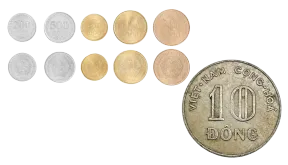
These are the few dong bits still used, though all of them are at least partially withdrawn from circulation already:
Denomination | Metal Used | Diameter (mm) | Weight (g) |
200 ₫ | Nickel-plated steel | 20.00 mm | 3.20 g |
500 ₫ | Nickel-plated steel | 22.00 mm | 4.50 g |
1 000 ₫ | Brass-plated steel | 19.00 mm | 3.80 g |
2 000 ₫ | Brass-plated steel | 23.50 mm | 5.10 g |
5 000 ₫ | Brass | 25.50 mm | 7.70 g |
Modern Vietnamese bits issued in the late 20th and early 21st centuries are not much different from those of other countries. They are machine-stripped and use common materials, like steel and brass alloys. While officially valid, they never became deeply integrated into daily commerce.
Vietnam Coins Value
With dongs, the factors influencing values are the same as with any other country:
Age and rarity.
Metal composition (silver and bronze are especially desirable).
Historical value (bits from important events like wars).
Condition and grading.
Authenticity and documentation.
Vietnamese bits are not valuable in general. Most are made from cheaper metals. They are valued more for their historical narrative than for precious metal content alone.
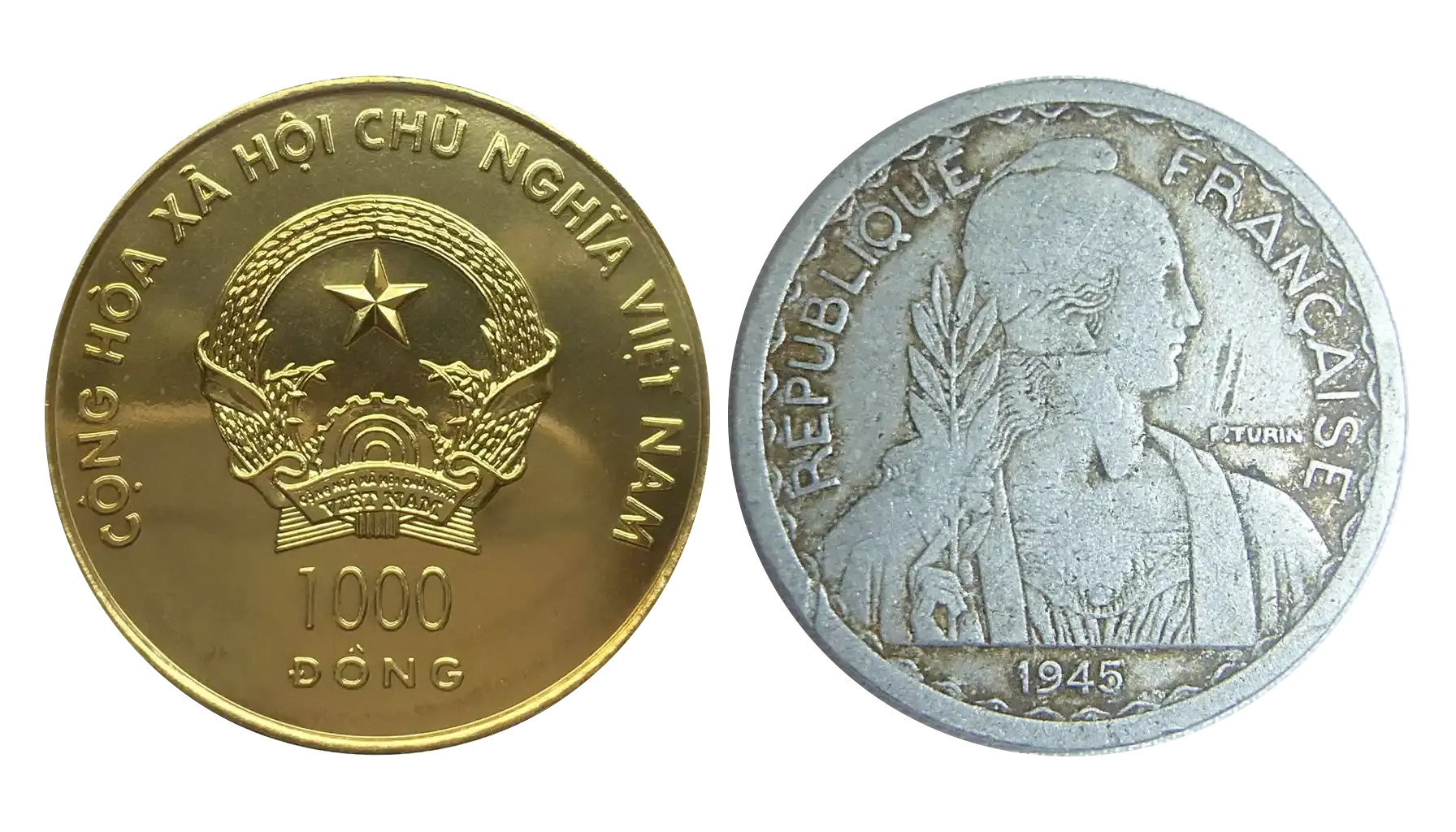
These Vietnamese bits are valuable:
Error bits. Even modern issues are valuable if they were made with errors like off-center strikes or were struck on wrong planchets.
North Vietnam's early Socialist bits. These bits were issued from 1946 to 1951. Due to limitations, they had relatively small mintage numbers, making them desirable.
French Indochina bits. In 1885–1928, many bits were issued in silver, a precious metal today.
Vietnam War Coins
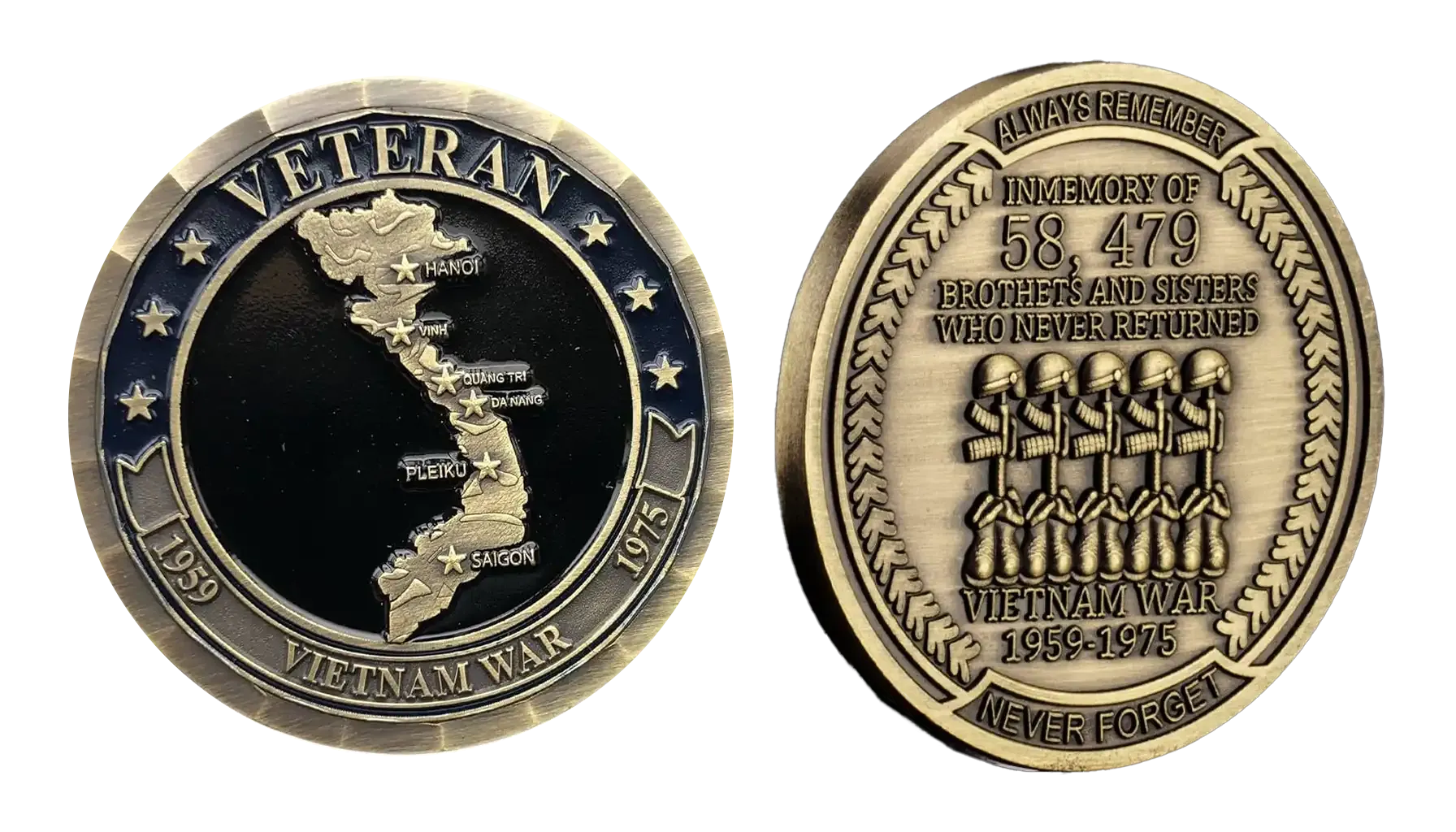
One category of Vietnamese bits that collectors are interested in is the Vietnam War. Collectors are often interested in coinage connected to wars (e.g., Civil War coins from the U.S.).
During the Vietnam War (1955–1975), both official currency and unofficial commemorative items circulated among soldiers.
South Vietnam used the South đồng, issued by the National Bank. Bits and banknotes featured national symbols and were used by civilians and military personnel alike.
North Vietnam had its own separate currency system, rarely encountered by U.S. forces. These pieces commonly featured stars as their main design elements.
A third group is the Vietnam veteran challenge coins. They are not legal tender, but Vietnam challenge coins were issued as commemorative tokens to military units and veterans of the war. Vietnam veteran coins still have no purchasing power, but attract collectors nonetheless.
Conclusion
Perhaps one day Vietnam will return to its coin glory. Until then, we can only wait.
Coin ID Scanner can scan bits from all over the world and evaluate them. A tool for collectors and traders.

 Facebook
  X (Twitter)
  Pinterest
  LinkedIn