Contents:
Do you know the Napoleon gold coin value? Or anything about French coins? Oh, it's all clear to us. Well, get ready to learn all the important information right now without using the Coin ID app.
What Is a Napoleon Coin?
Denomination | 20 francs |
Metal | Gold |
Purity | 0.900 pure gold |
Weight | 6.4 grams |
Pure gold content | 0.1867 troy ounces |
Diameter | 21 mm |
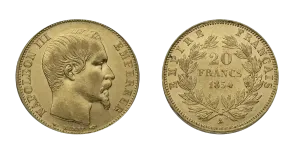
The Napoleon Empereur coin is a French 20-franc gold coin. They were first issued under Napoleon Bonaparte at the beginning of the 19th century.
However, over time, this name came to refer to old French coins with a denomination of 20 francs that were minted until the start of the First World War, regardless of the ruler depicted on them.
Napoleon Gold Coin Overview
Origin
Before the Napoleonic era, France's monetary system was quite complex and convoluted. There were various denominations: louis d'or and livres, which dated back to ancient times. The revolution and wars added even more complications.
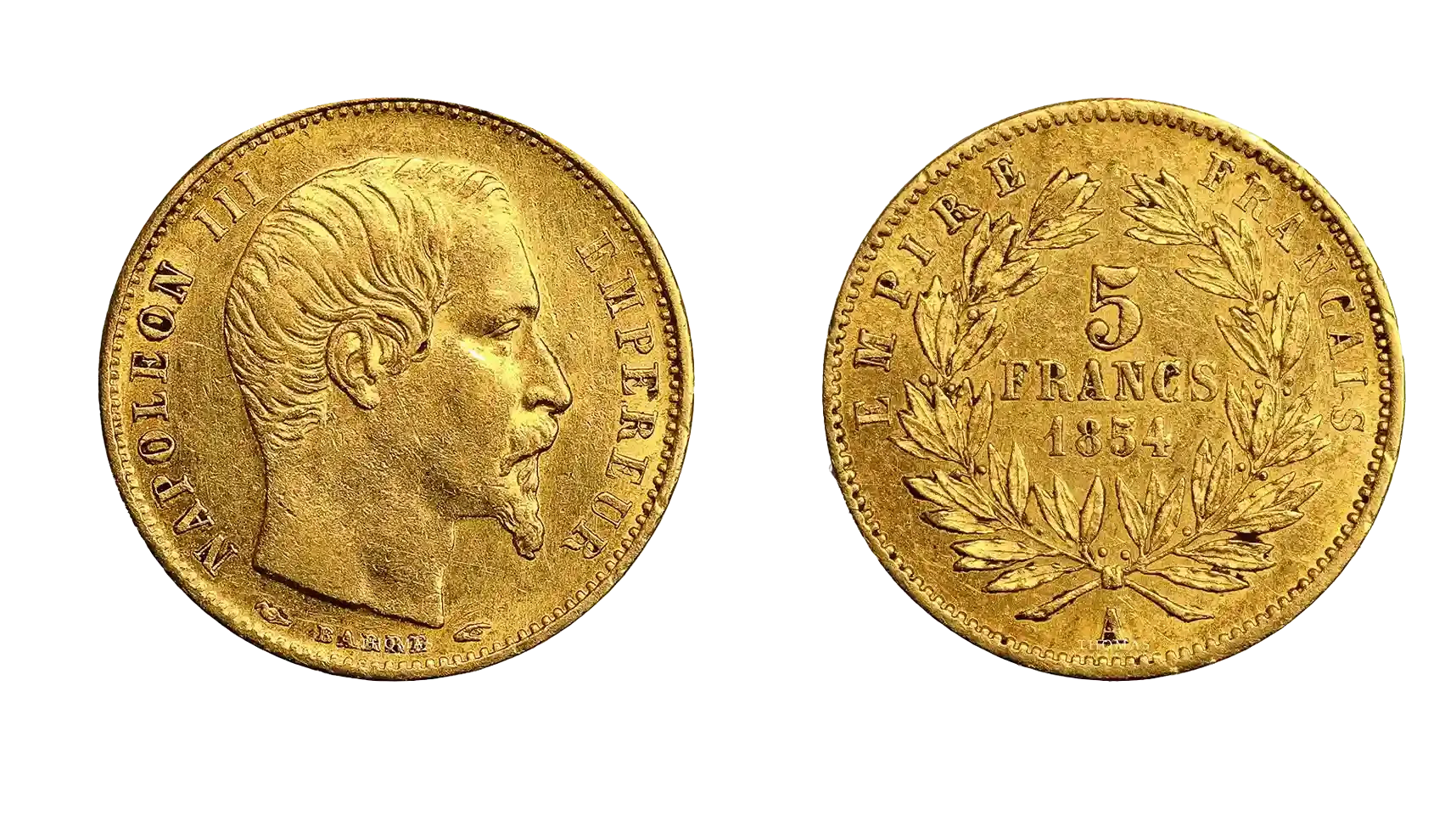
It was Napoleon Bonaparte who carried out a monetary reform that remained relevant for a long time afterward. In 1803, the Franc Germinal was introduced – a new monetary system based on bimetallism and strict adherence to weight and fineness standards.
The goal of the reform was to create a stable and unified currency for all of France, as well as for the territories under its influence.
Types and Varieties
Although the name "Napoleon" is primarily associated with the emperor himself, it extended to the entire standard of gold 20-francs.
Napoleón I Bonaparte (1803-1815)
Bourbon Restoration (1814-1830)
July Monarchy (1830-1848)
Second Republic (1848-1852)
Napoleon III coin (1852-1870)
Third Republic (1870-1914)
Napoleon Coin Value Factors
Intrinsic Value
For Napoleon gold coins, this is the primary factor. All these specimens contain a fixed amount of pure gold.
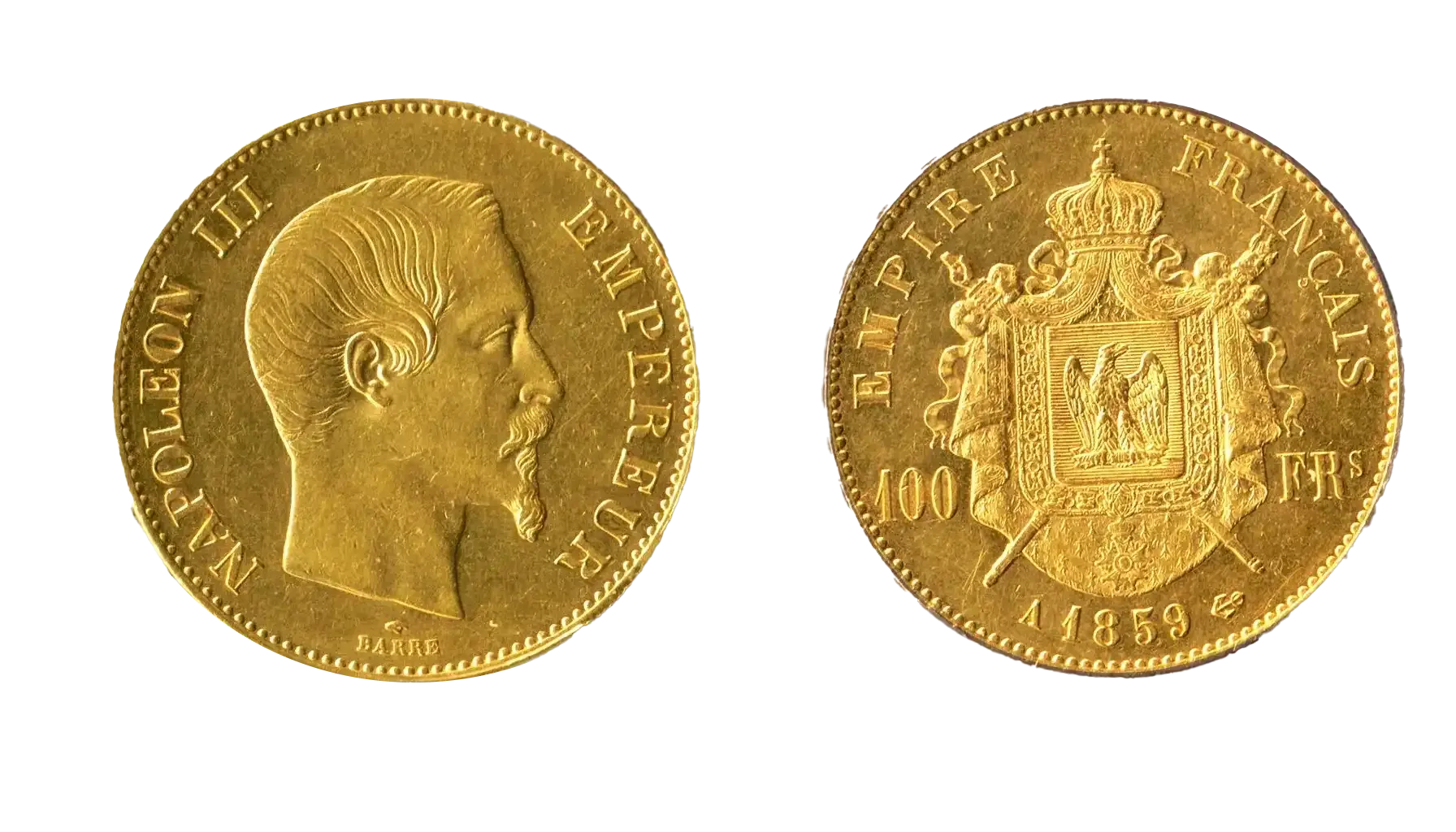
Therefore, any discrepancies will affect the price. This can also be evidence of a counterfeit if the amount of pure metal differs from the original issue. This can be checked using simple scales. Spot gold markets also have an influence. The higher the price of the metal rises, the higher the price of the specimen.
Rarity
Here, it's primarily about the year of mintage and the mint. Some years, for example, the beginning and end of issuance, affect the price. Or if the mintage was small, then accordingly, few specimens in good condition have survived, and they are more valuable.
Condition and Grade
Grade is important for any specimen. Not to mention Napoleon coins value. The higher the grade, the higher the price. This is determined by the internationally accepted Sheldon scale.
Circulated: the specimen was in circulation, showing signs of wear.
Fine/Very Fine/Extremely Fine: good, visible details, but with signs of wear.
About Uncirculated: the specimen was in circulation very briefly, with minimal wear.
Uncirculated/Mint State: never been in circulation, preserving all the finest details and original luster.
How to Identify Authentic Napoleon Coins
Weight and Size
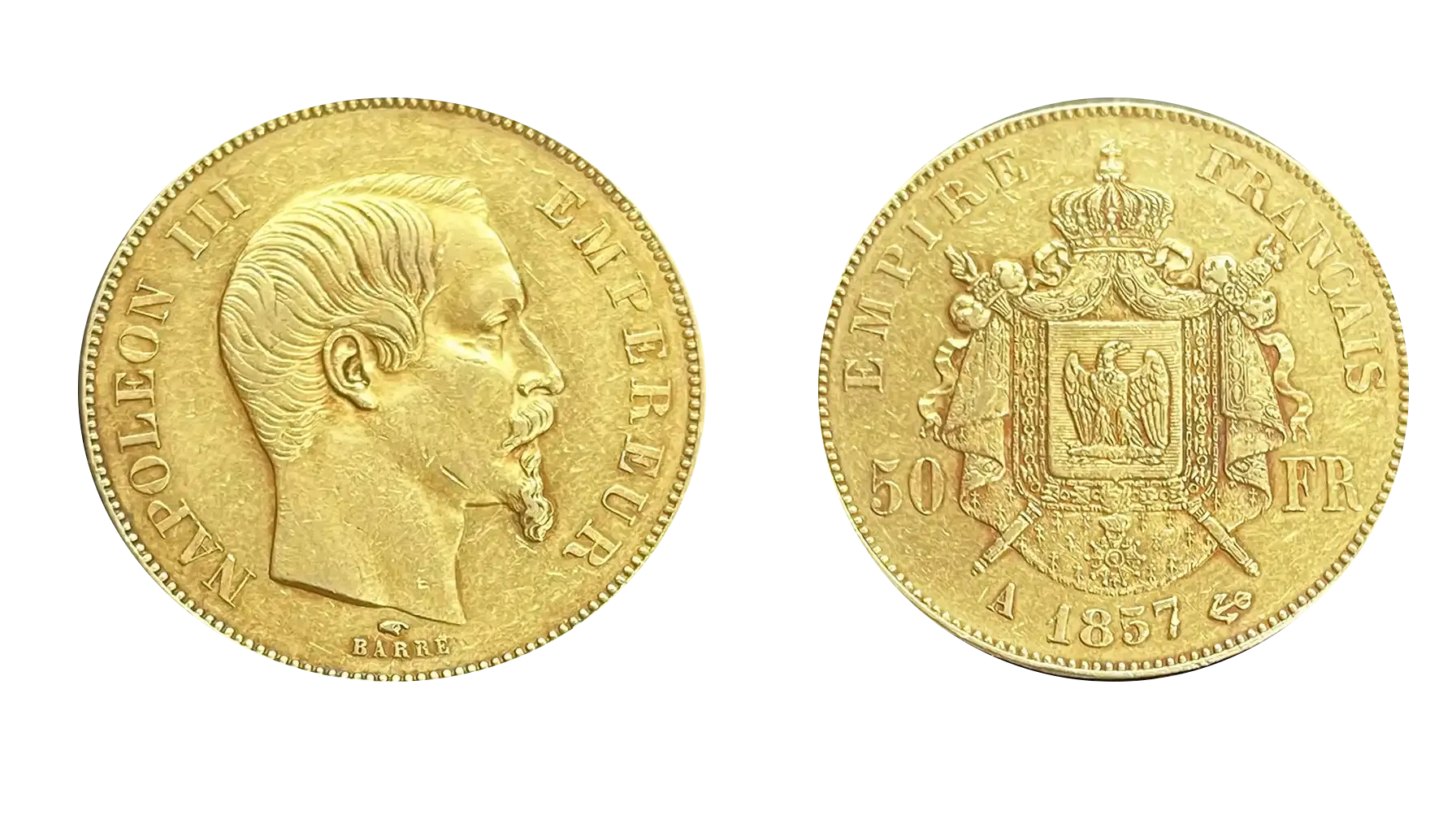
The exact weight is 6.45161 grams. Deviations, even by tenths of a gram, can indicate a fake. Use jewelry scales with an accuracy of hundredths or thousandths of a gram.
Diameter: The standard diameter is 21 mm. This can be measured with calipers.
Metal and Purity
The color is very important here. Over time, various alloys change their hue due to natural toning. However, 900 fineness gold has a characteristic yellow-orange hue.
This metal is also not magnetic. Bring a strong magnet close to the specimen: if the coin is attracted, it is definitely not gold.
When tapped lightly on a hard surface, a gold item will produce a clear, sustained ringing sound.
Density is the most difficult test, but the most reliable. The specific gravity of 900 fineness gold is about 17.2 g/cm³. You can measure the weight of the specimen in air, then in water. The ratio of these two indicators will give the specific gravity.
Design Details
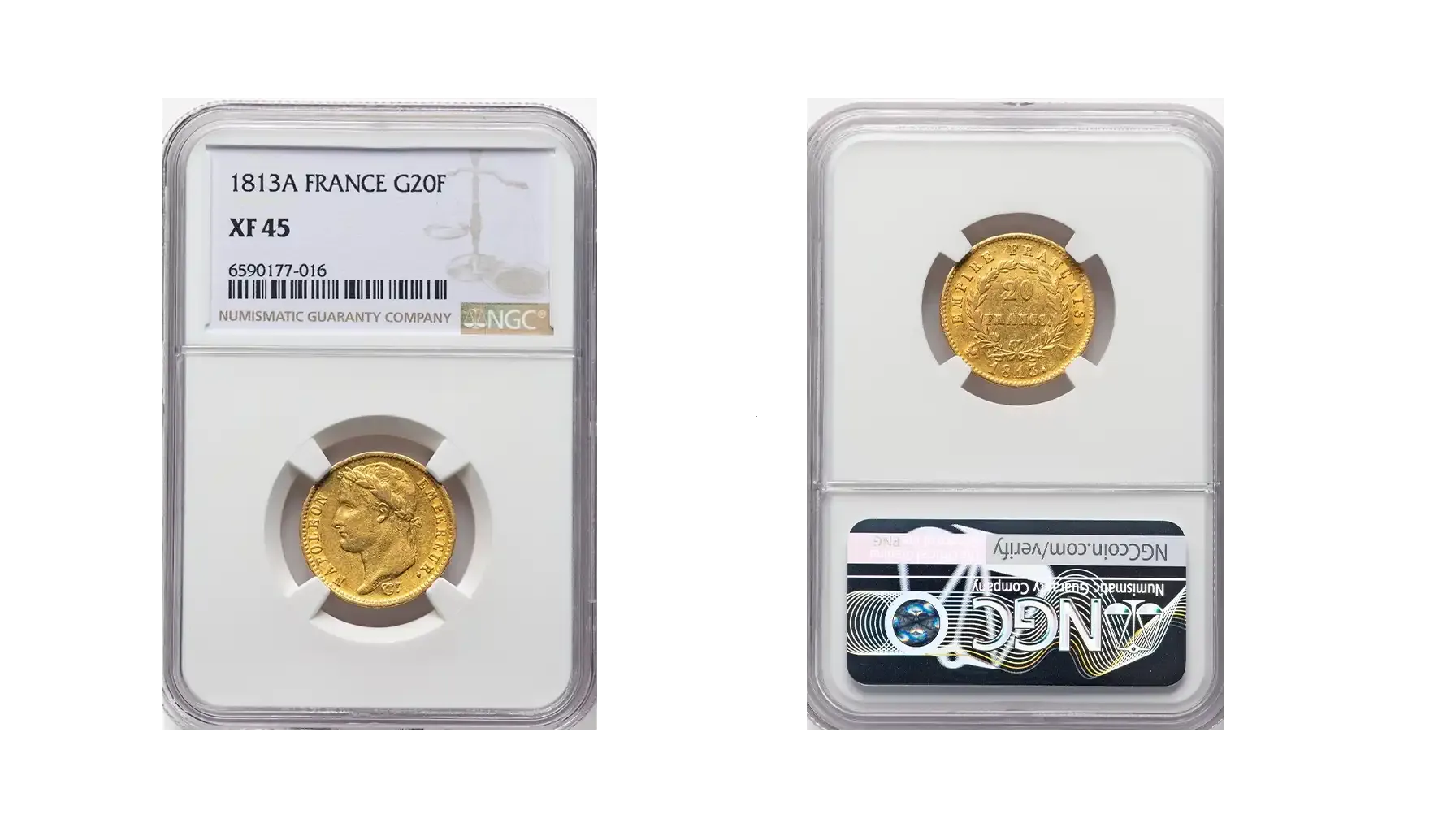
A genuine gold Napoleon coin has sharp, clear lines and details on the portrait, inscriptions, and symbols. Fakes often have "muddy," blurred, or shallow details due to poor quality stamping or casting.
The edge of the specimen should also be even and sharp, without burrs or casting marks.
Edge
Most specimens in this series have a reeded edge. The reeds should be even, sharp, and uniformly spaced.
Some specimens, particularly Napoleon I and III, have inscriptions on the edge, such as "DIEU PROTEGE LA FRANCE" or "LIBERTE EGALITE FRATERNITE".

 Facebook
  X (Twitter)
  Pinterest
  LinkedIn