Contents:
Coins may bear different names and be issued under various jurisdictions, but their essence is generally the same. Even when it refers to the 20-Franc gold coin, should it be French, Swiss, Belgian, Luxembourgish, or Monegasque, history shows that each follows the indistinguishable standard.
This is how units of currency were brought outside the borders and national prejudices – their history is universal, but which features identify these coins as unique anyway? What is the 20 franc gold coin value, and why do these still matter?
20 Swiss Franc Gold Coin (Helvetia/Vreneli)
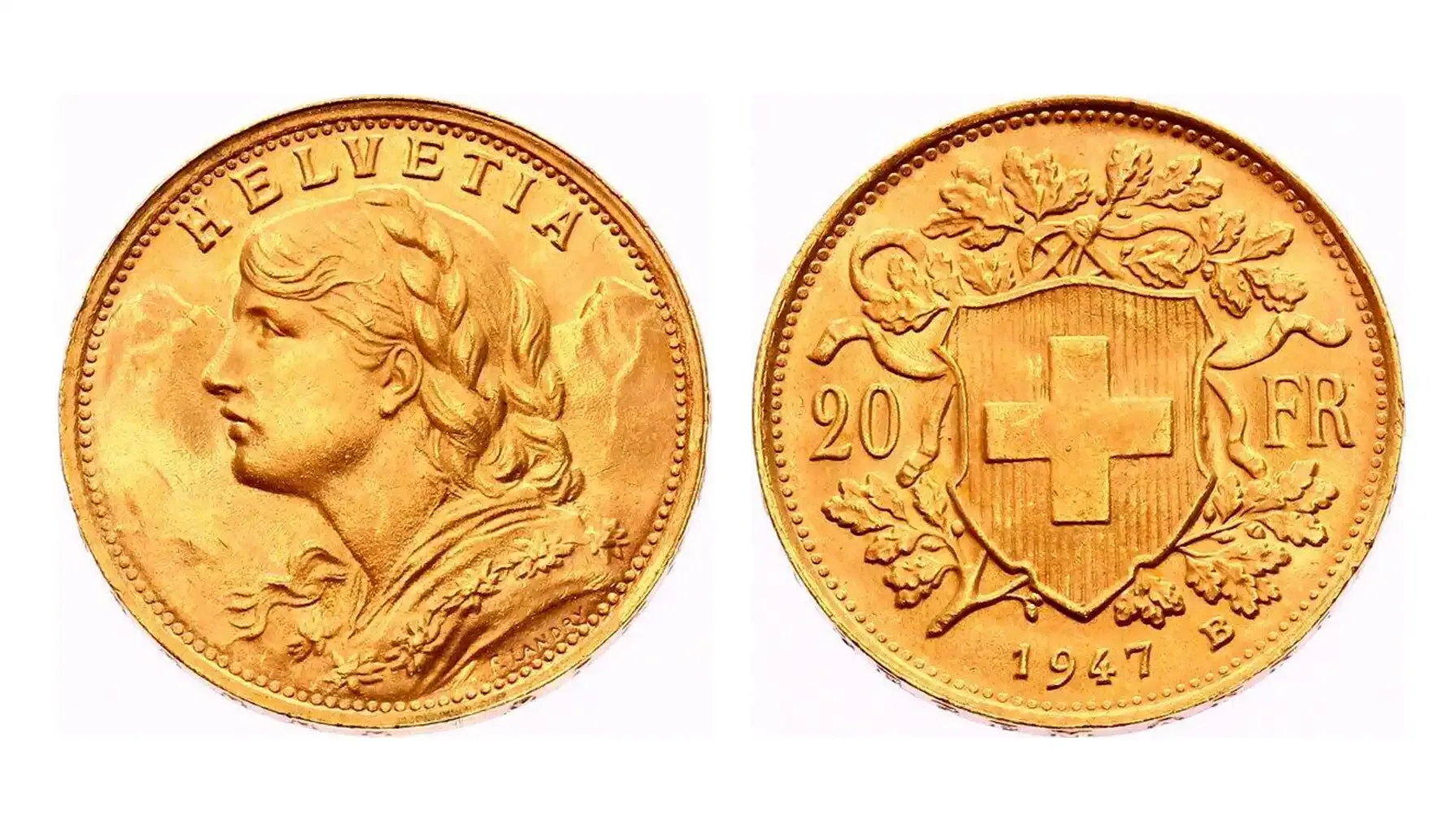
Approx. Reference Price: ~716,82 €
Years of Minting: 1883–1896 (for Helvetia); 1897–1936 +restrikes in 1947 & 1949 (for Vreneli)
The Swiss 20 Franc gold coin value proves that it is by far one of the most notable representatives of this type of denomination. To be more precise, it is a generalized term that still refers to two major varieties, i.e., the "Helvetia" design (i.e., the one with the female head of Helvetia) and the “Vreneli” (i.e., the one with a female portrait by Fritz Landry).
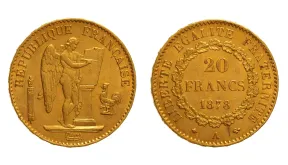
French 20 Franc Gold Coin
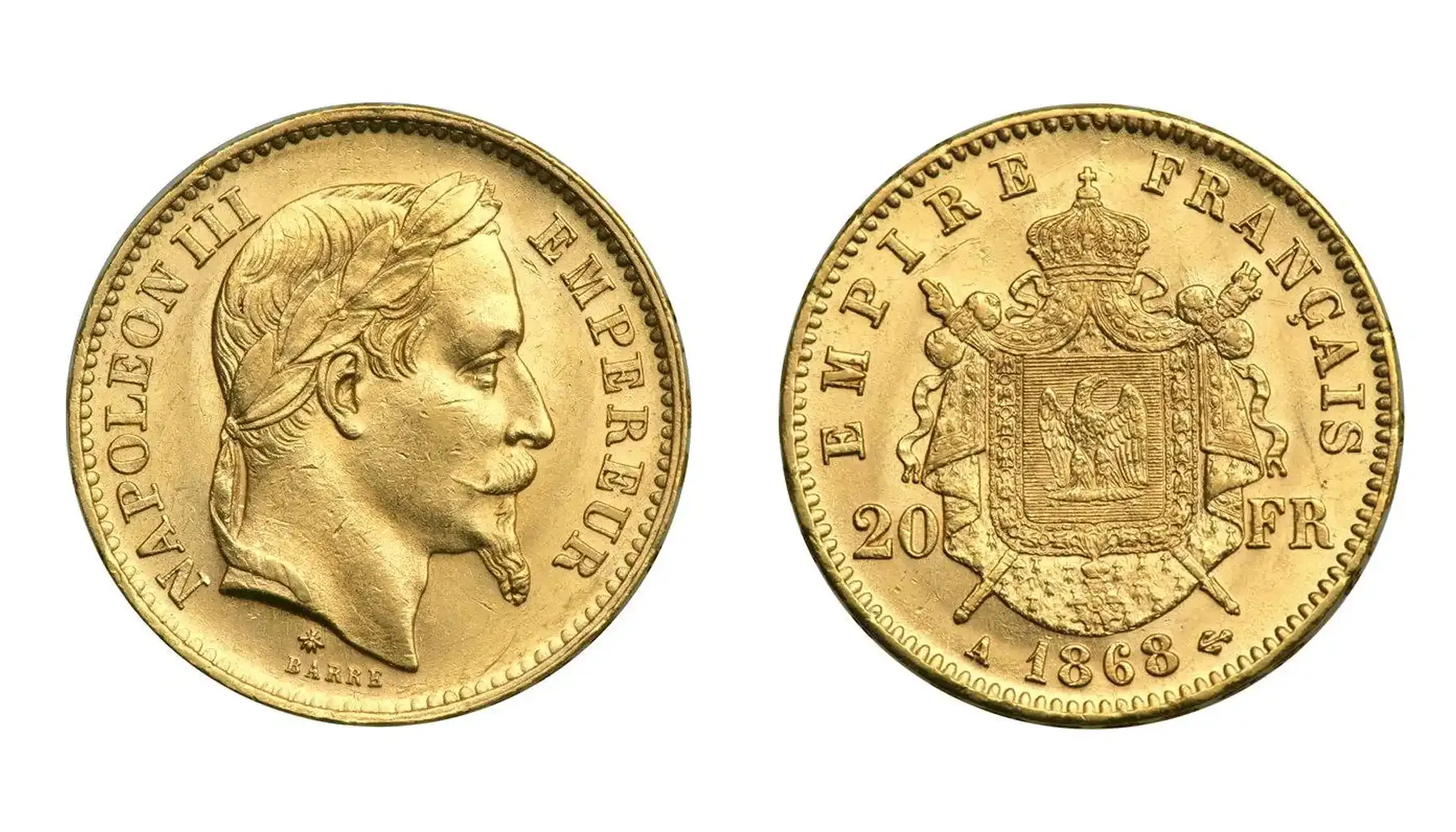
Approx. Reference Price: ~€670–€720 (for common types)
Years of Minting: 1803–1914 (multiple rulers and republics)
The type of franc, i.e., one of many other old French coins, is probably the most authentic and popular among the rest, and it comprises a set of numerous issues that all go by different names, with Napoléon, Génie, and Cérès/Coq (20 franc rooster) catching the eye. Although the designs changed throughout its path, all of them adhered to the same standardized weight and purity set during Napoleon’s reign.
“Before the French Revolution, the fineness of French gold coins had been determined in ‘carats and grains’.
The Revolution standardized all the units of measurement using a decimal basis, which would later be almost universally adopted as the metric system. From then on, most countries that were not part of the British Empire tended to adopt a fineness of 900 for any gold coinage that they issued…”
— Unknown authors, “The First Napoleon Coin” article
LBMA’s “Wonders of Gold” exhibition by Stewart Murray
Belgian Variety
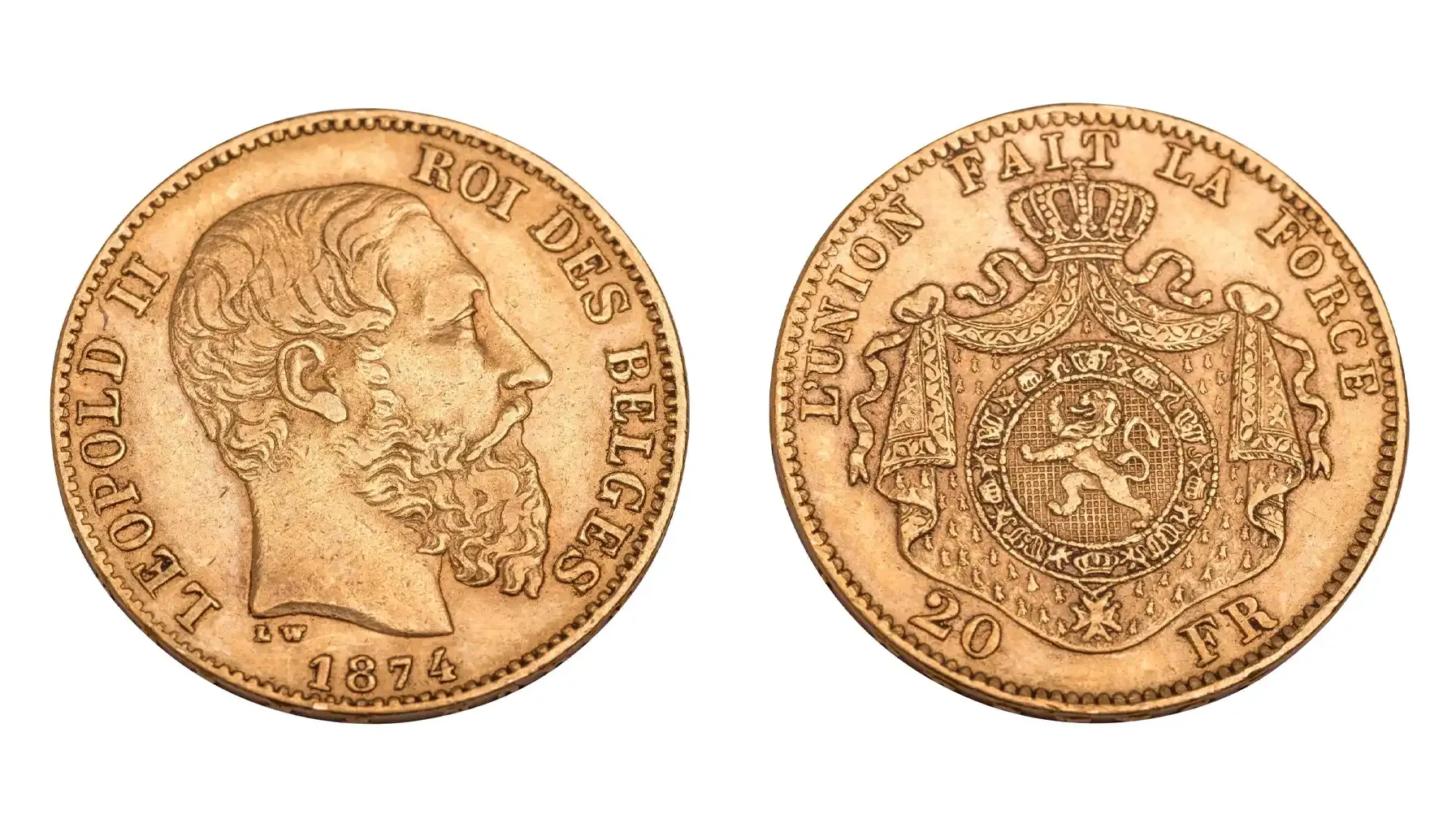
Approx. Reference Price: ~€ 724
Years of Minting: 1830s–1914 (multiple monarchs)
Although it is not the most well-recognized numismatic creation (unlike 2-euro coins), the Belgian issue is still worth mentioning as one more denomination representative that belongs to the same old Latin Monetary Union standard, too. One is free to explore various design iterations that featured Leopold I, Leopold II, and Albert I, but weight, purity, and technical specifications are always the same anyway.
Luxembourgish Variety
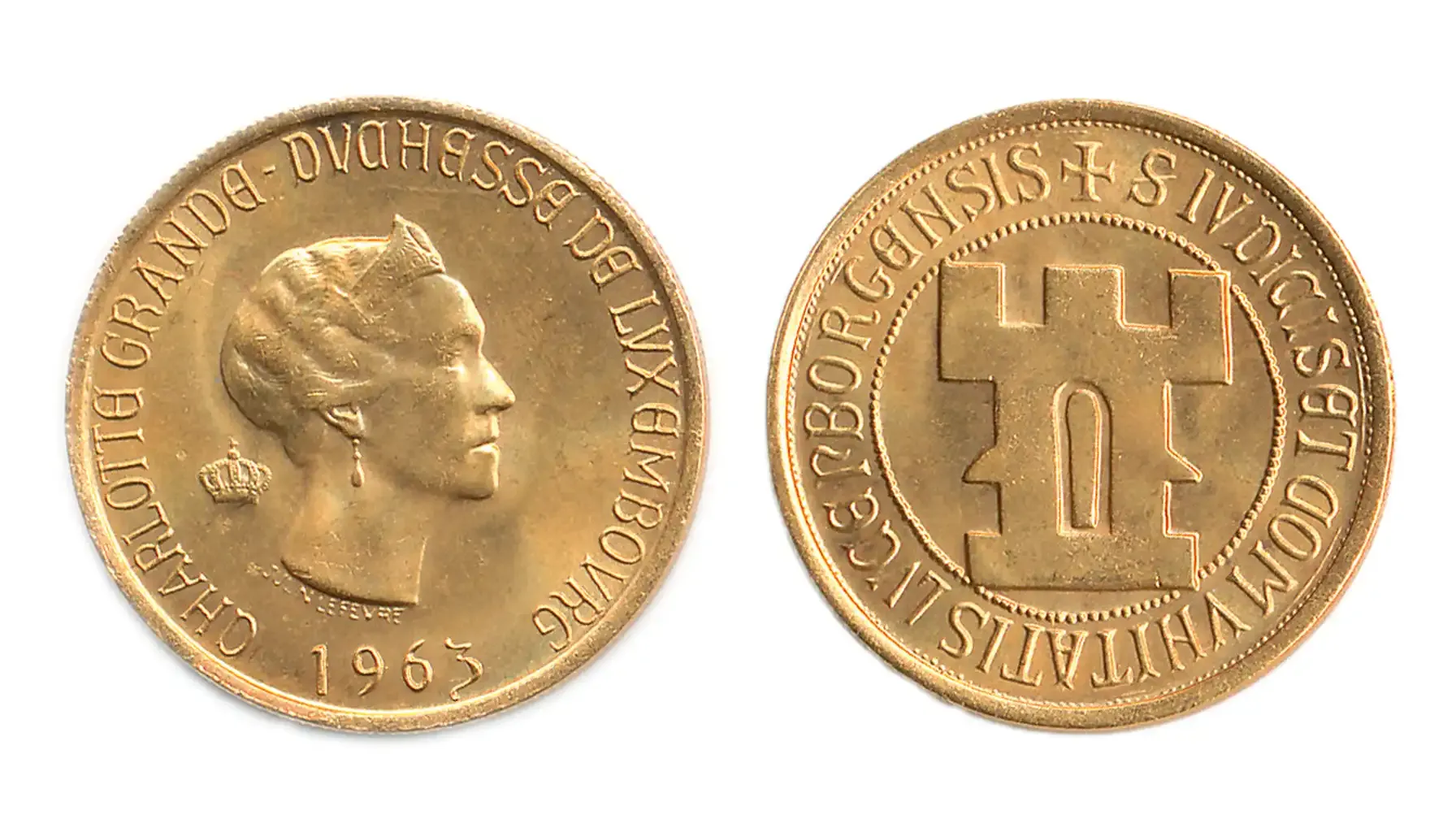
Approx. Reference Price: €650–€800
Years of Minting: 1940s-1960s +selected commemorative issues
When compared to other national currencies of the same denomination, the production of the Luxembourgish variety could be pronounced limited. The examples that collectors may truly love usually include the 1964 issue (meant to celebrate the accession of Grand Duke Jean) and a 1989 commemorative (devoted to 150 years of independence).
Monegasque Variety
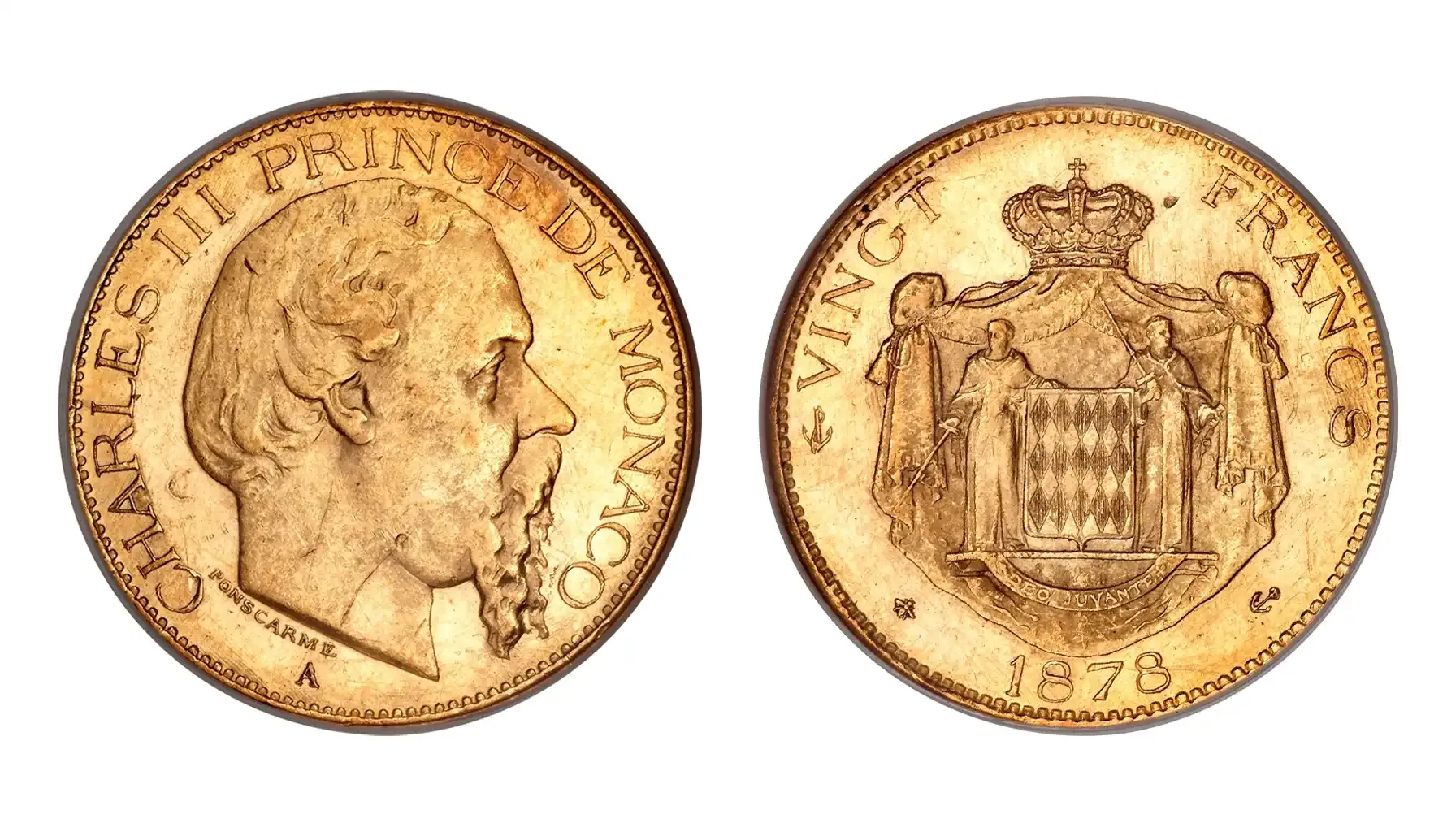
Approx. Reference Price: €1,100–€1,300
Years of Minting: 1878–1879
Monaco’s 20 Franc is one of the rarest national variations of the franc-standard series that has been issued only during a short period of 1878–1879. As such, it demonstrates Prince Charles III on the obverse and the Monegasque coat of arms on the reverse, though other denominations were a bit more diverse and lucky to feature even more rulers and events.
Denominations are rarely shared, but this is a vibrant example of a coin that has no limits but the common monetary framework that bound these nations together.
FAQs
How much is a 20 Franc unit worth?
This typically comes down to €300–€350 for common types. The rarer the coin, the higher the price.
What is the gold content of a 20 Franc coin?
As a rule, each numismatic creation of this denomination contains 5.806 grams of pure gold (which constitutes 6.45 g total weight and 90% purity).
How much is a 1878 20 Franc unit worth?
Should we refer to the Monaco issue, the coin auctions demonstrate that it is generally worth up to €1,300. The French variety is a bit less expensive, though, i.e., €800 to €1,000.
How to authenticate 20 Francs?
First of all, it is vital to check the weight, diameter, edge design, mint marks, and that it is non-magnetic. The second step is the use of tools like Coin ID Scanner to identify pieces by photo, explore the background, compare the details with verified examples, and detect errors on coins, if any.

 Facebook
  X (Twitter)
  Pinterest
  LinkedIn