Contents:
The history of each nation can be viewed from different perspectives. However, there are artifacts that reflect the consolidated narrative of the past, let alone the significance of the present. These are coins, i.e., pieces that may be found in daily routines, with a great potential to turn into valuable relics once.
The numismatic creations of Old France are genuinely engrossing, for their history reaches back approximately one thousand years. The path they took was twisted, ensnarled, full of dynastic rotations, economic reforms, and artistic influence that cannot be overestimated. So, what were the most notable pieces? Which features could identify rare coins, and how much would they cost today?
“…In their choice of symbolism, they [coins] document the French monarch's idea of self-manifestation – "L'Etat, c'est moi" – and the victory of the centralistic state over the regional feudal overlords.”
— Unknown authors, “La Grande Nation and Its Coinage”
Sunflower Foundation, the Money Museum
A Quick Overview of the Former French Coin
When referring to the former numismatic creations, we generally presuppose units of currency that were once legal tender but are no longer present in circulation, and the range of old French silver coins, as well as those struck in gold, is undoubtedly diverse.
At its dawn, when the royal authority was still weak (the 10th century, give or take), many local feudal mints issued their own coins, and the crown's releases could not be influential yet. Over time, though, the monarchy centralized its power, and this is when the national coinage was born: new denominations, metals, designs, and techniques came soon.
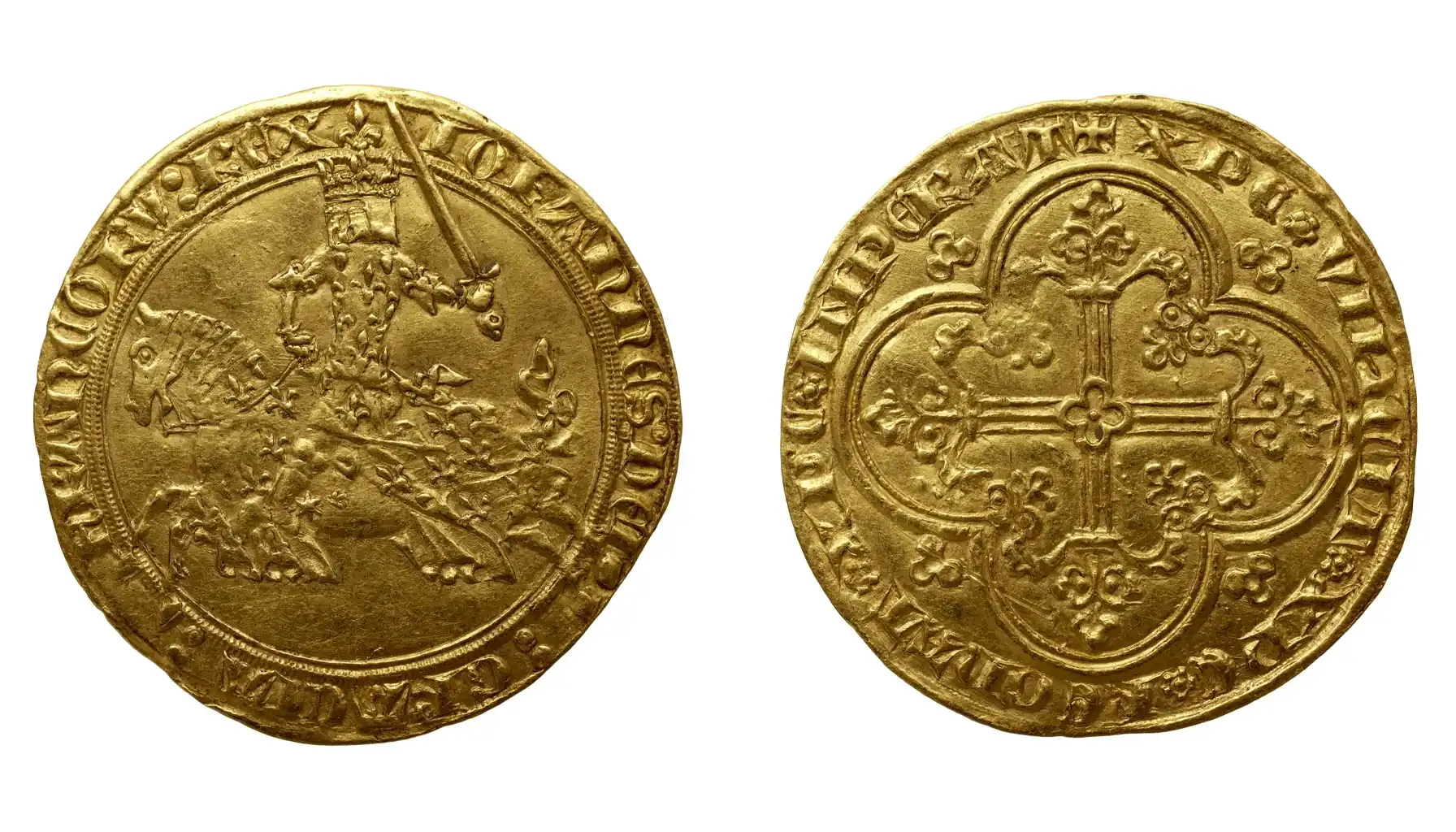
Each piece was developed for a reason. For instance, one of the most well-known French gold coins, i.e., the franc à cheval, was first minted in 1360 to help pay the enormous ransom demanded by King Edward III of England for the release of French King John the Good after his capture at Poitiers. It was intended to bear an astonishing sum of three million écus d’or, or 500,000 pounds sterling.
The name was illustrative: "franc" literally means "free" (=French for free), while “à cheval” reflected the peculiarities of the design. Centuries passed, and so did the coin, in turn. Nevertheless, other denominations were also yet to come.
Key Types of Defunct French Coins
Type | Period | Metal | Price Range | Notable Features |
Denier | 8th–13th c. | Silver/Billon | €20 – €200 | One of the earliest French coin types; simple design, regional mints. |
Gros/Gros Tournois | 13th–14th c. | Silver | €150 – €600 | Larger than deniers; widely copied across Europe; inscriptions and portraits vary by king. |
Écu (and Écu d’or) | 14th–18th c. | Silver & Gold | €100 – €9,000+ | Long-running series; gold écus of Louis XIV can reach the high end of value. |
Franc à cheval/Franc à pied | Mid‑14th c. | Gold | €1,000 – €2,000 | Early “franc” coins; motifs show the king on horseback or standing. |
Teston | 15th–16th c. | Silver | €300 – €400+ | Renaissance portrait pieces; value depends on the king and a mint mark. |
Louis d’or | 17th–18th c. | Gold | €1,200 – €4,000+ | Struck under Bourbon kings; mechanized minting; widely collected. |
Early Franc Issues (silver) | 18th–19th c. | Silver/Billon | €30 – €250 | Decimal system introduced; revolutionary imagery; transitional coinage. |
French Rooster Gold Coin | 1899–1914 | Gold | €250 – €500+ | Features the Gallic rooster; symbol of the Third Republic. |
Know What You Hold: How to Identify Units On the Spot
Identifying old French coins can be quite challenging. Yet, when one knows which tools to employ, this process becomes easier and even more captivating than before. Each detail of the intricate designs should not slip away – let us capture them with Coin ID Scanner together. But what does it offer, and why use it after all?
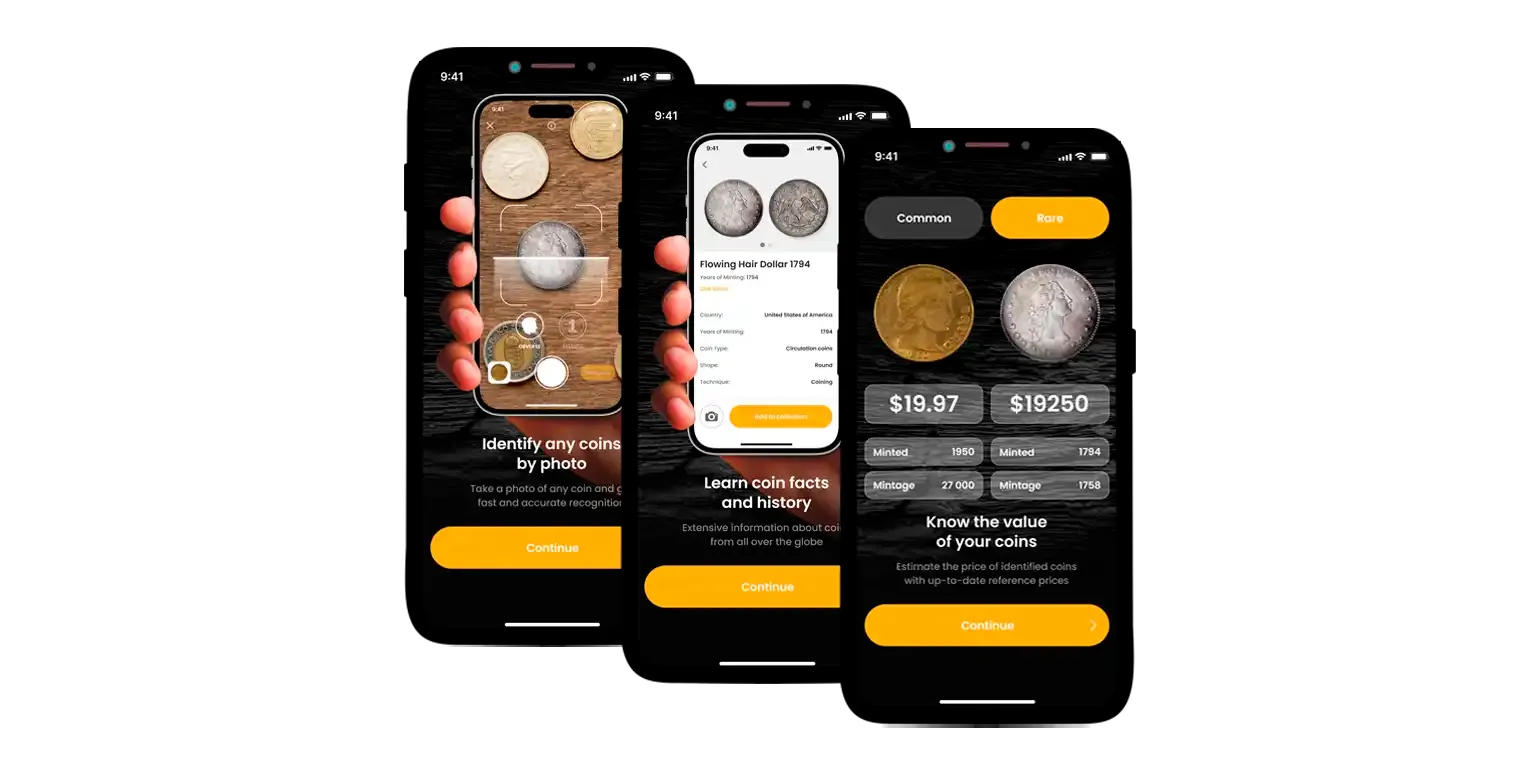
Photo Identification: Upload or take a picture for prompt results and access detailed cards with years of minting, country, type, metal, weight, diameter, edge, reference prices, and more.
AI Coin Helper: Enjoy smart assistance that accumulates information from professional numismatic resources in an instant.
Extensive Database: Explore 187,000+ pieces with global coverage via an international encyclopedia.
Educational Resources: Learn more about numismatics, coin history, minting periods, market trends, and designs through comprehensive articles, checklists, and guides.
Collection Management: Save and organize numismatic creations in your digital catalog (folder by folder).
The history of French coinage cannot be expressed in 1,000 words. We shall spark the interest – you are to explore more!
Frequently Asked Questions
What are French coins called?
Just like many other currencies, these could boast several names, depending on the given period and the monarch: the denier, écu, franc, louis, and later centimes and francs under the modern system. As of today, France employs French euro coins.
What is the three-letter word old French coin?
A common three-letter old French numismatic creation is the écu, used during the medieval era well into the 18th century.
Are former French coins valuable?
Yes, indeed. Many of these creations are valuable, which can be proven by the data from reputable coin auctions, yet this mainly depends on the minting facility, key dates, and condition. The more exclusive the coin, the more expensive it may get.
What is a 20 franc gold coin worth?
As a rule, the price of 20 Franc gold coins does not exceed €500, though exceptions are possible.
What old French coin starts with 'E'?
The most well-known old French unit of currency, whose name begins with “E”, is the écu, i.e., a long-running series, with the first sample having been released in 1266 and the original circulation period having lasted until as late as 1834.

 Facebook
  X (Twitter)
  Pinterest
  LinkedIn