Contents:
Dutch coins are overlooked sometimes, unfortunately. Today, we will bring a truly valuable coin to the spotlight. A “10 gulden munt", as they would call it back in the Netherlands. Today, we will go over the 10 gulden gold coin value, design, and history.
Would you like to identify rare coins in seconds? It is possible today, with the right apps.
Overview of the 10 Gulden Gold Coin
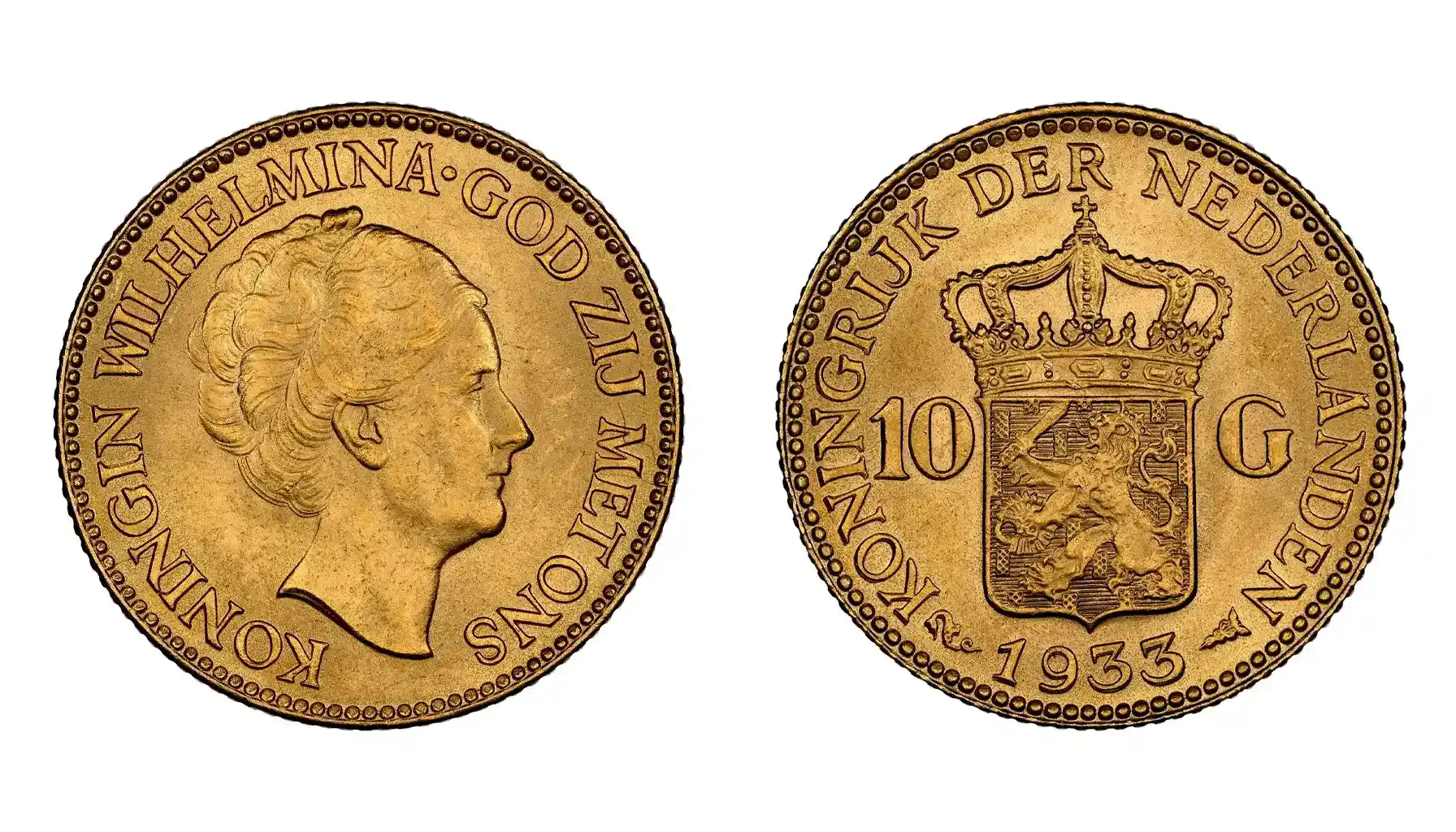
10 Gulden (Gouden Tientje) is a classic Dutch coin. An old one, too, before the euro. While old, being a gold coin, the Gulden is still a masterpiece and a point of interest for collectors and investors.
Multiple designs graced the coin, but the design with the Dutch Queen Wilhelmina remains the most popular.
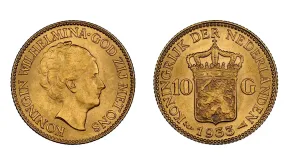
The obverse depicts Queen Wilhelmina. She is wearing a veil and an ornate gown. The inscription around the edge reads “WILHELMINA KONINGIN DER NEDERLANDEN” (Wilhelmina, Queen of the Netherlands). This design is one of the latest.
The reverse shows the Dutch crowned coat of arms, featuring a lion holding a sword and a bundle of arrows. A royal crown sits atop the shield, representing the Dutch monarchy. The face value “10 G” appears on both sides of the shield (“10” left, “G” right).
Feature | Details |
Country | Kingdom of the Netherlands |
Years of Minting | 1875 – 1933 |
Type | Bullion Coin |
Shape | Round |
Edge | Reeded (milled edge) |
Metal Content | 90% Gold (.900 fine), 10% Copper |
Gold Weight | 6.056 g (≈ 0.1947 troy oz) |
Total Weight | 6.729 g |
Diameter | 22.5 mm |
Thickness | 1.3 mm |
Historical Context & Issue Years
While not the oldest coin in the world, 10 Gulden has a few stories to tell.
The series originated in the 19th century, the Napoleonic period. The main reason for the new arrivals was that the government needed to modernize Dutch coinage. Most experts recognize two periods:
Willem era: Pieces that were issued under King Willem I (1818–1840) and Willem II (1840s), with more regular issues under Willem III (1870s–1880s). Overall, this period was longer, but we encountered coins from it less often, as most were melted. Intended for circulation.
Wilhelmina era (1890–1948): The most encountered 10 Gulden types feature Queen Wilhelmina. Some mintages are aimed at trade/hoarding rather than day-to-day circulation.
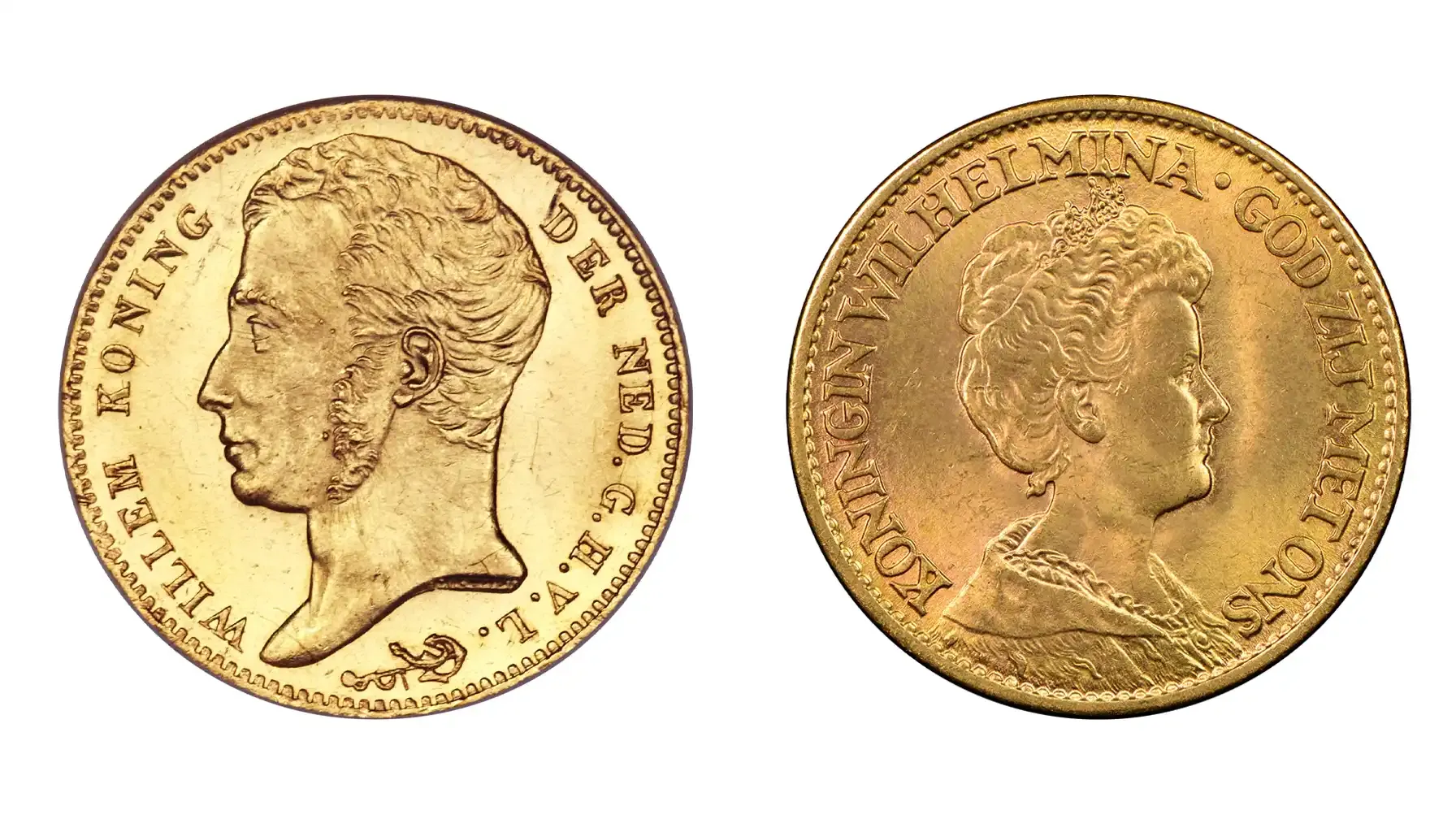
Back in the past, this coin sat comfortably within the European gold-standard ecosystem (comparable in size/value to other 20-franc–class coins), and remained a trusted store of value until gold circulation waned in the 20th century.
Current Value Estimate
As a bullion coin, the Gulden’s value mainly depends on the gold demand. Fortunate news, because nowadays this metal is very popular among investors.
We could even calculate the base prices with a formula: spot gold price × 0.1947 troy oz (the weight of the coin).
For example, (hypothetical): if spot price were €2,100/oz, then €2,100 × 0.1947 ≈ €409 for a coin.
Of course, with how unique each coin is and how often gold values fluctuate, the real value could be different.
With added premiums, most 10 Gulden bits in excellent condition are worth €650+, and some even almost reach a €1000 mark.
"The Netherlands 10 Gulden Queen Wilhelmina Gold Coins are one of the most popular and highly sought-after pre-1933 European gold coins."
— USA Gold
Official Website
How to Determine Value & Condition
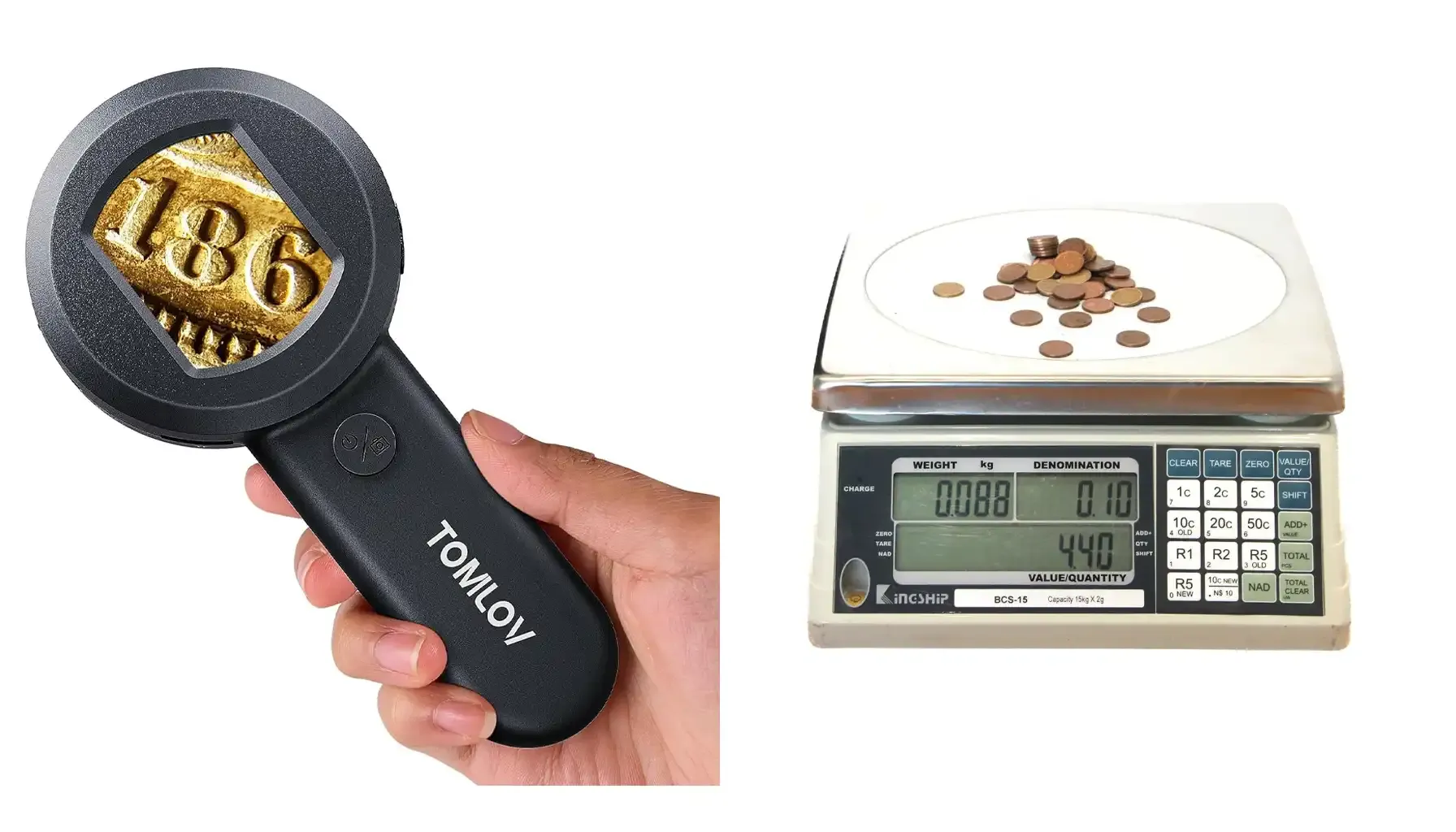
1. Authenticate the bit by:
Weight & size: ~6.73 g and ~22.5 mm.
Magnet test: genuine gold is non-magnetic.
Sound & details: a high-pitched sound with crispy details on the design .
2. Identify the period by:
Monarch & portrait type (Willem I / II / III, Wilhelmina).
Date & any varieties (small design differences, legends). Some dates are notably scarcer.
3. Assess condition (grade)
Circulated bits show moderate wear, often with scratches and murky elements.
Uncirculated (AU) bits have some friction spots, but are overall greatly detailed, even shiny.
Uncirculated (MS) bits show no wear. They still have luster and look well even under a magnifying glass.
4. Check market evidence
Compare your bit with recent auction results and dealers’ listings for the same date/grade.
Use the bullion value, based on the current gold price, and add a premium based on rarity, grade, or eye appeal.
Doing these steps might be hard for first-timers. You can always use NGC Coin Grading Service and let the expert determine the value.
Conclusion
The Dutch 10 Gulden is a classic European gold piece: compact, historically rich, and eager to trade. Most examples trade near the melt price, and you could always add a modest premium. Especially if you have scarcer dates.
Would you like to see more European coinage? Coin ID Scanner could help you. The app has 150,000+ bits from Europe and other parts of the world. You can learn more about Euros and Franks, and the app takes a second to scan these bits.

 Facebook
  X (Twitter)
  Pinterest
  LinkedIn