Contents:
Daenerys did not need a crown to be understood once the dragons arrived. Chinese mints used the dragon the same way: instant status, instant recognition, instant message.
If you collect across borders, a foreign coin identifier helps turn a mysterious Chinese coin with dragon on back into a piece with a name and a story.
Why Dragons Appear on Chinese Coins
It Was the Empire’s Signature
In late imperial China, the dragon was not a fantasy creature. It was political shorthand. “Imperial,” “authorized,” “backed by the throne.”
A Prosperity Symbol
Western stories trained people to see these creatures as monsters. Chinese tradition treats them as a force of order—rain, rivers, harvest, luck, and strength. If money is stored labor and future security, a prosperity emblem makes perfect sense.
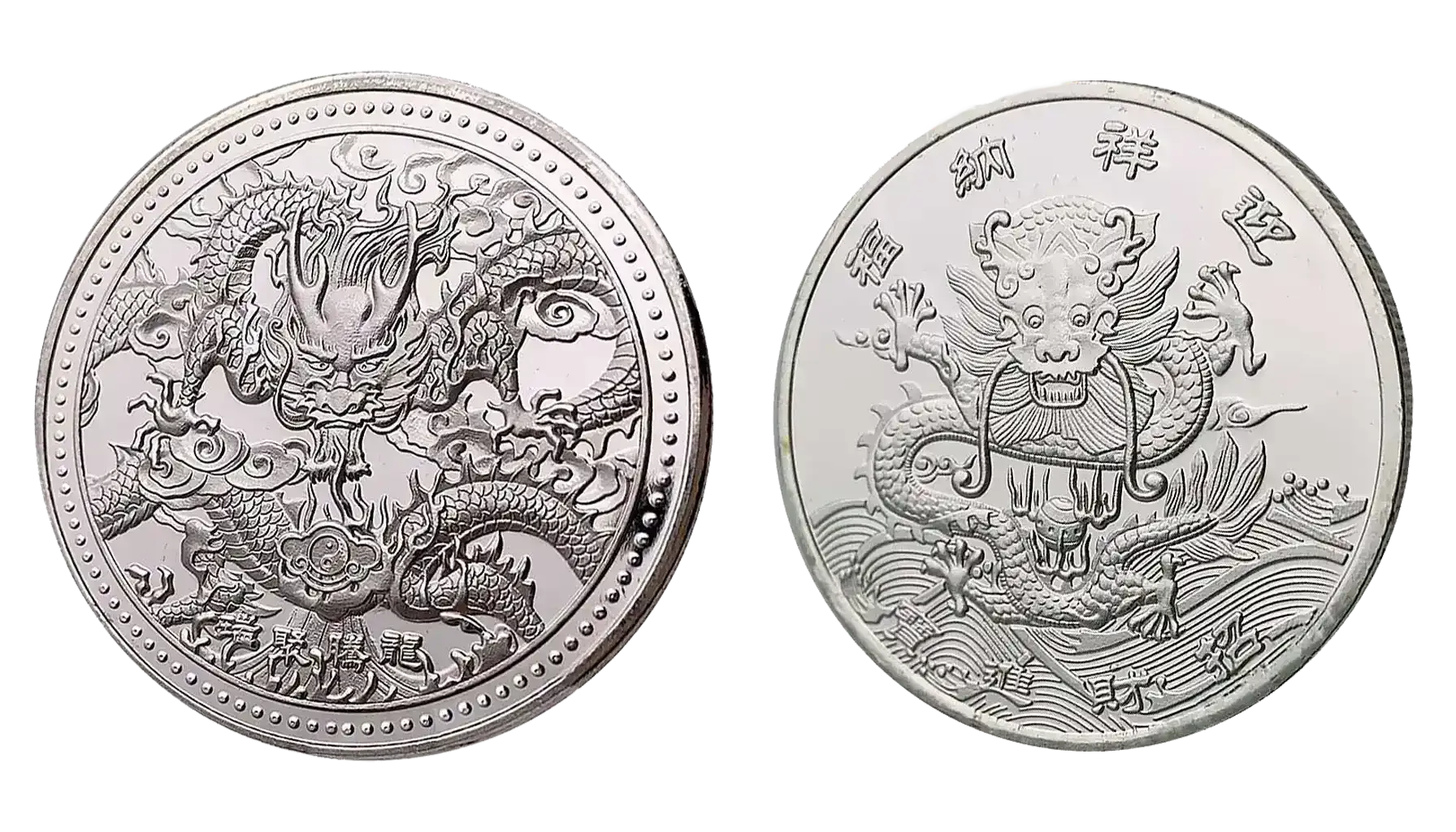
The Chinese Dragon Dollar Coins Era Needed a Strong Visual Identity
When China moved into machine-struck silver coinage in the late 1800s and early 1900s, designs had to do two jobs at once:
feel unmistakably Chinese
circulate confidently in busy markets and trade hubs
A bold dragon hits both.
Detail Helps Fight Counterfeits
Those swirling scales, claws, whiskers, or clouds are complex engravings that are harder to copy convincingly, especially on high-value silver pieces that people tested, weighed, and compared by eye.
Modern Ones Are Different
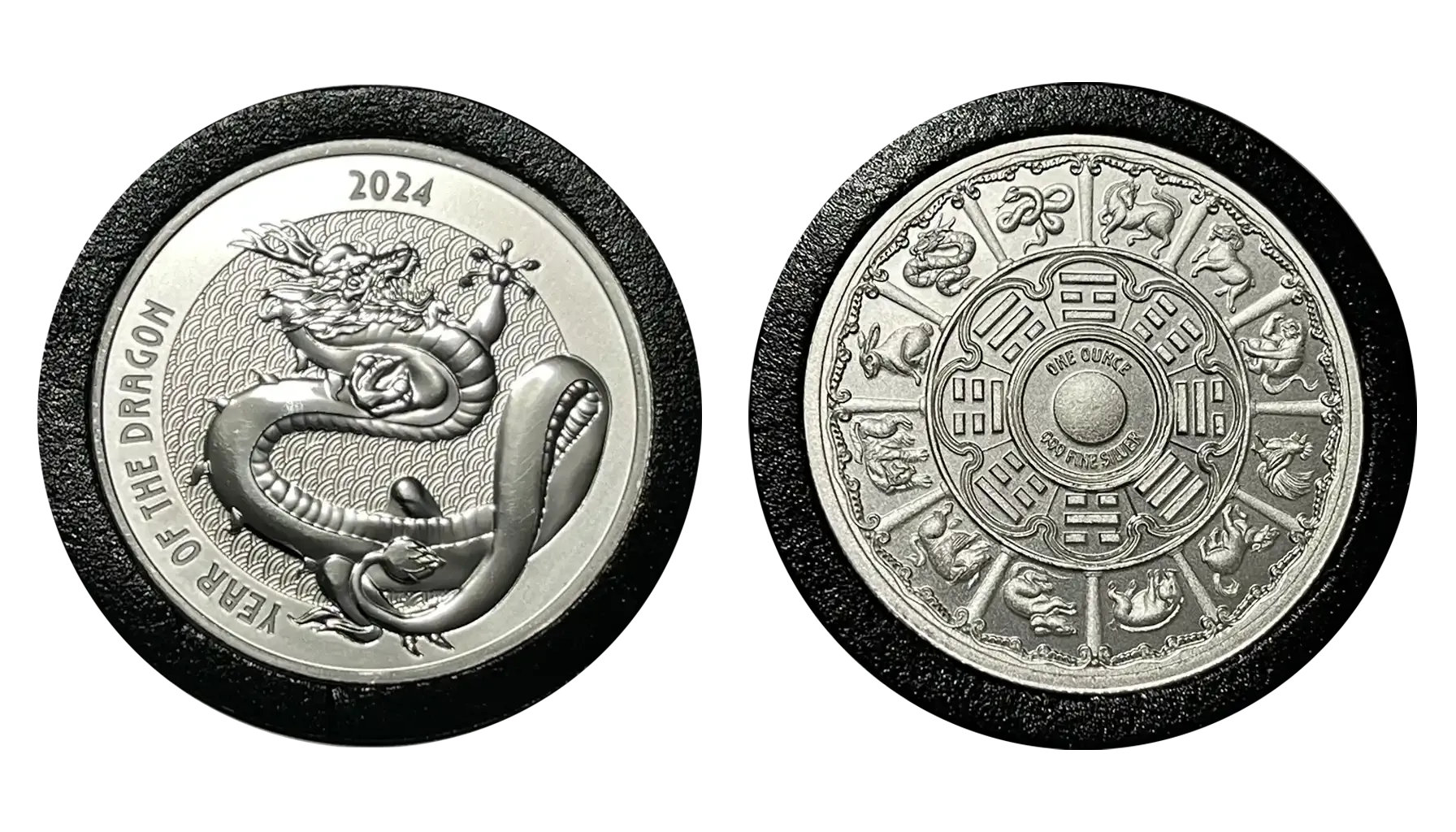
On modern issues, the dragon often shows up as culture and celebration—zodiac “Year of the Dragon” coins, commemoratives, collector series. Same creature, different message: heritage and gifting rather than imperial power.
Types of Chinese Dragon Coins
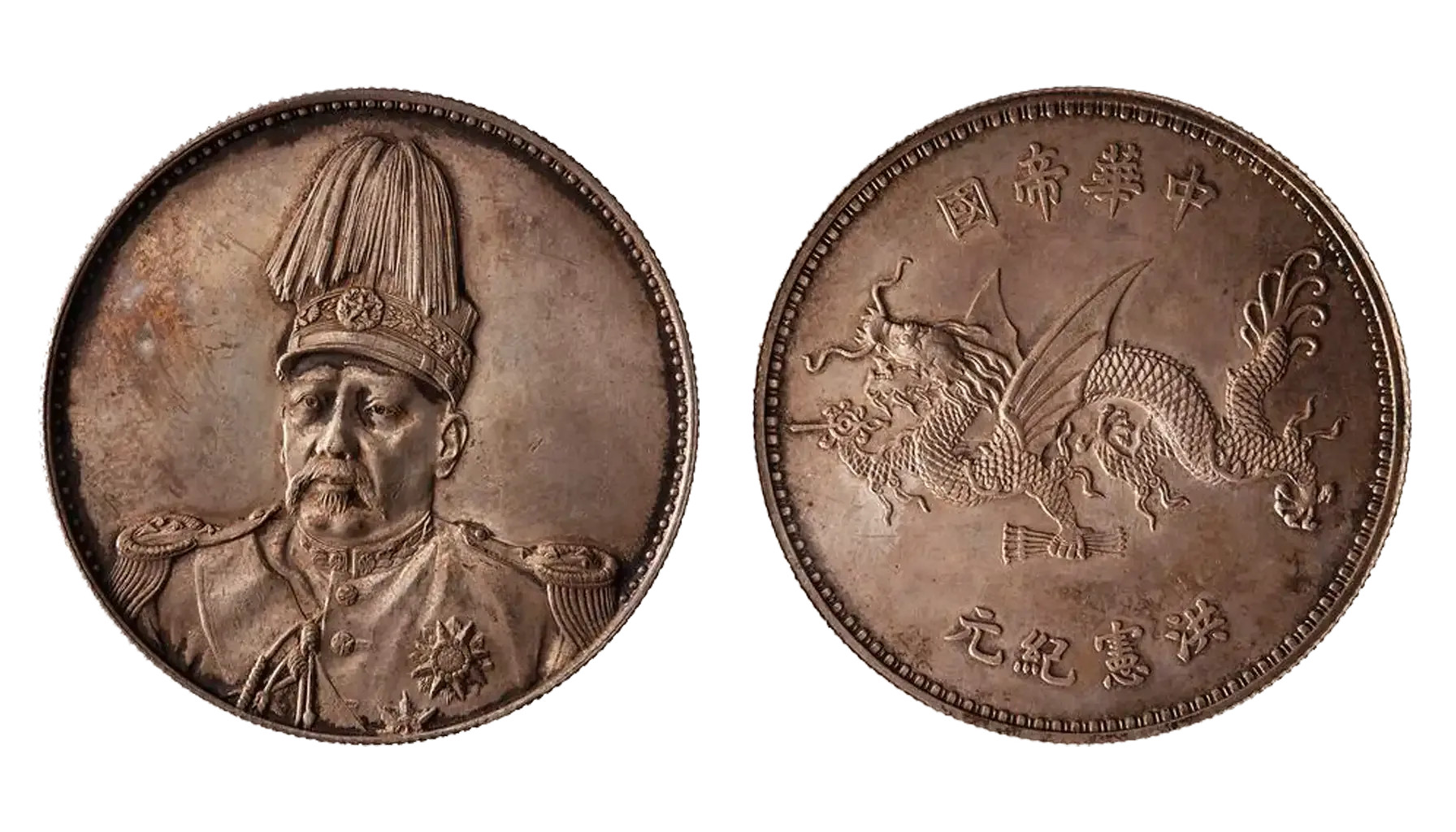
Late Qing Silver Dollars
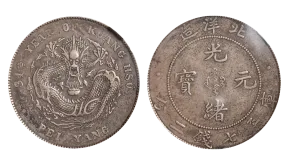
These are the classic dragon dollars that set the template for modern Chinese silver coinage: usually 7 mace 2 candareens weight standard on many issues.
Large silver “dollar/yuan” module
Dragon reverse (often with a fireball/pearl), legends in Chinese and sometimes English
Issued by the central government and many provinces
Late Qing / Early Republic Copper Cash
Not the ancient cast cash with square holes—these are modern struck copper pieces from the early 1900s that often carry bold dragon designs.
Republic Era Dragon-Adjacent Silver Trade Coins
Some late Qing coins and early Republic silver trade pieces keep Chinese coin dragon motifs or transitional designs as coinage competed for trust in commerce. Auction databases often file these alongside provincial issues because they share module/market context.
Modern PRC Lunar Zodiac
These are collector/bullion issues where the dragon is zodiac branding without imperial symbolism. You will see many dates across modern series.
Chinese Silver Dragon Coin and Its Value
Silver specimens usually mean the late-Qing / early modern 1 Yuan (“7 mace 2 candareens”) family with a themed reverse.
The Value Depends on:
Type + mint/province. Some provinces are routine; others get hunted hard.
Grade. These coins jump fast once you reach clean XF/AU and again in true Mint State.
Problems. Cleaning, scratches, repairs, rim bumps, and chopmarks can cut the Chinese silver dragon coin value.
Authenticity. This series is heavily counterfeited. (Treat raw bargains as red flags.)
Melt Value vs Collector Value
A standard Chinese dollar/yuan module is about 26.73 g, .900 fine, with 0.7734 oz actual silver weight—so melt moves with spot. Collector value is often many multiples of melt.
Market Examples
What Sold | Chinese Dragon Silver Coin Price |
Kiangnan dollar (PCGS auction record) | $840 |
Pei Yang / Chihli dollars (Numista archived auction results) | ~$300 to ~$1,500+ |
Yunnan dollar (PCGS listing/auction estimate) | $5,000–$10,000 |
Yunnan “4 circles” variety (PCGS auction estimate) | $500–$750 |
2025-Dated Dragon Coin
It is the Chinese 10 Yuan silver bullion coin with:
Face value: 10 Yuan
Metal: .999 silver
Weight: 31.104 g (1 oz class)
Diameter: 38 mm
Max mintage: 2,000,000
Obverse: Great Wall + “People’s Republic of China” + date 2025
Reverse: dragon with auspicious cloud patterns
2025 is the Lunar Year of the Snake, so this is not a “Year of the Dragon” zodiac issue. It is a themed bullion/legal-tender release dated 2025.
“China Gold Coin Group Co., Ltd. unveiled its 2026 Chinese Dragon Silver Bullion Coin at the World Money Fair held in Berlin, Germany, from January 29 to 31.”
— 11th February 2026 article
Busines NewsWire
Chinese Dragon Gold Coin Explained
The best-known modern Chinese example is the PRC Lunar Series “Year of the Dragon” gold issue—especially the 1988 100 Yuan.
Metal: .999 gold
Weight: ~1 troy oz (31.132 g)
Design language: Temple of Heaven on one side; dragon-themed reverse (Lunar series styling).
How It Is Valued
Two numbers matter:
Bullion floor (gold content). Heritage even lists melt alongside its sold result for a specific lot, which shows how tight the floor can be when gold is high.
Numismatic premium (grade + demand + originality + packaging/COA).
Heritage sold a 1988 1 oz “Year of the Dragon” 100 Yuan proof (NGC PR64 UC) for $2,760 on Dec 9, 2024.
Rare and Old Chinese Dragon Coins
Type | Era / date | Issuer / mint | Denomination |
Fengtien Tael (“King of Chinese Coins”) | 1903 | Fengtien | Tael silver |
Chihli (Pei Yang Arsenal) Dollar, Year 22 | 1896 | Pei Yang Arsenal (Tientsin) | 1 Yuan / Dollar |
Chihli (Pei Yang Arsenal) 50 Cents, Year 22 | 1896 | Pei Yang Arsenal | 50 Cents |
Fengtien Dollar CD 1903 (Manchu variety noted) | 1903 | Fengtien Arsenal | 1 Yuan / Dollar |
Kiangnan 1 Yuan (Uncircled dragon) | late Qing | Kiangnan | 1 Yuan / Dollar |
Kiangnan 1 Yuan (Circled Chinese coins dragon) | late Qing | Kiangnan | 1 Yuan / Dollar |
Kiangnan 1 Yuan (Redesigned + Manchu) | late Qing | Kiangnan | 1 Yuan / Dollar |
Hupeh “Pen Sheng” 1 Yuan | ND (1890s) | Hupeh | 1 Yuan / Dollar |
Hupeh Guangxu 1 Yuan (standard provincial dollar) | late Qing | Hupeh | 1 Yuan / Dollar |
Szechuan Guangxu 1 Yuan (provincial dollar) | late Qing | Szechuan | 1 Yuan / Dollar |
Szechuan 1 Yuan pattern (Royal Mint, London) | 1896 (pattern) | Royal Mint (Tower Hill) | Pattern 1 Yuan |
Yunnan Guangxu 1 Yuan (1908) | 1908 | Yunnan | 1 Yuan / Dollar |
Here are more examples with different designs: Ancient Chinese coins.
Chinese Double Dragon Coin Overview
Late-Qing style double dragon fantasy taels are the ones people post online. You will see two creatures flanking a longevity character, often sold as “Kwangtung/Guangxu tael” pieces. Major auction houses and catalogers describe many of these as fantasy types, not regular provincial currency.
Denomination like Tael / 5 Mace (½ tael) with medal-like layout
Double dragon is the headline motif (symmetry + longevity symbol)
Often shows up slabbed as “Fantasy” in reputable sales listings
How Much Is a Chinese Dragon Coin Worth?
Coin Family | Common Reality | High-End Reality |
Provincial dollars (7 mace 2 candareens) | Four figures are normal for nicer, certified pieces | Anhwei example sold $60,000 |
Hard provincial types (example: Yunnan dollar) | Strong premiums even before Mint State | PCGS estimate shown $5,000–$10,000 |
Double dragon fantasy ½ tael | Collectible, but condition and credibility matter | Heritage shows $15,600 (MS63) |
Double dragon fantasy tael | Often sold cheap when raw/uncertain | NumisBids notes comparable Chinese coins with dragon bringing $24,000 |
What Influences the Chinese Dragon Coin Value
Certified vs raw. This market is saturated with replicas; certification changes the conversation. (You will even see coin-forum warnings calling out modern base-metal replicas.)
Surface honesty. Cleaning, tooling, fake toning, rim filing = big haircut.
Province/type. It is a category; within it, rarity is province-by-province.
Grade ceiling. A type that is common in VF can be brutal in MS—auction records show the premium.

 Facebook
  X (Twitter)
  Pinterest
  LinkedIn