Contents:
In the 1990s, cash transactions were still common in the US, and everyday commerce heavily relied on small-denomination coins, i.e., those numismatic creations that were of lower nominal value, widely used by the public.
According to the United States Mint, the dime indubitably belongs to the group of the most familiar pieces found in pocket change. That said, a “common” coin can still be worth a closer look, so let us focus on one particular example: the 1994 copper dime and its silver counterpart. What do they look like, where to check coin value, and how much do they cost in 2026?
The 1994 Dime at a Glance
The last dime design was introduced in 1946 to honor the legacy and impact of the president, who carried the country through the darkest periods of its history – Franklin D. Roosevelt. The very first iteration, i.e., the 1946 Roosevelt dime, received positive public and collector attention, although the shift was rather swift: the Mercury dimes were loved by an average American as a representation of the new coinage – beautiful, elegant, yet modern.
As for the 1994 issue, it belonged to the second iteration of the coin (the clad one), which was launched as a regular circulating standard after the passage of the Coinage Act of 1965. No more silver was employed in the major line; only proof versions could have been minted in silver at times.
“The Roosevelt Dime replaced the Mercury Head Dime in 1946 <...> as part of the ongoing trend toward placing historical figures on U.S. coins in place of allegorical figures of Liberty. The new Dime proved to be very popular, and the mintage for the first year set a new record for the denomination.”
— Ron Guth, licensed Certified Public Accountant, numismatic consultant
PCGS CoinFacts
Design Features and Specifications
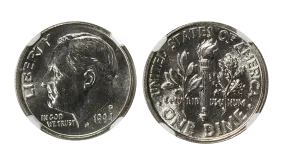
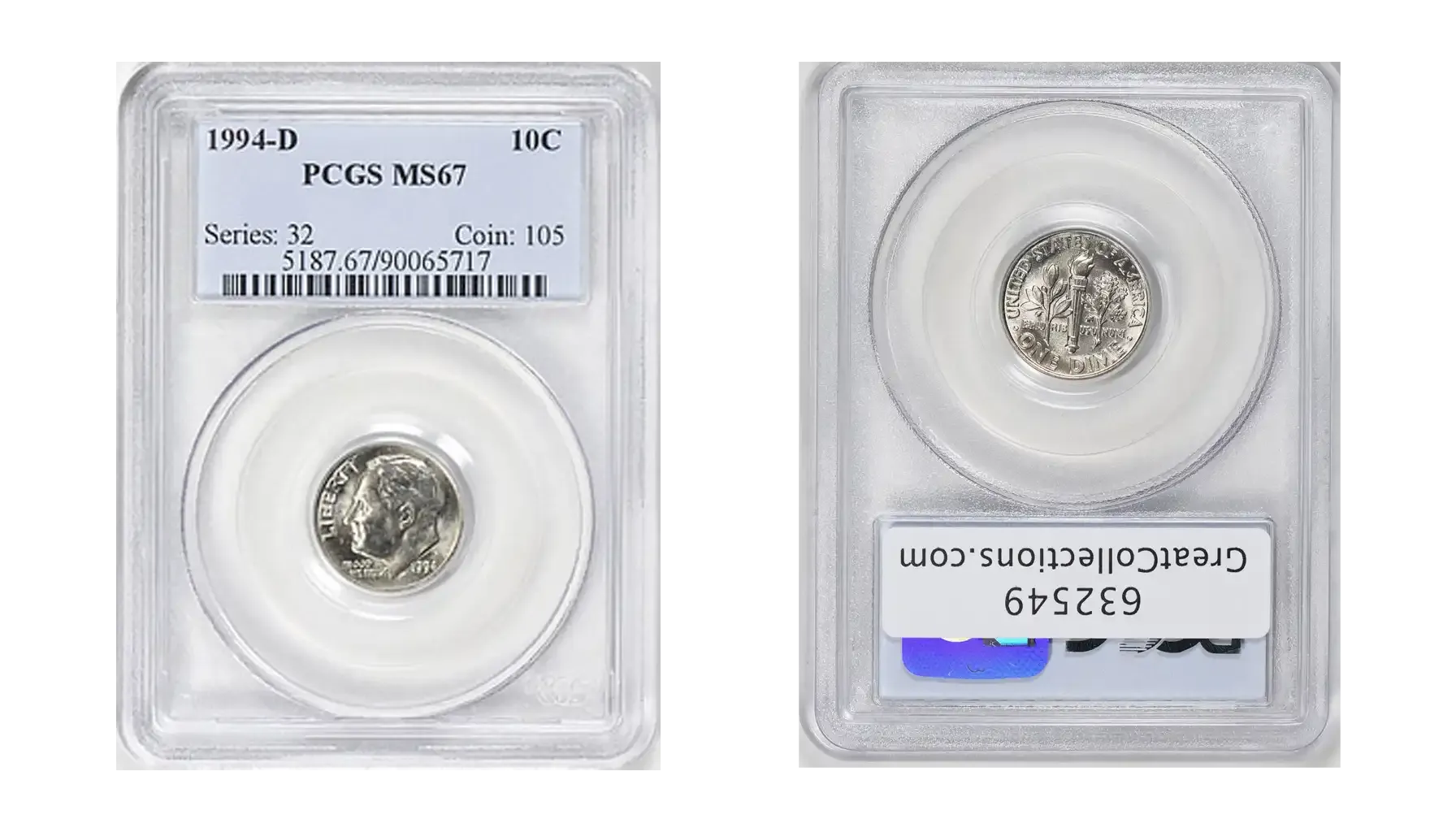
Obverse: The left-facing portrait of Franklin D. Roosevelt, the inscription "LIBERTY" along the upper-left part of the rim, the national motto "IN GOD WE TRUST" positioned in the lower-left area, as well as the initials "JS" referring to the designer of the coin, John R. Sinnock, the date "1994", and a mint mark right below the bust (from left to right).
Reverse: The centered composition of an olive branch, a torch, and an oak branch (from left to right), accompanied by the inscriptions "UNITED STATES OF AMERICA" around the top rim, "E PLURIBUS UNUM" behind the trio, and the denomination "ONE DIME" beneath.
The Main Features | |
Composition | 75% copper, 25% nickel over a pure copper center OR 90% silver, 10% copper (silver proof) |
Weight | 2.27 g OR 2.50 g (silver proof) |
Diameter | 17.90 mm |
Thickness | 1.35 mm (0.053 in) |
Edge | Reeded (118 reeds) |
Shape | Round |
1994 Dime Types by Mint Mark and Composition
1994-P 10C
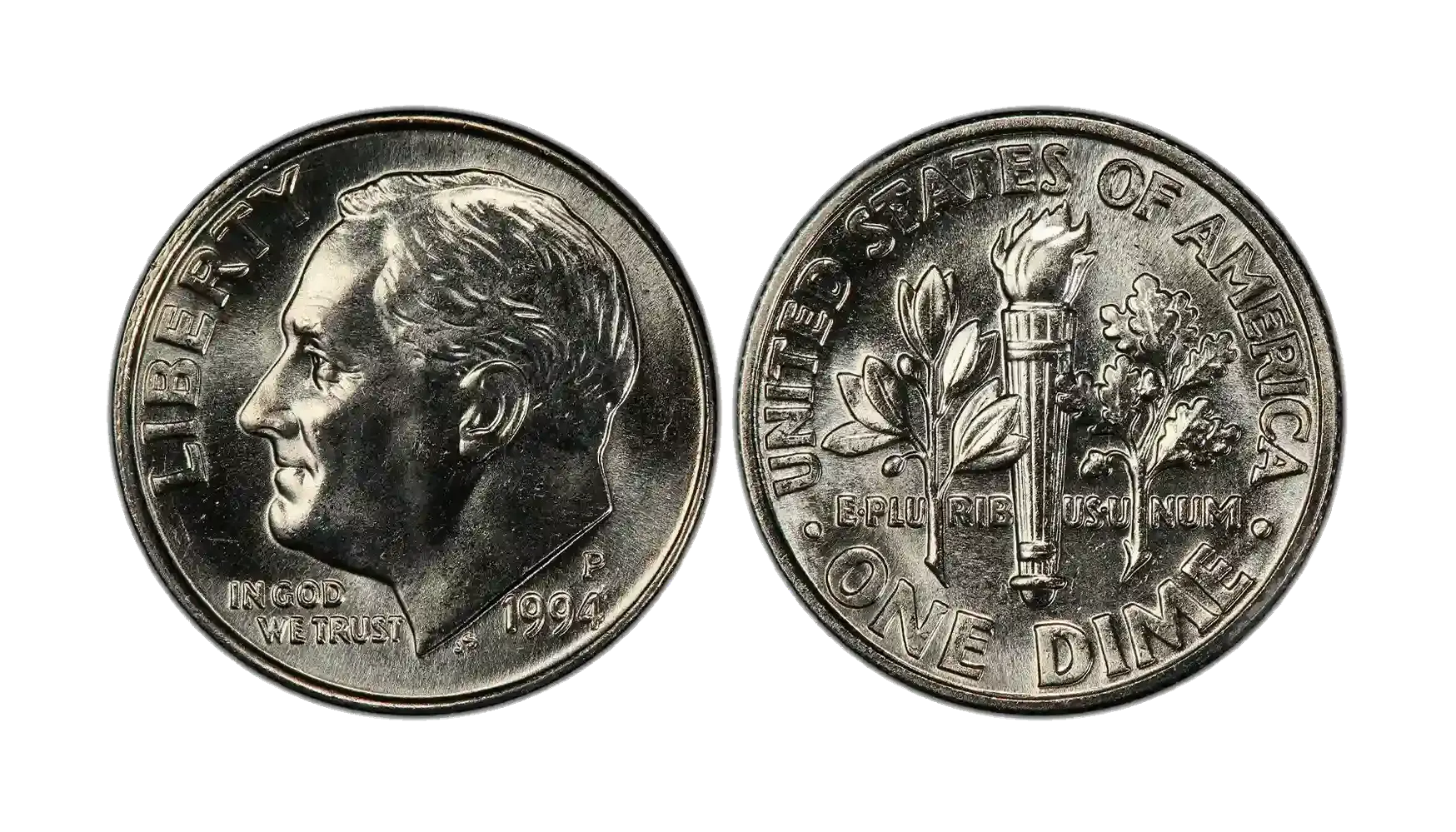
Produced by: Philadelphia Mint
Mintage: 1,189,000,000
Auction record: $1,080 for MS68FB
One of the most widely-circulated coins in the series. As per PCGS statistics (and the 1994 P dime value rates), the main part of these numismatic creations is common in circulated grades, yet top-notch examples with "Full Bands" designations may be worth up to a few thousand dollars.
1994-D 10C
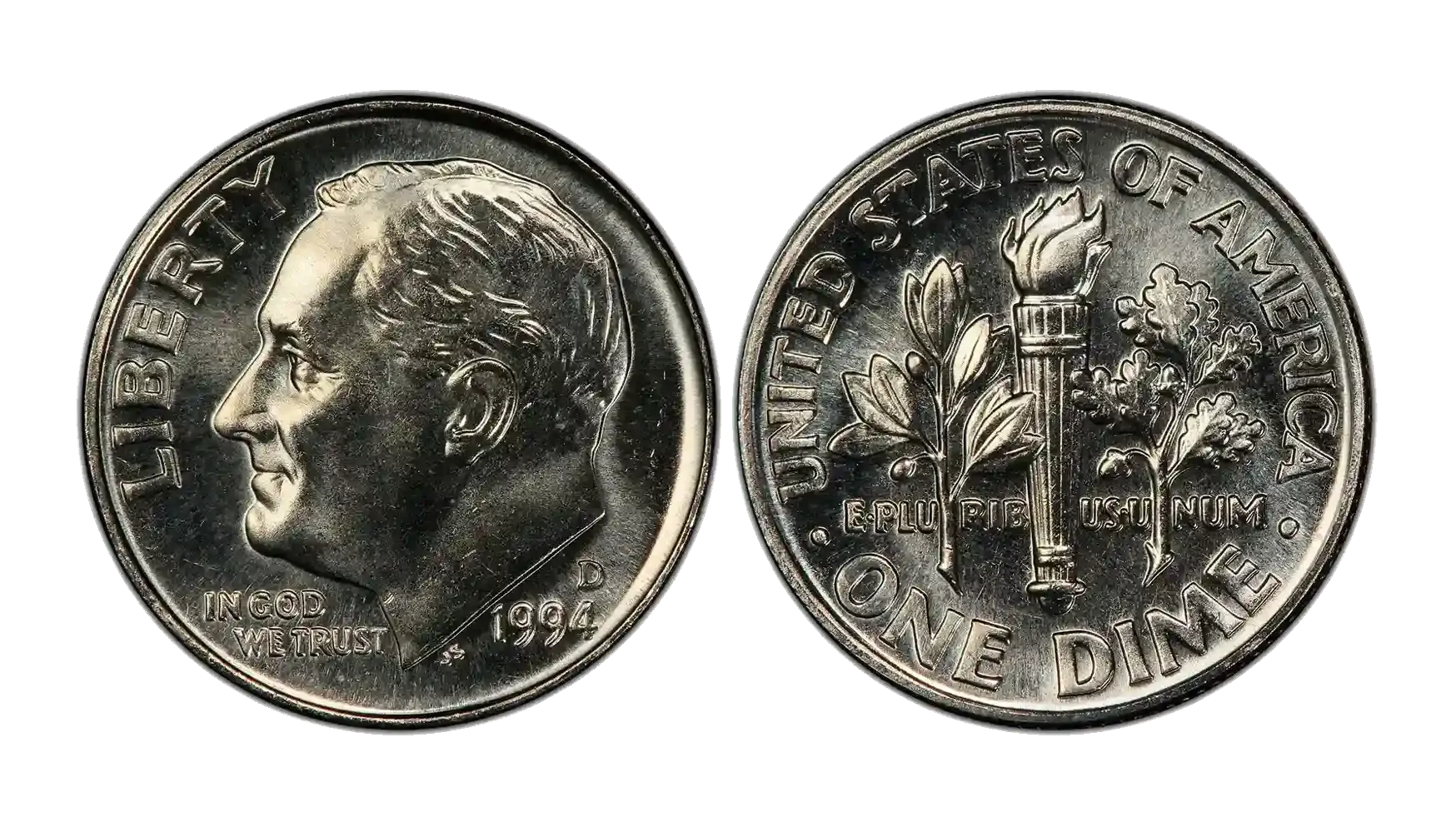
Produced by: Denver Mint
Mintage: 1,303,268,110
Auction record: $1,680 for MS68FB
Although the mintage of this variety is the highest for 1994, the 1994 D dime value never fails to impress. Because of high mintage and extensive circulation, the typical coin from the Denver Mint should be heavily worn. This is why the elite mint-state examples are the real targets during the coin hunt.
1994-S 10C
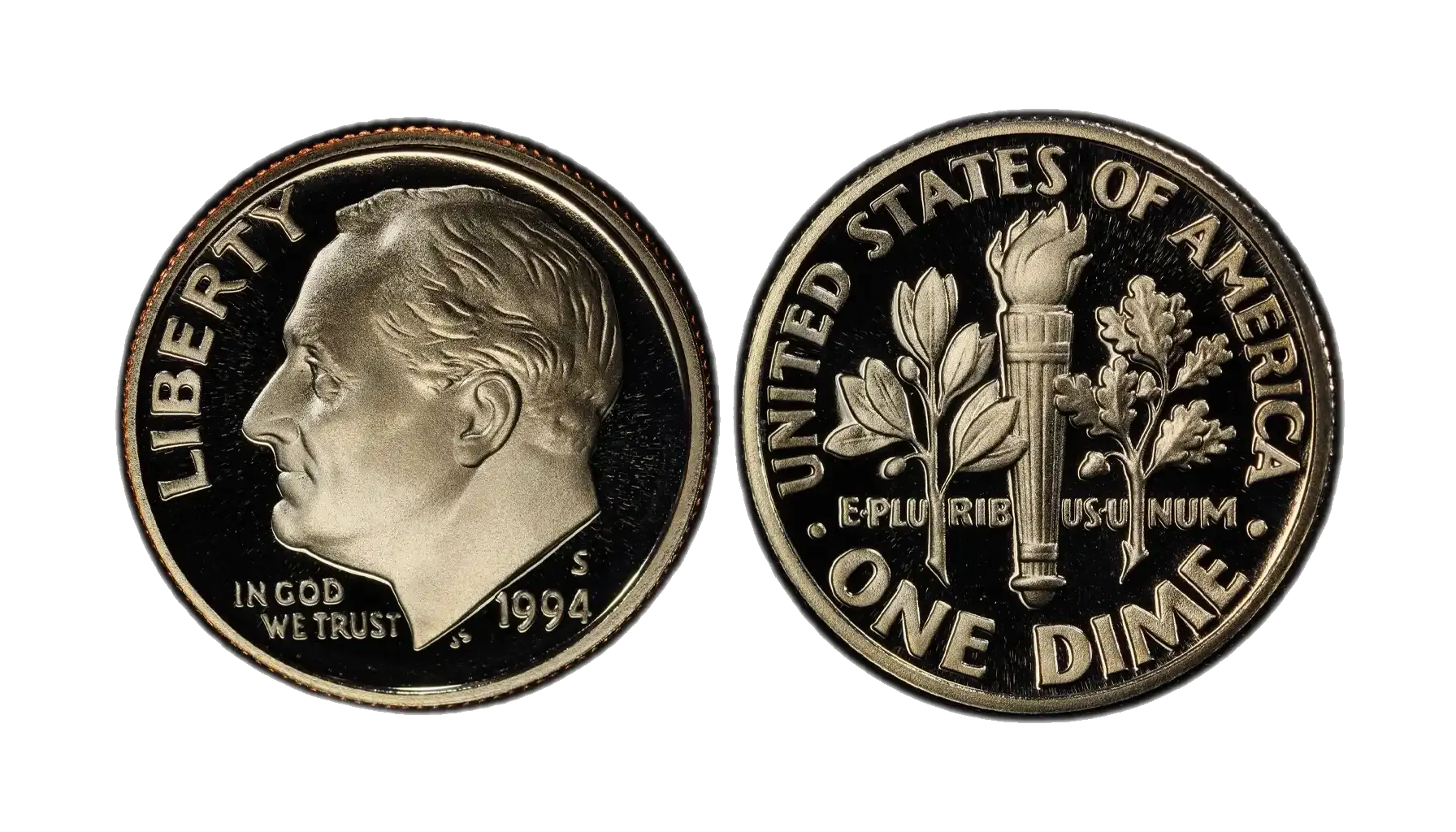
Produced by: San Francisco Mint
Mintage: 2,484,594
Auction record: $495 for PR70
The proof coin was issued in two major types, and the clad version can be seen as the primary one. As such, it features mirrored fields and frosted devices, with perfect PR70 coins bringing the highest prices.
1994-S 10C Silver
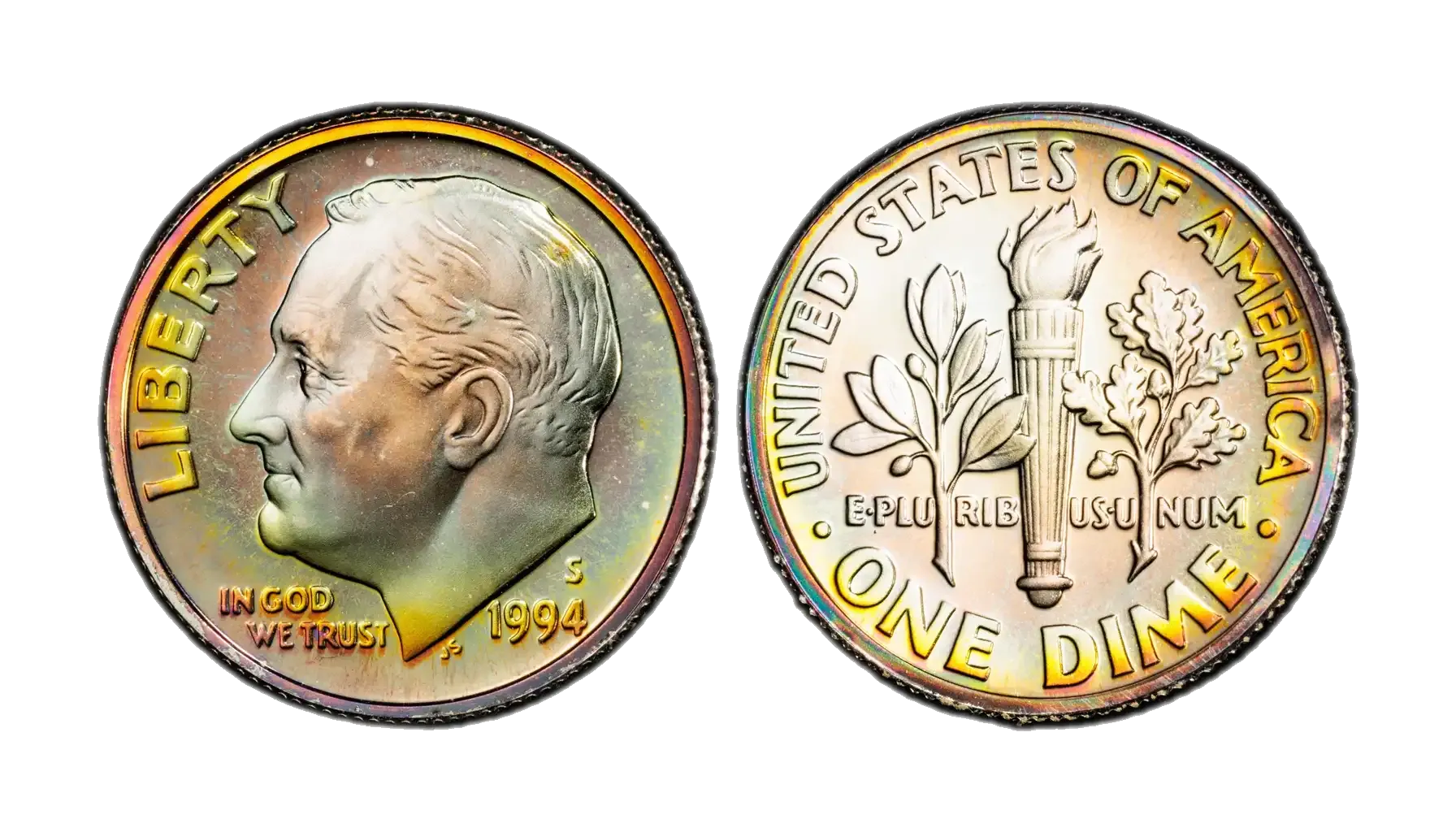
Produced by: San Francisco Mint
Mintage: 785,329
Auction record: $719 for PR70
A 90% silver proof version was originally sold in collector sets, though today, it can be found everywhere on the market. The most appealing benefit of this coin is the intrinsic metal value that cannot drop overnight: this is why the PR70 examples are the most profitable now.
1994 Dime Error List with Pictures and Values
Doubled Die Obverse/Reverse (DDO/DDR)
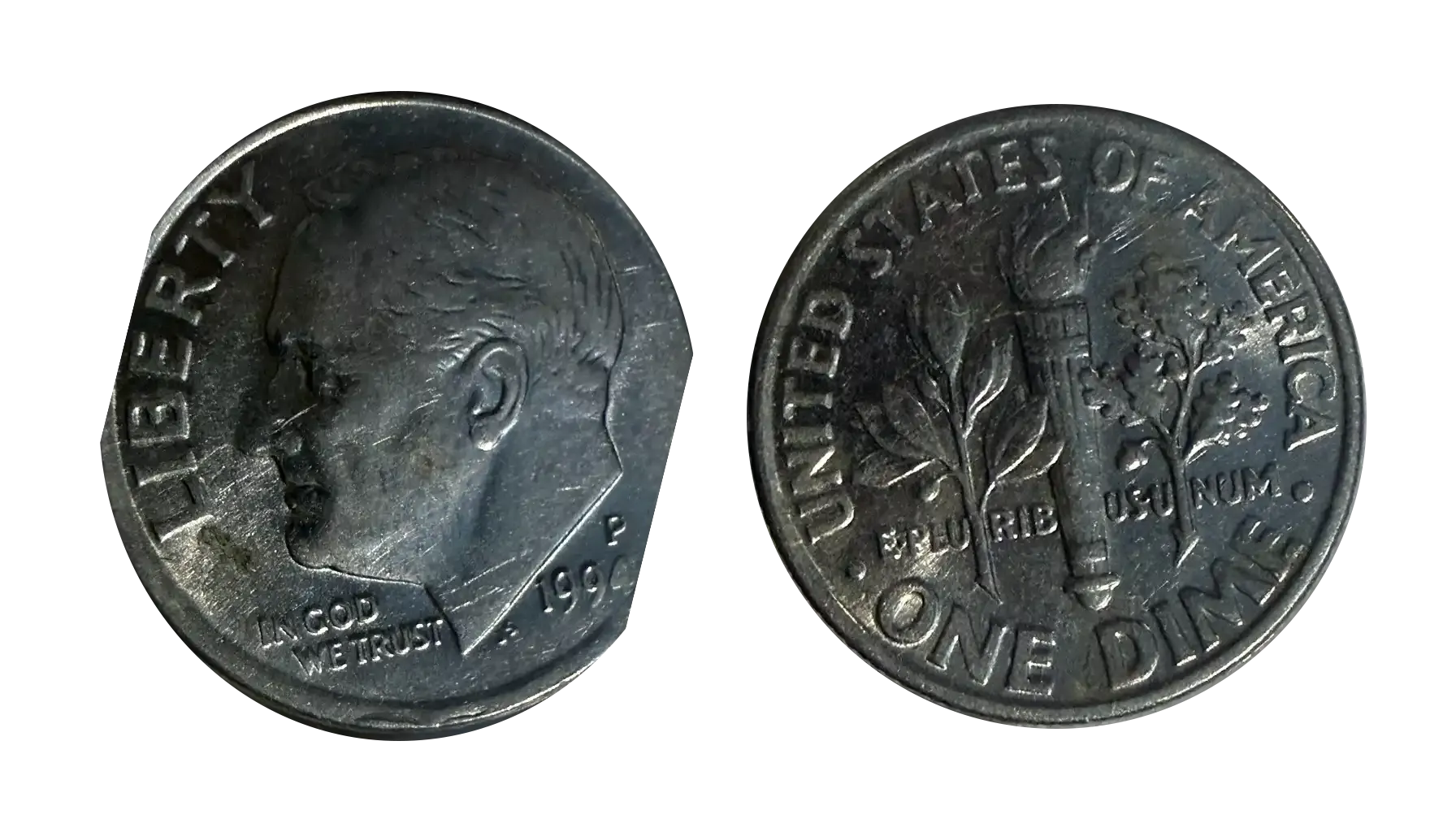
Estimated value: ~$650
A doubled die usually comes from an improper hubbing process, when a working die receives a misaligned hub impression. It is usually seen on letters and numbers, as these details are delicate, and each alteration is easily noticed. The most popular representative of an average 1994 P dime error list with pictures.
Edge Strike Error
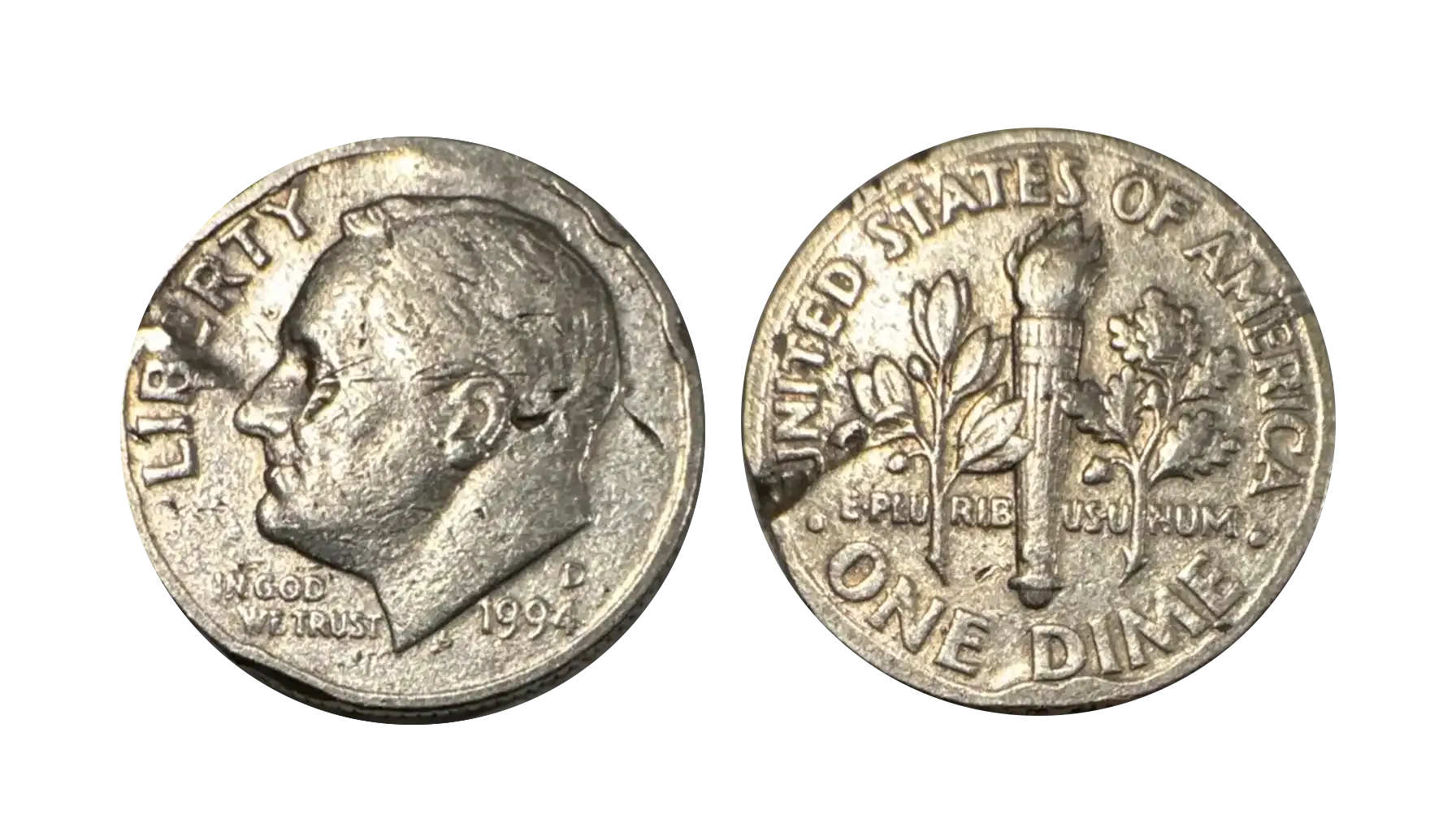
Estimated value: ~$400
There are numerous ways that the coin edge might look abnormal. When a dime is struck partly on its edge instead of lying flat between the dies, the distortion takes place, often with a dramatic bend or an unusual partial impression that appears pushed toward (or outward) the rim.
Wide Lettering
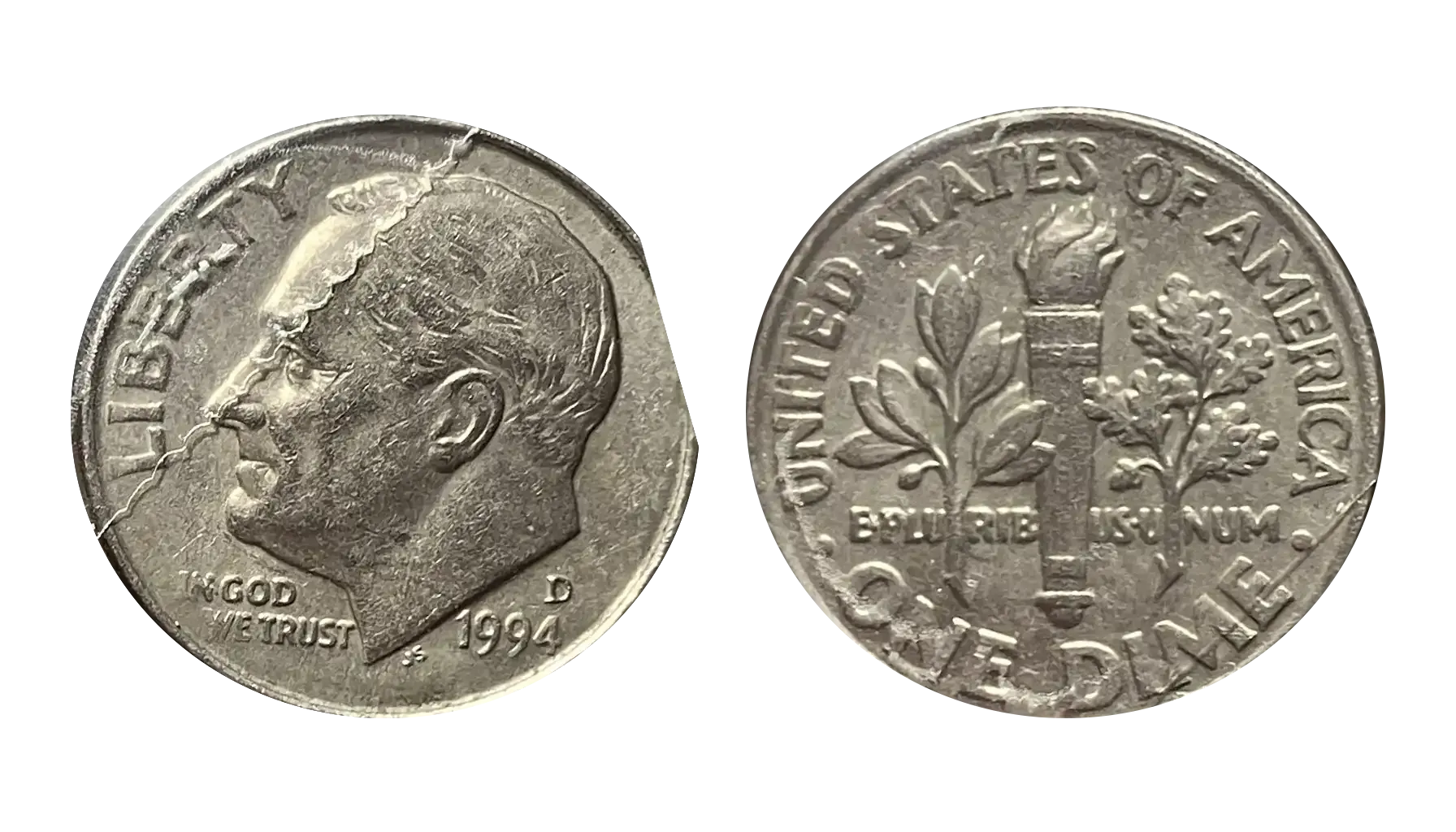
Estimated value: ~$300
Wide lettering also belongs to the common 1994 D dime error list with pictures, and it shows unusually spaced or broadened-looking inscriptions, caused by spacing differences that make the legends appear more open. In fact, it is usually hard to spot, but comparison with a standard example makes a difference.
Off-Center Strike
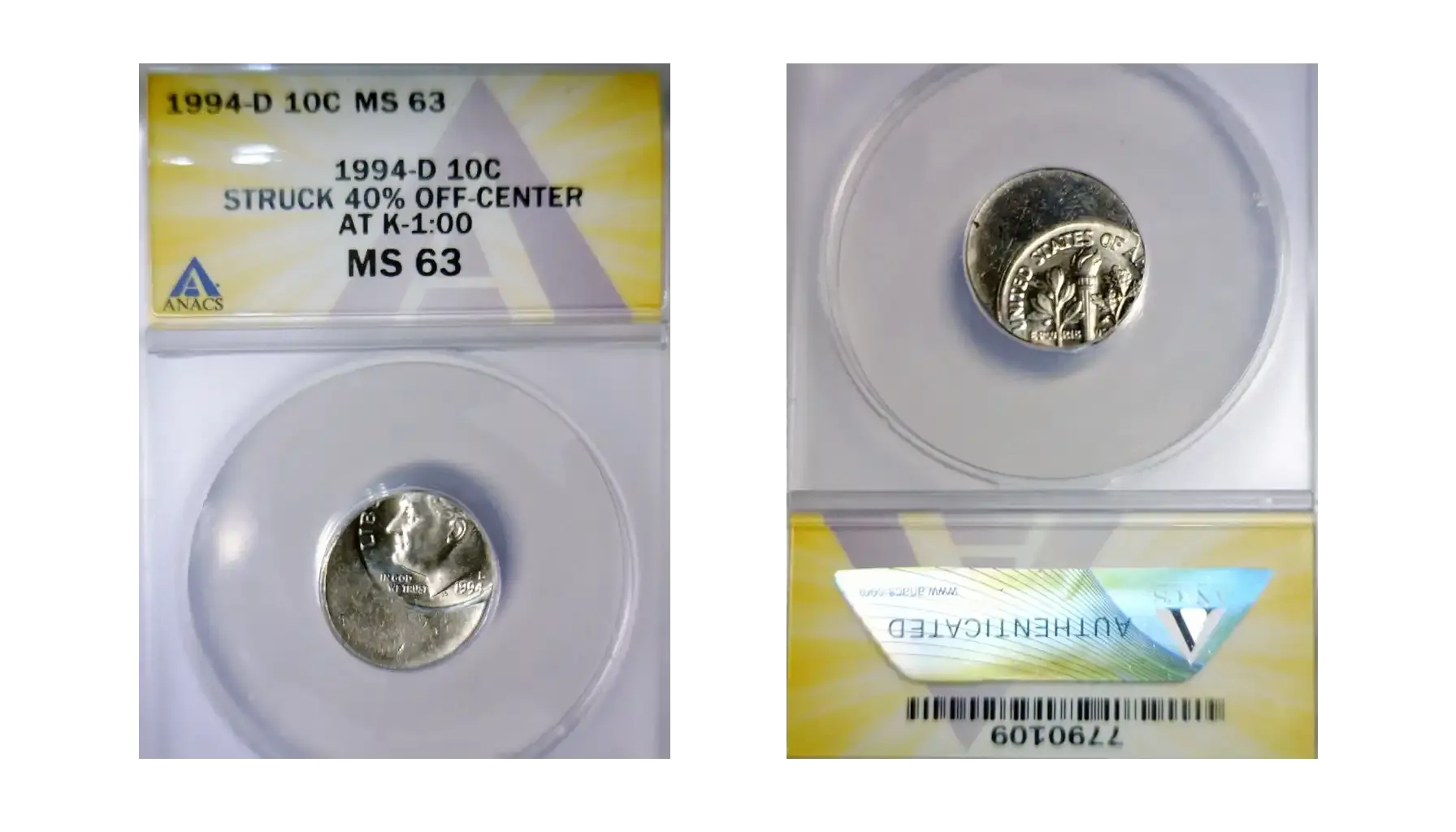
Estimated value: ~$100
Although it is not the most valuable coin in the list, it is definitely the most dramatic one. The off-center strike is always caused by a planchet that has not been properly seated when struck. The result is the design that sways from the blank, and its value grows as the percentage off-center increases.
How Much Is a 1994 Dime Worth?
Most 1994 Roosevelt dimes are still worth face value today. Nonetheless, certain exceptional examples may be sold for much higher prices than expected: up to a few thousand dollars! This, however, depends on the mint mark, grade, designations (e.g., FB, or Full Bands), composition, and type.
Let us see the main value ranges by grade and type to understand the average trends on the market (according to PCGS).
Value by Mint Mark and Grade (General Ranges)
Type | Circulated | MS63–MS65 | MS67–MS68 | PR69–PR70 |
1994-P | $0.10 | $13 – $26 | $185 – $1,800 | – |
1994-D | $0.10 | $12 – $50 | $300 – $2,250 | – |
1994-S Clad | – | – | – | $14 – $18 |
1994-S Silver | ~$7.52 | – | – | $12 – $35 |
Should you wish to explore more advanced data, please feel free to use Coin ID Scanner: identify coins, explore their backgrounds, manage collections, and get educated – one coin after another. Dimes should never be set aside.

 Facebook
  X (Twitter)
  Pinterest
  LinkedIn